I was up very early on Friday morning (3:30 am) due to Someone’s snoring. A breeze began about the time I woke, cooling the tent and the outside air. I listened to an audiobook until it was light, then sat outside on the deck to greet the dawn – and all of the critters who appeared with the sun. It was peaceful and calm, the only noise coming from songbirds trilling and Egyptian Geese squawking.

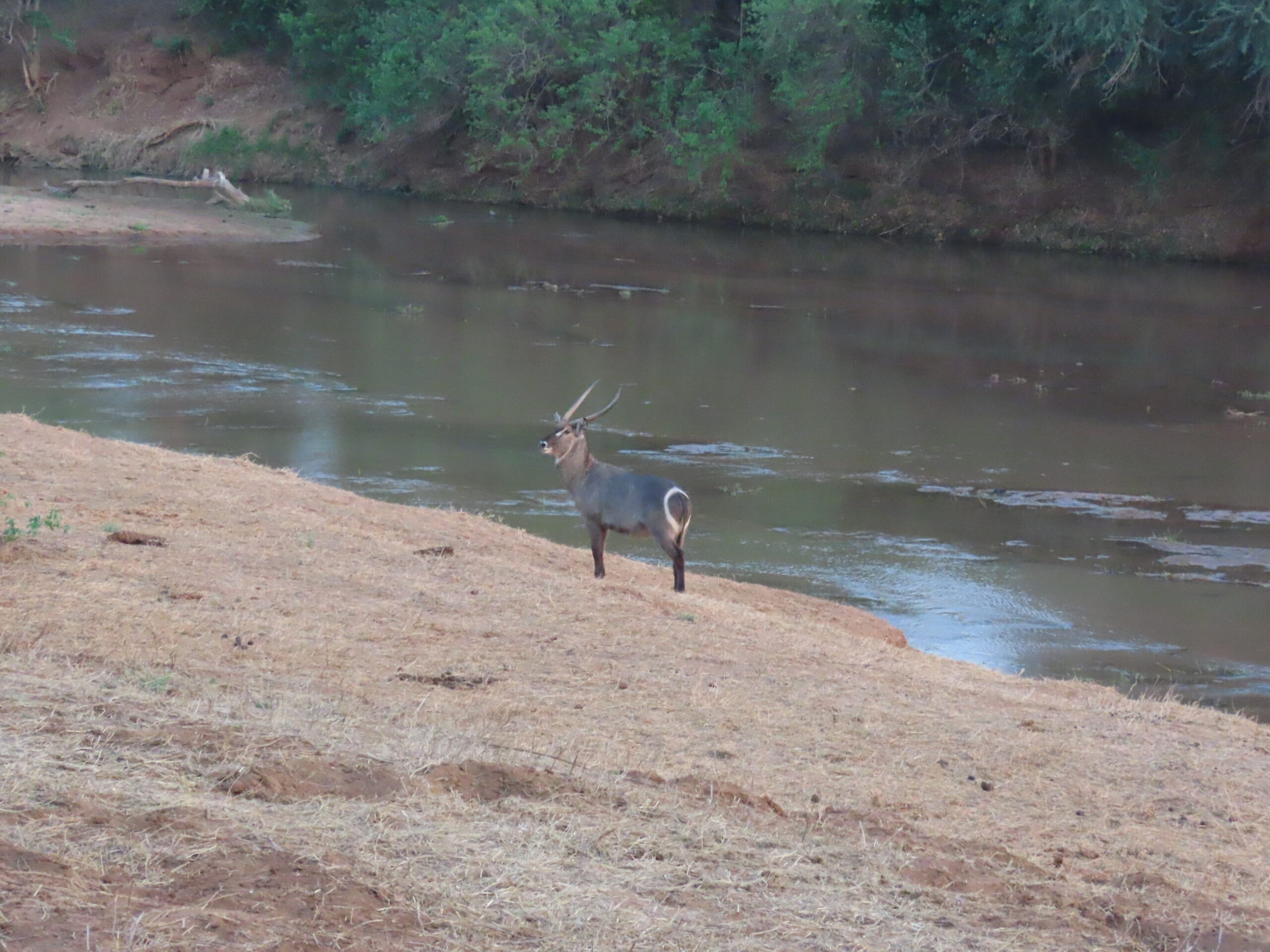


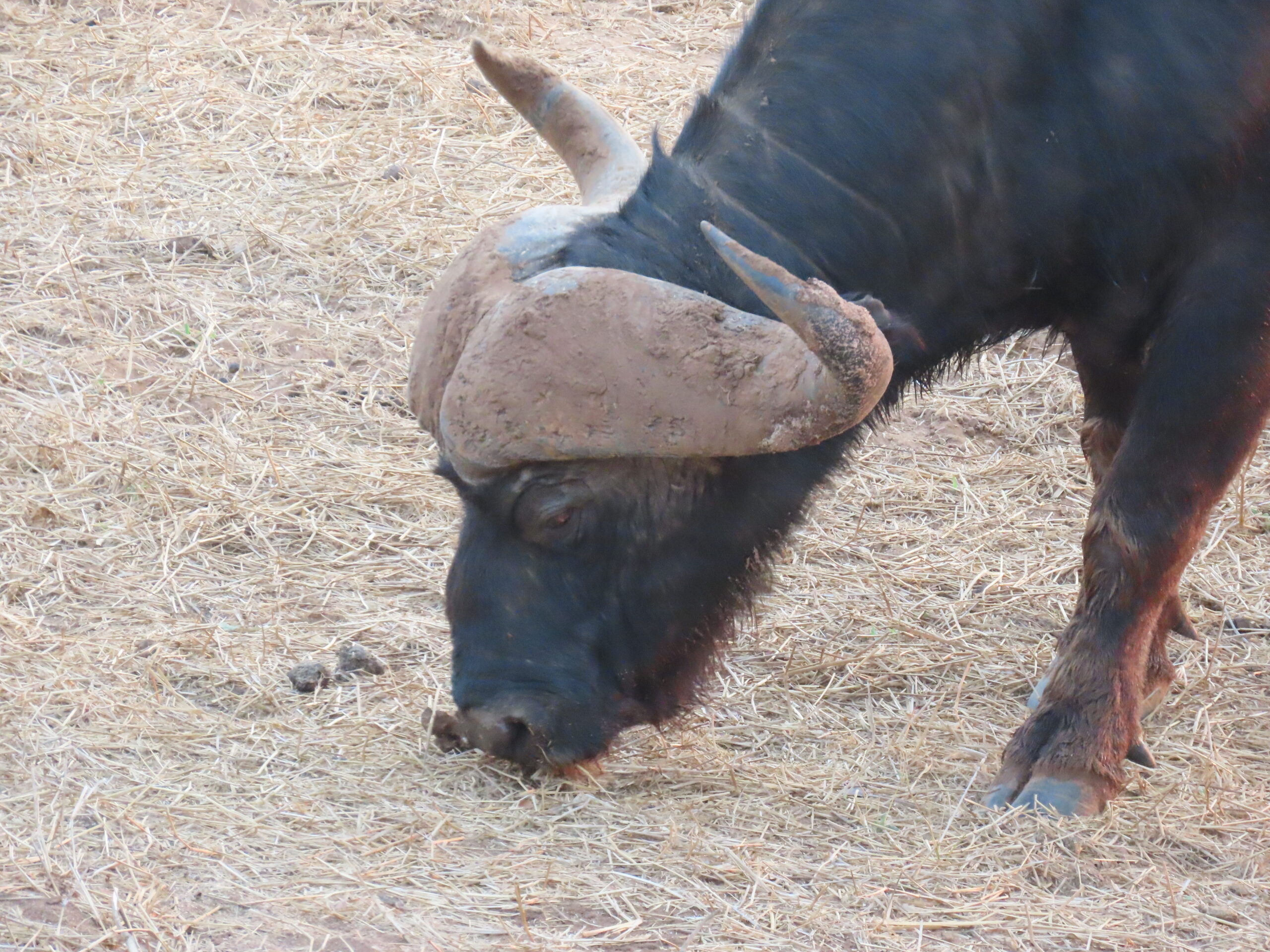


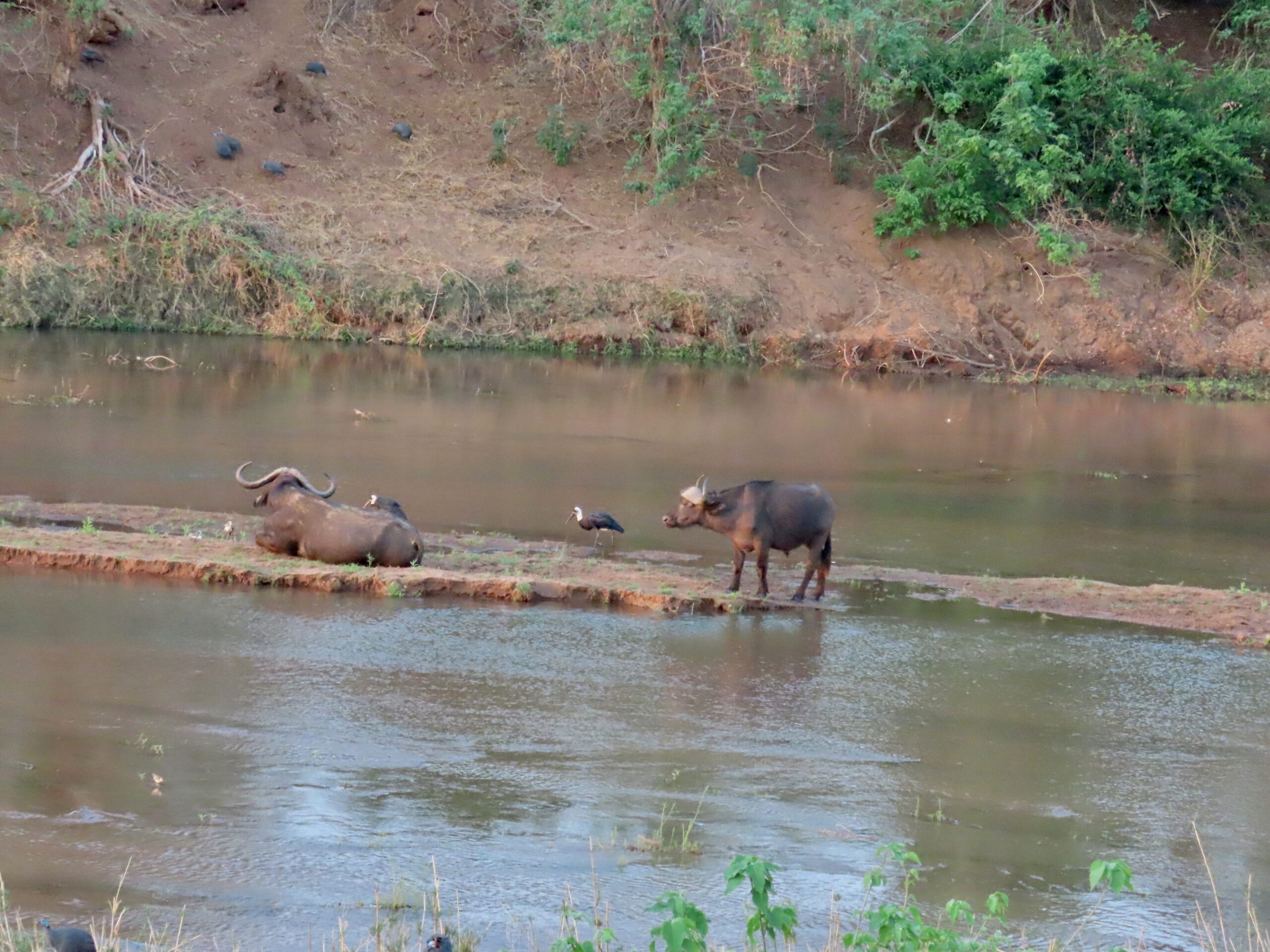
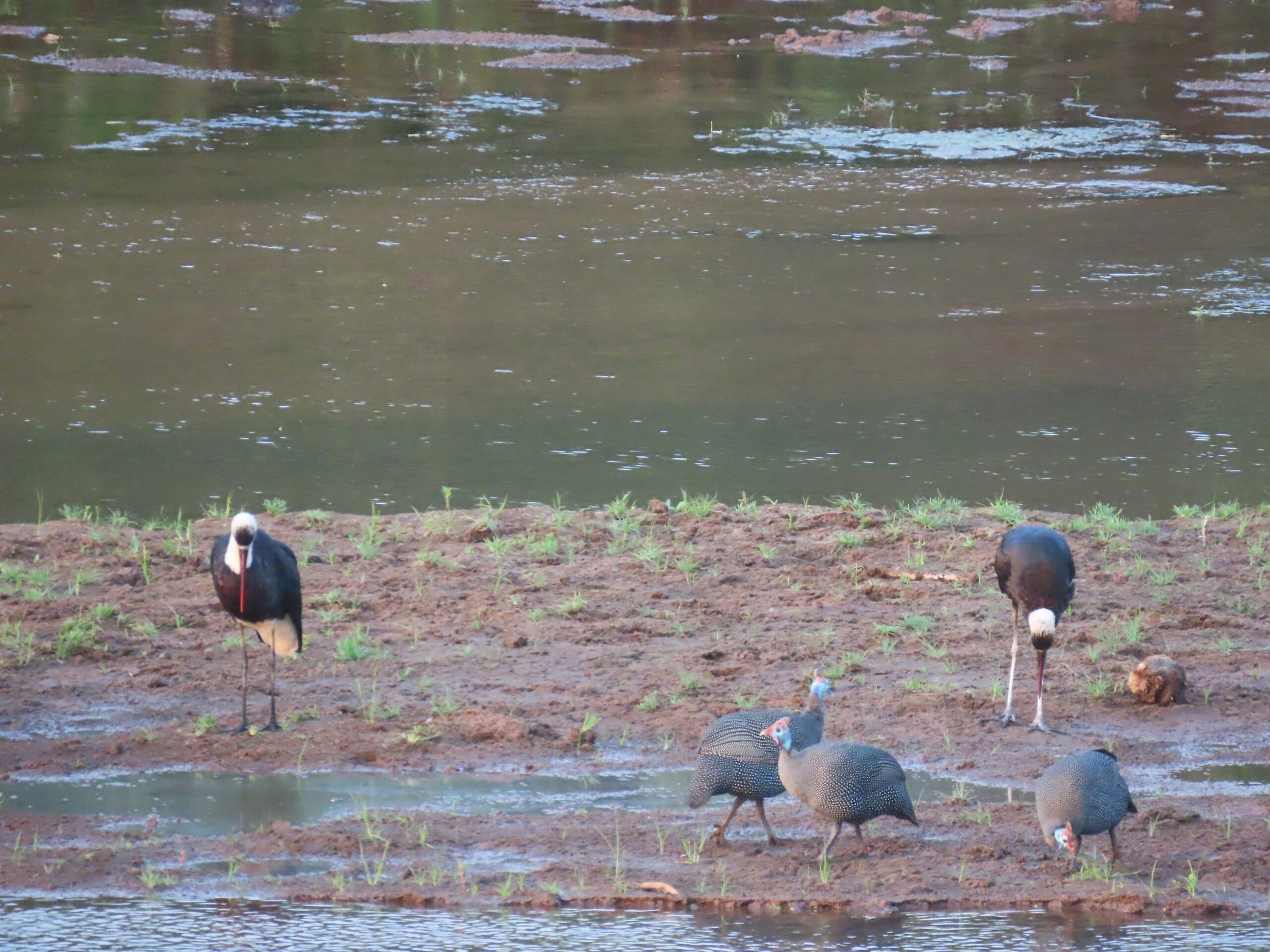


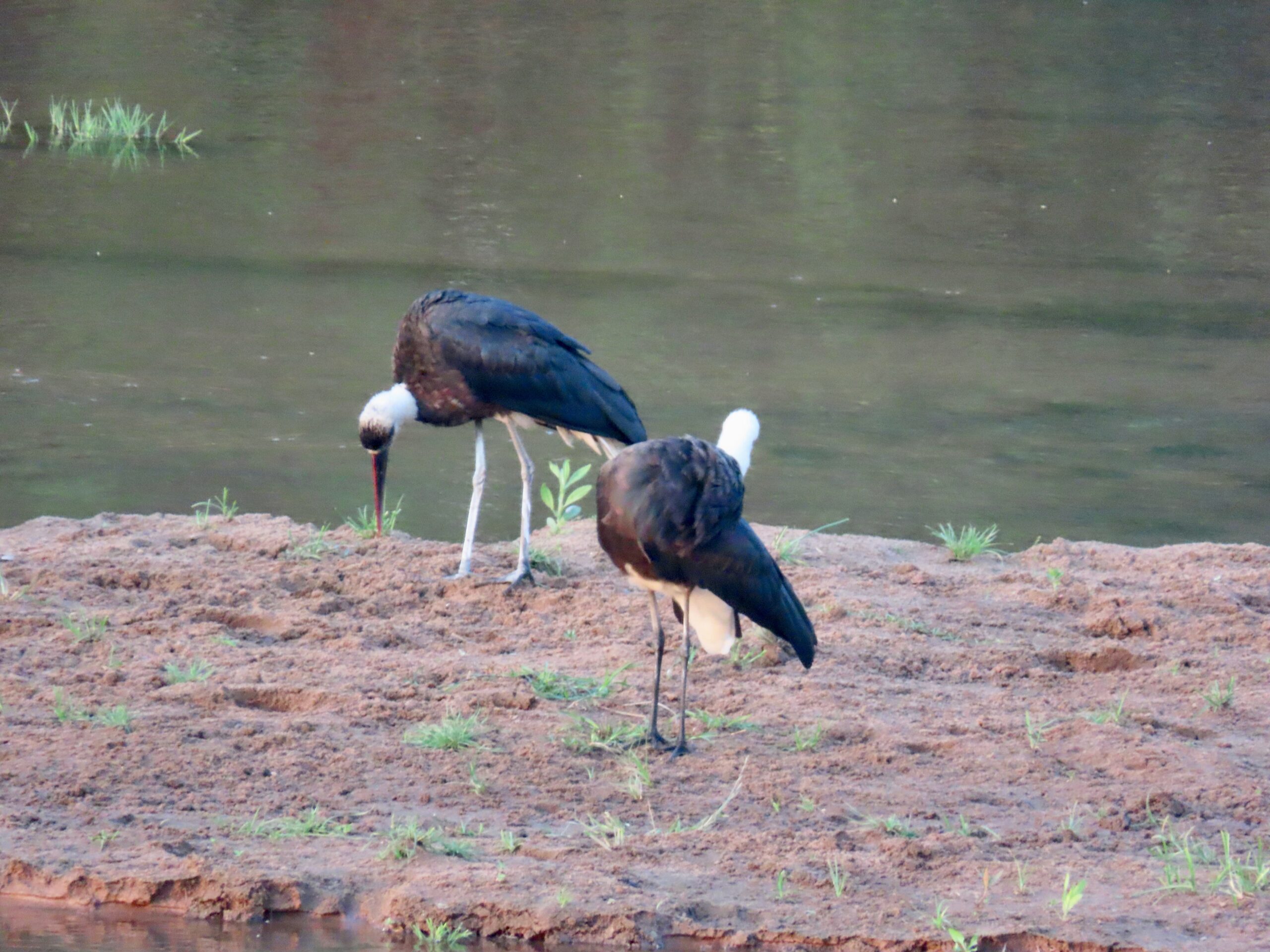
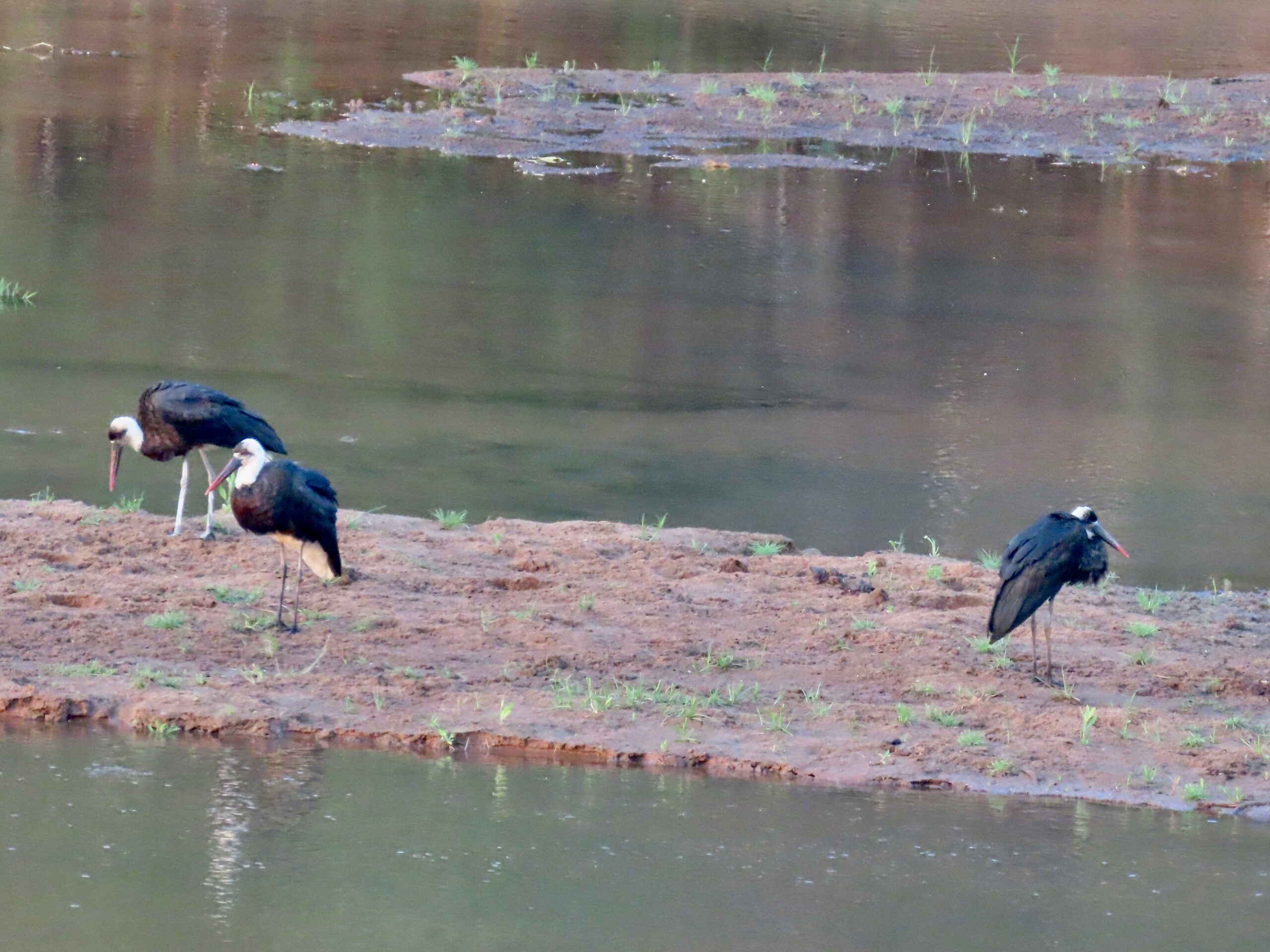

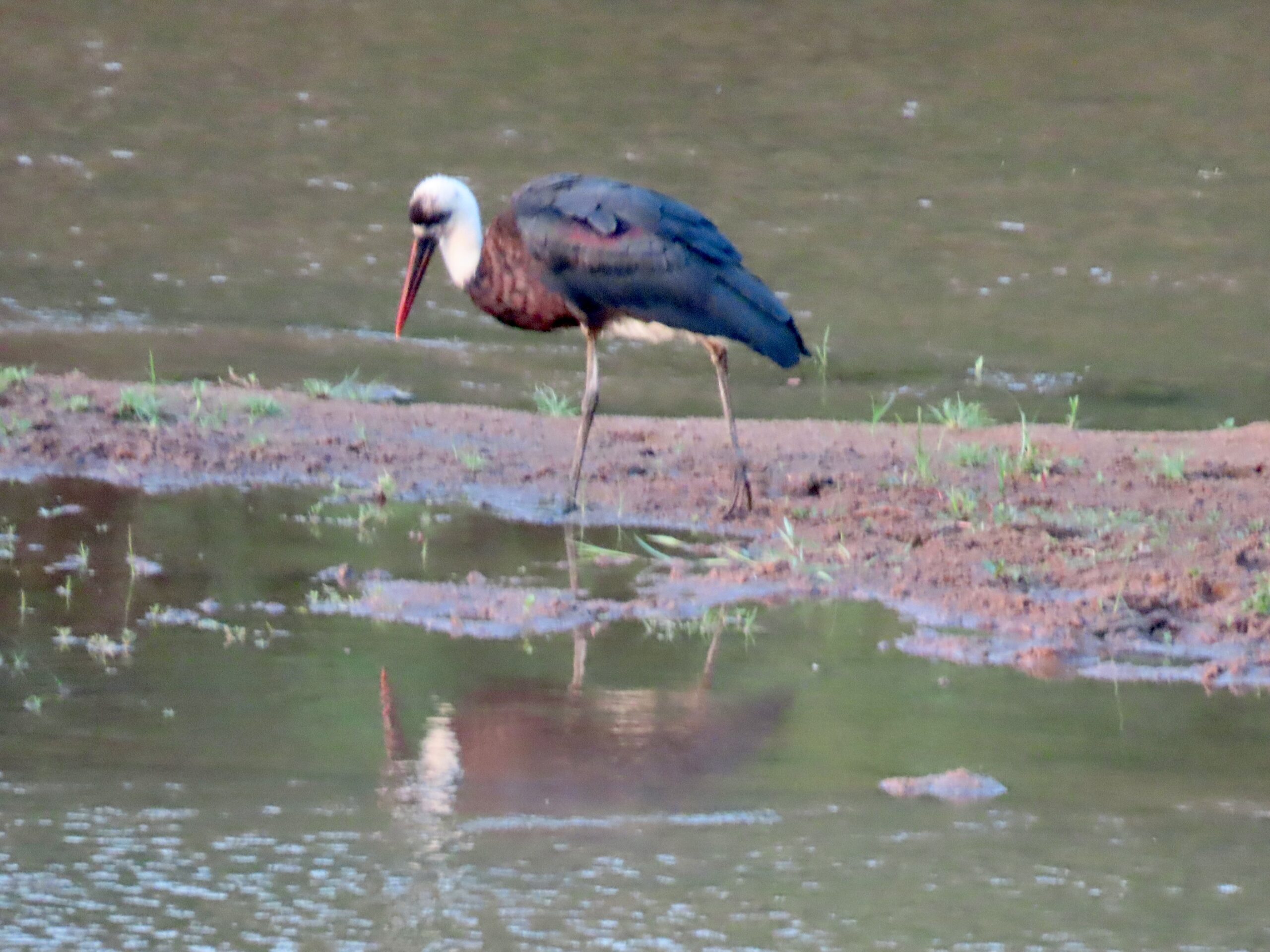


The battle between Vervet Monkeys and Pafuri servers continued at breakfast, with the monkeys seeming to come out ahead.


At 8:30 am, we were picked up by Allen, our driver for the roughly 4 hour drive to Mashatu, in Botswana.


I rode shotgun for the first leg, and found Allen (a long time South African resident) to be a wealth of information. All of the excellent fresh fruit and vegetables we’ve been enjoying is South African grown, and our route took us along a line that bisects the growing areas. Fruits (melons, peaches , avocados, etc.) are grown to the south, while vegetables (pumpkins [butternut squash to us], root crops, etc.) are grown to the north. Kiwi, grapes and apples are brought up from the Cape.
From Kruger to Musina, we mostly passed subsistence farmers and game farms. The farmers really struggle, Allen said, because they don’t have the knowledge or resources to manage large tracts of land. This is a point of contention for white residents, since part of the government’s post-apartheid policy has been to give land to black farmers (apparently without providing the support they need to be successful).


run as a cooperative
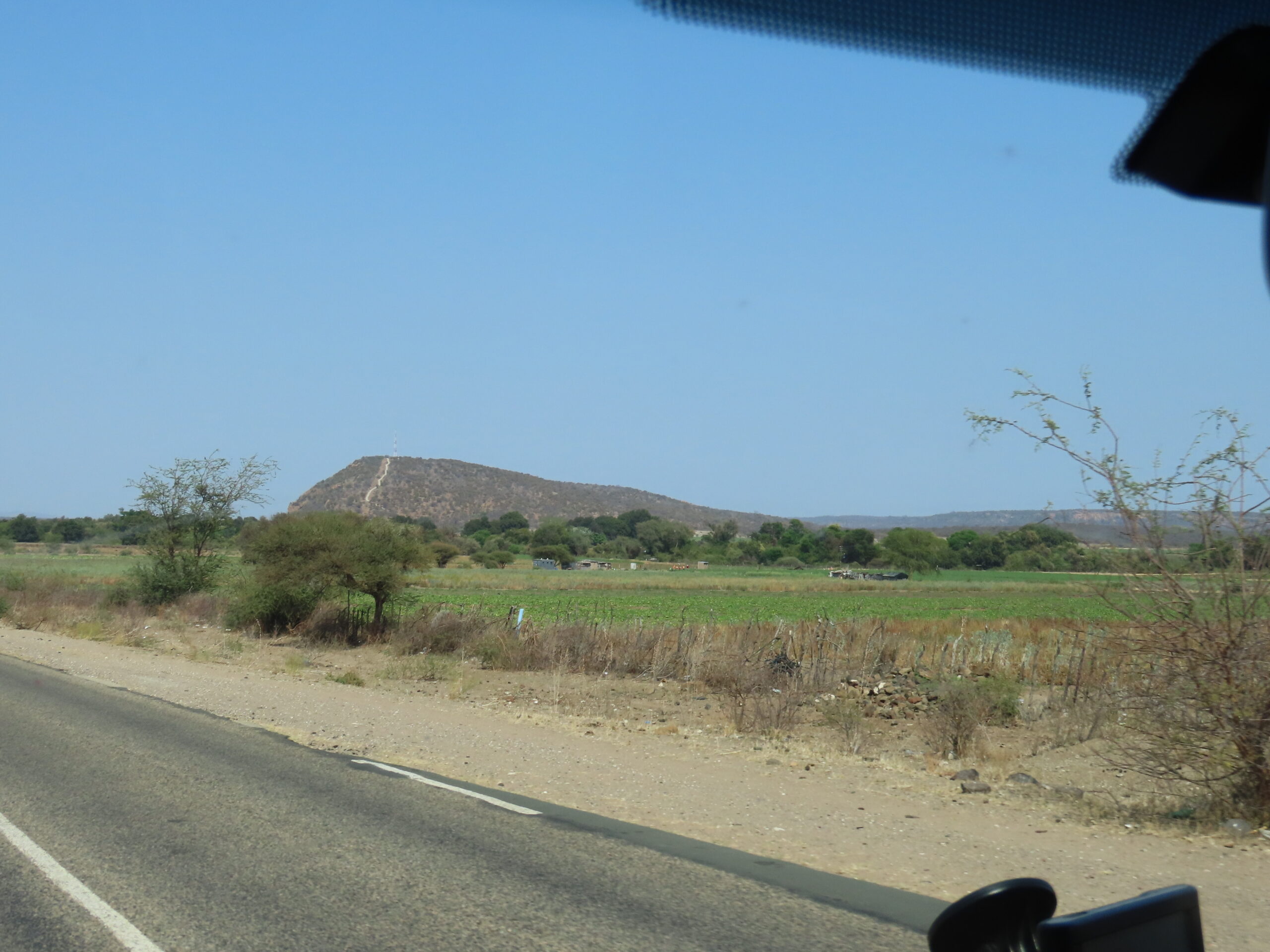


After driving mostly west out of Kruger for a couple of hours, we stopped for gas and a potty break at Musina. The town was dominated by commercial traders, mostly coming from Zimbabwe, bringing in cheap Chinese goods. We passed a very large complex of Chinese wholesalers.


From Musina, we swung northwest on a very potholed road towards Pont Drift, leaving farms behind and mostly seeing the high fences of game farms. I asked about how hunting is regulated. Under South African law, wildlife on private property is owned by the landowner. If they want to protect their assets, they have to put up high fences (of which we saw many). There are no public lands in South Africa, so all hunting takes place on private property through outfitters who make deals with landowners. But hunting itself is managed by the government’s conservation department. Landowners must count and register animals with the government, and report when and why an animal dies. The Conservation authority issues permits based on conditions: right now, in a drought, they issue more permits to take pressure off the land. When conditions improve, fewer permits will be issued to allow populations to rebuild. Stock is regularly replenished through public auctions.
Trophy hunting is big here, and I asked what happens to the meat after a tourist takes their trophy. Almost all of it ends up “in the pot,”one way or another. After the shooter and outfitter take what they want, the remaining meat ends up in local supermarkets. (Locals also get permits to hunt antelope directly for sale in supermarkets.) I asked what happens to carcasses that humans don’t eat (like big cats) and was told “they go to crocodile farms.” Where do crocodile carcasses go? To crocodile farms.


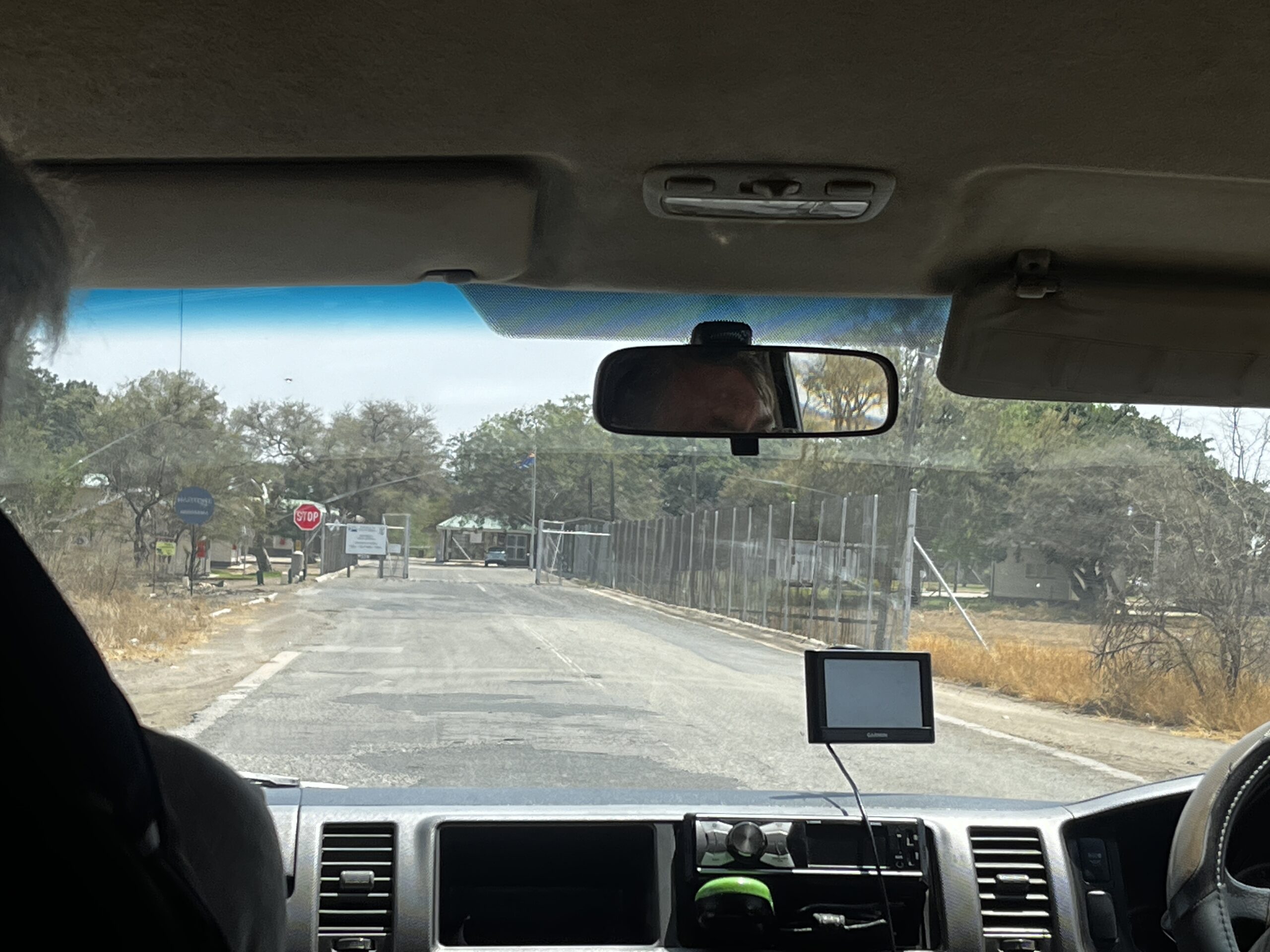
Pont Drift sits on the border between South Africa and Botswana. We disembarked from Allen’s van and passed through customs/immigration on the South Africa side as inspectors checked our luggage. Allen drove to the Botswana side while we walked a few hundred feet to pass through customs/immigration on that side (taking advantage of a convenient bathroom stop along the way).


Pont Drift sits beside the Limpopo River, which travelers have to cross in order to continue the journey into Botswana. When the river is in flood, crossing by vehicle is impossible, so people use an open cage style cable car to cross the river. We were disappointed that it wasn’t operating so we could ride!


After a ten minute wait (thankfully in the shade), we were met by our guide, Dan, and spotter, Tau, who loaded our bags in one vehicle and us in the other and whisked us off towards Mashatu Tent Camp.
The Mashatu game reserve is located in the easternmost tip of Botswana, squeezed in between South Africa on the south and Zimbabwe on the north.


Mashatu is part of the Northern Tuli Game Reserve, one of the largest privately owned game reserves in Southern Africa (about 178,000 acres). Mashatu is one of three private concessions within Tuli, with a traversing area of about 90,000 acres. The reserve’s operating company offers a wide range of experiences: in addition to game drives and walks, visitors can cycle, ride horses, sleep under the stars and take specialized photo safaris with a photographer guide. There are six lodging areas within Mashatu: two tented camps, two “luxury lodges,” one with suites and the other (Euphorbia) with villas, and two “luxurious” safari homes. We stayed at Mashatu Tent Camp, designed for “guests seeking an intimate bush experience.”

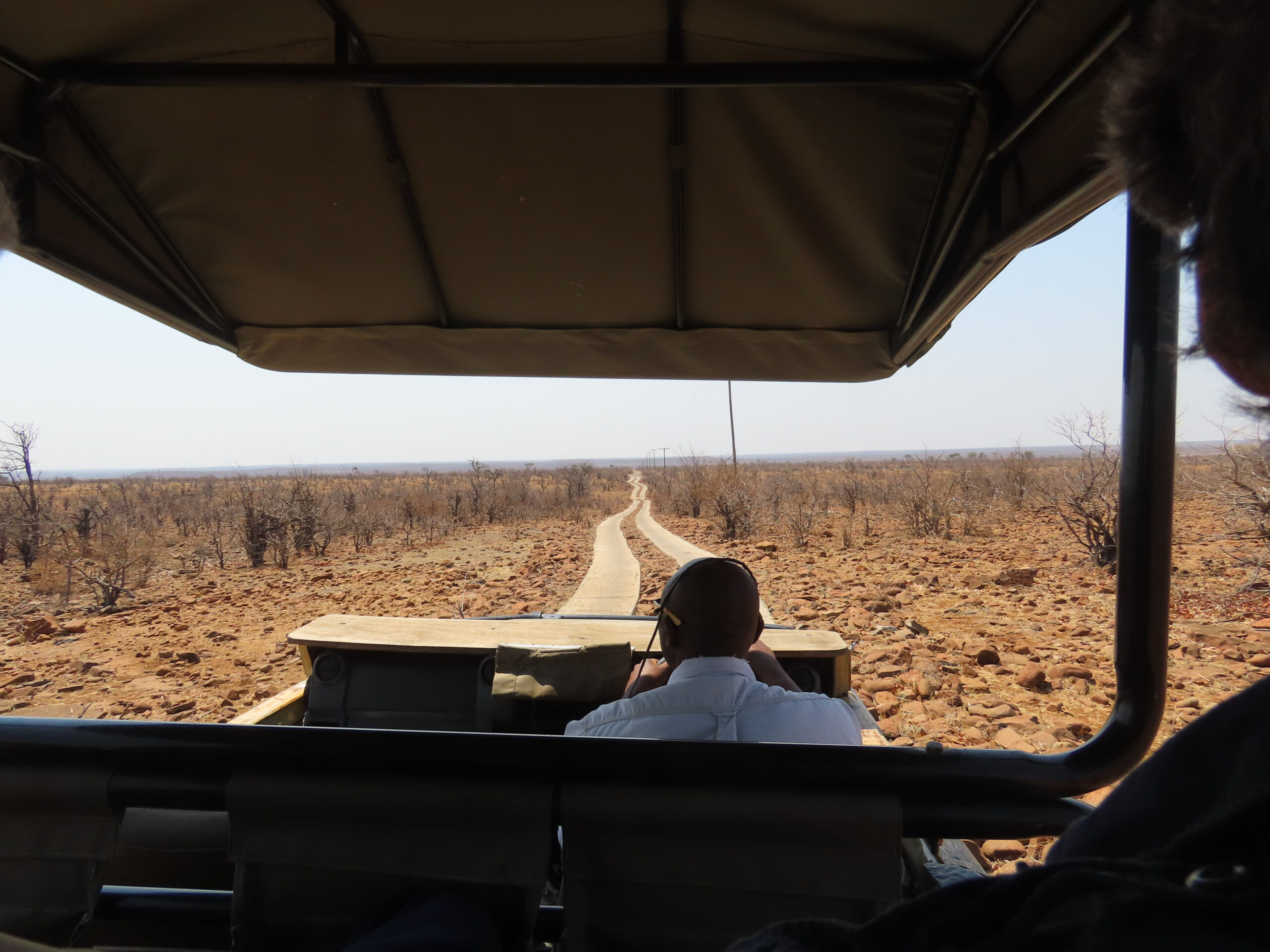
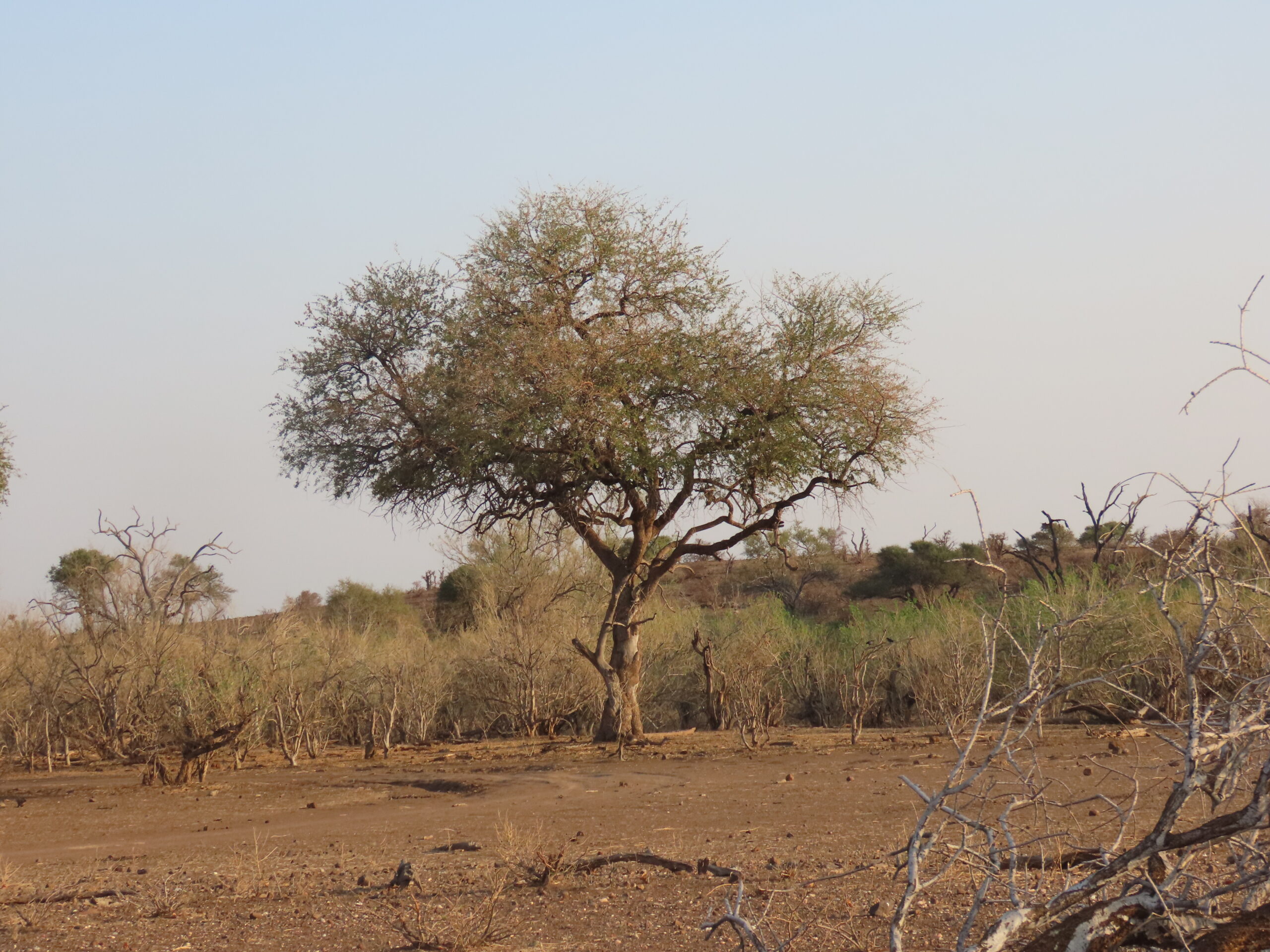
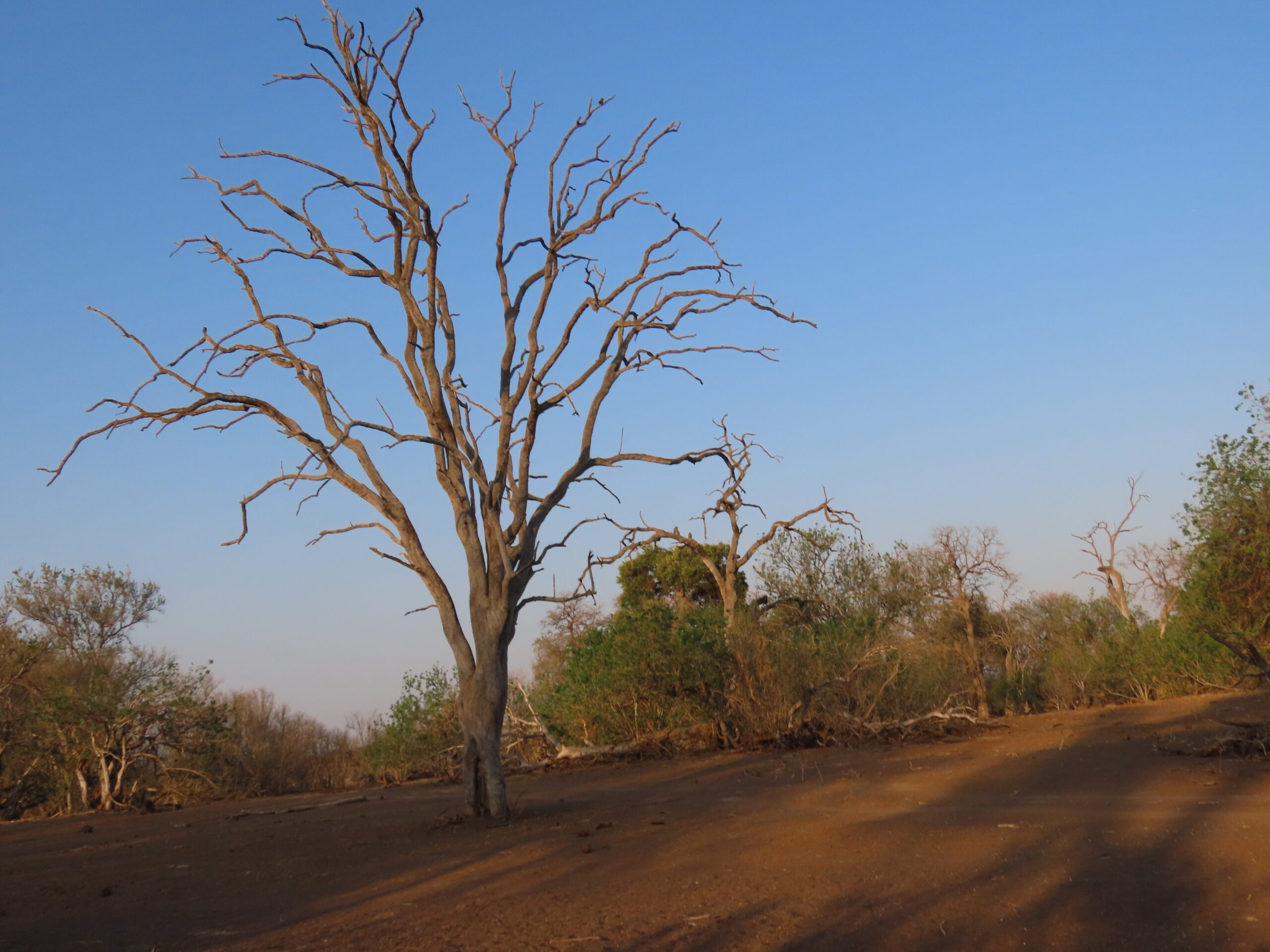
It was about an hour’s drive from Pont Drift to Mashatu Tent Camp, which is located at the northern edge of the reserve, very near the Zimbabwe border. It was a hot, windy ride along rocky roads, past stunted Mopane and Shepherd’s Trees, bumping through dry riverbeds, circling hill after hill. The area has been experiencing severe drought conditions for some years: I wrote in my journal that I felt like we were traveling through a post-apocalyptic landscape. But this is a region of extremes: when the winter rains come (and come they did), the landscape transforms. BBC America produced an excellent documentary on Mashatu’s extremes, following five animal families over 2 years through cycles of drought and rain: The Wild Sides.


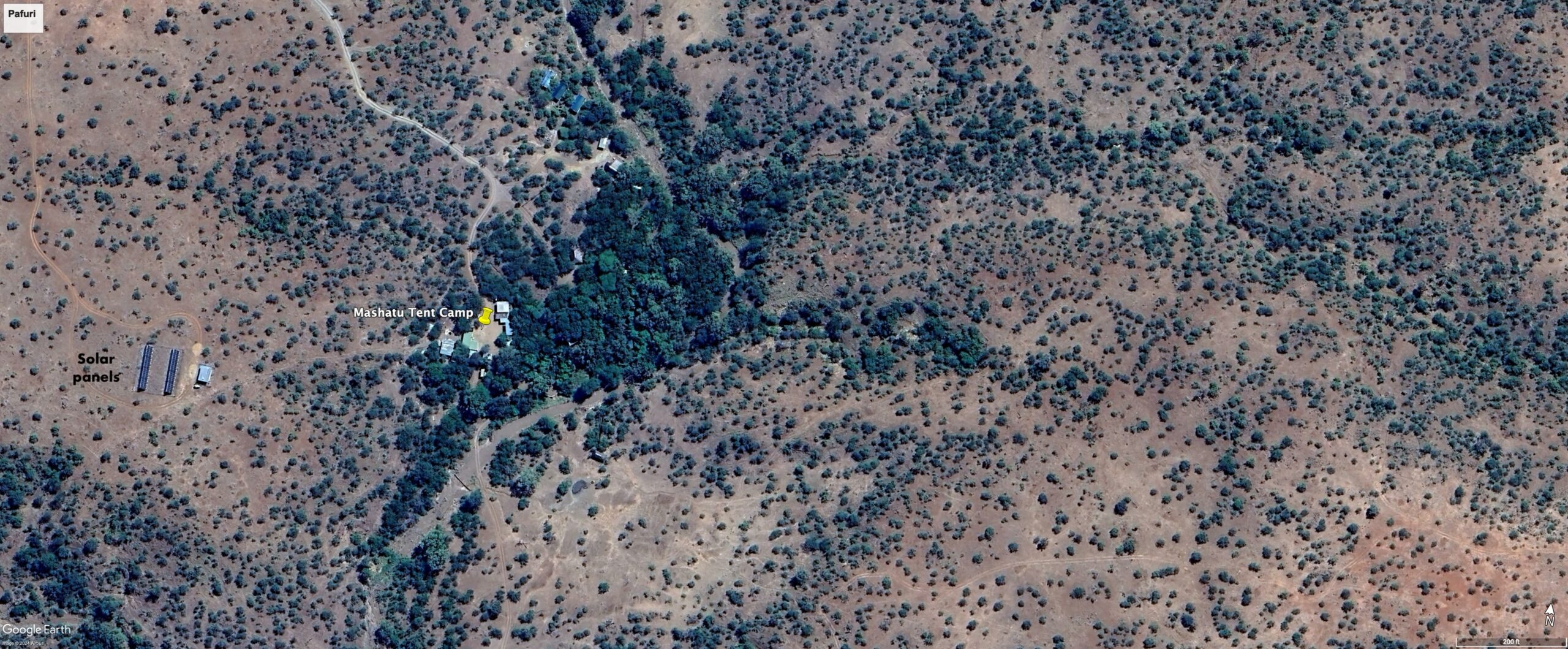

Mashatu Tent Camp is small: eight tents under canvas amidst the trees, arranged in a semicircle along a dry wash, with room for 16 guests (children aren’t allowed). There is a small open-air bush lodge, which serves as a dining room, reception and lounge. A large veranda overlooks a small natural garden with bird bath and mister, while across the wash is a waterhole (kept wet by a borehole) and a small hide for animal viewing. The camp also has a humans’ pool, kept cool by full size Mopane and Fever Trees, which we ladies took advantage of during the very hot afternoons. (It was unseasonably hot throughout our stay.) Like other camps, a small electric fence around the camp’s perimeter keeps the elephants at bay, while all the other critters are free to come and go at will. The staff were all delightful – friendly, funny, flexible and informative. And the food was terrific!


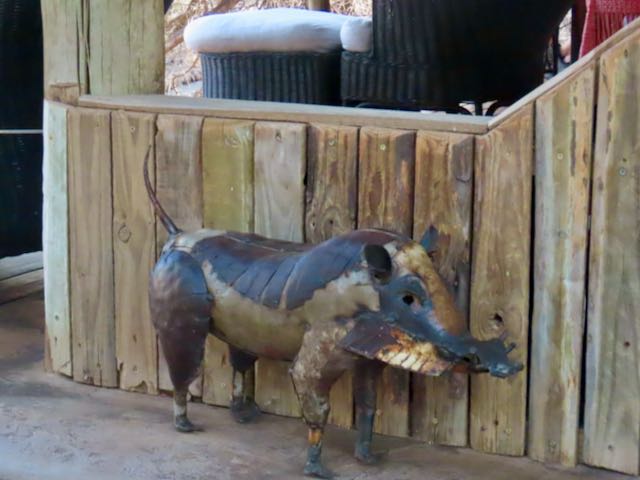
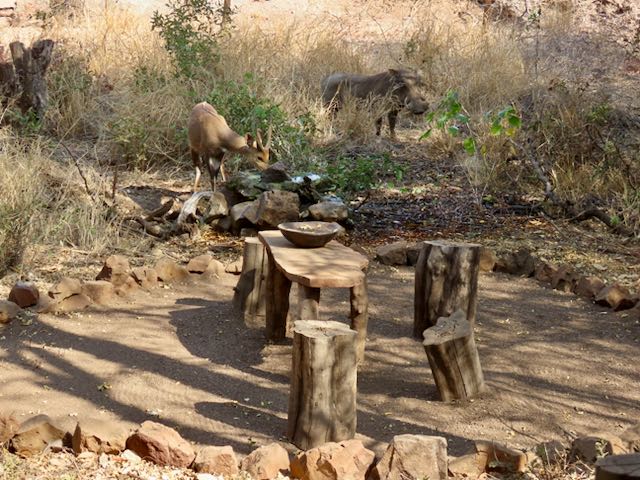
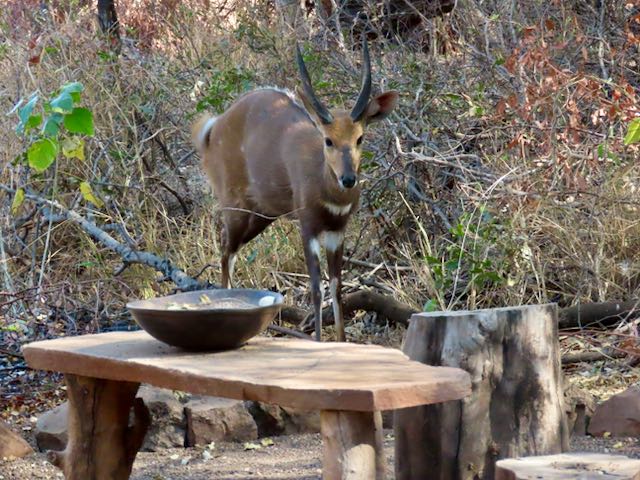


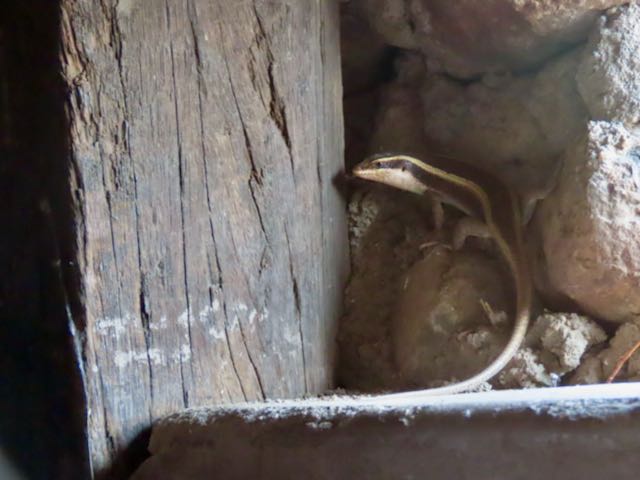

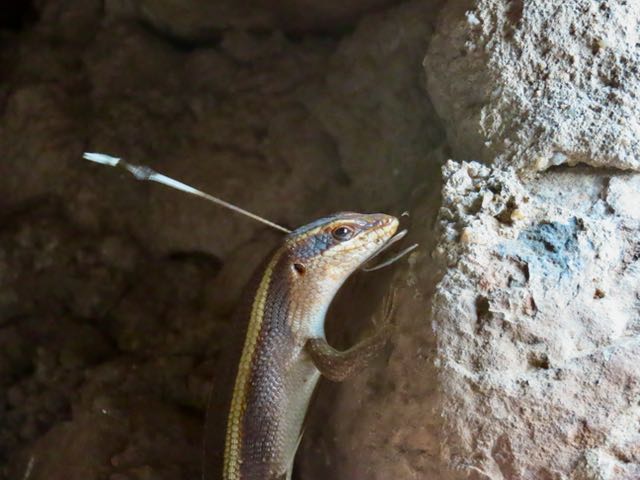
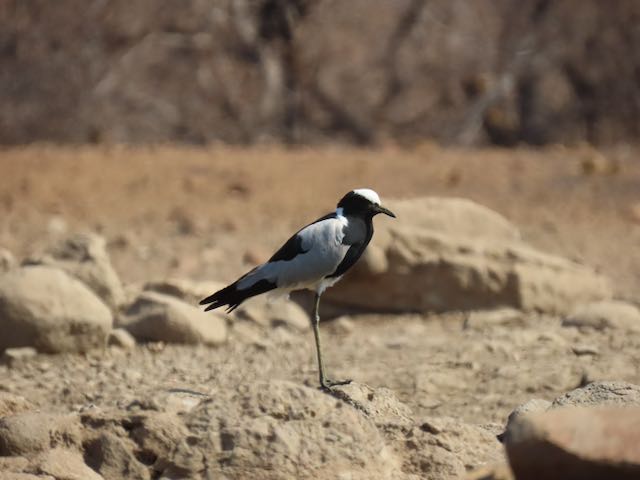


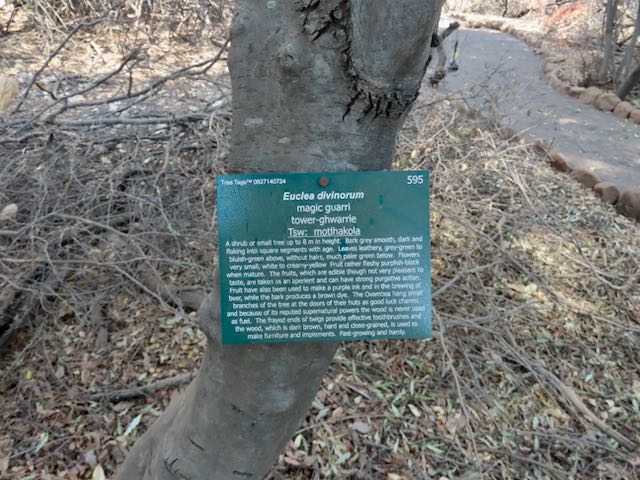
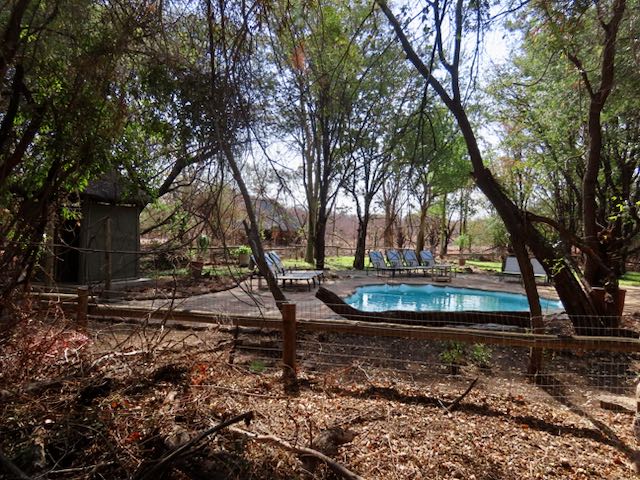


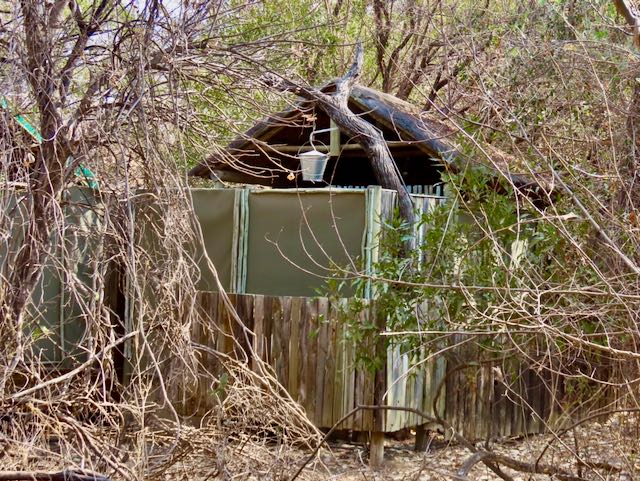
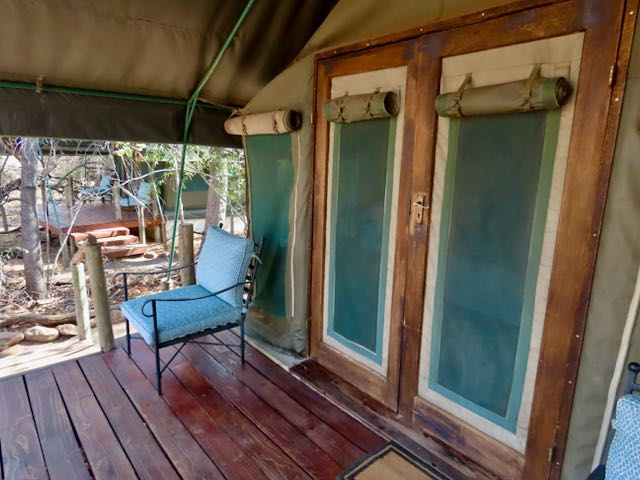
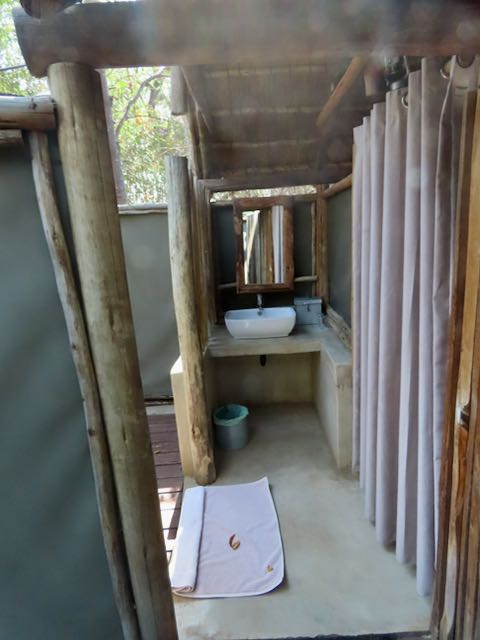
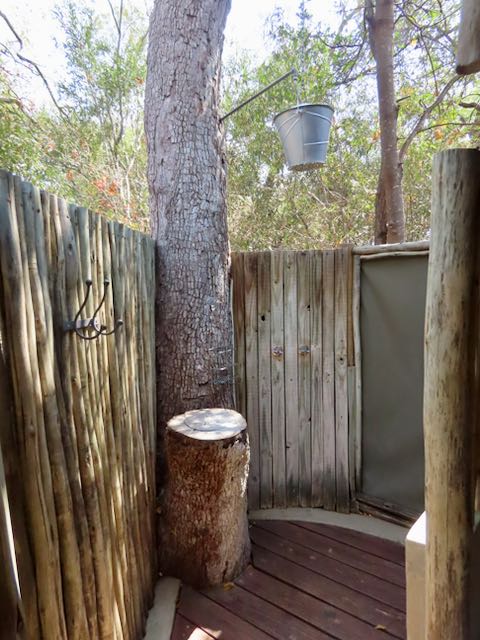
Each tent was tucked beneath the trees. They were comfortably equipped with outside seating on a large deck, an inside setup for making tea, a private bath and an outdoor shower.




Dan, our guide, has been working at Mashatu for 32 years and knows everyone. He’s from a village just across the Reserve boundary – an hour away as the Pied Crow flies, but 4 hours by vehicle because the roads go out and around the Reserve. Dan was funny and extremely knowledgeable, as well as being a very careful driver on Mashatu’s extra bumpy, rock-littered roads. Tau, our spotter, has been here for ten years and is amazing at spotting very small things by day and by night. Unlike other safari camps, here the spotter rides on the back seat (the highest point in the vehicle) instead of on a special seat up front on the bonnet. Dan said they decided some time ago that a spotter would be the first victim if an animal attacked, and changed the setup.
Dan and Tau are not unique in their longevity here: Mashatu prides itself on treating staff (98% of whom are Motswana) like family and offering opportunities for advancement. At the end of each year, management sits down with each employee to discuss where they would like to go with their careers. Dan started on the bar, then worked his way up through spotting to guide, where he seems happily ensconced. BG, the Tent Camp’s young resident manager, was a guide who recently decided to try a different path and is now quite capably managing staff (and sometimes difficult tourists) in a management role.

After High Tea at 3:30 pm with way too much food (we misunderstood what we were ordering), we headed out at 4pm for an evening game drive. Leaving the camp, the road passed over barren, rocky hills through stunted Mopane and Shepherd’s trees, dipping down through rock-bottomed gullies and sand-filled dry stream beds to an area with enough underground water to retain tall trees and shrubs.




Girafffes can go for 2-3 days without water (unlike ellies and antelope, which need to drink daily).



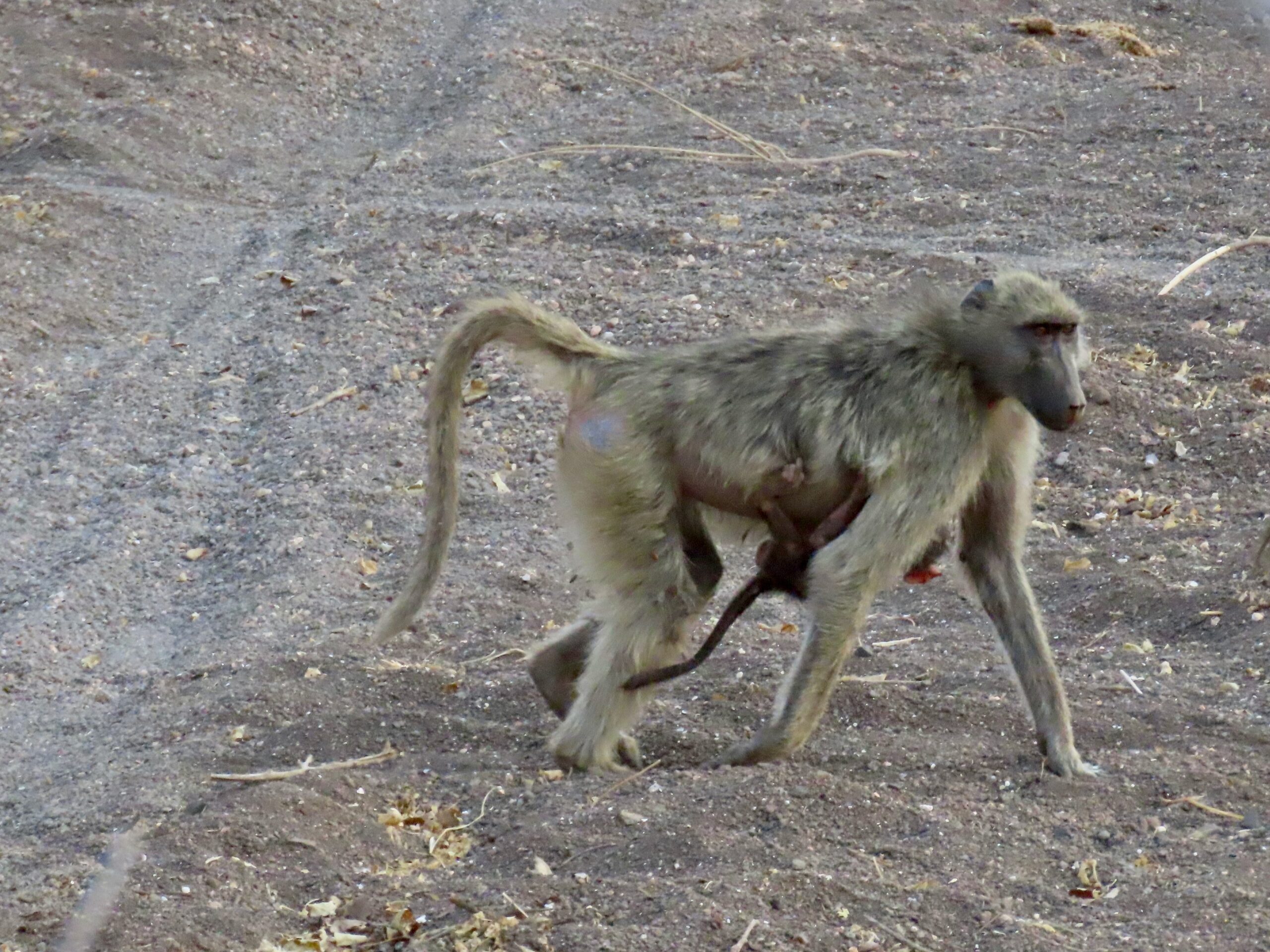
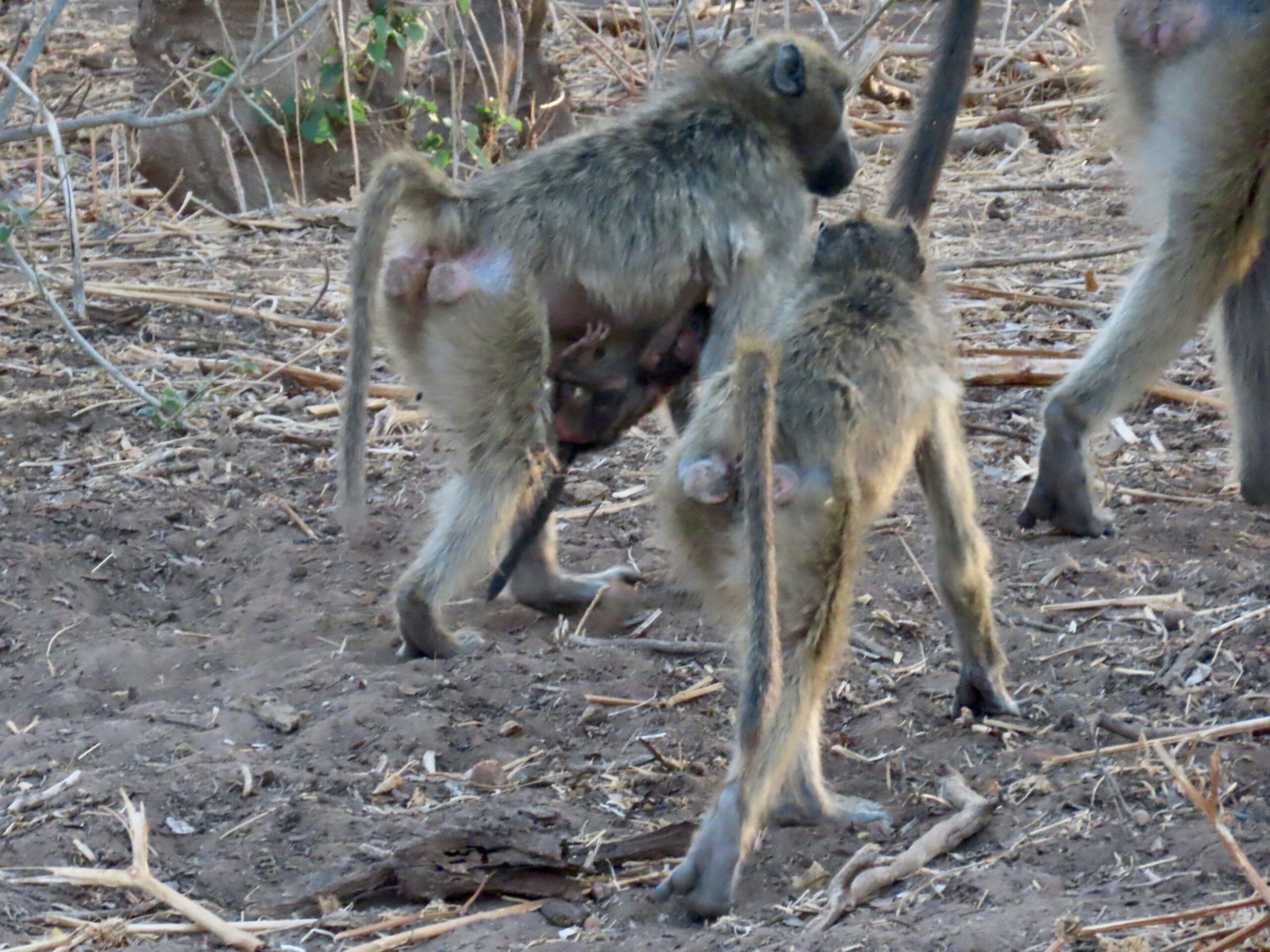
A large colony of Baboons were hanging out in and around a cluster of Mashatu trees.




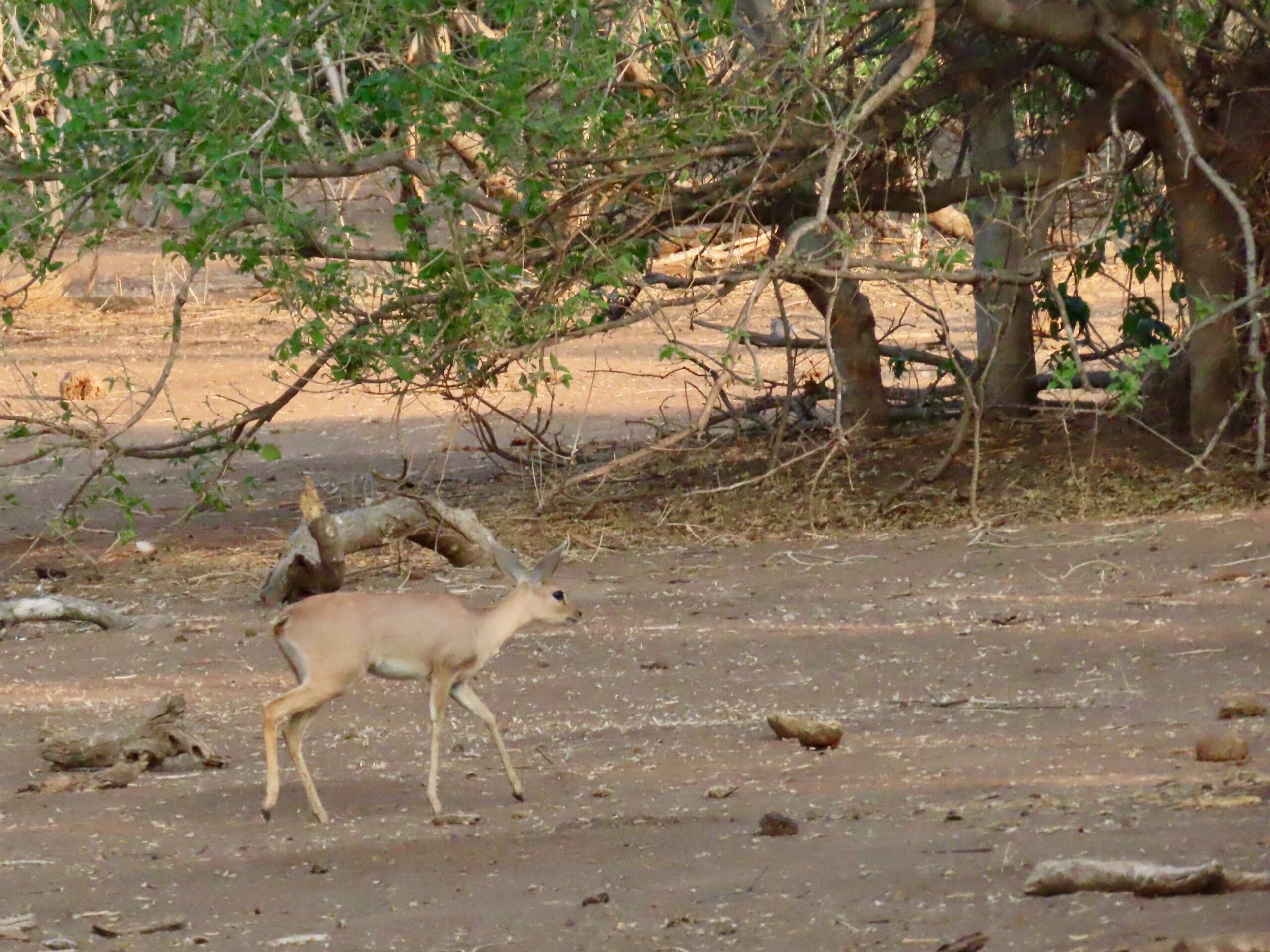
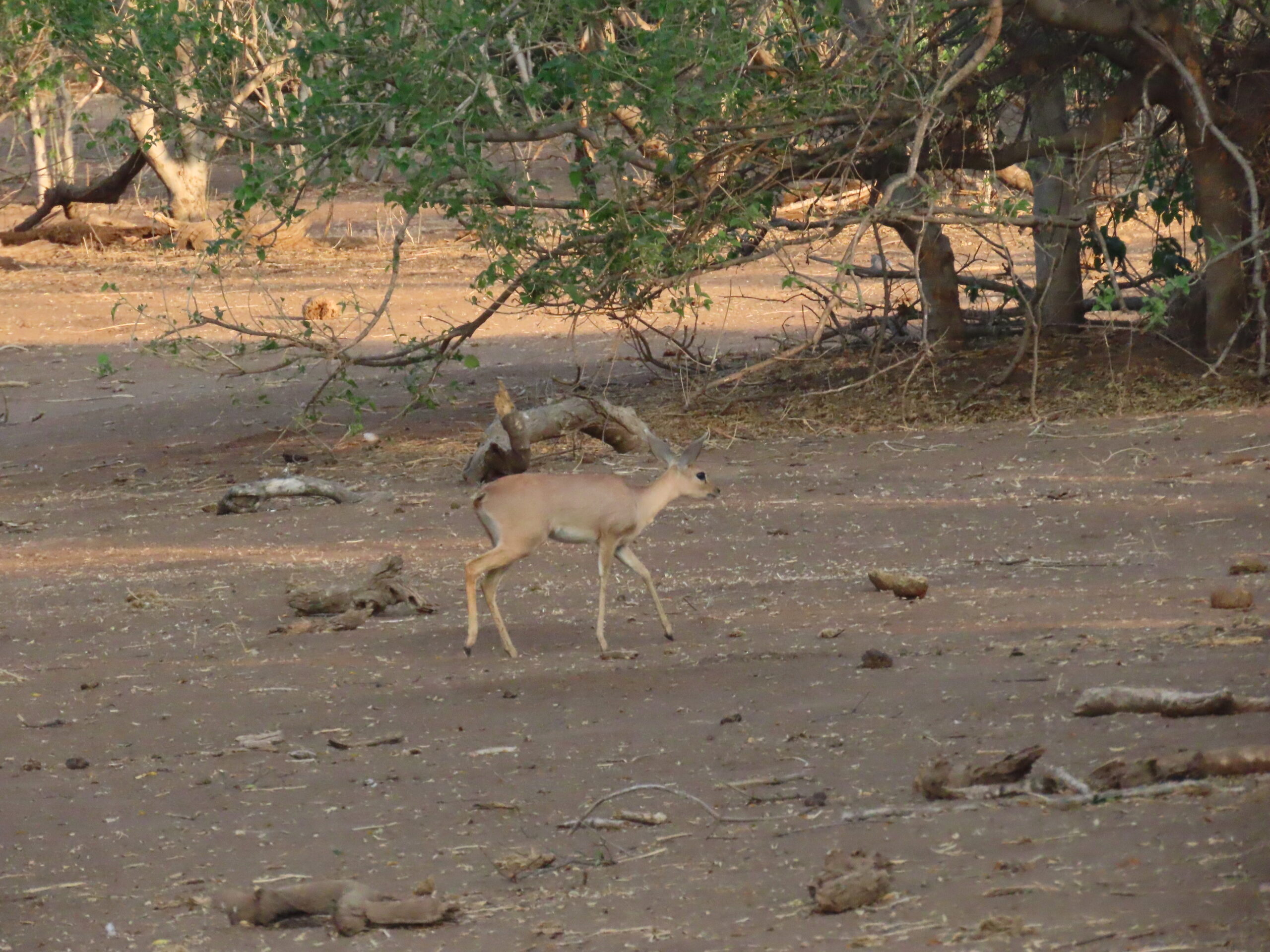
We were fortunate to get a long, close-up look at a Steenbok. (These little guys usually vanish on being spotted.)


As we tootled through the undergrowth, we came across a very large male leopard lounging in the bushes as he digested his dinner.


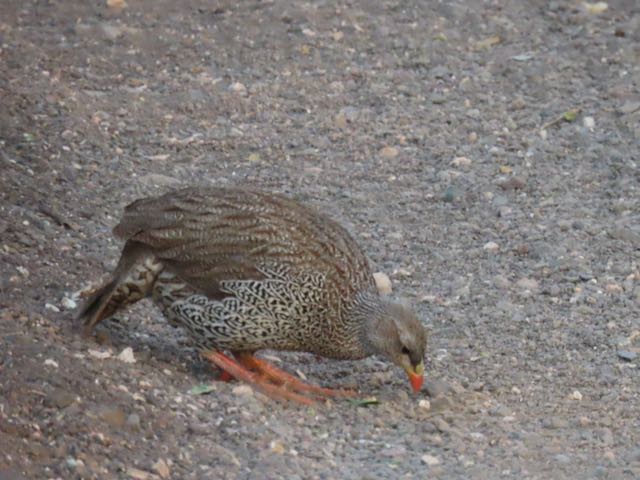


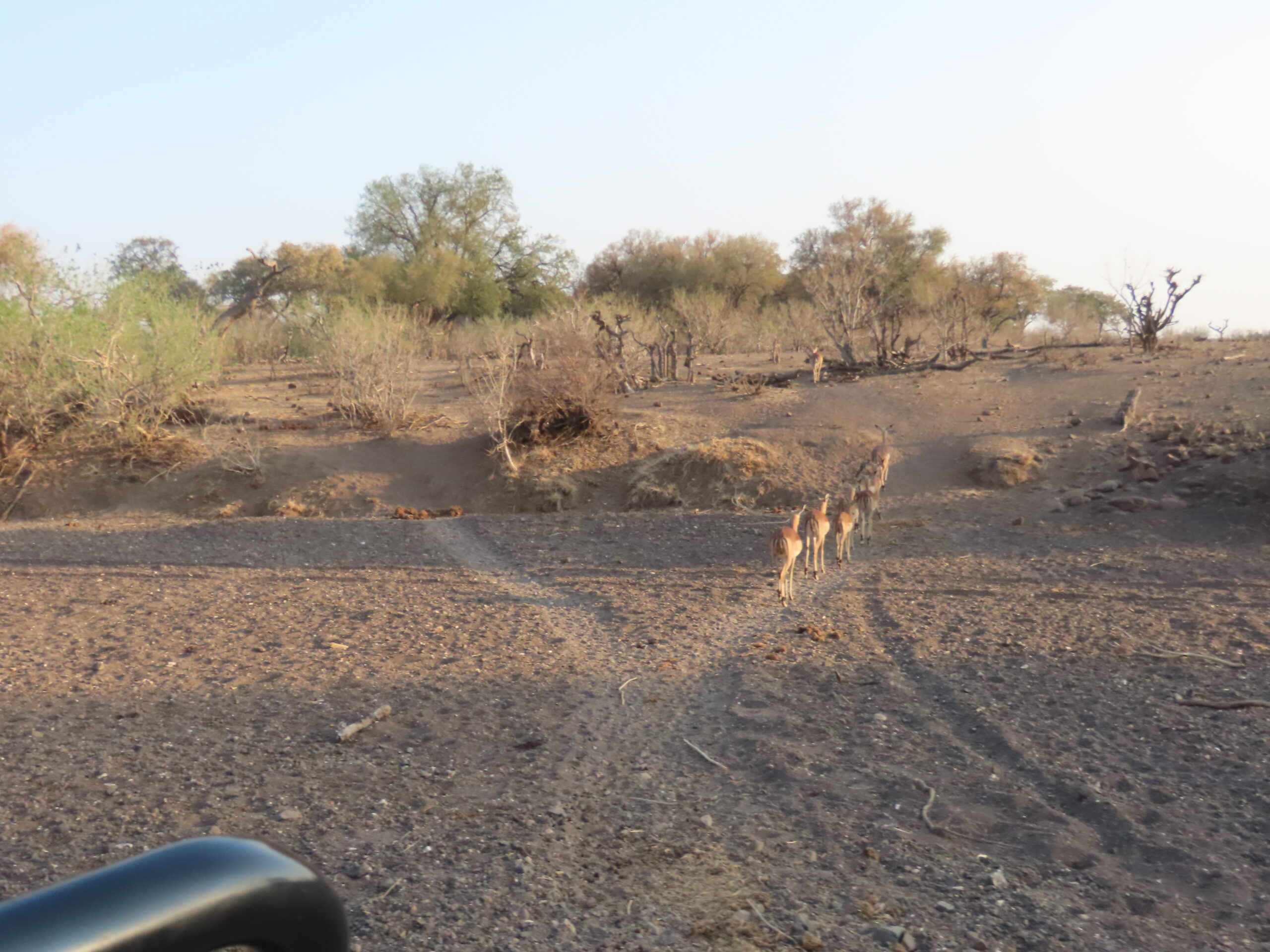
Impala, Baboons and Eland were all hanging out together in the shrubbery. Baboons are a favorite prey of leopards and are always on the alert, so Impala like to stay close to Baboons for safety – except when the Impala are calving, because Baboons love the milk they can get from the stomachs of newborn Impala (up to 2 weeks old).
We followed the Eland through a dry riverbed.




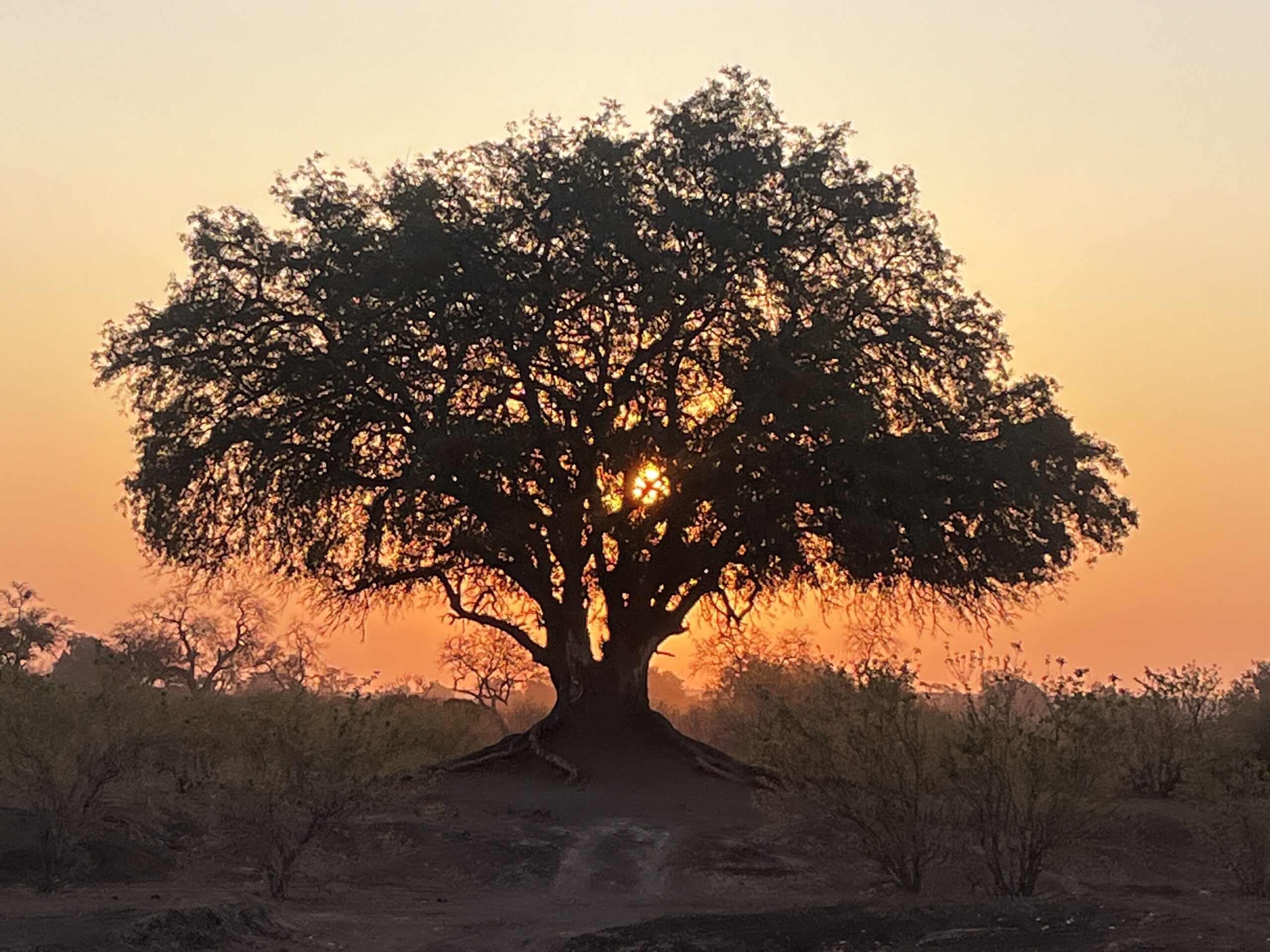
Our sundowner was on top of a high hill with views across the Reserve, accompanied by a stunning sunset.




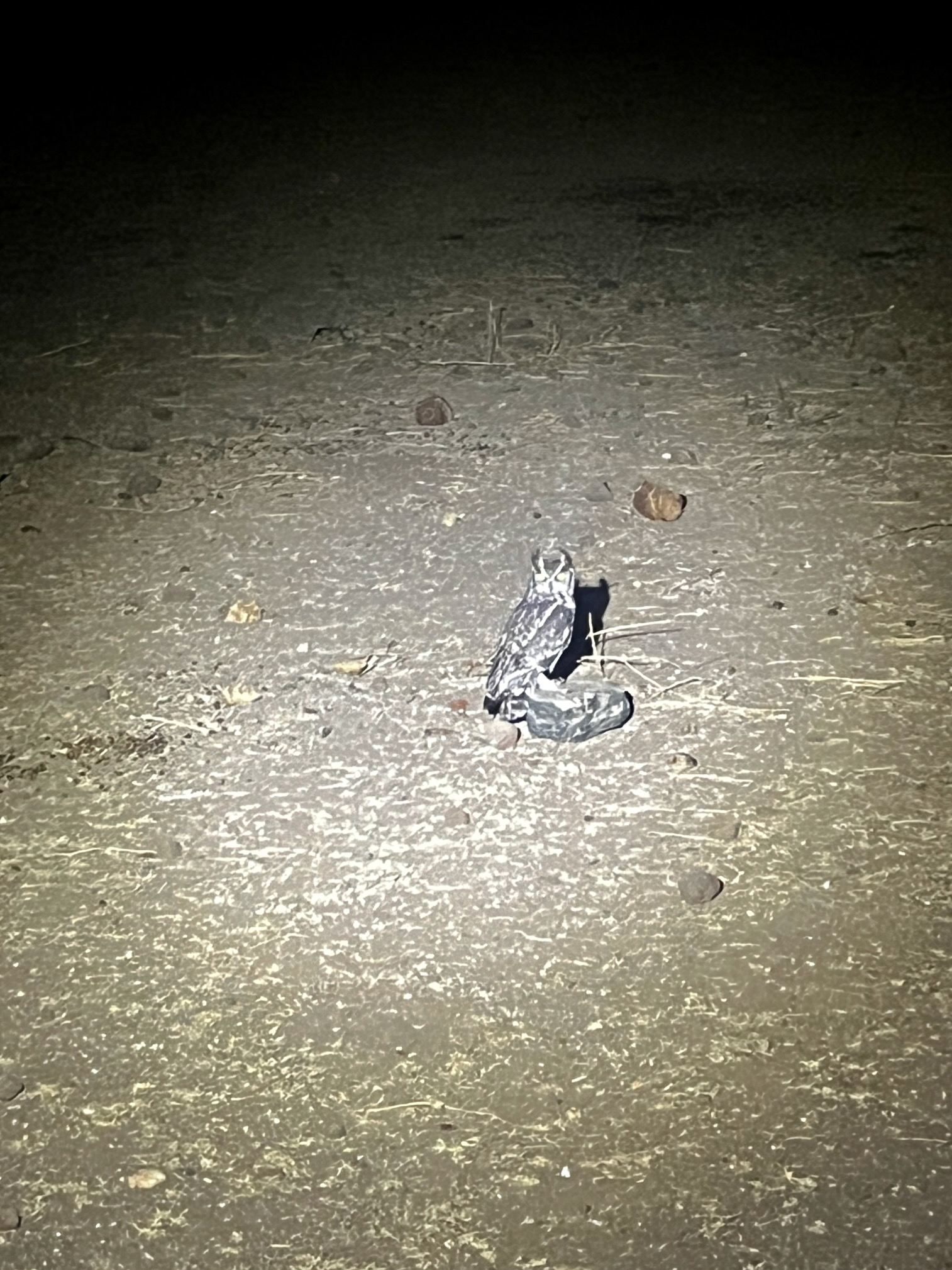
Our last sightings, thanks to Tau’s sharp eyes in the dark, were an African Eagle Owl on the ground (although not for long) and a genet (no photo, alas).



Brings back great memories! Super photos and interesting descriptions. On our first trip to Mashatu, it was unseasonably very cold in July. Do they still have the buried hide, or has the walk-in one replaced it? We saw a lot of cheetahs patrolling their territory, or hanging out when it got hot.
I’m not sure what you mean by the buried and walk-in hides, David. I know of two photographic hides at Mashatu: One for daytime photography, which is built into an artificial hill (you climb down a ladder to get into it); and another overnight hide for nocturnal photography (which we didn’t see). We spent two fabulous mornings in the daytime hide – posts coming up on those experiences.