In mid-September, 2025, we embarked on a three-week visit to three very different regions of Italy: South Tyrol in the Dolomites; the Ligurian coast, on Italy’s northwestern coast; and Umbria, in central Italy, northeast of Rome.


We took the nonstop flight to Munich, leaving Denver at 8:20pm and arriving in Munich on Wednesday ~ 2pm. Munich’s airport is relatively small and easy to navigate, getting high marks for efficient processing through customs and passport control. But we must have landed at peak arrival time, because there was a mob scene at passport control for exiting passengers – hundreds of people crammed into the non-European passort lines. (Munich has multiple customs/passport control stations for connecting flights and arrivals). There were “faster” kiosks available to test a biometric system (like many US airports now use) but they repeatedly failed at the fingerprint stage for almost everyone who tried -clearly a system not ready for prime time. It took us most of an hour to get through the lines.
The airport is located about 20 miles from downtown Munich, but transport is easy: simply catch the S-Bahn (a suburban metro train line) from the airport to the Hauptbahnhof (central train station), a journey of about 40 minutes. We had decided to break up the journey by staying overnight at the Hotel Metropol, traveling on to Italy by train the following morning. The hotel was comfortable, friendly and very convenient, located about 3 blocks from the Hauptbahnhof, but nothing special architecturally.

After dropping our bags at the hotel, we zig-zagged our way through commercial streets towards the Marienplatz, Munich’s historic central plaza. Nearby streets were typical for neighborhoods near a main train station: a mix of banks, gambling dens, erotica shops, retail stores offering tourist schlock and every day items, and lots of Turkish and other eastern Mediterranean food. As we approached Neuhauser Strasse (the main drag), shops became decidedly tonier, featuring expensive local goods plus lots of upper end international brands often tucked into historic buildings.


St. Michael’s Church, on Neuhauser Strasse.


The Marienplatz plaza has been here since 1158, serving originally as a market place and tournament ground. When the grain market was moved to a glass-covered location in 1858, the “markt” square was renamed the Marienplatz after the statue of Mary that has stood in its center since 1638.


Today, the north side of the plaza is dominated by the Neues Rathaus (new town hall), built in 1874 to house the municipal government, which had outgrown the Altes Rathaus (old town hall). In addition to its over-the-top Gothic architecture (which was all the rage in the late 19th century), the Neues Rathaus has a Glockenspiel, one of those mechanical clocks with figures that trundle out to perform at certain hours of the day. Sadly, those hours did not coincide with our visit, so we didn’t get to see the bits of Munich history represented by the the steampunk characters.


As some of you know, I have a passion for gargoyles and grotesques, and they abound on the Neues Rathaus. (For the uninitiated: gargoyles are creepy creatures that funnel rainwater from rooftops through their gaping maws; grotesques are stone creatures with no architectural function, offering moral lessons, caricatures of prominent people or – sometimes – comic relief.)


The basement of the Neues Rathaus houses the Ratskellar, well-known to students of German from the song, “In München stadt ein Hofbrau Haus” (“in Munich stands a beer hall”). We had a delicious dinner there, served by a delightful, chatty Italian waitress from Veneto (near Venice), She moved here to learn German without having to go through university course and because there were more job opportunities here. We accepted all of her recommendations: potato pancakes with lovely German saurkraut; Pannfische (a salmon-like fish in honey-mustard sauce; fried cod (excellently prepared); and roasted vegies in sauce.


On Thursday morning we had about an hour free before catching the train, so strolled back to and around the Marienplatz. In contrast to the afternoon before, there were few pedestrians but many, many bikes (people headed to work) and a lot of trucks unloading goods along what is normally a pedestrian street.


We walked through the Marienplatz and around the corner to the Viktualienmarkt (fresh food market, which was just opening up), then around the Alter Peter church and back to the hotel.


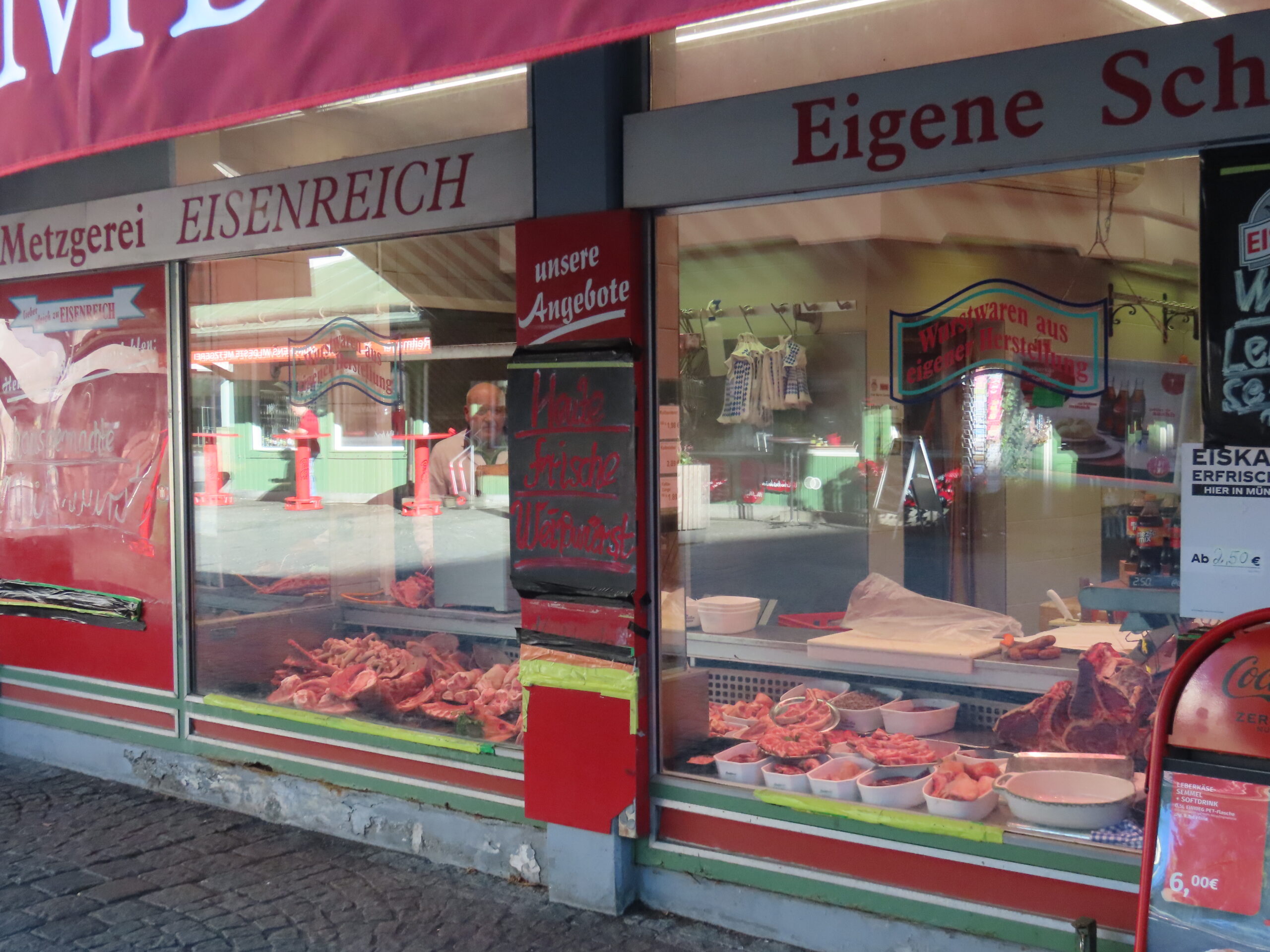


Departure time for our fast train to Bolzano, Italy, was pushed back up 30 minutes to 11 am because of re-routing around Munich-area construction. It was a fast train, with comfortable seats, and the journey was uneventful.

This route travels through the Brenner Pass, which is described as “spectacular” by many travelers. It may be more spectacular from the highway, which is elevated several hundred feet above the ground in some areas, but we found the scenery to be “pleasant.” (I guess we are spoiled when it comes to mountains.)


Arriving in Bolzano/Bozen about 3:30 pm, we immediately hopped on a regional train to backtrack north up to Ponte Gardena/Waidbrück-Lajen where we could catch a bus to Ortisei/Ürtjen, our final destination.
About those names: South Tyrol/Alto Adige is one of those regions whose boundaries have gone back and forth between the Austrian empire and Italy for centuries. Finally landing in Italy after WW2, today the region has 3 official languages (German, Italian and Ladino, which dates back to the Roman empire) and double names for everything. It reflects a graceful compromise, recognizing the region’s cultural and linguistic complexity, but it can be very confusing when first trying to figure out train and bus stops. The region does everything it can to encourage use of public transit, with easy access to real-time schedules online, and a transportation pass that allows folks to ride free on all buses and local/regional trains within the region. Most hotels (including ours) provide this pass to guests at no extra charge and we took full advantage of it!

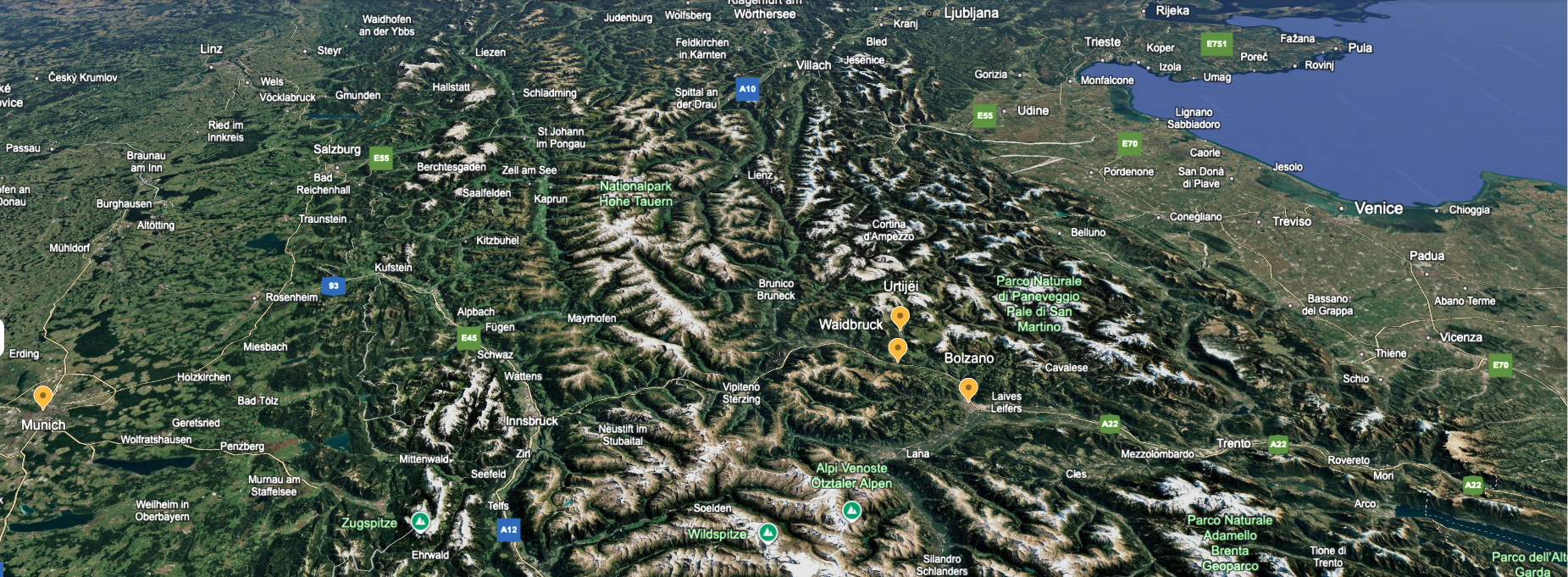
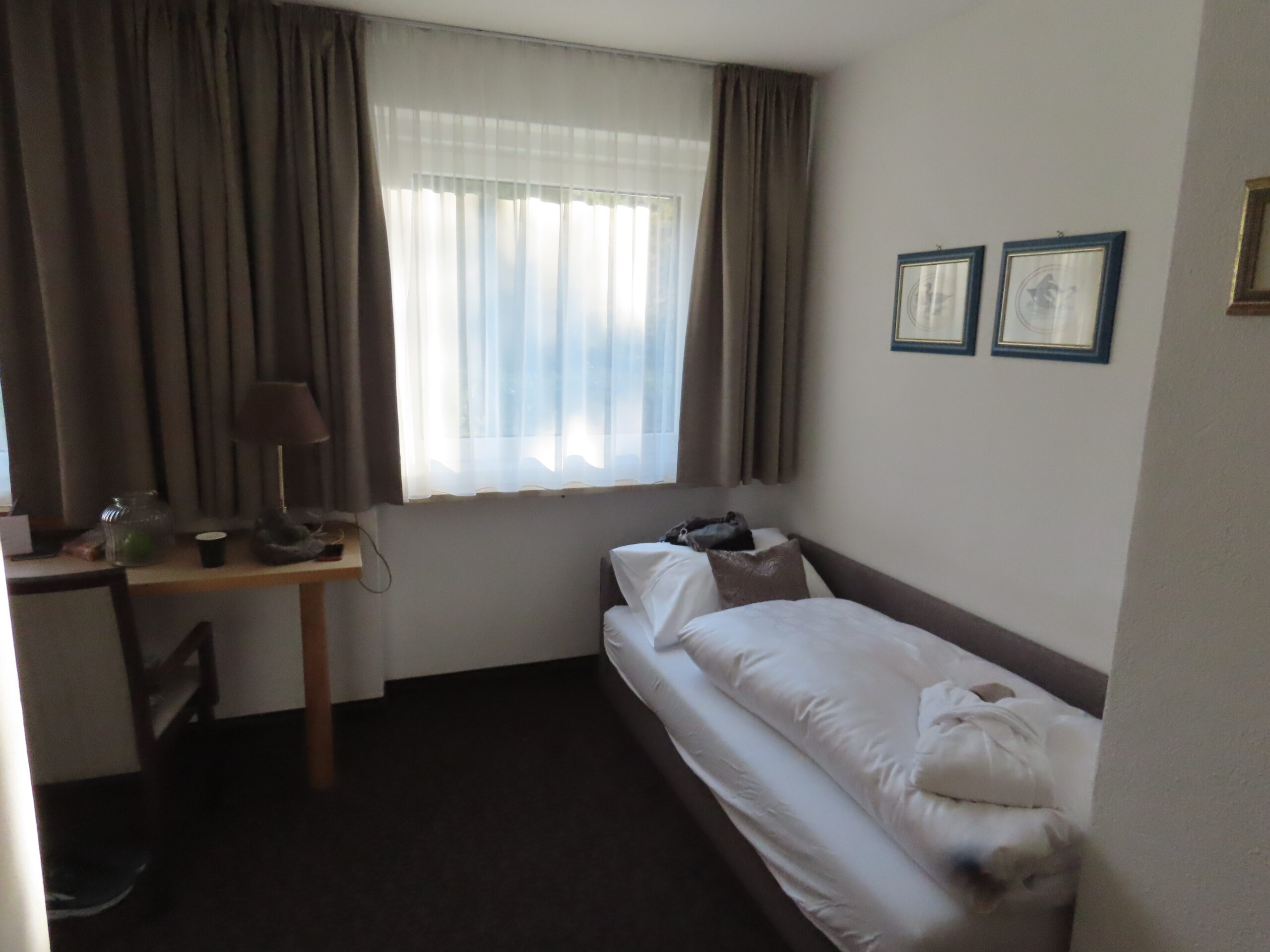
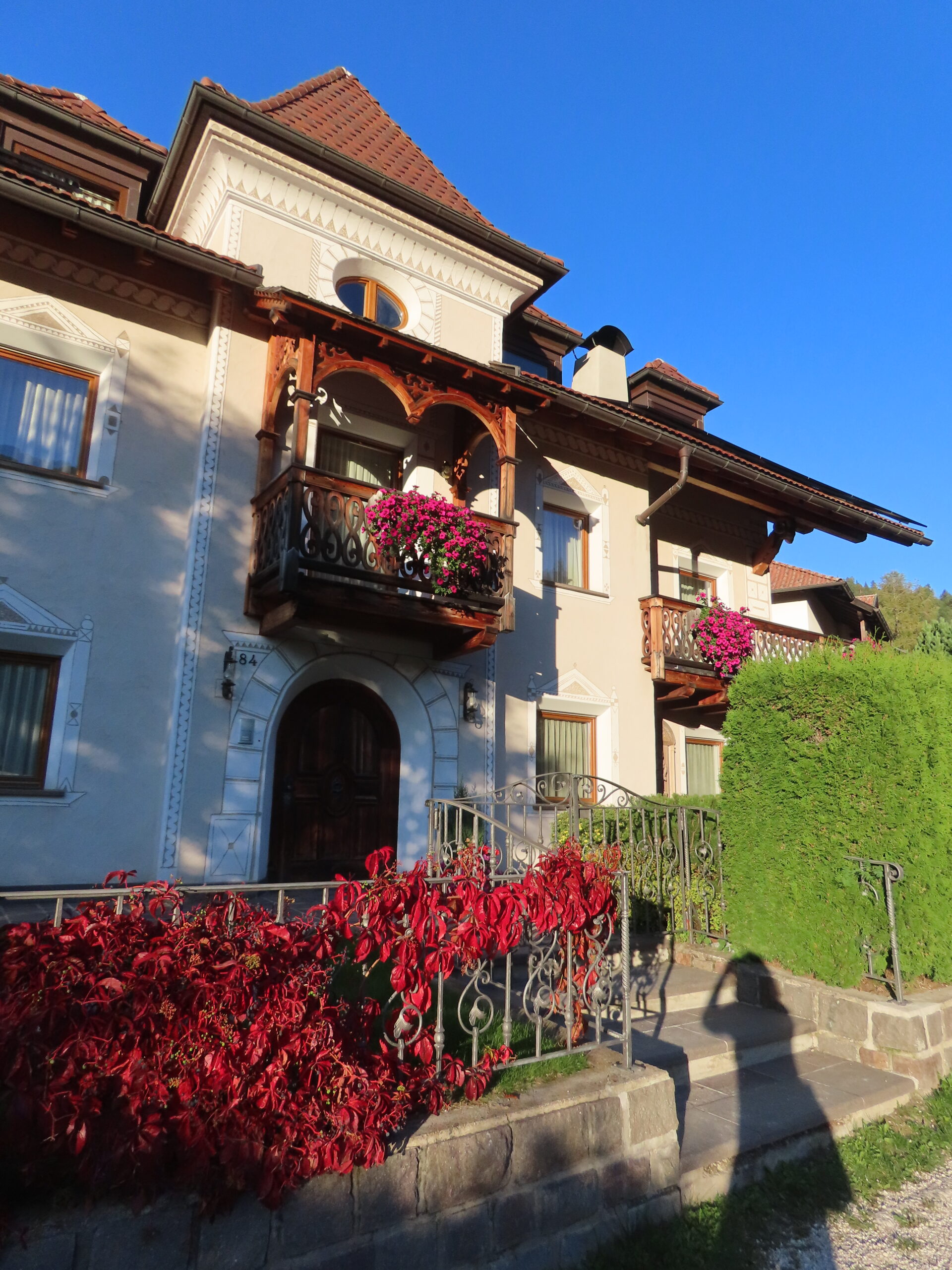
At Ponte Gardena, we caught the 350 bus for the 30 minute ride to Ortisei. The bus wound through a steep, heavily treed valley, with the two-lane road frequently shifting to one lane in the narrow bits. We disembarked at Ortisei’s Piazza St. Antonio, (the main bus station, right in the center of town), then hopped the 352 bus for a ten-minute ride up the hill to the Skasa stop, located a couple hundred feet from our lodging, the Hotel Hartmann. This small hotel is really lovely, located in a gorgeous setting, with well-maintained gardens and views up and down the valley.




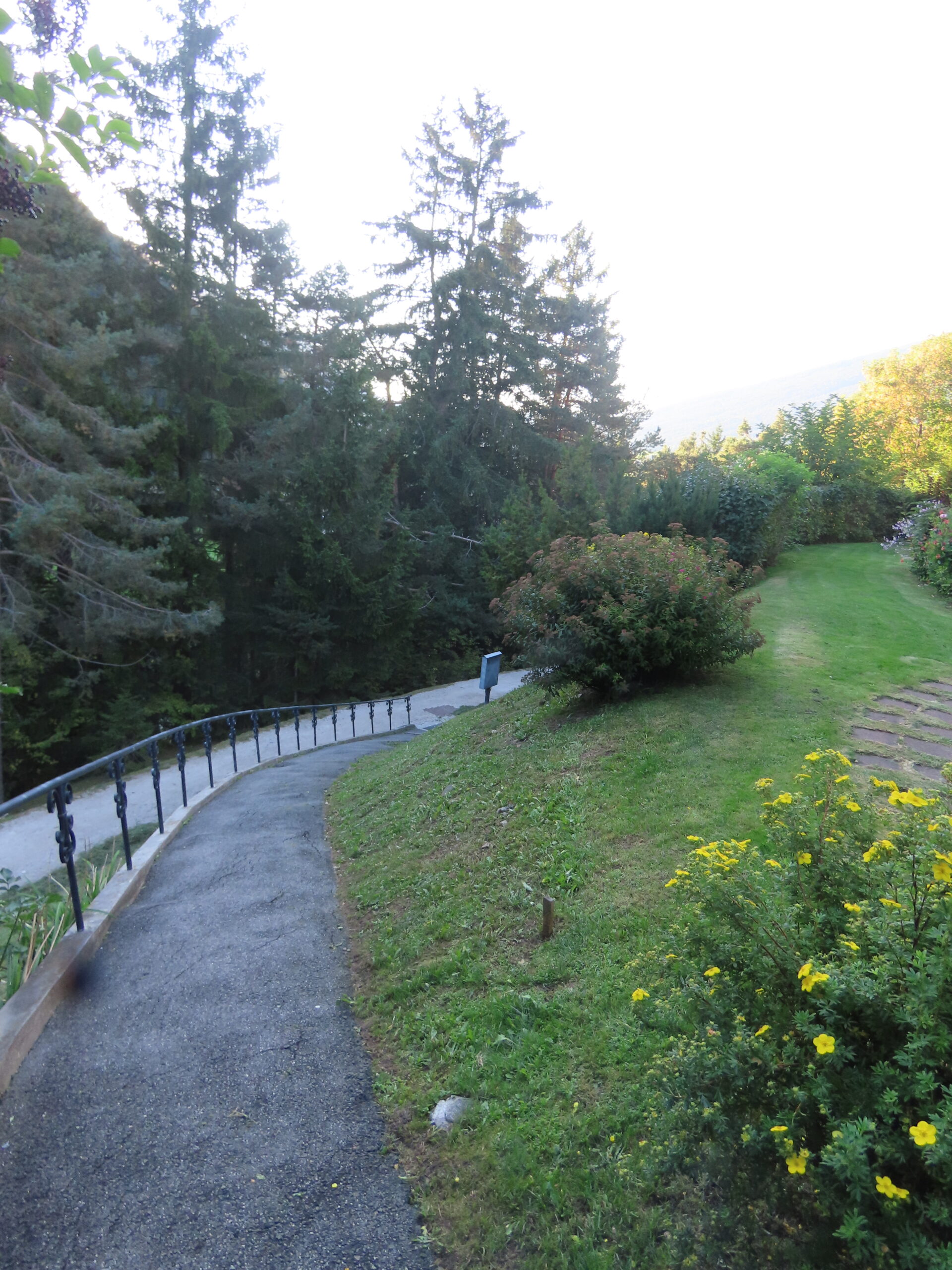
After checking in, we got rid of all those travel kinks by walking into town along the pedestrian path that runs behind the hotel (about 25 minutes), catching the last of the early evening sun.




We ended this long day with an excellent dinner of nachos, pasta Italiani, a fish burger and local beer at Turanda, a pizza/bistro place not far from the center.



Very interesting and great photos, as always. Joni, thank you for sharing!
Great photos! Loved the gargoyles and grotesques…they made me chuckle 🙂