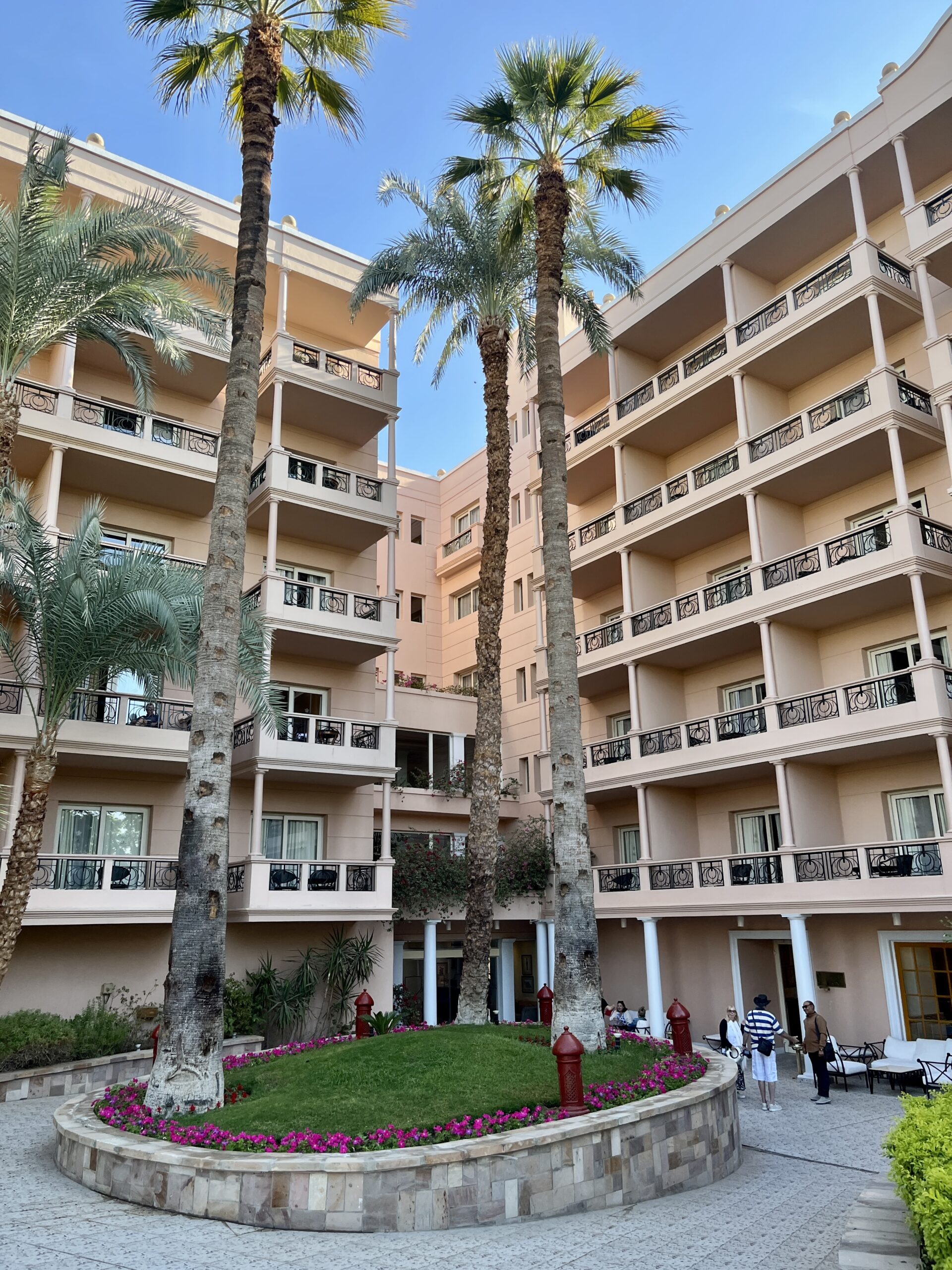
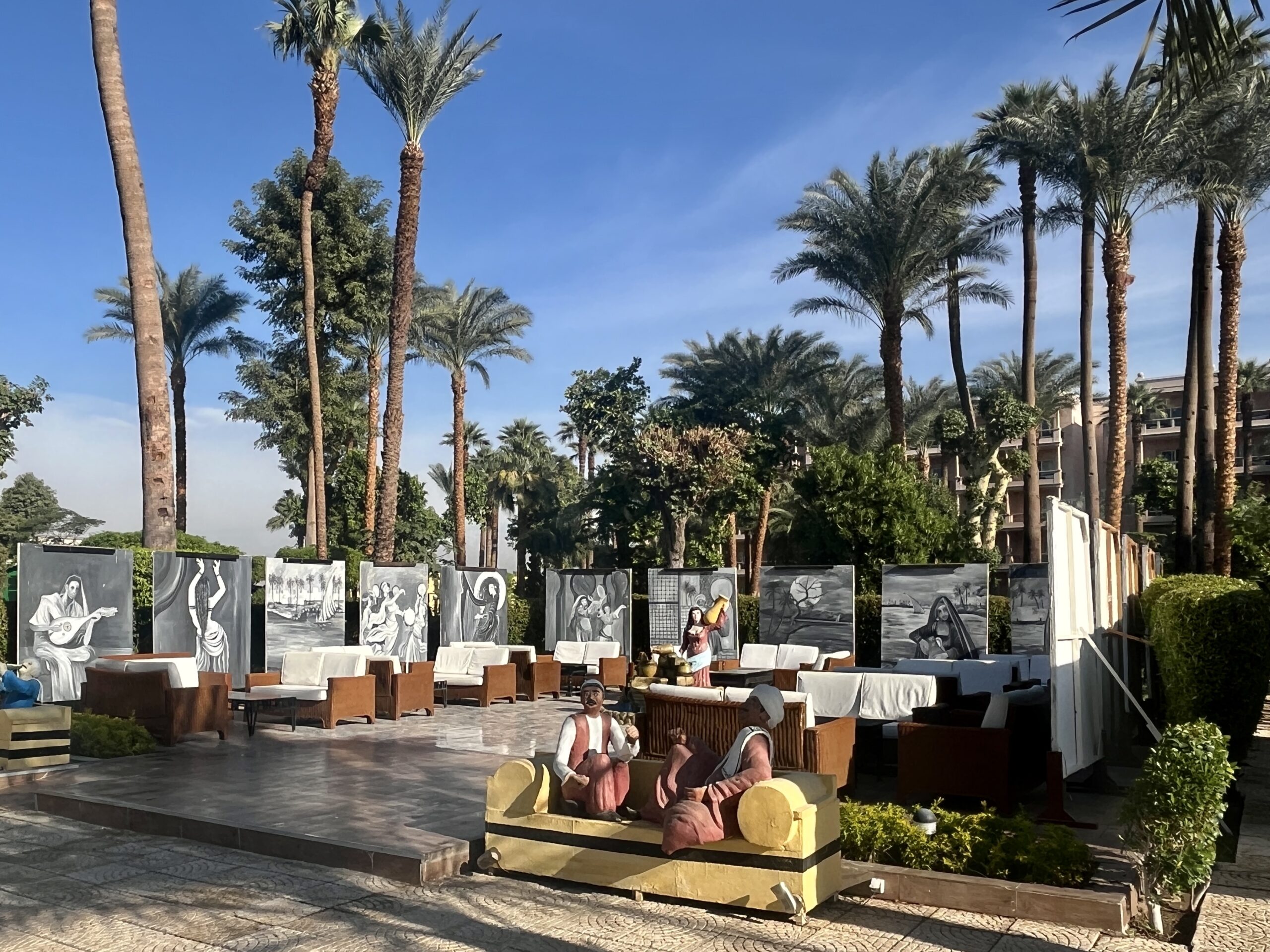
On Wednesday morning, I had a bit of time to wander the Winter Palace gardens before breakfast.



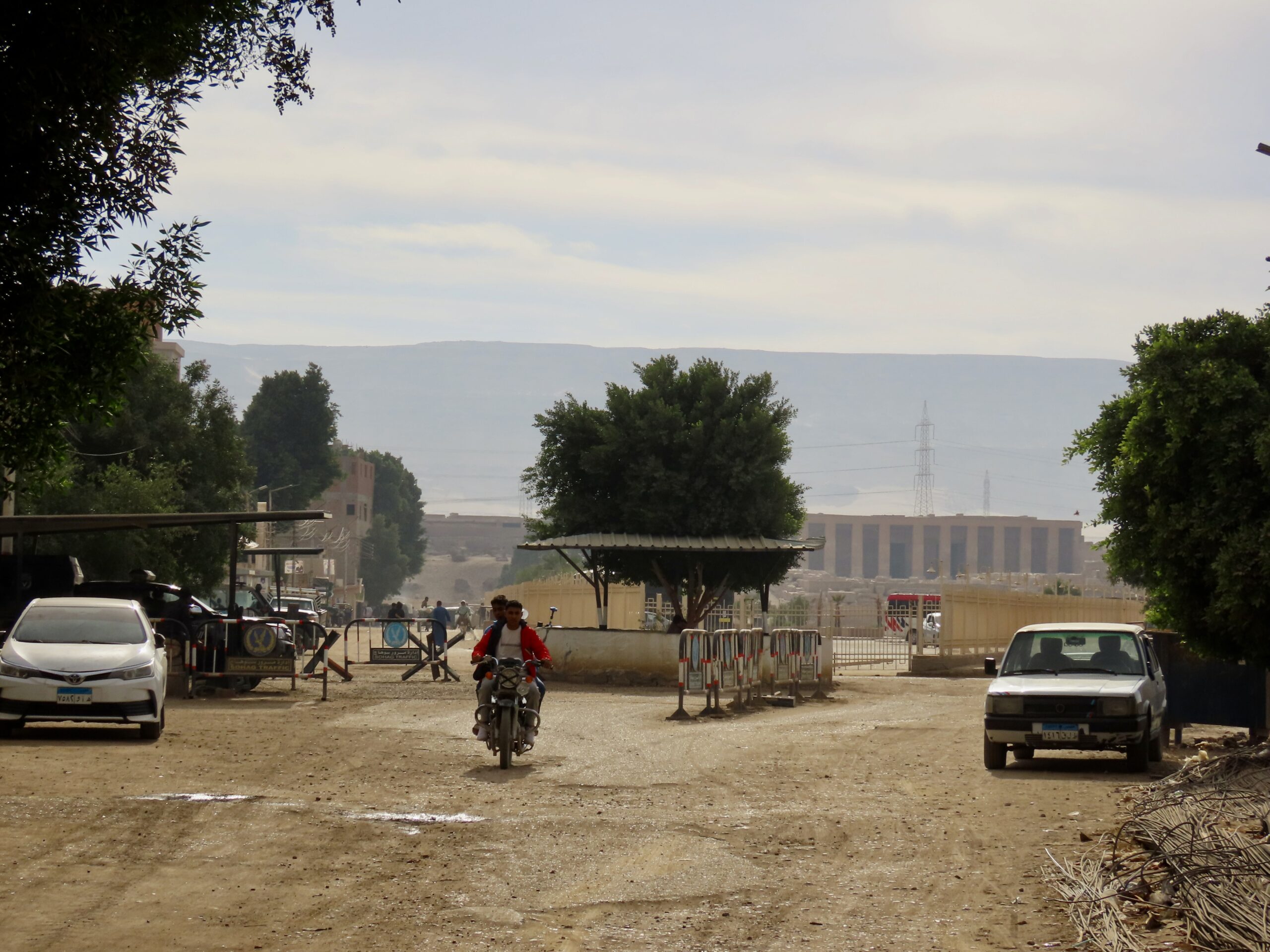
Our destination today was the ancient city of Abydos, north of the Nile’s Great Bend.
Abydos/Thinis

Abydos was perhaps Egypt’s most important religious place for the entire history of pharaonic Egypt. The Abydos region was one of the emerging State’s power centers (“proto-kingdoms,” to Egyptologists) in the centuries before Upper (the south) and Lower (the north) Egypt were unified. The process of unification seems to have been a combination of gradual cultural assimilation through trade and migration, plus battles among the major power centers: Nekhen/Hierakonpolis (near Edfu), Coptos/Qis, Nubt/Naqada, Thinis/Abydos, and Memphis/Helwan (modern Cairo).
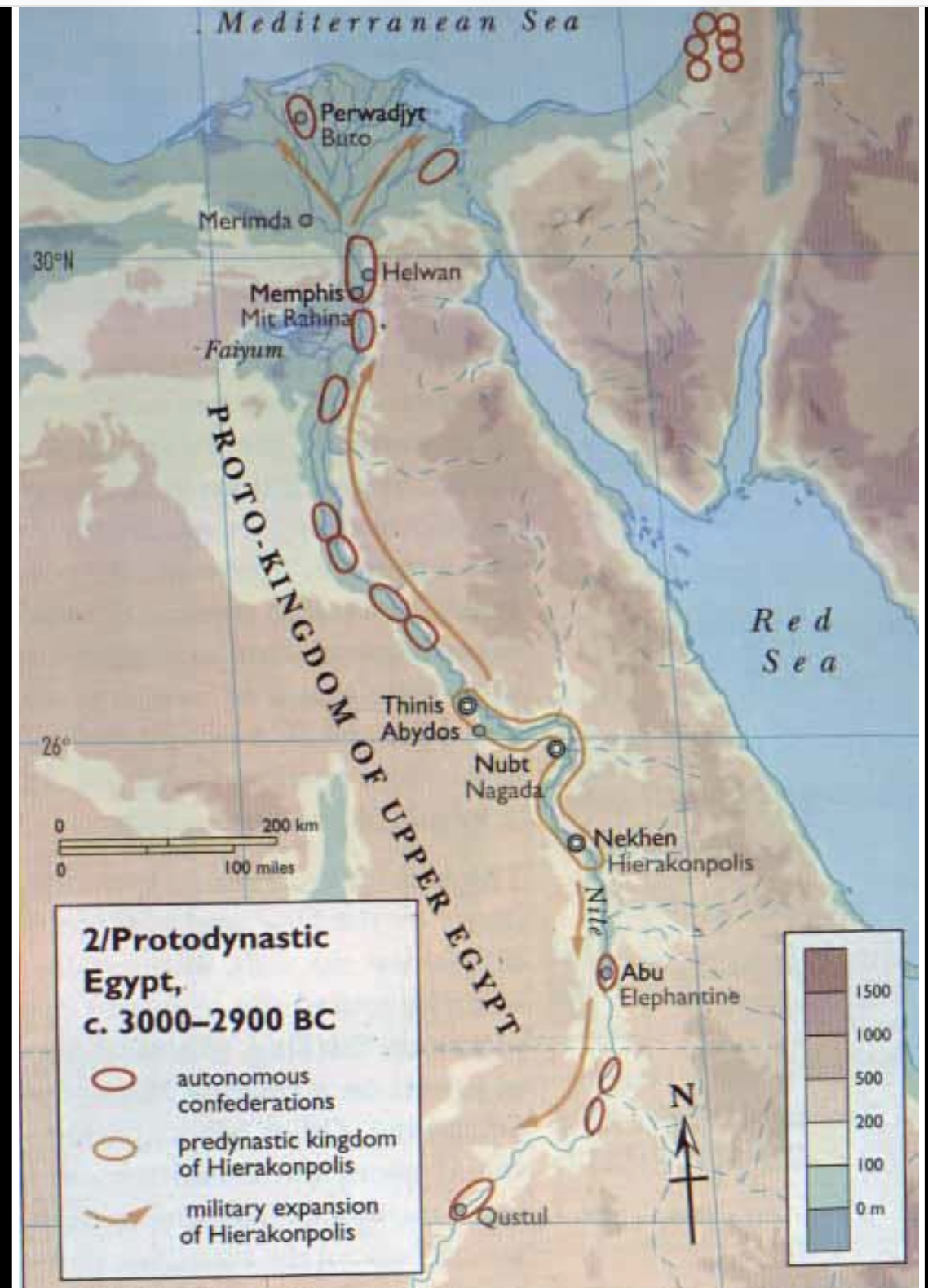
Thinis emerged as the capital of the newly unified state, with its rulers (both before and after unification) buried at Abydos. These cemeteries formed the foundation of a sacred landscape that would loom large in Egyptian theology.
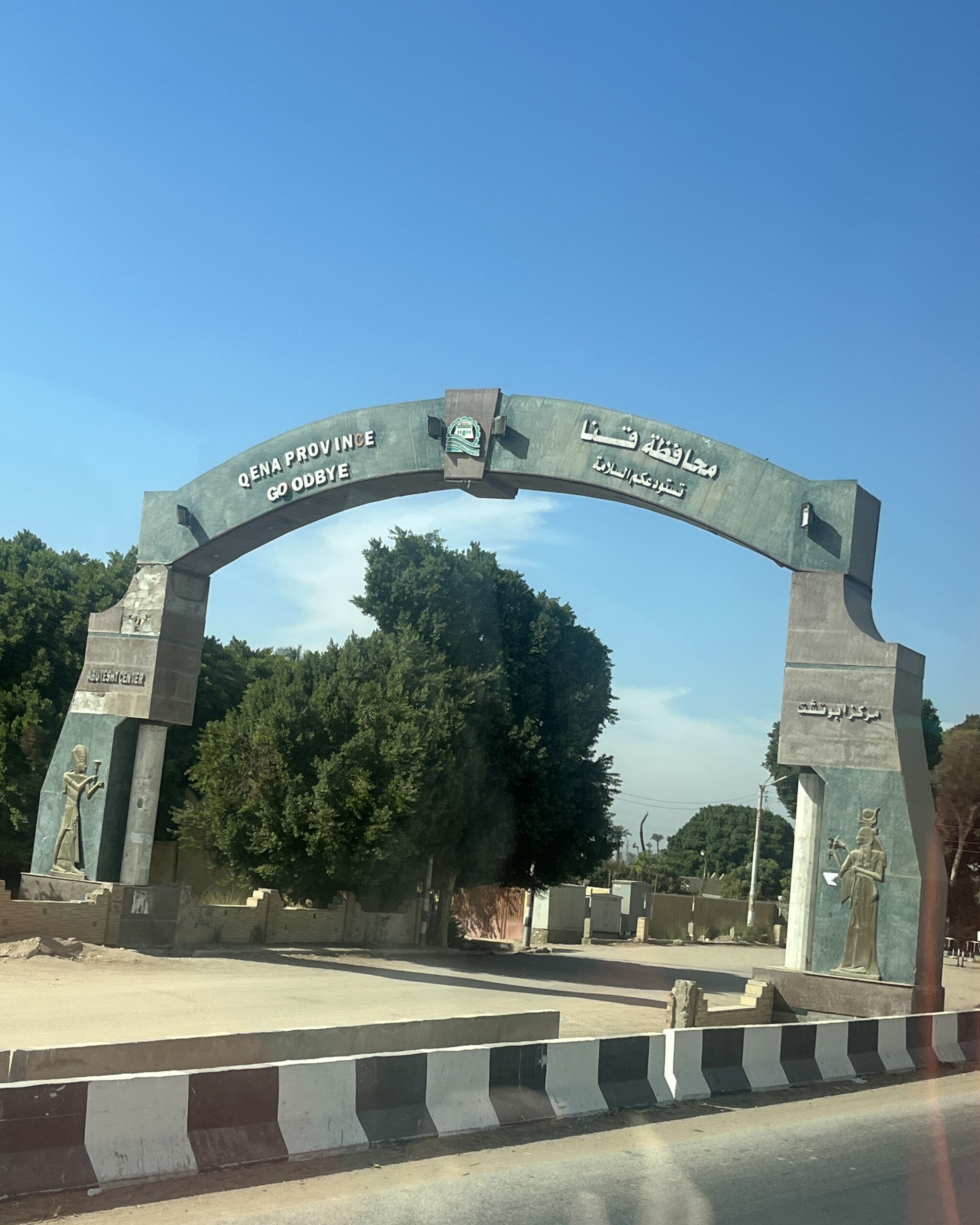
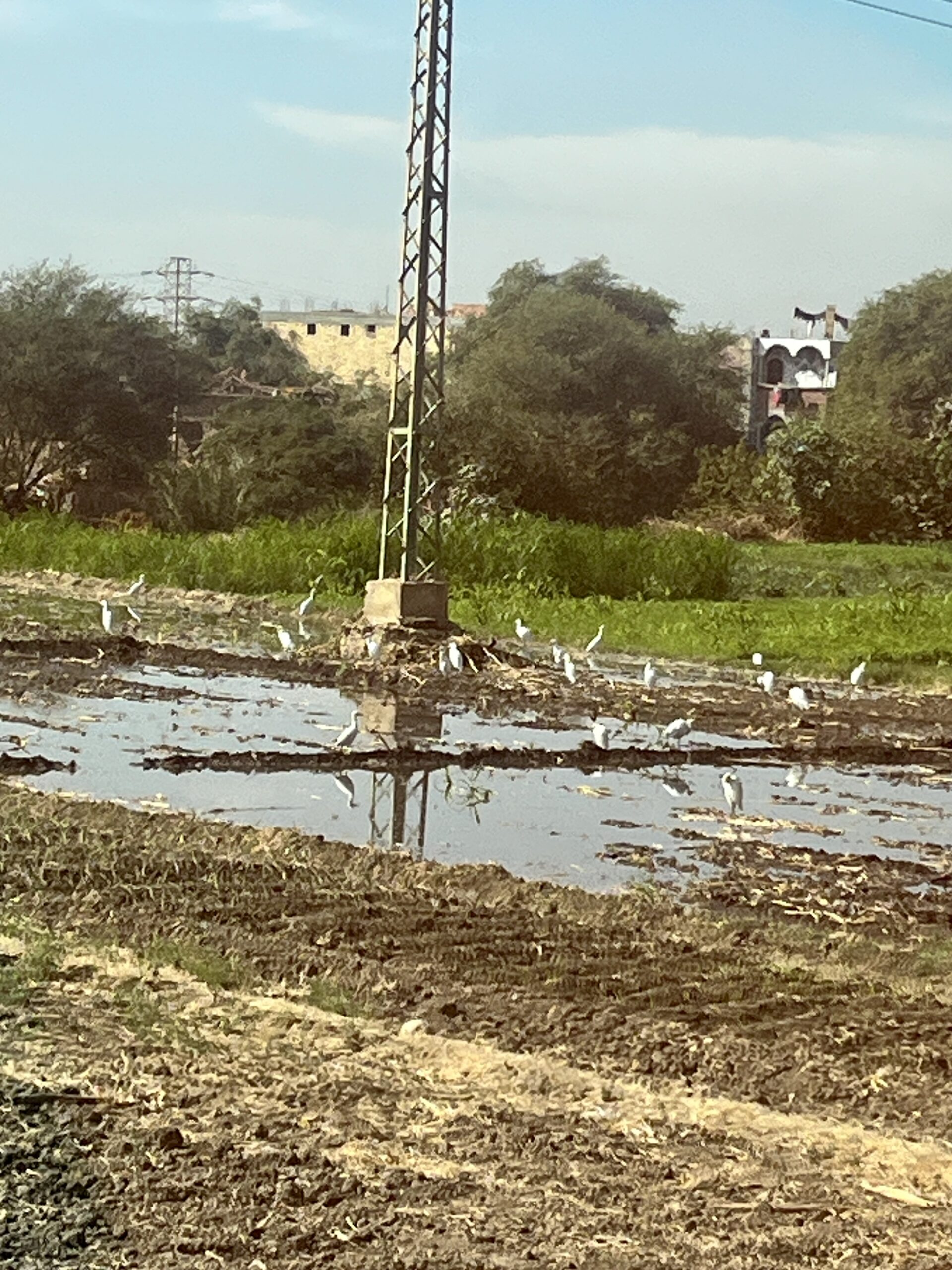
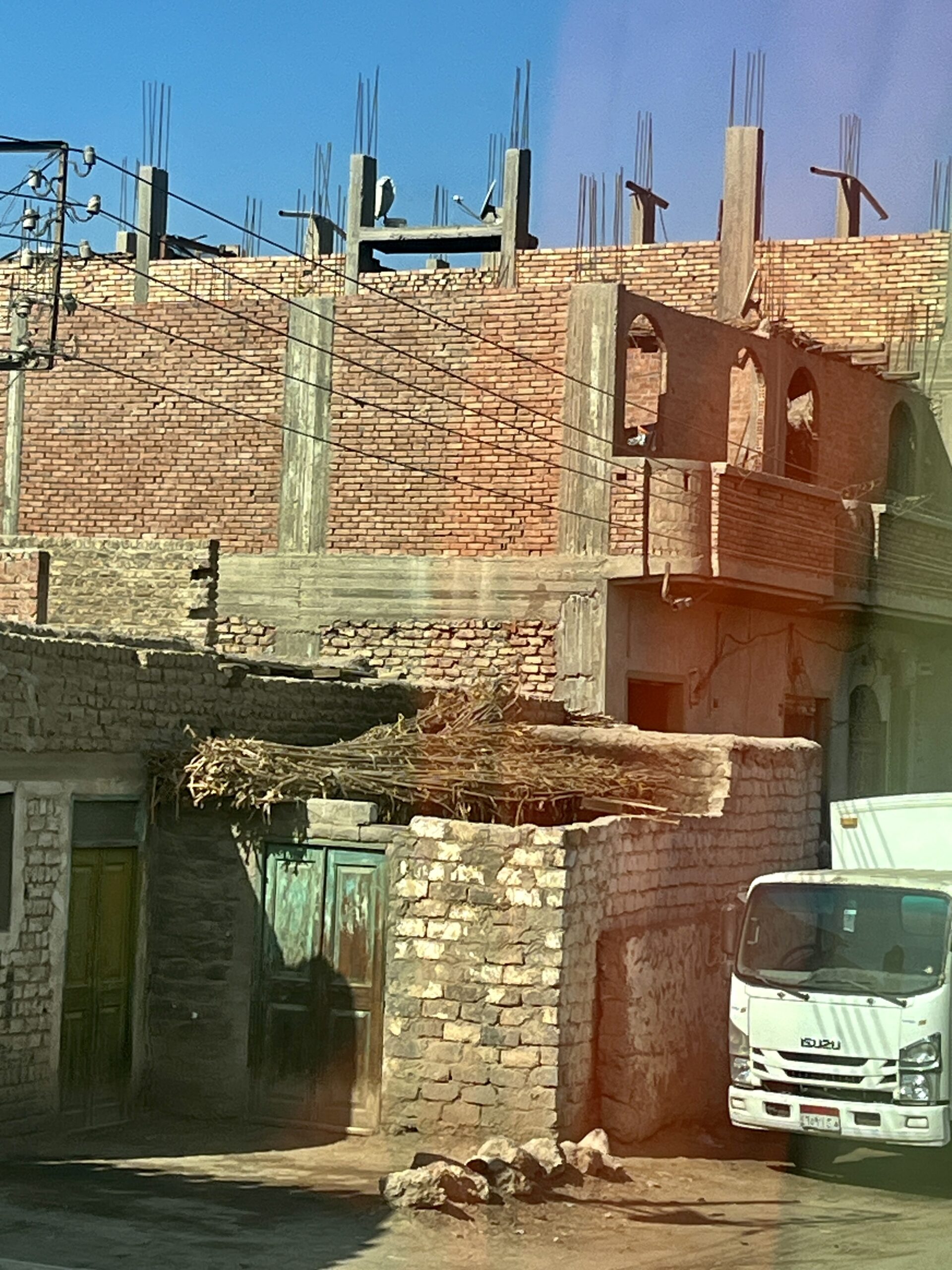
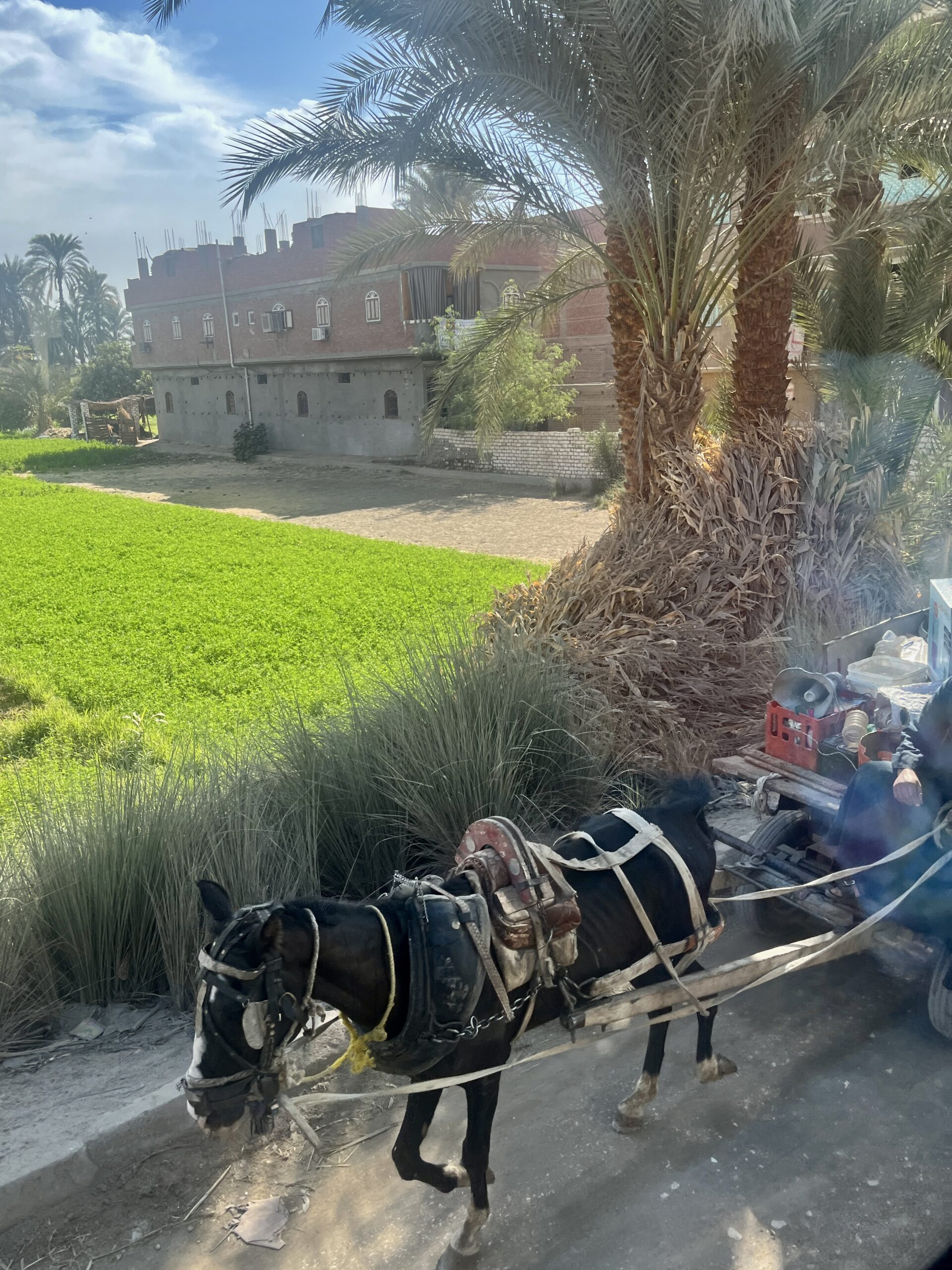
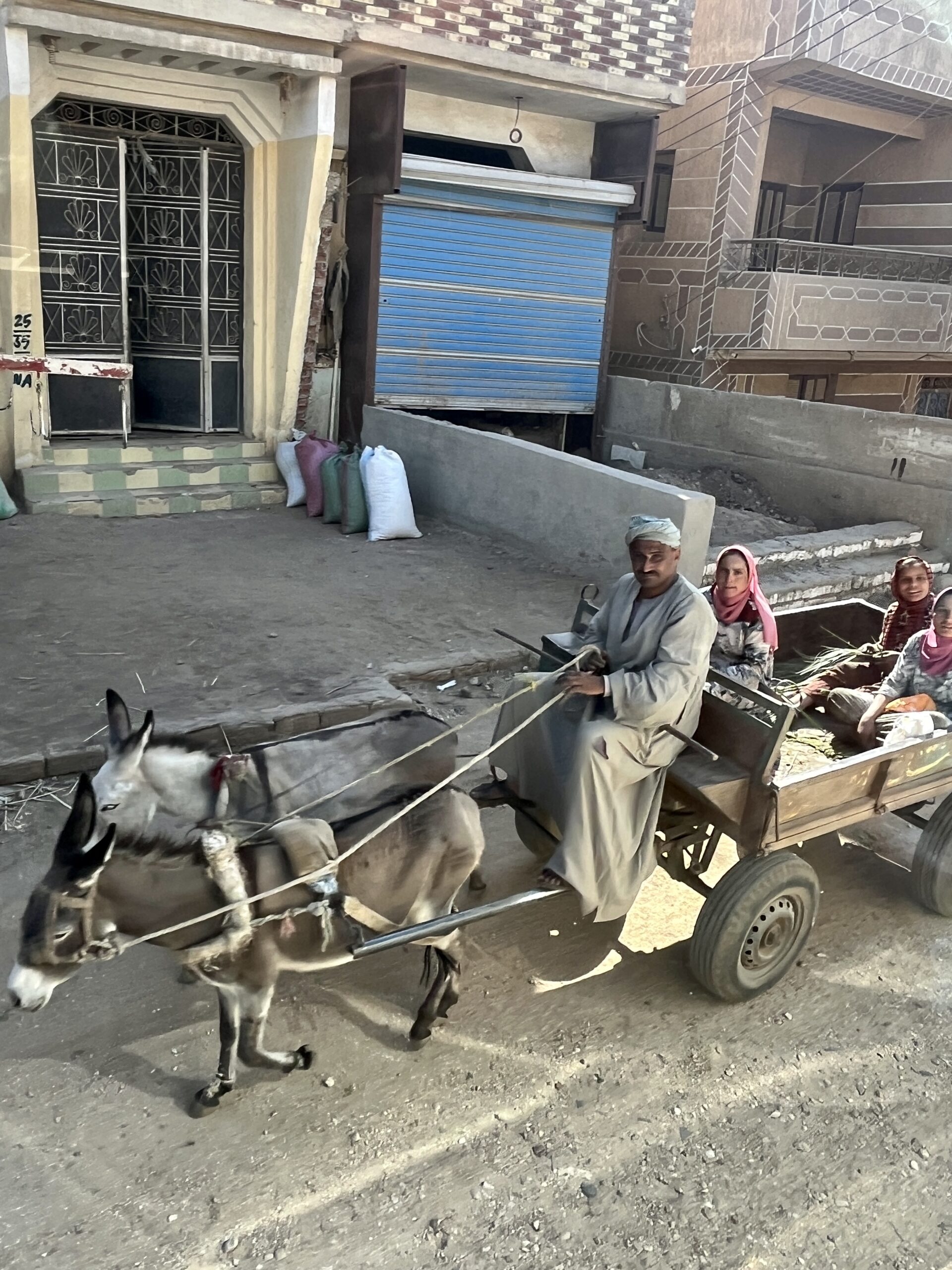
The area around the Nile’s Great Bend continued to play an outsized role in Egyptian history because of easy access both to trade routes (south into Nubia and east to the Red Sea) and to the quarries used to obtain stone for all those monuments and statues. We traveled up the Nile’s east bank, then crossed to the west side at Qena, northwest of Qift, near the top of the Bend.



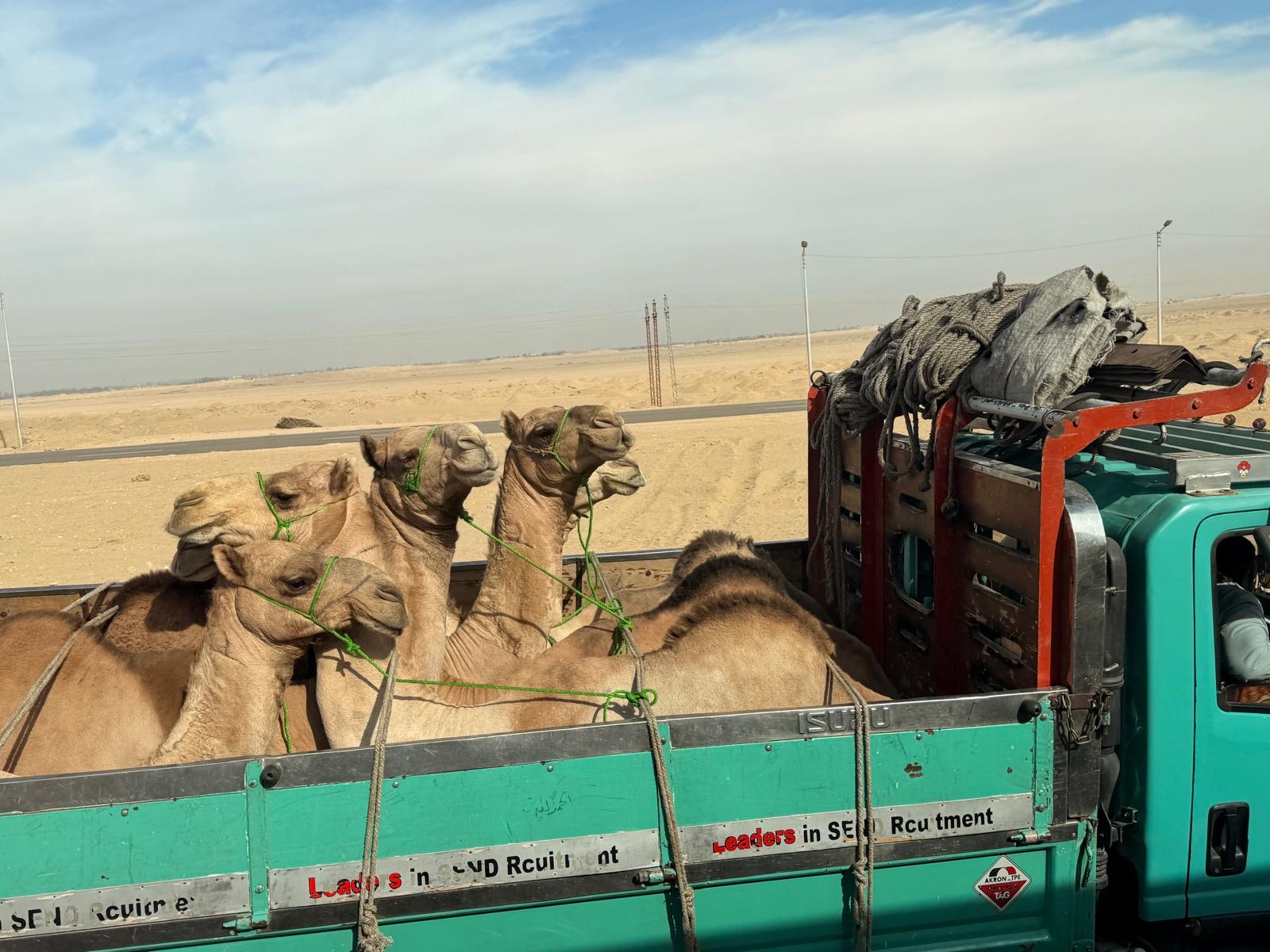




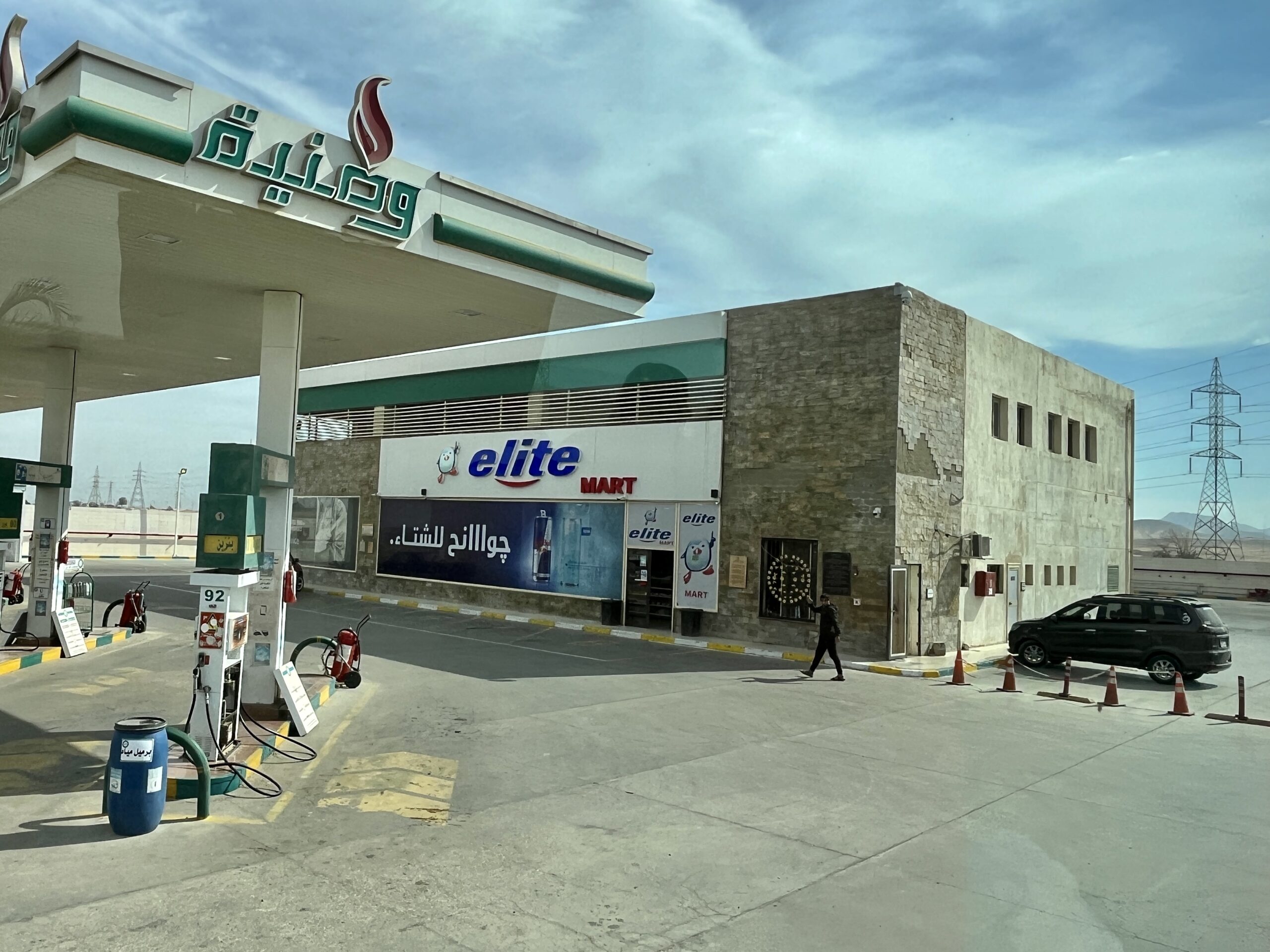
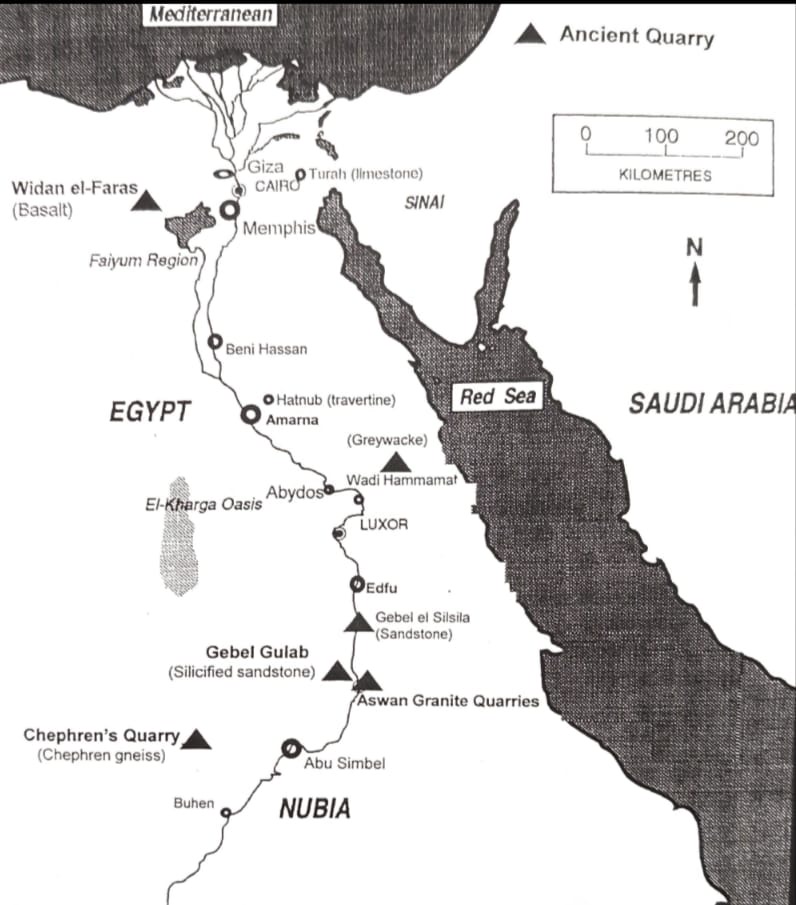

from the Red Sea to Luxor still use this route.







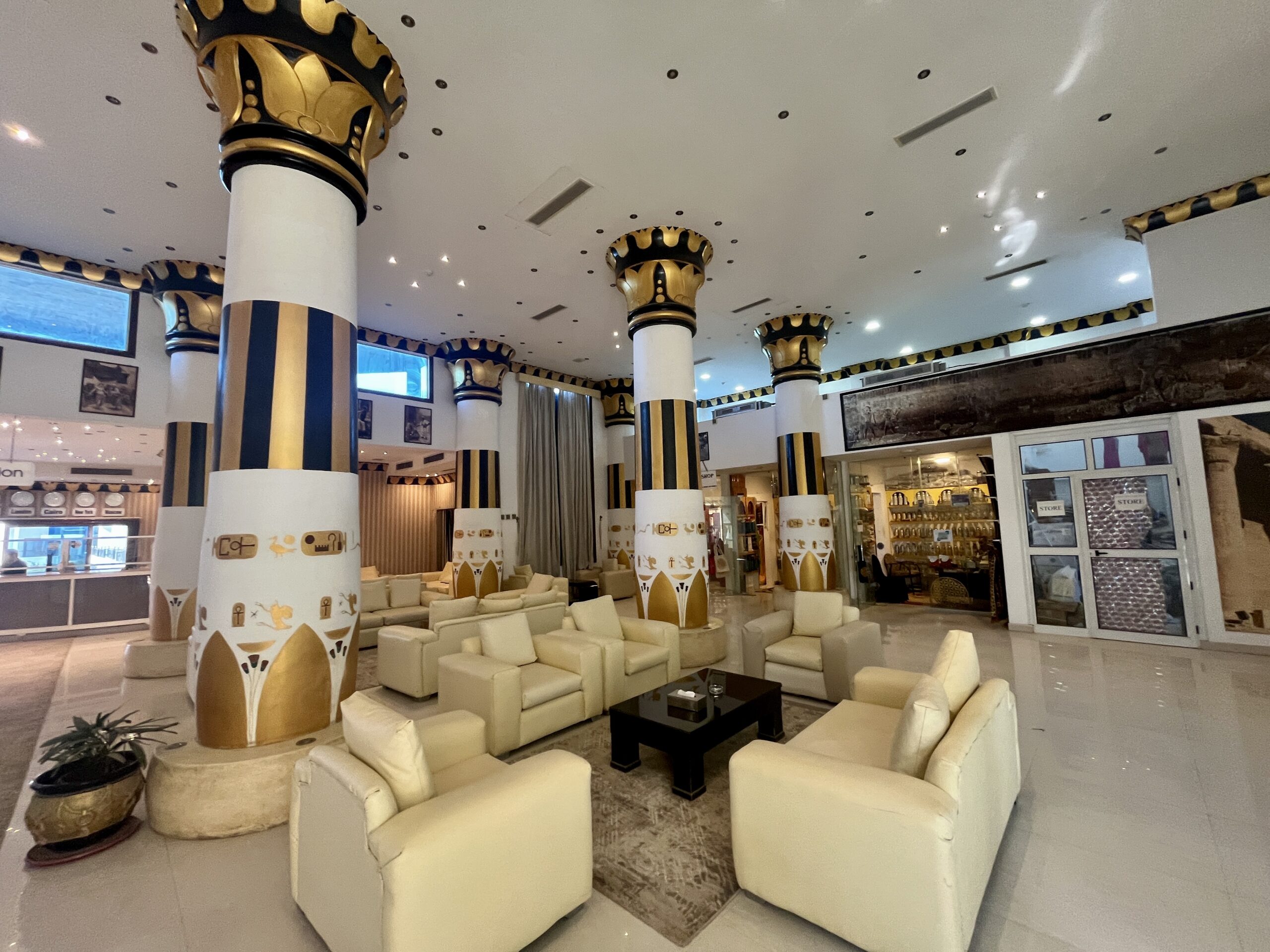
The House of Life
Our home for the night was the very comfortable and somewhat eccentric House of Life in Abydos. In addition to offering high quality lodging, the House of Life is also a healing center, using methods drawn from Ancient Egypt, based on the teachings of Omm Sety.




Omm Sety
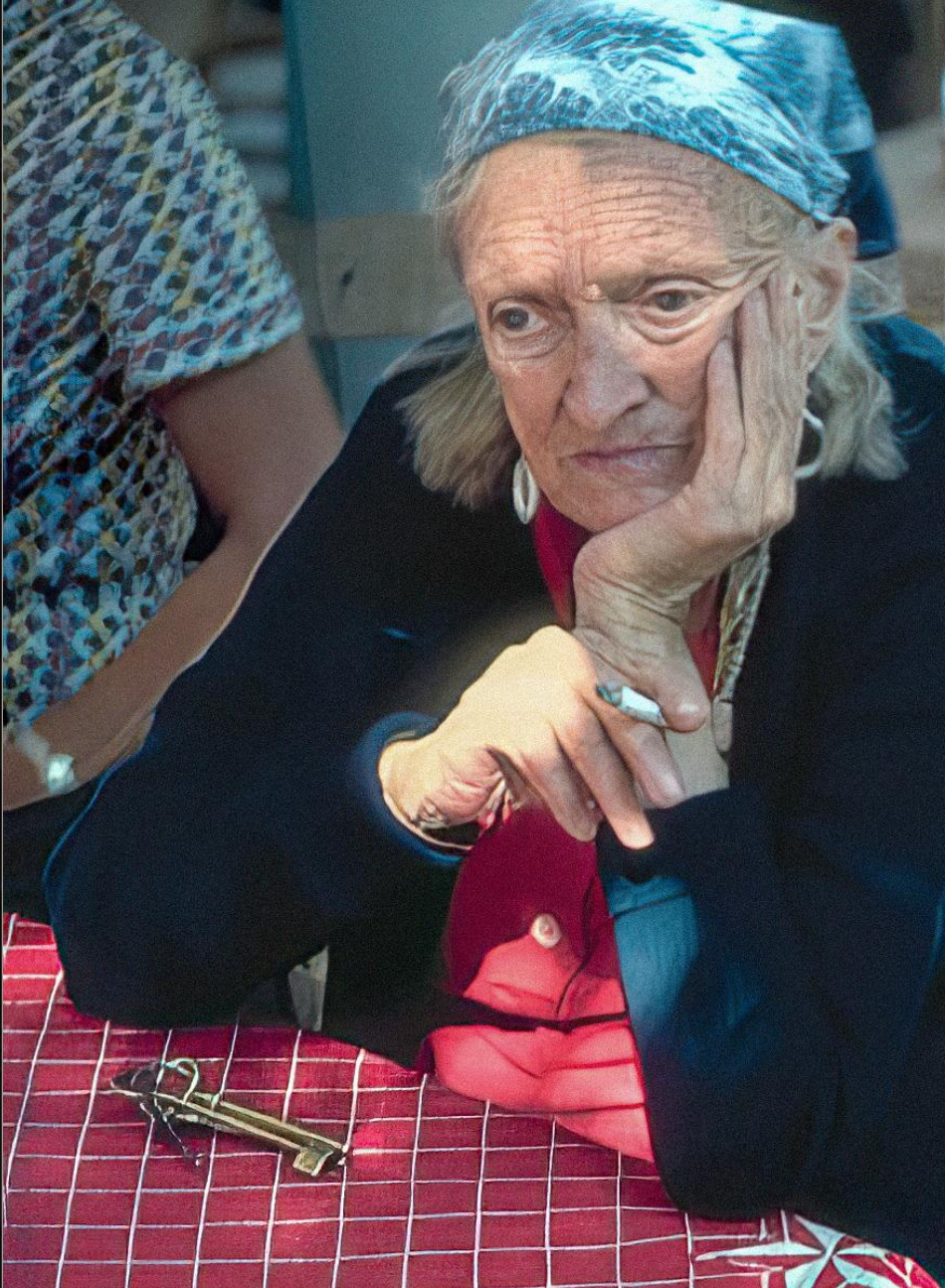
Omm Sety was one of a kind. She believed that she had been a priestess in Abydos c. 1270 BCE and had been a lover of the pharaoh Seti I. She spent the last 35 years of her life as a caretaker for the Seti 1 Temple.
She was born in London in 1904 as Dorothy Eady, and had a near-death experience at the age of three. Emerging from a coma, she began asking to “go home,” which befuddled her parents. On a visit to the British Museum, she saw a picture of the Seti I temple in Abydos and recognized it as her home, with the surrounding artifacts those of “her people.” Wallis Budge, renowned early Egyptologist and director of the BM’s Egypt collection, took Dorothy under his wing and encouraged her study of hieroglyphs, something for which she had a natural aptitude.
At the age of 15, she began having night time visitations from Hor-Ra and Seti I, which revealed her previous life in Egypt and landed her in a mental health sanatorium. She married an Egyptian man, moved to Cairo and had a son whom she named Sety (giving her the Egyptian honorific Omm Sety, “Mother of Sety”). When the marriage ended, Dorothy moved to Giza and began working for Egyptologists there, where her translations and draughtmanship (copying reliefs) were highly valued.


She was a practitioner of ancient Egyptian religion, in particular a devotee of Osiris, and moved to Abydos in 1956 at that god’s direction. There she lived in a tiny house, surrounded by adopted animals, while continuing to work for expeditions as a translator and draughtswoman, recording and helping to conserve the temple. Egyptologists were impressed by her ability to translate enigmatic texts and to direct their work towards unknown landmarks like the temple’s gardens. Omm Sety said that, for her, the temple of Seti was like a time machine, “where the past becomes the present” and where magic was real, something “the modern mind has difficulty understanding.”
Omm Sety taught ancient Egyptian faith traditions to many of the children in her village. She had a particular affinity with one boy, Mohammed El Khadar Gad Ahmed (now known as Horus), who partnered with Dutch music therapist and healer, Yvon Taken (now known as Aset) to found the House of Life as a healing centre, and continue Omm Sety’s teachings.
While this may seem like a load of hokum to some, Omm Sety was deeply respected by many traditional, highly respected Egyptologists, who valued her knowledge and never doubted her sincerity. If you want to know more about this intriguing woman, here is a short video; Dominic Perry also has an excellent episode on his History of Egypt Podcast. I enjoyed her biography, The Search For Omm Sety, Reincarnation And Eternal Love by Jonathan Cott, which you can find on Internet Archive.
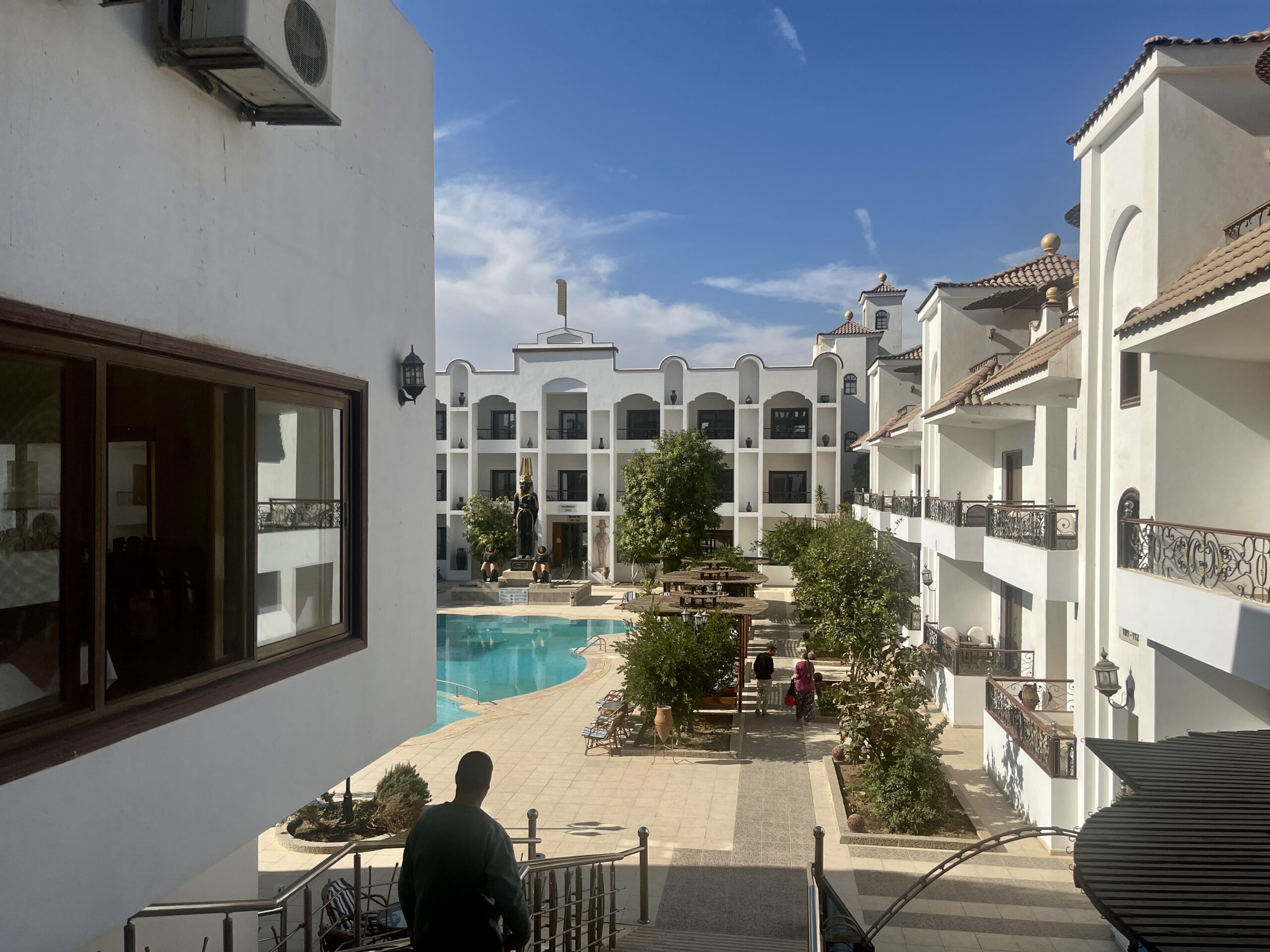


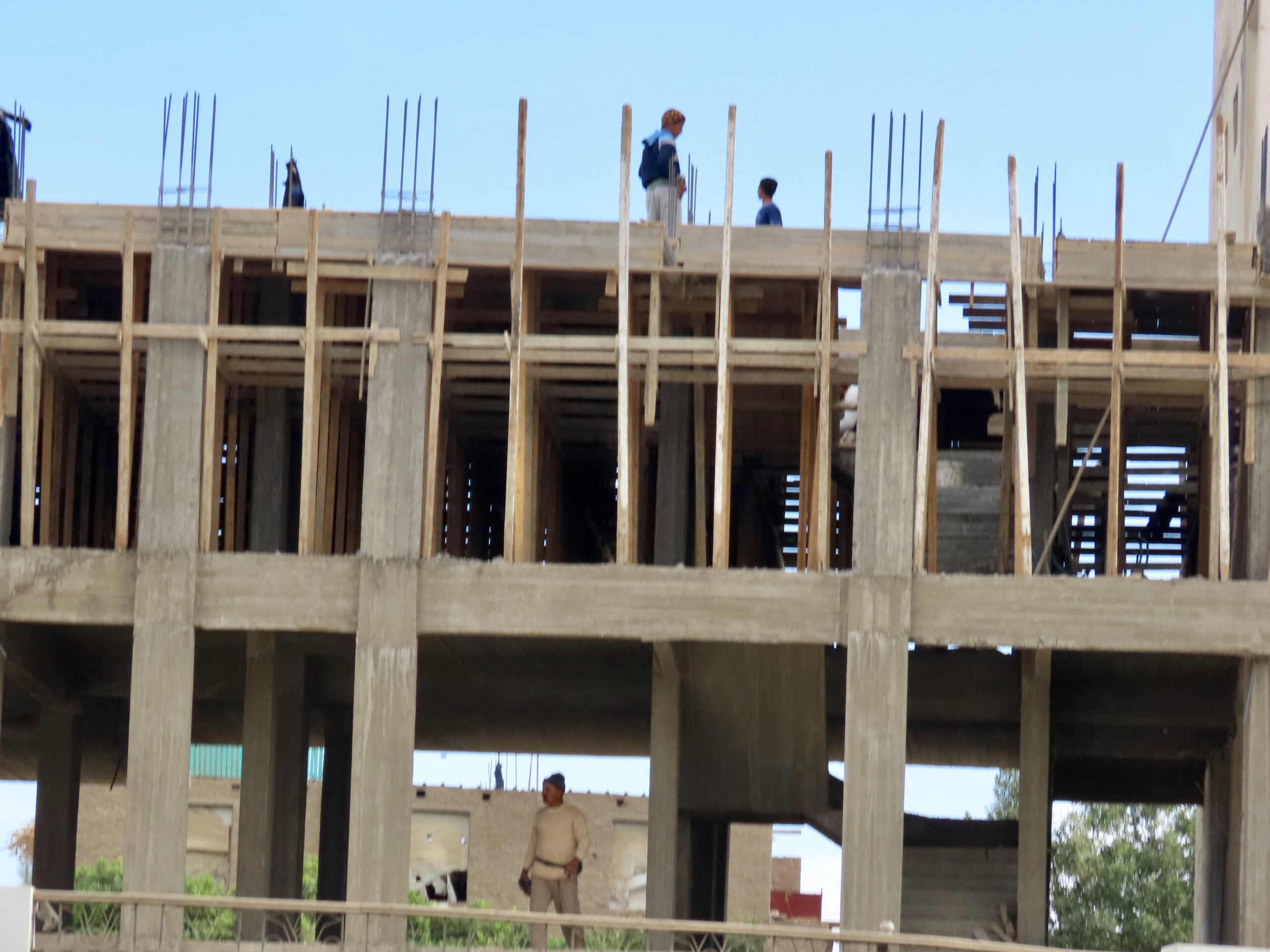
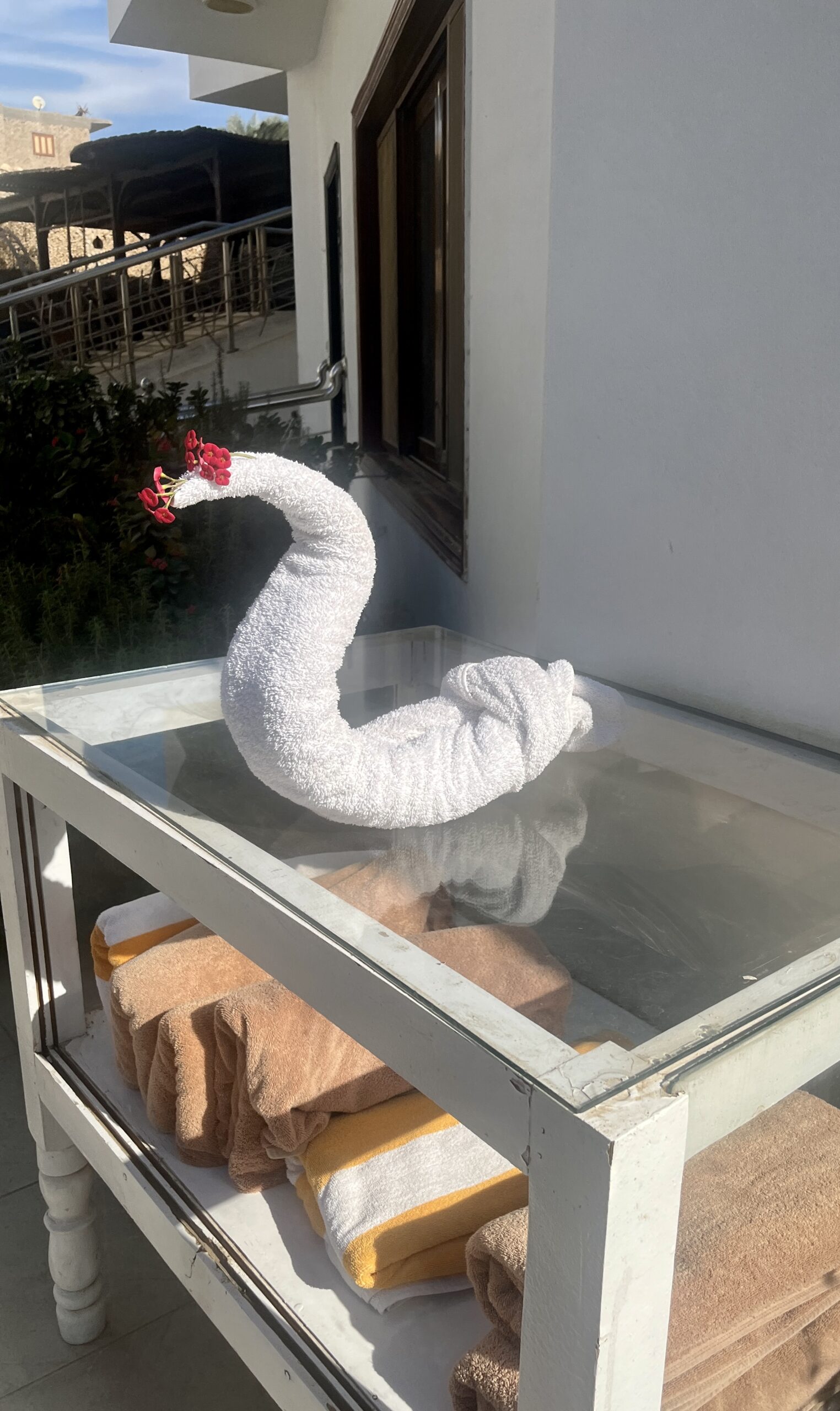


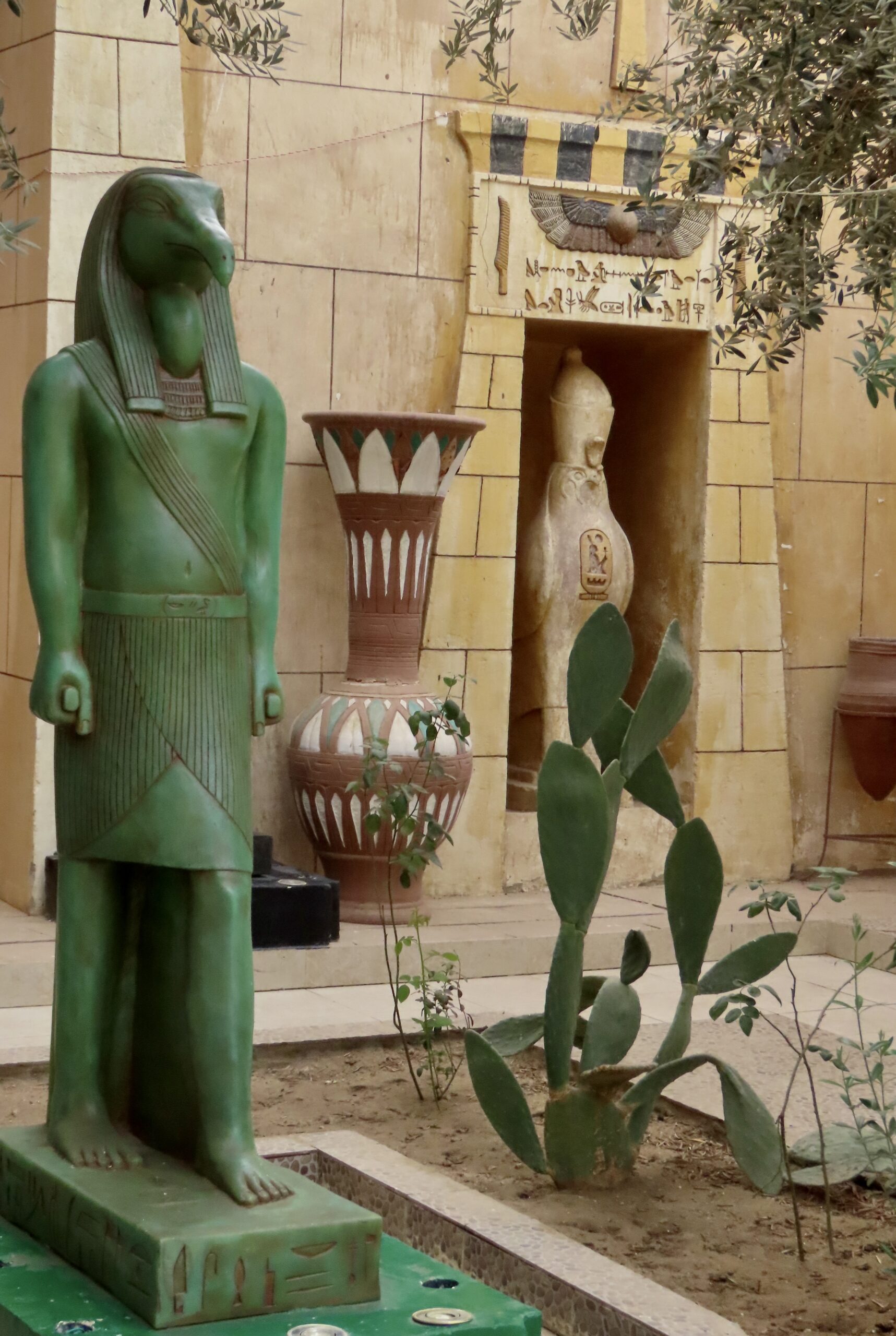
Below is the House of Life’s Healing Centre, modeled after the Osireion (we’ll get there).


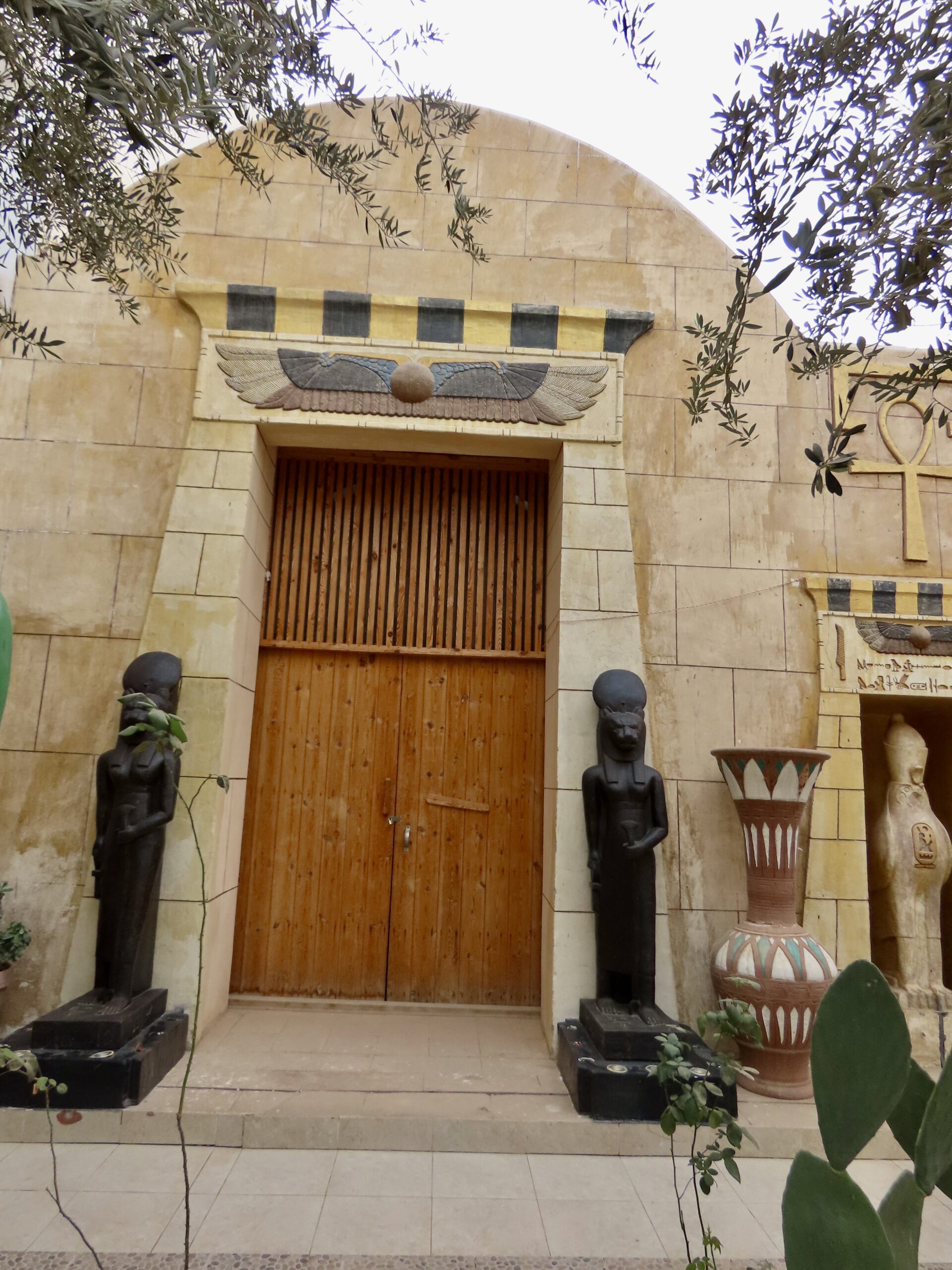
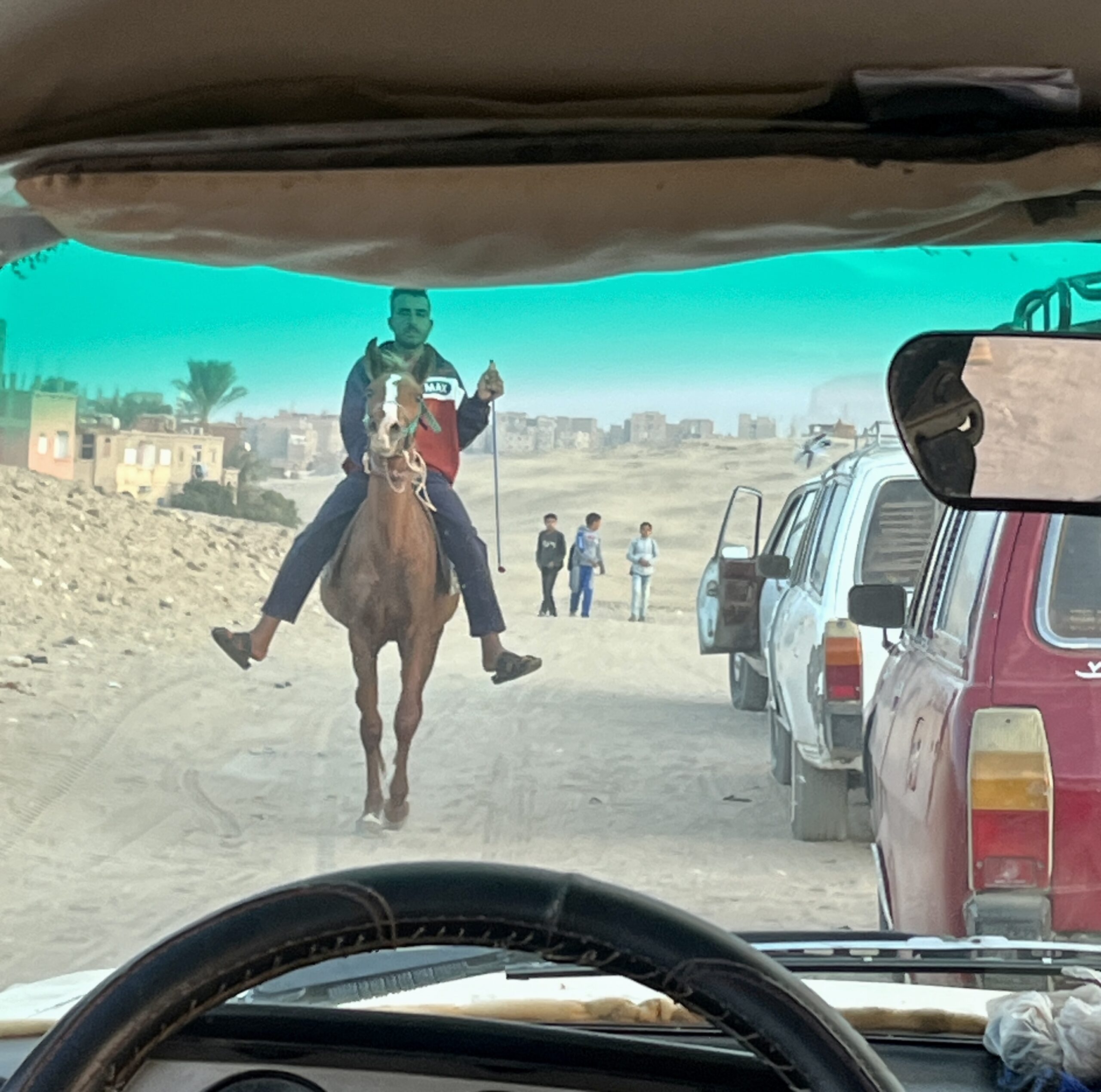
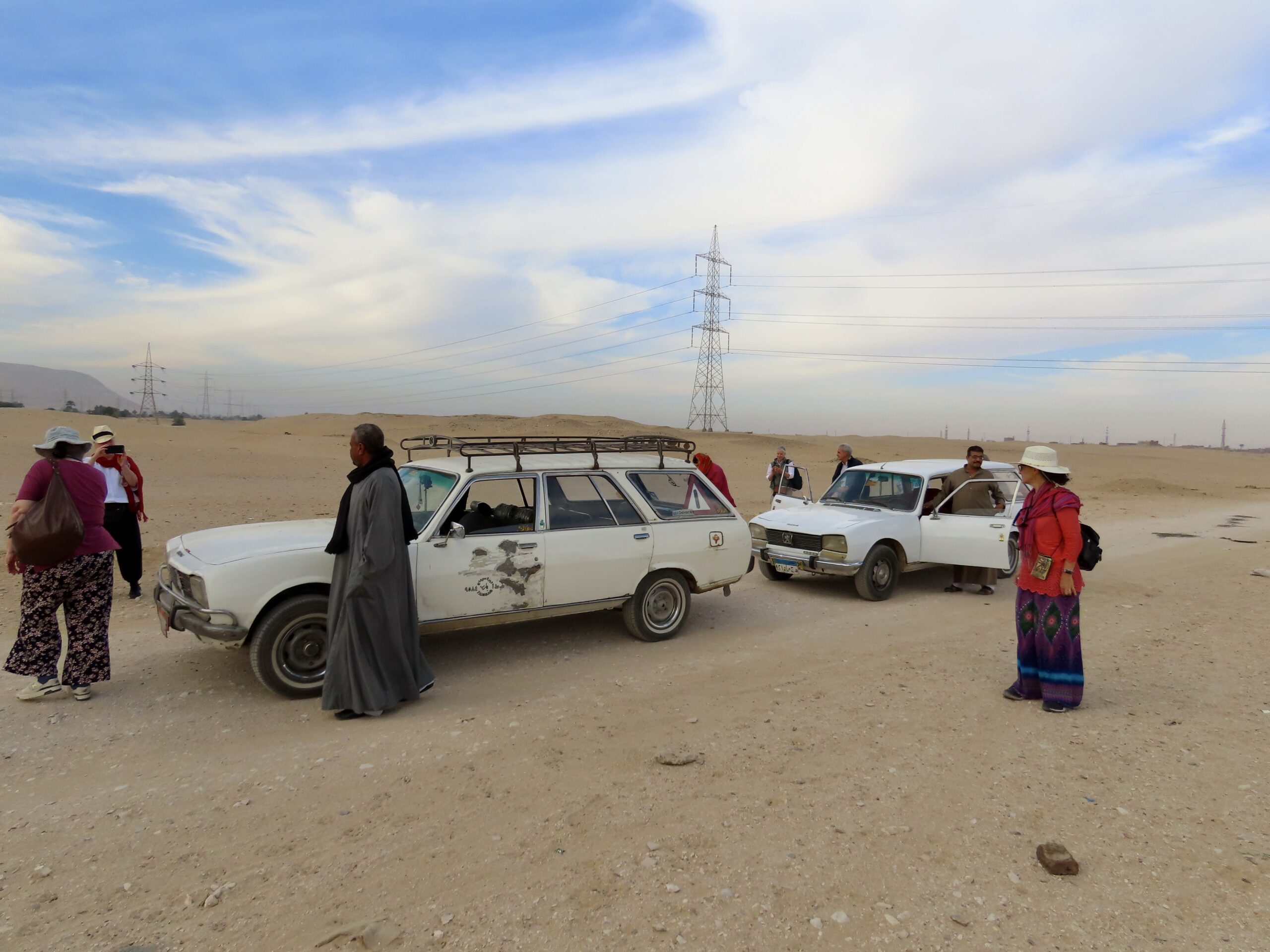
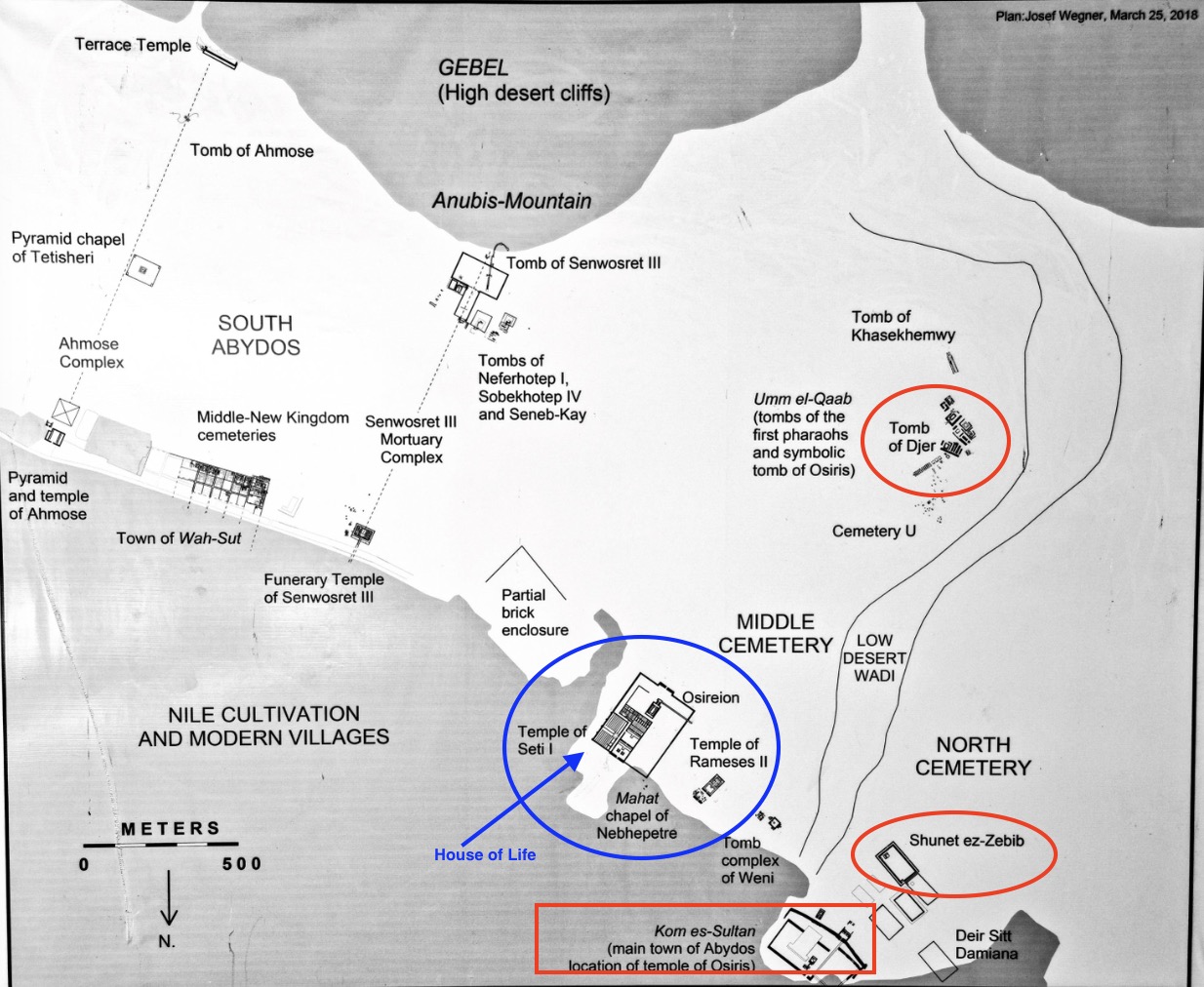
After lunch, we piled into 5 “vintage” taxis, driving through very narrow village streets and across the low desert to visit three sites in Abydos’ sacred landscape: the Umm el-Qa’ab, Kom es-Sultan and the Shunet el Zebib.


The Umm el-Qaab
I mentioned that Egypt’s earliest rulers are buried in a cemetery here, called the Umm el-Qa’ab today. By the beginning of the Middle Kingdom, the god Osiris had emerged as the principal god of the dead, promising resurrection/eternal life to anyone, not just the ruler (as seems to have been the norm for previous centuries). One of those early ruler’s graves was identified as the tomb of Osiris, and Osiris himself became associated with the jackal-headed god Khentiamentiu (Foremost of the Westerners), the principal guardian of the dead here at Abydos.
As a result, Abydos became the site of an annual religious festival, and the most important pilgrimage site in Egypt. Osiris’ story was re-enacted here over multiple days in a passion play: his murder by his brother Set; his burial and resurrection through the magic of his sister-wife Isis; his transition to ruler of the West (eternity); and the revenge of his son Horus.
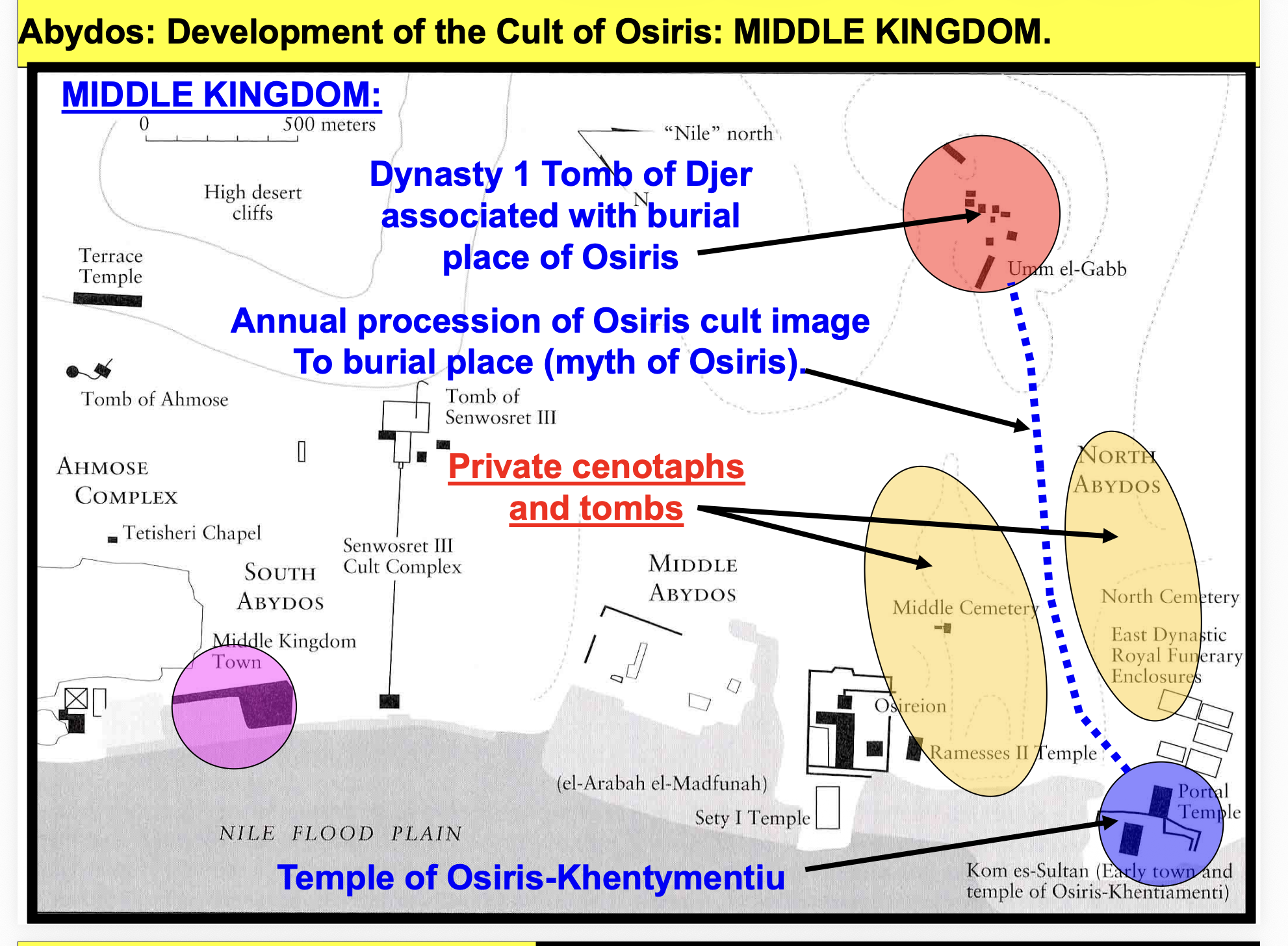
The ceremonies began at the temple of Khentiamentiu (known today as the Kom es-Sultan), then processed west up a shallow wadi to end at Osiris’ mythical tomb. People would bring offerings in pots and leave them at the tomb. Local people named the cemetery Umm el-Qa’ab, “Mother of Pots,” because of the thousands and thousands of potsherds that accumulated over centuries of worship. (Slides from Mumford.)
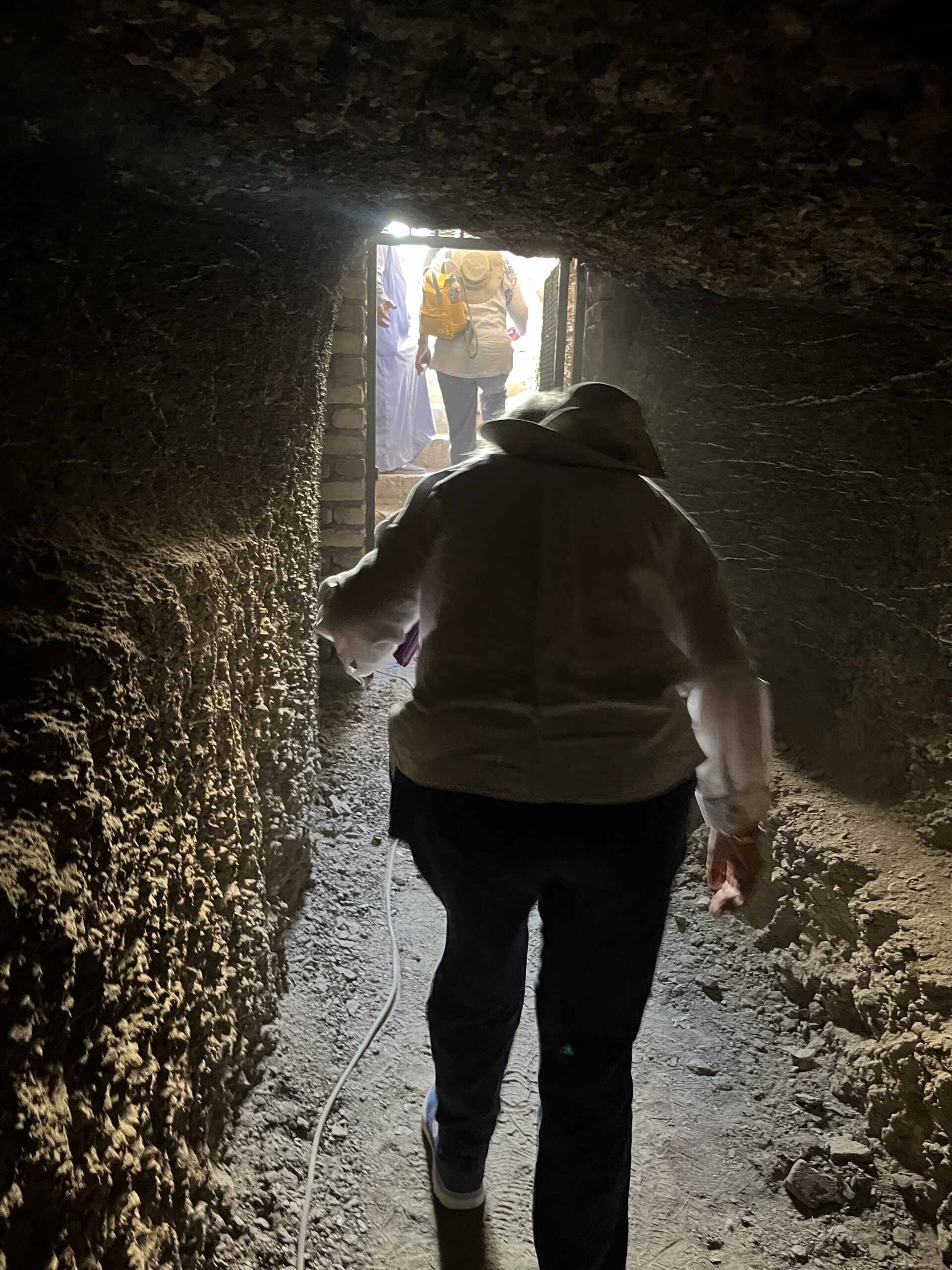
We followed the path of these ancient worshipers from the Middle Cemetery to the Umm el-Qa-ab (or as close to the Umm el-Qa’ab as the Ministry of Antiquities allows).
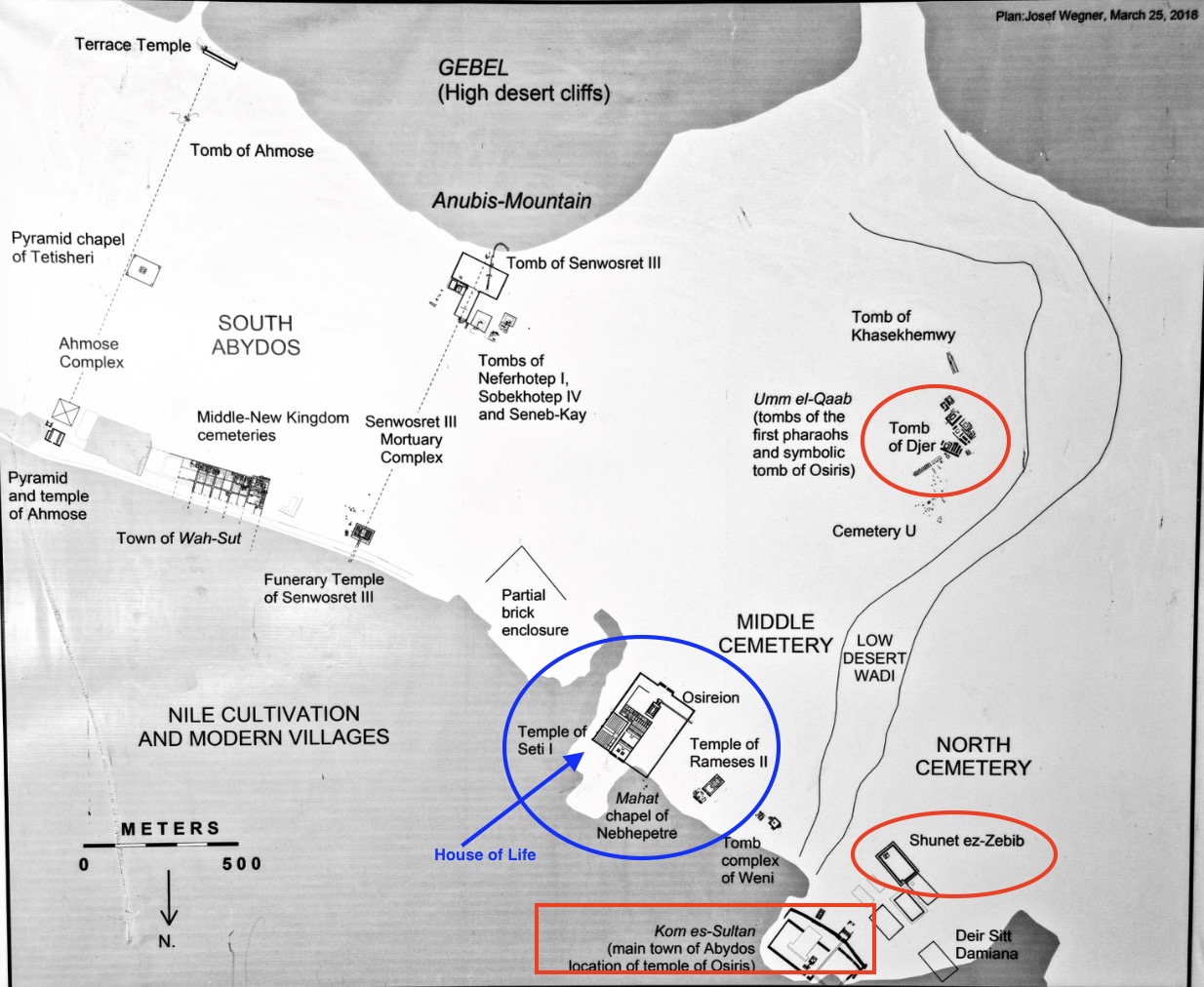
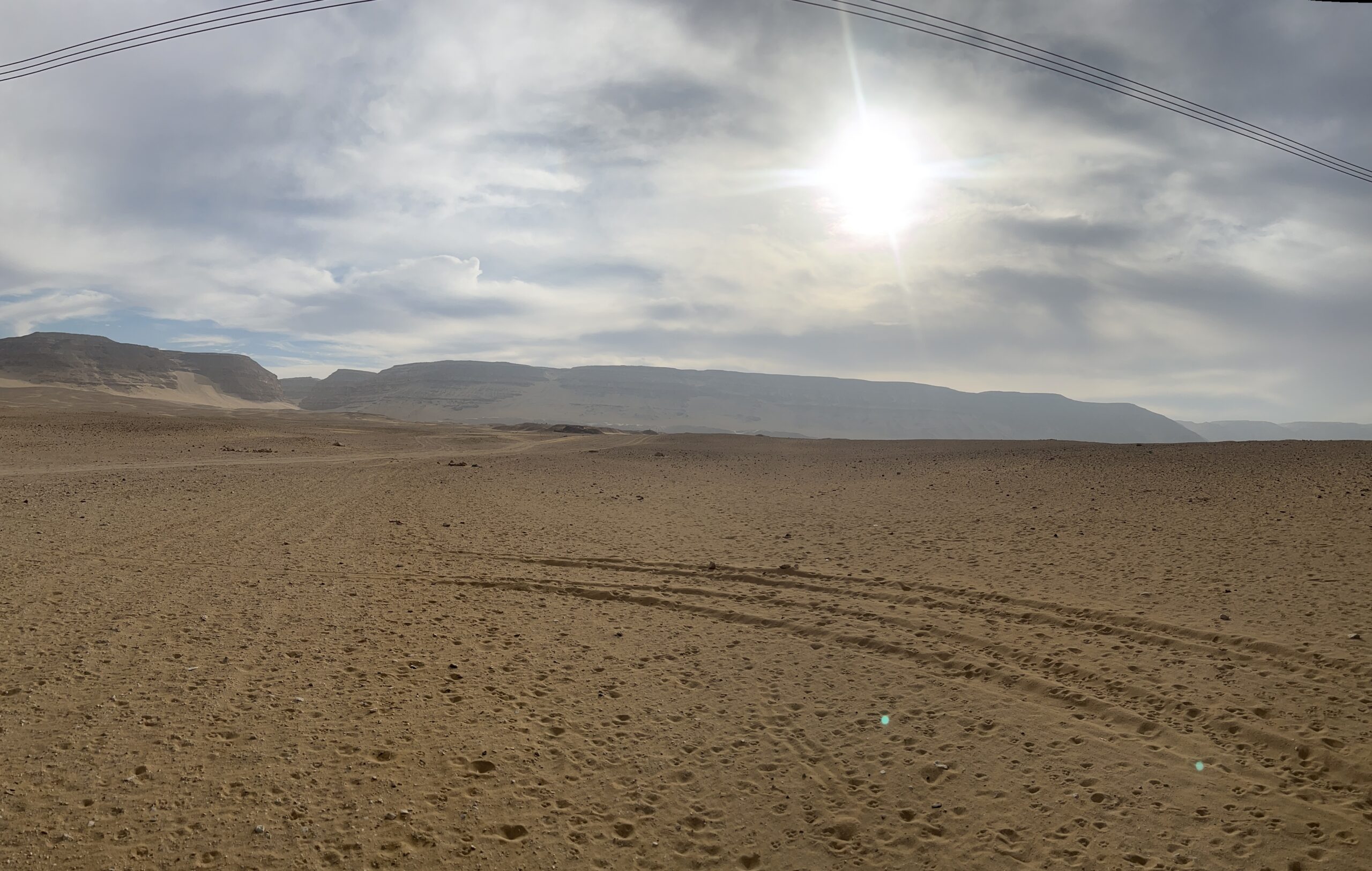
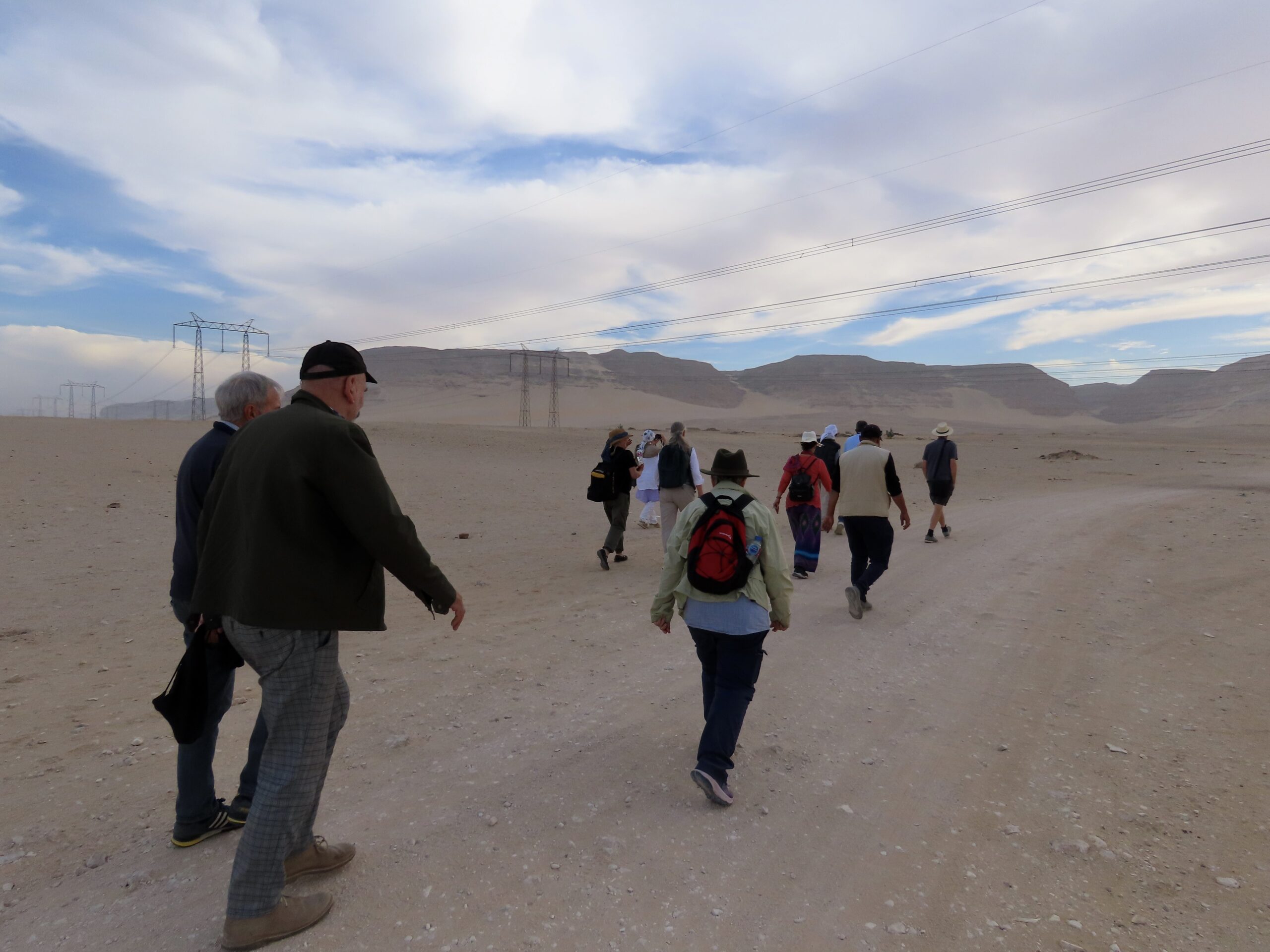


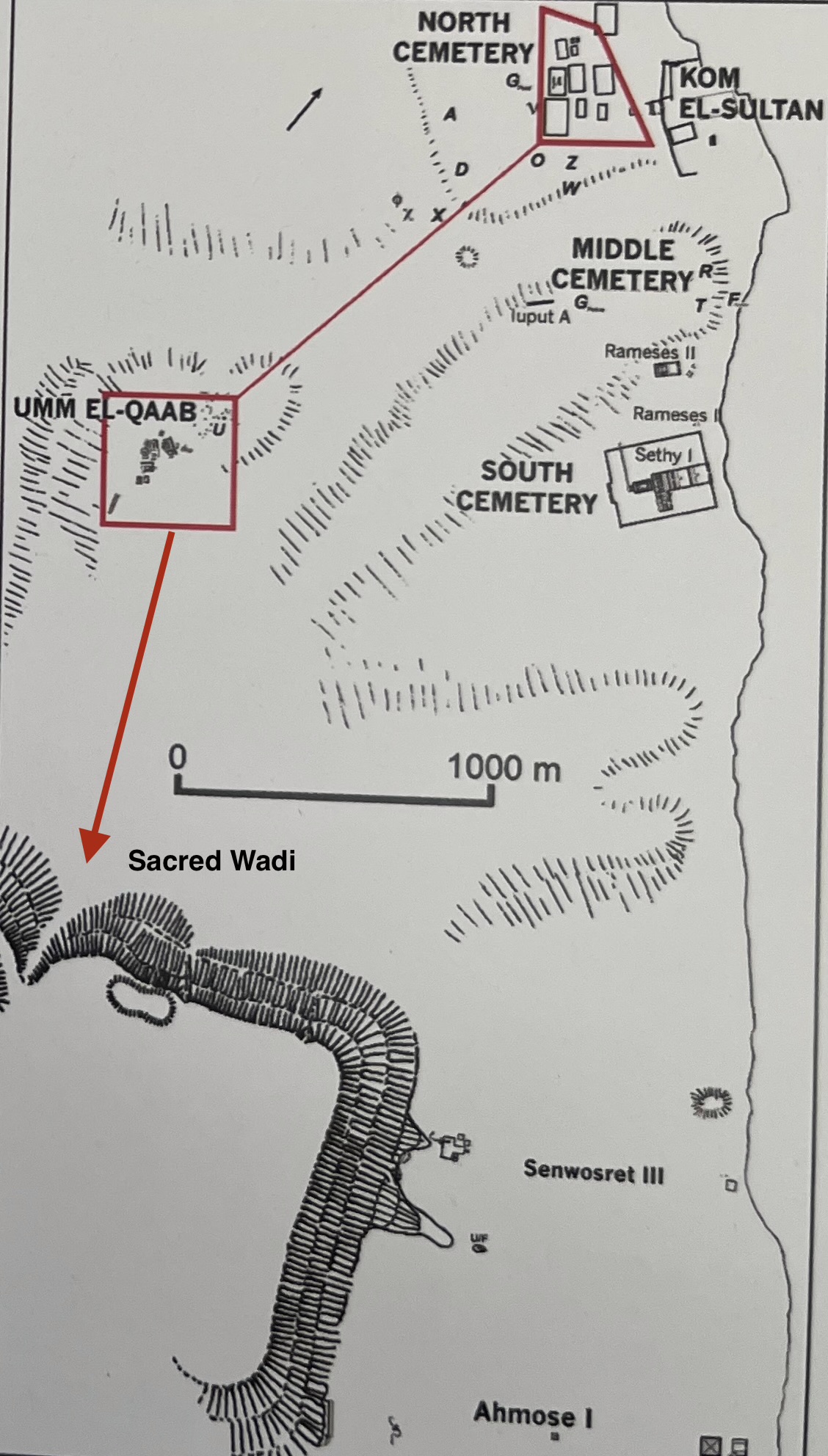
The entrance to a V-shaped wadi on the west edge of the low desert is an important feature in this sacred landscape. The ancients associated this wadi with the entrance to the afterlife, which was in “the West,” which may account for the burial here of Egypt’s earliest rulers (and their forebears).
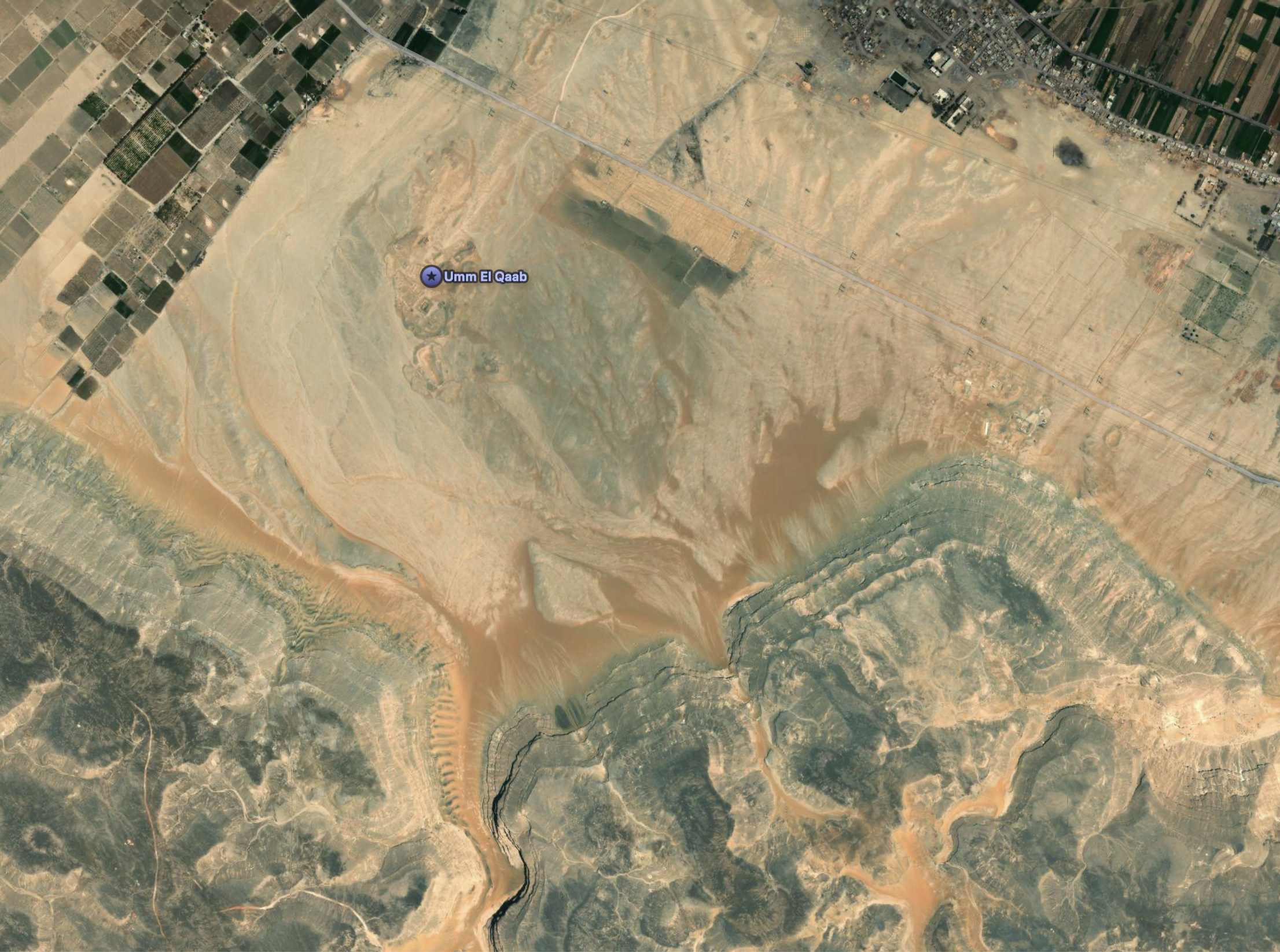
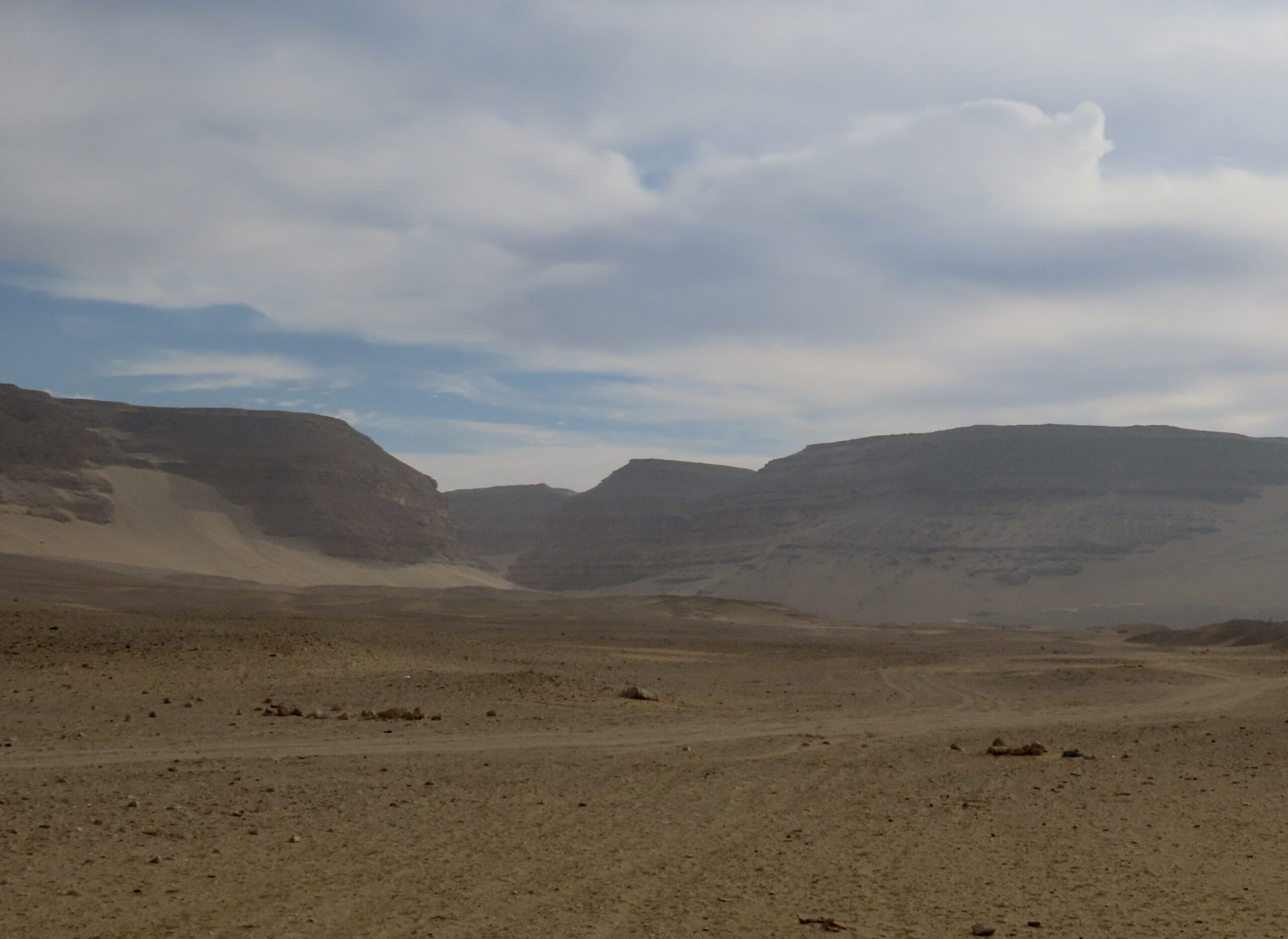
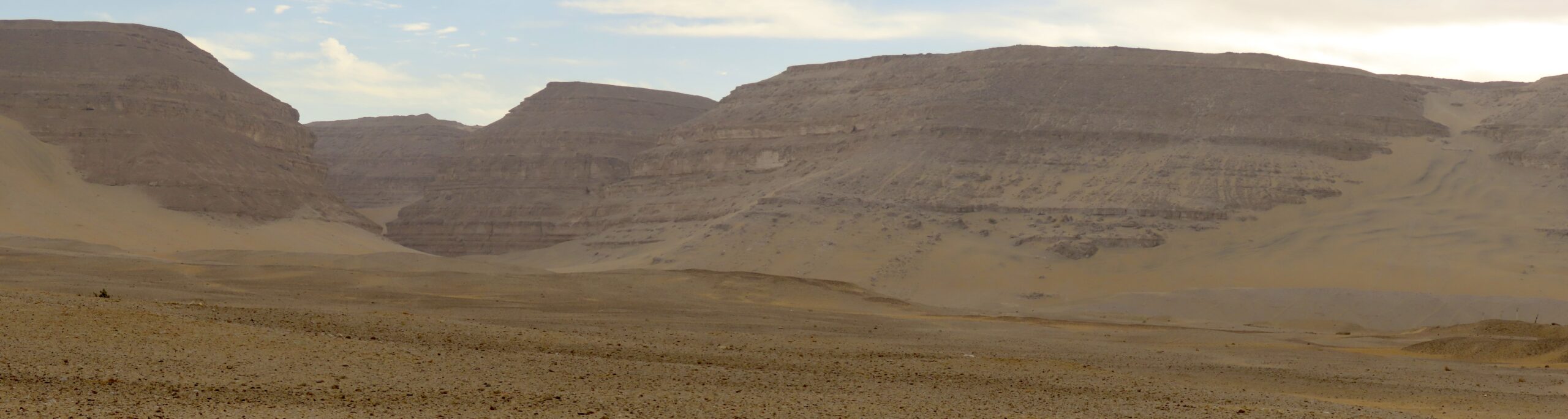

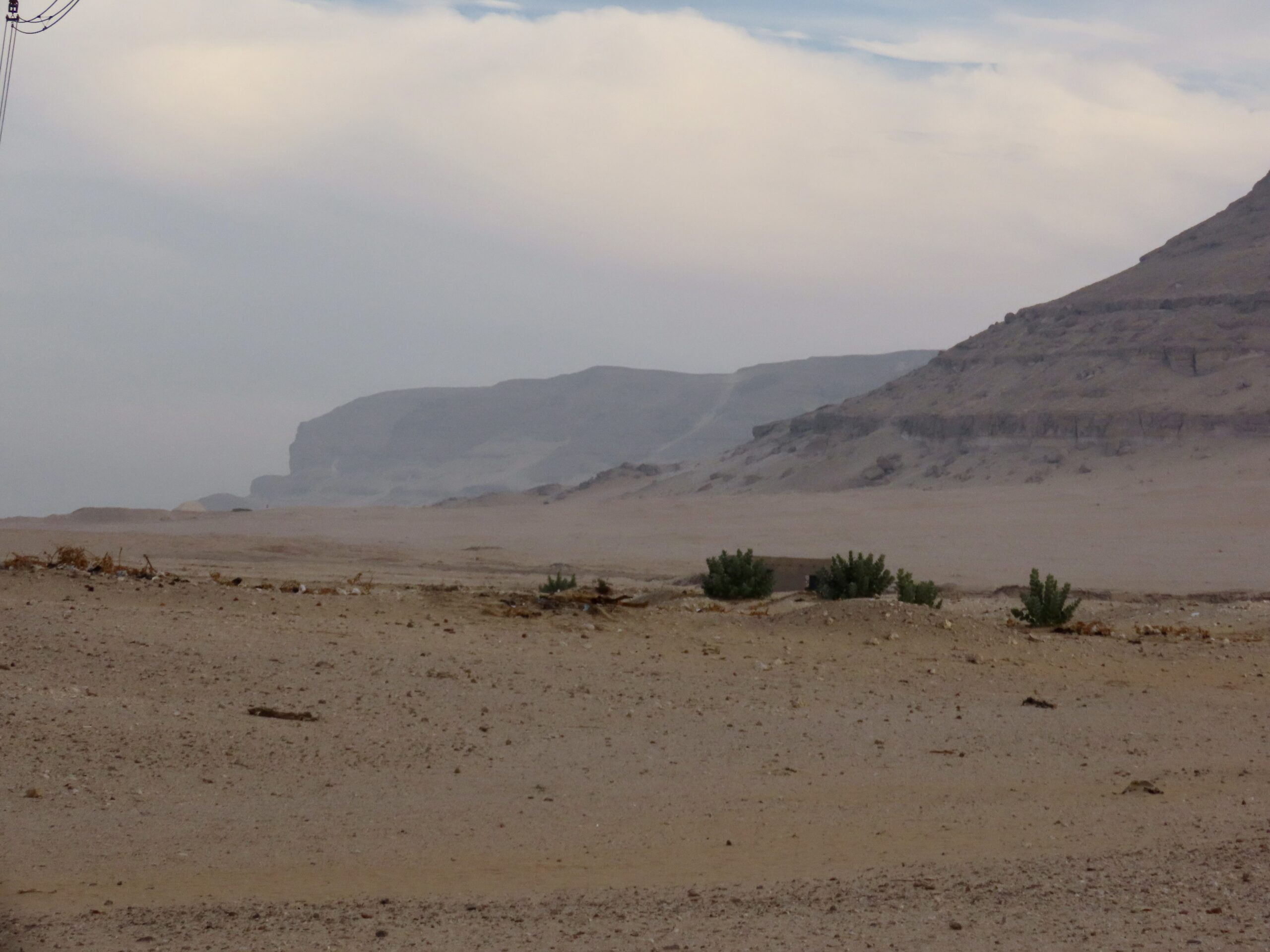
The Umm el-Qa’ab cemetery was probably in use from ~4000 BCE. It contains Abydos proto-kingdom tombs, c. 3200-3000 BCE, a.k.a. Dynasty 0 (including the evidence of the earliest writing and the earliest imported wine – with vintages); and the entire 1st Dynasty, c. 3000-2890 BCE. Outlines of the tombs are quite clear on satellite imagery, but there is little to see on the surface because all tombs are re-buried after excavators complete their work. Still, we were happy to snap pictures of mounds of sand.

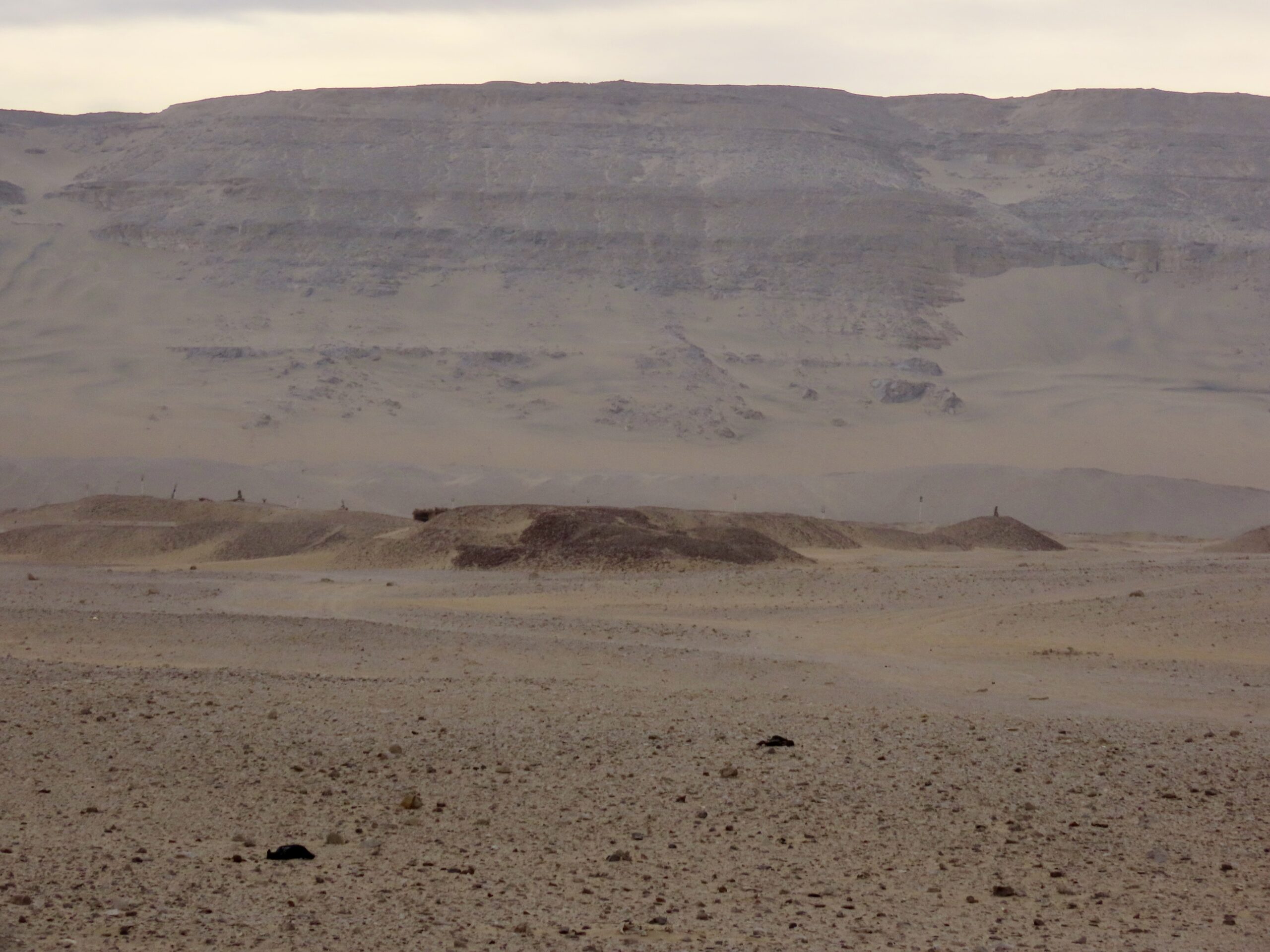

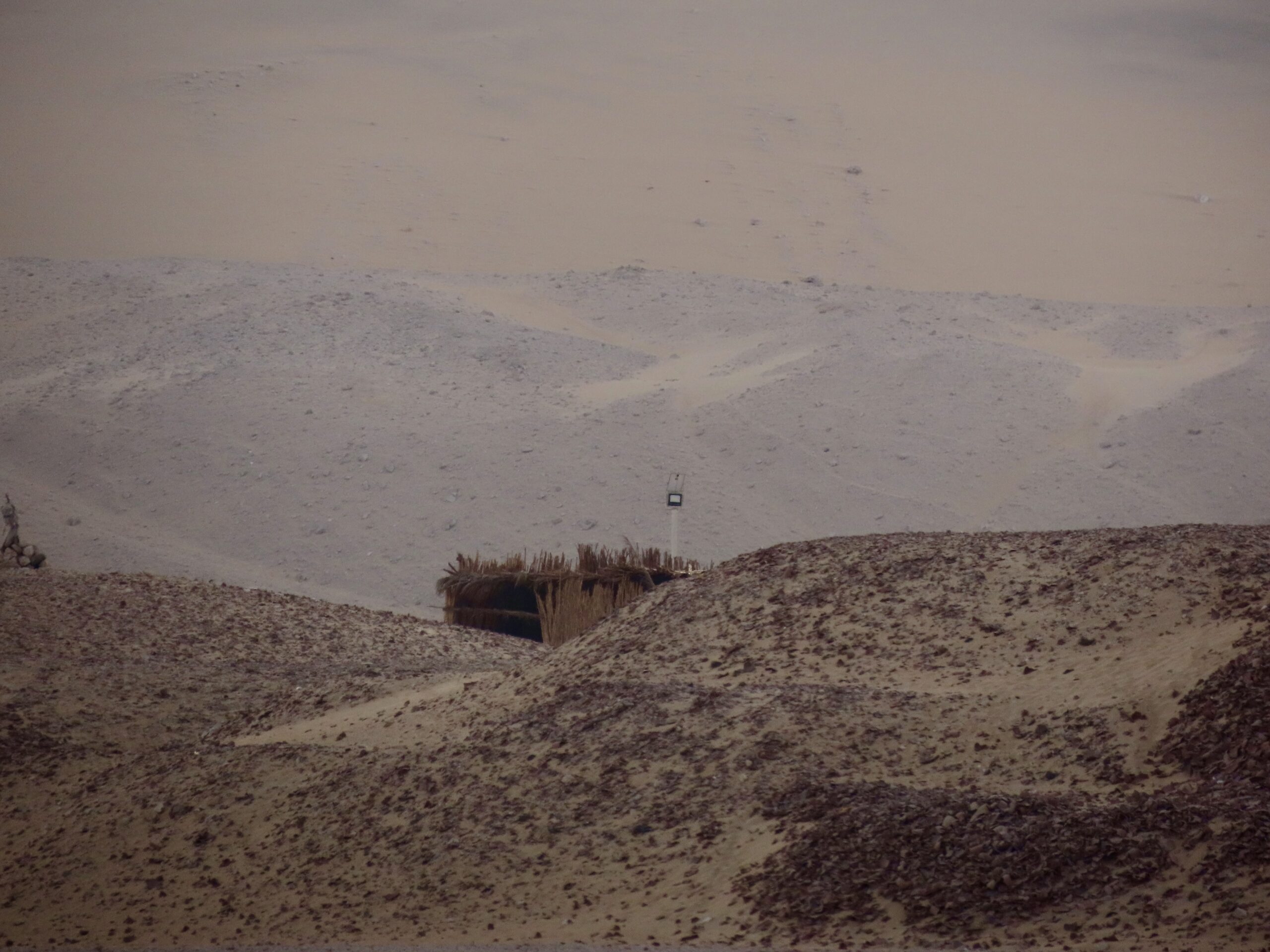

The ruler who first unified the country is likely buried here. (Egyptologists are divided on whether that ruler was Narmer or Aha, but they are both believed to be buried here – assuming they were not the same person using different names…it’s complicated.)
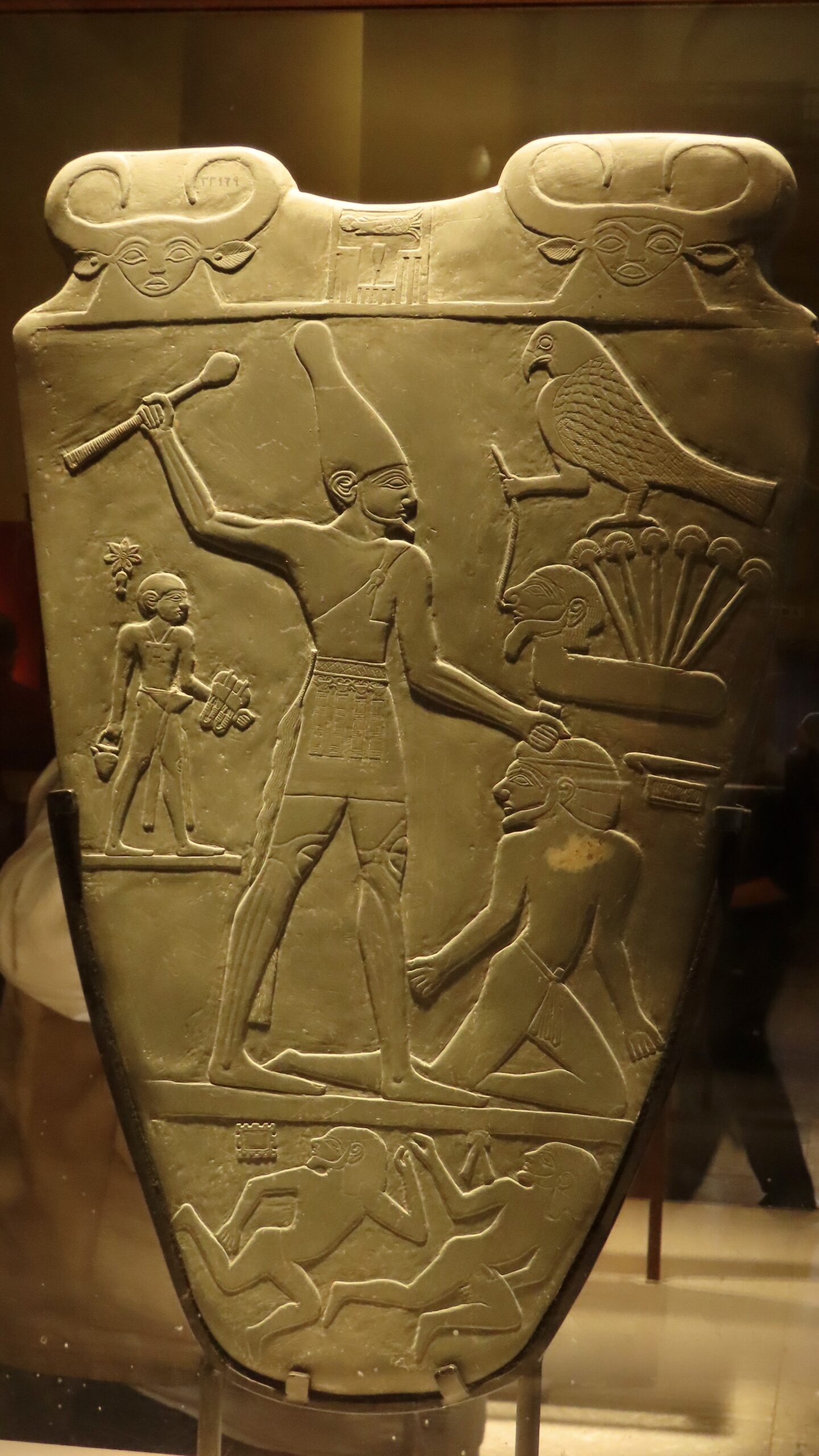
The Narmer Palette (originally found at Nekhen/Hierakonpolis, now in the Tahrir Museum) is believed to reflect that event. Large stone palettes were a typical way to demonstrate power and memorialize important events at this period, and interpreting their symbolism has used up gallons of ink in modern times. The shorthand version: the ruler is seen “smiting” an enemy (bashing him over the head) wearing the White Crown (the tubular one, associated with southern Egypt in later times); on the other side he is marching in procession towards the bodies of slain enemies wearing the Red Crown (the one with the curly bit, associated later with northern Egypt). Those enemies may (or may not) have the faces of “northerners” (the Levant facial type).
There are also a lot of symbols that became part of the standard portfolio for projecting pharaonic power: the false beard, the bull tail, the scepter and the little guy carrying sandals; the bull stomping on people/towns; and the falcon (who seems to be pulling the breath out of a guy with papyrus on his back). Nobody’s quite sure what to make of the Mesopotamian-looking elongated lion heads, although lions are another common pharaonic motif (usually savaging someone). The fish shown in the little palace (“serekh”) is the name Nar-mer, “the Fighting Catfish.”


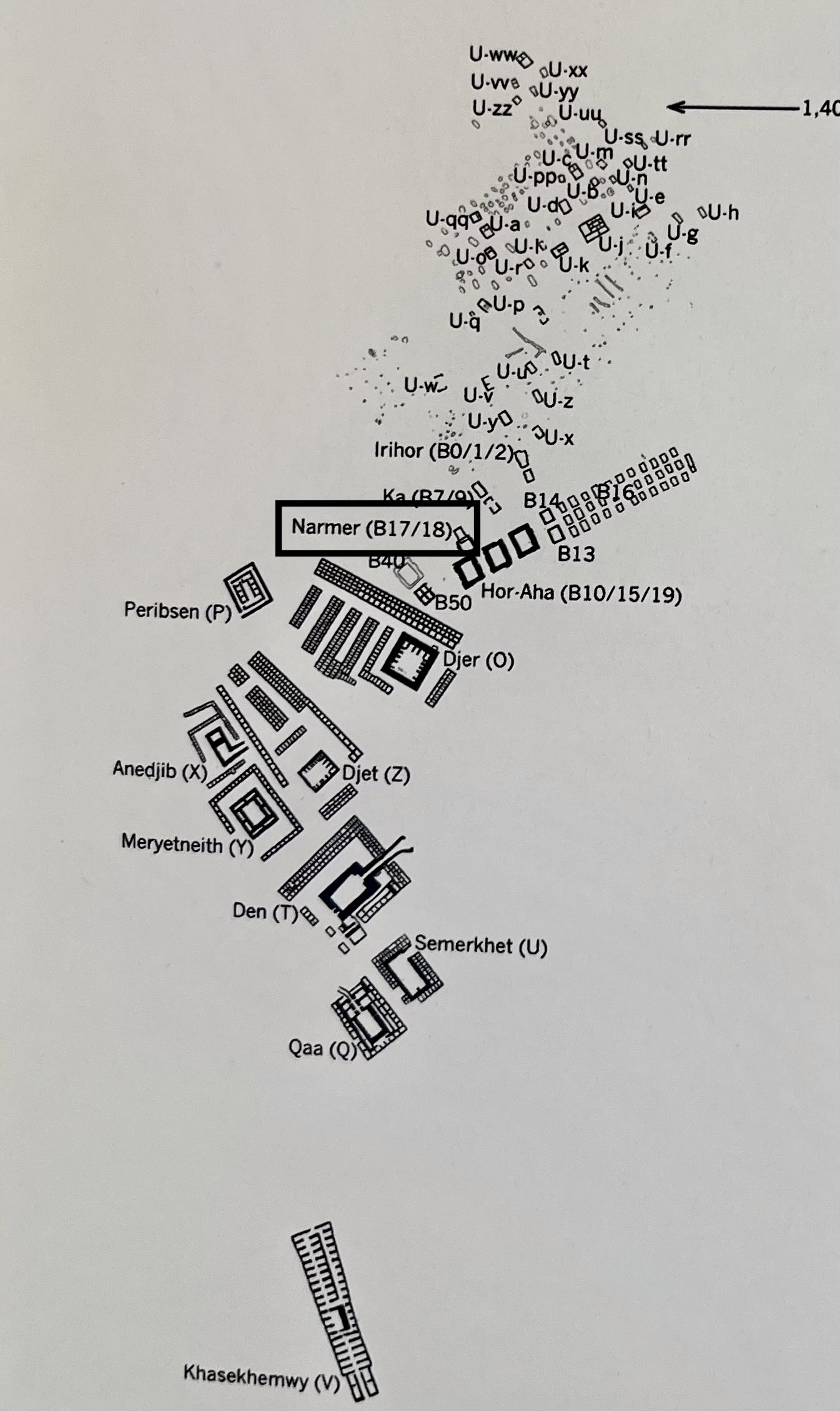
Some Egyptian myths identify Osiris as Egypt’s first ruler. However, the tomb that came to be identified with Osiris is the tomb of Djer, the 3rd ruler of the 1st Dynasty (or the 2nd, depending on who you count. Like I said, it’s complicated.)
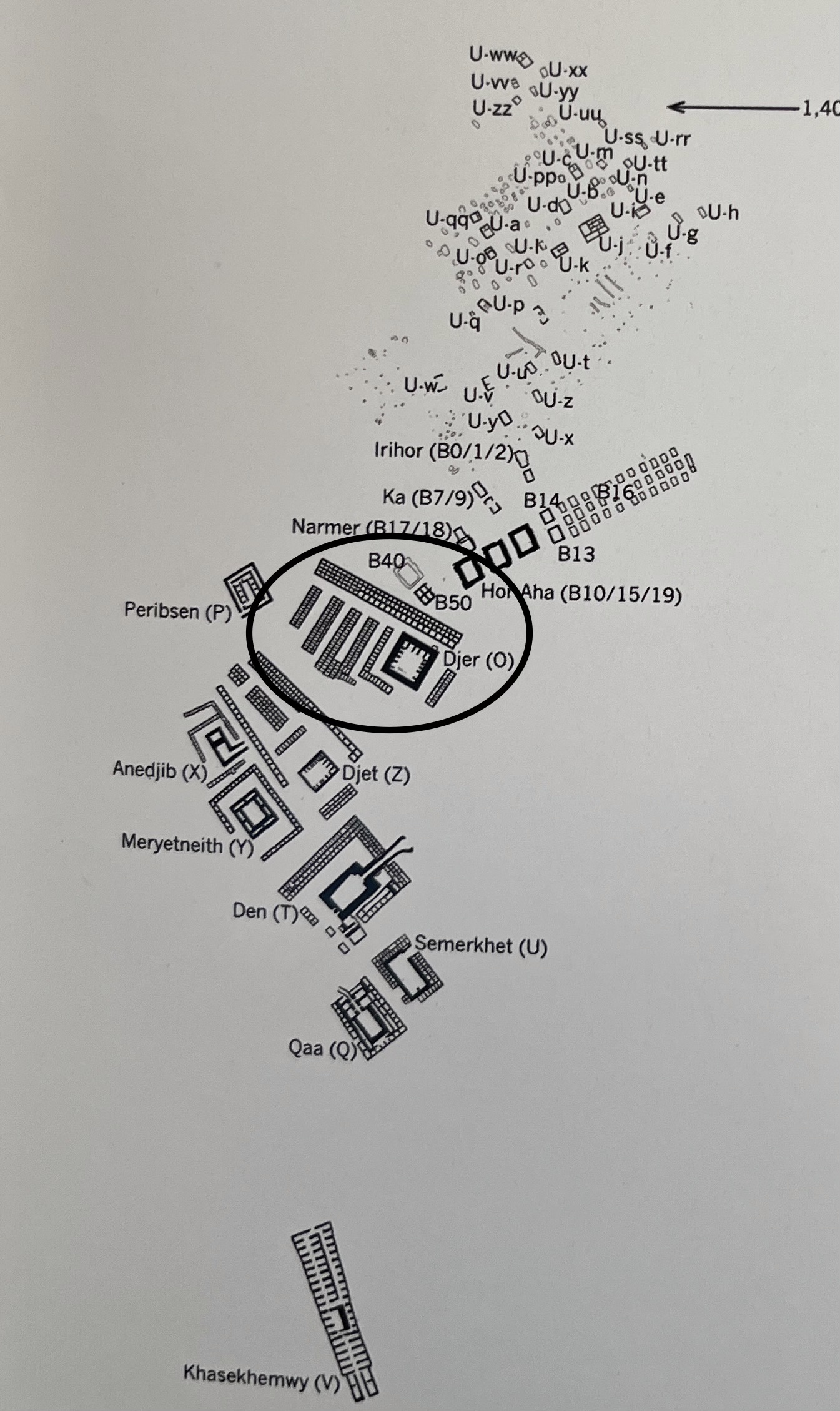

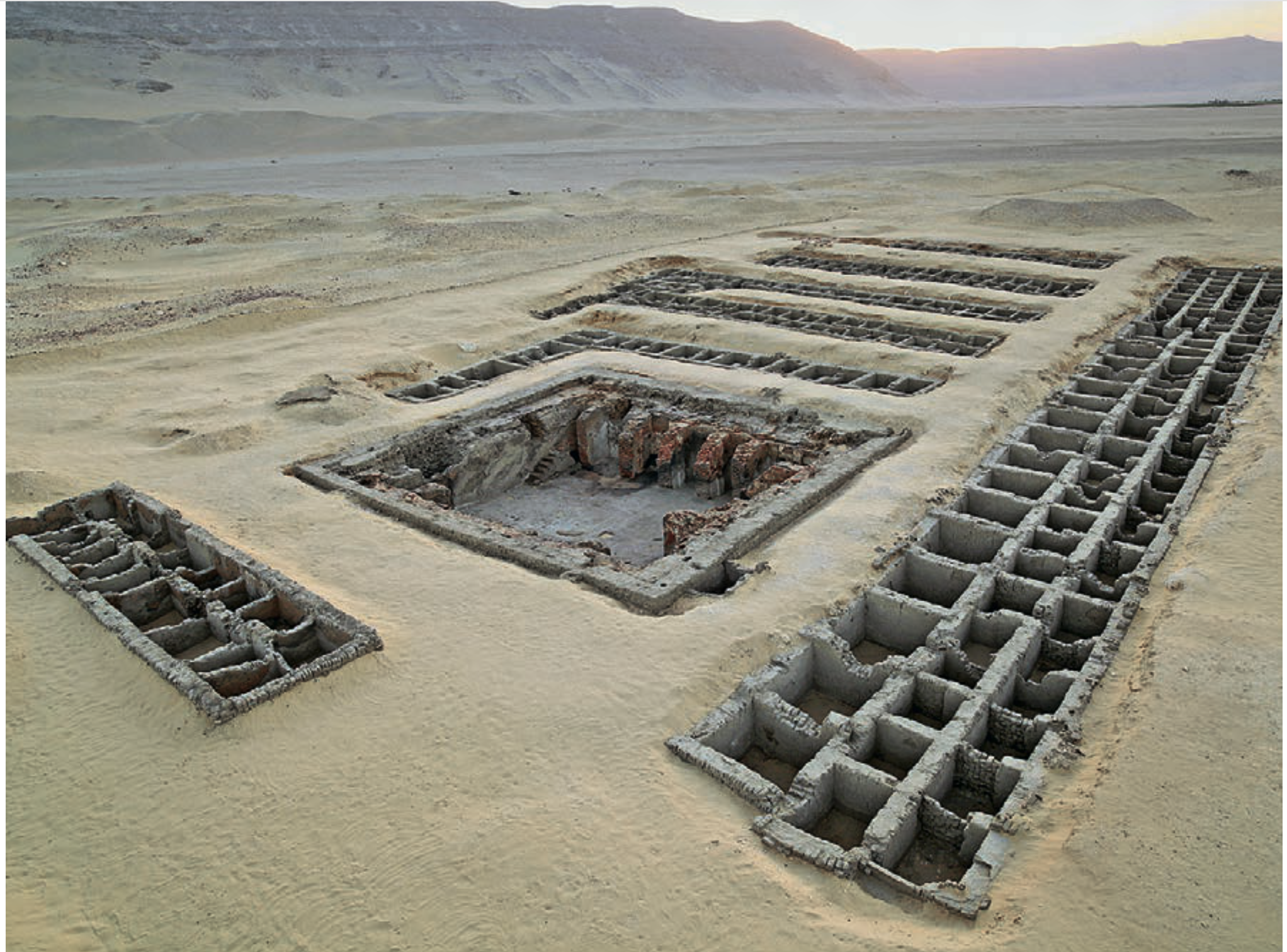
I find Djer’s tomb to be an interesting choice because of the huge numbers of people who accompanied him into the afterlife – probably not by choice. All of the 1st Dynasty tombs are surrounded by “subsidiary” or “retainer” graves. Egyptologists have squabbled for decades about whether these retainers (people who worked for or were part of the royal court in one capacity or another) were human sacrifices, chosen or volunteering to join the ruler in his afterlife court. Evidence considered includes architecture: “Were all of the subsidiary graves constructed and covered/roofed at the same time?” and forensic science: “Is there evidence of blunt/sharp force trauma or strangulation (i.e., pink teeth) on the bodies that remain?” While not all rulers’ subsidiary graves seem to contain sacrificed retainers, Djer’s subsidiary graves do. They seem to have been buries with an almost factory like efficiency.
Aha’s tomb, Djer’s predecessor, has 36 subsidiary graves. Djer’s tomb has 318 subsidiary burials. The bodies were buried in long trenches divided by mud brick walls – an efficient way to accommodate a lot of bodies quickly – and cranial trauma is evident. Rosalyn Campbell, whose PhD thesis reflects the most recent work, places these deaths in the cultural context of government violence as a way to reinforce power and enforce unity on a newly unified – and probably still divided – polity. I find some of her comments quite chilling, especially in the context of our modern times. (Some things never change…)
“…human sacrifice frequently occurs with the birth of a state, as disparate groups are unified (in theory if not in reality) under one government… Sacrificing human lives served as a form of conspicuous consumption, a way to demonstrate the king’s command of resources and his ability to waste (in terms of the earthly economy, at least) dozens or hundreds of human lives…Human sacrifice is, however, an effective tool of power for a ruler looking to expand and demonstrate his control over potentially reluctant or unwilling citizens. In times of crisis, public sacrifices can also serve as a tool to maintain and reaffirm community identity and social boundaries…”
Was there a cultural memory that identified Djer as particularly to be revered because of this demonstration of power?
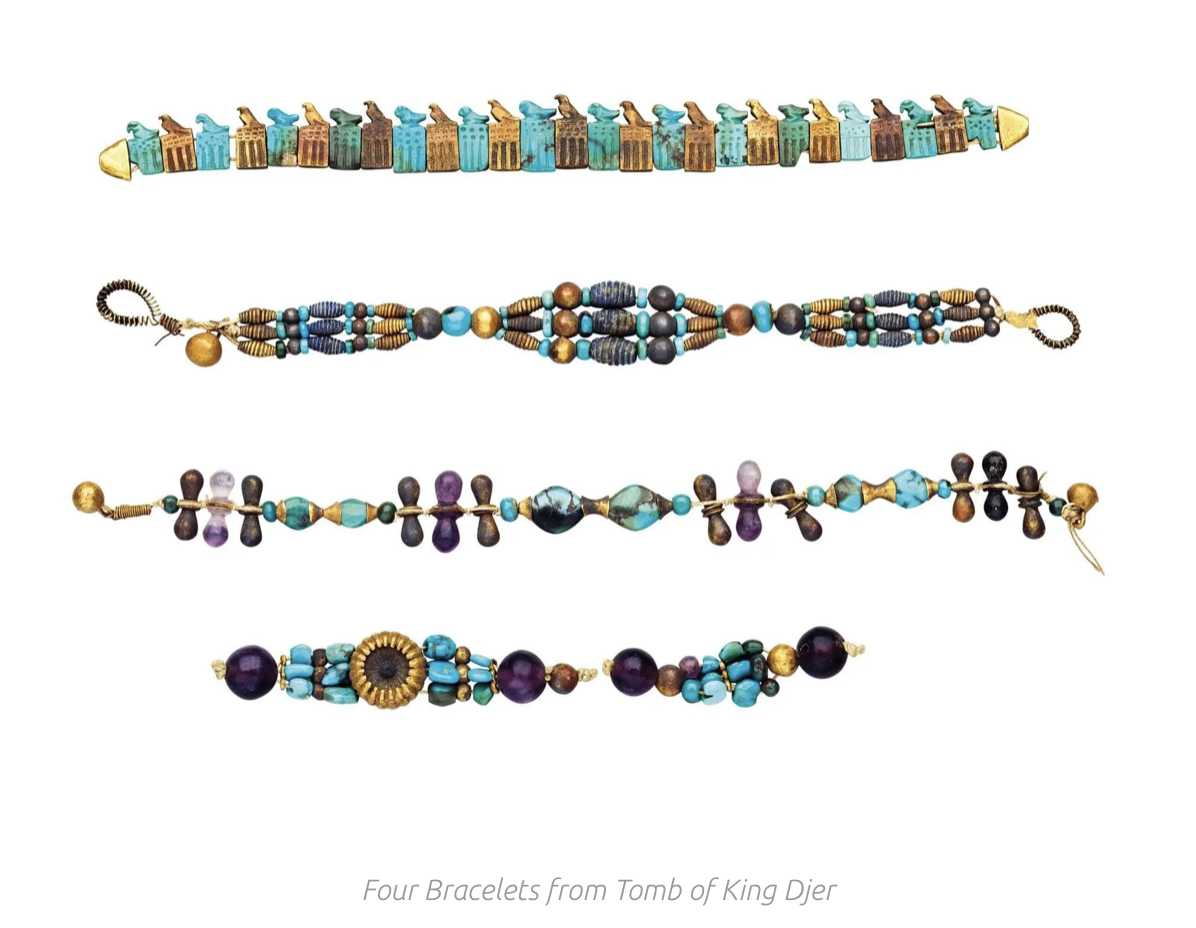
Although Djer’s tomb had been ransacked and robbed in antiquity, the robbers missed a human arm garbed with gorgeous bracelets.

Once Djer’s tomb became associated with Osiris, there was some re-fitting in the interior. A 13th Dynasty ruler installed this “bed of Osiris” in the tomb, showing a crucial moment in the Osiris tale: Isis (in the form of a kite) magically impregnating herself on her husband’s corpse.


Kom es-Sultan
After feasting our eyes on the wonders of the Umm el-Qa-ab, we walked back to the taxi rank and drove a bit further south to the Kom es-Sultan, site of the Khentiamentiu/Osiris temple and the starting point for the religious festival.
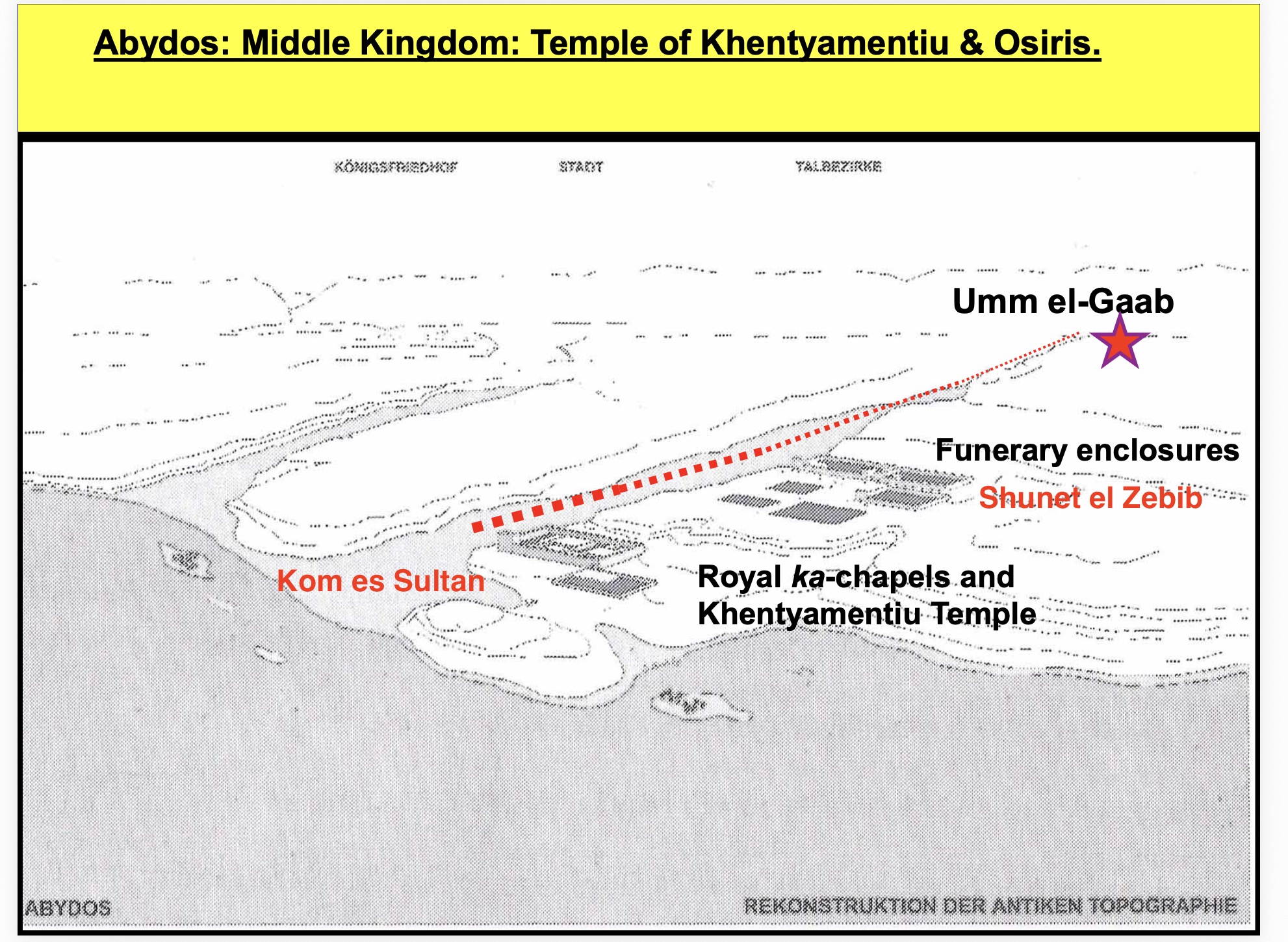
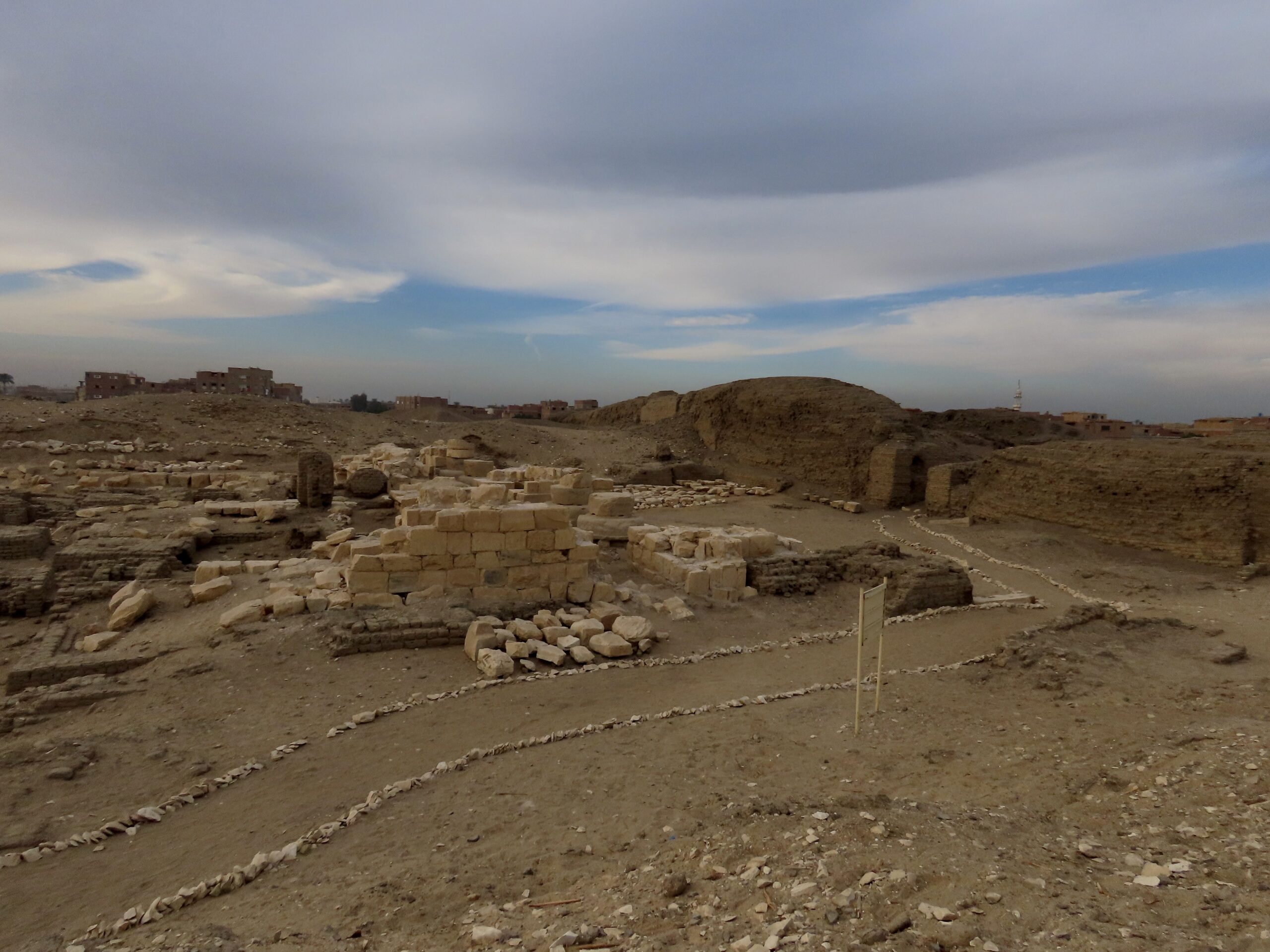
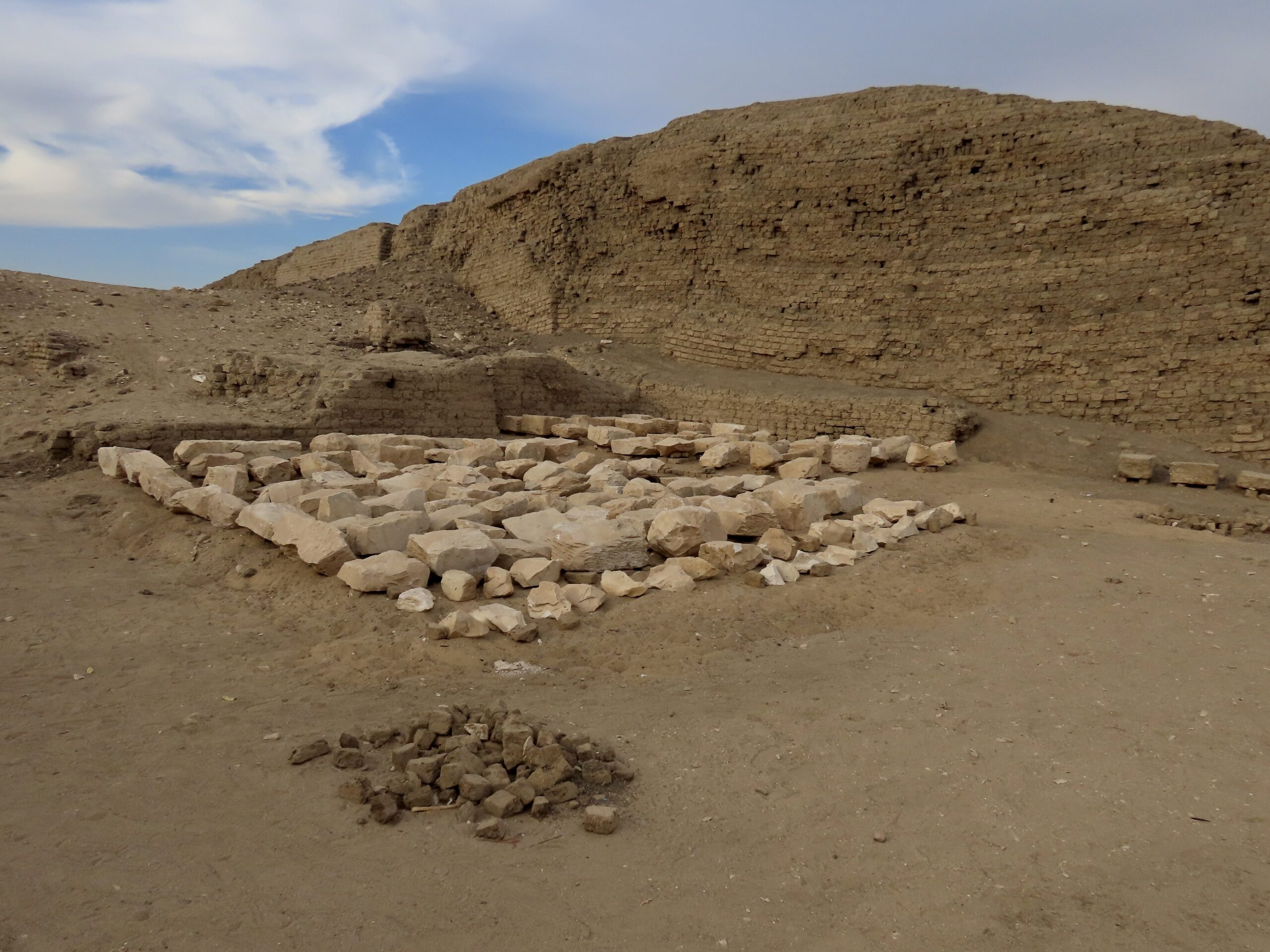
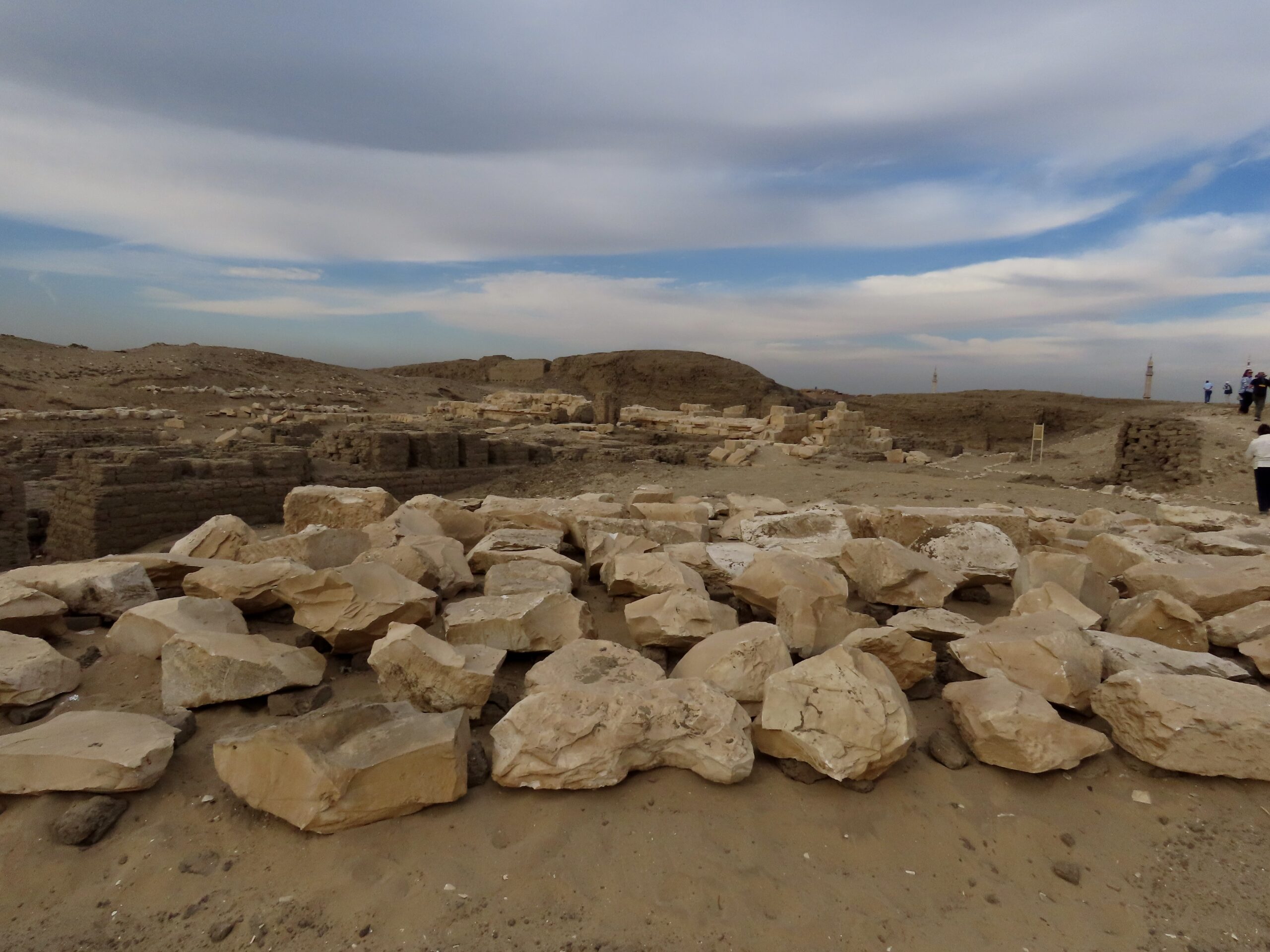
Although the Khentiamentiu temple was enlarged and improved by multiple rulers over the course of two thousand years, it is in ruins today. The original temple site is at the east end of the complex, now just an area of lumpy sand surrounded by mud brick walls. The stones are from a temple of Ramses 2 (New Kingdom) with Middle Kingdom mud brick chapels in front. (Keep in mind that these mud bricks are 3,000-4000 years old.)


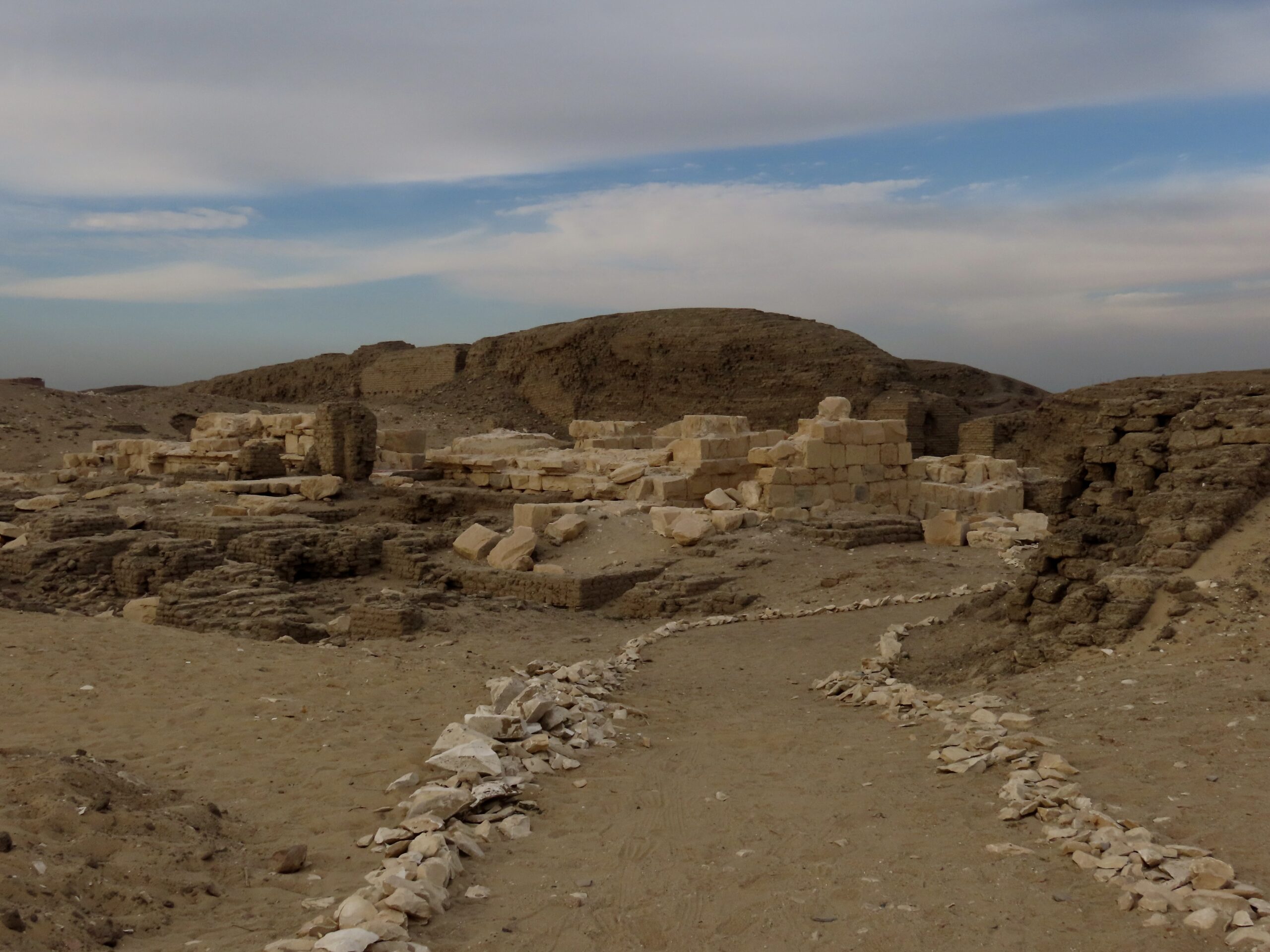

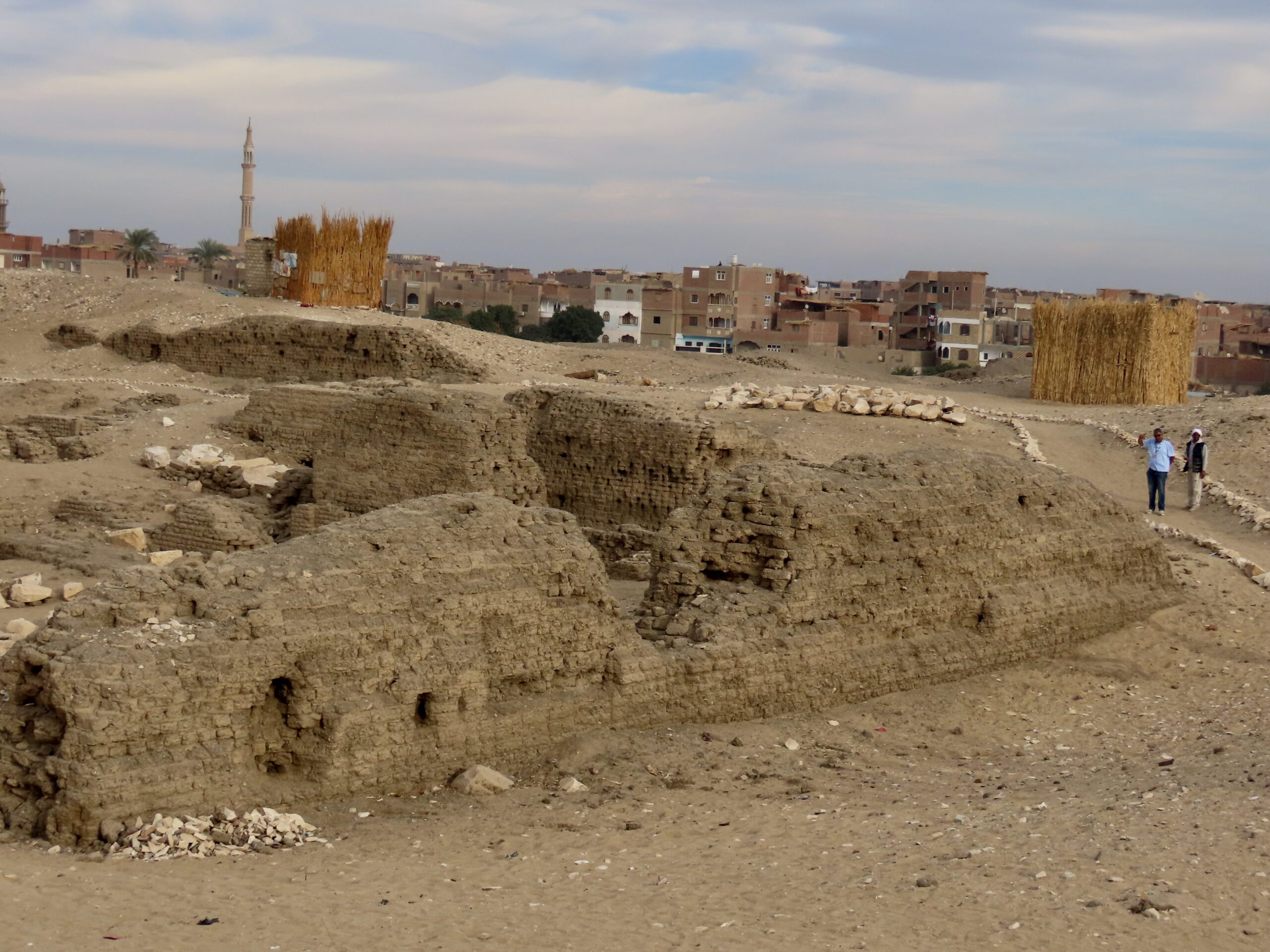
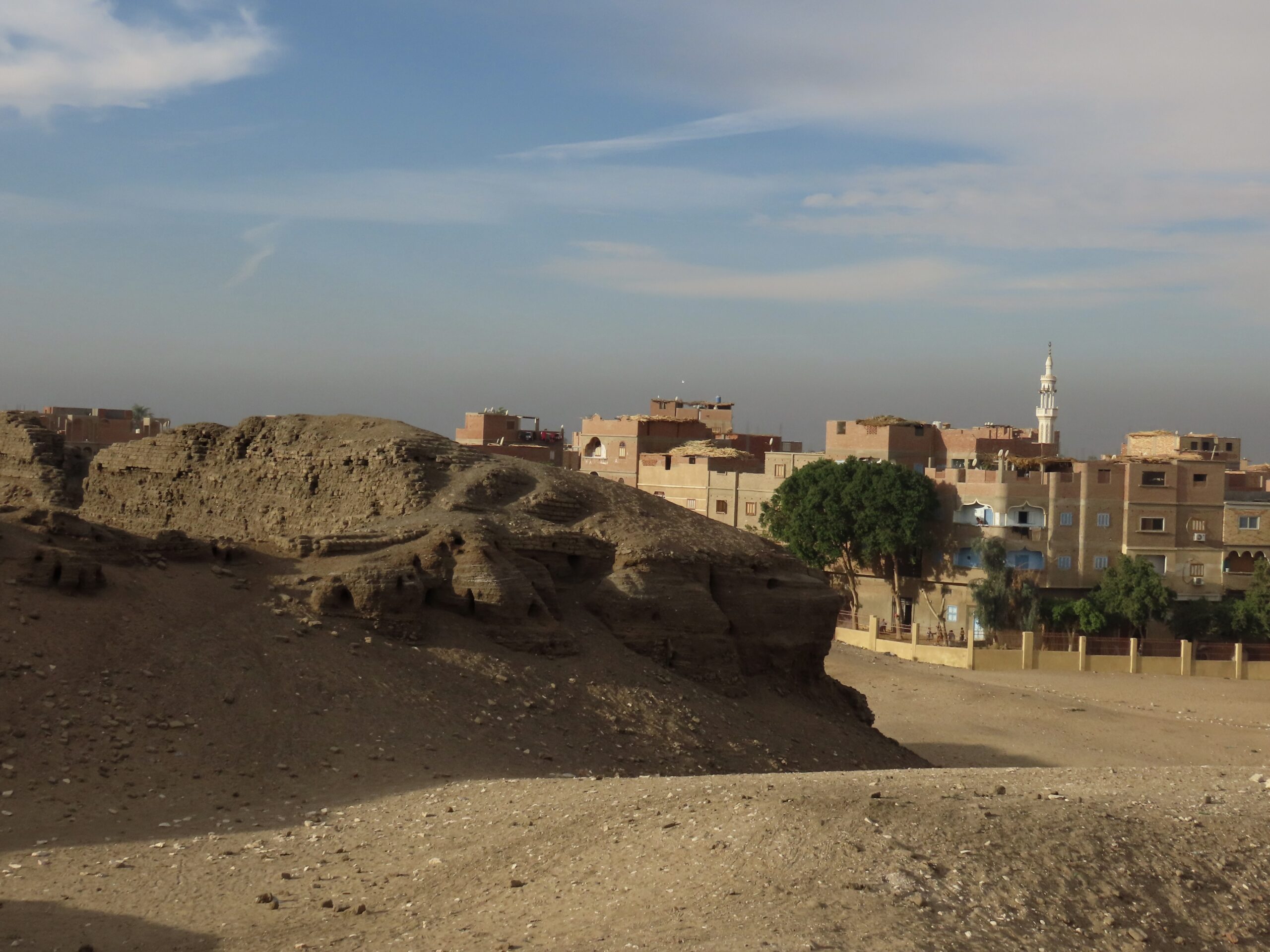
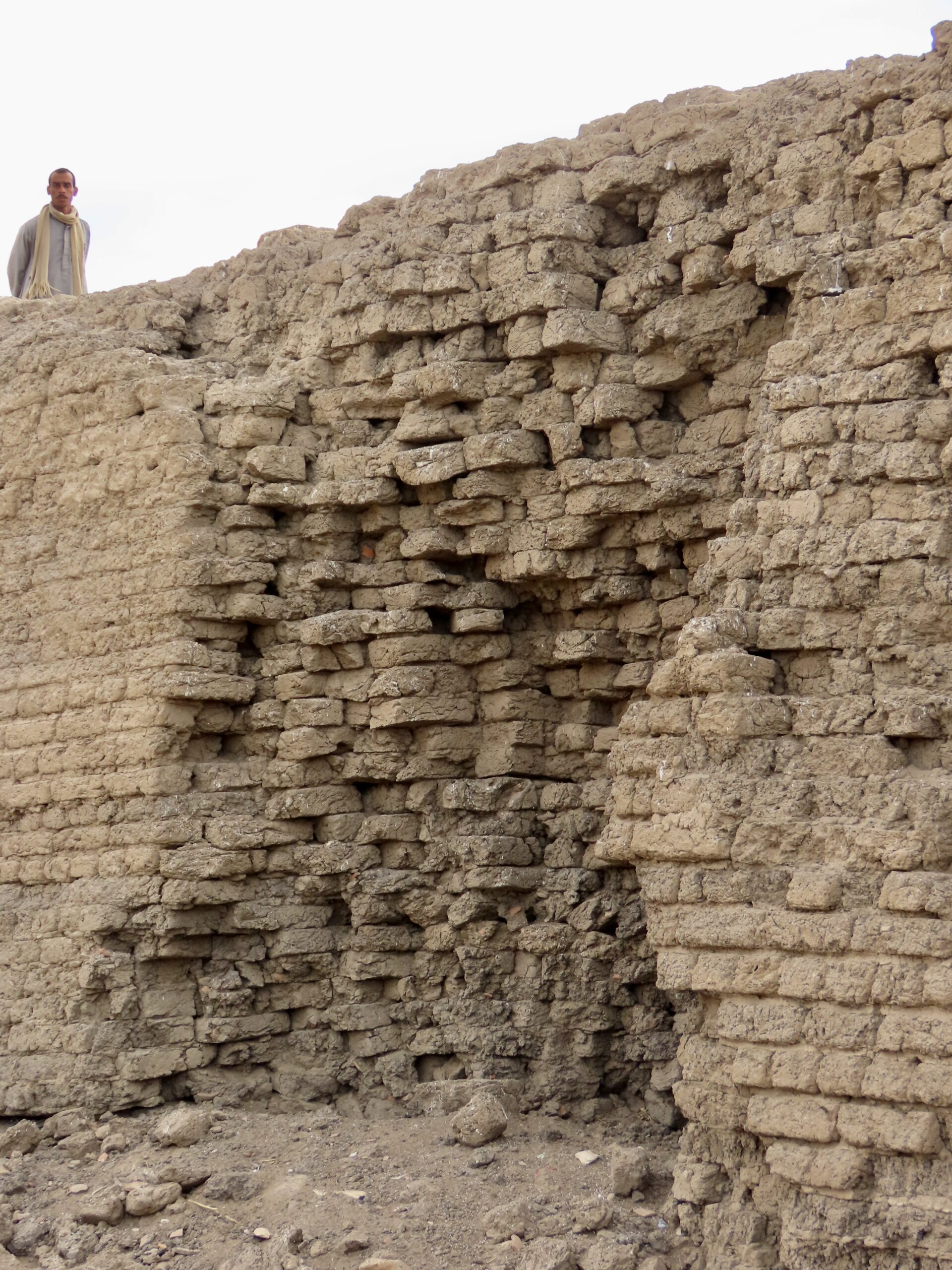




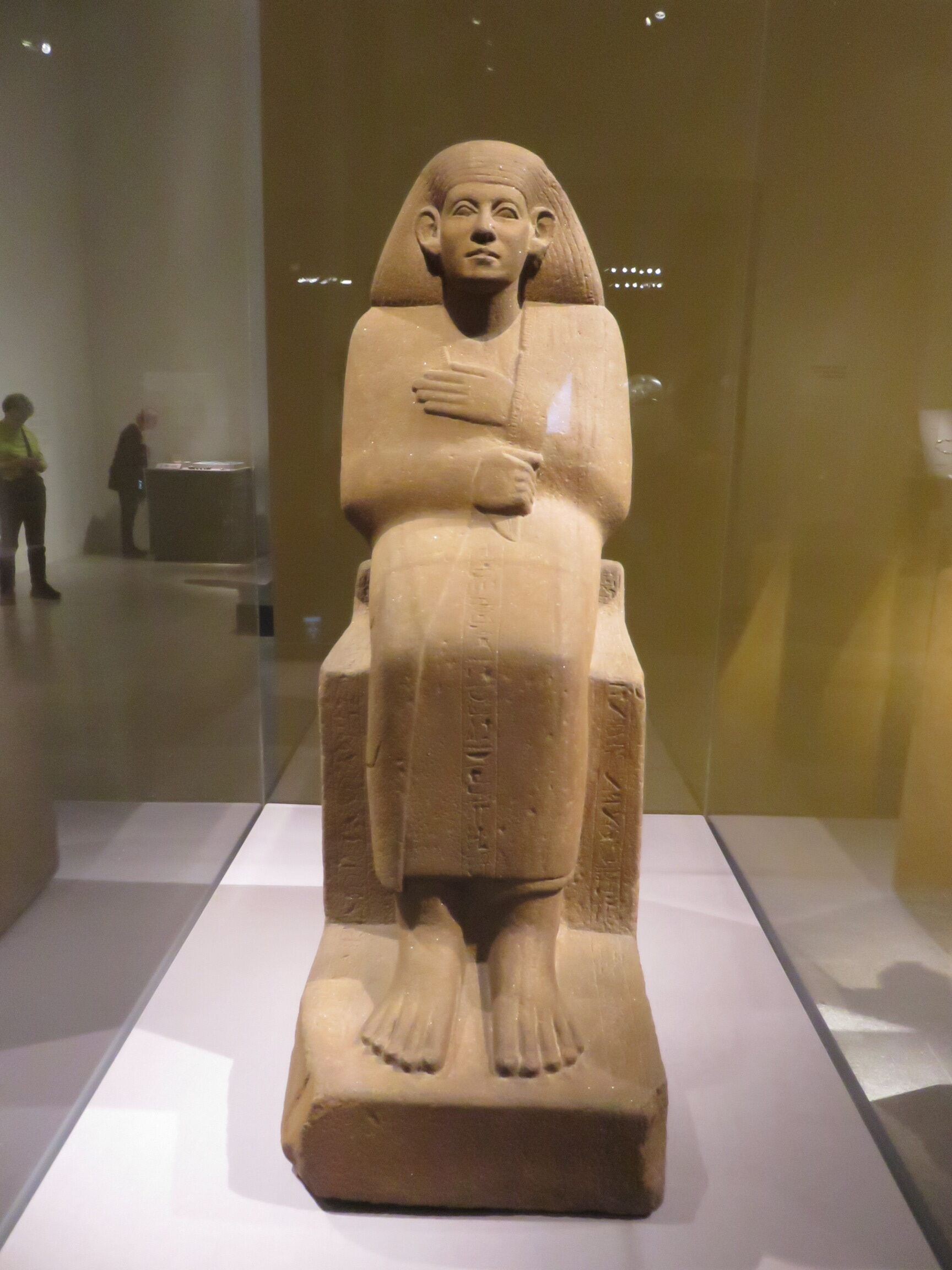
It became popular for people to build memorial spaces for themselves along the processional route, in order to share in Osiris’ magic and his offerings – so popular that priests had to issue decrees restricting encroachment along the route. Wealthy people would build small chapels with statues of themselves inside, like this statue of Rehuankh (British Museum). (Slides from Mumford.)


Those who couldn’t afford a shrine erected stelae, large stone tablets inscribed with magical spells and offerings to preserve their identity and sustain them in the afterlife. Thousands of such stelae have been recovered – this collection is in the GEM.

The Louvre has a particularly fine example in the stela of the Overseer of Herds Abkau and his wife, Imemi. The couple sits at a table piled high with offerings while family members and servants recite rituals and bring more food and drink. Inscriptions in the upper register (above the couple) depict scenes from the Osiris story. (First photo is from the Louvre’s files.)
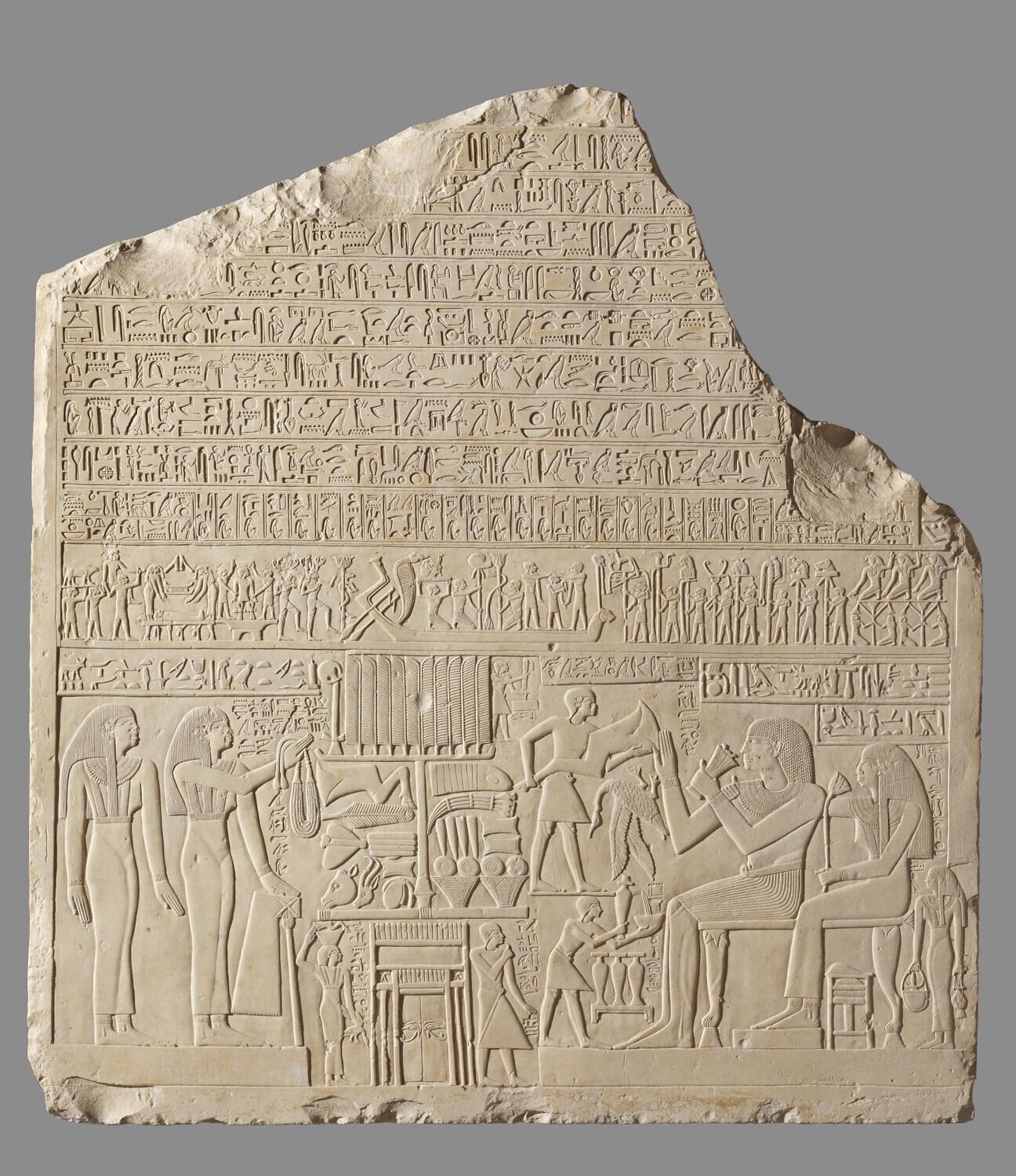
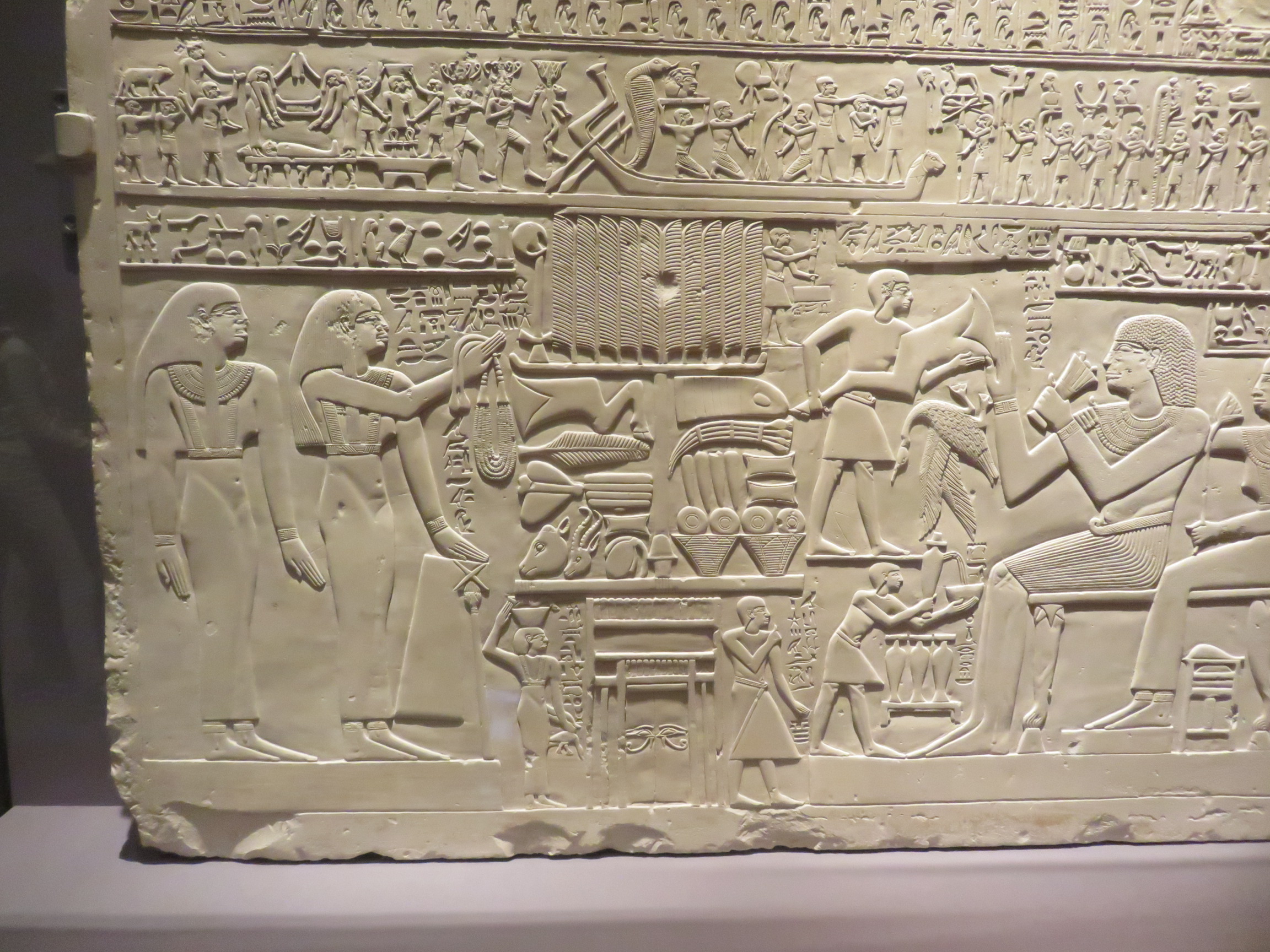
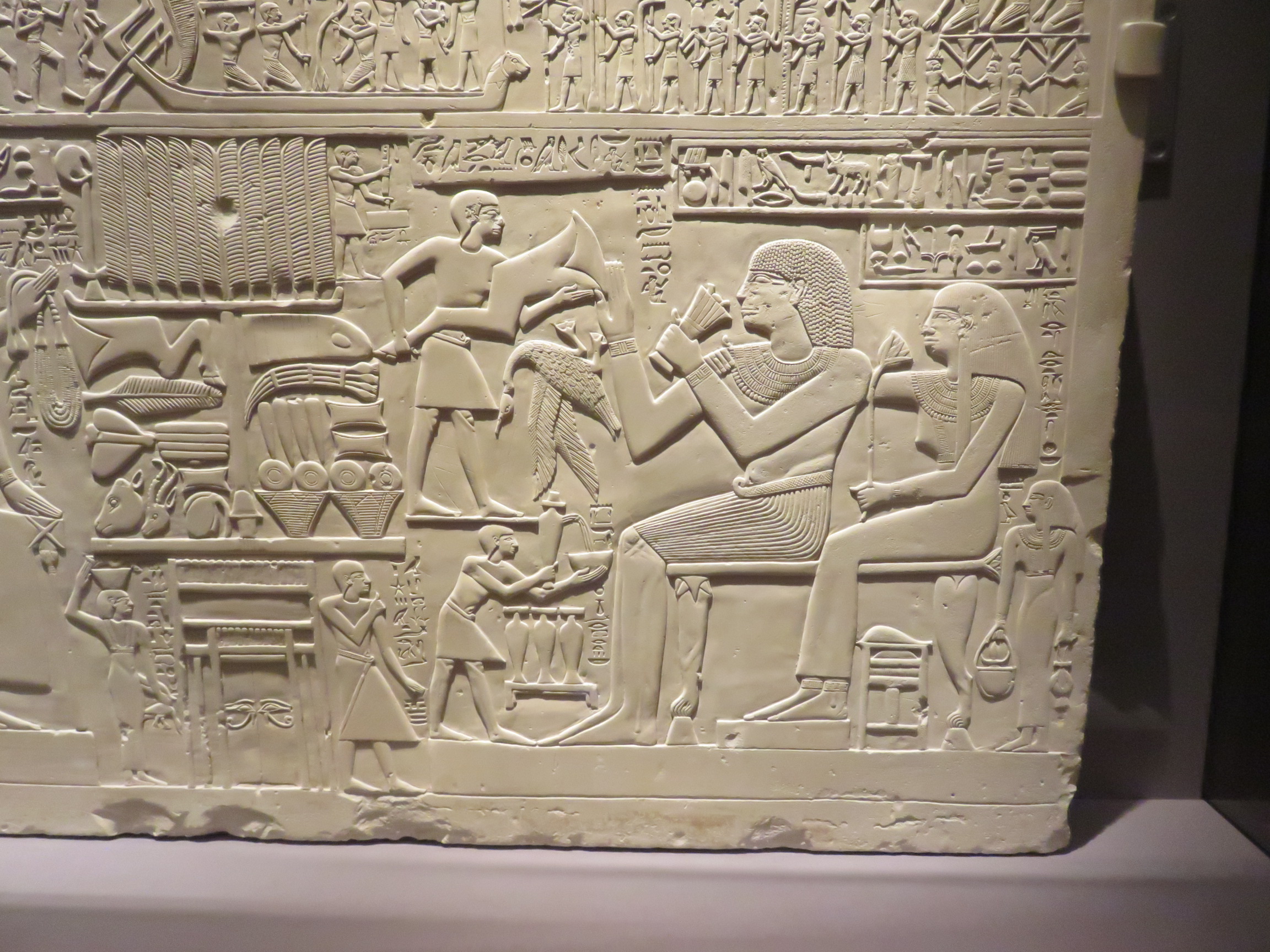

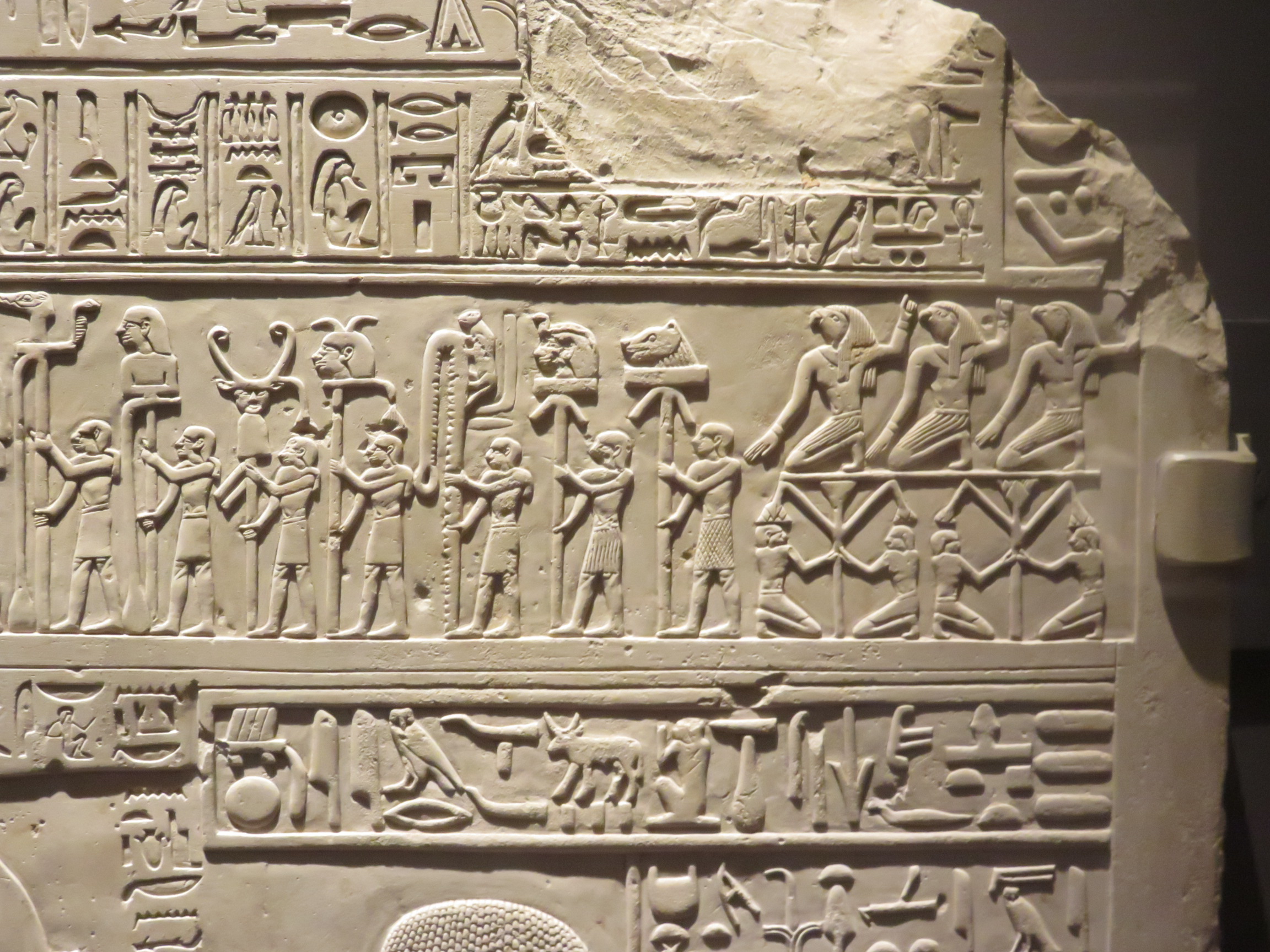
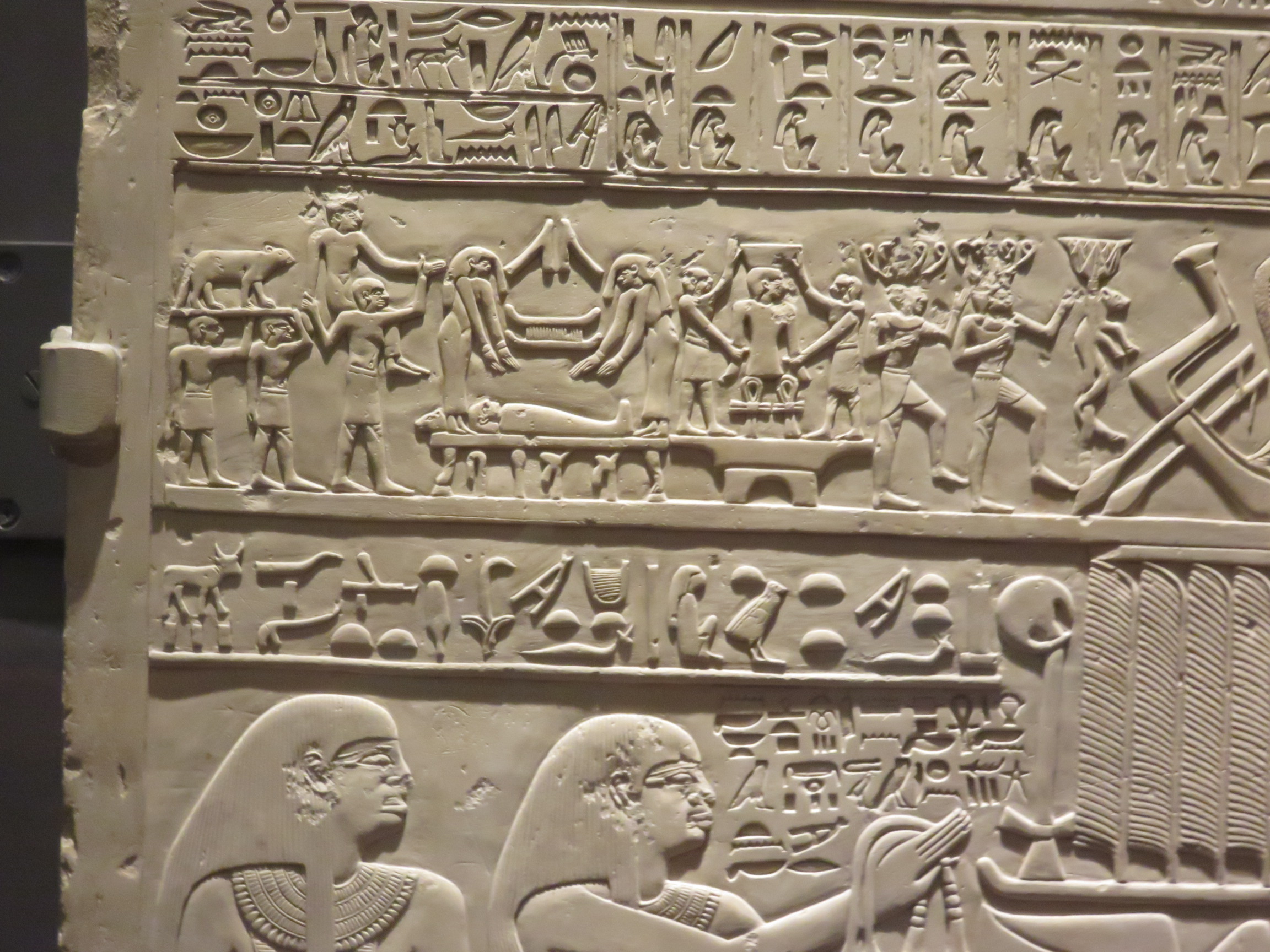
Below, the Overseer of Priests Iki and his wife are listening to the musician Neferhotep perform a funerary hymn on a bow harp (Riksmuseum van Oudheden, Leiden). The bow harp below is in the MMA.


This unusual stela, made for the Butler Senebef, has a peculiar window shaped as an ankh. The window allowed him to both view the divine image of Osiris as it passed and to smell the incense used to please the gods. The text reads, “Uncovering (lit. opening) the face of this butler Senebef so that he sees the lord of the horizon as he sails across heaven…I have made for myself this chapel . . . at the Terrace of the Great God, lord of life, foremost of Abydos . . . so that I smell the incense that comes forth and betakes me into the god’s fragrance.” (From the MMA’s Ancient Egypt Transformed: The Middle Kingdom, an exhibition catalog.)

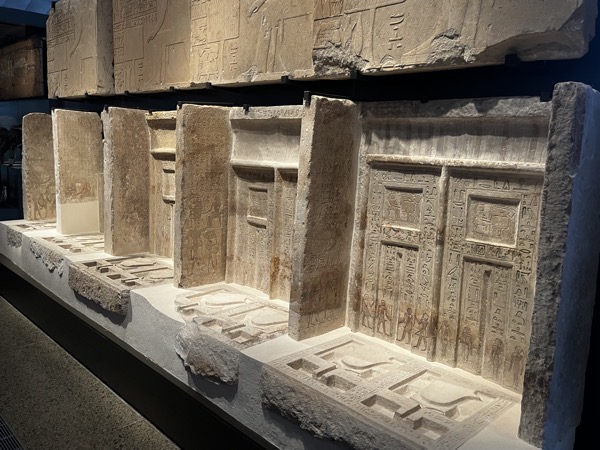
Stelae sometimes took the form of false doors, magical entries which provided the deceased a means of access from the afterlife to world of the living. False doors are standard features in tombs and frequently found on coffins, especially in the Middle Kingdom.
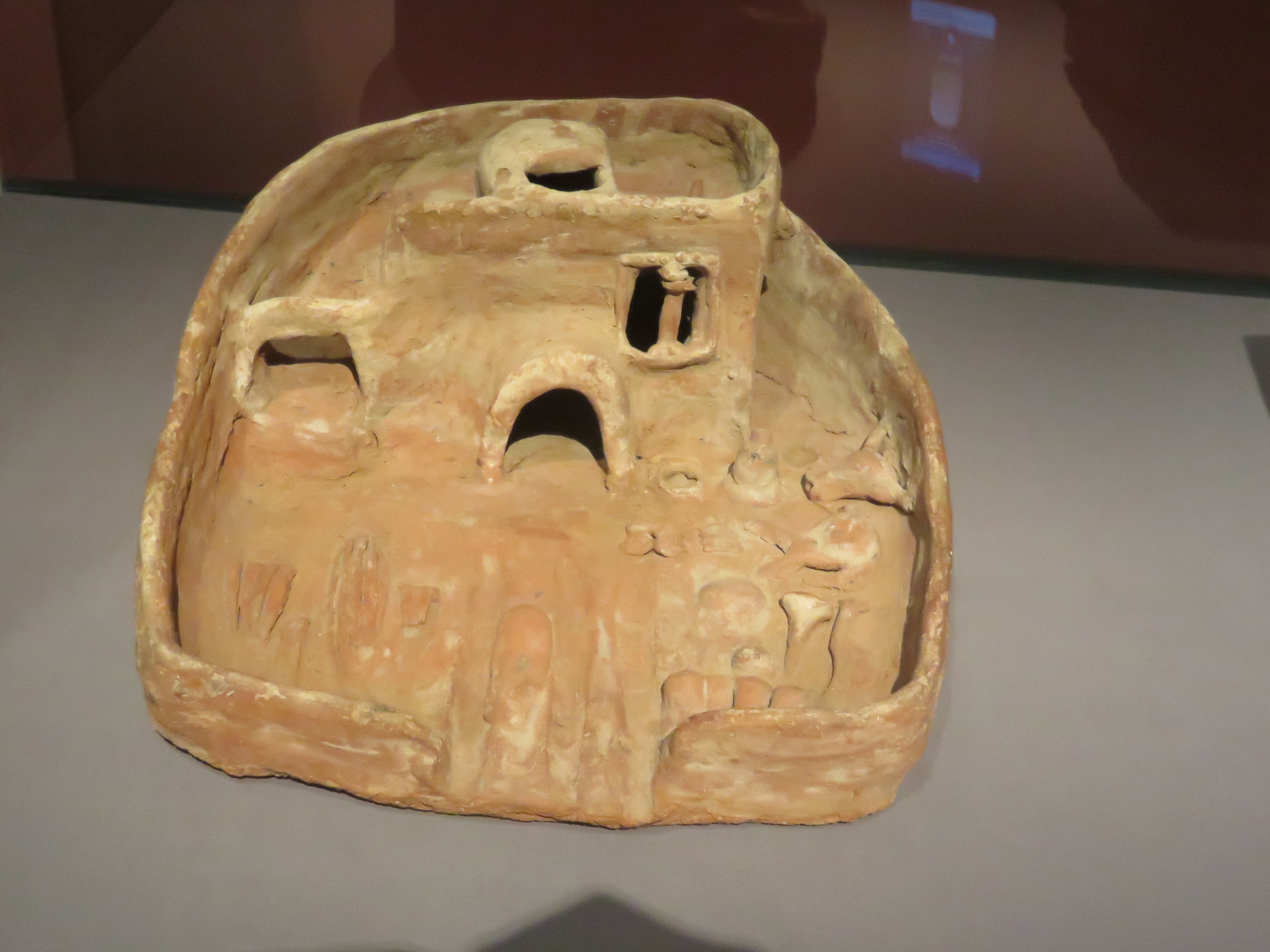
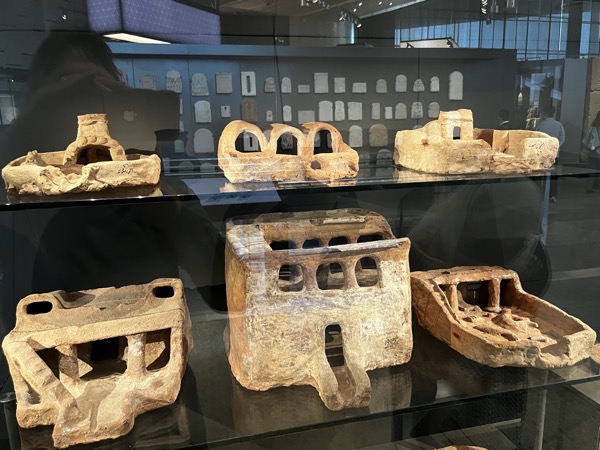
My personal favorites are “soul houses,” small pottery models of dwellings which served as places for less wealthy people to receive small offerings, like beer and bread. These are from the BM, the GEM and the Museo Egitto in Turin.


The pilgrimage to Abydos by boat also features prominently in Egyptian grave goods. The painting below is by DeGaris, reflecting the voyage of Userhat and his wife (MMA). The model boat is from the tomb of Ibi at Gebelein (Museo Egitto, Turin).




Shunet el-Zebib
After an hour spent wandering the ruins of Kom es-Sultan, we walked west again, heading to the Shunet el-Zebib.

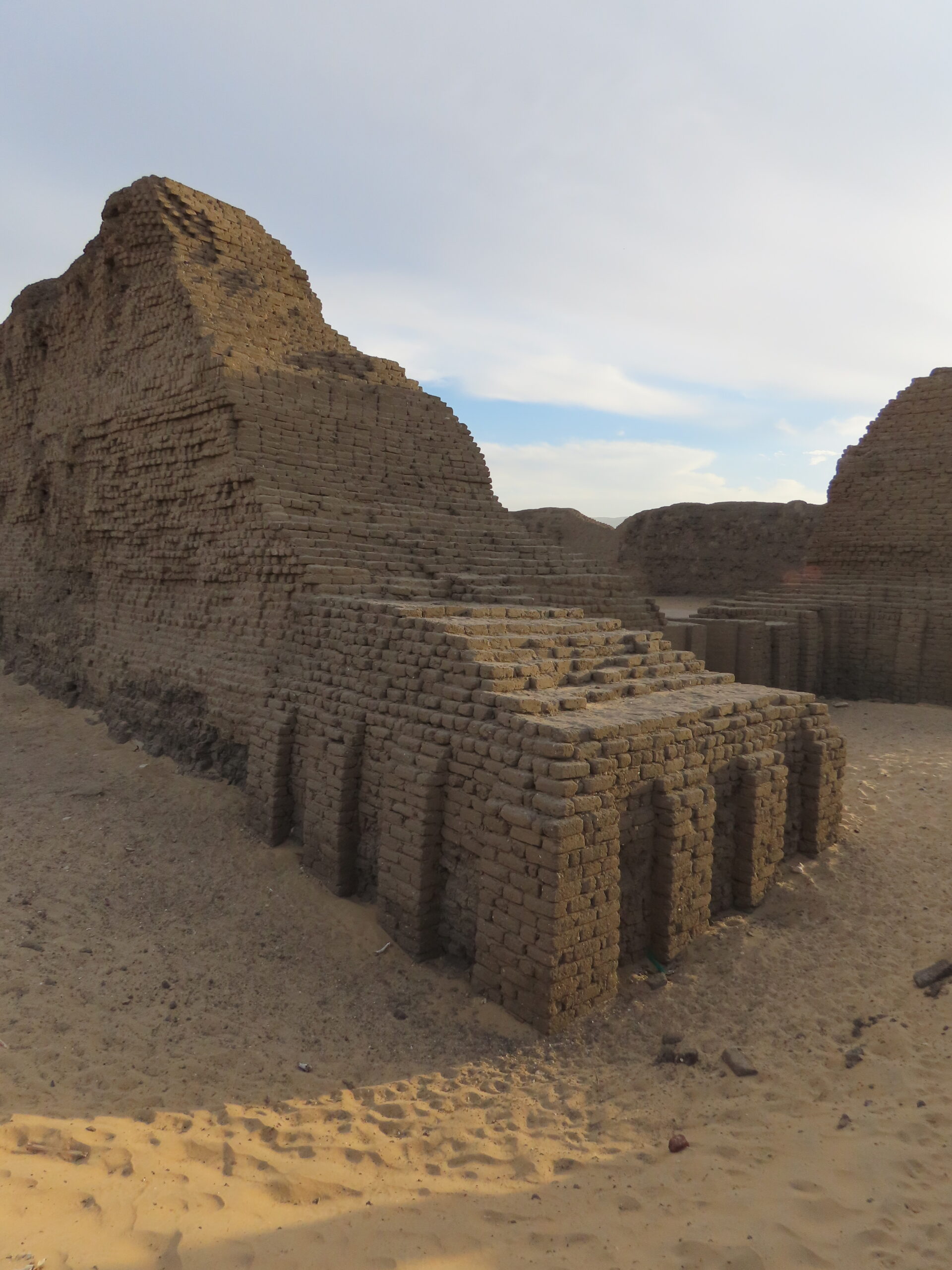
In addition to the tombs at Umm el-Qa’ab, all of the 1st Dynasty rulers also had very large mud-brick “funerary enclosures” located closer to the temple of Khentiamentiu. Scholars are still unsure what purpose these enclosures served, but most think they were used in some way for funerary rituals. Each of these enclosures (which were also surrounded by subsidiary burials) appears to have been contemporaneously dismantled. Only one survives: the funerary enclosure of Khasekhemwy, last ruler of the 2nd Dynasty (c. 2700 BCE).
Interestingly, he may have been another “re-unifier,” bringing the country back together after a period of unrest (possibly civil war) in the 2nd Dynasty. The evidence for this mostly comes from the symbolism of names (and, is, of course, hotly contested). Simply put, his predecessor(s) used the image of the god Set, instead of Horus, in their throne names. Like Mentuhotep 2, Khasekhemwy came to the throne as Horus Khasekhem, “Horus, the powerful one has risen.” After (presumably) some years on the throne he changed his name to Horus-Seth Khasekhemwy Nebwy-hetep-imef, “Horus and Seth, the two powerful ones have risen, and the two lords are at peace within him,” signaling that he had brought the competing sides together. (Such is the stuff of Egyptology.)
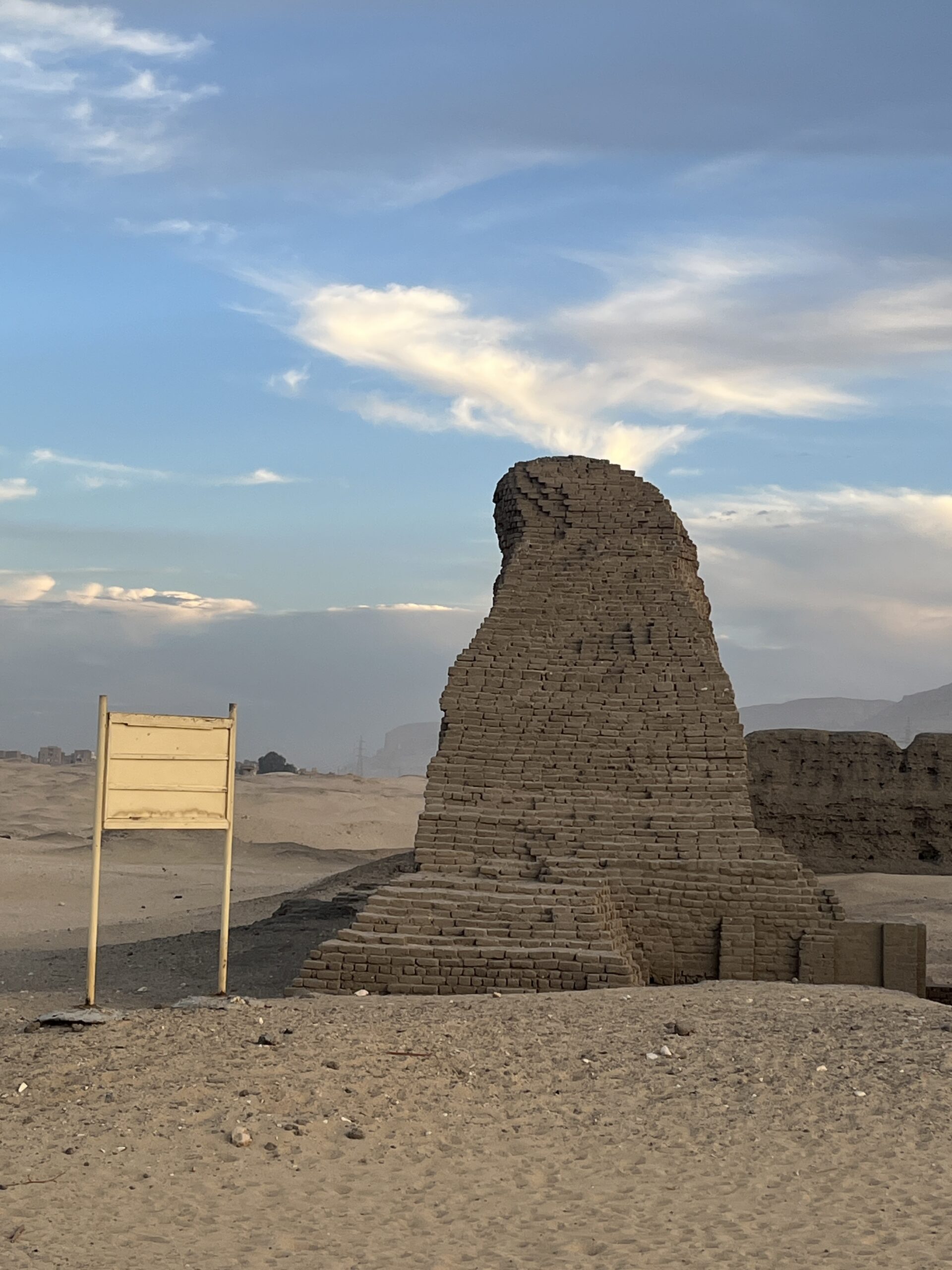
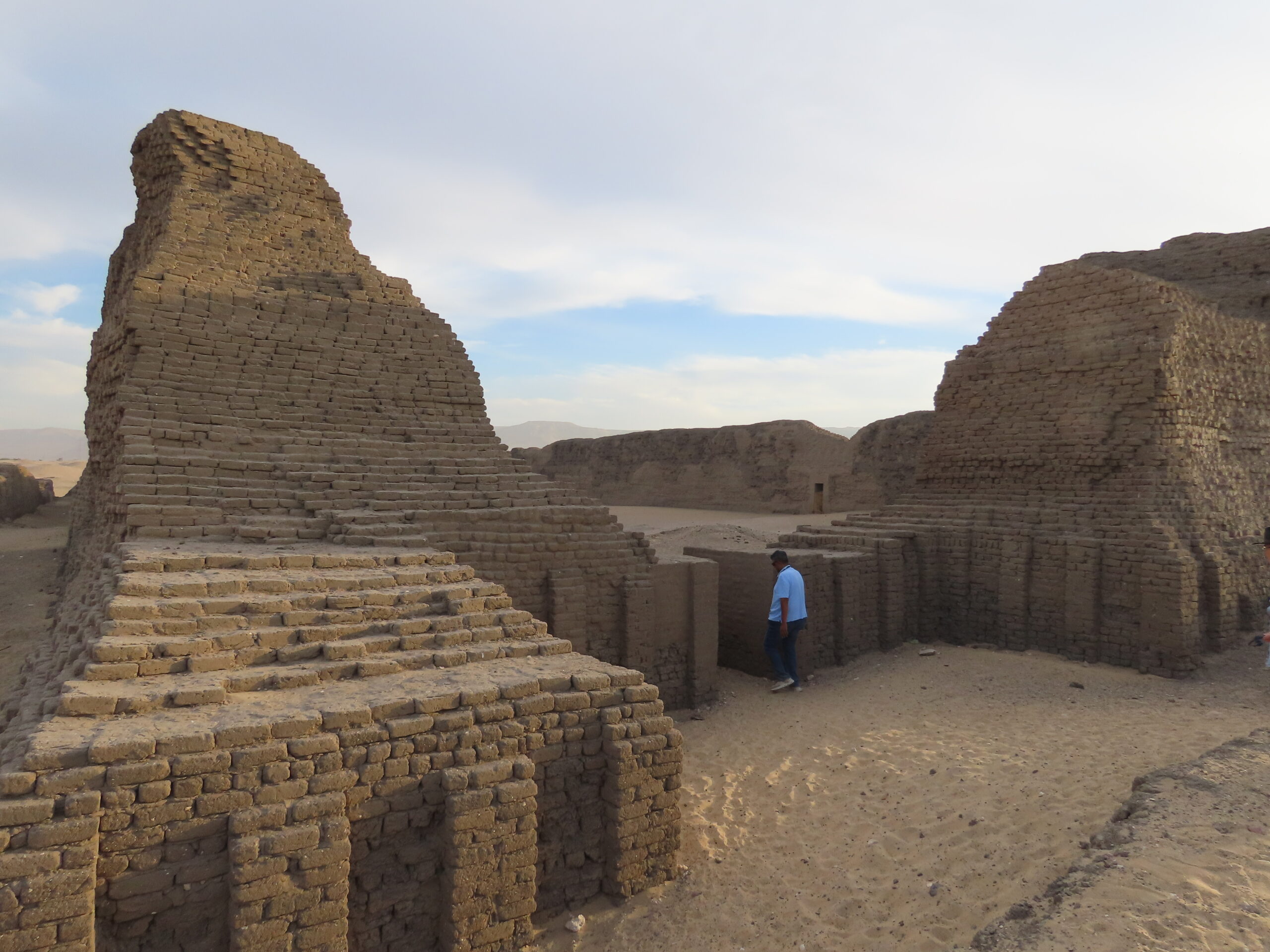
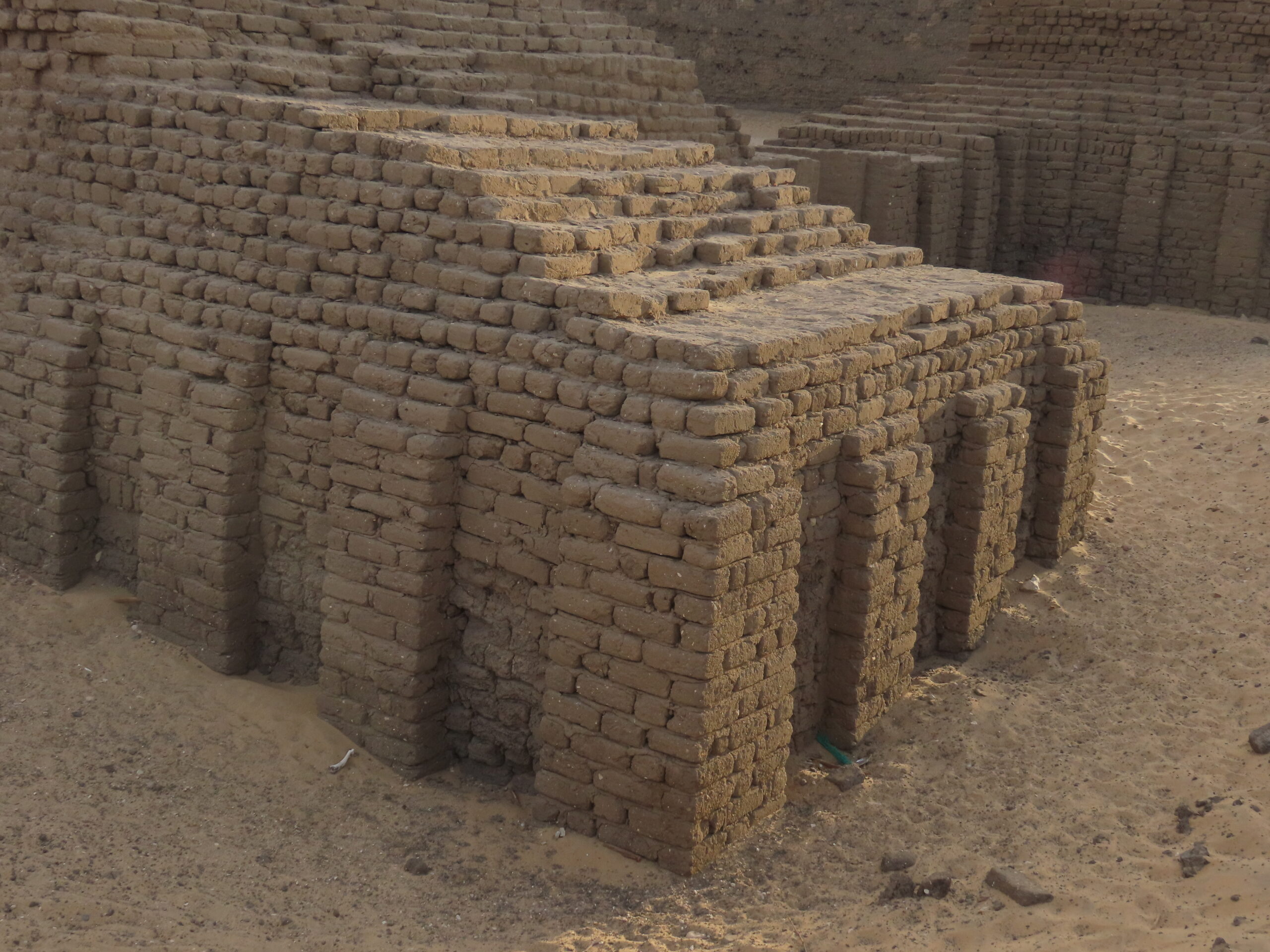
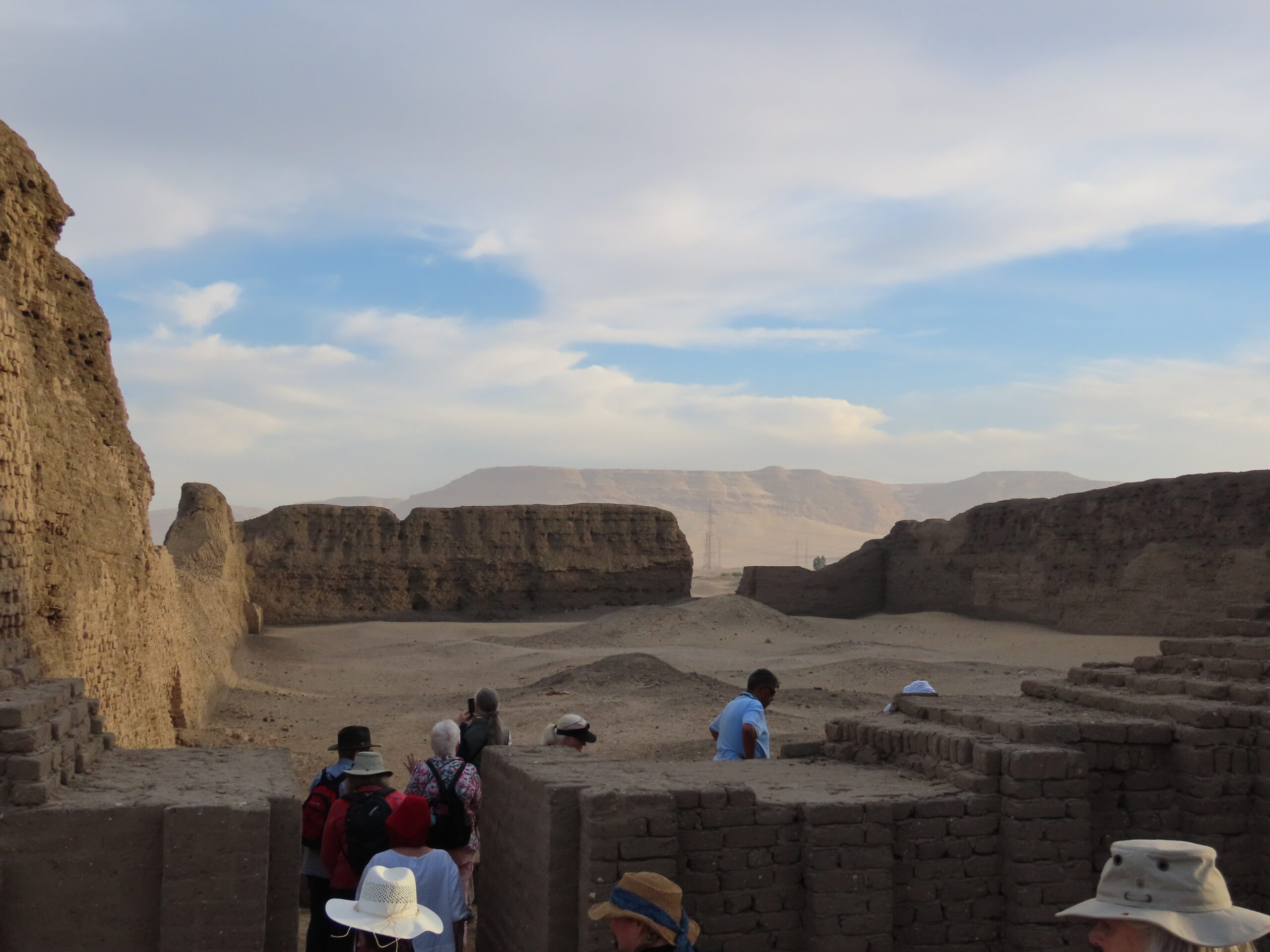
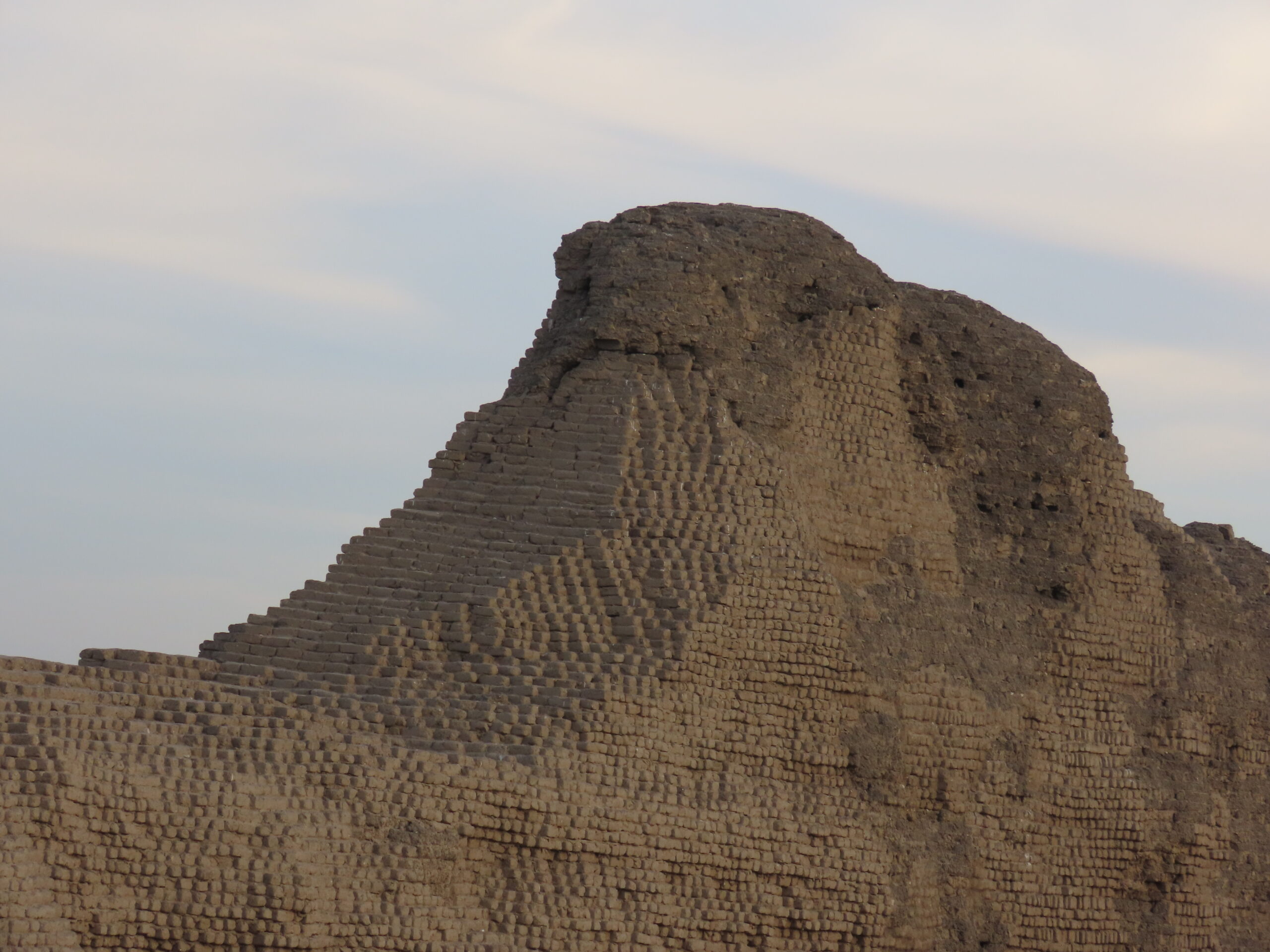
In any event, he left behind this enormous mud brick fortress-like structure called, in modern times, the “storehouse of raisins.” (Nobody knows where the name comes from.) The structure covers 10,500 square meters (roughly 2.6 acres), and is constructed of inner and outer rectangular walls. The inner wall is ~ 8 meters high and 3 meters thick, while the outer wall is ~12 meters high and 5 meters thick. The only things found inside were 2 small internal structures (chapels?) and a lot of beer jars.
It’s amazing that this structure is still standing after 5000 plus years. Stabilization and conservation work has been underway for the last 25 years, most recently through the work of Matthew Adams and David O’Connor (who have also extensively excavated and recorded sites at Abydos).





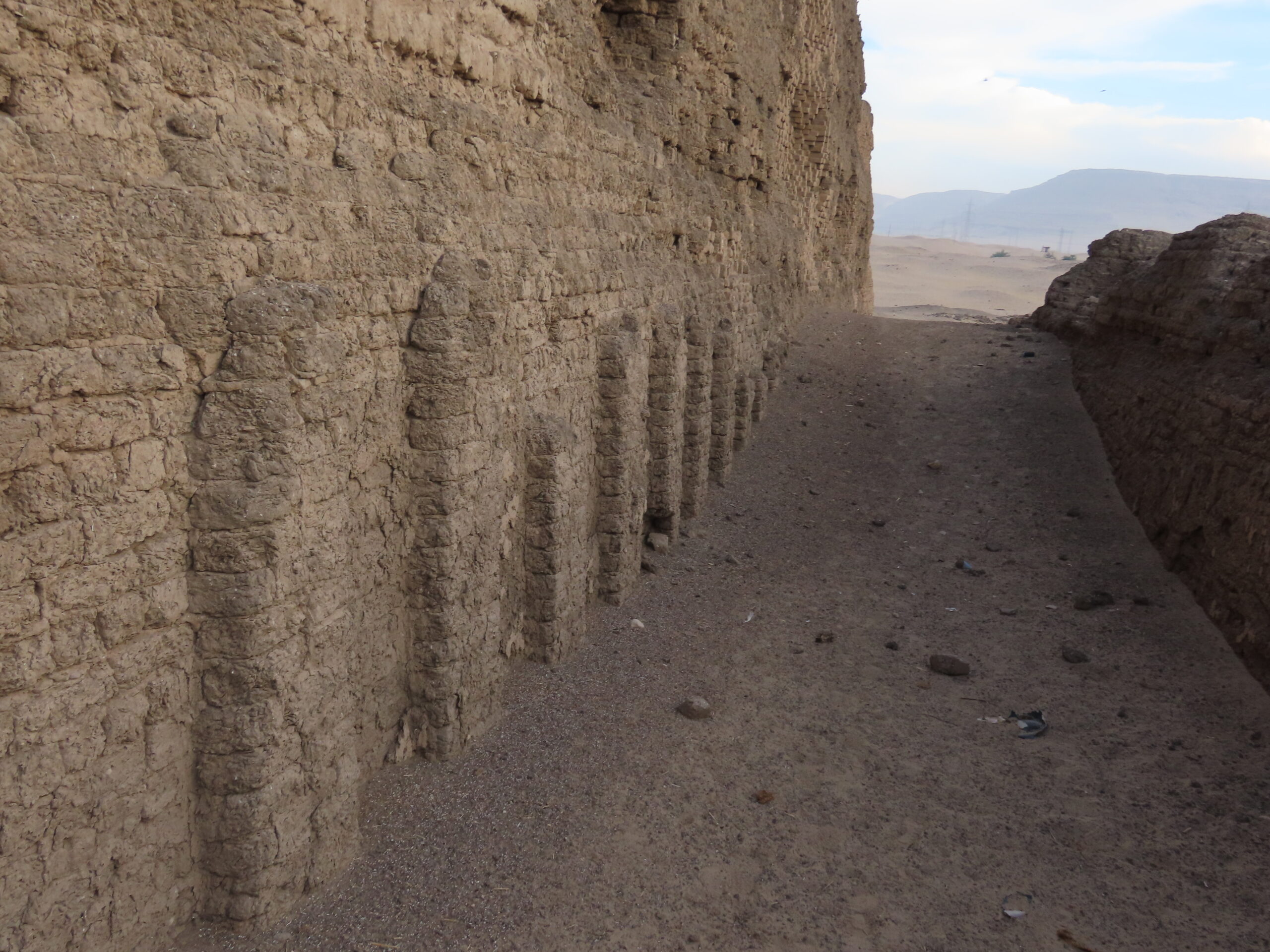
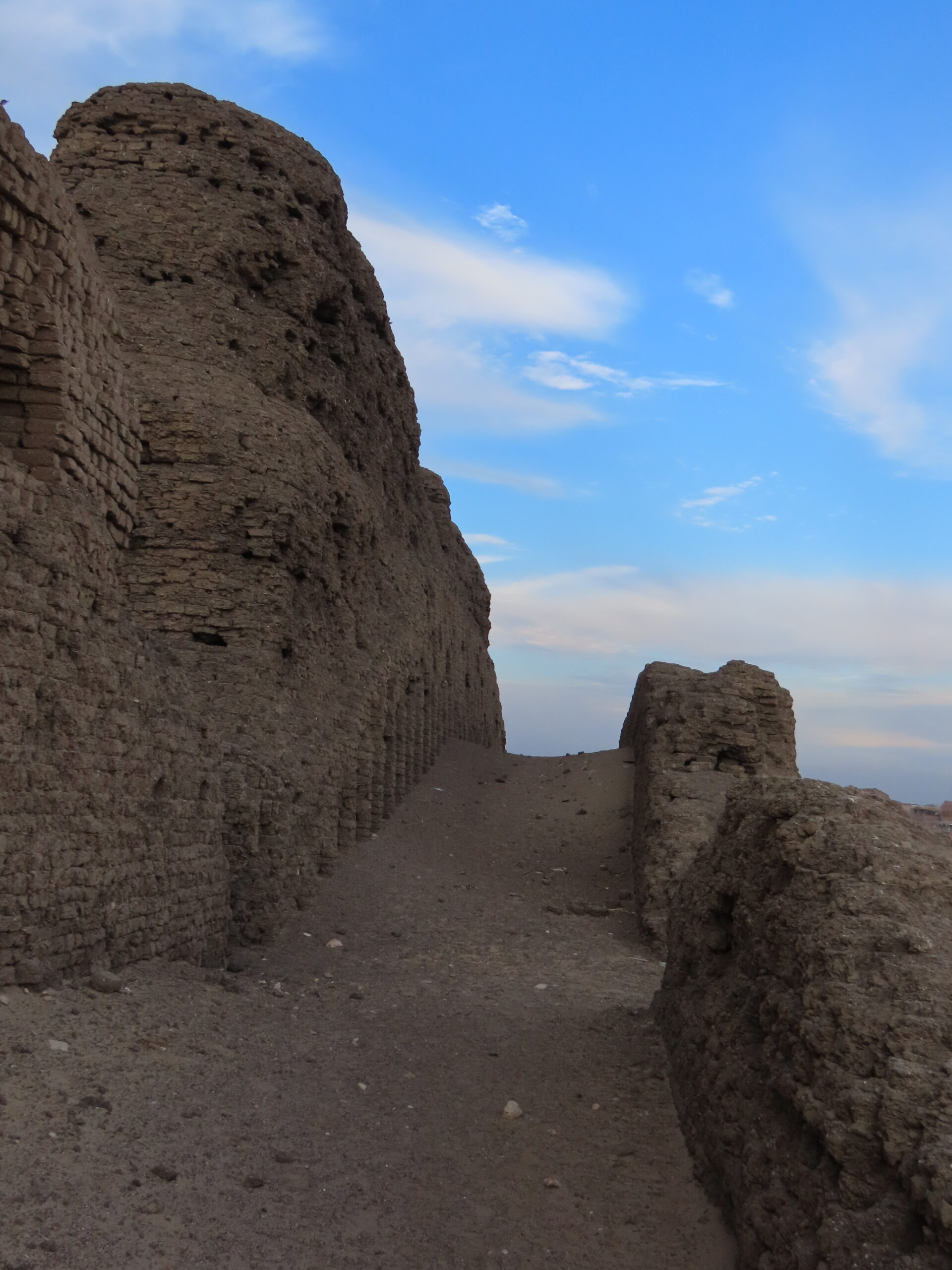
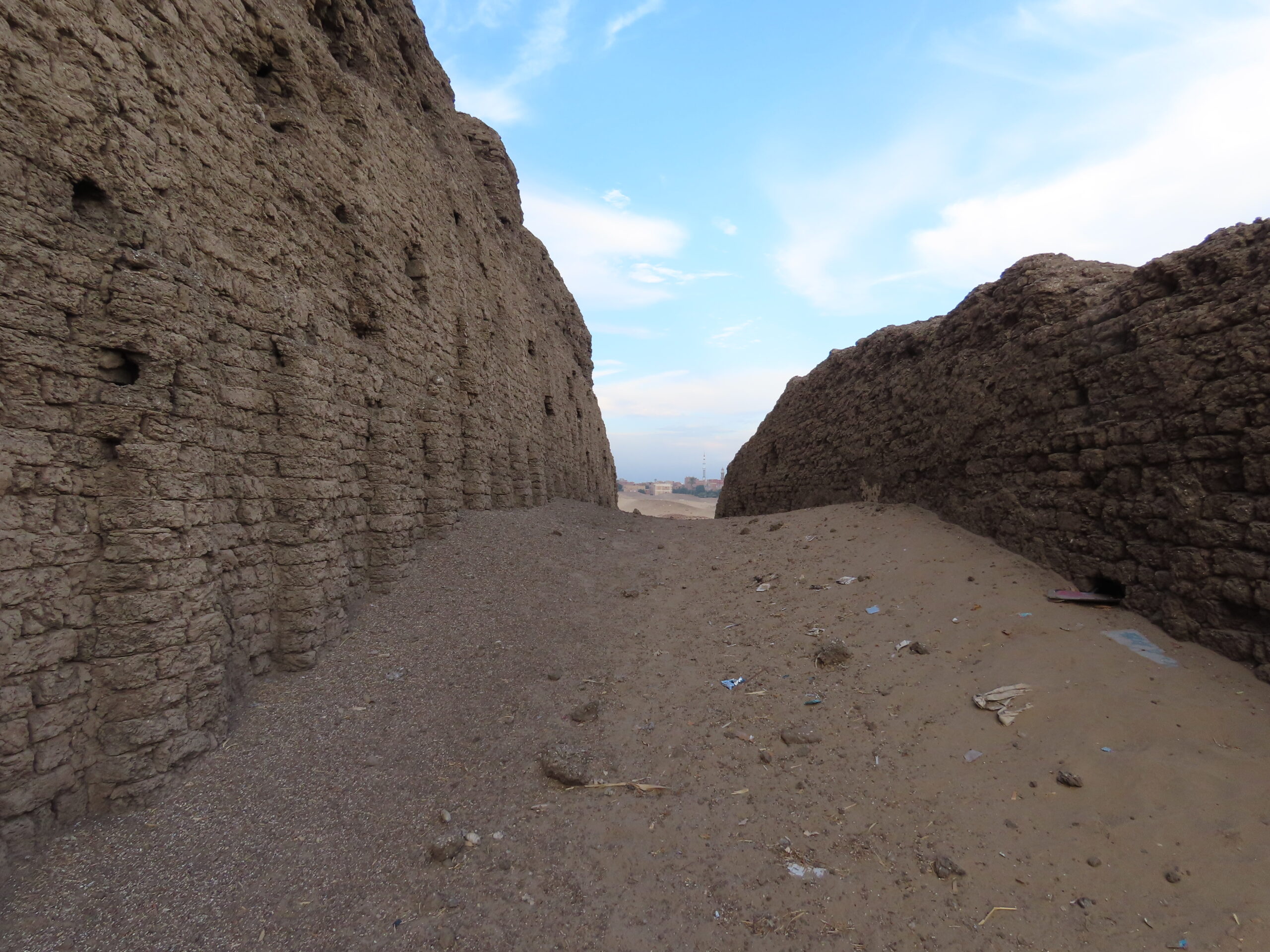


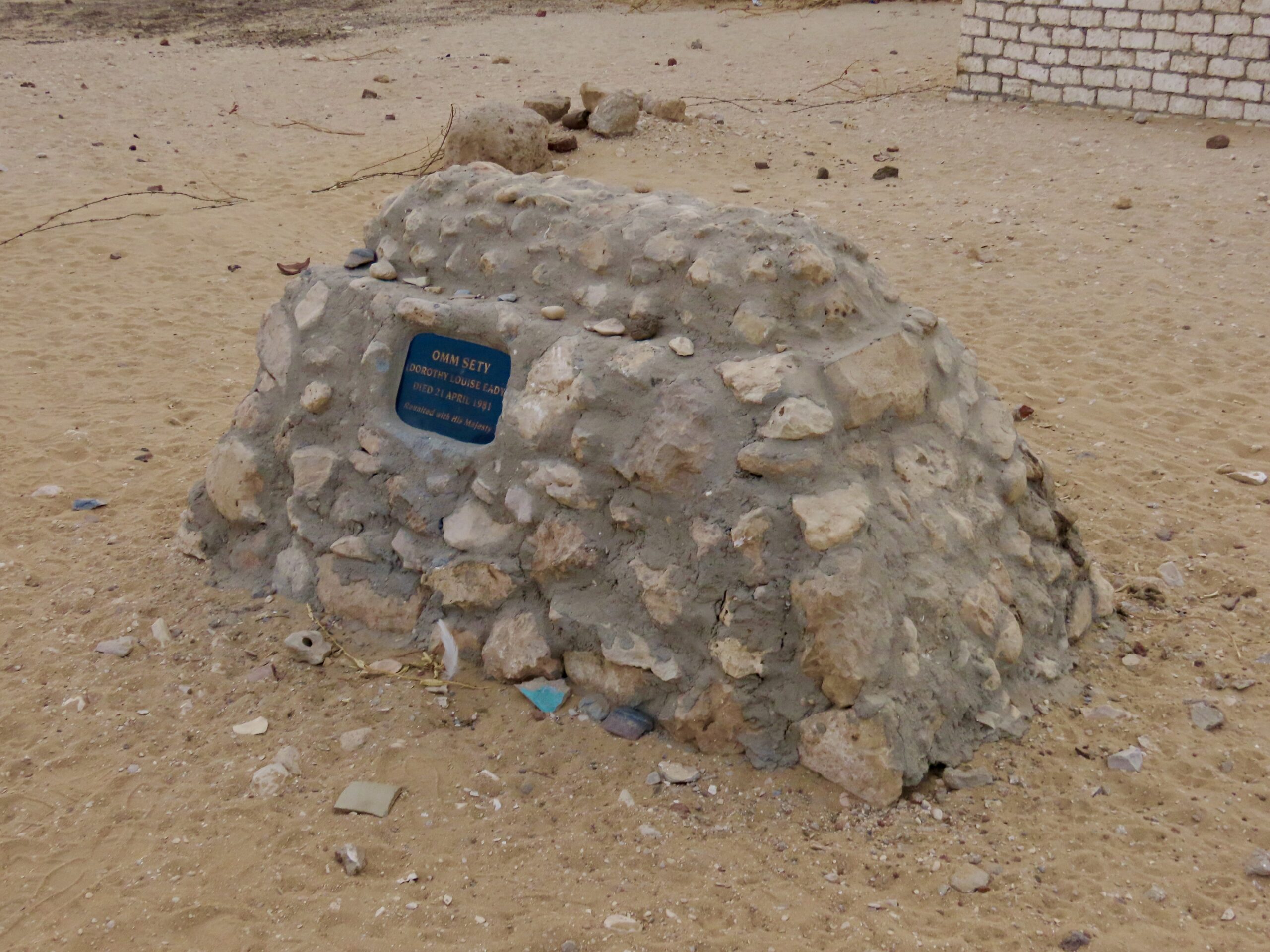
A bit to the northwest of the Shunet is a memorial to Omm Sety. She actually created a tomb for herself in the garden of her tiny house, but the Egyptian health authorities would not let her be buried there. Instead, she was buried in the low desert outside the village cemetery.

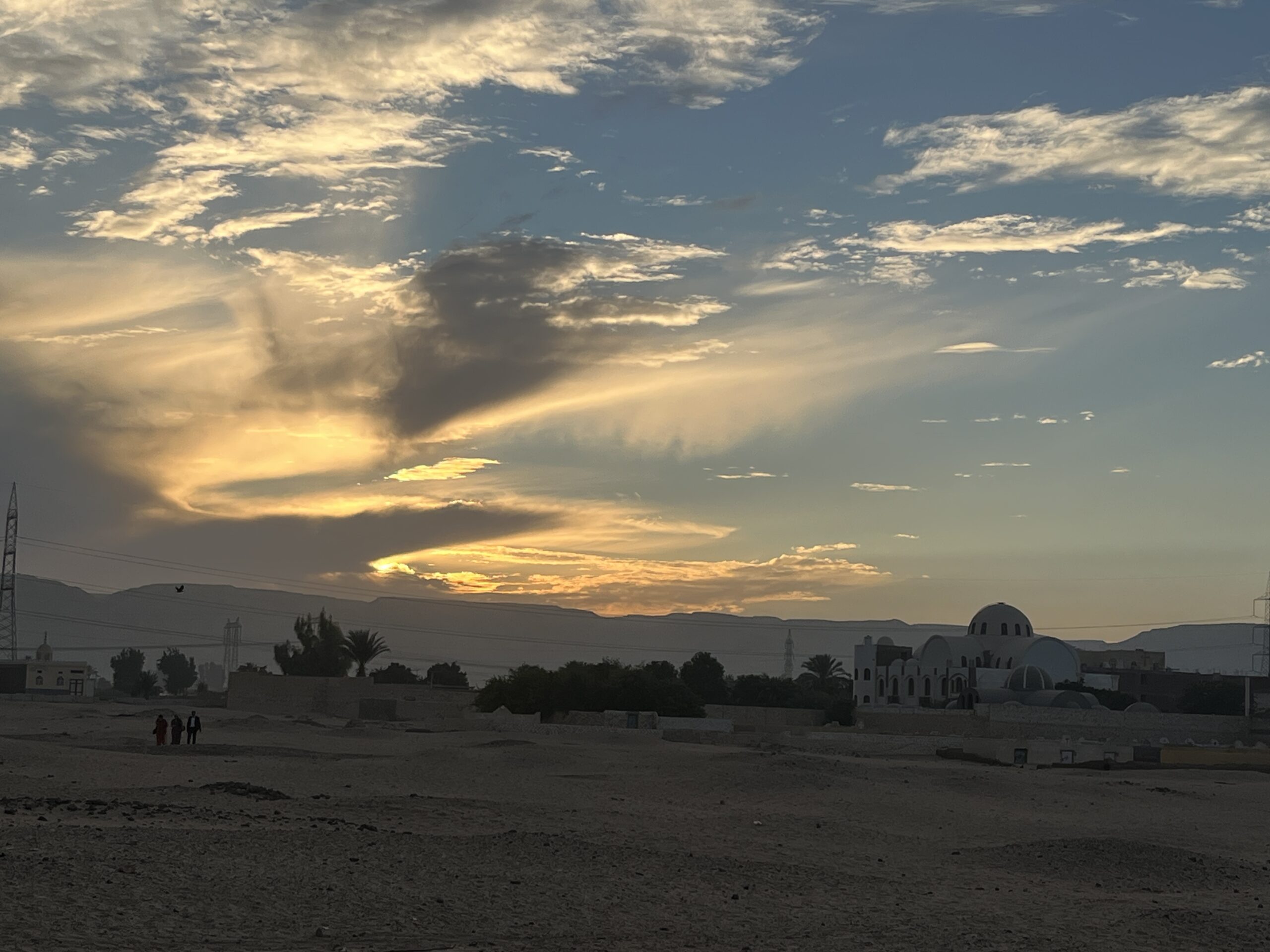
In one of her volunteer roles, Ali visits elementary schools to perform the story of Isis and Osiris. She shared her rendition of the tale with us as the sun dropped into the west. A fitting end to a day on the sacred landscape!