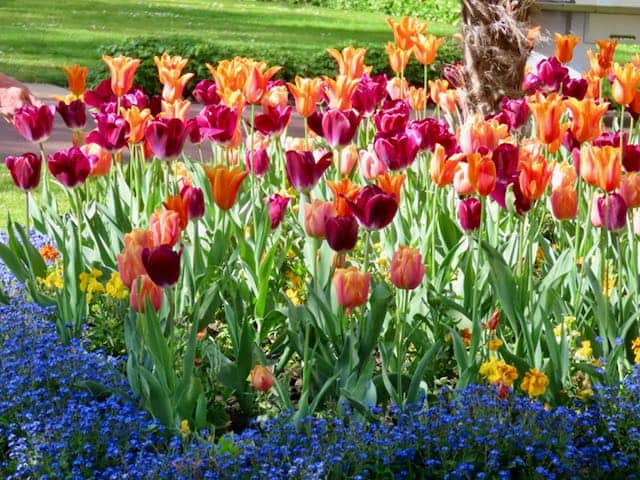
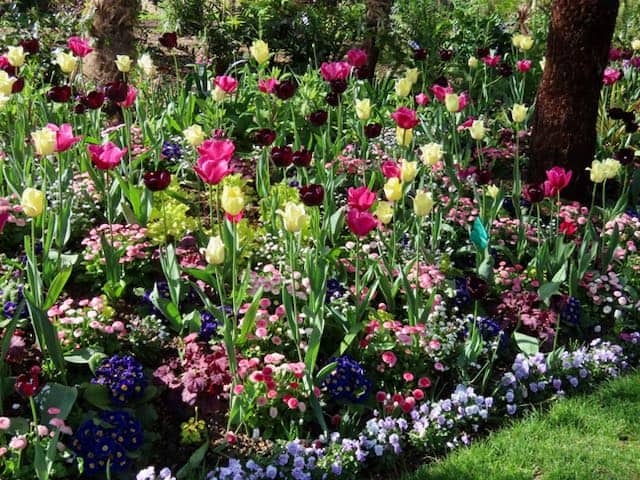
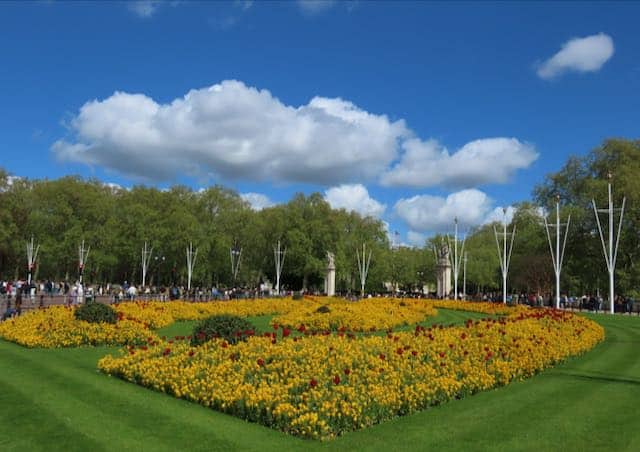
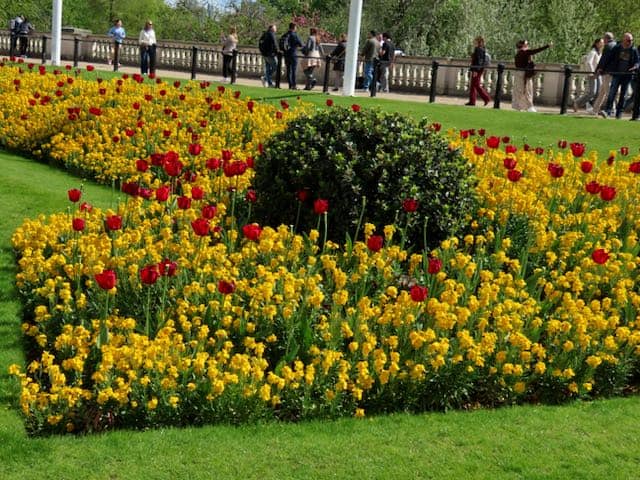
On Saturday, we spent most of tour time engaged in one of our favorite pastimes: strolling through central London’s colorful and ever-popular royal parks. It was a perfect April day: sunny, not too hot, with riotous blooms everywhere. Prepare for some serious garden porn.
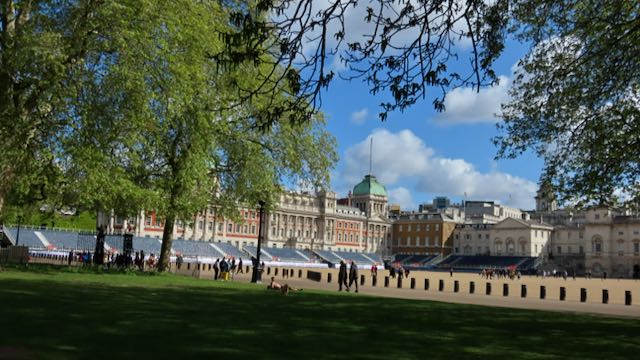
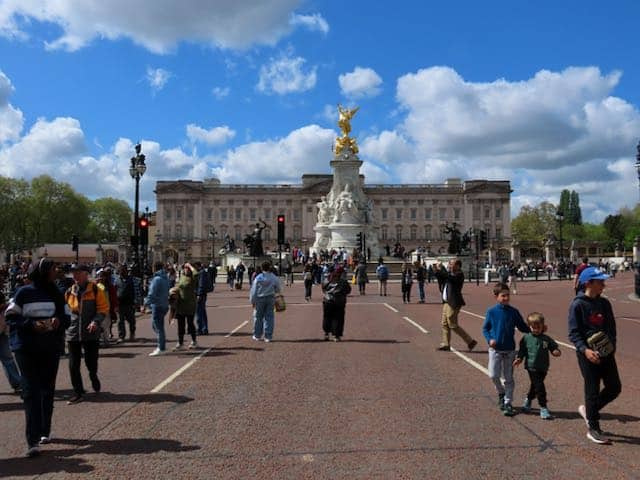
We began the day with a tube ride to the Embankment station. After passing through the Victoria Embankment Gardens, we made our way to St. James Park, where Matt had a coffee date with a work friend. A stroll along the lake took us to Buckingham Palace, then on through Green Park into Hyde Park and the Serpentine.

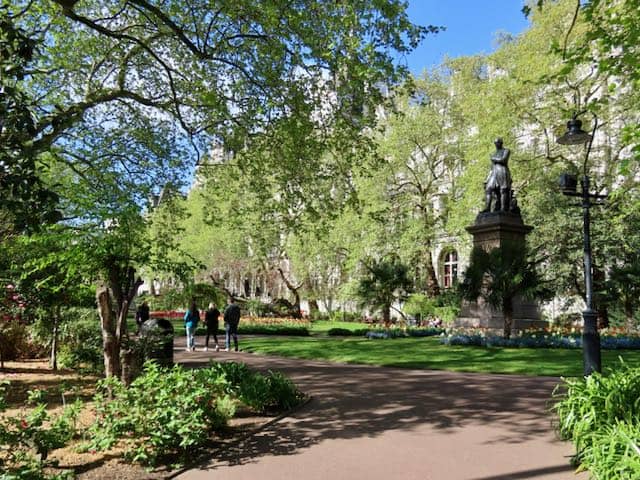
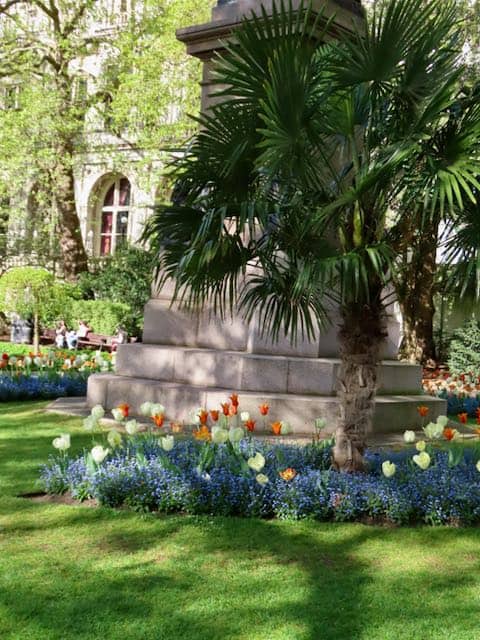
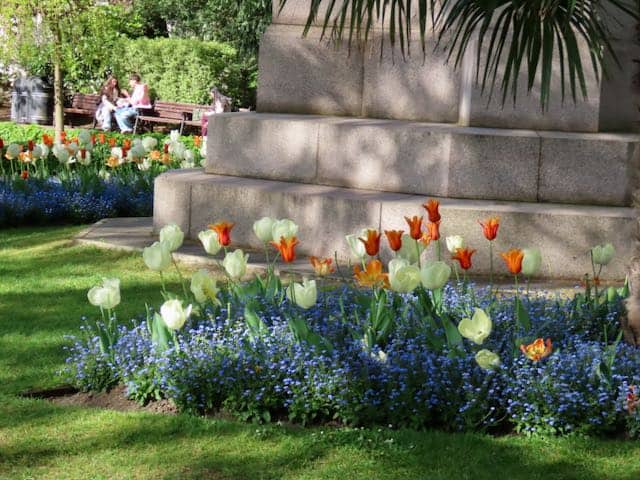
Victoria Embankment Gardens
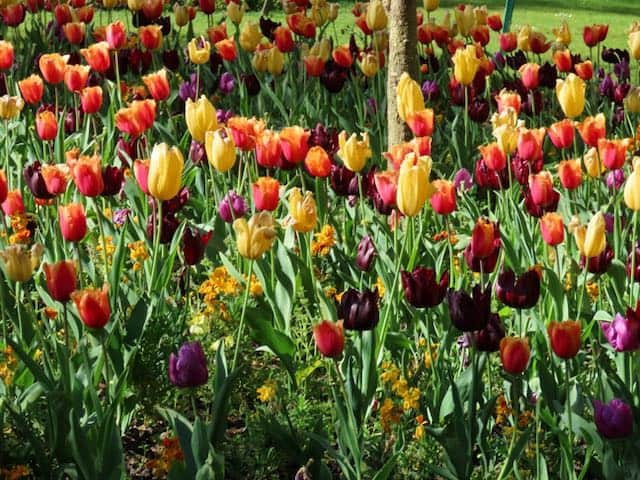
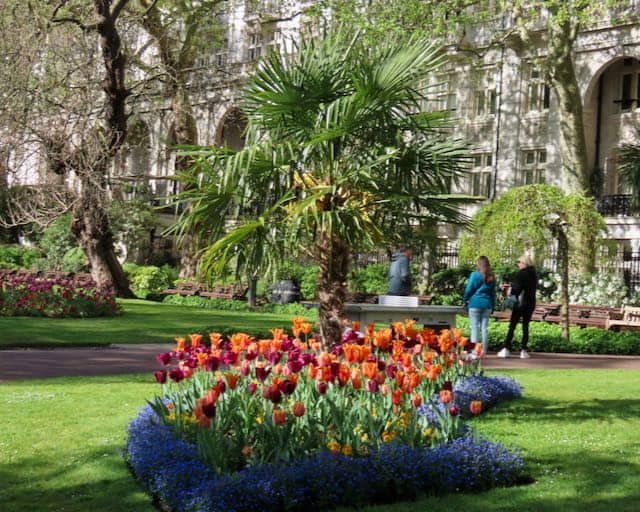
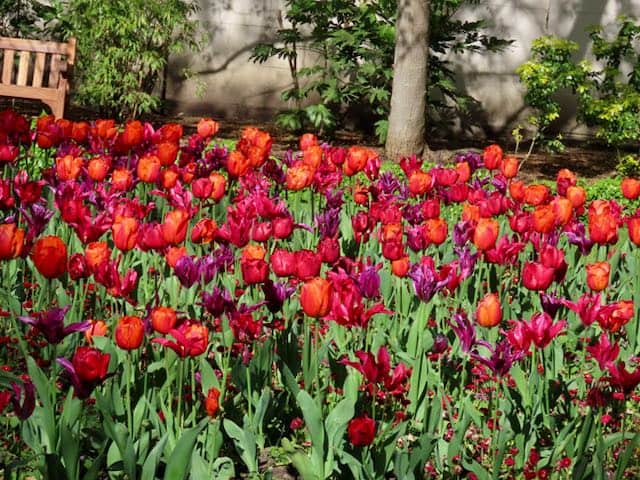
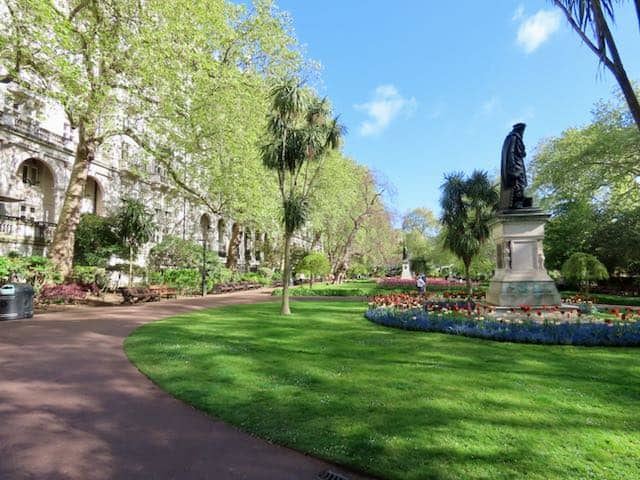
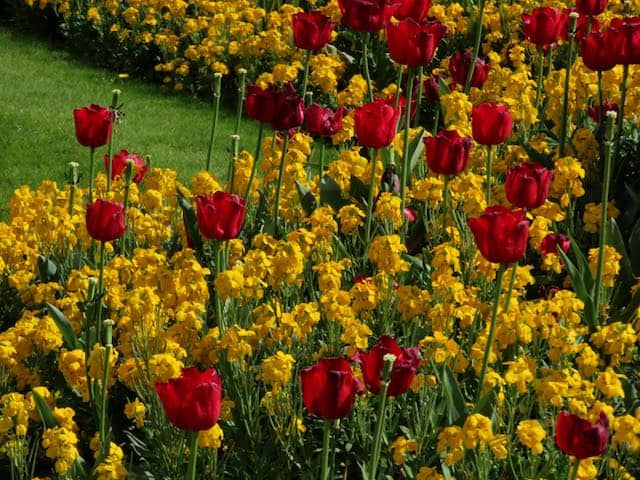
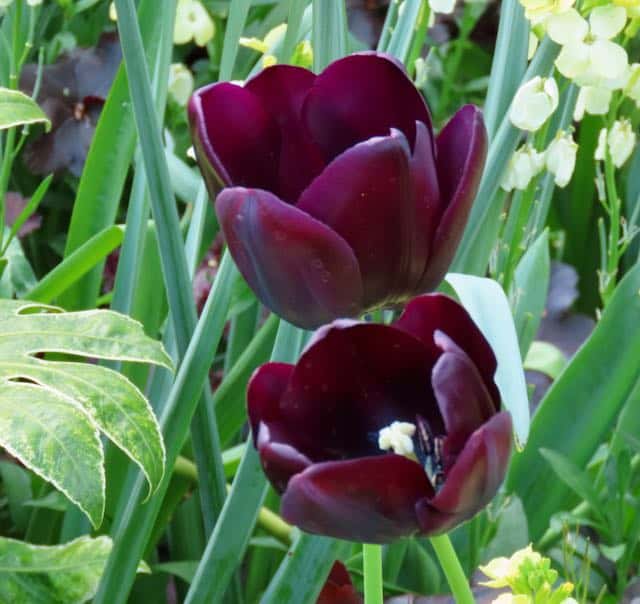
Beginning in 1861, those engineering-obsessed Victorians developed a modern sewer system for central London running along both banks of the Thames. Expensive riverside properties were demolished, while the river was narrowed and channelized using massive granite walls. The north bank embankment was named after (who else) Queen Victoria, while the south bank was named after her recently deceased and much lamented spouse, Prince Albert. In 1875, several public gardens were created on top of reclaimed land on the north side, including the Victoria Embankment Gardens, located adjacent to the tube station. At the time of our visit, tulips were at their peak.

St. James Park
We wound our way through Whitehall to enter St. James Park, my personal favorite. These Royal parks have their origins in Henry VIII’s dissolution of the monasteries. In 1532, he confiscated property from Westminster Abbey, Eton College, the women’s leper hospice of St. James the Less, and his erstwhile favorite, Cardinal Wolsey, to create a private deer-hunting park. This (enclosed) estate covered almost all of the area that today makes up the three parks. The leper hospital was replaced with a royal hunting lodge, which was later rebuilt as St. James Palace.
Most of what is now St. James Park was originally marshland, which James I drained and had landscaped in 1603. He use the area as a zoo to house the many exotic animals that other rulers kept gifting the monarchy. Charles II created a long canal with walking paths on both sides and opened this park to the public. Charles entertained his many mistresses here, and the park became known as a meeting place for lecherous trysts, according to the scandalous poem “A Ramble in St. James Park” (published in 1680, censored by the Victorians, and re-published to much titillation in the 1920s). The Great White Pelicans whose descendants still grace the park were a gift from the Russian ambassador in 1664. Unfortunately, they were hiding on this visit.
In the 1820’s, the influential Regency architect John Nash re-worked the canal into today’s winding lake and fountains. Nash was a favorite of the Prince Regent at the time, who spent a lot money “beautifying” London. As a result, Nash’s fingerprints are all over London architecture – including Buckingham Palace.



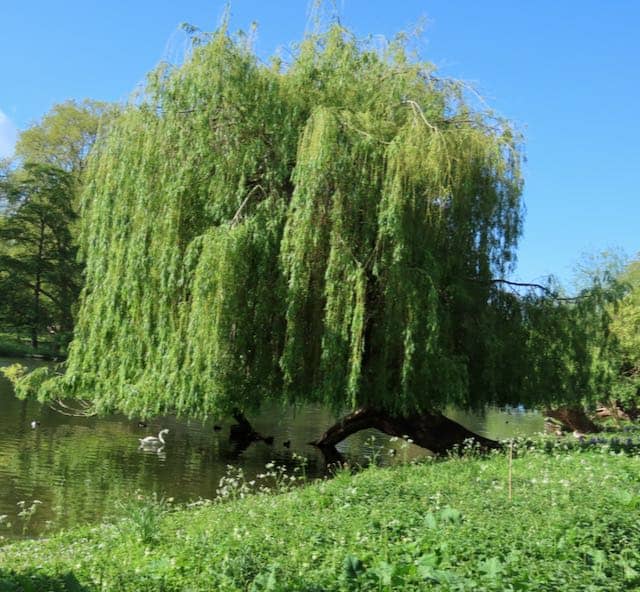
The St. James Cafe, where Matt met his friend Cooper, was constructed in 2004 to replace an ugly concrete predecessor known as The Cake House. Based on the cafe’s cake-heavy menu, the culinary concept hasn’t much changed. I left the boys to catch up and wandered around the lake on my own, enjoying the abundant waterfowl.





This little “Dig for Victory” vegetable garden is a re-creation of a World War II-era wartime allotment. with a modern, sustainable vegetable garden spin. It was created as an exhibit for the Churchill Museum and Cabinet War Rooms, which are across the street from the Park (highly recommended).


I completed my circumnavigation of the lake and park borders and joined the guys for a cuppa at the cafe.


The three of us then walked back up along the Lake to Buckingham Palace, where Cooper pealed off for home.




Buckingham Palace
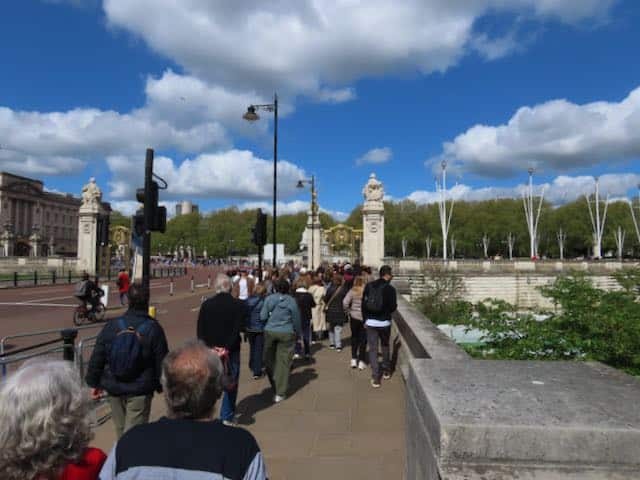
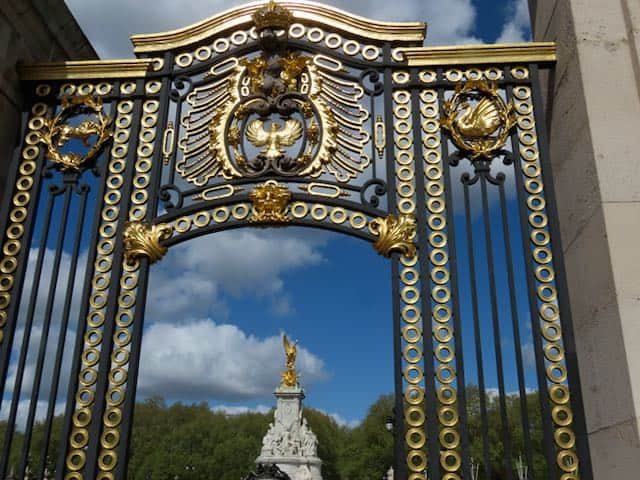
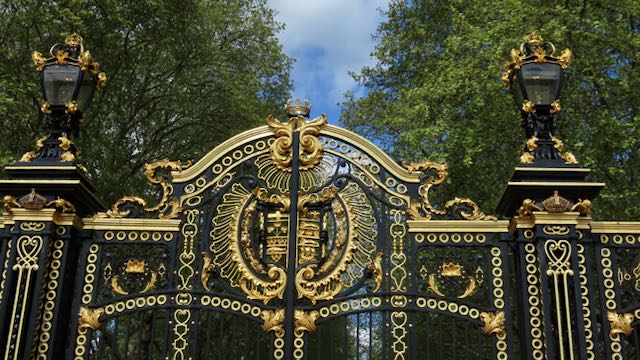
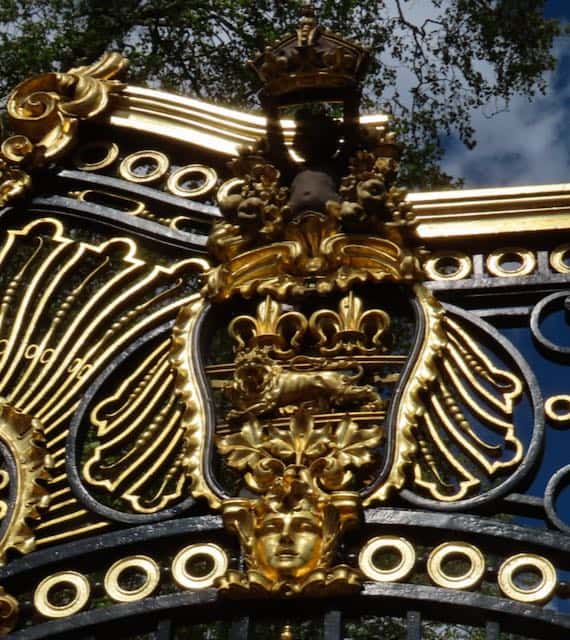
Lots of golden froth on these gates. Trump would approve.



I was intrigued by the subtle differences displayed on the uniforms of these regiments. I doubt that the Continental Army spent much time counting buttons or registering the color and placement of plumes when fighting the Redcoats back in the day.
Green Park
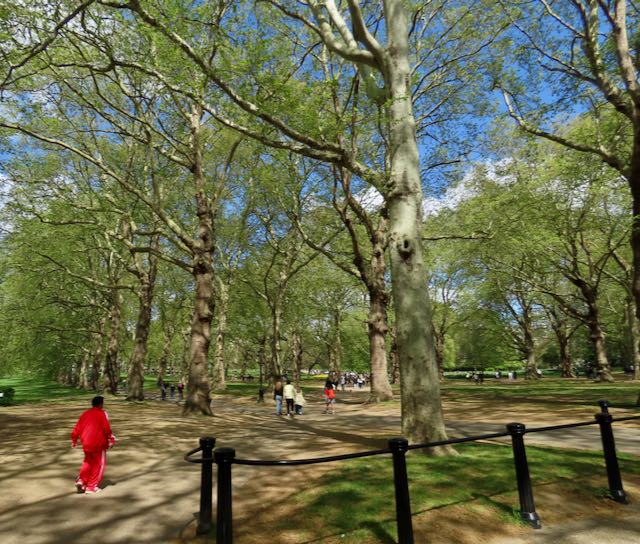
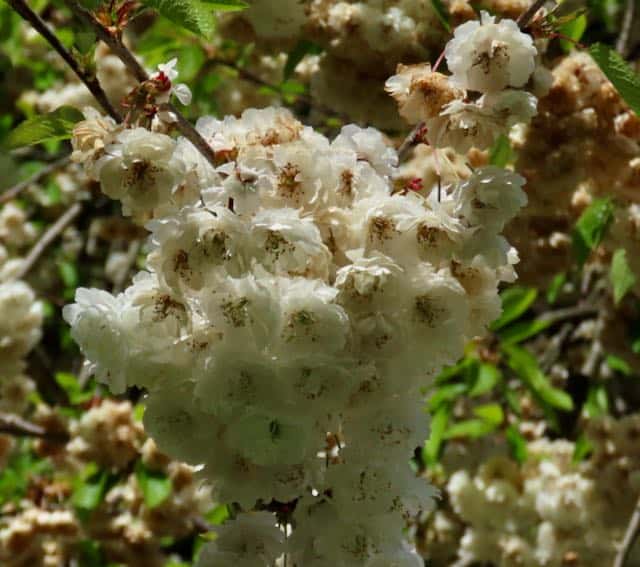
Green Park, originally the burial ground for the leper hospital, is on the other side of those golden gates. Green Park is well, green – lots of trees and shady paths but no flower borders, although a few bluebells were lurking in the shade beneath the blooming chestnut trees and the double white flowering cherries. Buckingham Palace’s 39 acres of private gardens parallel Green Park, separated by a high brick wall. About 3.5 acres of this private garden is maintained as a formal garden right next to the palace, where multiple events are hosted every year. The other ~36 acres are managed for nature conservation, creating an island of rich habitat for birds, small mammals, amphibians and insects in the middle of London. There are debates over whether to open the Buck Palace gardens to the public, now that the royals no longer live there.



Hyde Park
This arch to nowhere sits on the boundary between Green and Hyde parks. John Nash designed it in 1827 as a grand monumental gateway for his brand new Buckingham Palace, but, in 1851, Queen Victoria had the arch removed in order to expand the palace’s living quarters for her nine kids. The arch was dismantled, block by block, and reassembled here as a grand entry into Hyde Park instead.
We walked through the Arch, past the Rose Garden (not yet in bloom) and up the walk to the Serpentine.




The Serpentine
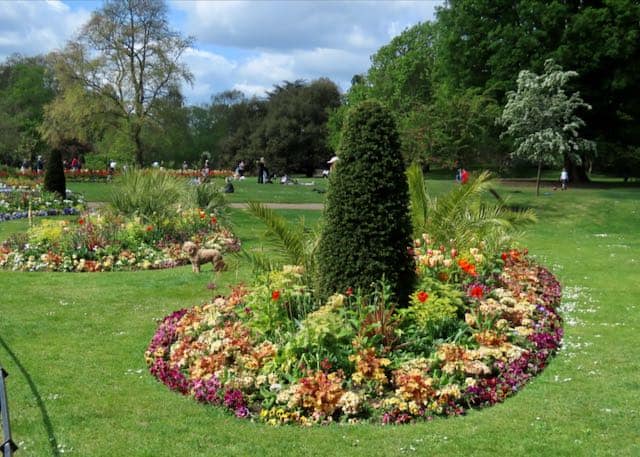
The long lake that dominates the middle of Hyde Park is called the Serpentine. The lake was created in the 1730’s at the order of Queen Caroline, wife to George II. A series of small ponds were engineered into a sinuous, seemingly wild lake – quite a departure from the rigid geometric forms that dominated formal gardens at that time. It was one of the first naturalistic artificial lakes in England and initiated the English landscape garden movement. We grabbed some lunch at the Serpentine Lido Cafe, accompanied by some cheeky starlings.


After lunch, we continued our walk along the lake to the Serpentine Bridge.


We had intended to walk through Kensington Gardens (the bit beyond the bridge), but that entire portion of the park was closed, with Bobbies guarding the entrance. A police and hazmat team investigation was underway, sparked by a report that “dangerous substances” were present. The Israeli embassy is nearby, and the group posting the notices was linked to arson attacks on Jewish and Persian targets.
So we made our way out of the park past the to the Serpentine North Gallery to Lancaster Gate, where we caught the Tube to Tottenham Court and took a short walk to the British Museum.


British Museum

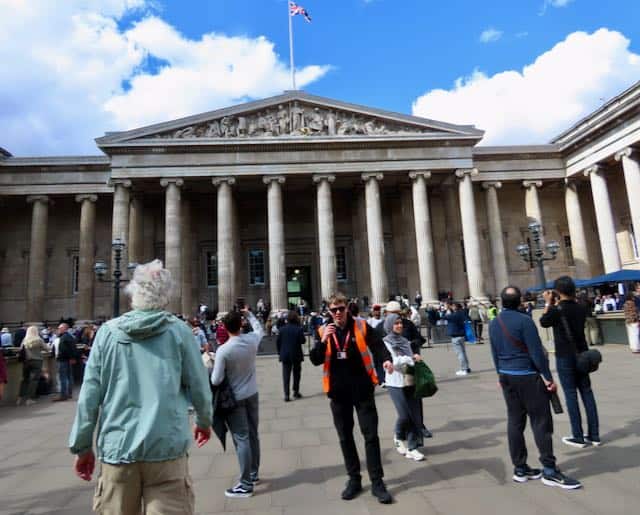
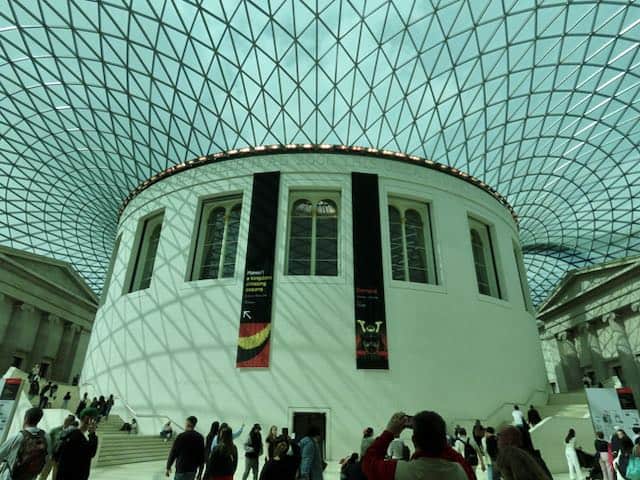
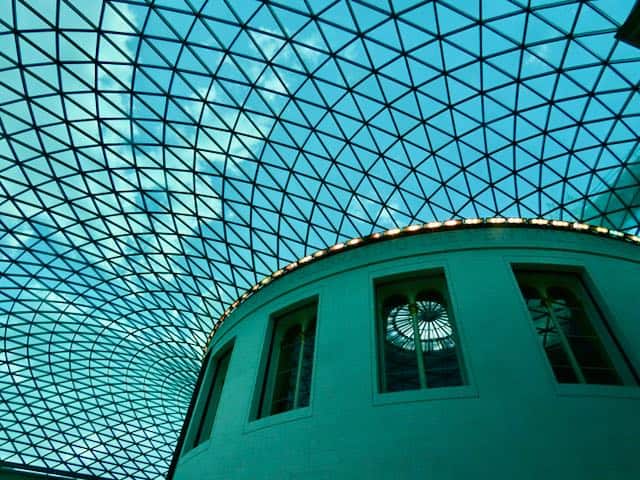
We stopped for a cup of tea in the museum cafe and had a lovely chat with a gentleman “originally from Lancaster,” ranging over topics like linguistics and politics. It was 3:30 by then, and we only had an hour before closing time. Of course, you know where I spent my hour…
I’ll try not to bore you with too many Egyptian artifacts. Below are some items I found particularly interesting and/or beautiful, starting with the Predynastic period (c. 4500-3200 BCE).
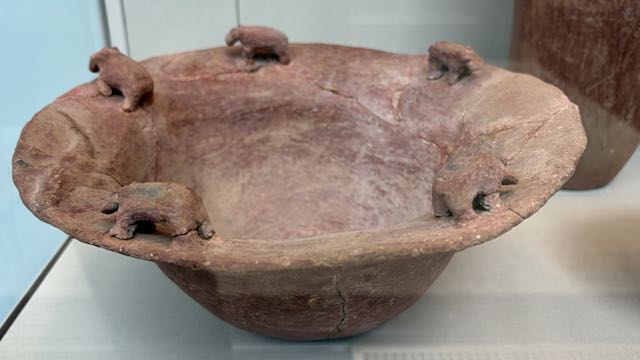
Painted pots are characteristic of this very early period in Egyptian history. The images almost certainly have ritual significance since they were found in funerary contexts, although no one is sure what they represent. I really love the sense of rich biodiversity they reflect – flamingoes, multiple species of antelope, hippos, crocodiles – all gone from Egypt today.
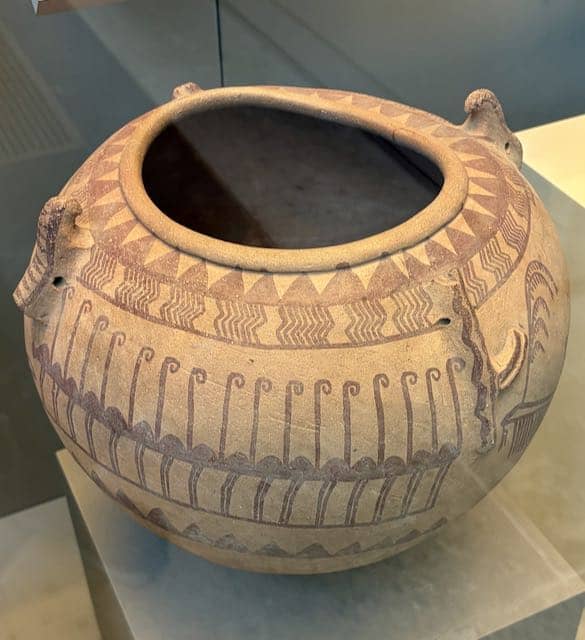
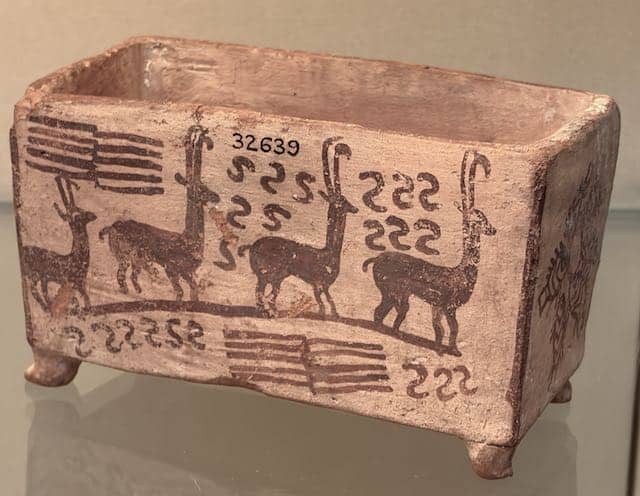
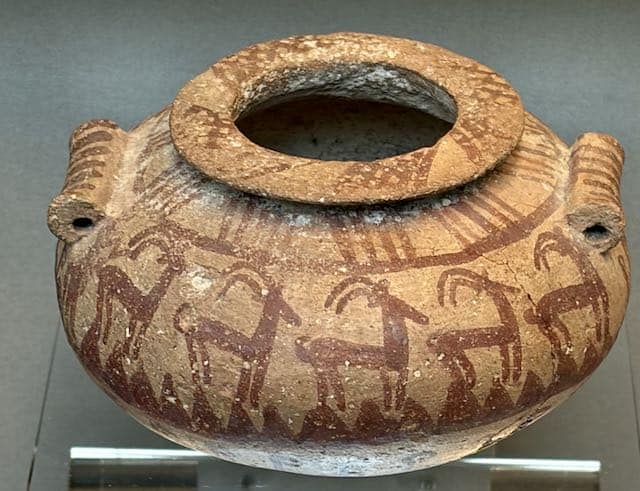

Note the boat, a persistent image conveying people into the afterlife.

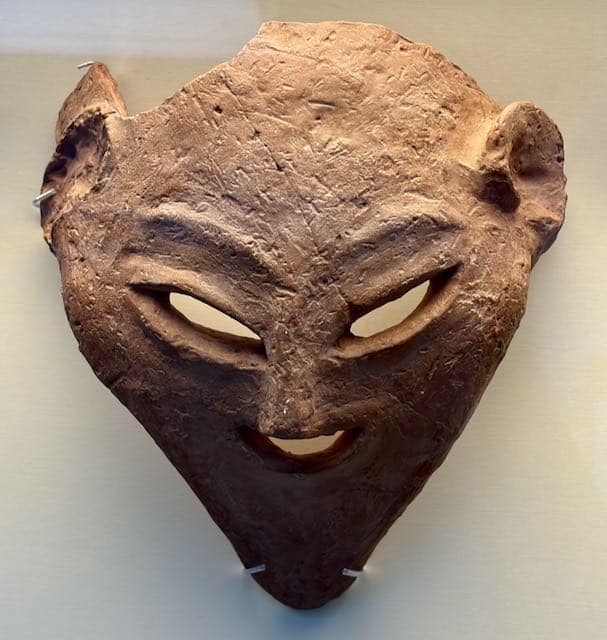
Slate palettes are another characteristic art form of this period. This was a period when various “proto-kingdoms” were competing with one another for dominance up and down the Nile Valley. Egyptians ground various mineral powders on stone palettes for everyday cosmetic use. At some point, “big men” enlarged them and used this medium to capture events and convey messages amplifying their power The Narmer Palette (Cairo Museum) is the best known; many people interpret the images carved on its surfaces as a record of the unification of Egypt c.3000 BCE.
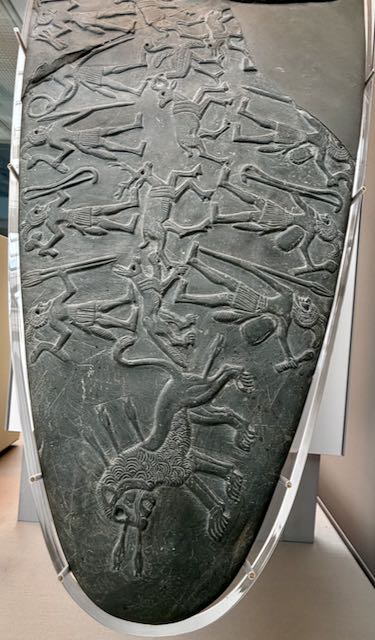
The British Museum has a couple of other interesting examples, below. The front side of the Battlefield Palette shows scenes of horrific warfare, with bound prisoners being attacked by a lion and pecked apart by birds. (The fragment showing the two bound prisoners is a cast; the original is in the Ashmolean Museum.)
The back side shows a peaceful scene of two giraffes nibbling on a palm tree. This duality of extreme violence and peaceful harmony remained at the heart of Egyptian ruling mythology throughout its history. The rulers – male and female – were responsible to conquer chaos and ensure balance.


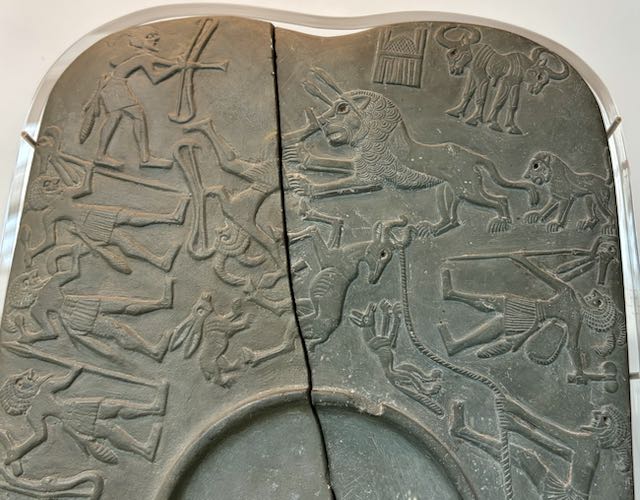
The violence in the Hunters Palette is aimed at the natural world. Men and dogs shoot and corral a hots of wild animals for sacrifice at a shrine. The circle with a raised edge is carried over from cosmetic palettes – that’s where the galena and malachite were ground for use as eye paint. (The upper left portion of this palette is a cast; that fragment is in the Louvre.)


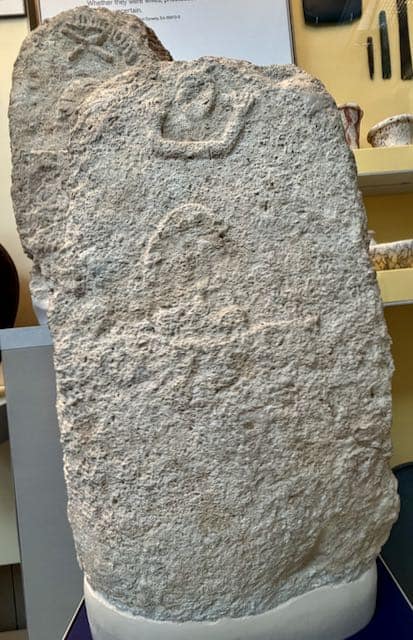
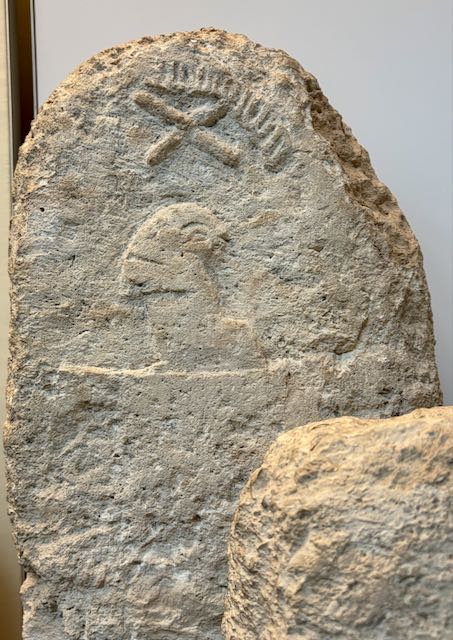
Fast forward a couple of of centuries to an Egypt that is united under the rulers of its first dynasty, who are buried at the Umm el-Qaab, which I visited in December and wrote about in Abydos, A Sacred Landscape. (I also talk about the Narmer Palette in that post.) A funerary feature of this era was the mass sacrifice of hundreds of courtiers and servants to accompany the deceased king into the afterlife. Djer, whose tomb later came to be identified with the murdered and resurrected god Osiris, had the biggest accompanying entourage: 318 subsidiary burials at his tomb alone. (There were more at his “cultic enclosure” nearby.) Below are two tombstones memorializing women retainers called Sesher-ka and Neith. Stelae like these survived into modern times on some 73 graves; 60 of these bear feminine names. Wives? Priestesses? Servants? No one knows…but they were important enough to be honored with a royal afterlife.
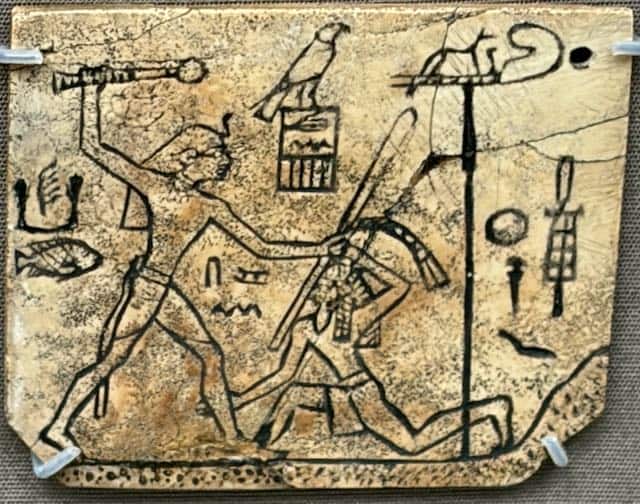
The small ivory label below the tombstones shows the ruler Den smashing an enemy’s head – an illustration of royal power that endured for over 2000 years.
On a less grisly note, these gorgeous bowls are from the tomb of Khasekhemwy, who ruled ~200 years after Djer, when retainer sacrifice was already a thing of the past. Khasekhemwy appears to have re-united Egypt after a civil war, and he was greatly revered. His son, Netjery-khet/Djoser built the Step Pyramid at Saqaara, ushering in an era of grandiose funerary monuments that would contribute to the collapse of the economy some 400 years later. The bowls are carved from dolomitic limestone and topped with gold foil, delicately worked to look like the cloth covers which served as lids in everyday use.

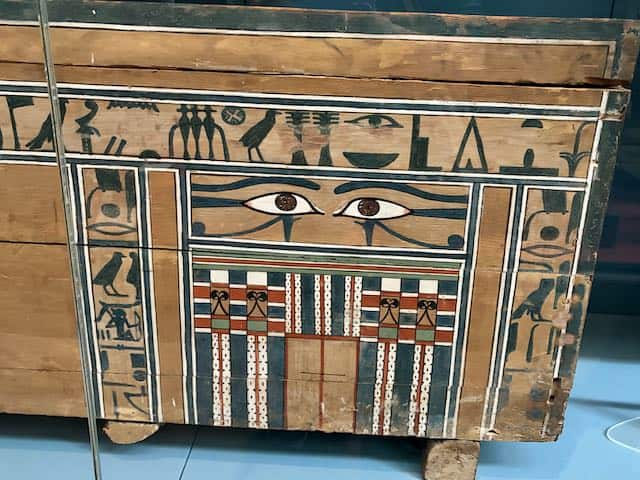
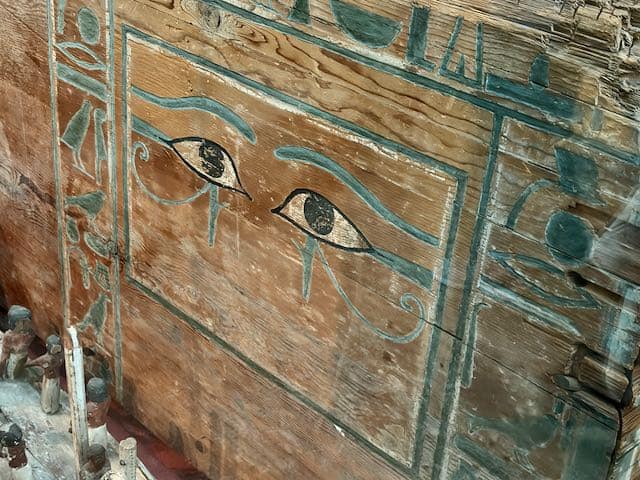
Fast forward another 600+ years to the Middle Kingdom, with a look at the BM’s lovely wedjat (eye) coffins.

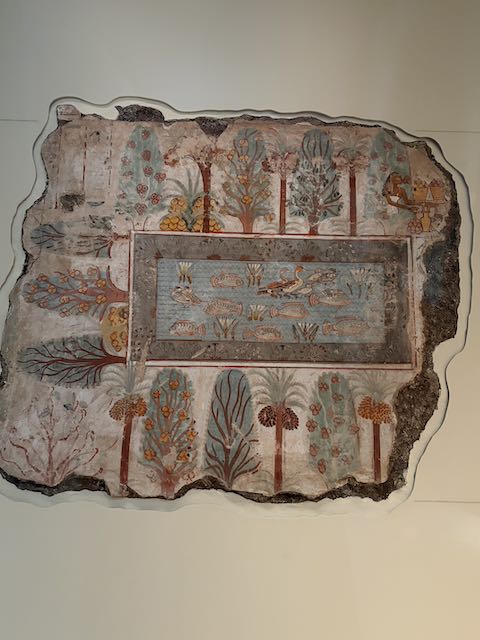
Fast forward yet to the 18th Dynasty (c. 1350 BCE) and we arrive at the collection’s premier exhibit: the tomb chapel of Nebamun and his wife (name unknown). Nebamun was a mid-ranking scribe and official in Thebes (Luxor), responsible to manage the grain stores kept in the stores of the temple of Karnak. The walls of this tomb chapel were richly decorated, in keeping with the fashion of the time. The tomb was discovered on the Theban West Bank in 1821 by an employee of Henry Salt, the British Consul. (Britain was the colonial power controlling Egypt at that time.) At Salt’s direction, workmen hacked out selected scenes with knives, saws and crowbars, and Salt then sold the fragments to the (relatively new) British Museum. There was intense competition over this kind of pilferage at the time, so the tomb’s discoverer kept its location secret – then died without revealing the location, ensuring that it was lost to posterity.
The scenes are typical for 18th Dynasty funerary decoration, reflecting the idealized afterlife that Nebamun and his wife desired. They were wealthy enough to afford the best artists, so the imagery is gorgeous.


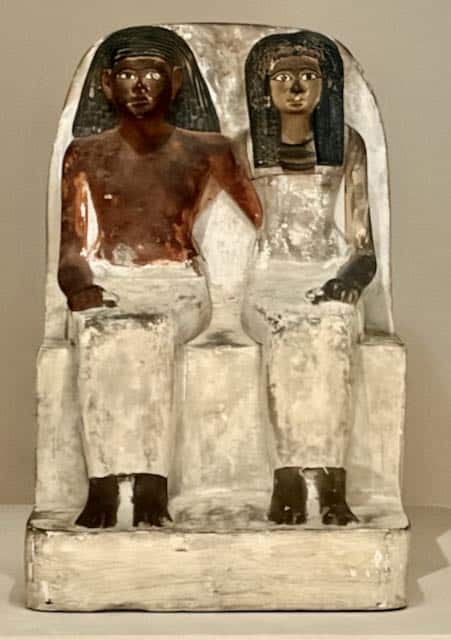


Finally, fast forward yet another +700 years for a peek at this lovely little Anubis, keeping guard over the inner coffin of a Prophet of Montu Hor c. 700 BCE. By this late date, Egypt had endured 400+ years of foreign rulers and dynastic in-fighting and foreign domination, with rulers from Kerma (modern Sudan) as the latest conquerors. These 25th Dynasty Nubian pharaohs reached back to Egypt’s glory days to revive artistic traditions like this painted coffin.
And that was it for the British Museum.


That’s all, folks
We Tubed/bused back to Cannon Street, passing this amusing giraffe construction screen along the way. Dinner was a delicious pub meal at the Sugarloaf, across the street from the flat. And then we collapsed…




It felt like I was there with you! Great photos, fantastic day!