
On Monday, because we had been good troopers on yesterday’s walk, Temba took us on another longer walk. It was a tee-up to an afternoon lesson on survival skills led by Simba.
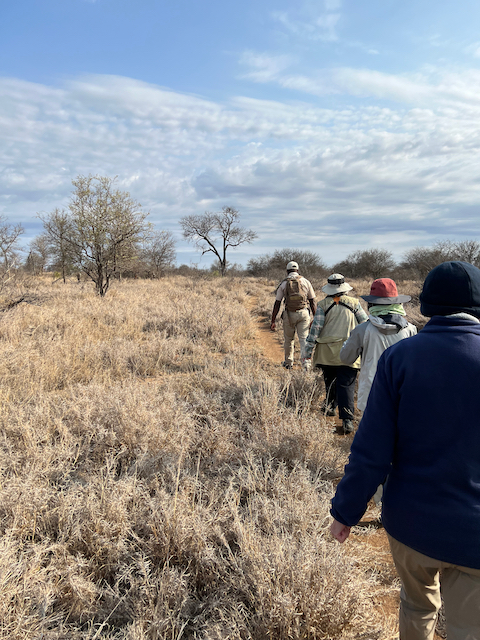
We drove about 15 minutes from the camp, disembarking at a trail that wound through brush and thickets of trees beside a large open area.


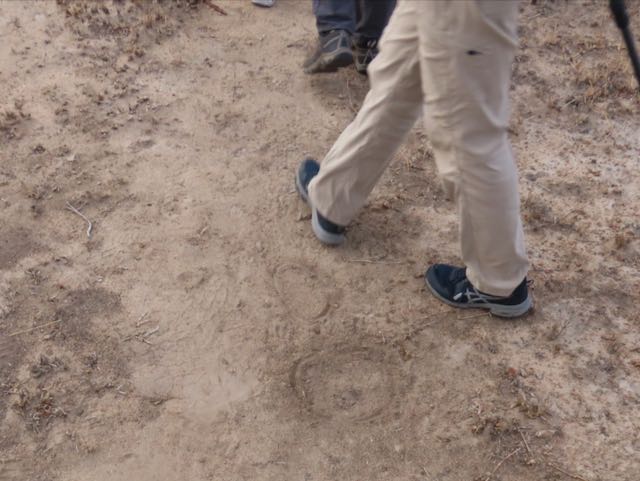
We were out very early, but a bull elephant had passed through even earlier that morning. Remember yesterday’s lesson about under- and over-stepping? Ellies under-step (back legs behind front) when relaxed, and over-step (back legs in front of front legs) when hurrying. Thius guy was just moseying along.

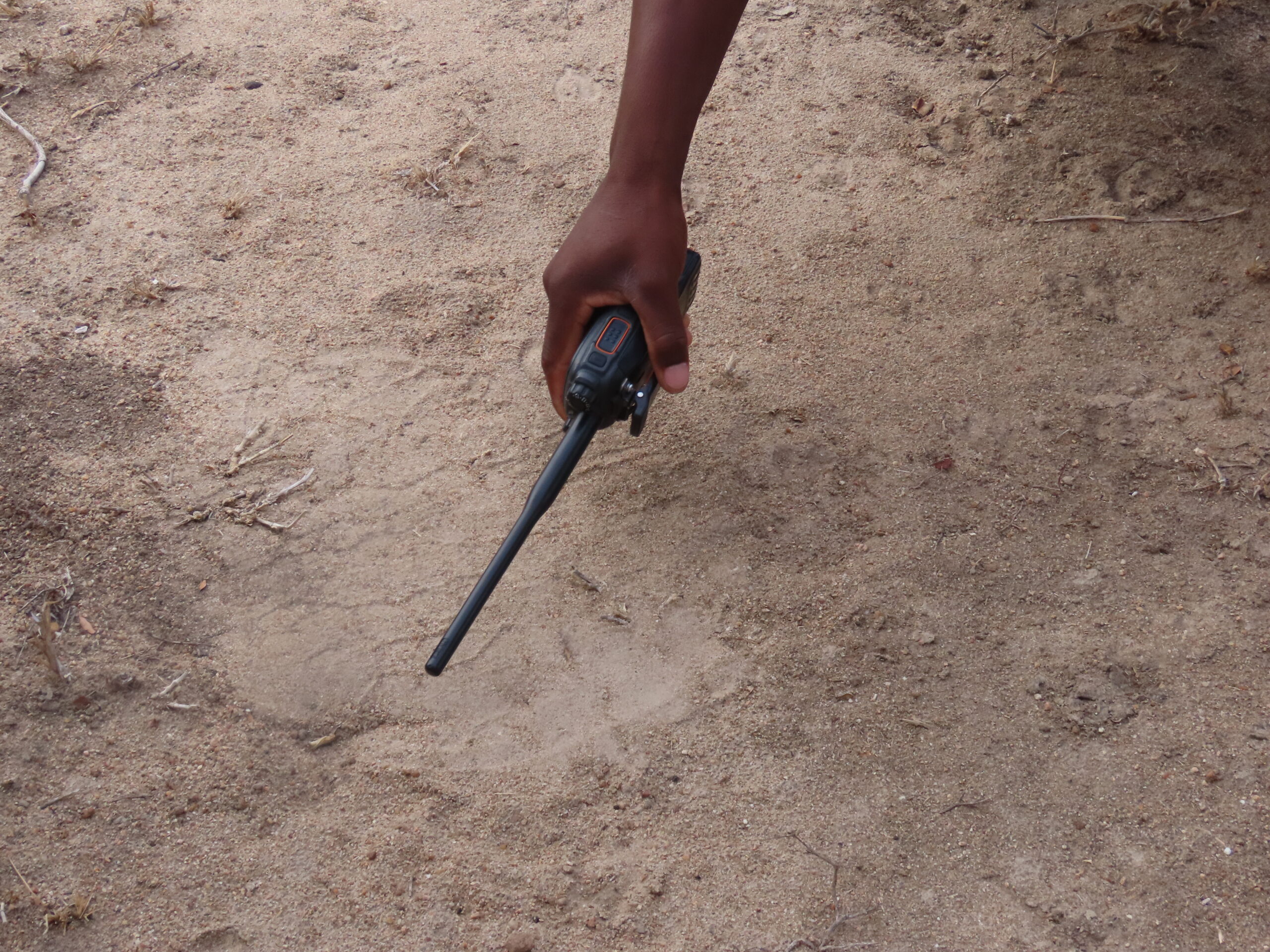
We stopped to investigate a set of Lion Ant traps. The larvae of this insect live for 6-8 years, lurking in the ground to set funnel traps with steep sides that other insects tumble down. They can live for months without food, but when an insect falls into the trap the Lion Ant injects the prey with venom and enzymes, then sucks out the liquified insides. When ready to mature, Lion Ants spin a cocoon in the ground, then emerge as a flying insect with a lifespan of about one month.


but they all look similar. This is a larval Lion Ant.



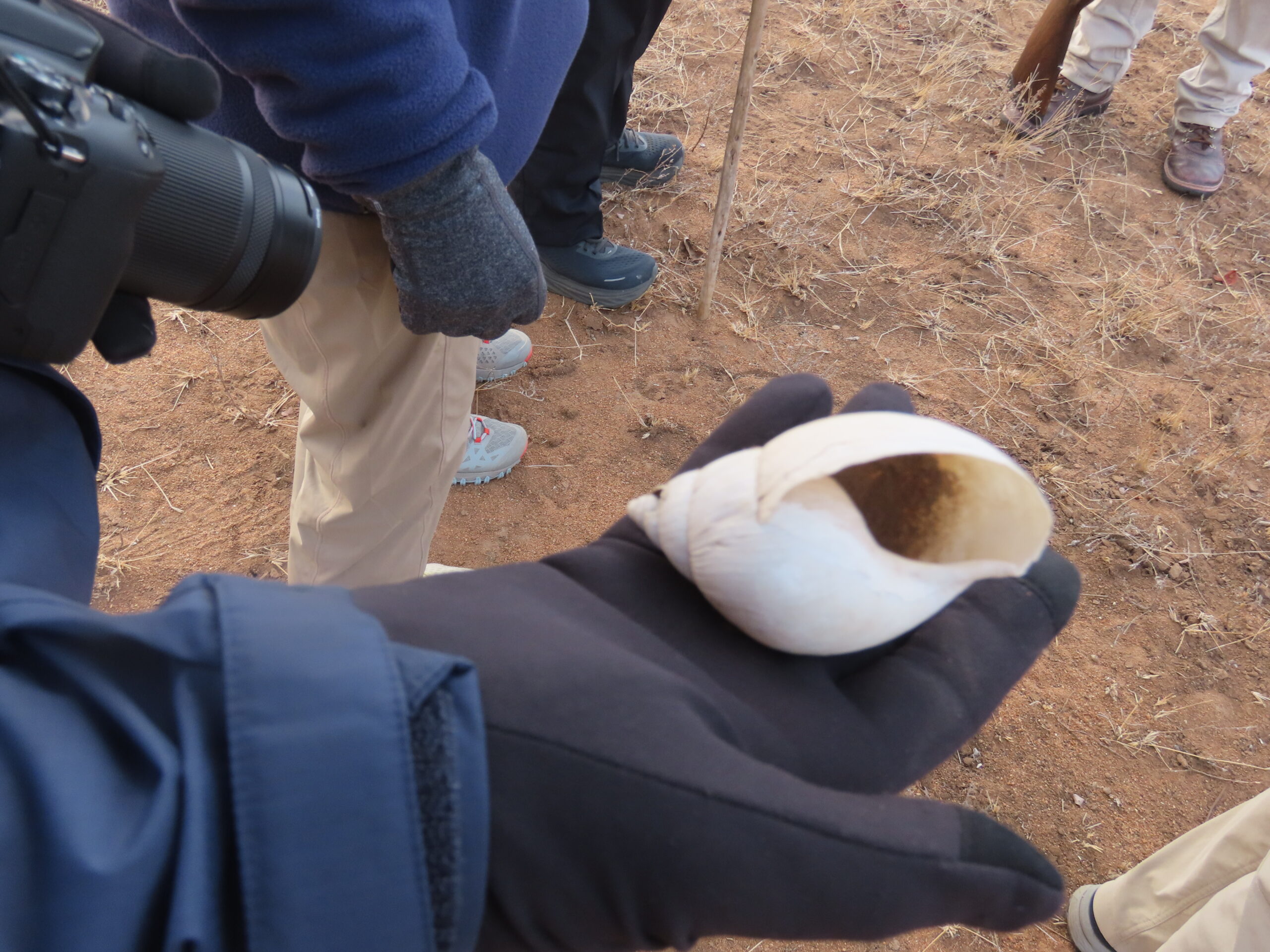
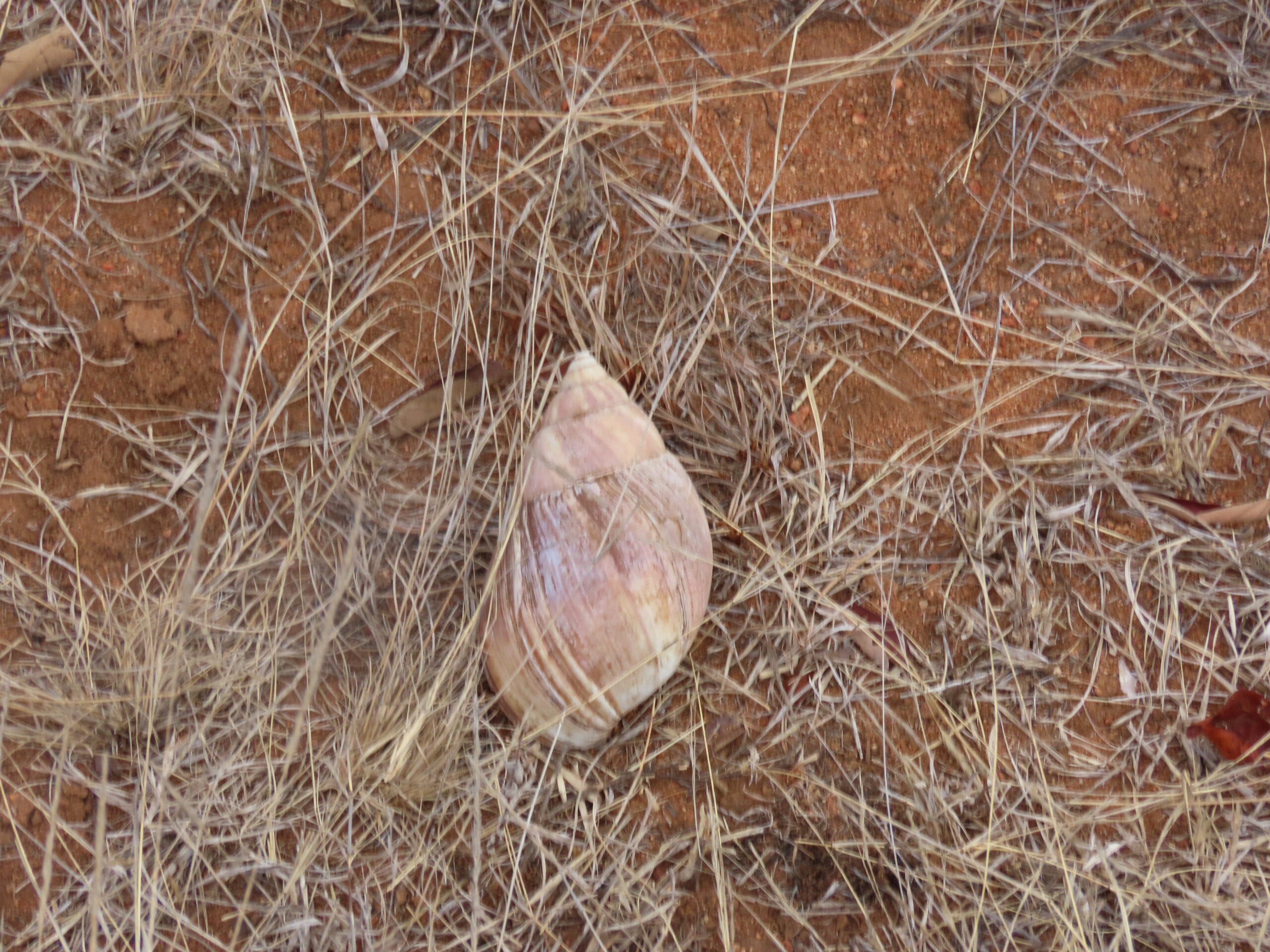
We came across a “smallish” African Land Snail – about the size of a pear. These little beauties are hermaphrodite, with breeding habits worthy of science fiction: one partner lays eggs in the other, and the hatchlings devour the host. (Wasn’t there a movie about that…?) The snails bury themselves underground in the dry season. Ground Hornbills break open the shells and eat the snails inside.



While most spiders are solitary (and tend to eat any other spider in the vicinity), community spiders like this live in large colonies and share the care and raising of youngsters. The colonies are roughly 90% female, of whom about 60% engage in breeding. All females care for the young: when the spiderlings approach adulthood, older non-breeding females sacrifice themselves as food for the kids. (I guess that’s one way to solve the social safety net for seniors.)


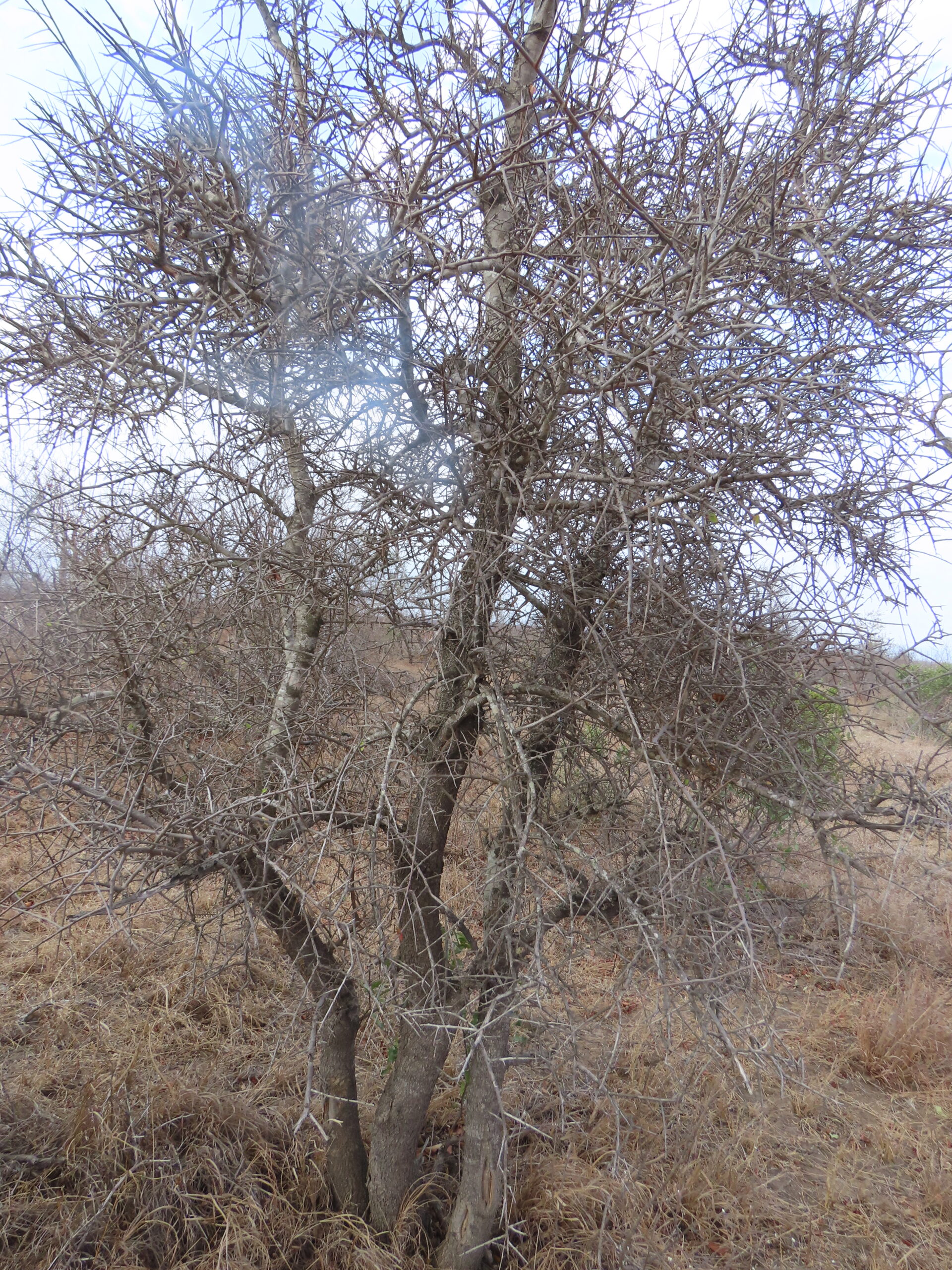
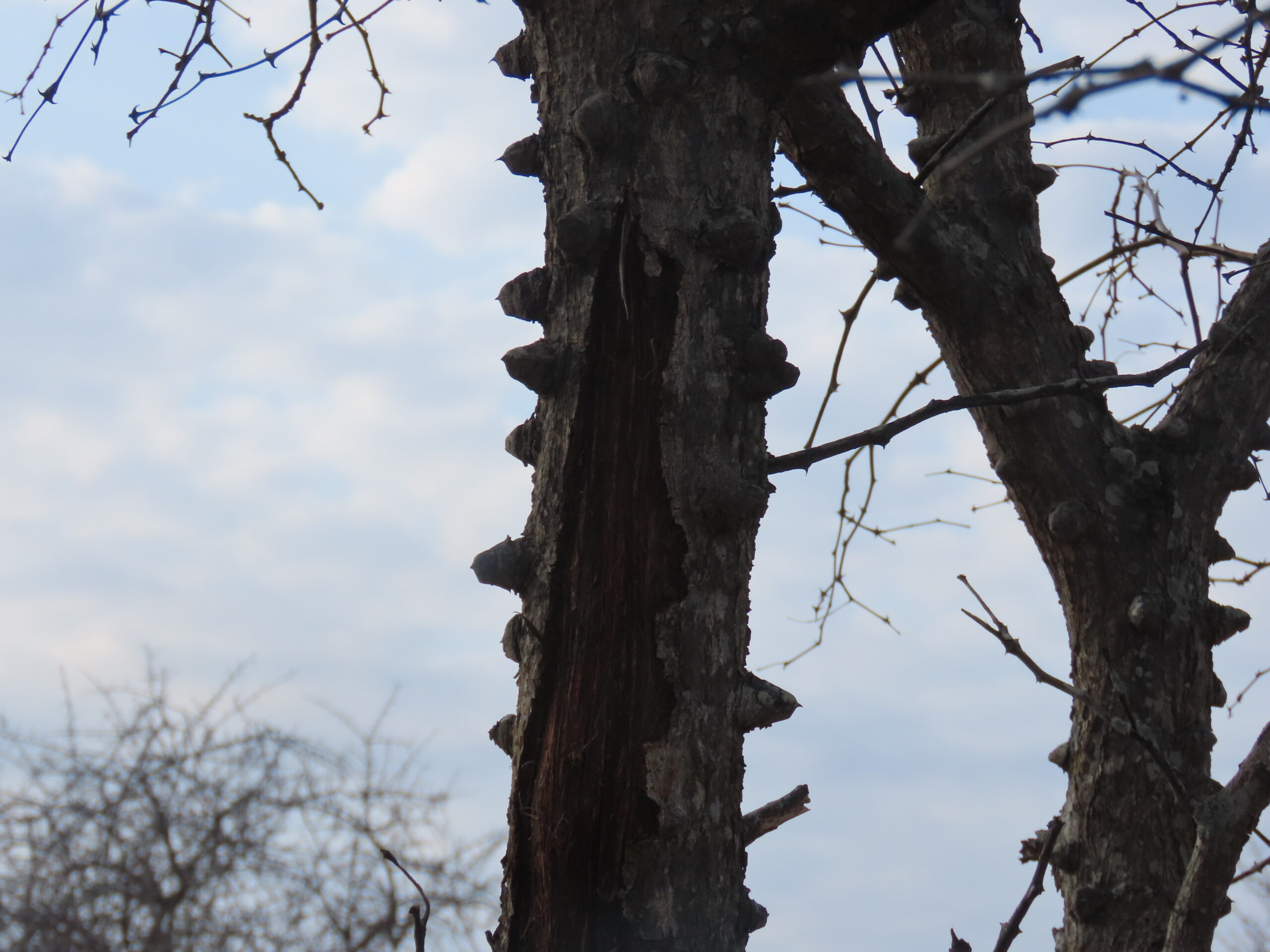
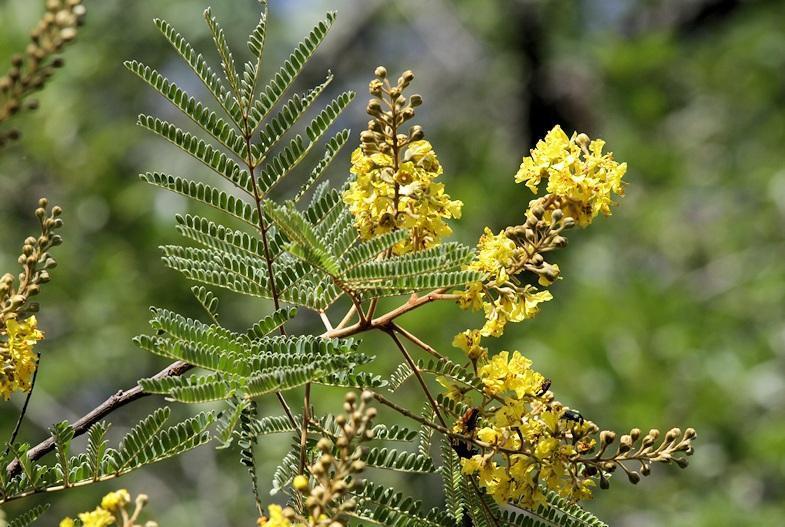
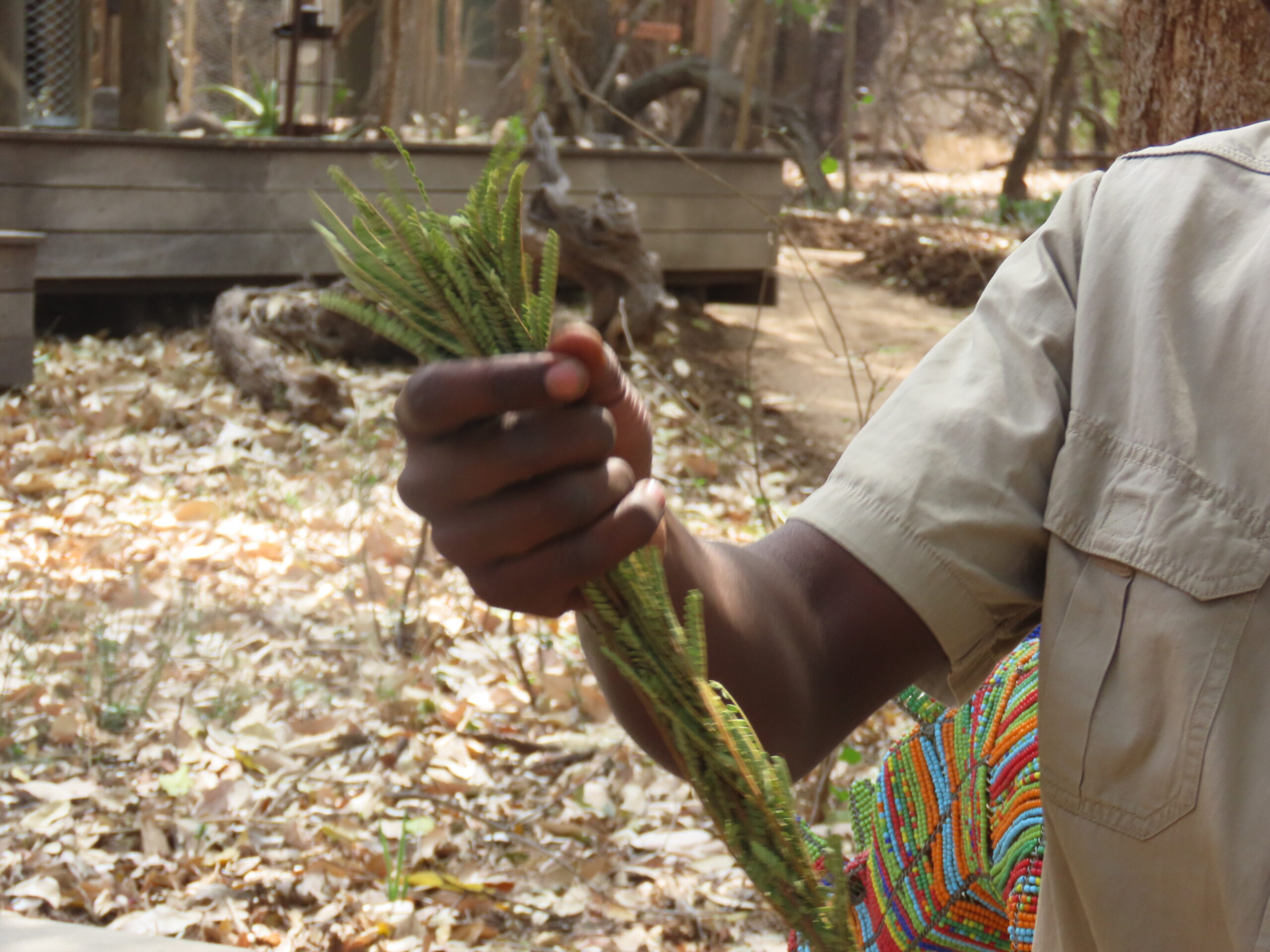
We spent some time learning about the Tambouti Thorn tree, which oozes a poisonous latex from its underbark when cut. The smoke from Tambouti wood can make people sick, as can eating any meat cooked on it. Local people use the leaves as a diuretic, a colon cleanser and a headache remedy, and put the latext on a tooth cavity to kill the root – after 2-3 months, the tooth can be easily pulled. They also burn the wood inside a house as a fumigant, to drive out snakes and verminous insects.
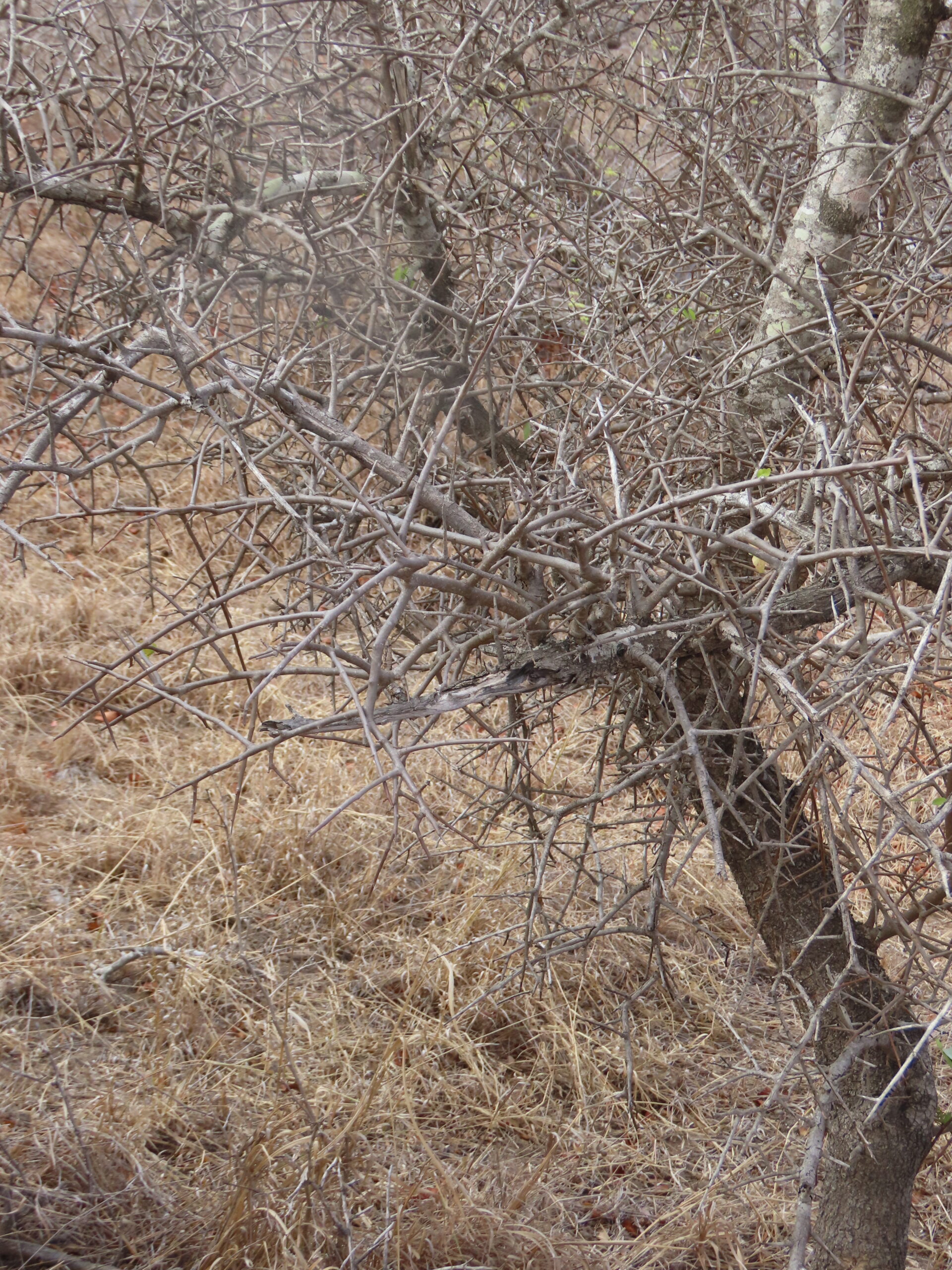

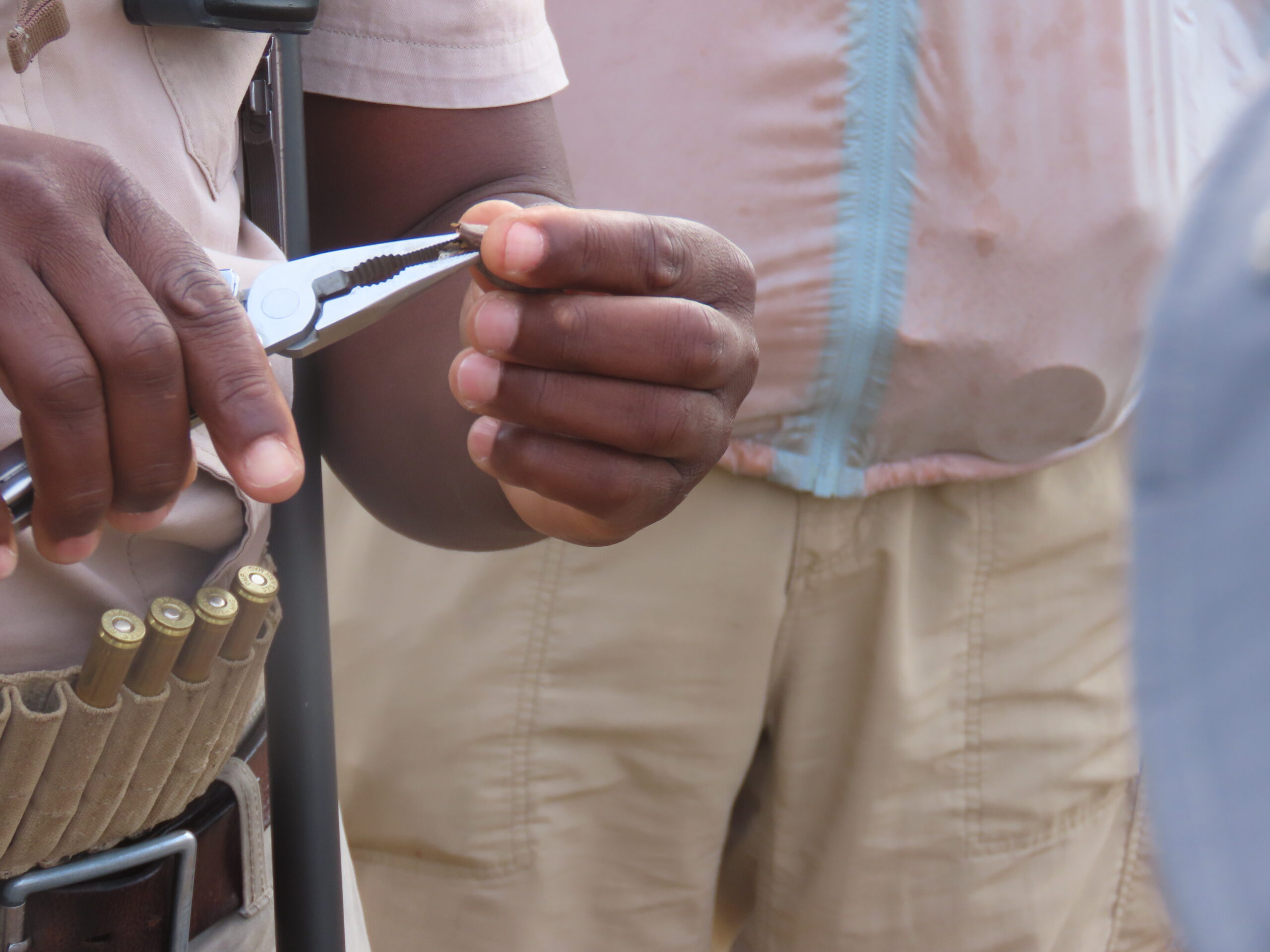
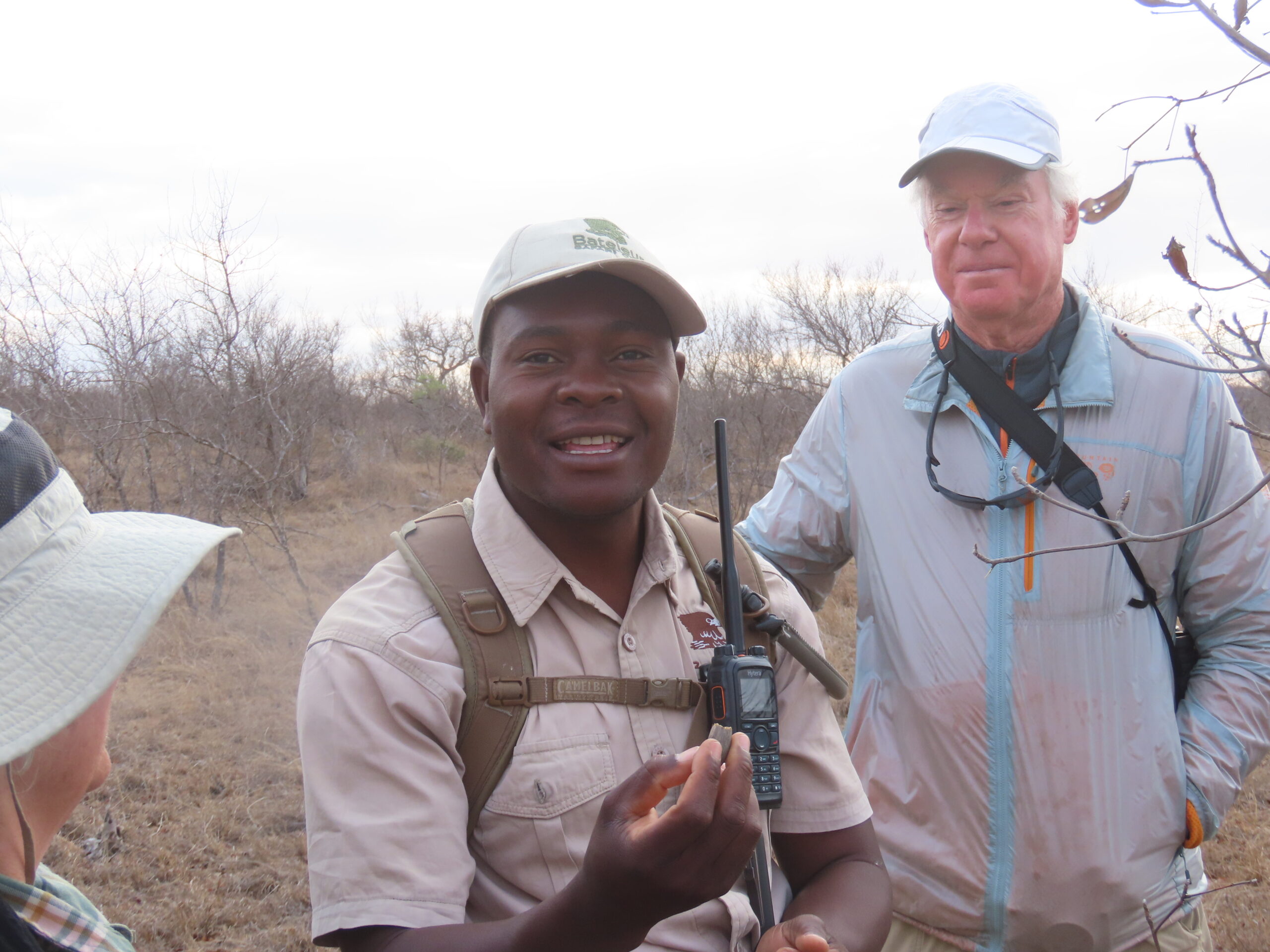
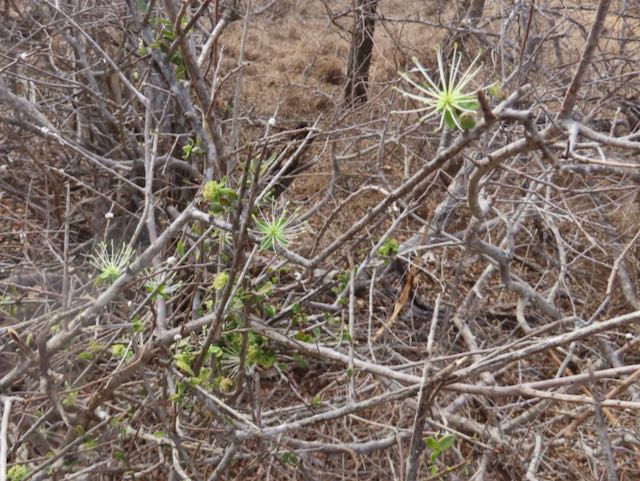
Temba shared stories of his childhood when introducing us to galls on the branches of an (unnamed) bush.


A species of wasp creates nests in the bark of bushes, causing the bush to form these galls. When the wasps hatch, the (now hollow) galls remain, and kids cut them off to make whistles. Different sizes of galls create different sounds, so kids use them to signal one another when out in the bush herding animals or to amuse themselves by making music.



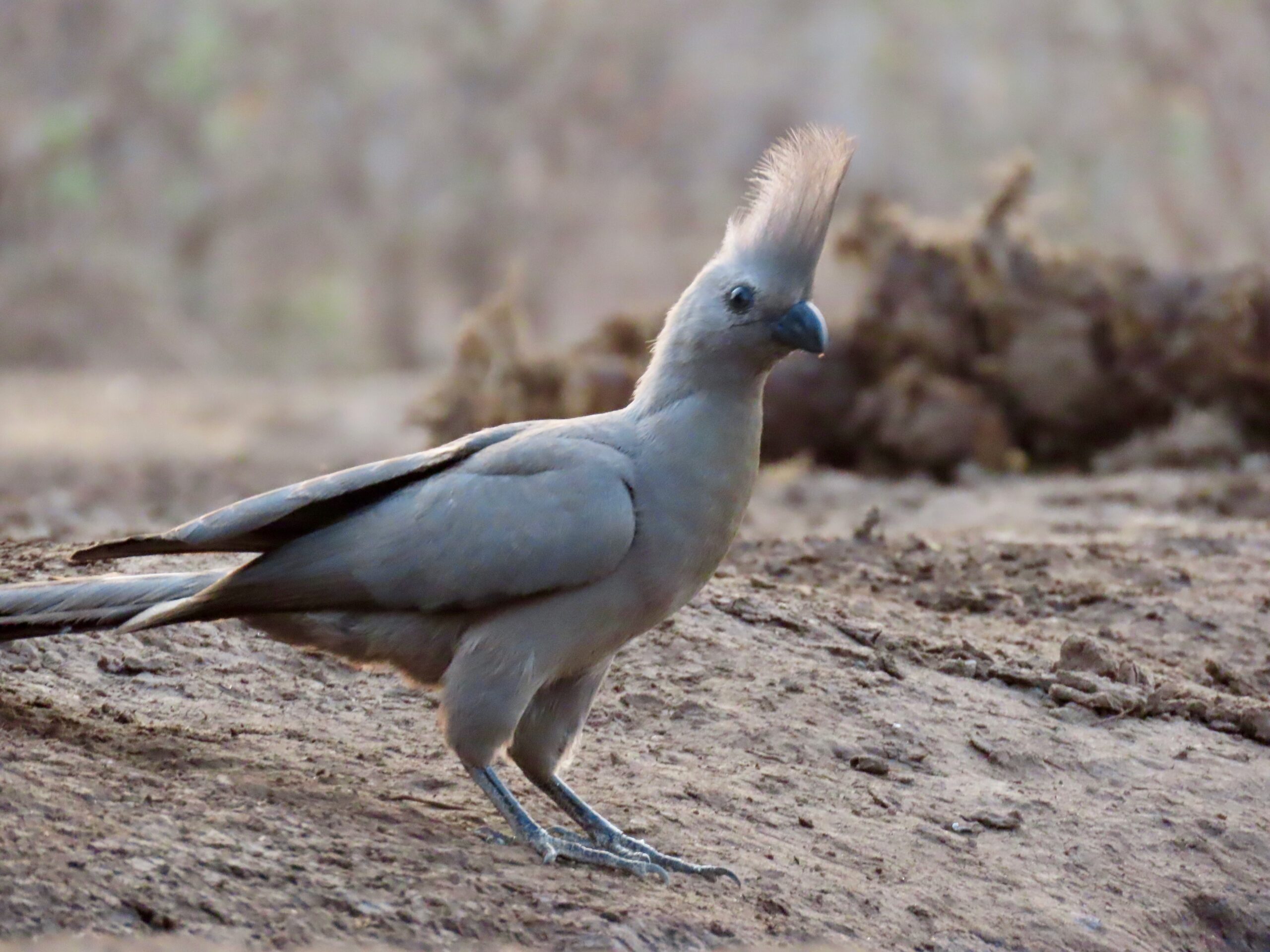

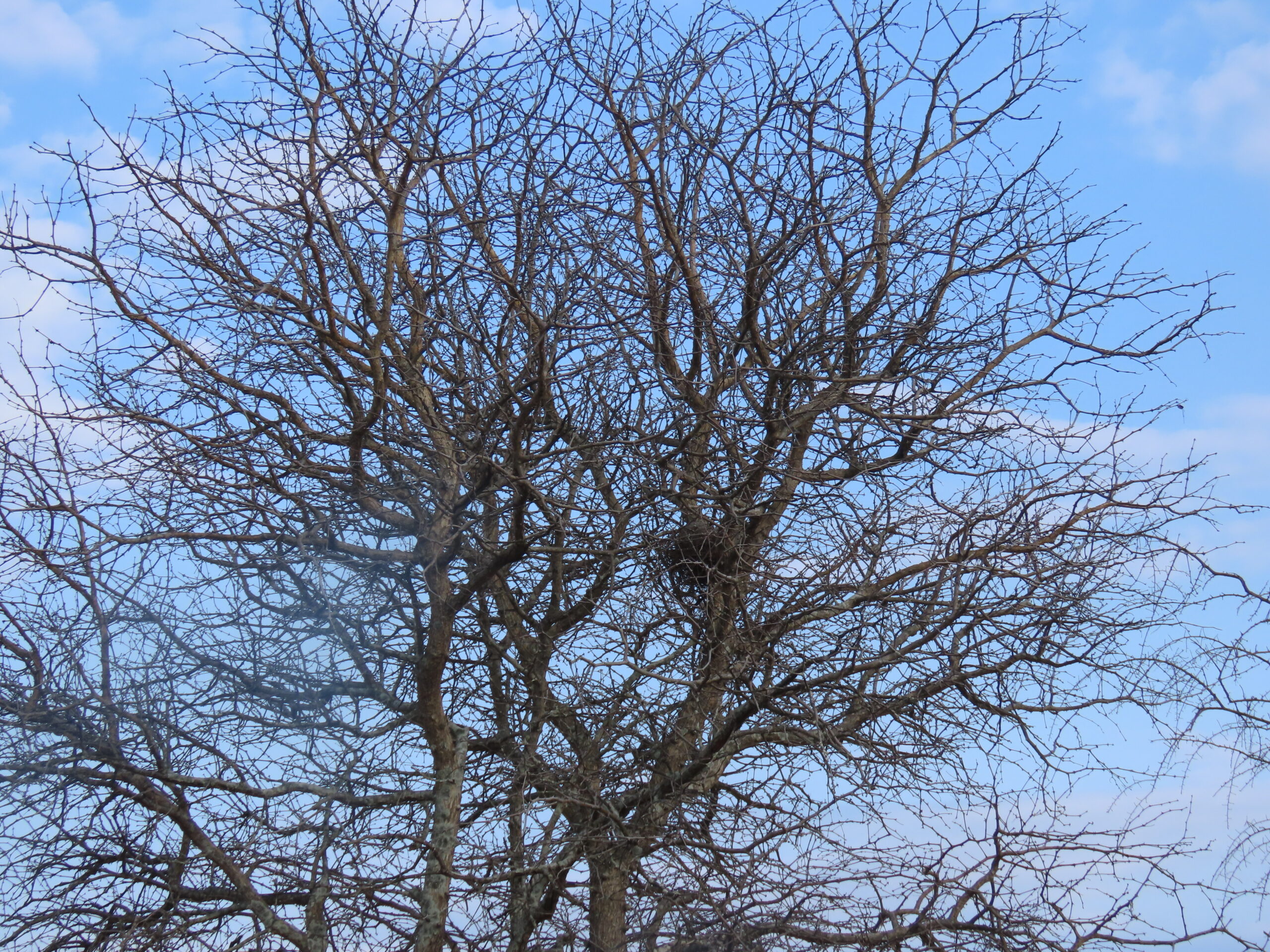

(they are nocturnal, so this one is snoozing)



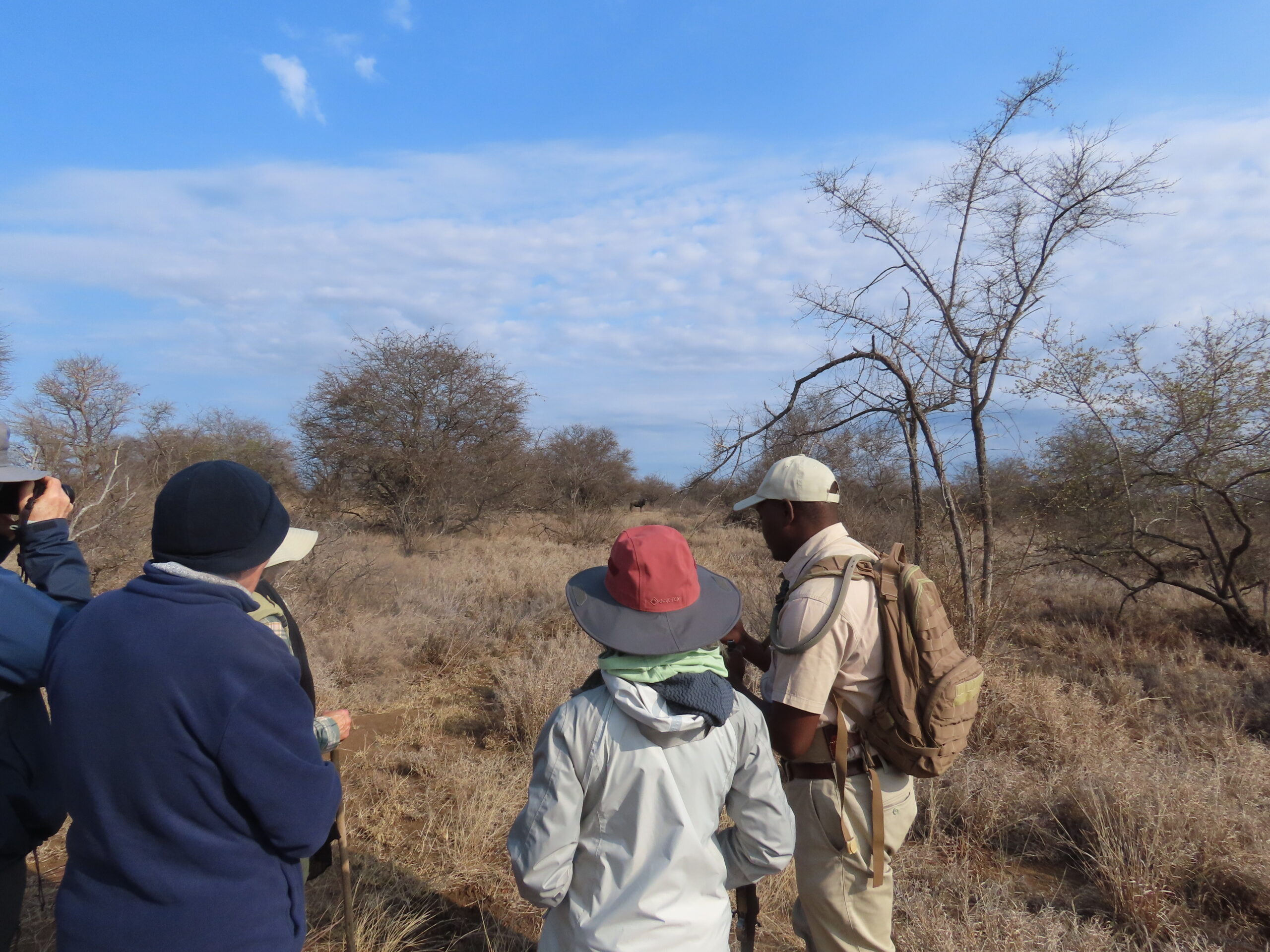
A Blue Wildebeest (a.k.a.Brindled Gnu) stopped to check us out, then went on about its business. Wildebeest maintain overlapping female/male territories: female territories endure, while males create temporary territories during breeding season. Female territories may overlap several male territories, while males without territories live in bachelor herds. This guy was likely one of those bachelors.


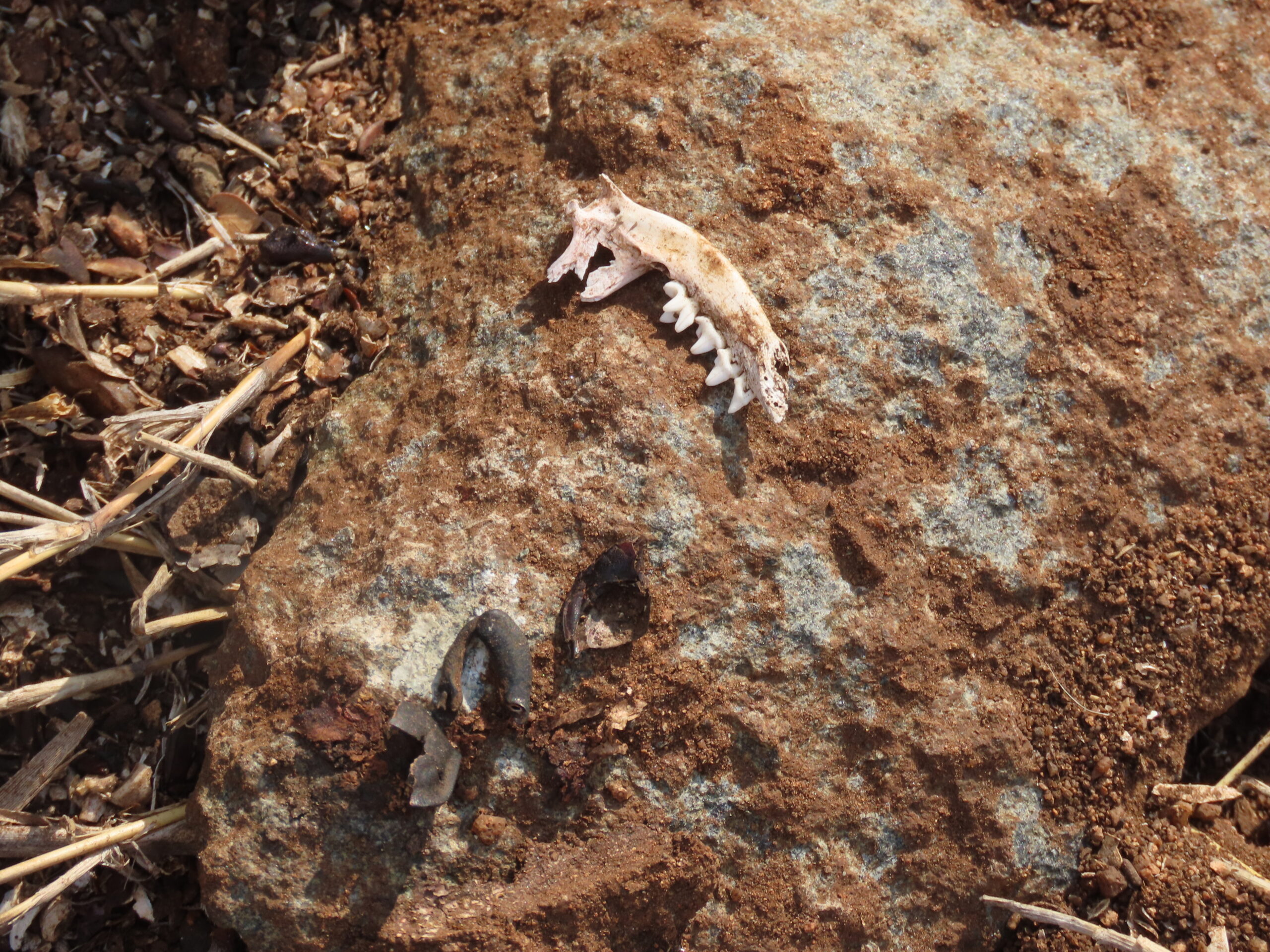
This is a Civet midden. Civets are cat-like critters, more closely related to the mongoose family than to felines. They are omnivores, eating anything they can get their paws around. They also secret a musk (civetone) which, for centuries, has been scraped from their musk glands for use in perfumes. The civets rarely survive this practice for long. Reputable perfume companies now claim to use synthetic civetone, but the practice (sadly) continues.

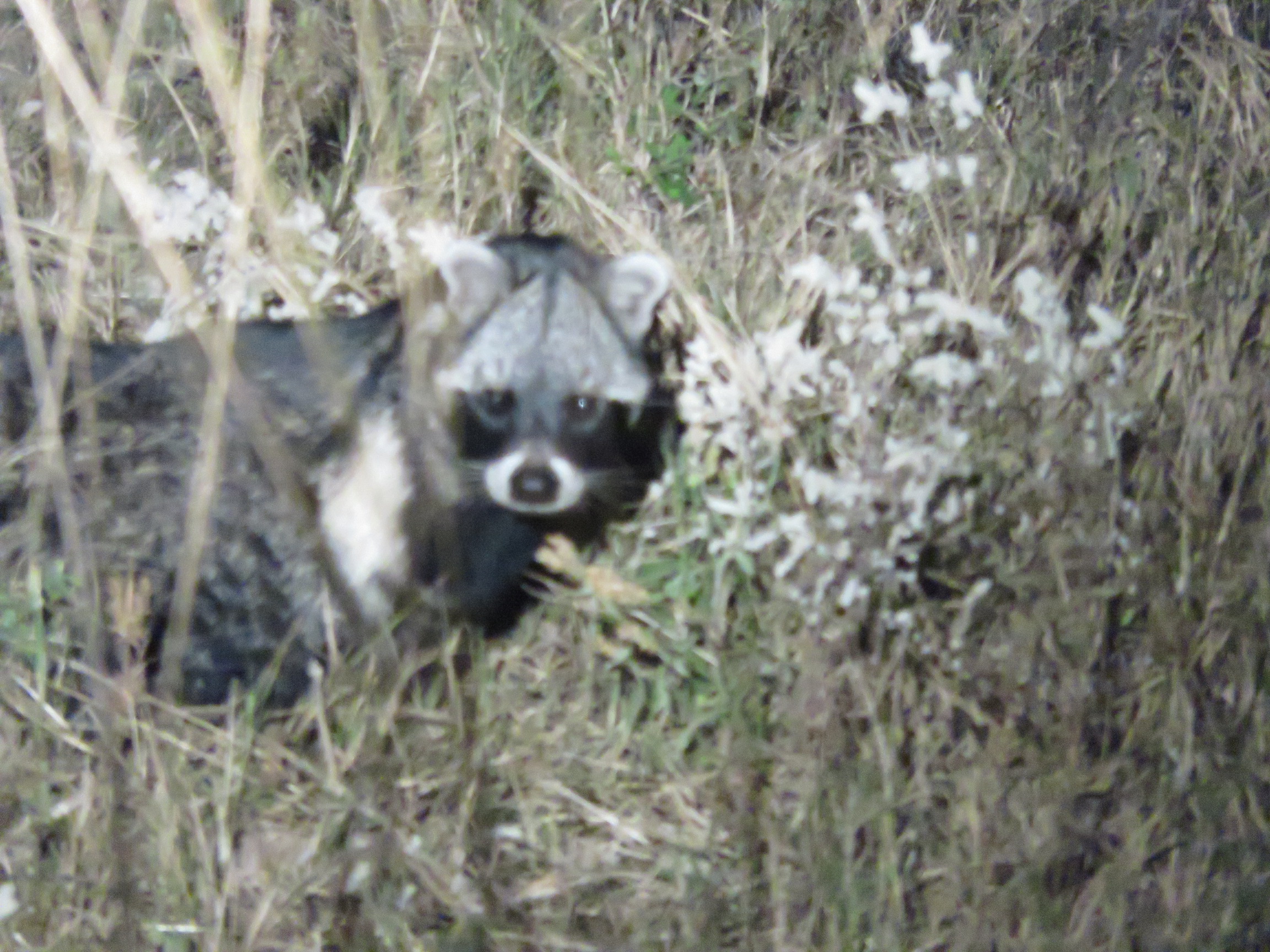
on our trip to the Okavango Delta 10 years ago.
Various parts of the Sjambok tree are used in traditional medicine: Roots are used to treat bilharzias, blackwater fever, toothache and severe abdominal pain. Headaches are cured by inhaling the smoke from burning twigs.,

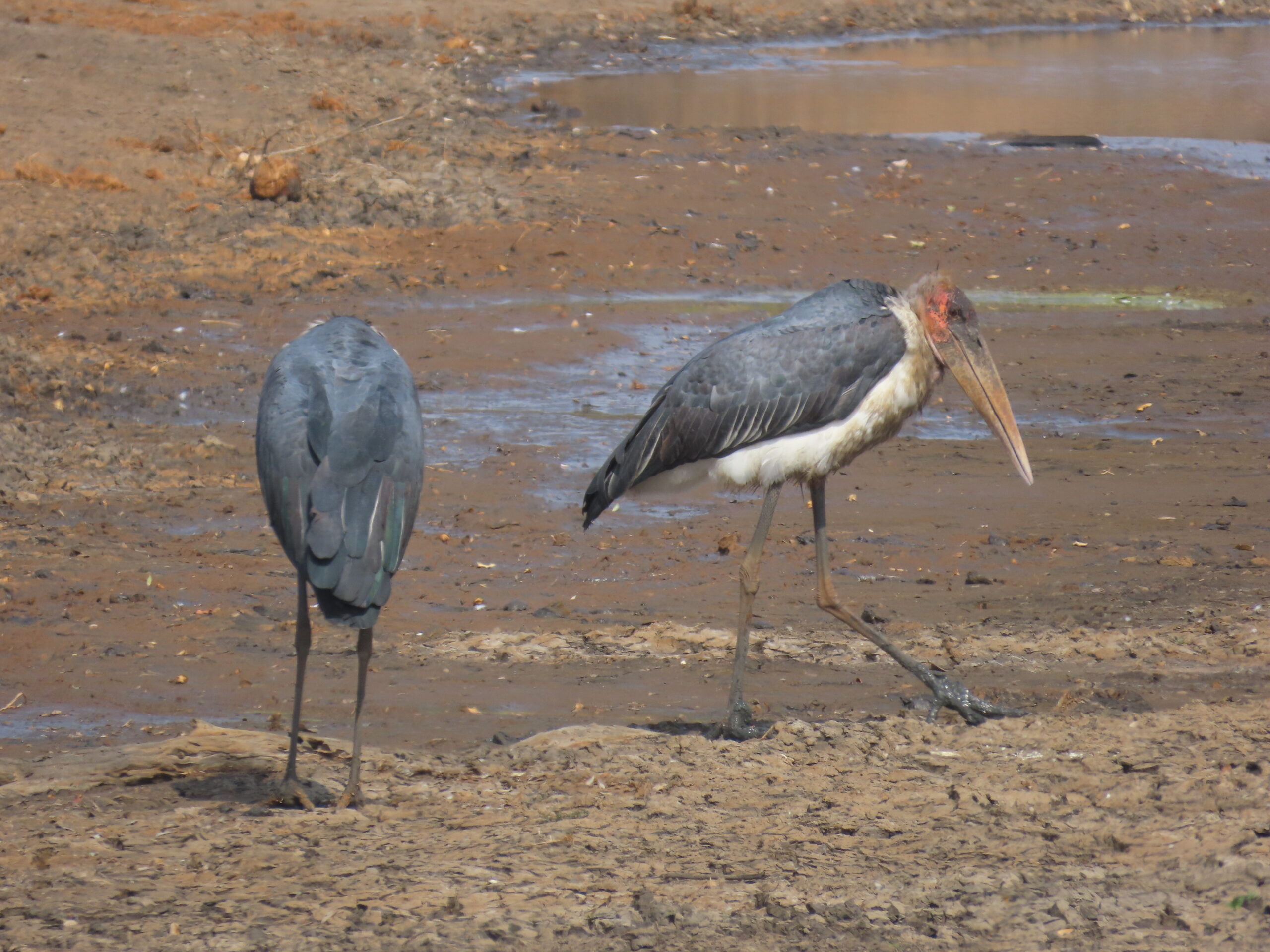
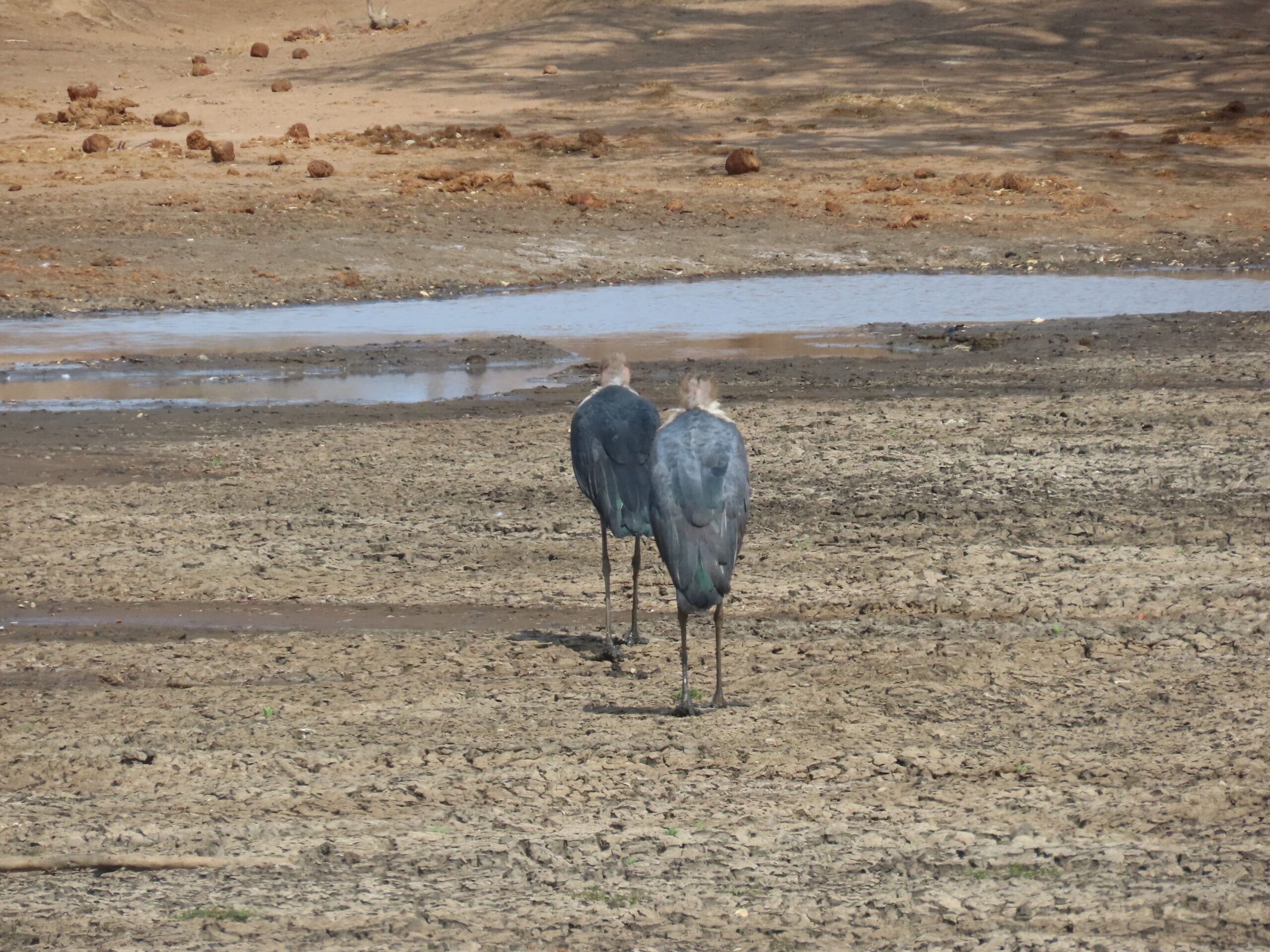
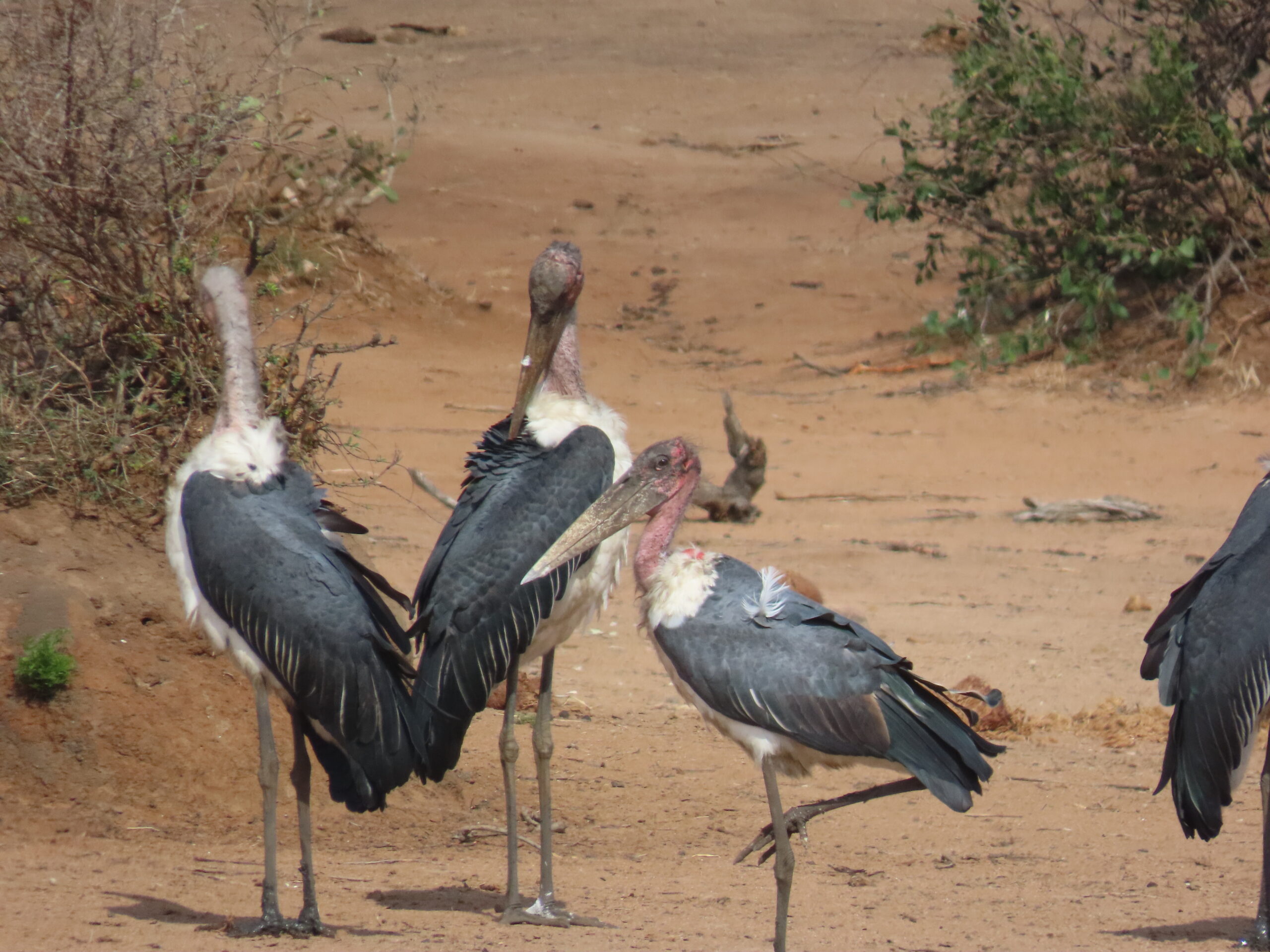
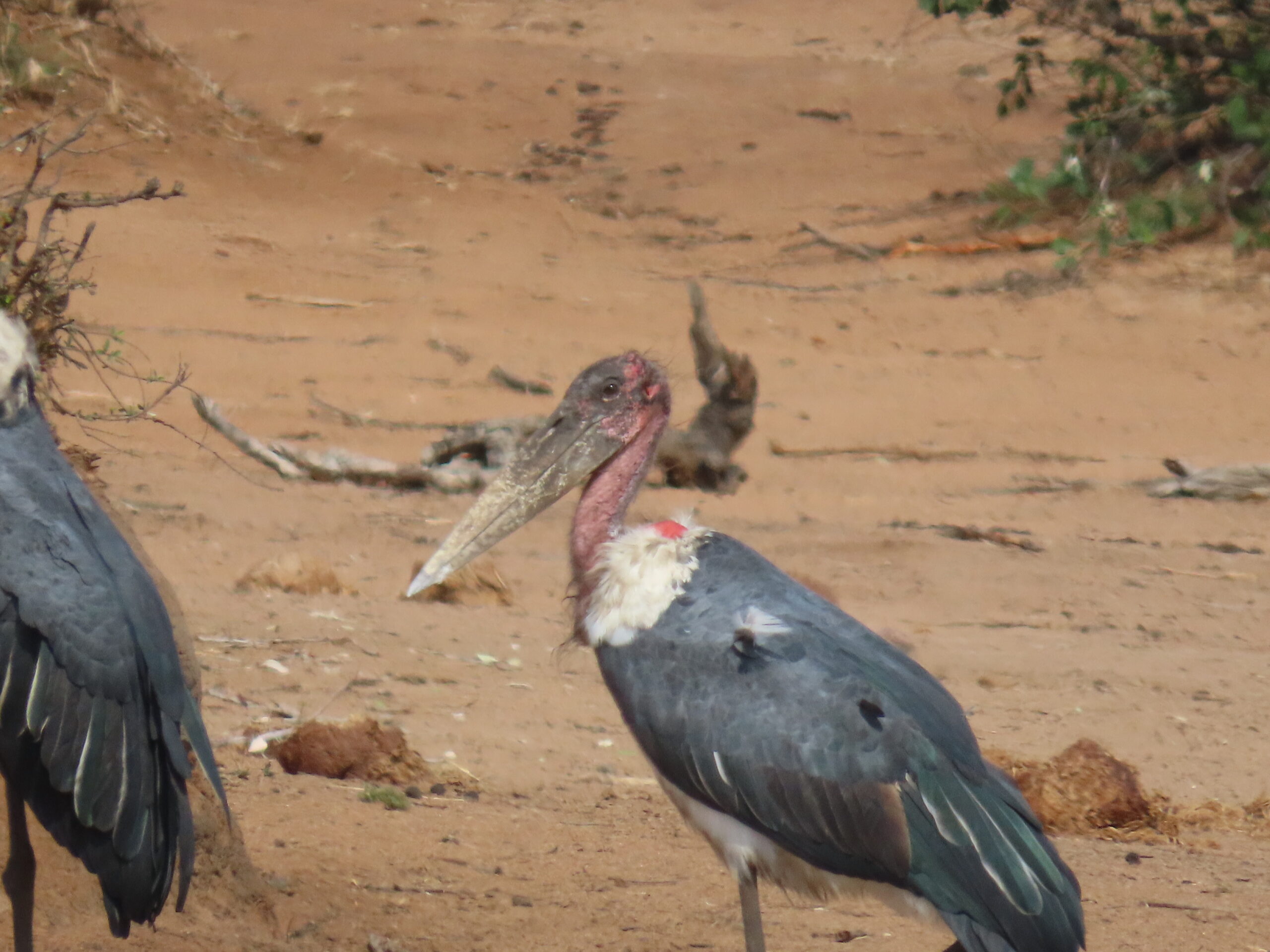
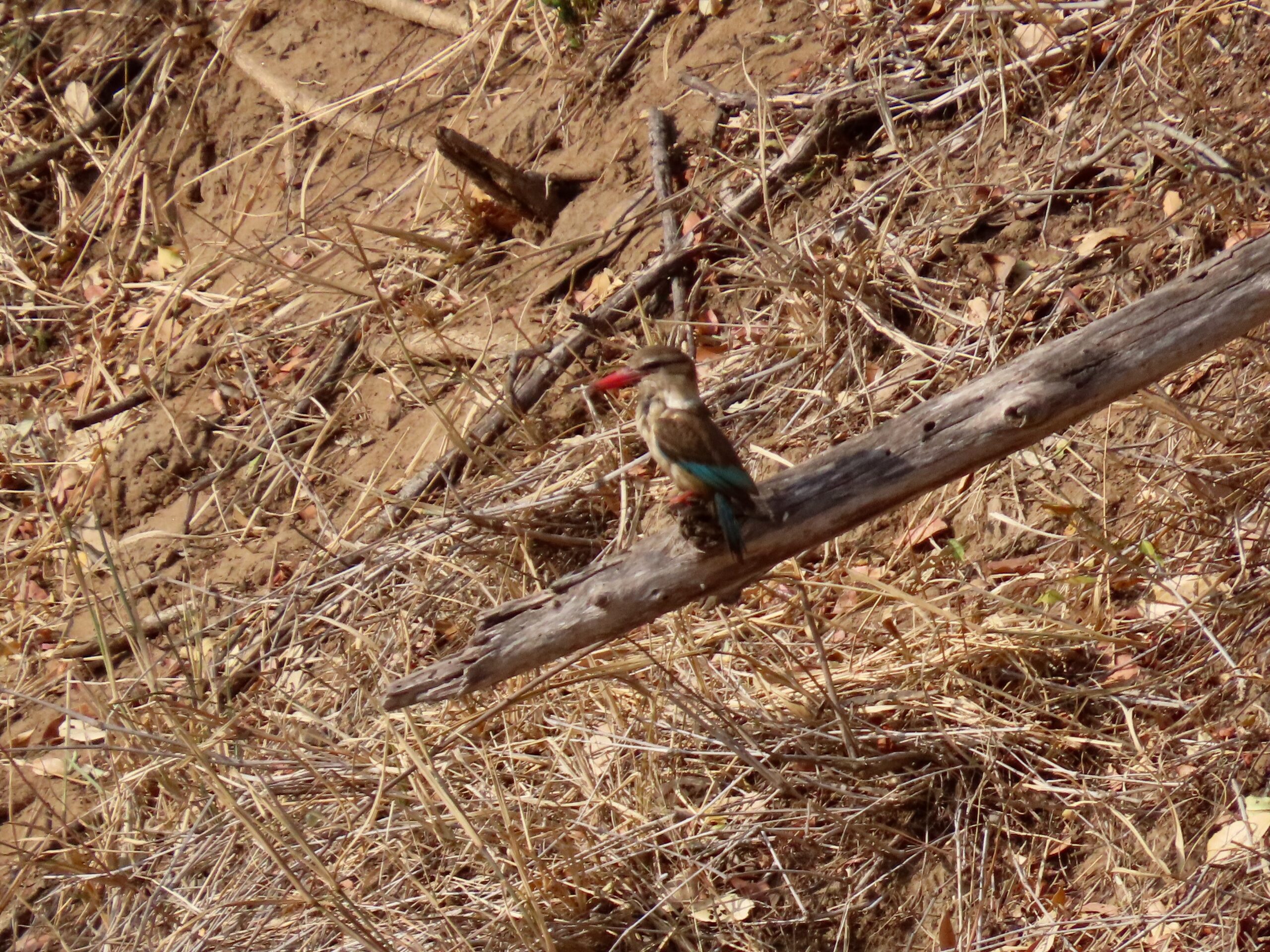
Completing our bush walk, we returned to the vehicle for a late morning drive. Our first sighting was a group of Marabou Stork around a shallow pond. These are enormous birds: up to five feet tall with wingspans of +10 feet. They are gregarious colony birds – but reported to be bad-tempered – with a face only a mother could love. I love to watch them, finding them quite comical.







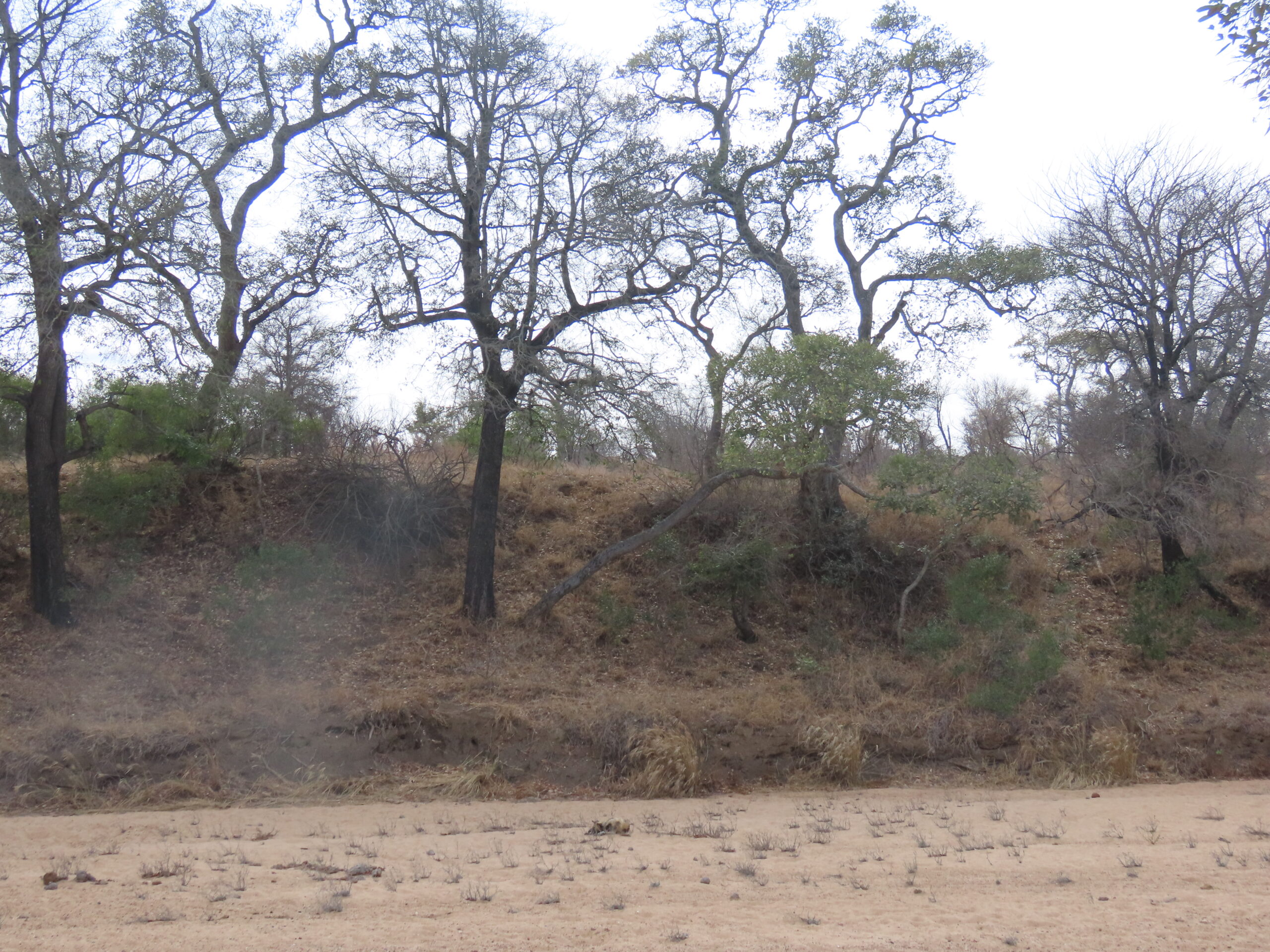
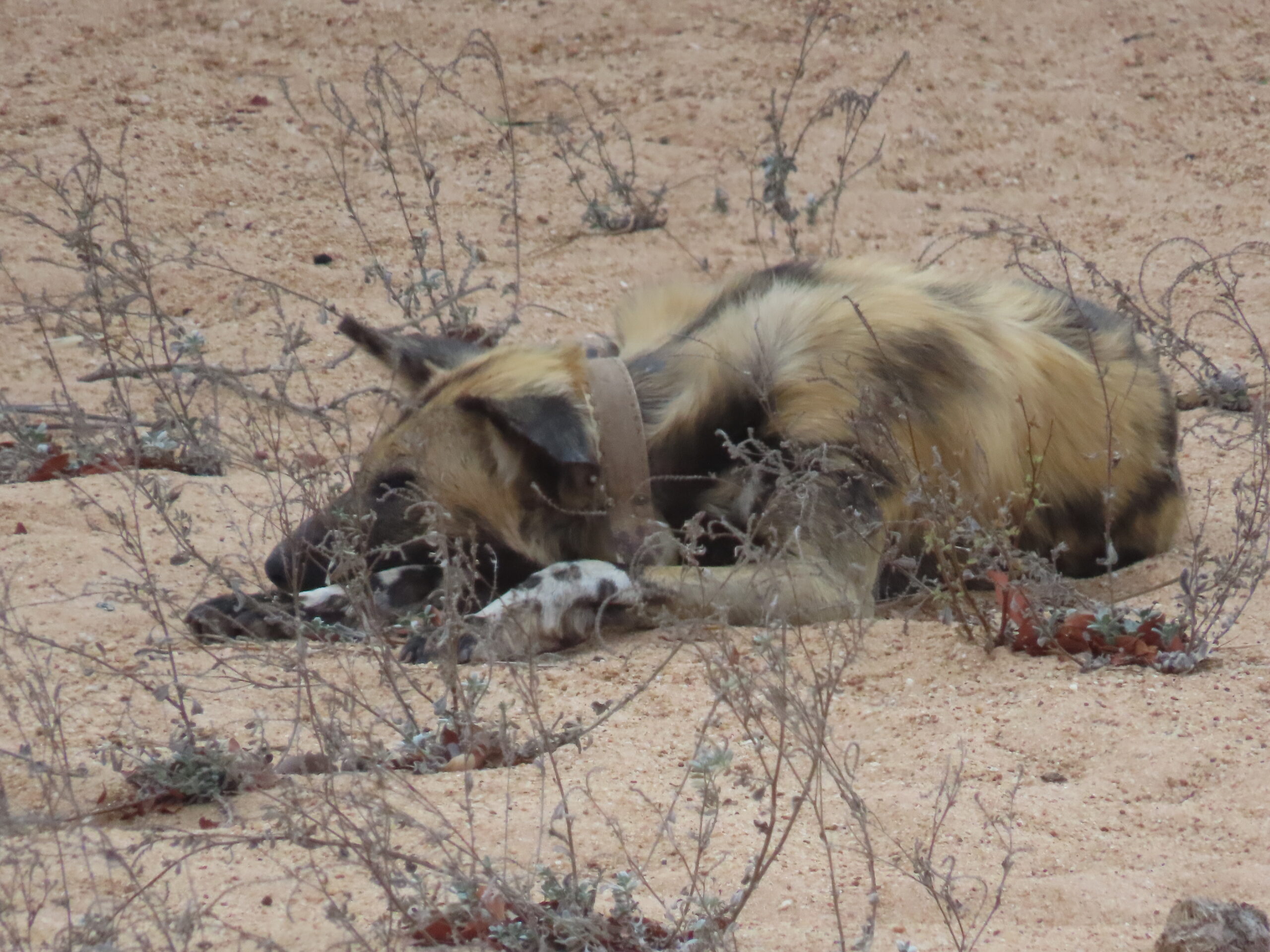
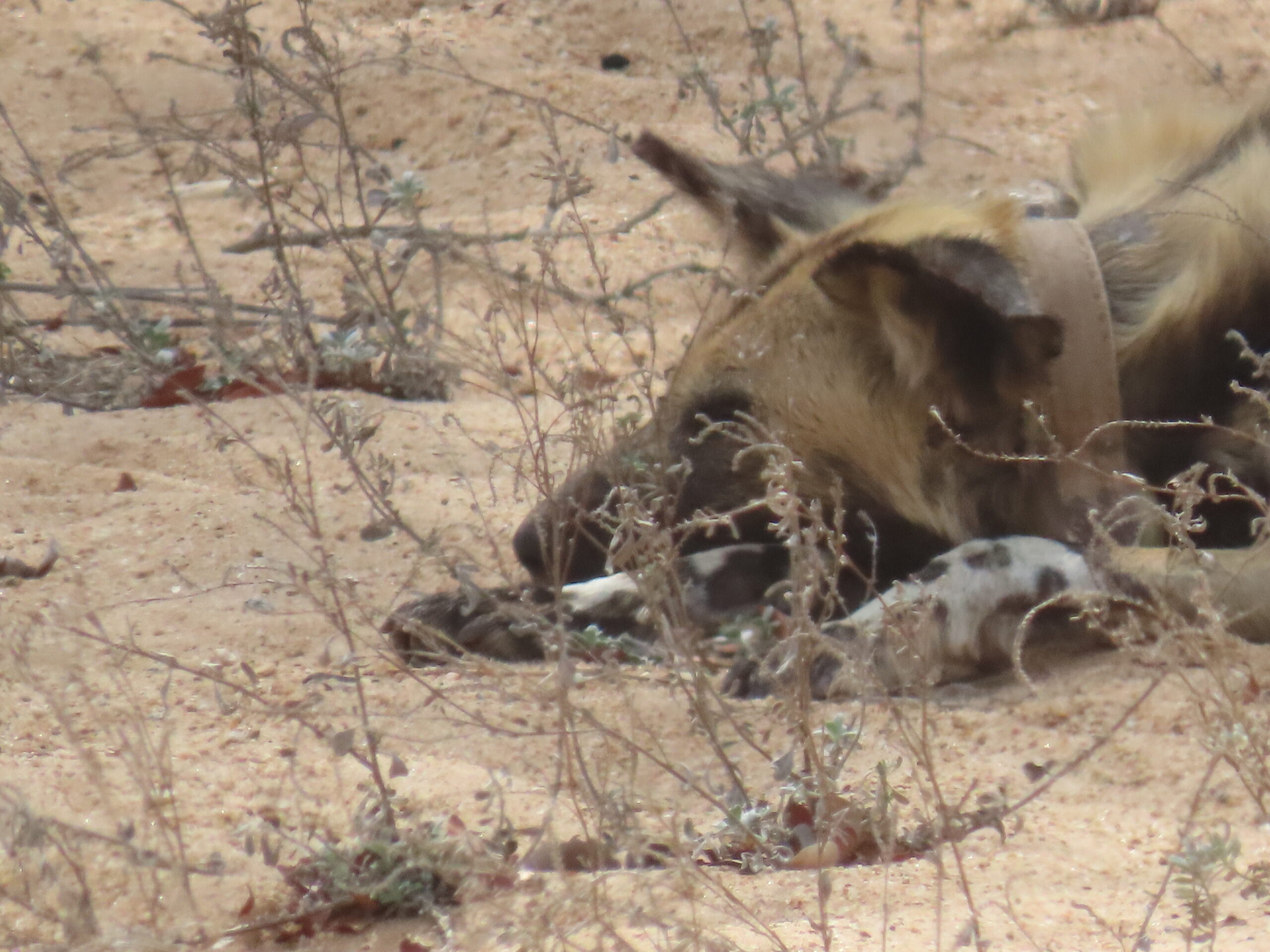
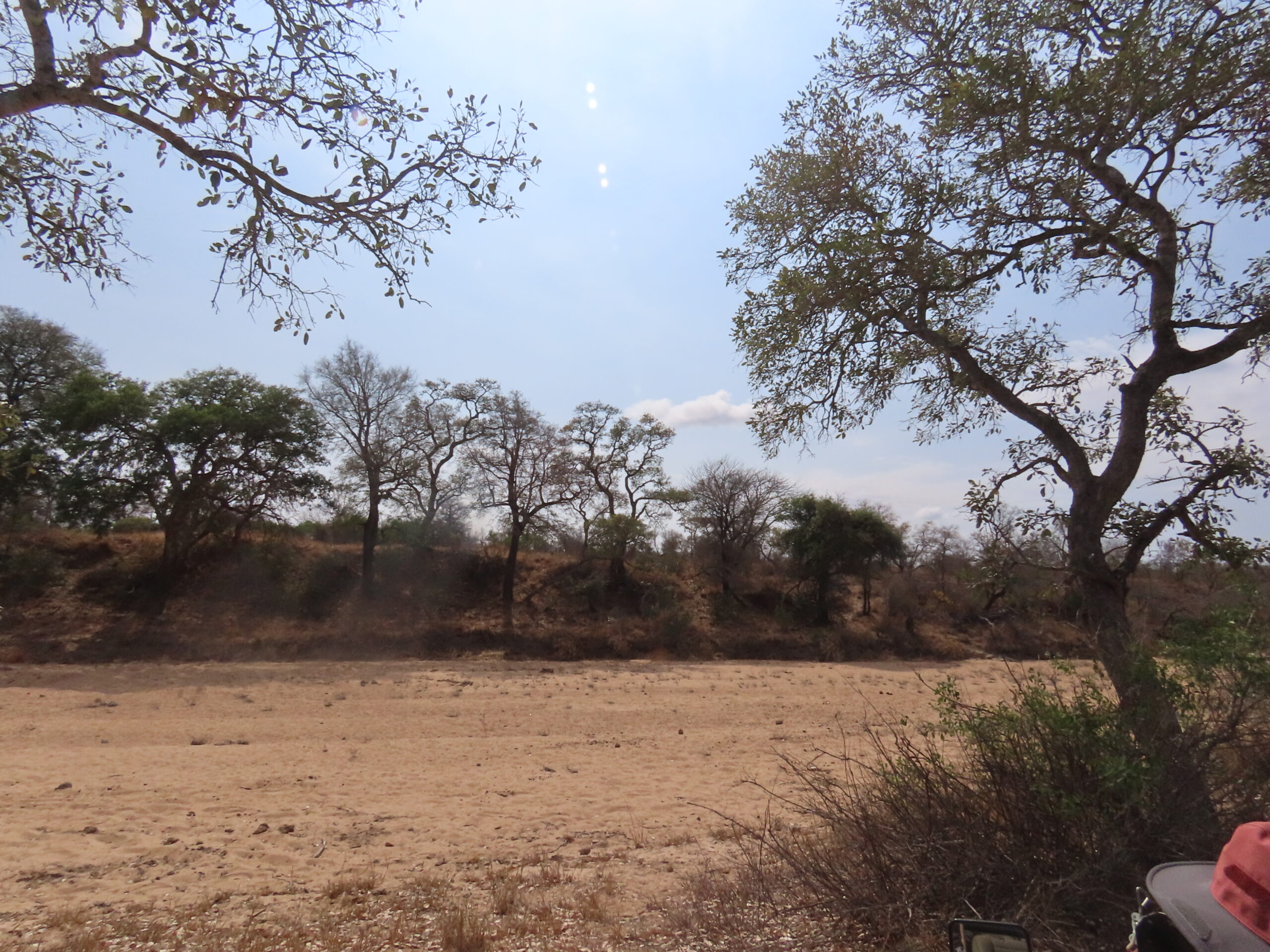
While traversing a riverbed, we spotted a solitary Wild Dog lying in the sand. Rangers had found this dog injured, treated it, then released it (with a collar) when it had recovered. It had not yet found its way back to its pack, and we felt sad for it.

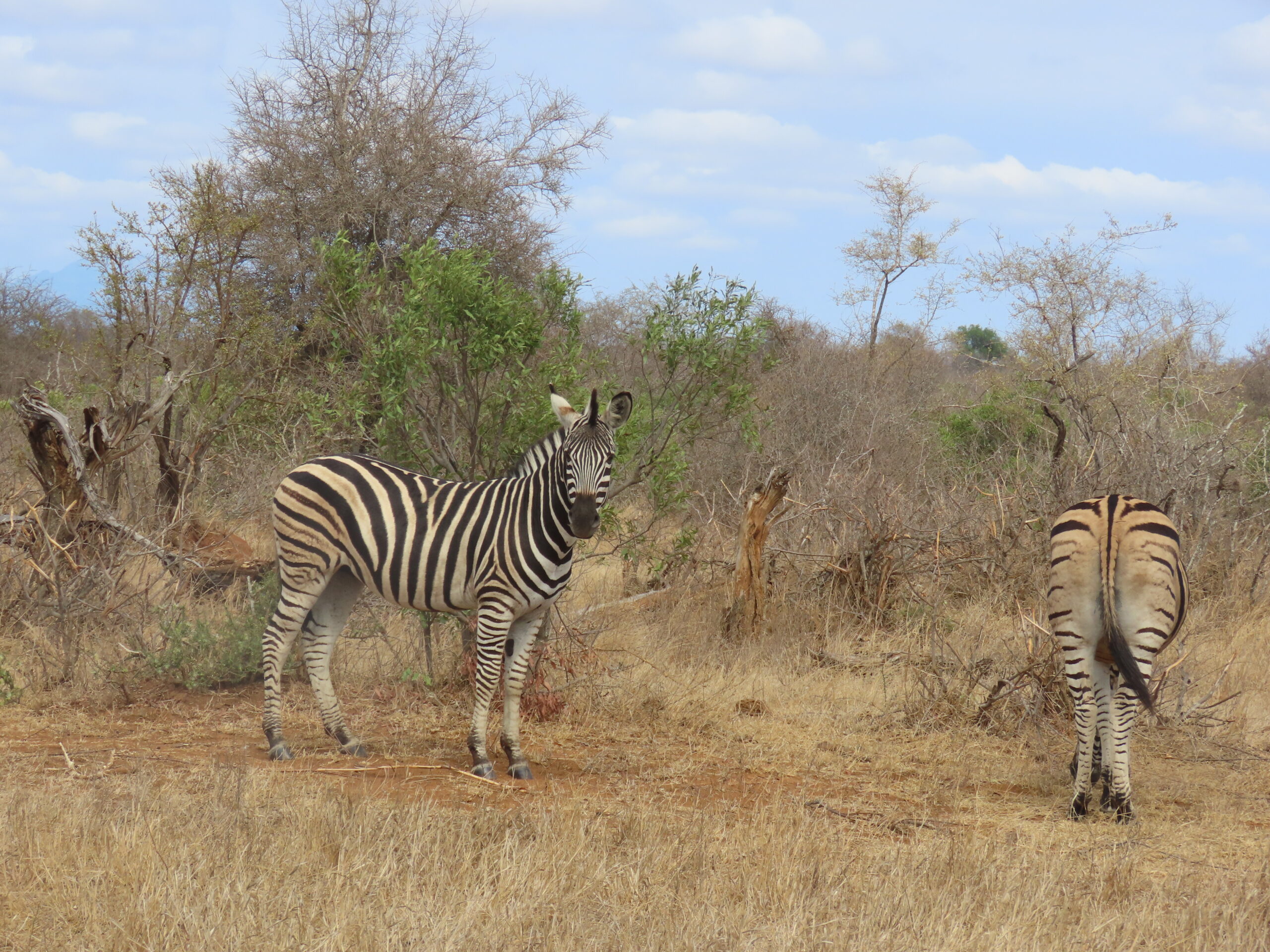
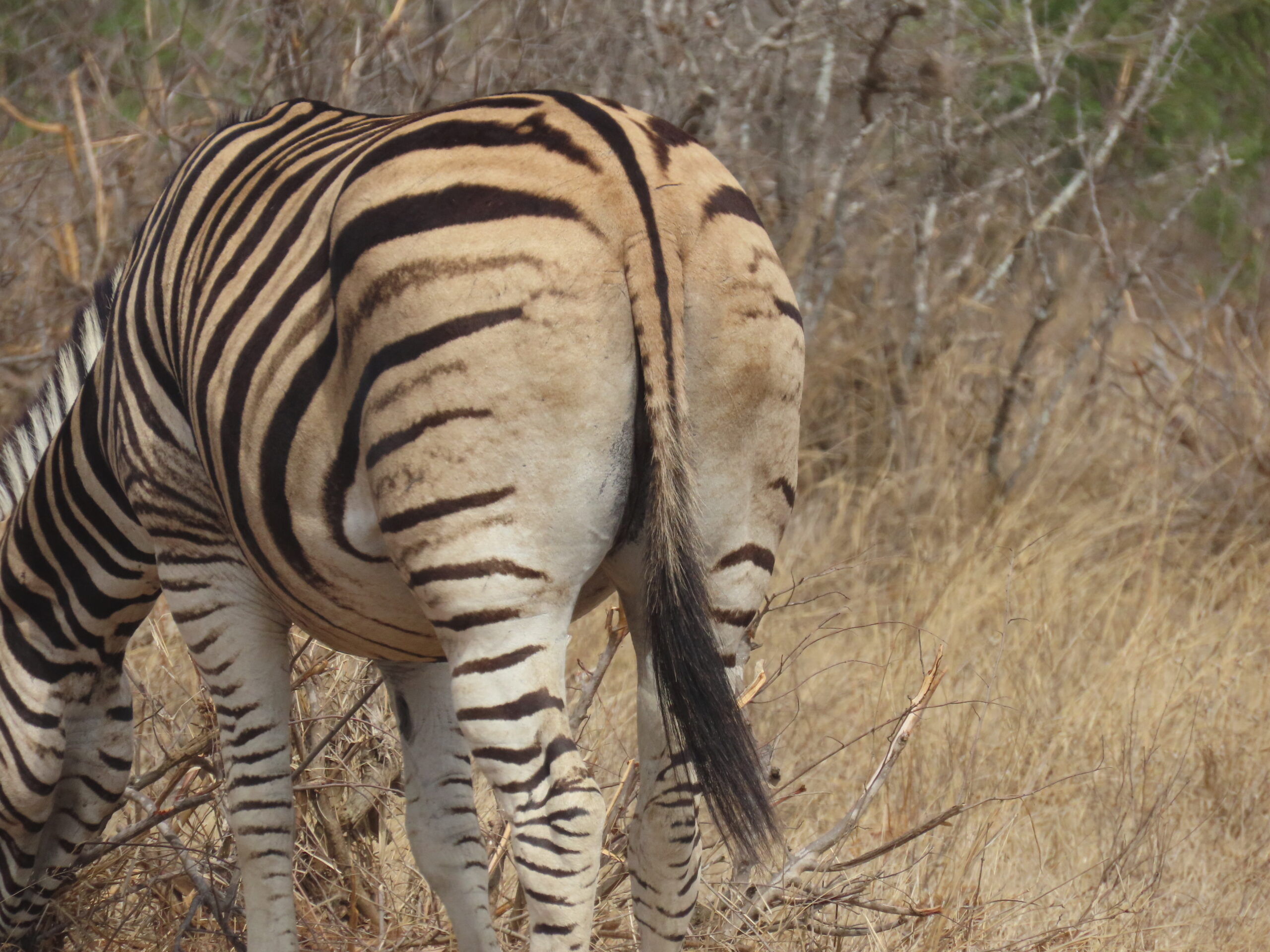
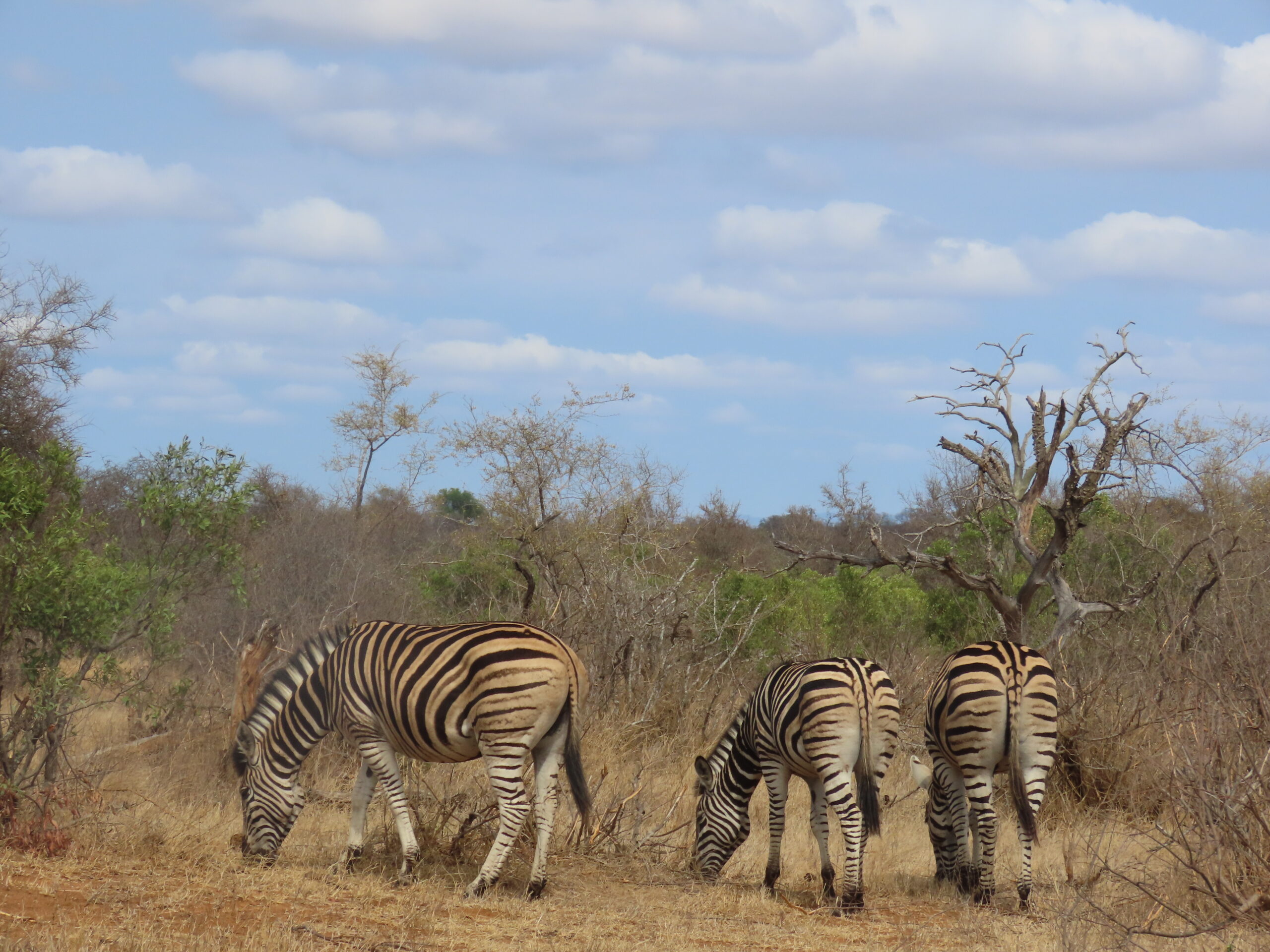
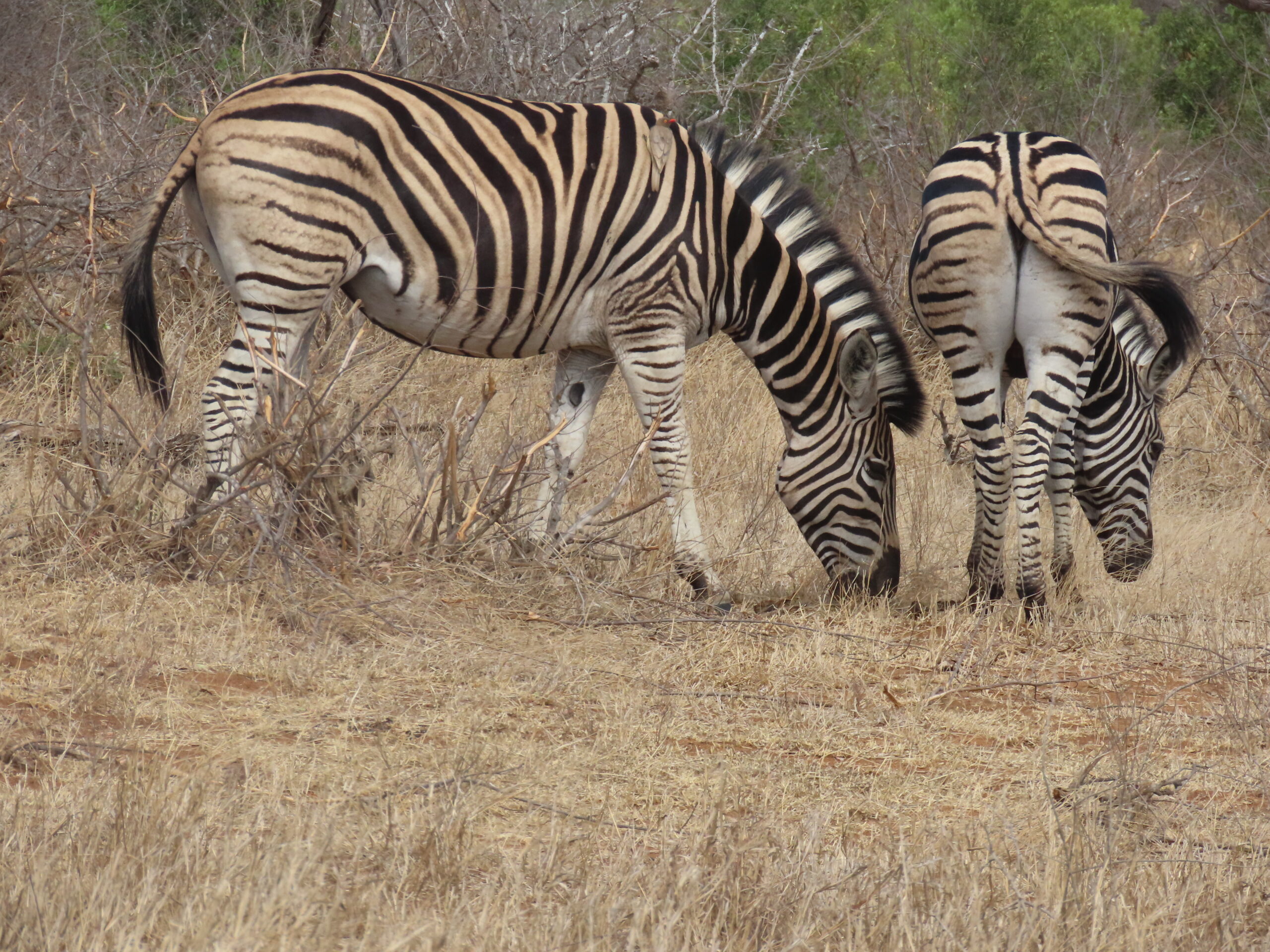
We spent some time watching a small herd of Zebra. A Wildebeest wandered into the group, and they all headed out following the Gnu.





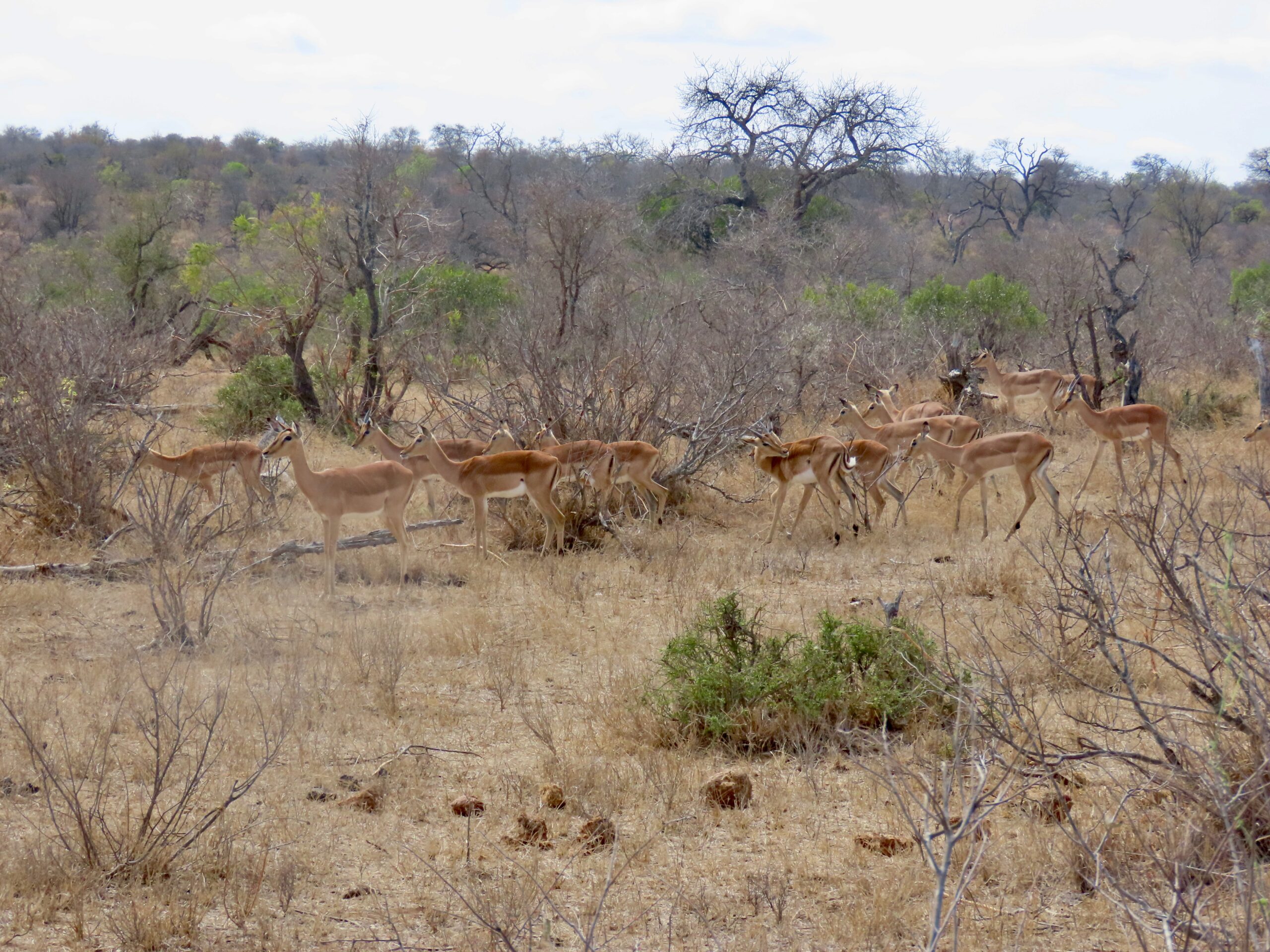
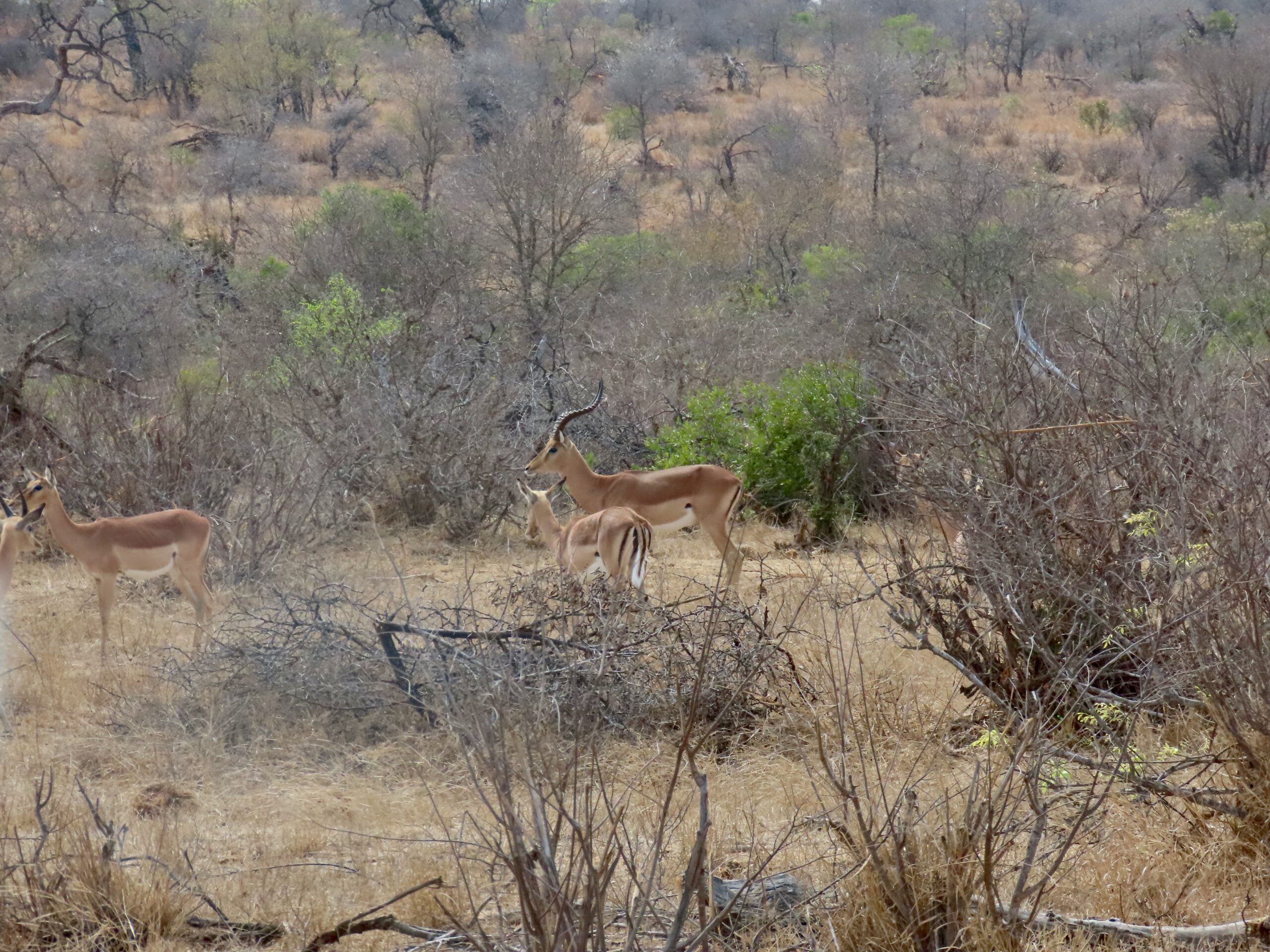
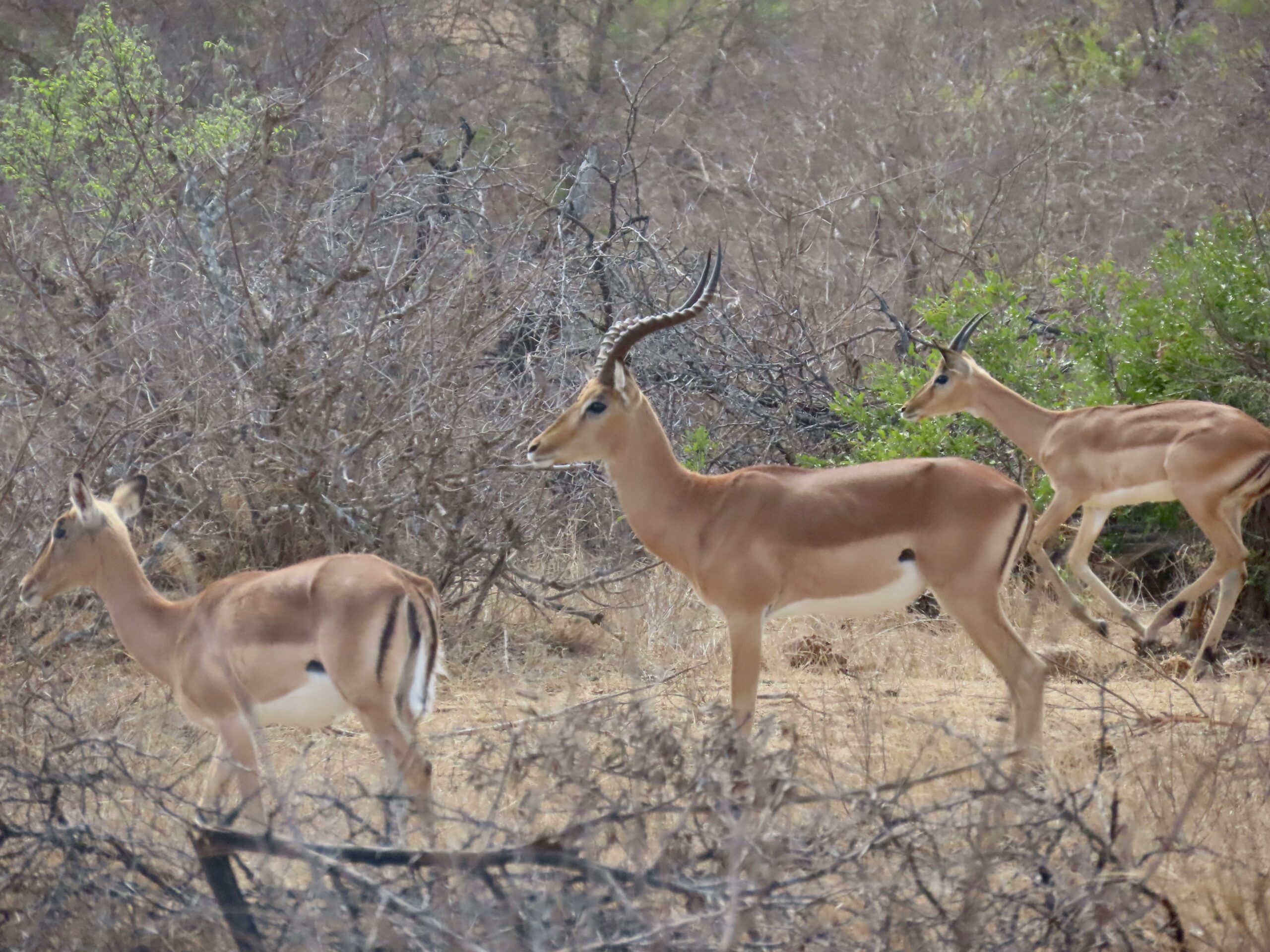
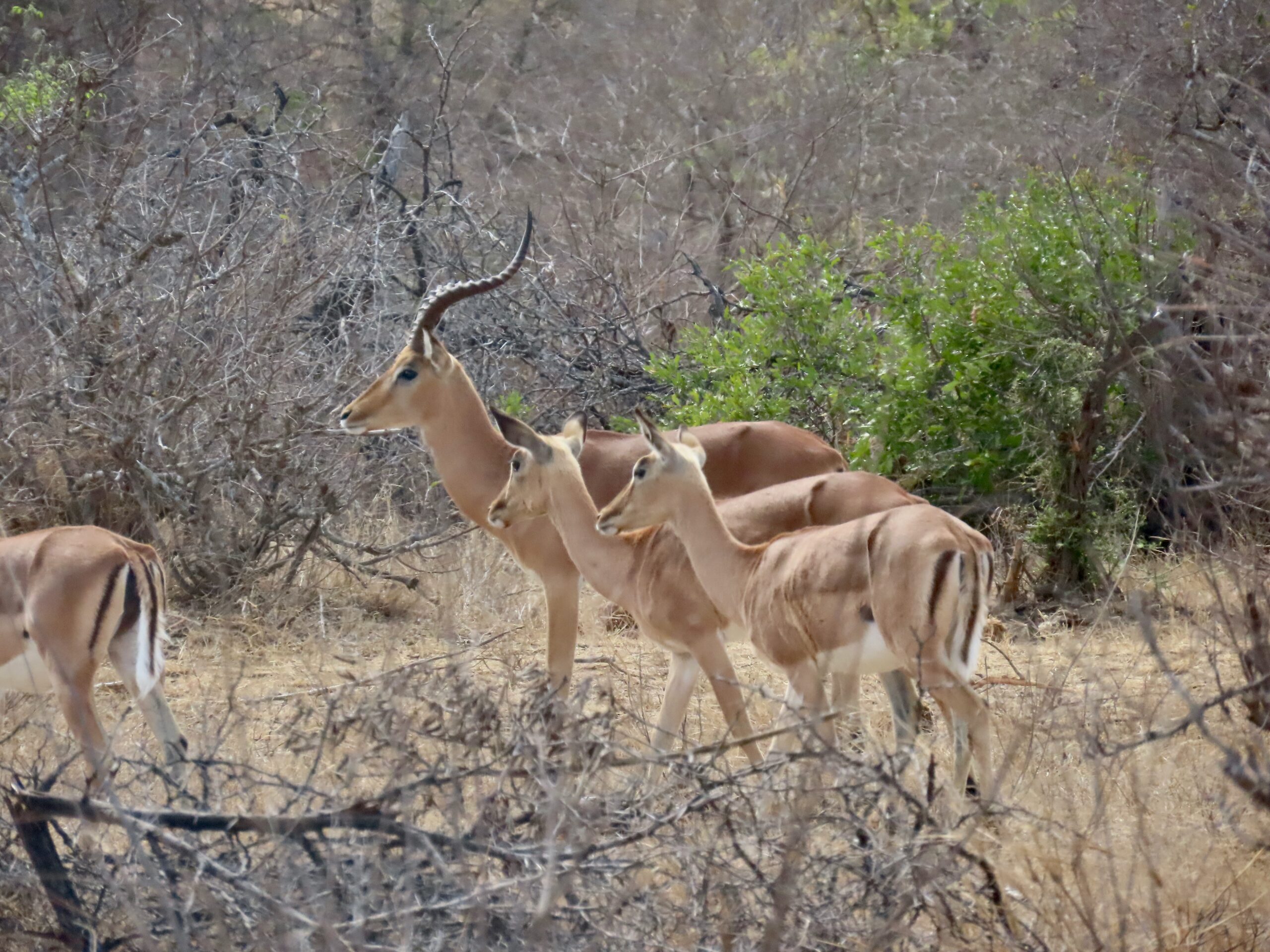
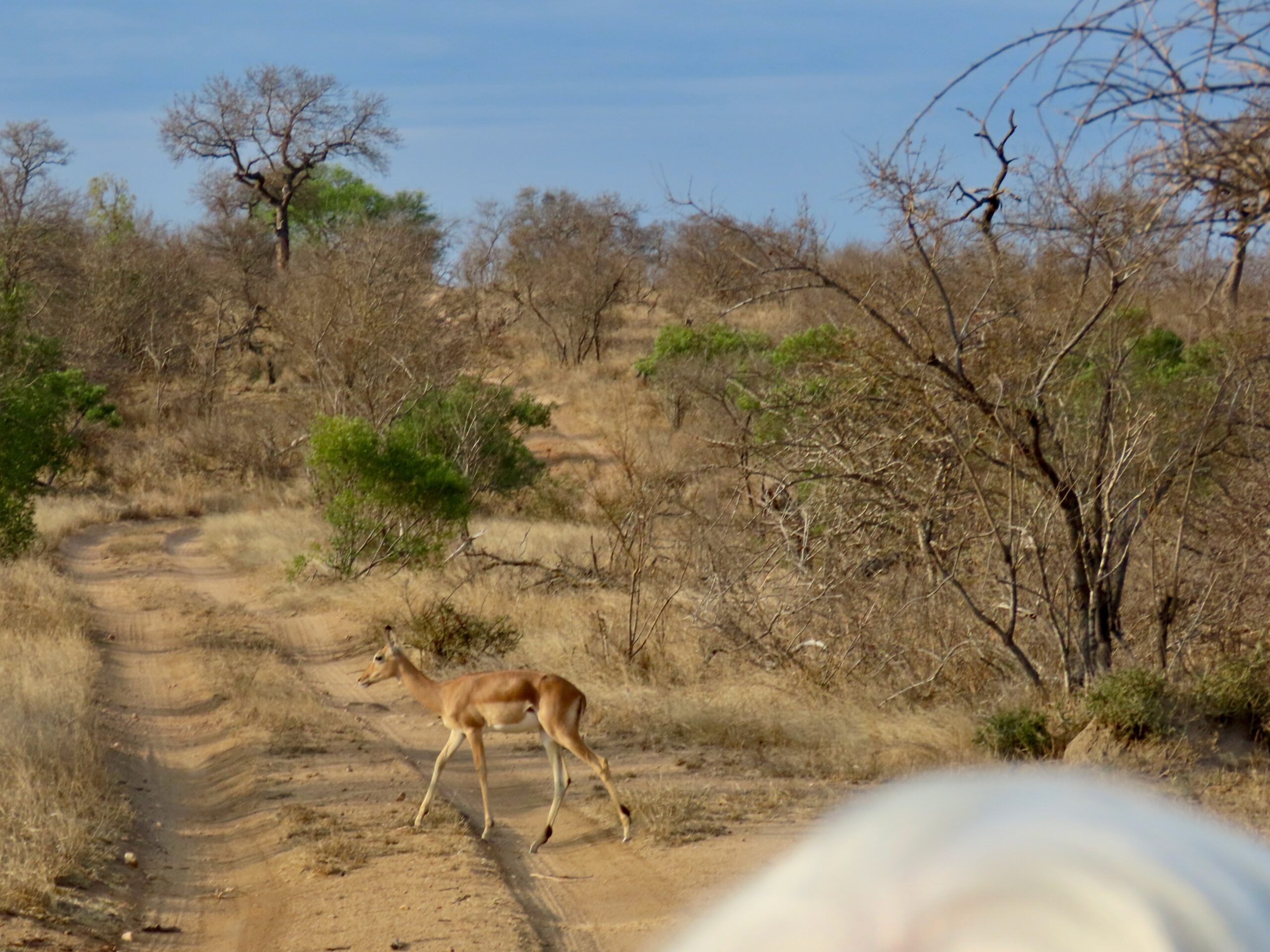
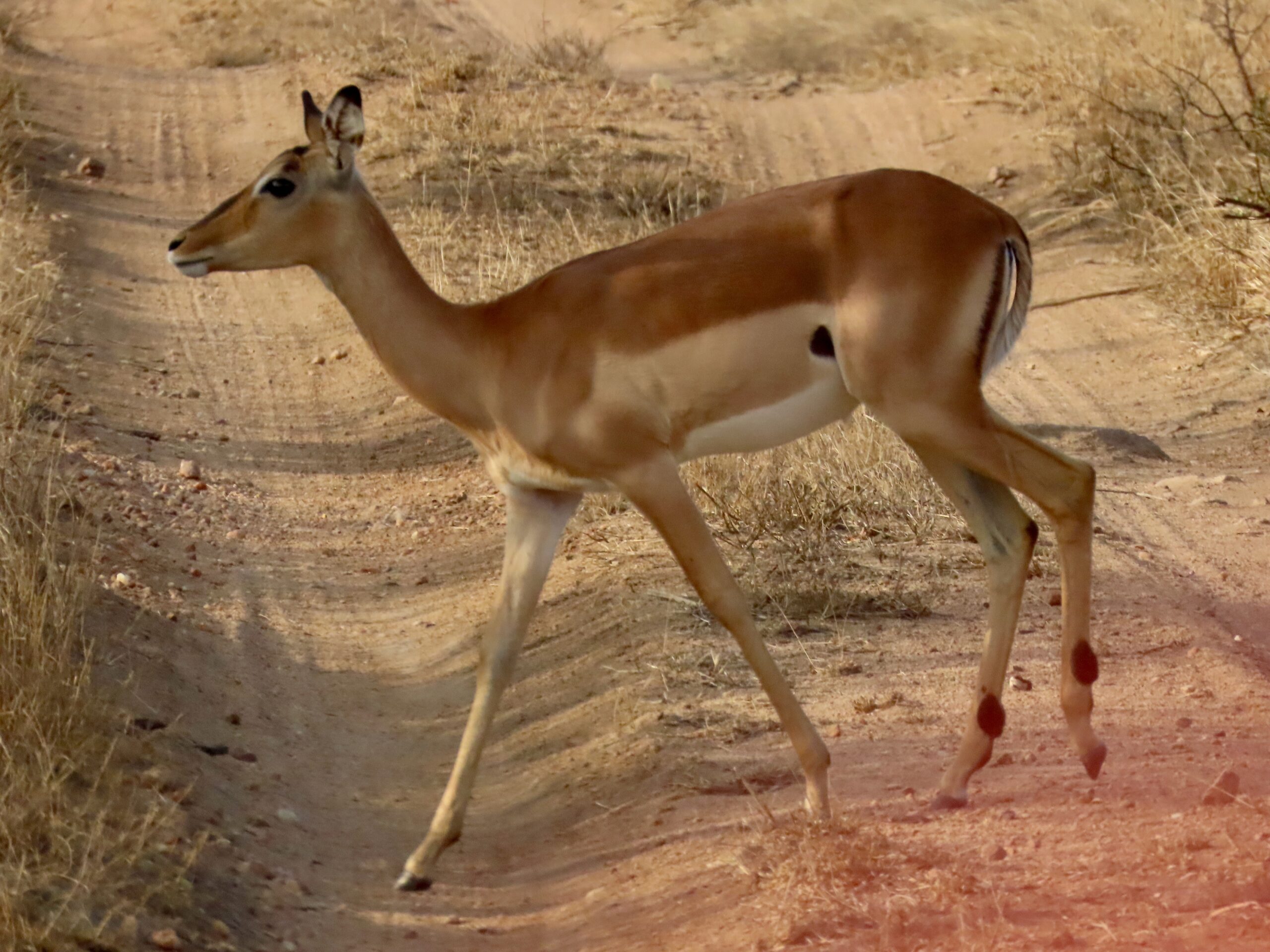
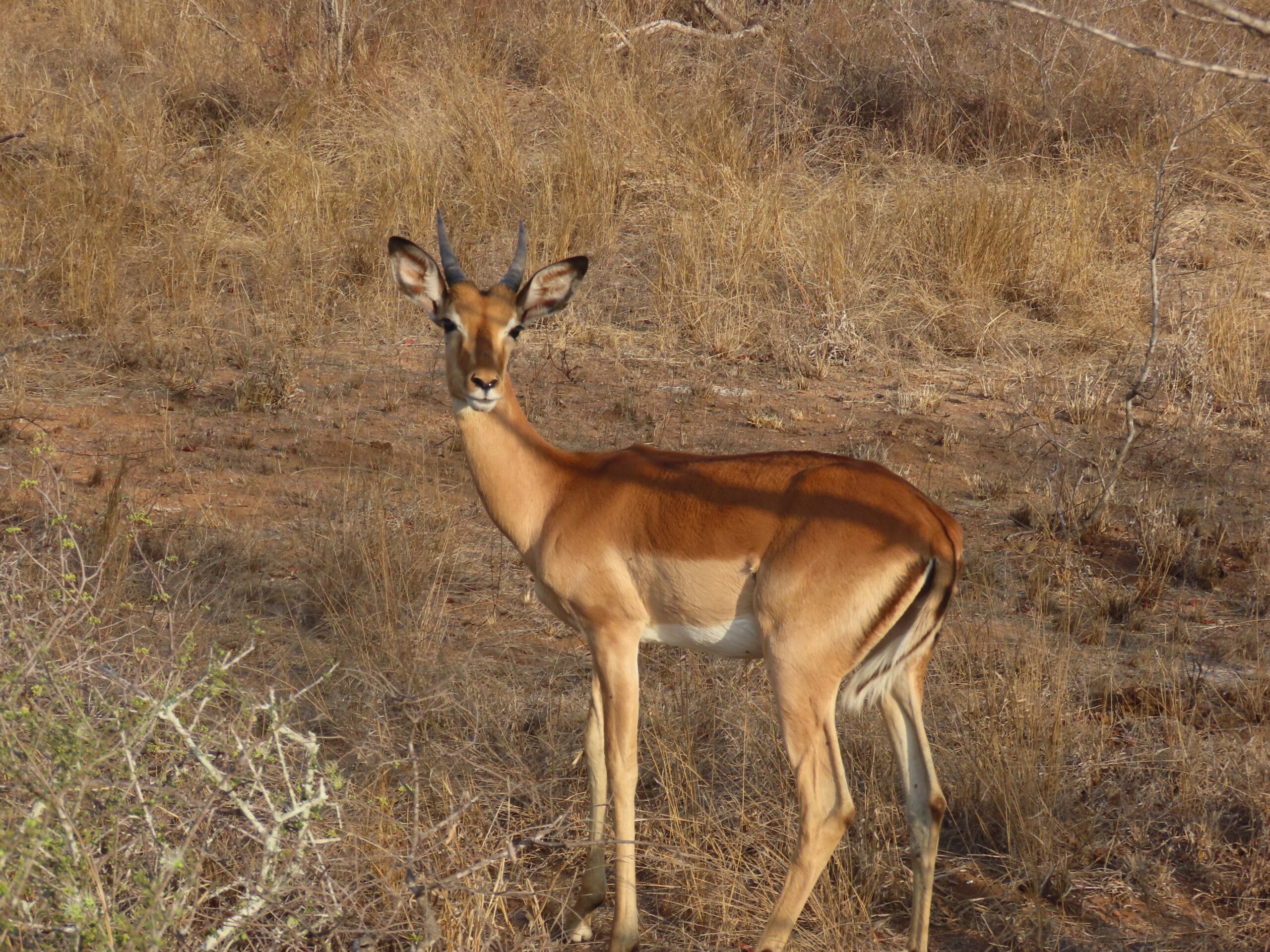
No drive is complete without a few Impala.


Back at camp, after brunch and a bit of time to freshen up, Simba called us to the boma for a lesson in Bushcraft.
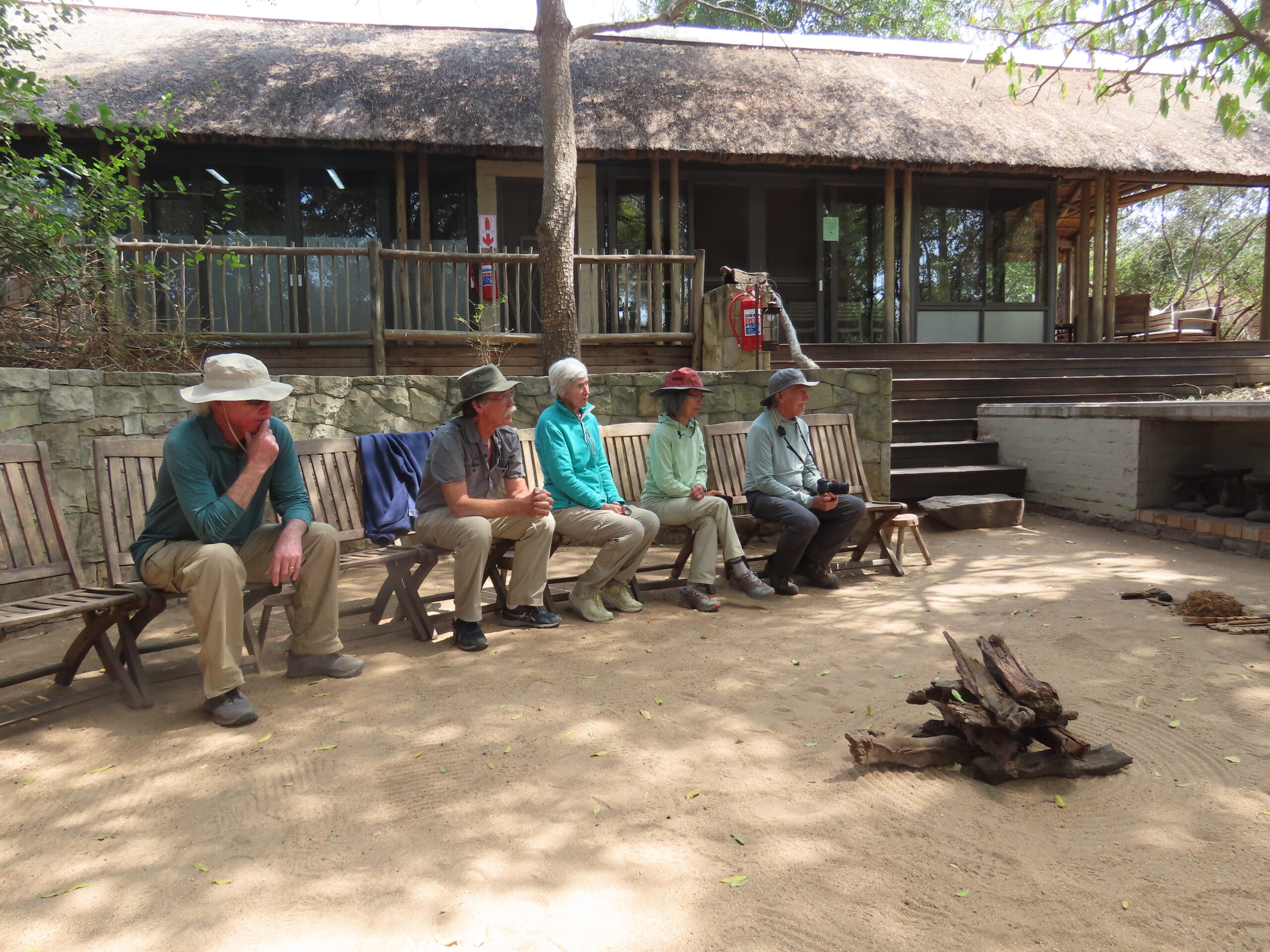

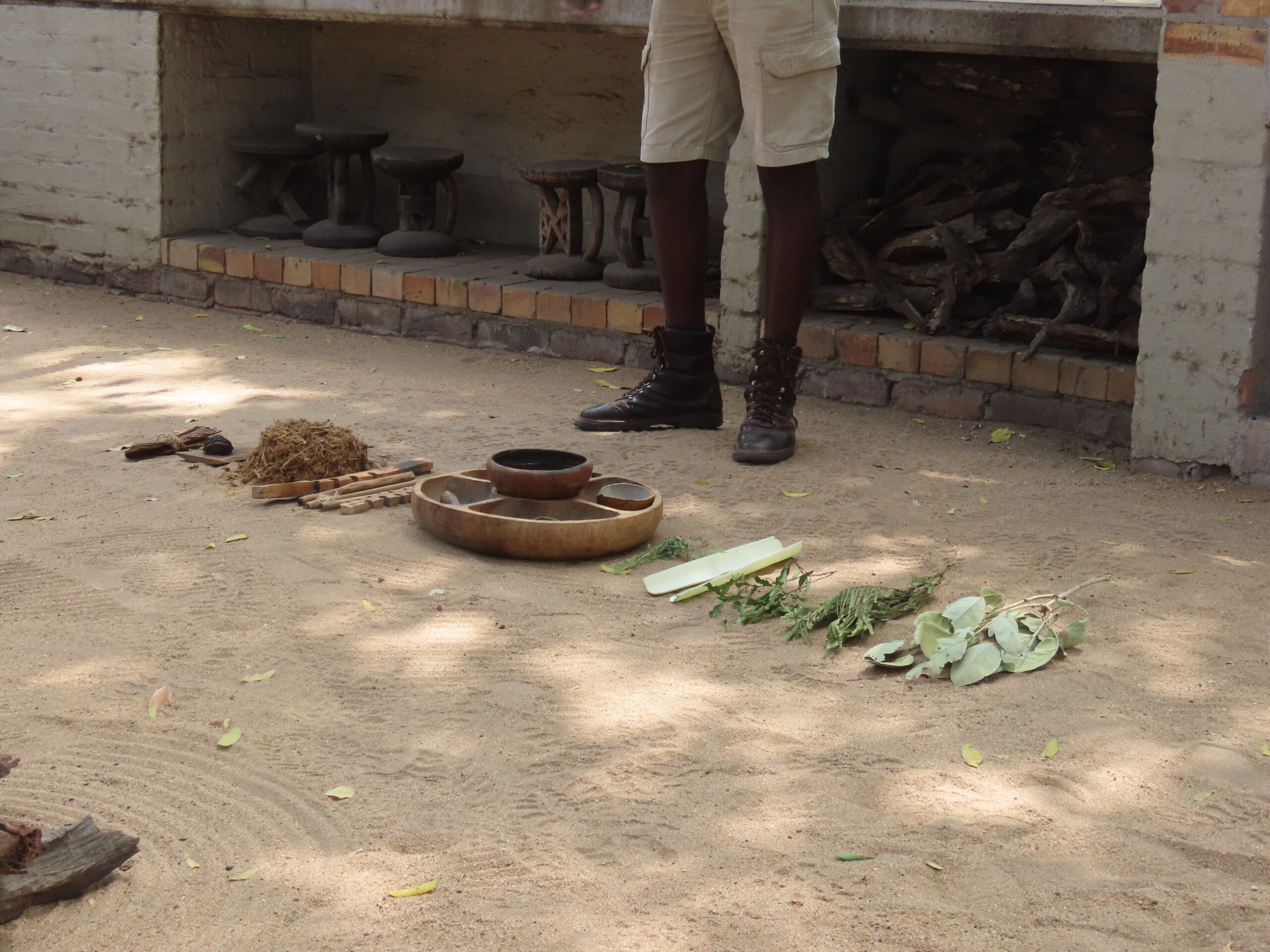
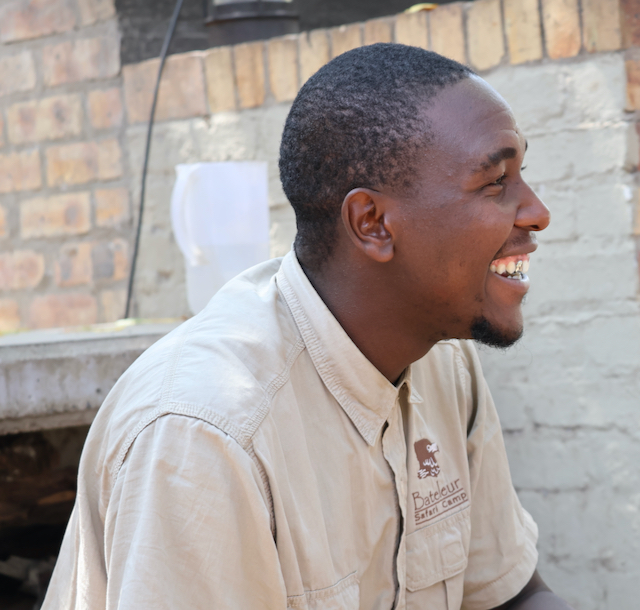
The three cardinal rules of bushcraft survival are: save time, save energy and stay safe.
First up: find water by following an elephant. Elephants walk through dry riverbeds, searching for water by sensing it through their trunks. When water is scented, they loosen the soil with a foot, then dig down with their trunks – up to half a meter or so. Excavations like this usually take place in spots where the river bends, because pressure from below will cause water to seep into the elephant’s hole. We saw some ellie holes on the next morning’s drive.


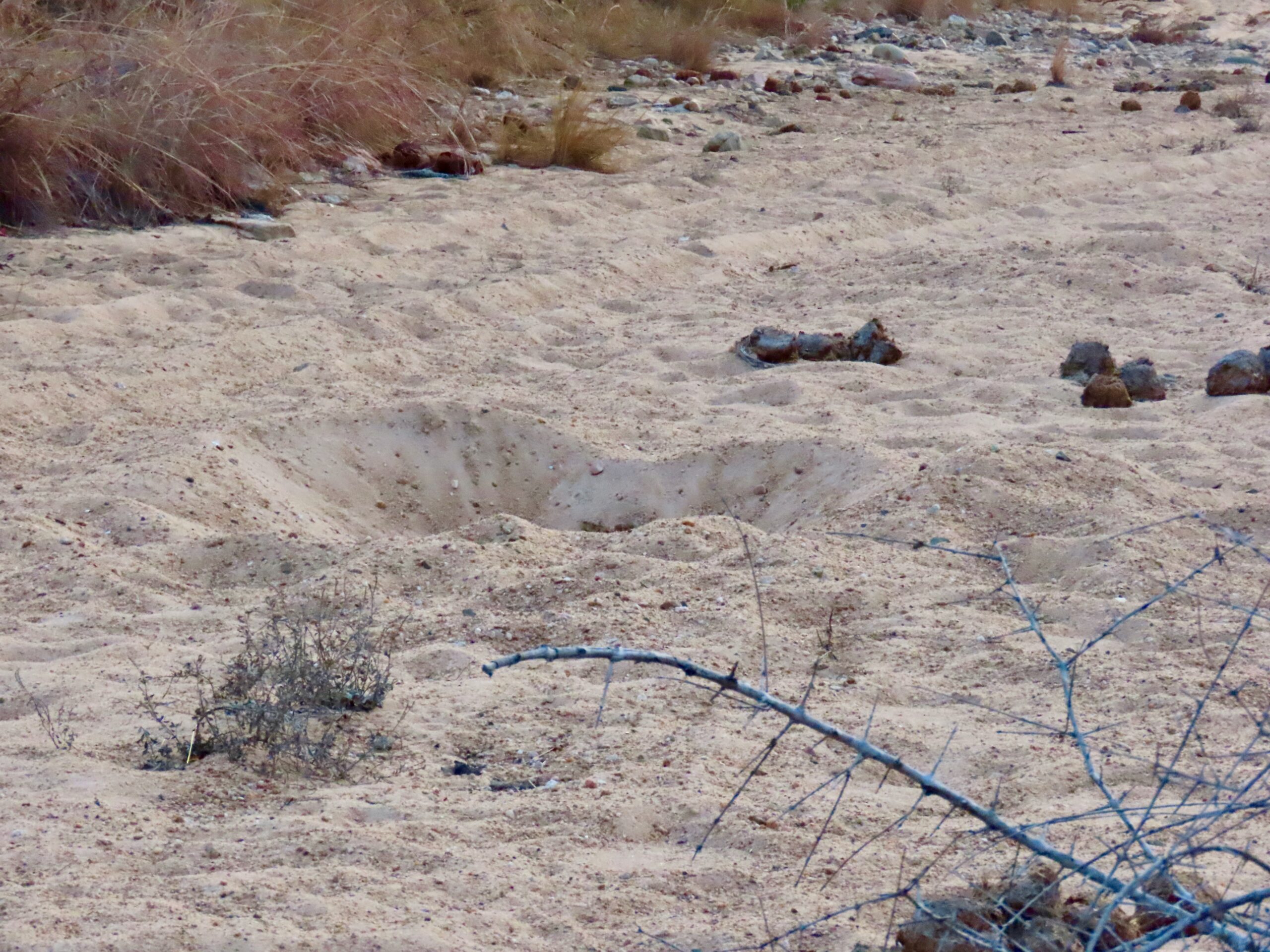
Elephant dung contains a lot of moisture, and moisture from fresh dung can be safely drunk – traditionally, pregnant women drink elephant dung water to ease birth pains. (None of us were inclined to try it.) As an alternative, you can suck moisture out of the roots of Marula trees.
Second, find food. Start by watching other animals: like monkeys, who eat food that is safe for us. Grasshoppers and termites are high in protein – remove the wings, chop them up and eat them raw or cooked. Catch termites by sticking a piece of grass in the mound.
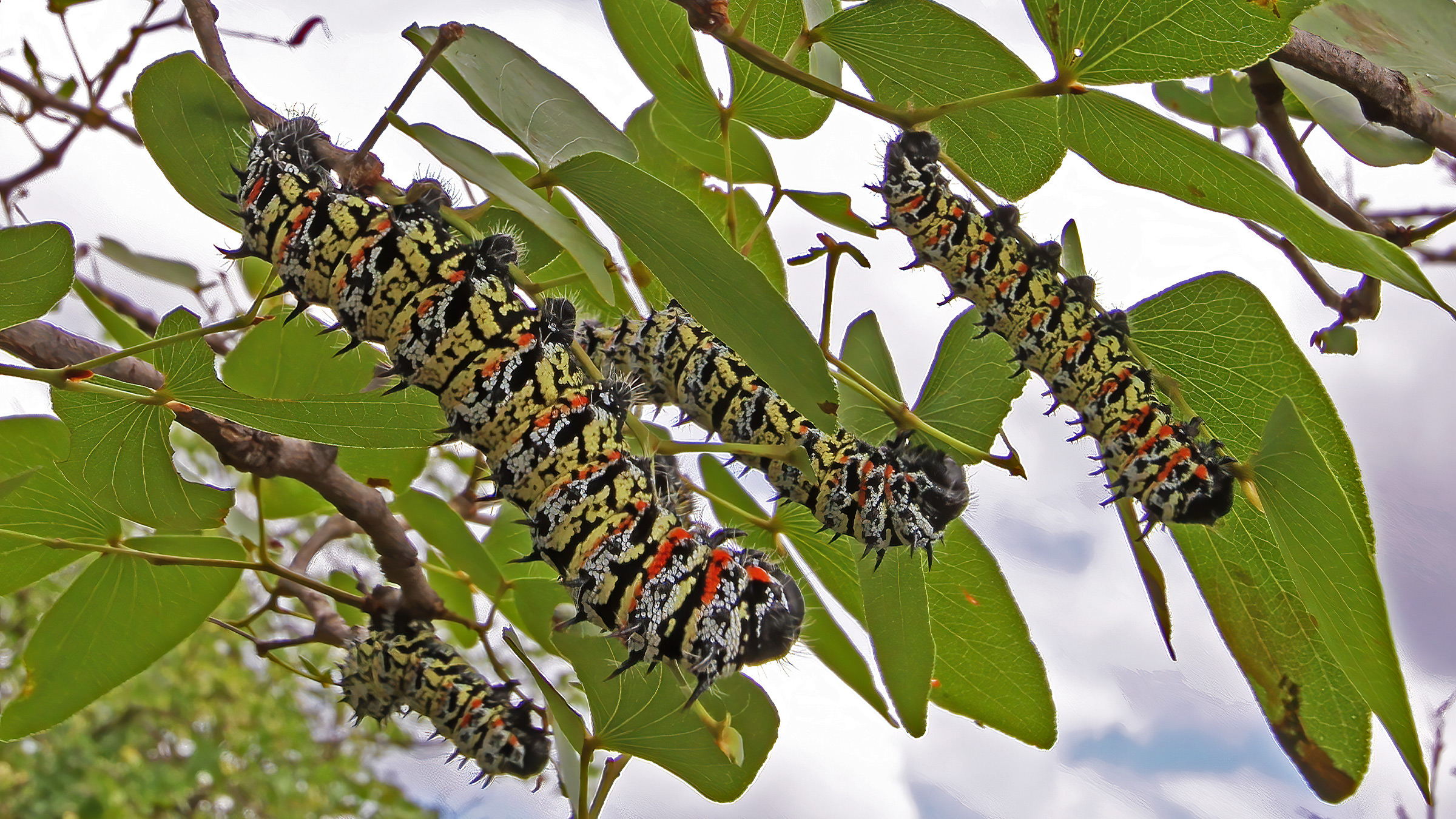
Mopane worms are a favorite high-protein treat, available in November/December. Preparation: clean the worms, boil them for an hour in salt, dry them in the sun, then cook with tomatoes for a stew. (I tried a Mopane worm on a trip to Zambia and found it to be a decidedly acquired taste. My dish wasn’t cooked with tomatoes, however, so maybe that was the problem.)

Eggs are another good source of food: drink them raw, fry them or bake them in the ground with the fire on top. Guinea Fowl nest on the ground and their eggs are easy to harvest. Ostrich eggs are a great meal – one egg is equal to about 24 chicken eggs – but there is the small problem of avoiding irate Ostrich parents, who kick a mean wallop.
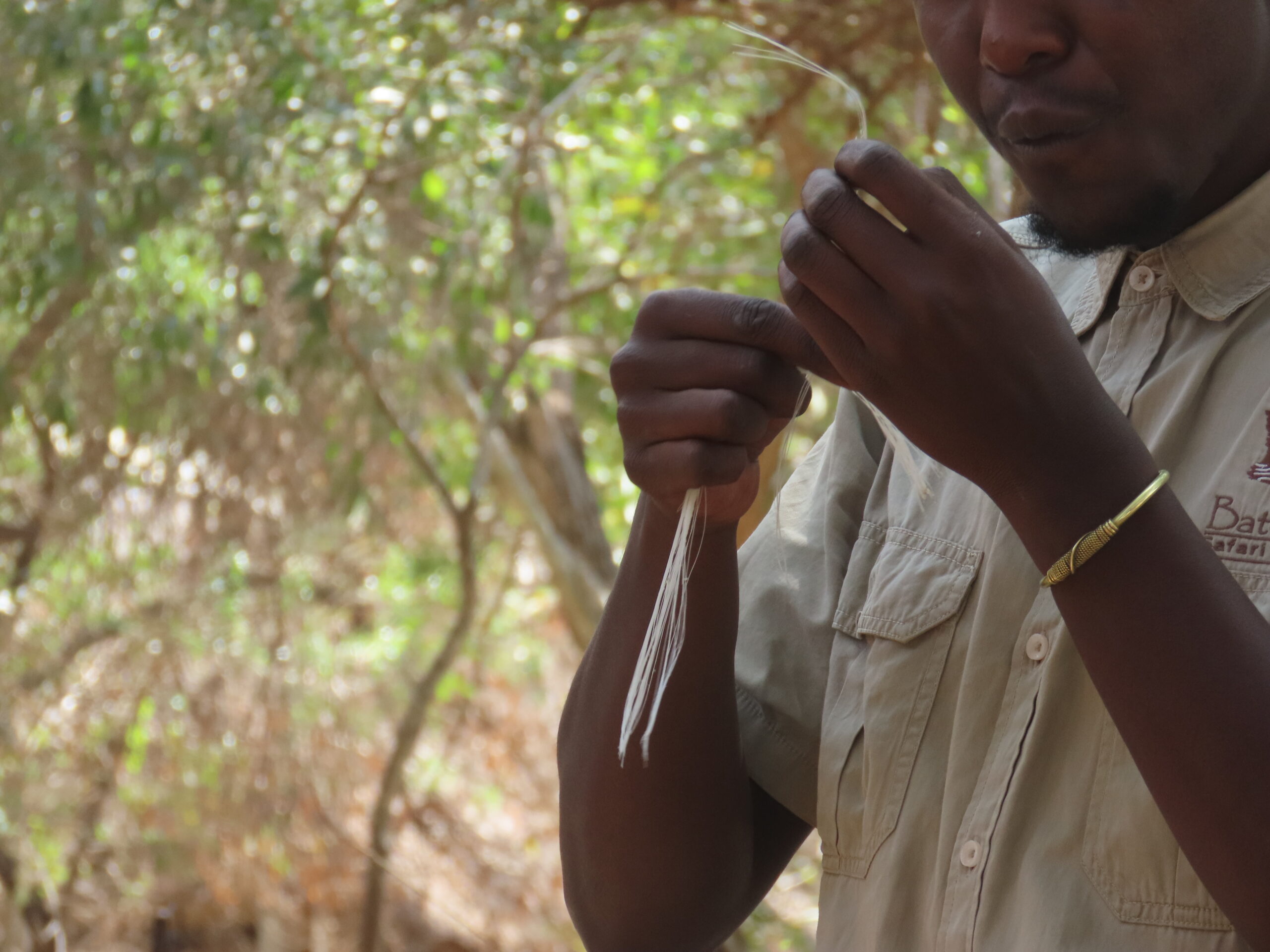
Next, Simba showed us how to make snares so we could trap our dinner. Start with fibers from the Snake Plant, a.k.a. Mother-in-law’s tongue. (Men wishing to propose marriage would write a message one of the plant’s ribs as the proposer’s “tongue,” hence the name.)

First, remove the flesh and use a sharp stone to get the fibers out. Next, separate the fibers and roll or braid them together to make a strong rope.

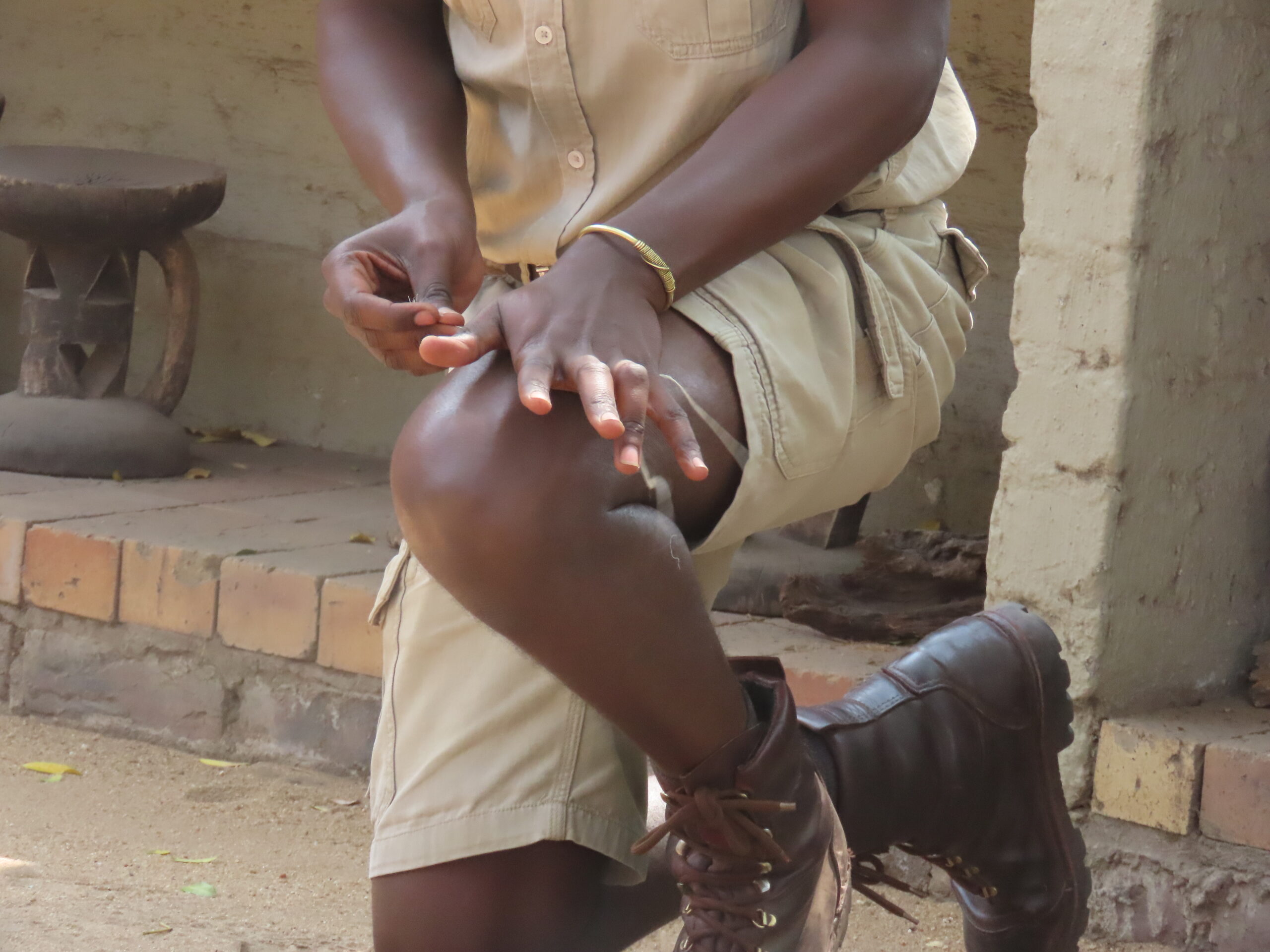
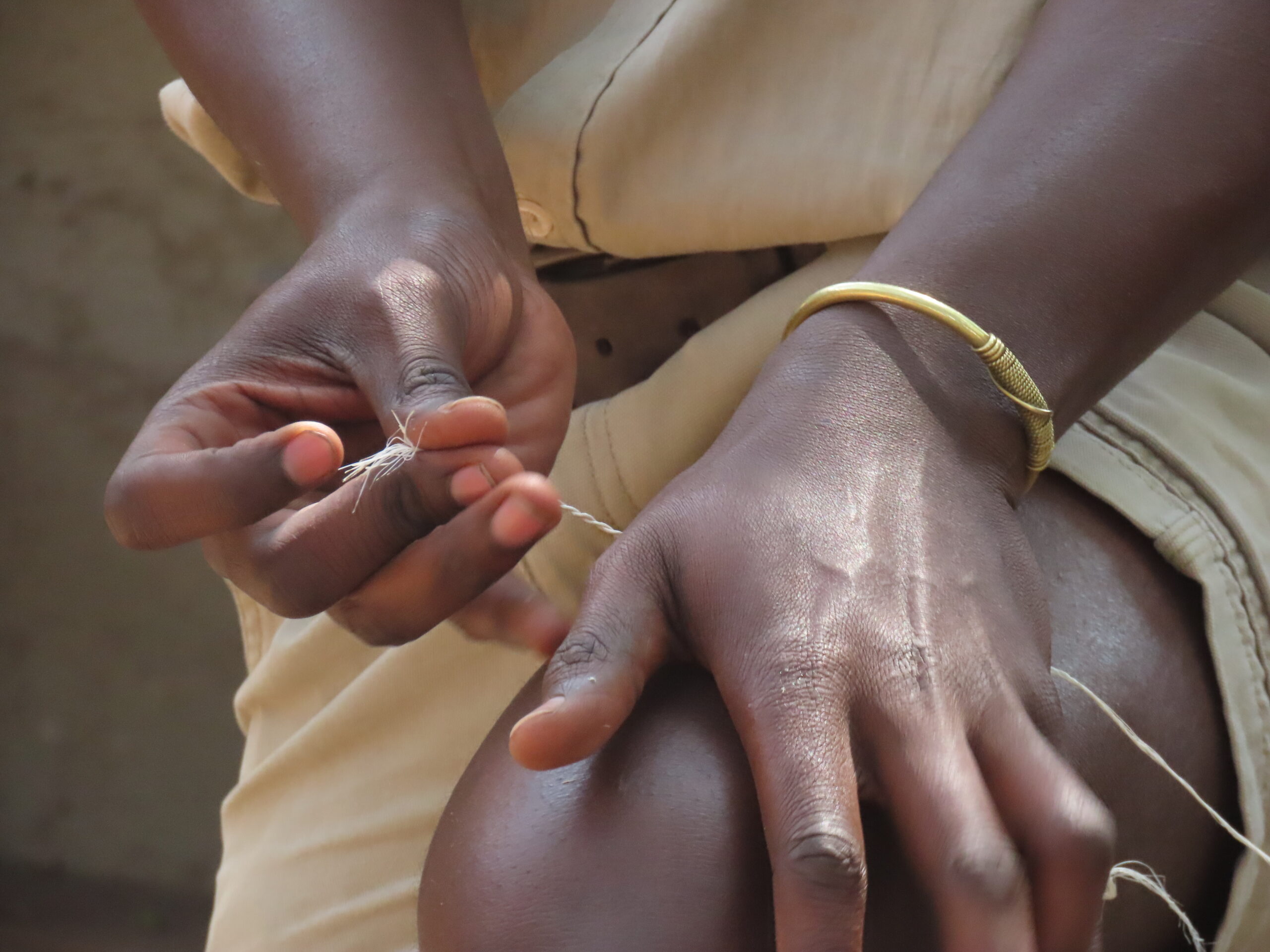


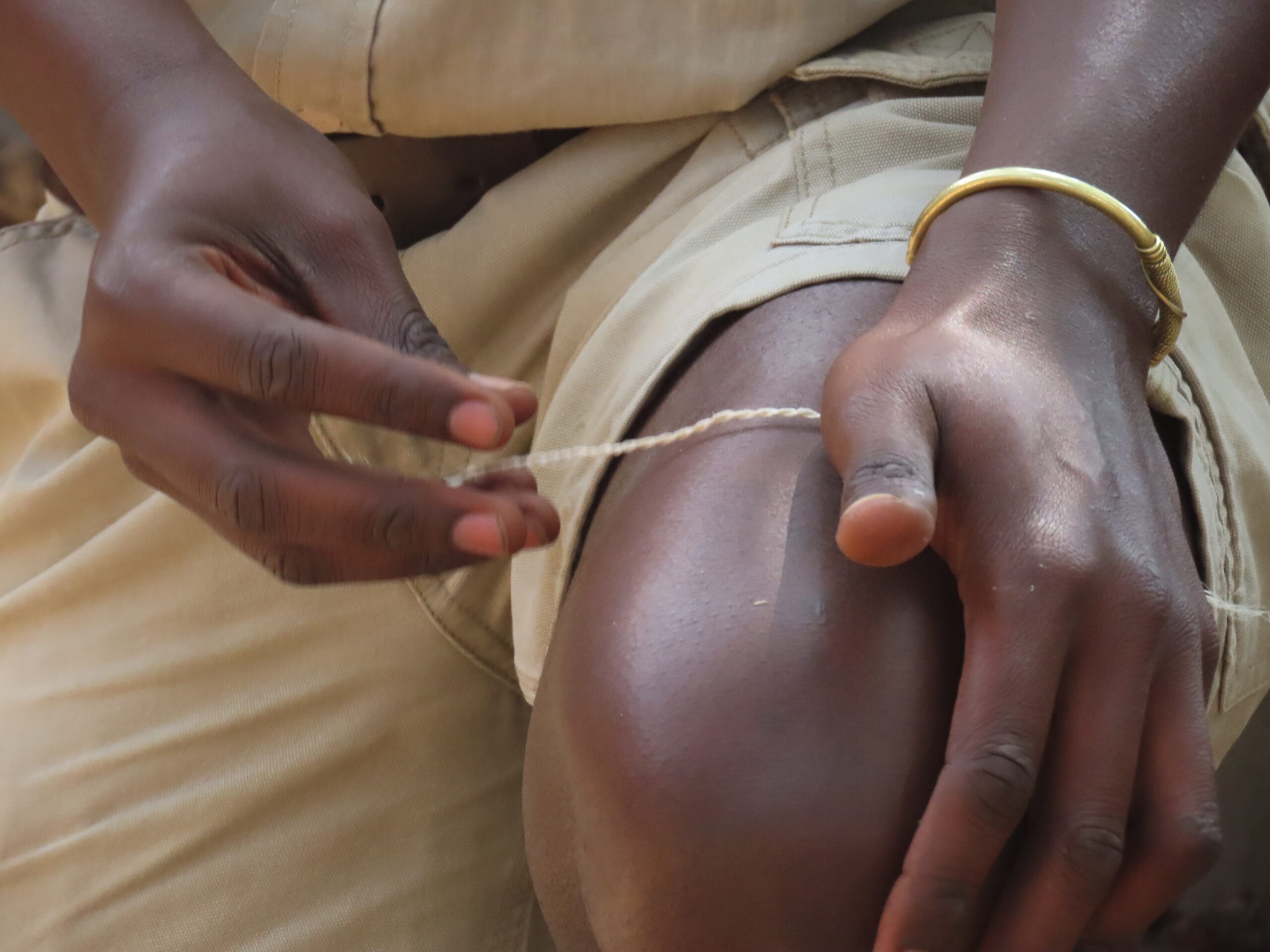
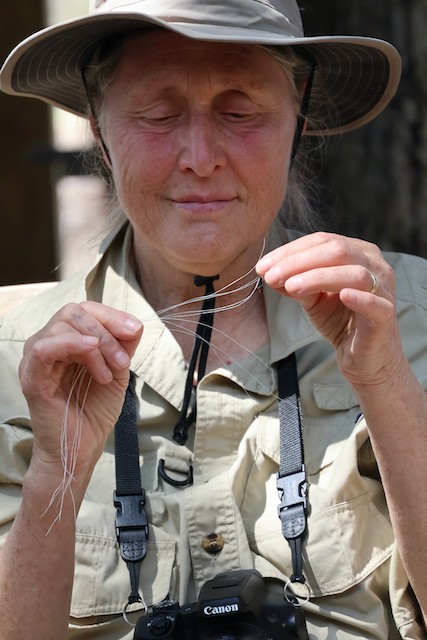
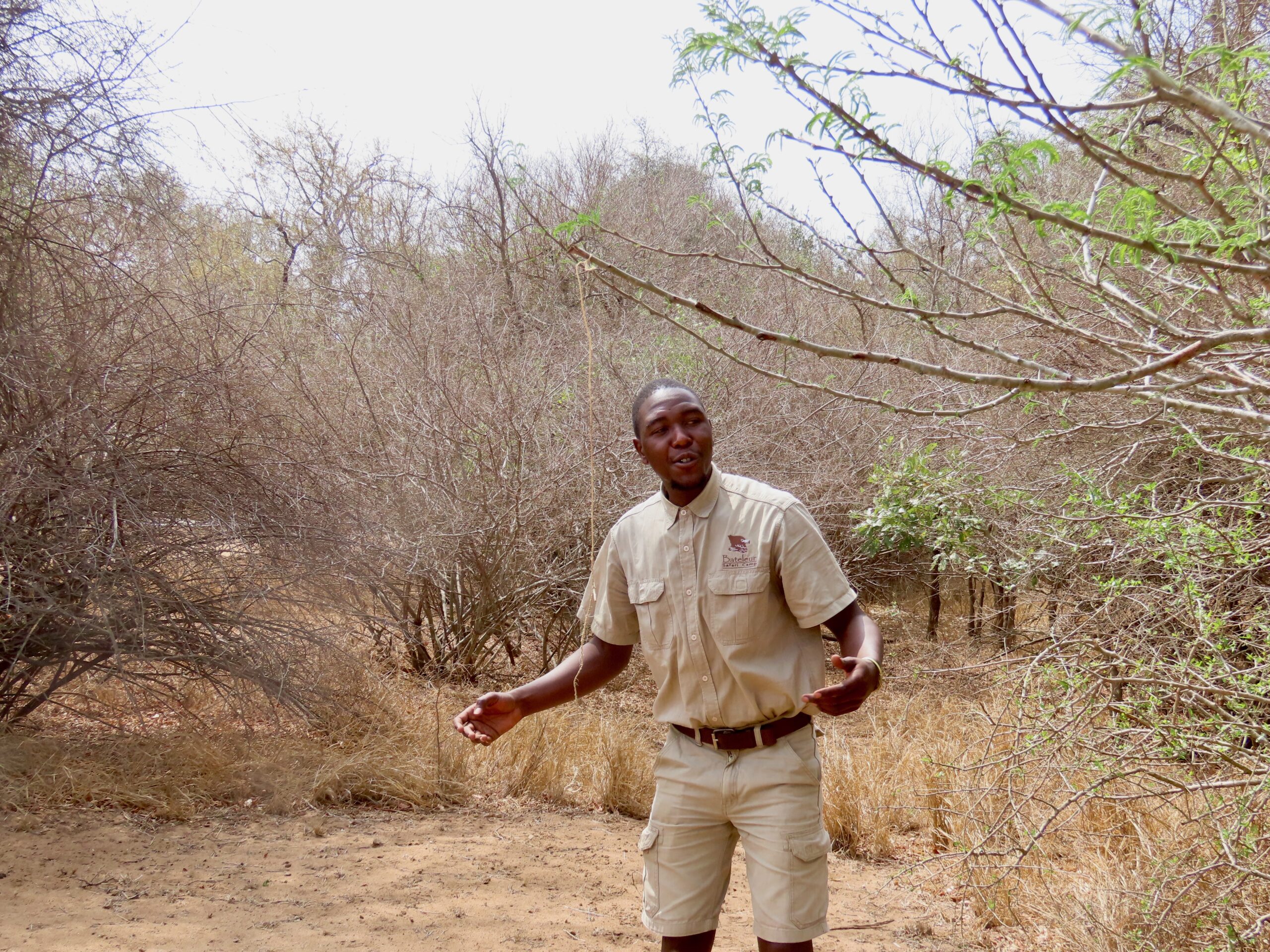
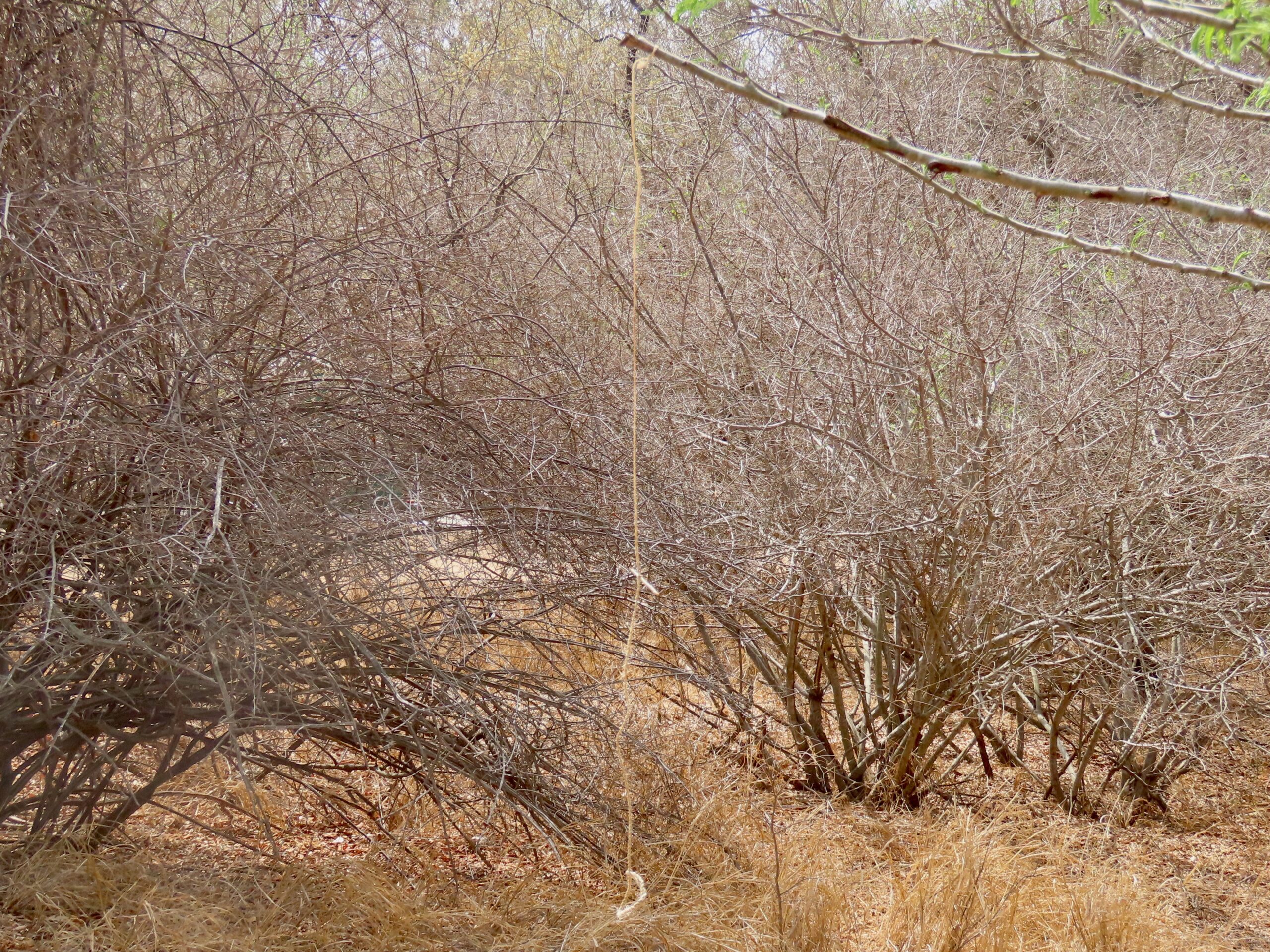
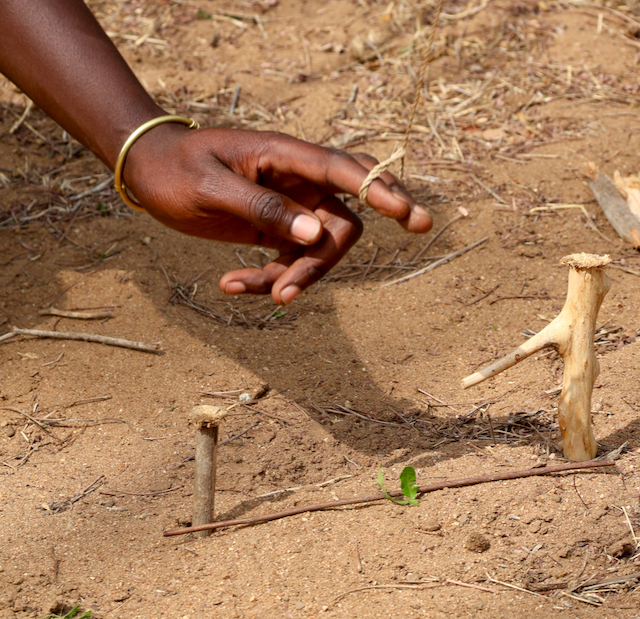
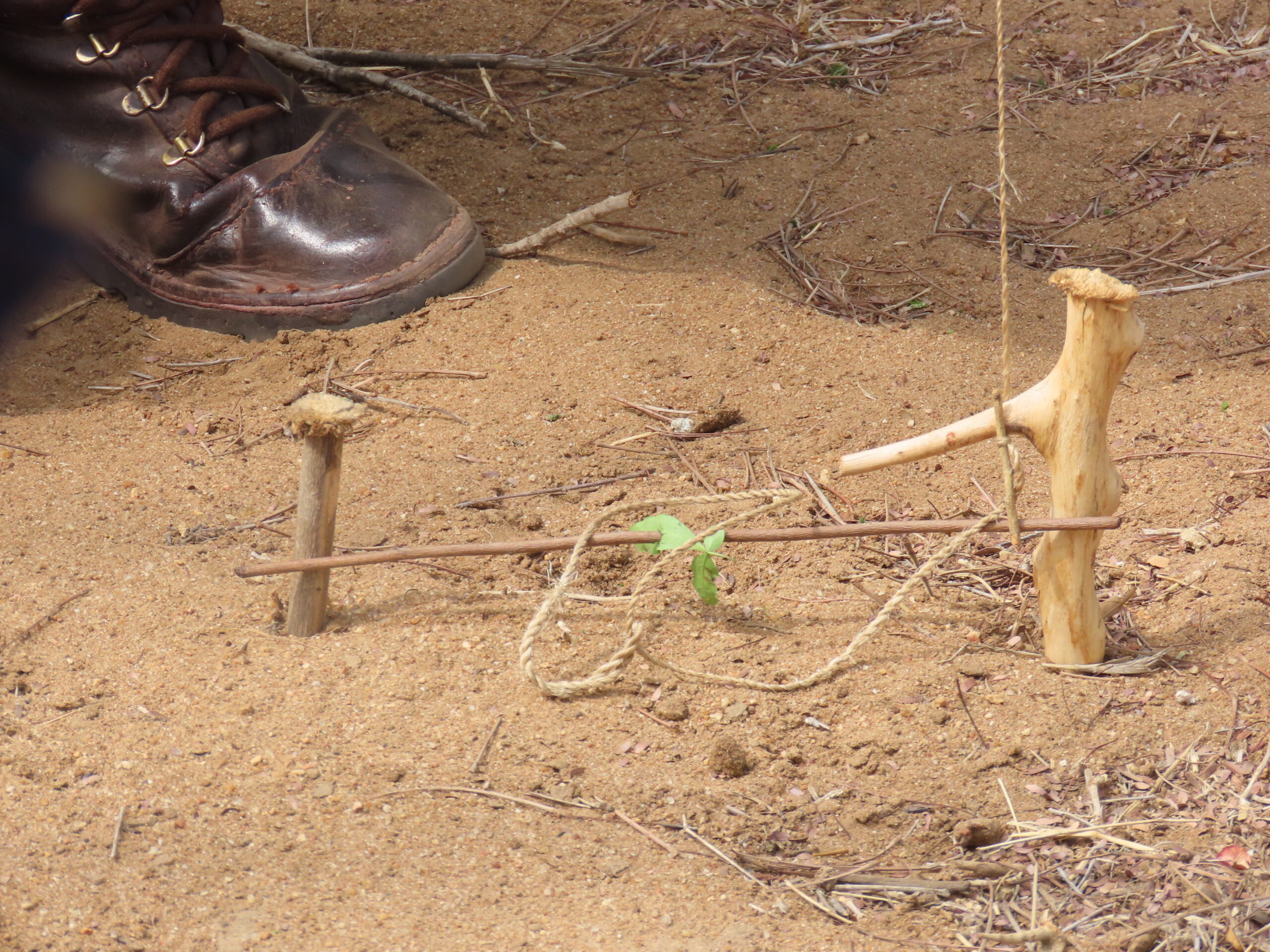
Once you have a rope, the next step is to set a trap for some hapless animal. Hang the rope from a flexible branch and tie a slip knot in the end to create a noose, then tie a trigger stick a few inches above the noose. Drive two sticks into the ground, one with a short branch to hold the trigger stick. Balance a bait stick horizontally across the two sticks, place the noose below and voila – dinner is trapped! (Except for those, like me, who have no spatial acuity and will be trapping termitesinstead of using a snare.)




Before enjoying that lovely dinner, it’s a good idea to create shelter. Do we hide in the bushes? No! Too easy to become prey. Pick a nice open area, with 360 degree visibility. Then collect a bunch of those downed branches – especially the nasty, gnarly, thorny ones – to create an enclosure with us inside.
With shelter in place, it’s time to start a fire. Don was especially excited to learn this skill, something he’s wanted to learn since childhood (who knew?) and I promised a full report. So, here goes…first, find a fig tree, which has relatively soft wood and will be easy to cut. (In Ancient Egypt, Sycamore Figs were sacred to the goddess Hathor so they offer the extra benefit of blessing from a powerful goddess.)

Cut two pieces: one to use as a long flat base, and another to use for twirling. Cut a V shape on top of the base and carve out holes with a bone or rock.


Next gather some handy dung (elephant, rhino or zebra are best), or a bird’s nest or a handful of wild cotton. Place your tinder near the fire-starting equipment, put something under the drill to catch embers, the twirl the stick in the base to generate a a flame.


When a little whisp of smoke appears, transfer the small flame to the tinder and blow on it – gently – to grow the flame.
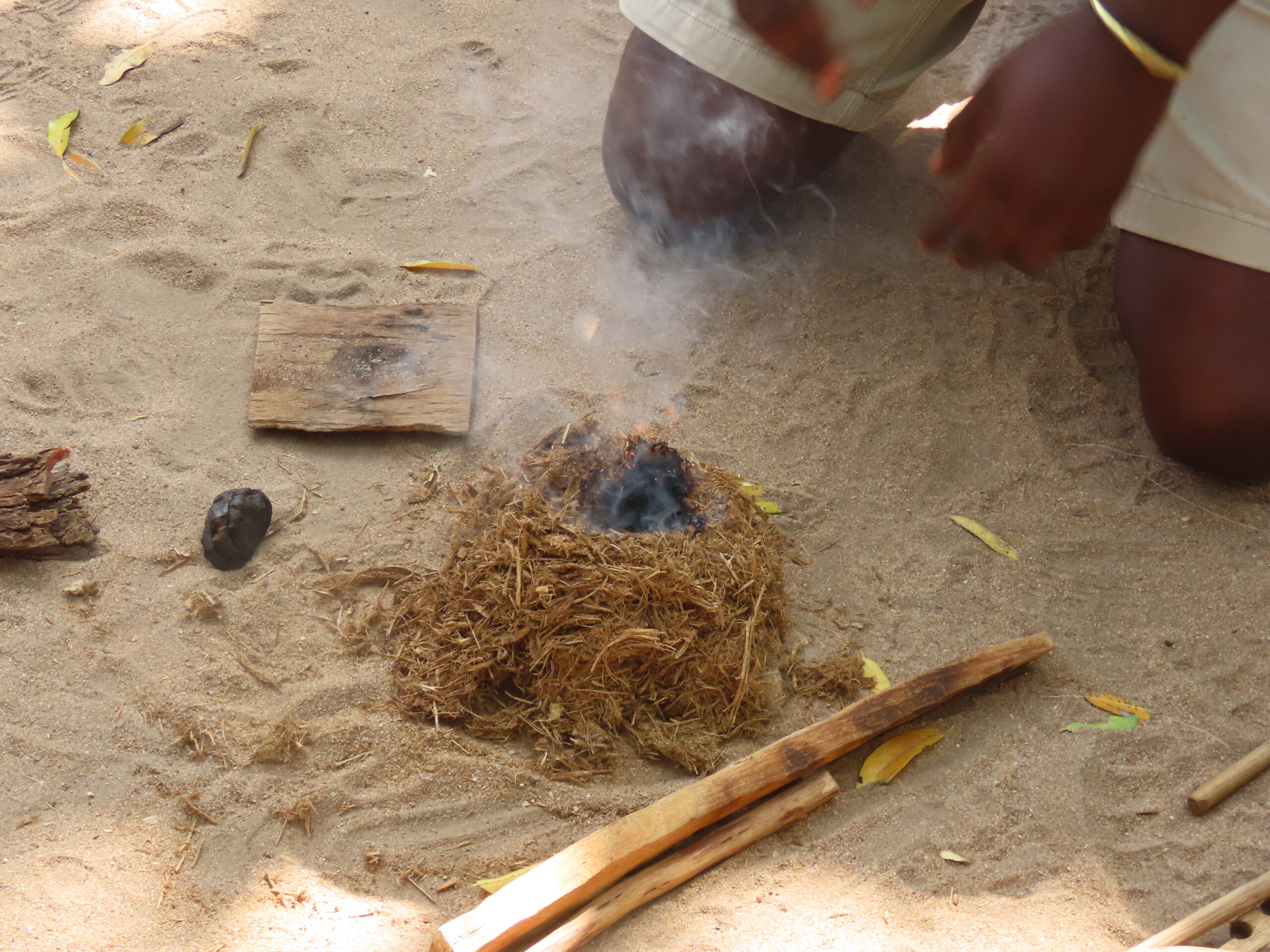


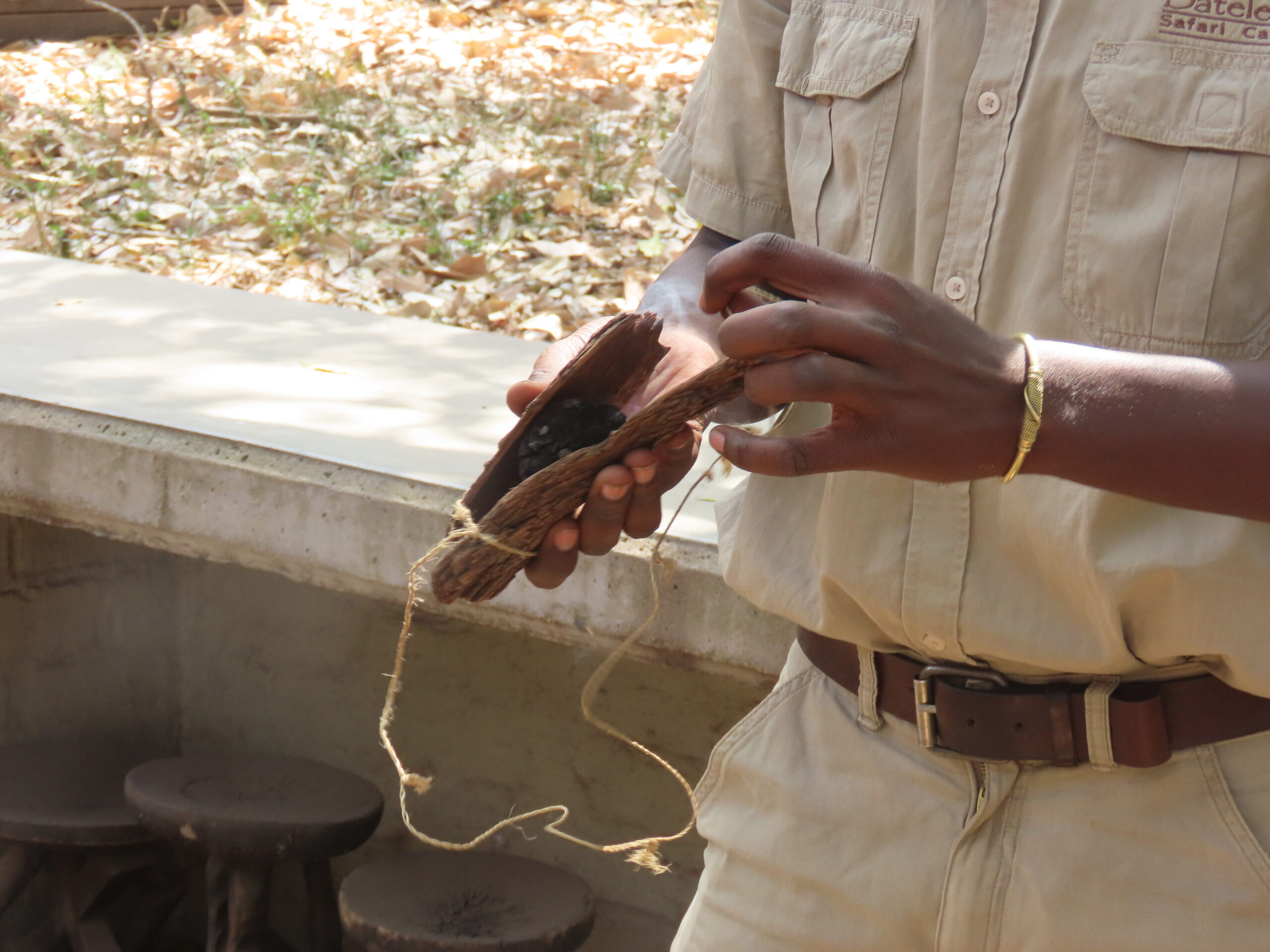
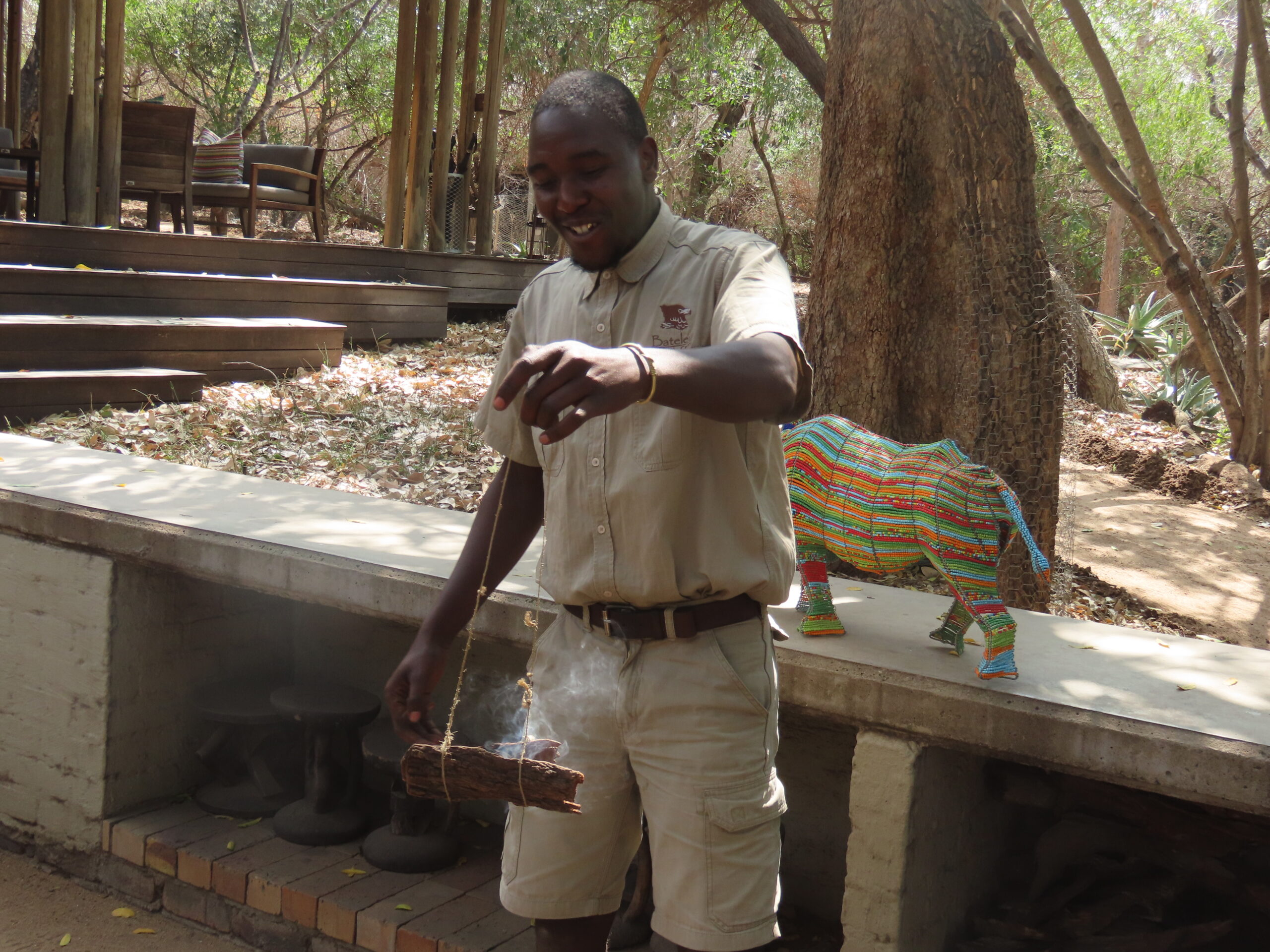
Since it’s inefficient to repeat this performance every day, we can make the fire portable. Put some of the smoldering tinder into (what else?) a patty of dried dung, poke a stick in the patty and carry it over your shoulder as you traverse the bush. Alternatively, create a little fire pouch out of hard wood like Simba has done here, and use that handy snare as a carrying sling.

For personal hygiene, use a Magic Guarri twig as a toothbrush. Weeping Wattle leaves as toilet paper and rub the leaves of Devil’s Thorn with water to make soap.


All set for our overnight field trip to the bush? (I didn’t think so…)
Our afternoon game drive started off quietly…




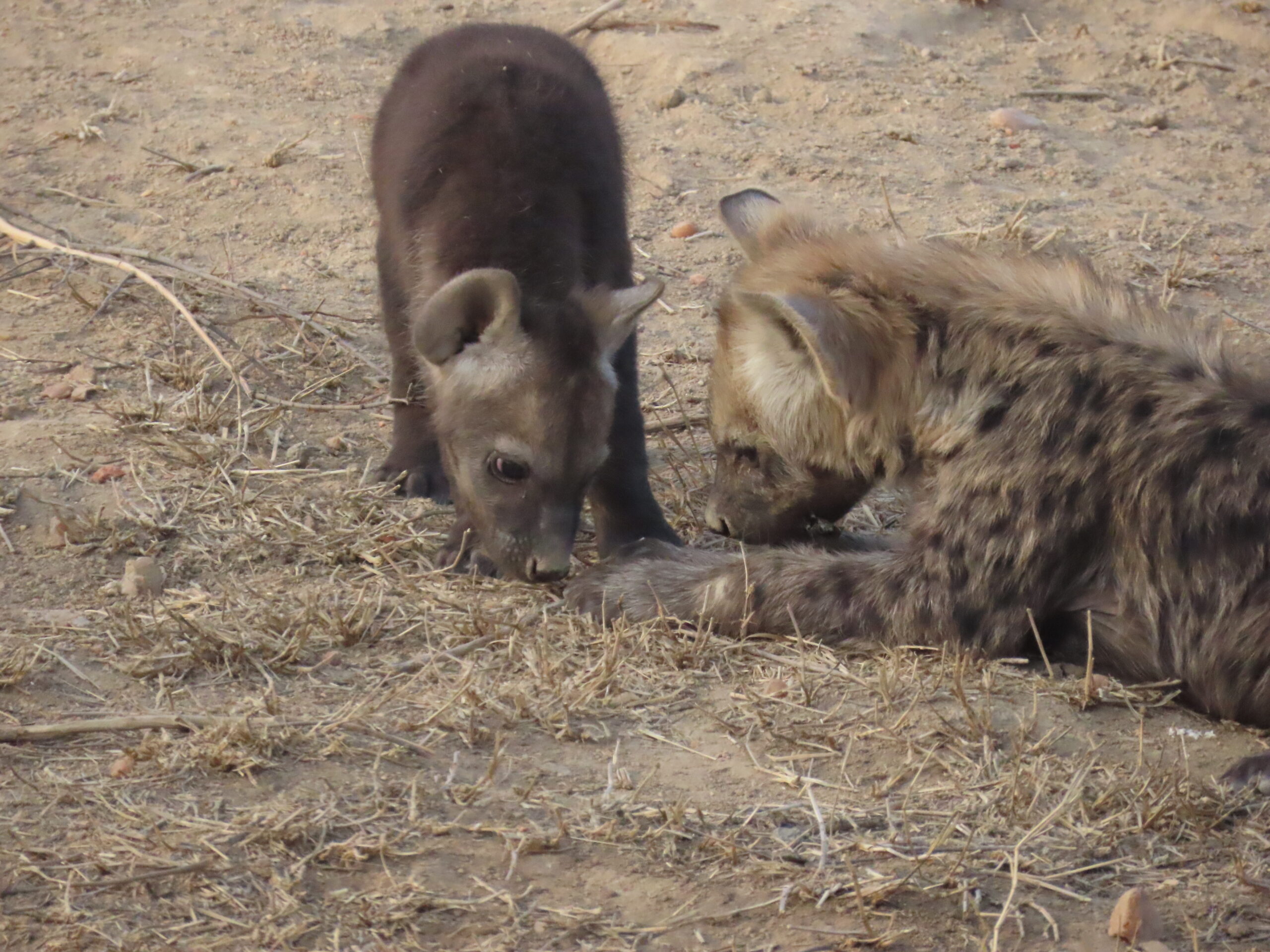
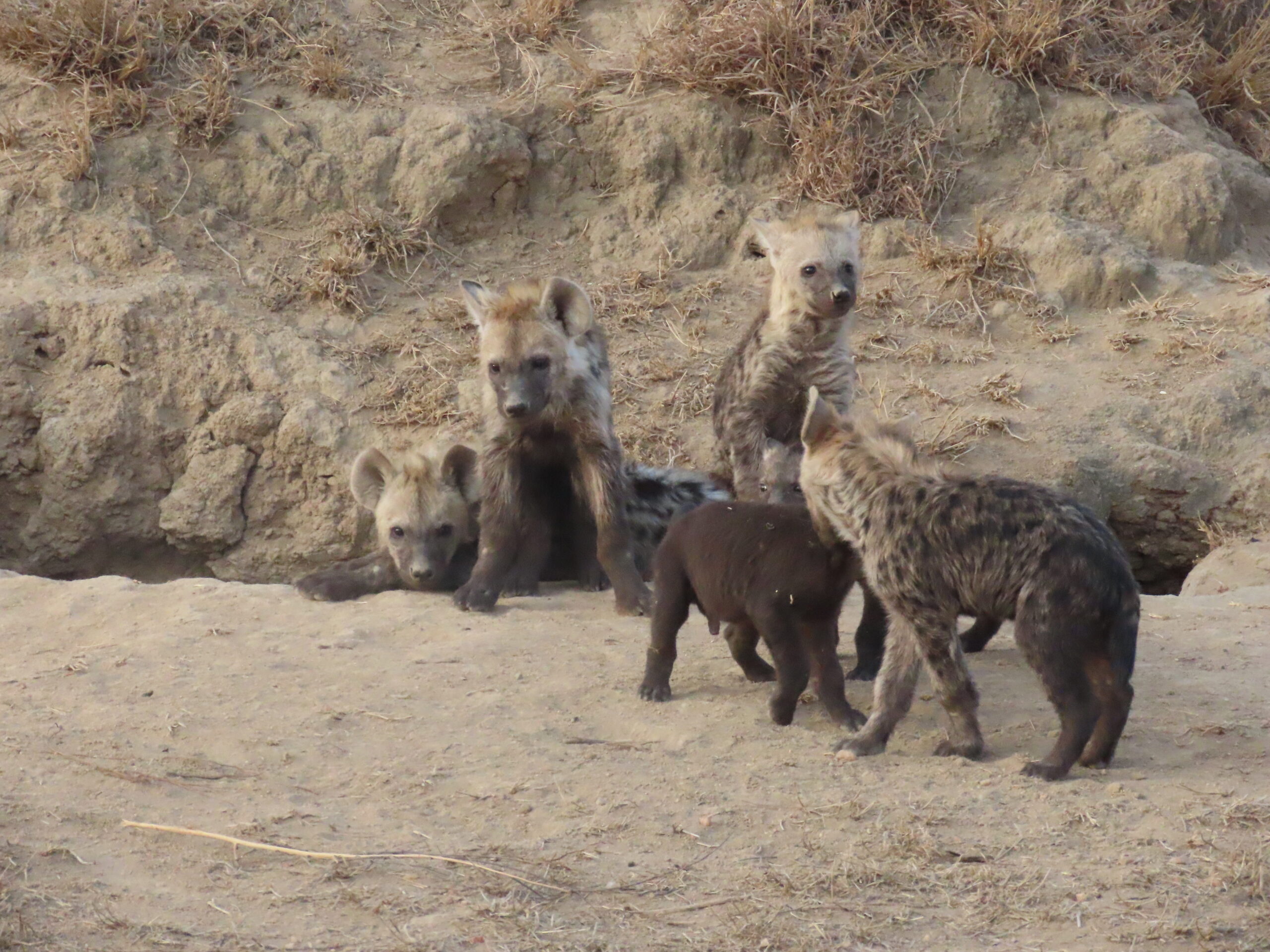
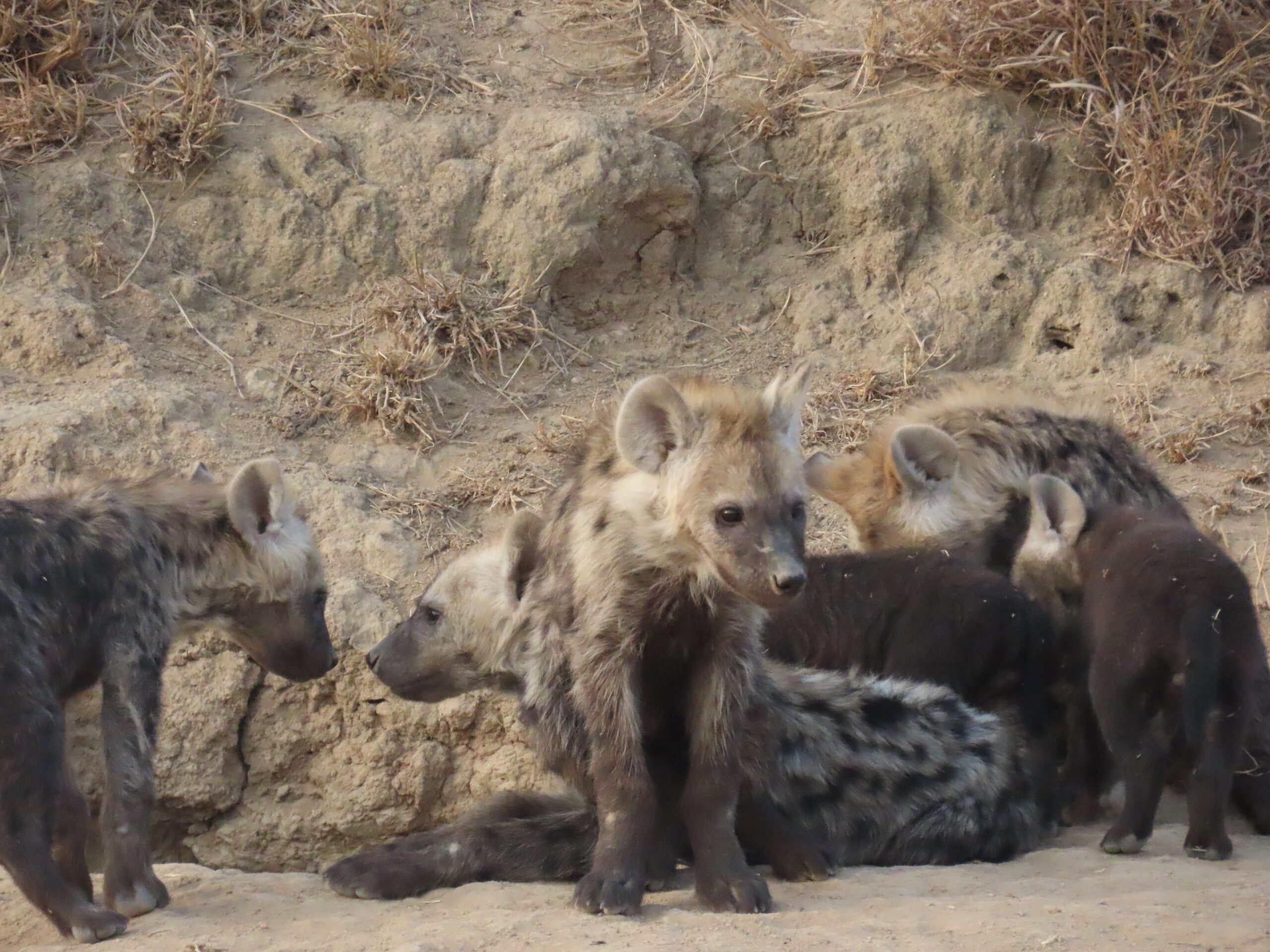
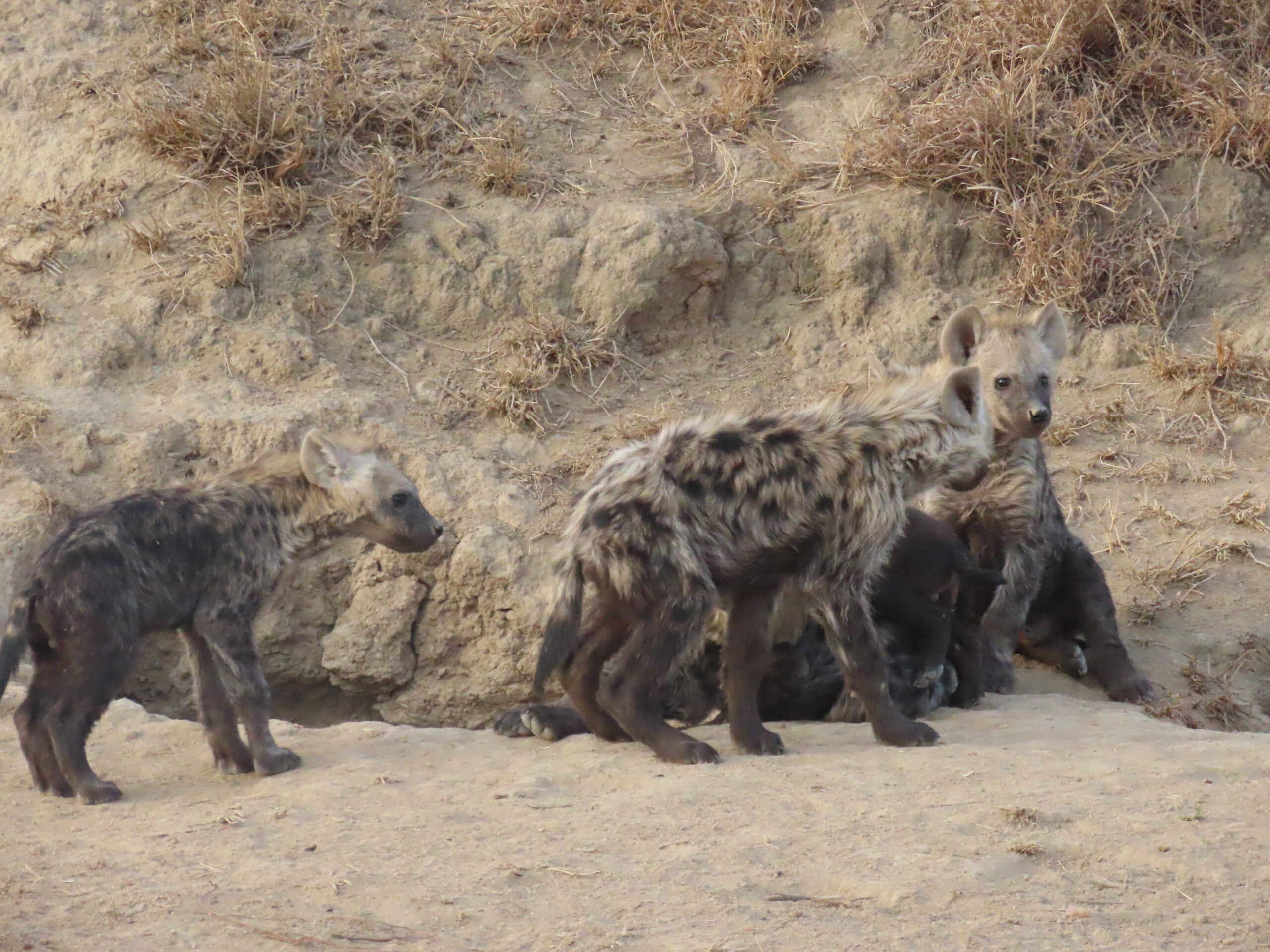
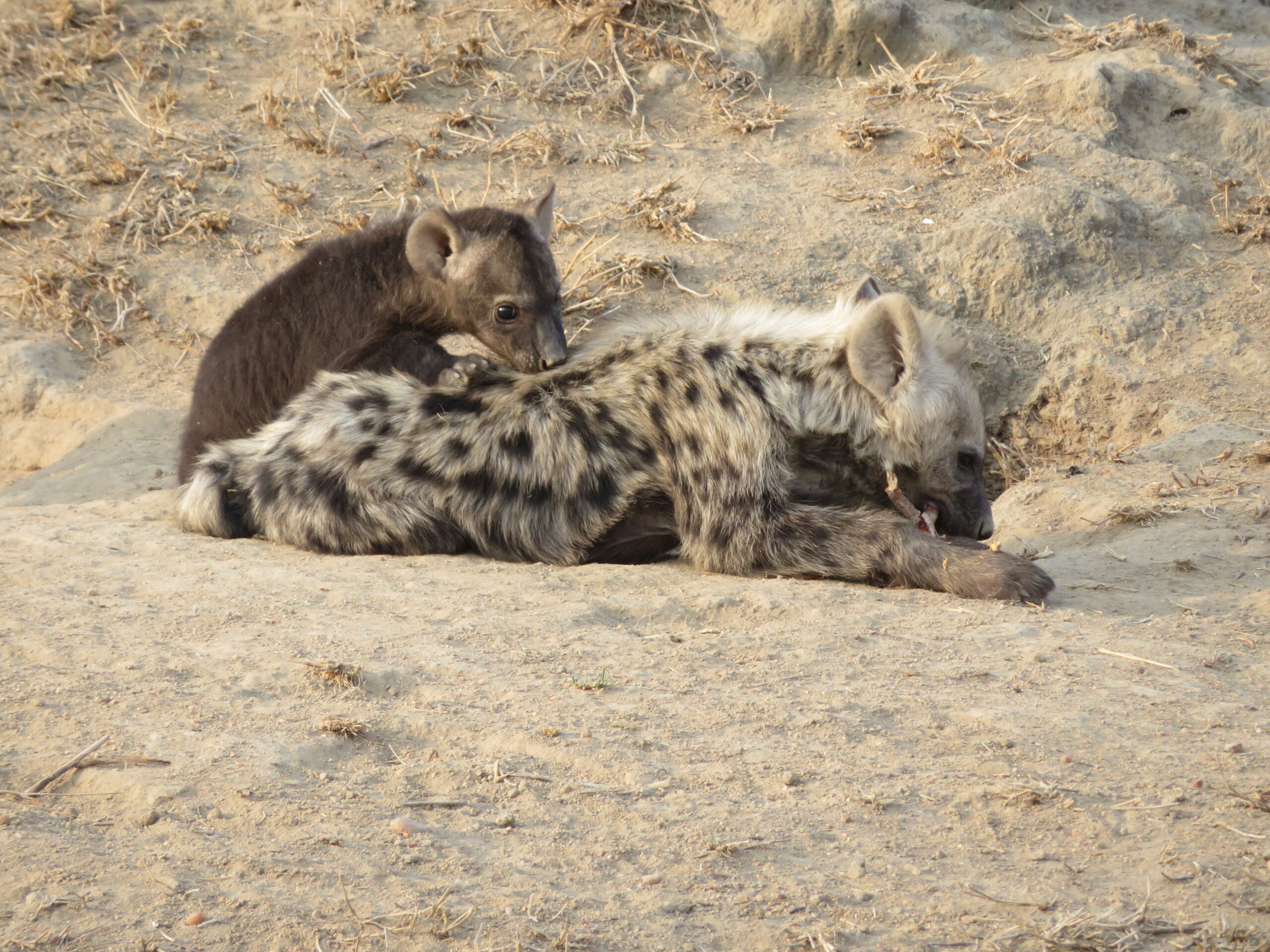
…then a Spotted Hyena crossed our path, loping towards home. We followed her to the clan’s termite mound den and found – to our delight – the cubs romping outside. Babysitter adults were inside, while other adults were out hunting to fill hungry bellies. This clan had 9 babies from 2 litters. Cubs are born black, so the smaller black cubs are 4-5 months old, while the spotted cubs are about 6 months. They were so much fun!





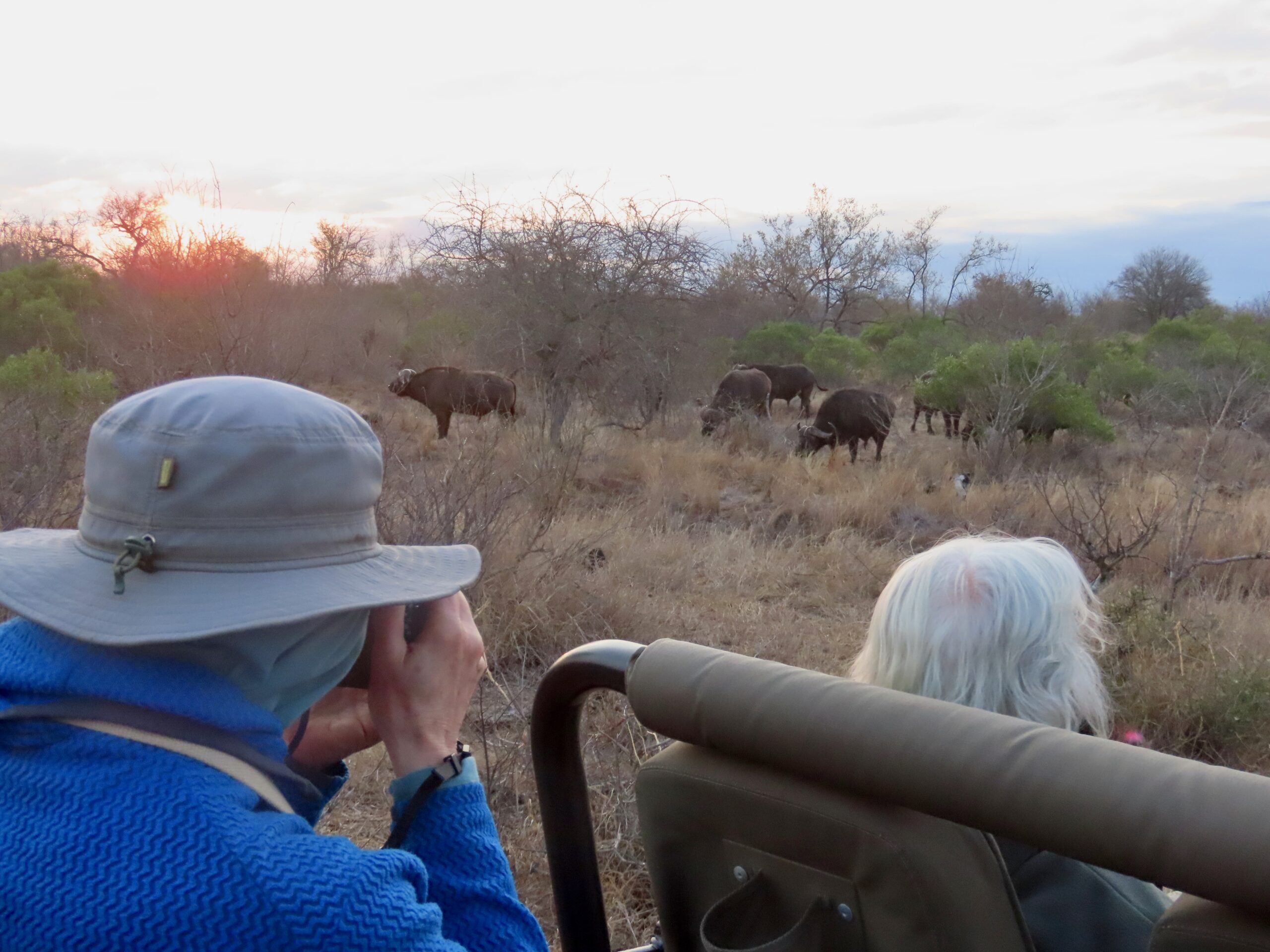
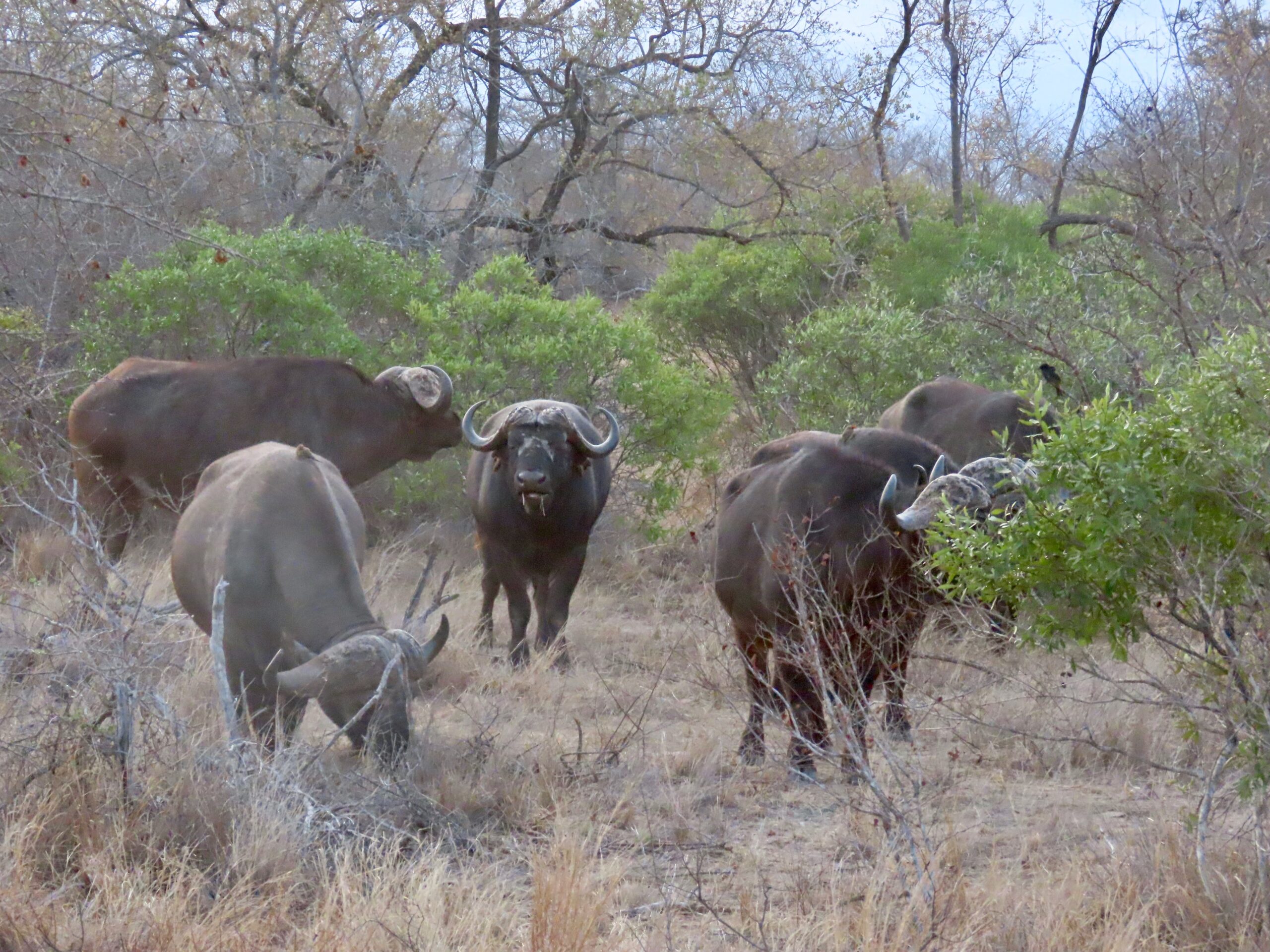
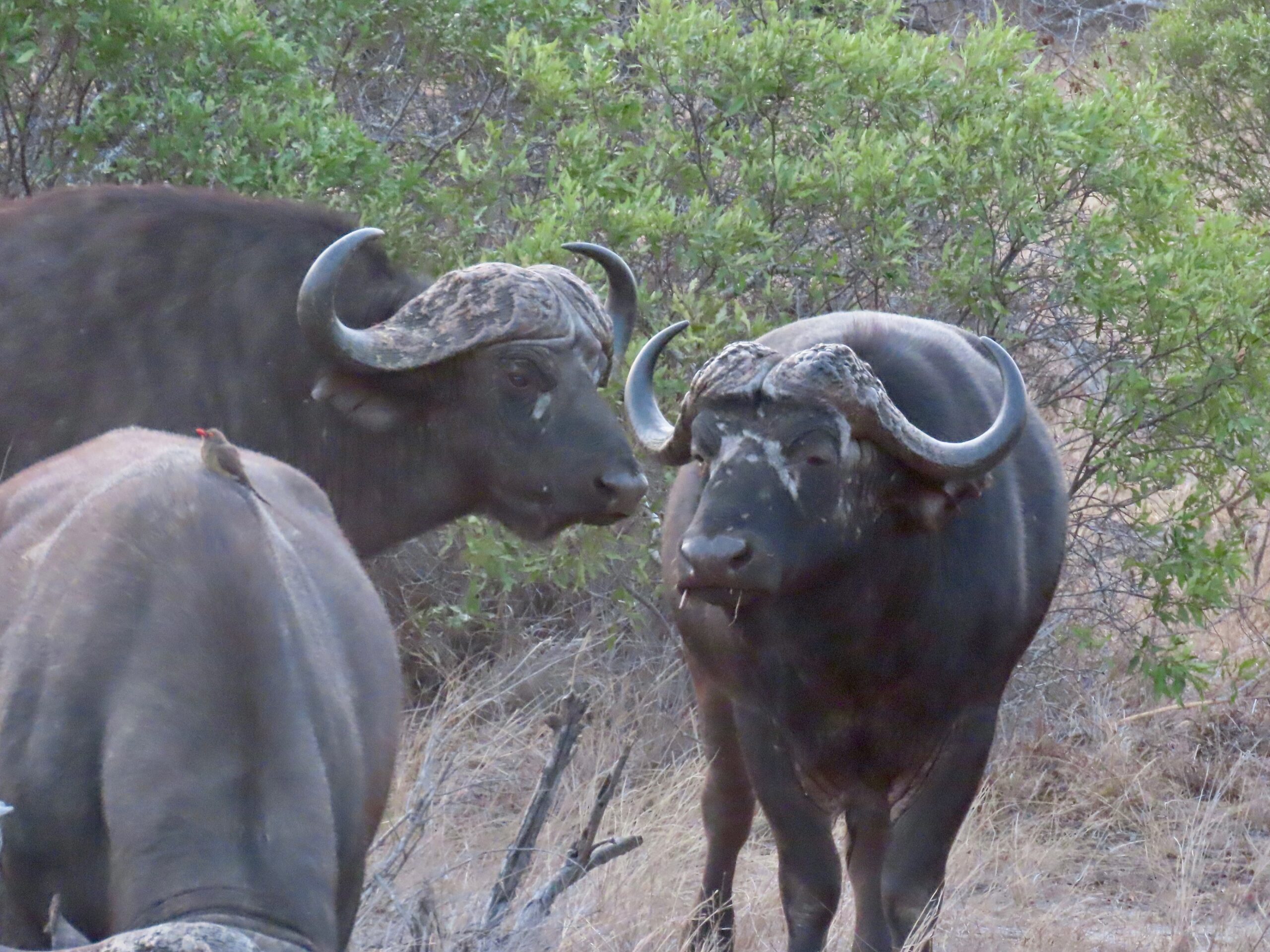
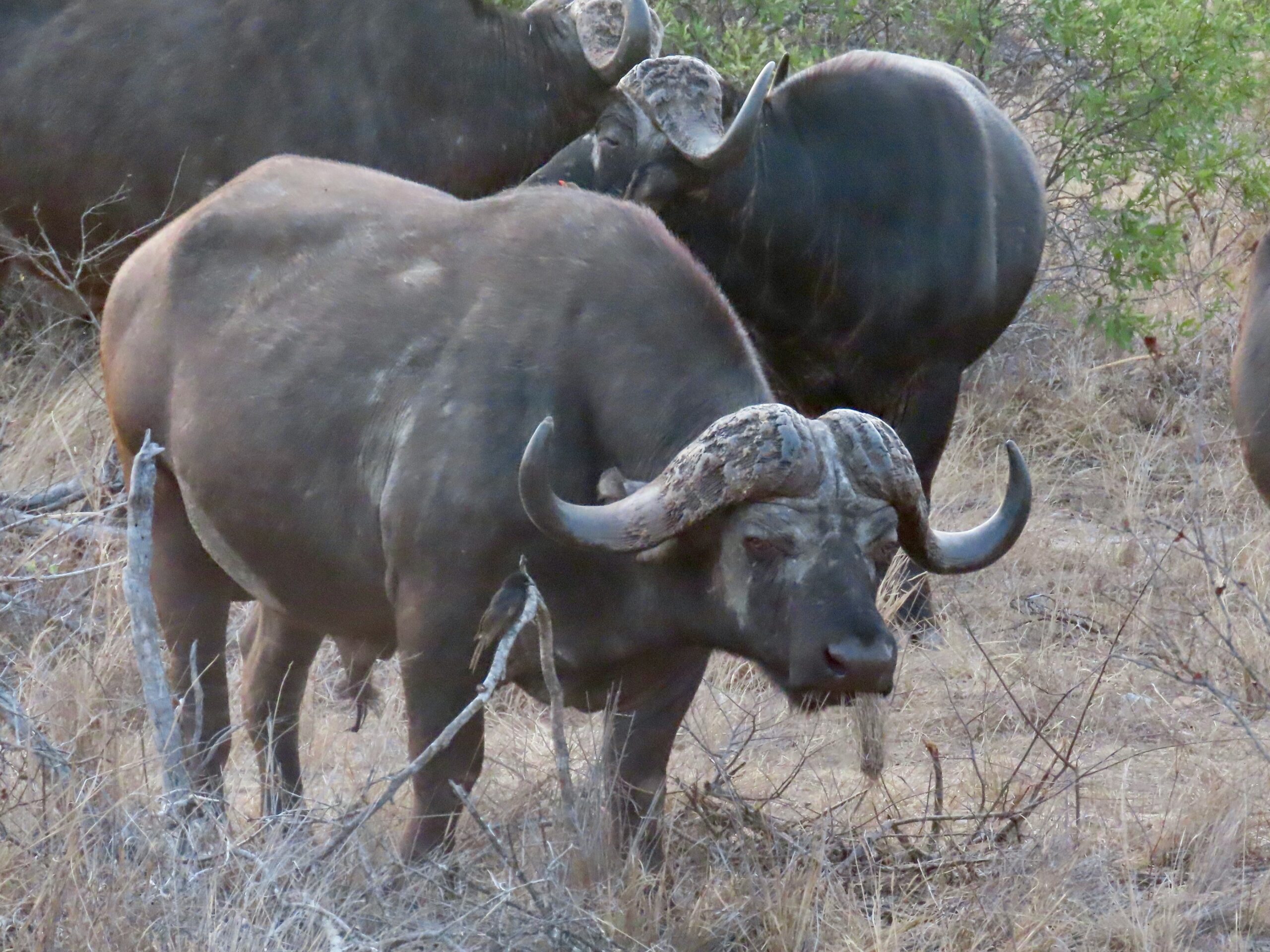
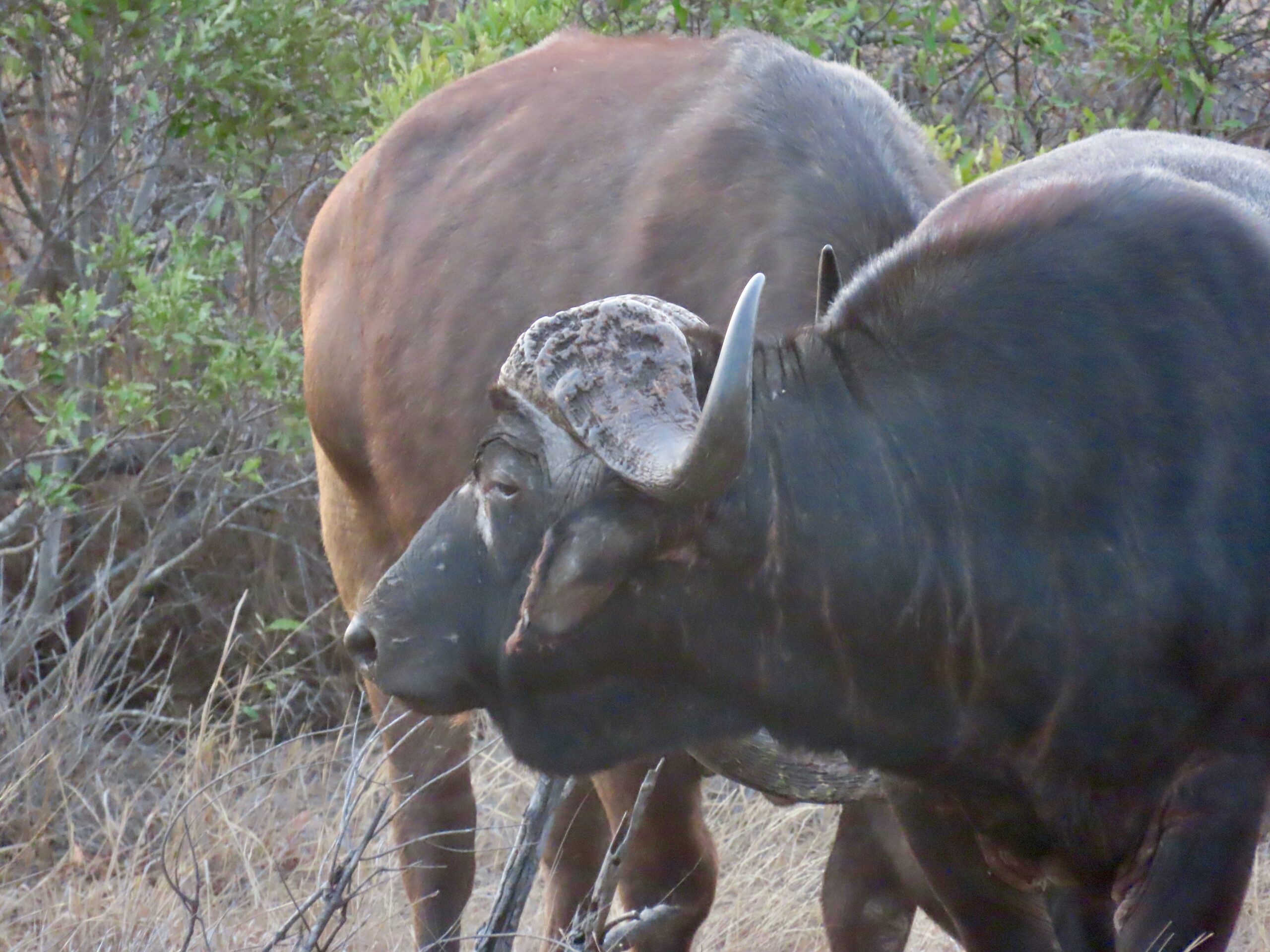
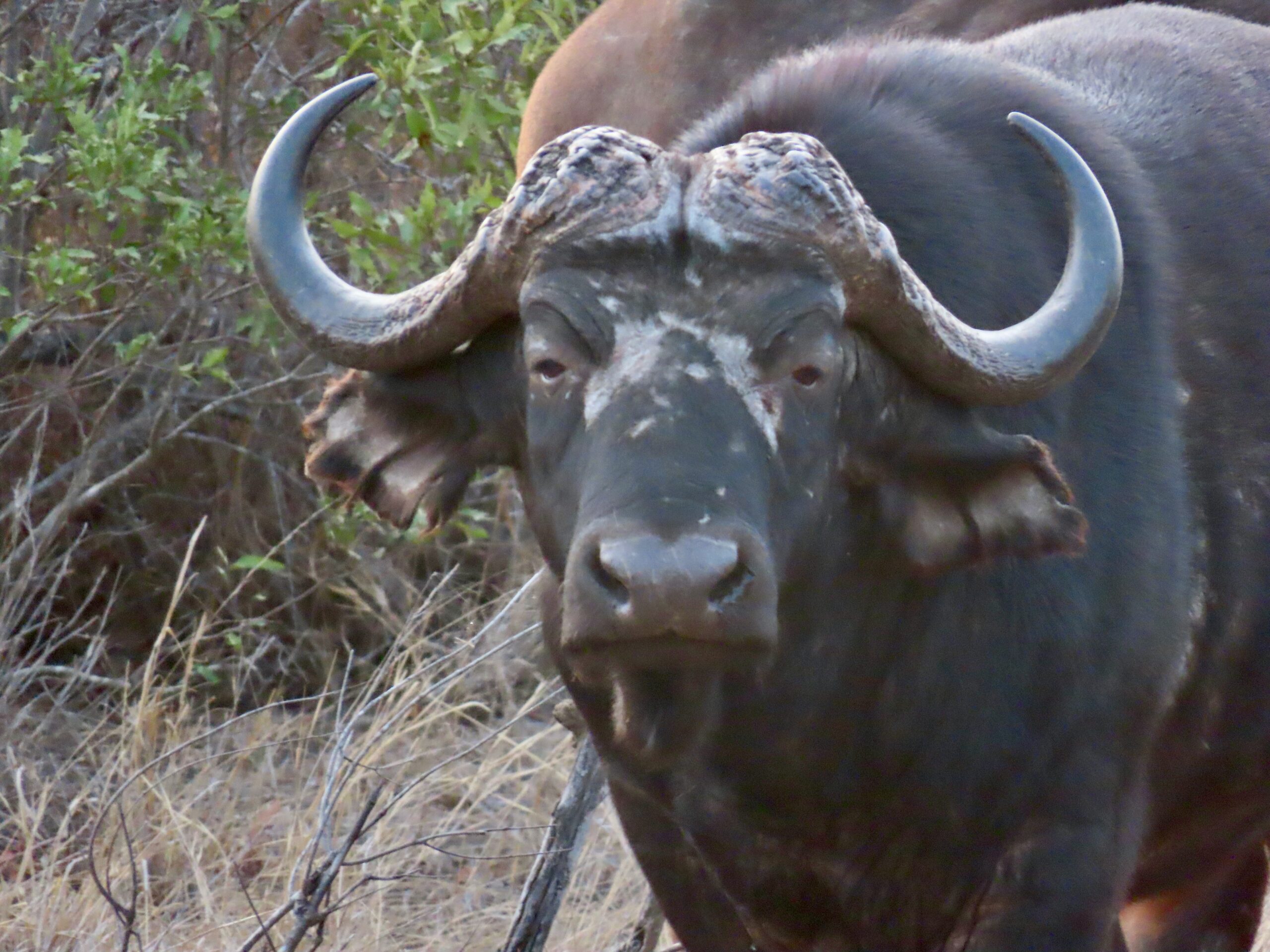
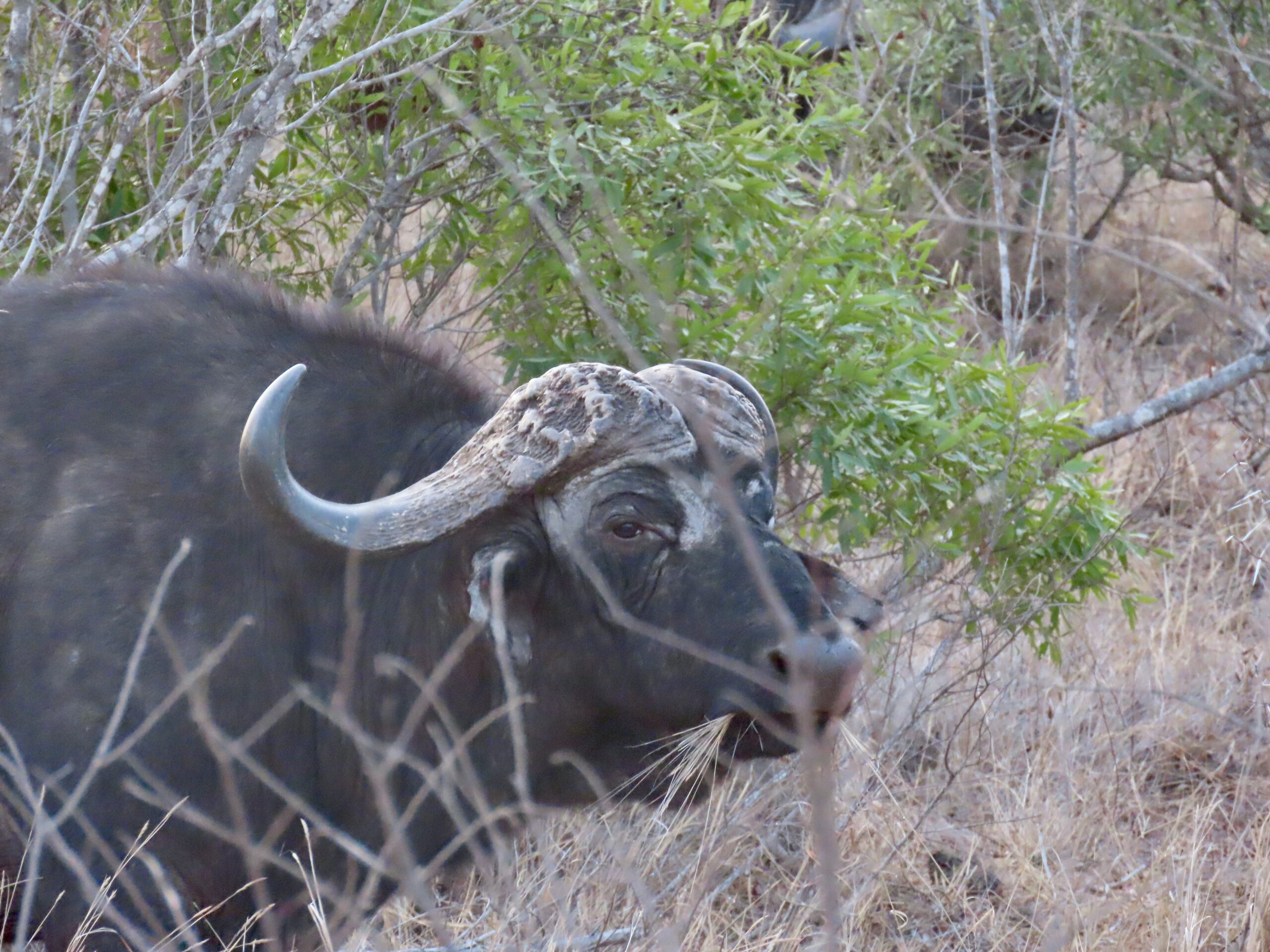
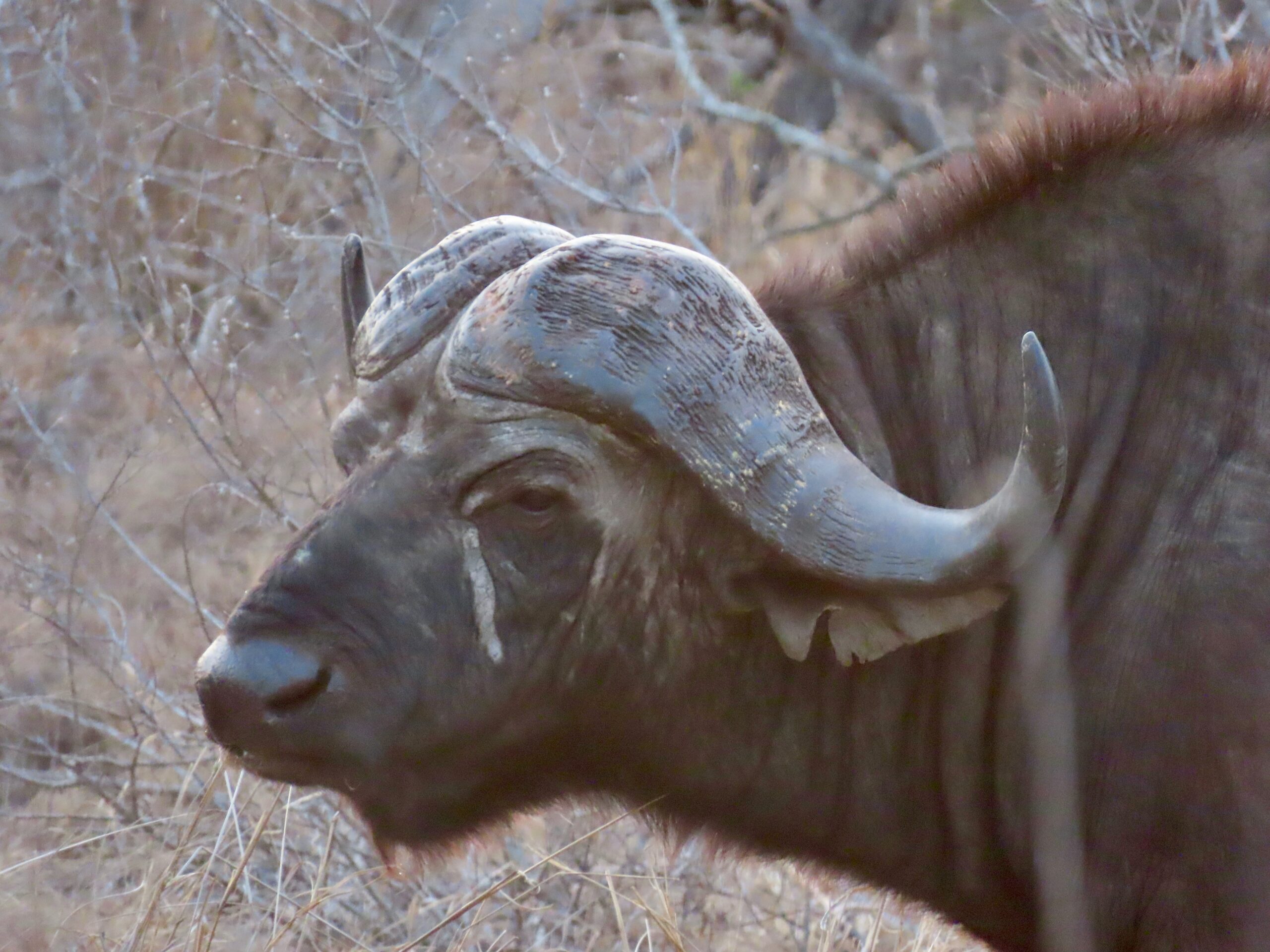
On our way back to camp, we detoured to visit a herd of Cape Buffalo, which Ken and Judy had not yet seen.

At dinner that night, we were visited by an African Genet – another of those cat-like not-a-cat beasties, cousin to the Civet. Great way to end a jam-packed day!


Thank you for sharing your adventure, Joni!
Wow, so cool! Loved all the bushcraft and ethnobotany! The guide’s knowledge of “everything” in their environment is such a lost art and way of life.