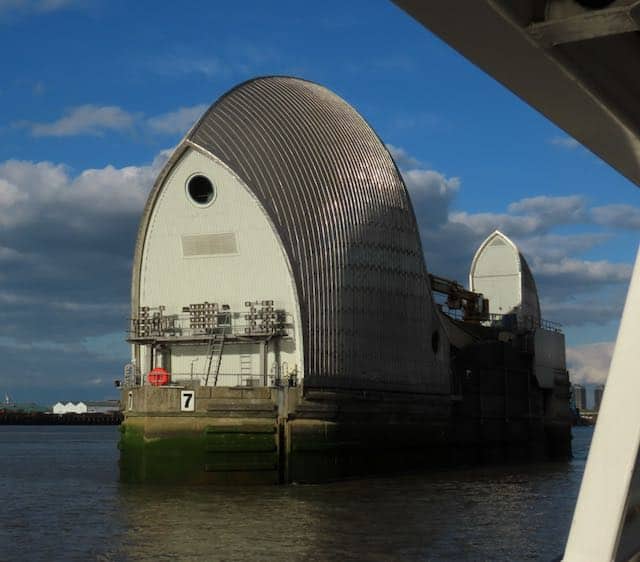
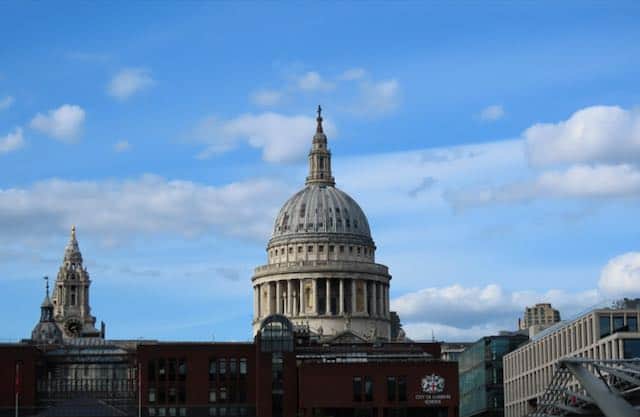
Sunday morning we had a brunch date with the youngest generations of our long time (and now sadly departed) British friends, Alan and Janet: Olly, his wife Hannah and their delightful eight month old daughter Elizabeth. Our destination was The Delauney, a venerable European restaurant right on the edge of London’s theater district. We strolled past St. Paul’s and on to the Thames Embankment path

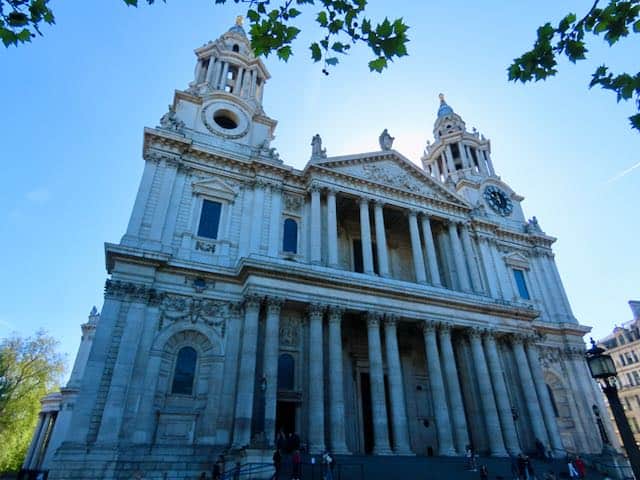
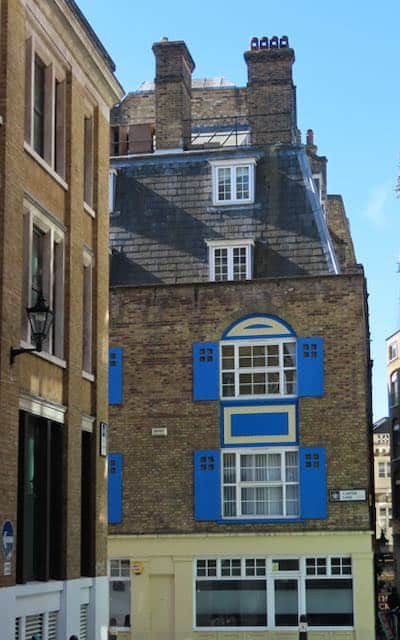
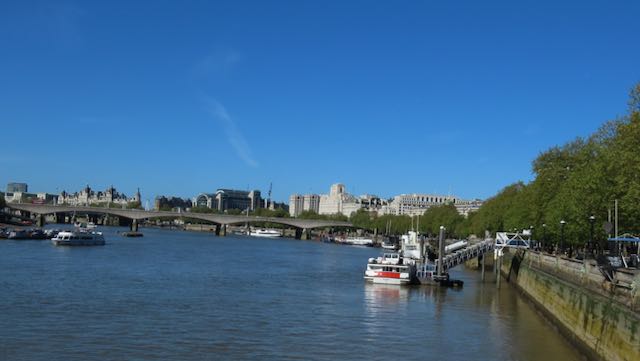

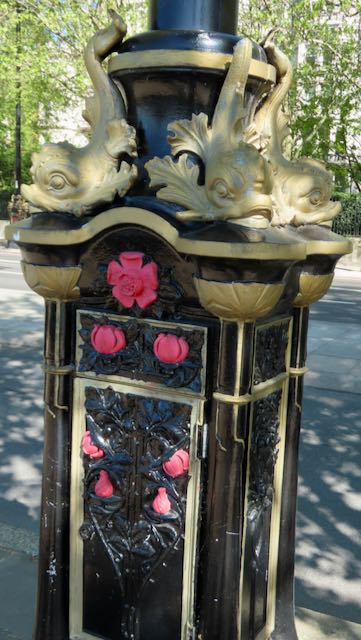
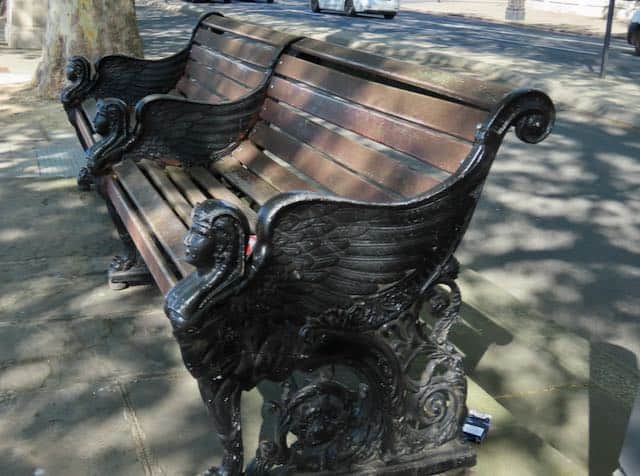
I’ve always been fascinated by the whimsical creatures decorating benches and lampposts along the Thames Embankment. They date to the 1870’s, shortly after the Embankment “works” were completed. The sea serpent-like “dolphins” decorating lampposts were modeled after the Fontana Del Nettuno in Rome’s Piazza Navona. (Beyond sinuosity, I can’t say I see the resemblance.)


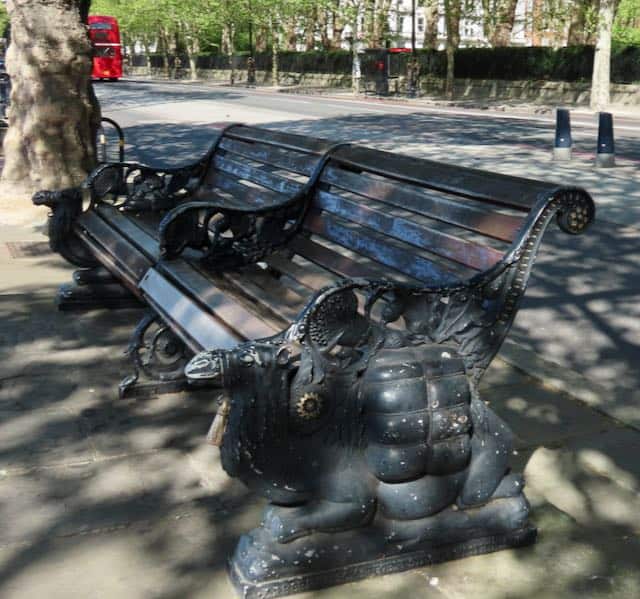
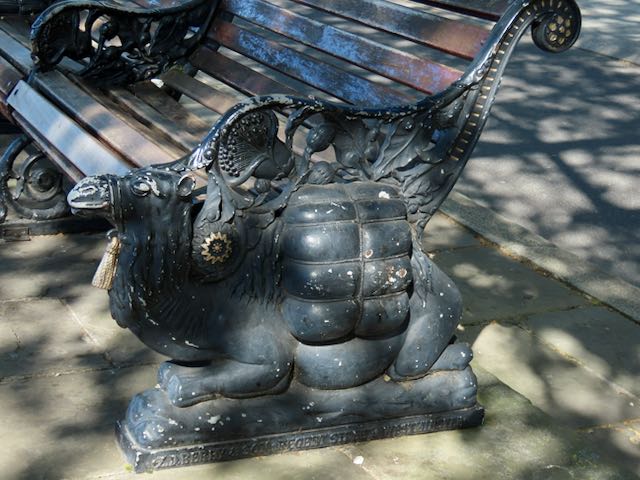
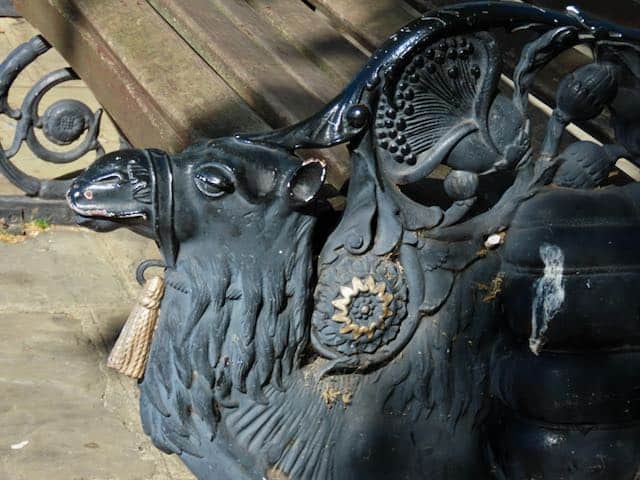
The benches date to 1874, when British Egyptomania was it its height. Hence, we have camels (imports to Egypt) and sphinxes (the Greek version, not the Egyptian type) providing support for weary bums and feet. These creatures were intended to reflect the British empire at the time, representing exploration, foreign trade, and the far, far reaches of the Brits.

Admiral Nelson defeated Napoleon in 1819 at the Battle of the Nile, with the British replacing the French as Egypt’s colonial masters (a relationship that continued until Nasser’s takeover in 1956). To commemorate that 1819 victory, Muhammed Ali, the Ottoman Turkish ruler of Egypt at the time, gifted an ancient Egyptian obelisk to the British People. One would not expect a 224-ton, 68-foot hunk of stone to be a popular travel memento, no? But 20 of the ~29 ancient Egyptian obelisks that survive stand today in the capitals of other countries. This one has great tea el anecdotes to tell.
The obelisk gifted by Ali was created by Thutmose III around 1450 BCE as part of a pair, erected in front of the sun temple at Heliopolis (now an eastern suburb of Cairo). Around 1250 BCE, both obelisks were usurped by (who else) Ramses II, who at least left them in place at Heliopolis. But when the Romans finally conquered Egypt (~12 BCE), they hauled both obelisks to Alexandria (the Ptolemaic Greek capital of Egypt) and erected them in front of the Caesareum, a temple built by Cleopatra VII to honor Julius Caesar. Thereafter, both obelisks became known as “Cleopatra’s Needles” – even though she had nothing to do with them.
Muhammed Ali’s gift was not appreciated by the British government, which had no interest in spending the exorbitant sums required to move this gigantic hunk of rock through the Mediterranean and up the Atlantic coast to London. But, fueled by Egyptomania, in 1877 a wealthy dermatologist (first of his profession), Sir Erasmus Wilson, paid about the equivalent of about $2 million to ship the obelisk to London. Since no ship at that time could carry that much weight, an engineer named John Dixon built a floatation boat around it. The obelisk was encased in a watertight iron cylinder 92 feet long and 15 feet wide, complete with a deckhouse, a mast with sails, a rudder, and a small cabin. There was no engine, since this contraption was designed to be towed by a steamship.
It was not smooth sailing: a storm in the Bay of Biscay capsized the obelisk/pontoon, almost sinking the steamship and drowning 6 sailors who tried to right the ship. Eventually, the crew cut the towing cable and waved good bye to the needle, expecting it to sink. But the pontoon was spotted floating on the surface a few days later by a Spanish boat and towed to a port in Spain. After some wrangling over salvage claims, the obelisk finally made it to London where it was raised on the Victoria Embankment to cheering crowds in 1878. And there it stands today, out of place and out of time, hieroglyphs weathering away… (It’s sister obelisk stands in New York’s Central Park, where it is suffering a similar fate.)

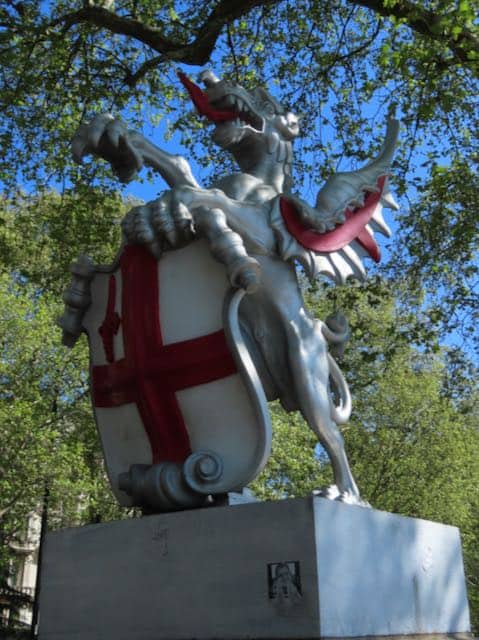
This lovely dragon is a heraldic symbol of the City of London, marking its western boundary along the Thames.

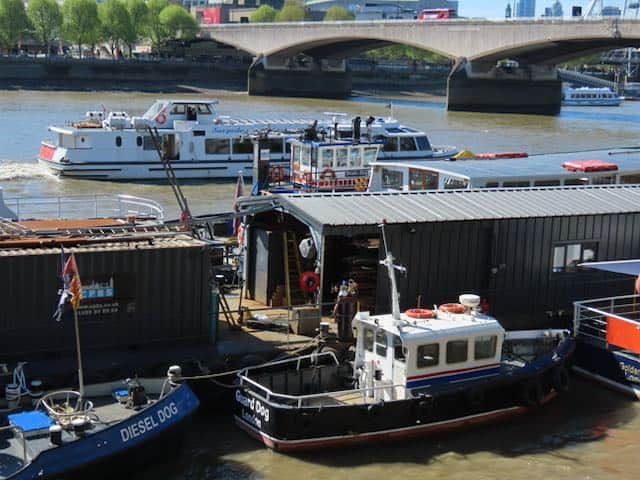
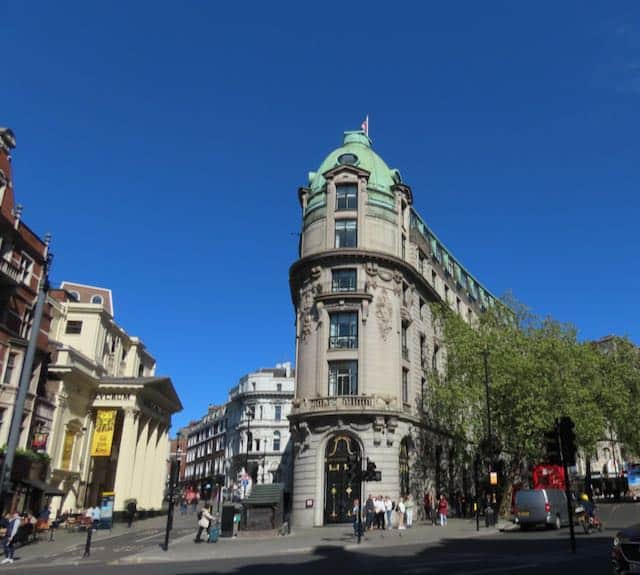


After a delicious lunch with our friends, we headed south past Victoria Embankment Gardens (and New Scotland Yard), Big Ben, Westminster Abbey and Parliament, then – via the 349 bus from Lambeth Bridge- on to Battersea Park.


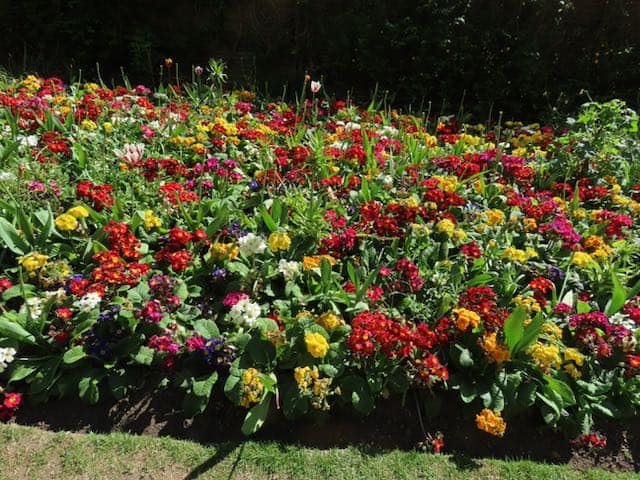

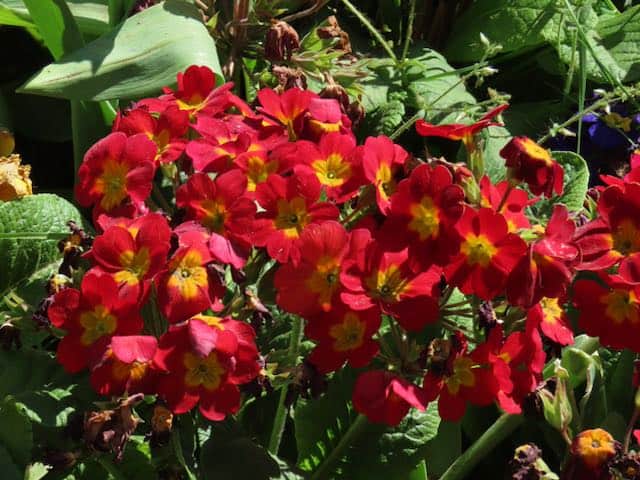

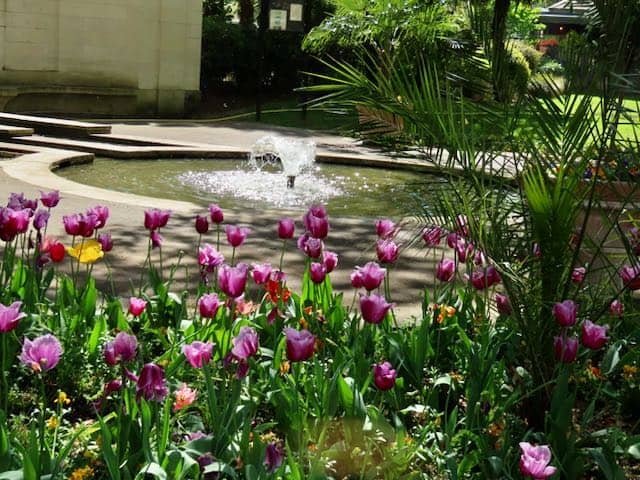

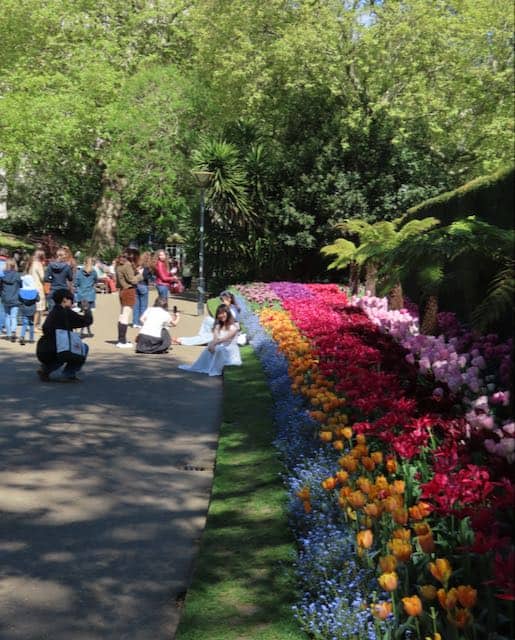


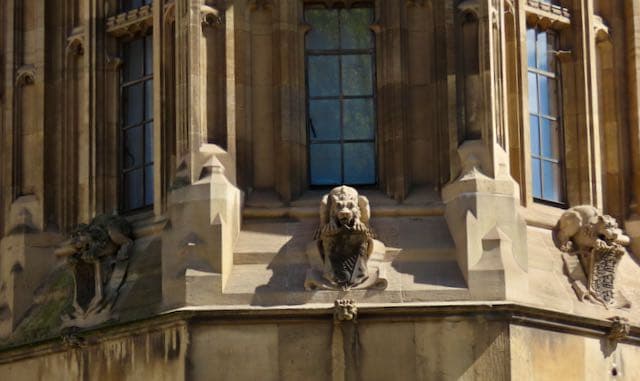


Behind the Parliament building lies a lovely little park named after the Victoria Tower (the bit that looms up on that end of the building).
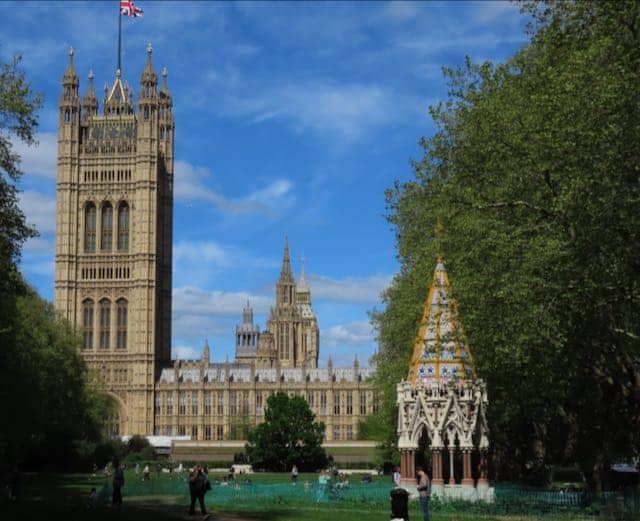


Views from the bus, as we rode through Vauxhall and passed by the huge apartment complex anchored by the Battersea Power Station development (about which more anon).


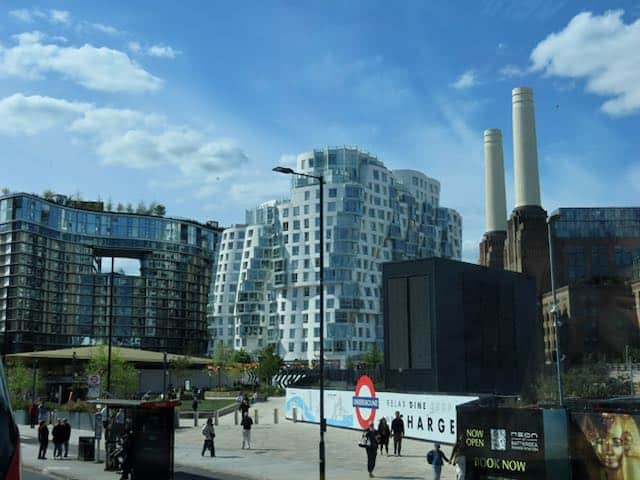

Battersea Park has a long and storied history. The area was an insalubrious part of London in the 19th century, with all sorts of heavy industry and the odd bawdy house lining the riverbank. The Battery Fields marshland (a popular dueling ground) was converted into parkland in 1848. Today it provides 200 acres of playing fields, strolling lanes and much appreciated green space on the Thames’ very dense south bank.




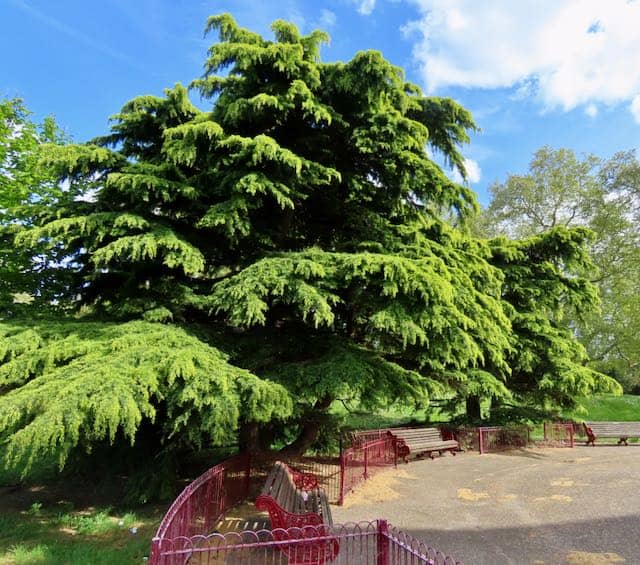
We found a couple of unexpected features: The Peace Pagoda…
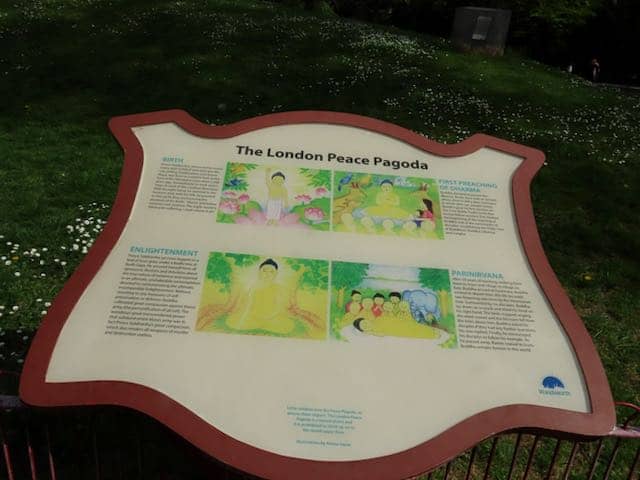
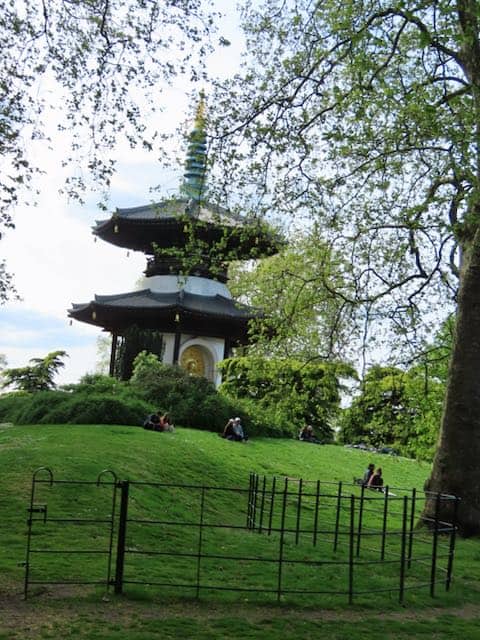


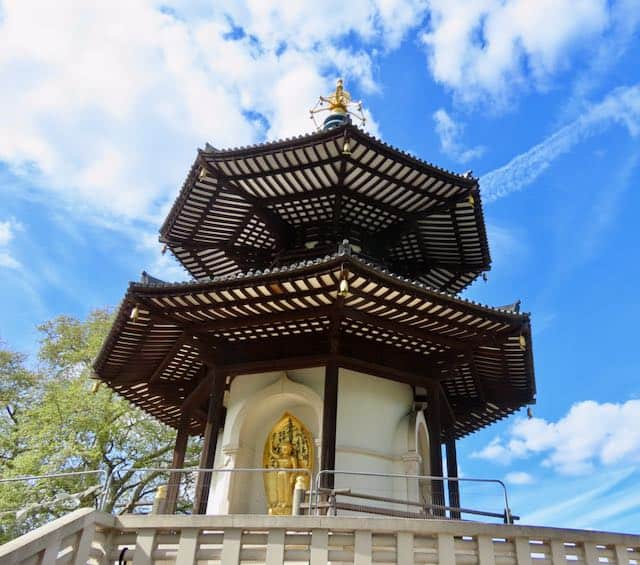


…and a South Asian themed topiary garden. The ladies in brightly colored hats were participating in a fundraiser for autism.


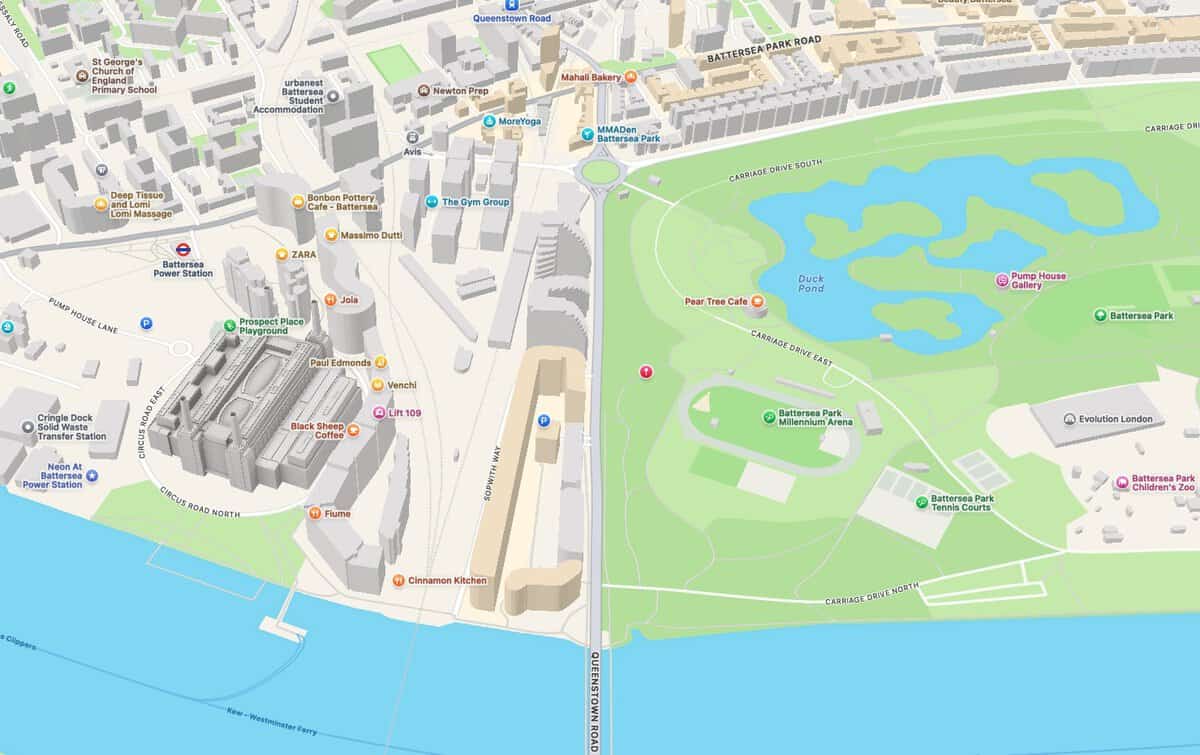
The Battersea Power Station sits right next to Battersea Park, accessible by a riverbank path that passes under a road and old railroad line. The power station was constructed in two stages: Battersea A between 1919-1935, and B between 1937-1941.

Cultural connections: Pink Floyd’s 1977 album “Animals” features the Battersea Power Station as its cover art. (How many power plants get to become a rock art icon?) The station came to my attention through one of my favorite series, Jodi Taylor’s uproarious – and historically accurate – Chronicles of St. Mary’s. If you appreciate history, irreverence and madcap time travel adventures, this series is for you!


Battersea A was decommissioned in 1975,and Battersea B in 1983. The whole building was listed as an historic structure in 1980, but it sat empty, moldering into ruin, for the next 30 years as multiple redevelopment schemes failed. But in 2012 a consortium of Malaysian business inked a deal to regenerate the property, developing a mixed-use project with residential, retail, commercial, recreational and cultural spaces inside and around the building. It is one of Europe’s largest urban redevelopment schemes.
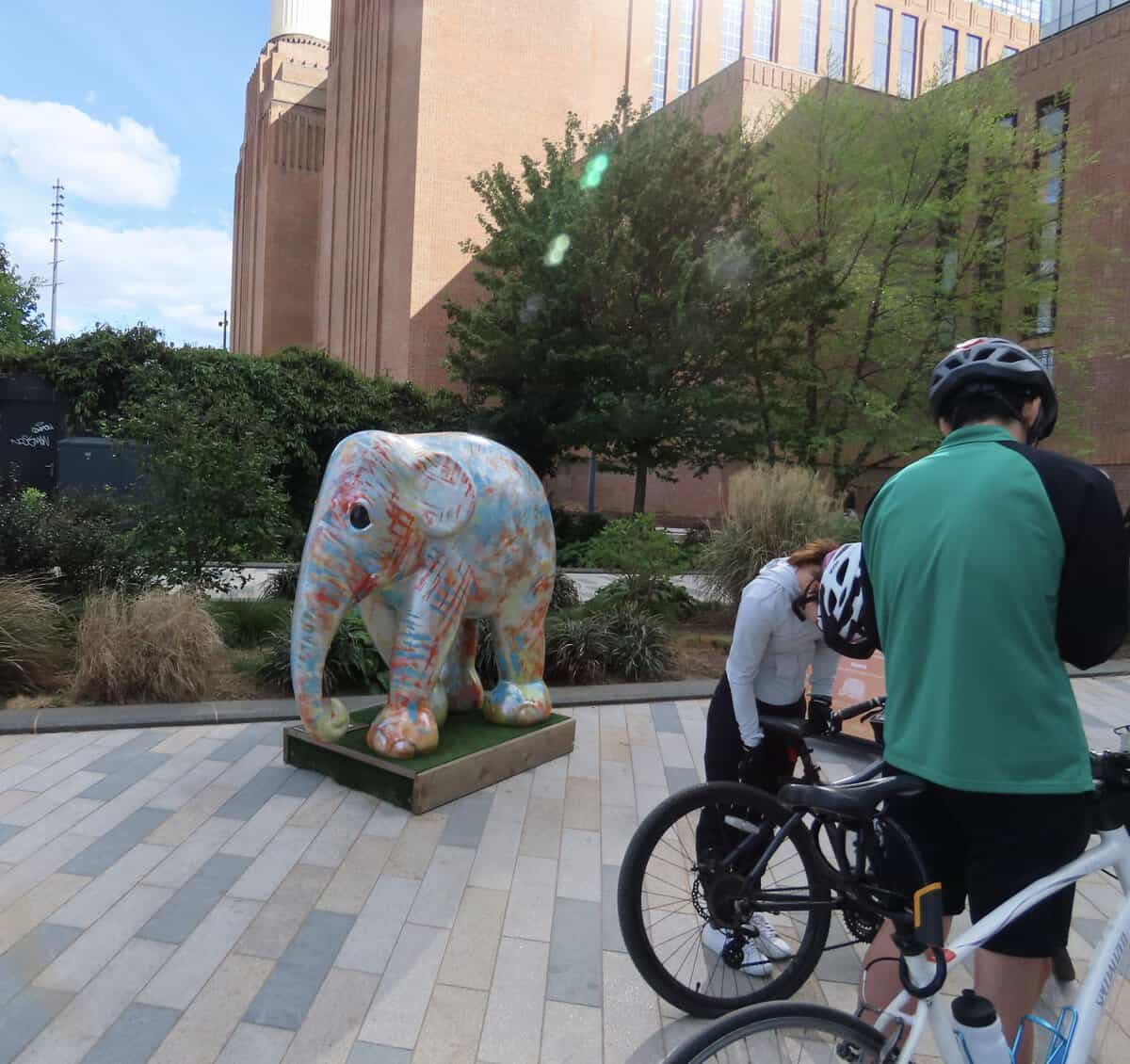
There are over 4000 apartments on site, ranging in price from £365,000 to north of £2.5 million. Like a lot of projects, the low end units were mandated as part of development approval, but the original 15% affordable requirement was reduced to 9%. It looks like a very nice place to live if you can afford it, with an outdoor market along the river, vast lawns for lounging, biking and walking paths, gyms and workout spaces, entertainment venues and a variety of small shops. We grabbed some lunch at an upscale grocery, then wandered the grounds.


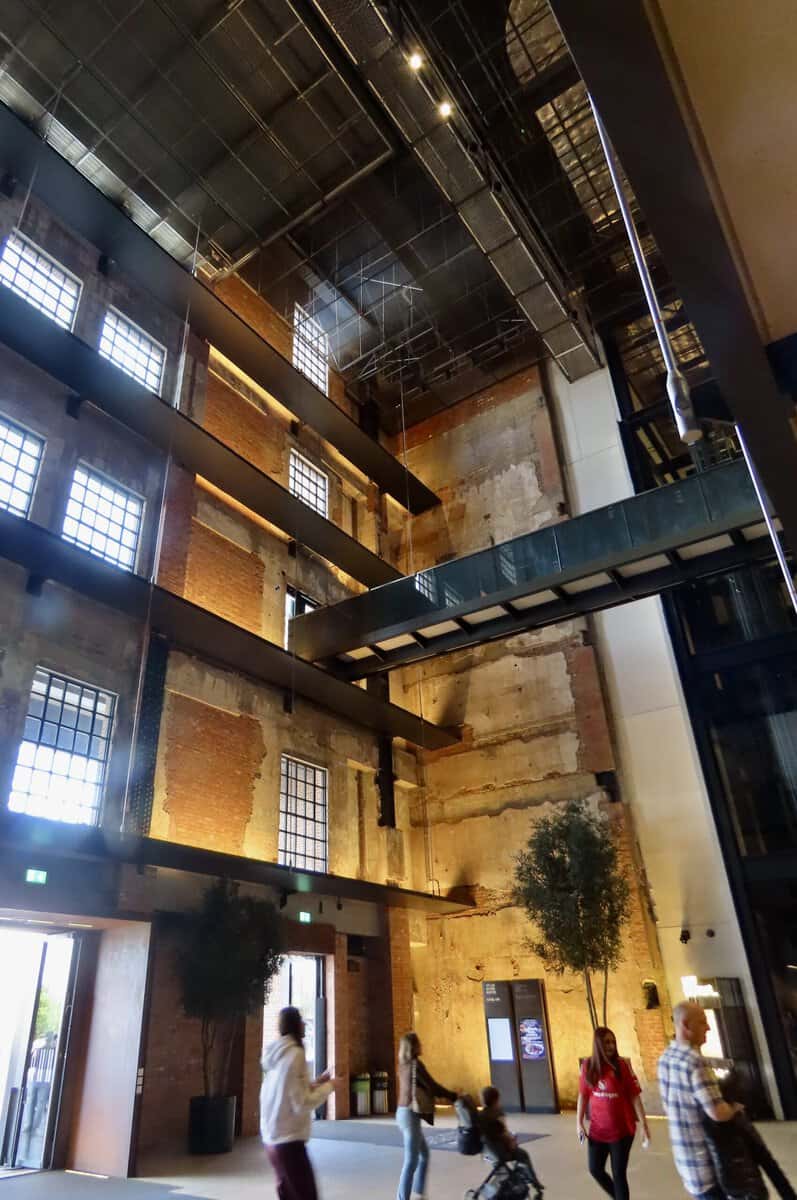
There is a massive retail shopping mall inside the power plant building.




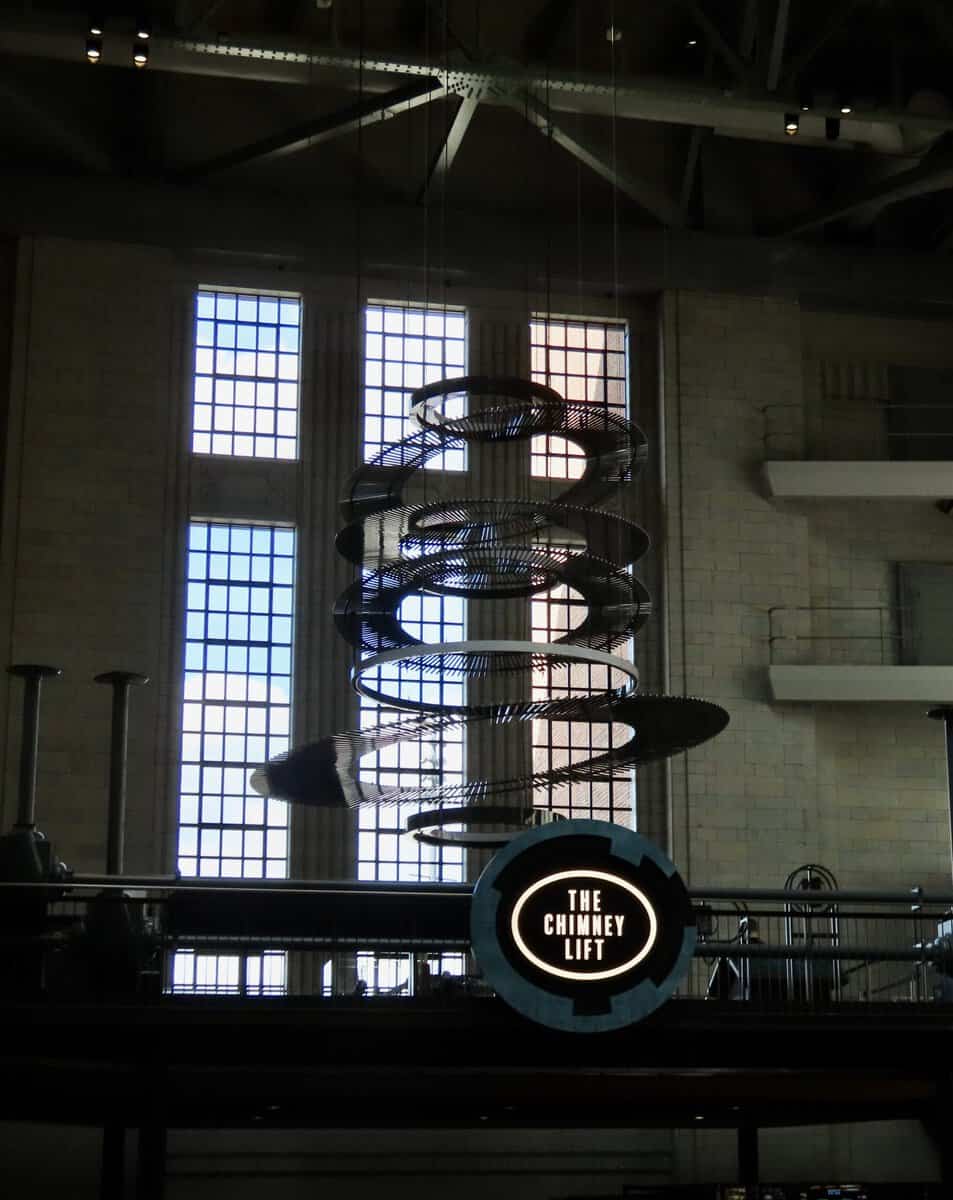
One of the chimneys has been repurposed as an amusement ride, The Chimney Lift, with an elevator rising 360 feet to offer 360 degree views of London.

As the afternoon wore on, we made our way to the Thames ferry terminal to catch a ride downstream, wanting to make it to the Thames Barrier before sunset.


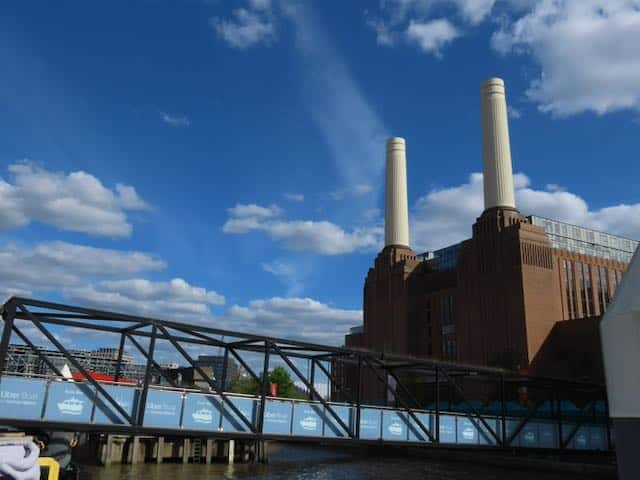

Thames ferries are a lovely way to rest your feet while watching the extraordinary diversity of Thame-side architecture roll by.


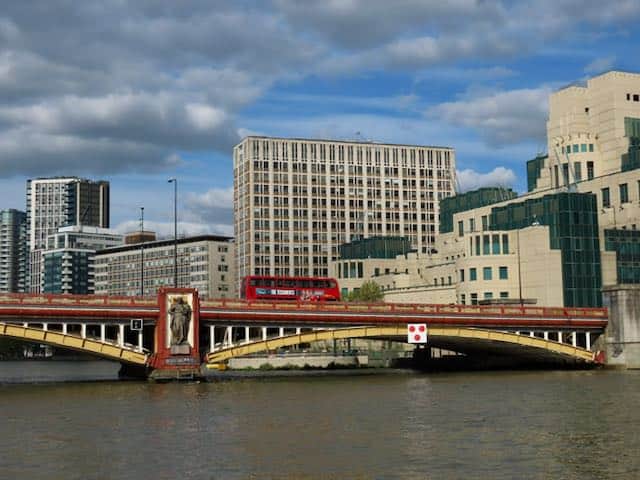

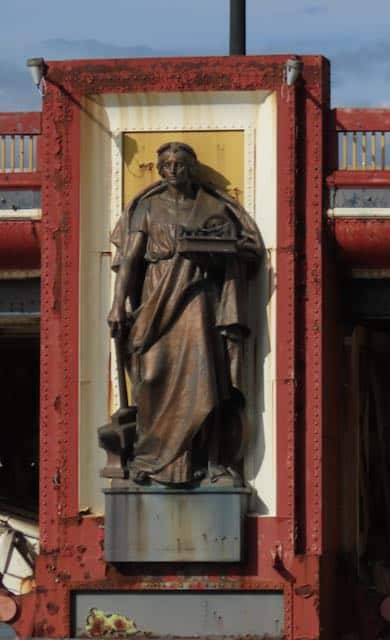

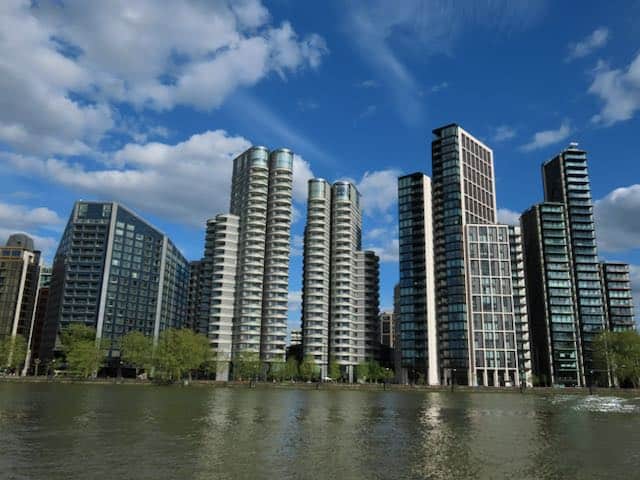
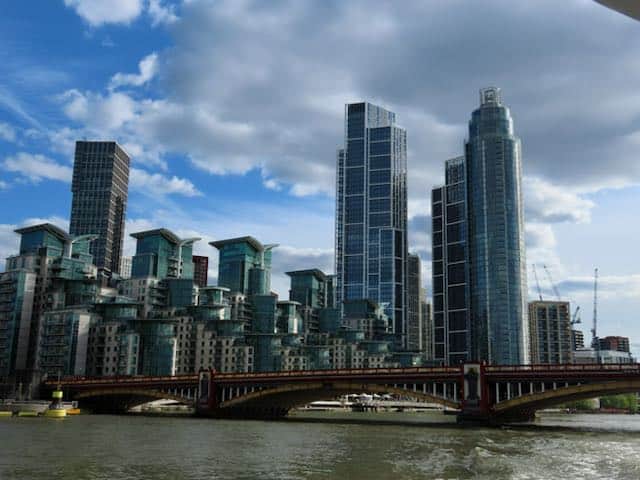


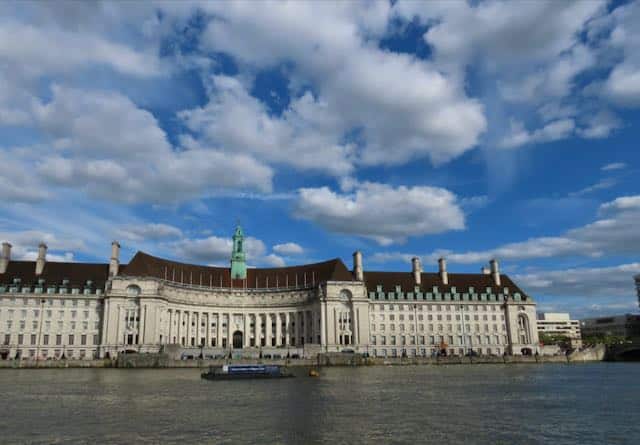
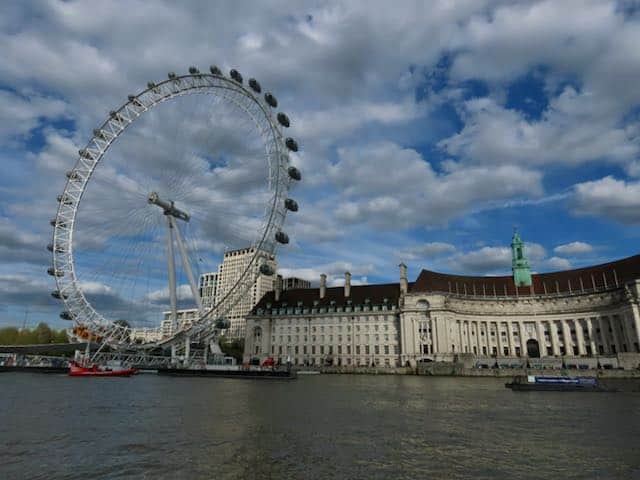


I love the juxtaposition of old and new, although I could do without the Walkie-Talkie Building looming over Tower Hill.
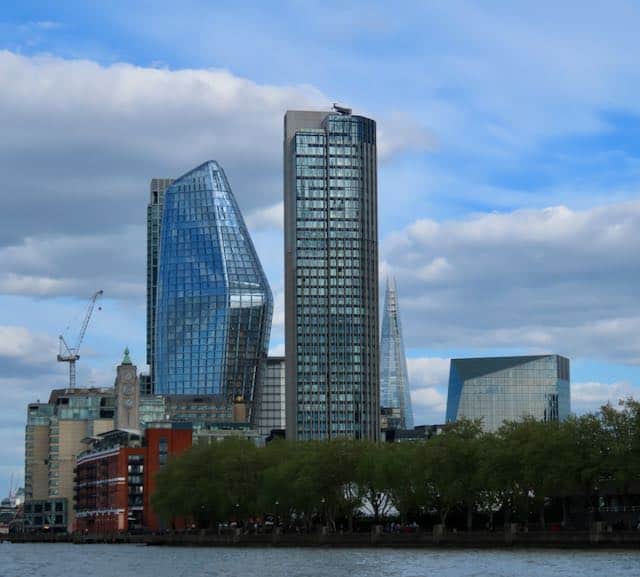



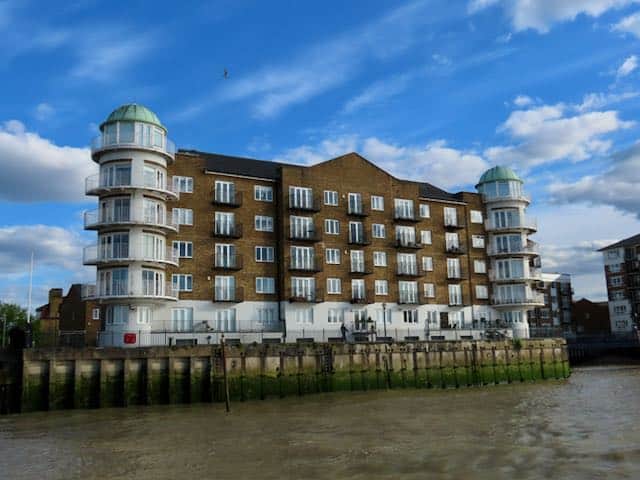

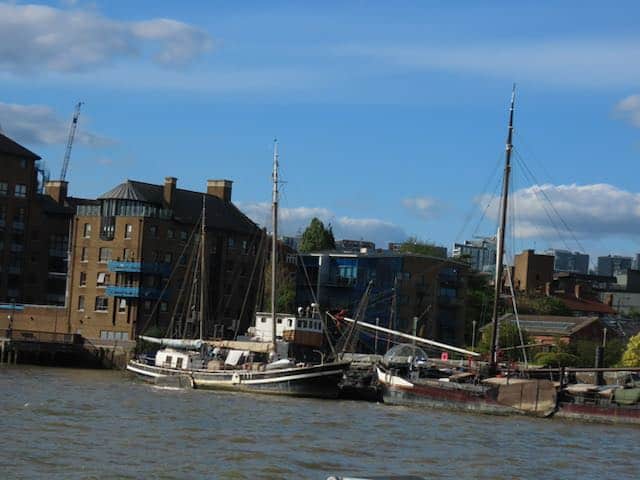


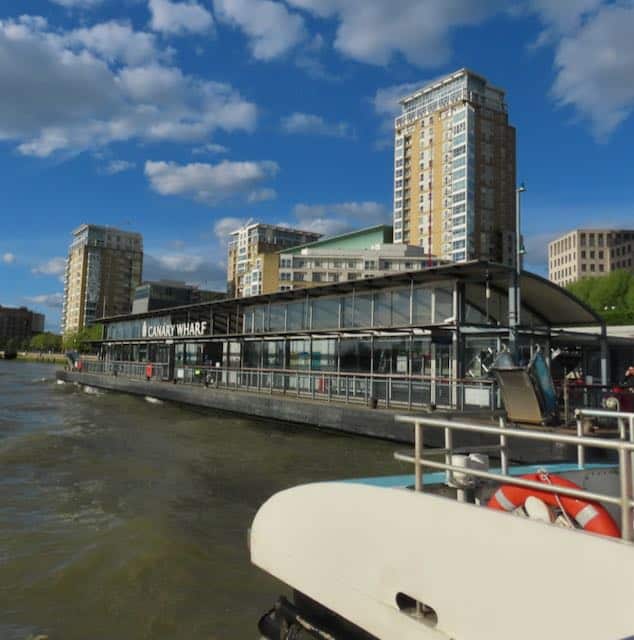
is the East End ‘s waterfront today

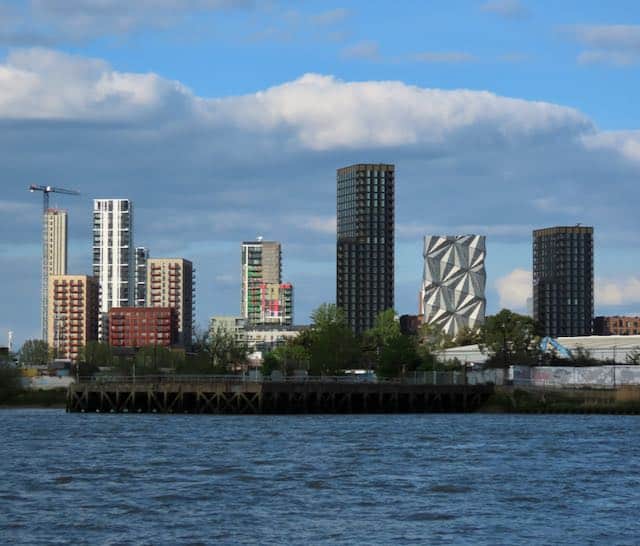
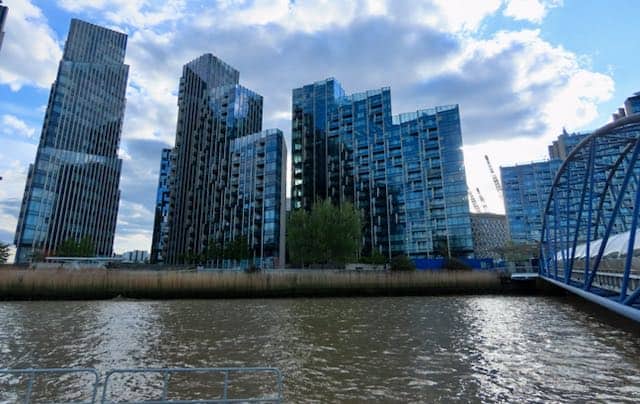
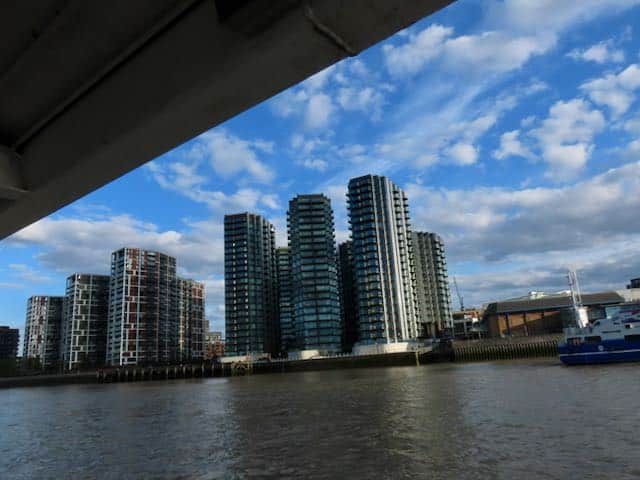
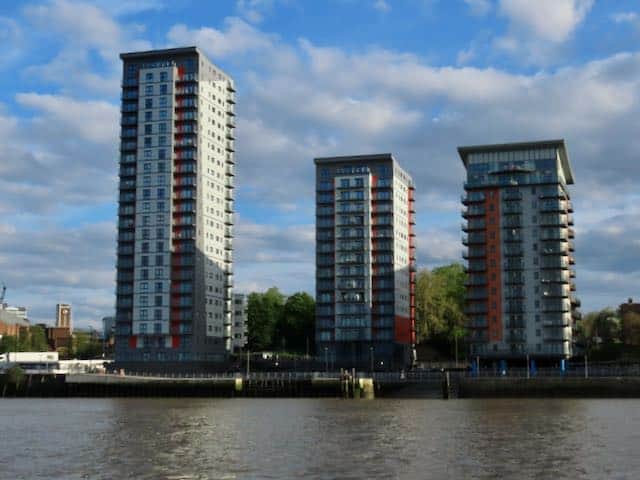
We had traveled as far as Greenwich on the ferry previously, but never beyond. I was amazed at the pace of development, with high-rise residential buildings lining the banks all the way to the Arsenal.




into an entertainment district
The cable car was a surprise – it connects the Docklands to Greenwich, accompanied by some really edgy art.
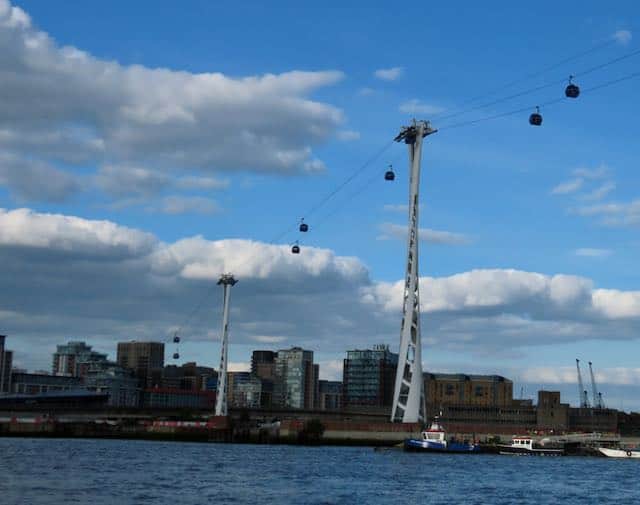




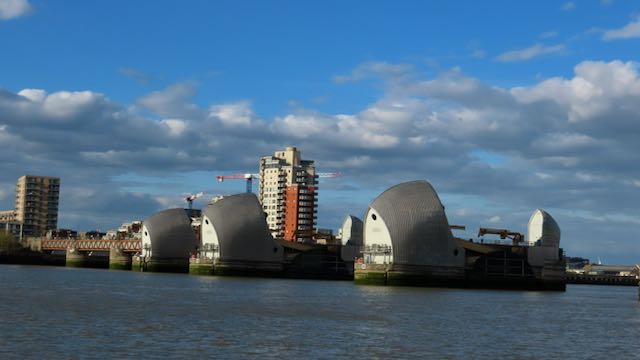
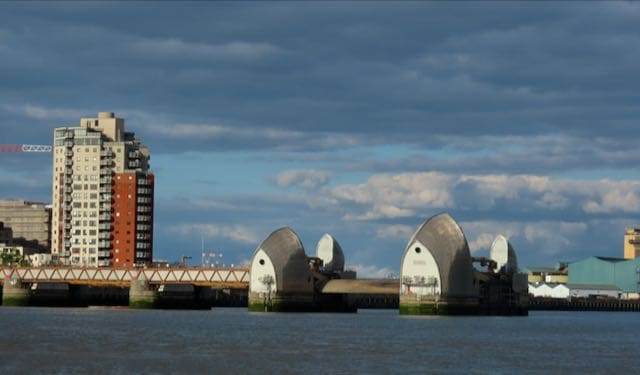
We transferred to a different ferry at North Greenwich, then – at last – got to see the Thames Barrier. The Thames is a tidal river, and the Barrier was built to protect all that upstream development from tidal/storm surges. There are ten steel gates (each weighing 3,300 tons) between the silo-looking structures that can be raised to the height of a 5-story building. This was a project of the Greater London Council (before Maggie Thatcher axed the Council) and our friend Alan was one of its designers, so I’ve always wanted to see it. I think it’s an artful design.


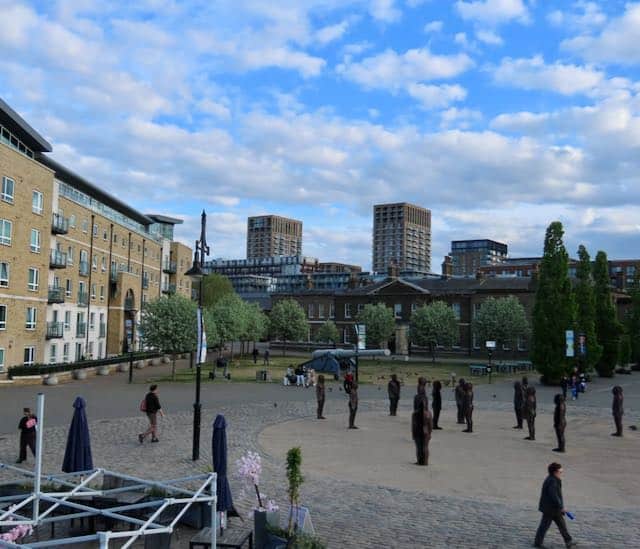
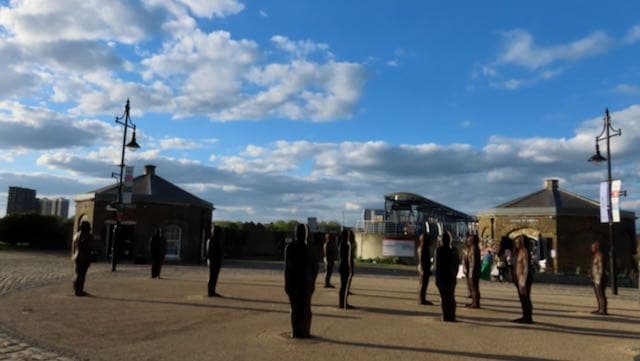
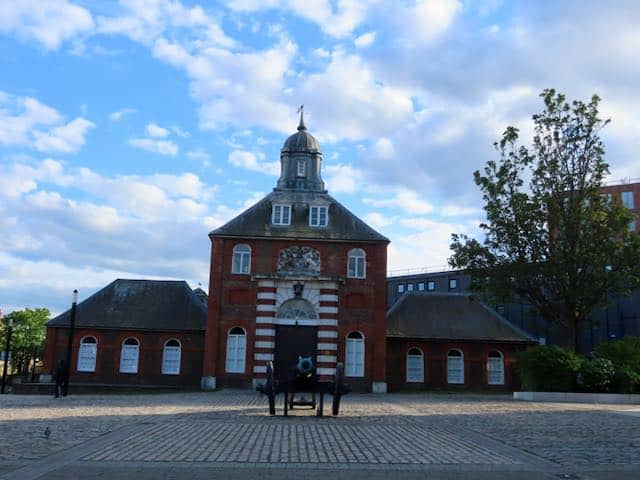
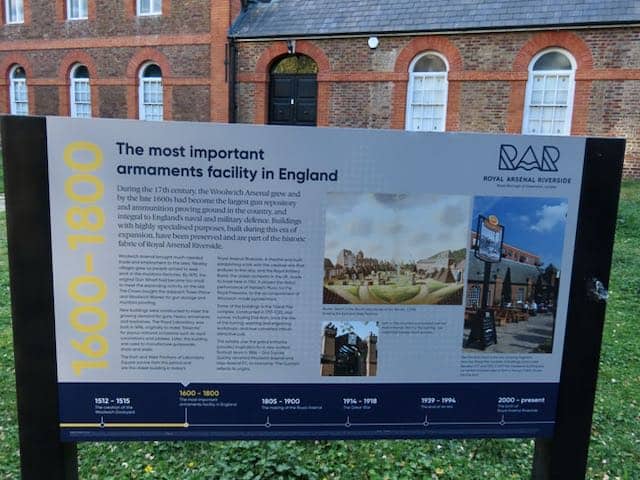
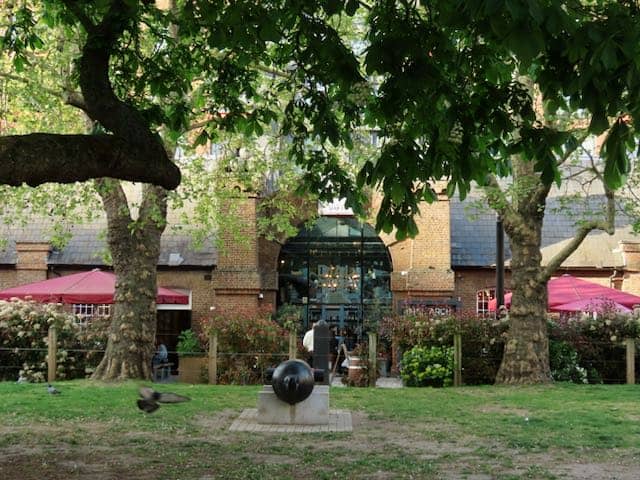
And then we were on to our last stop: the Woolwich Royal Arsenal. This site functioned as an important part of England’s military defense system beginning in the 16th century. It started out as a storage facility for ship guns, then morphed into a defensive installation when a battery of cannon was installed in 1667. Gunpowder manufacturing began shortly thereafter, with fireworks manufacture as an ancilarryy use. In 1748, King George II commissioned George Frideric Handel’s Music for the Royal Fireworks: the fireworks were produced here and the Royal Arsenal Band performed the music (probably struggling to stay awake, as this is one of the most boring pieces of classical music EVER IMO).
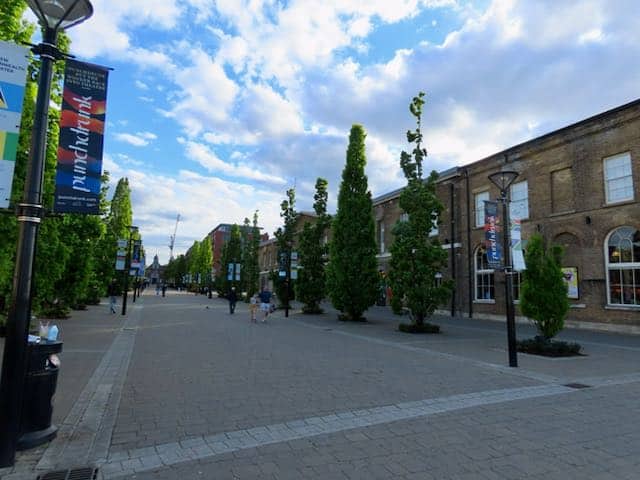
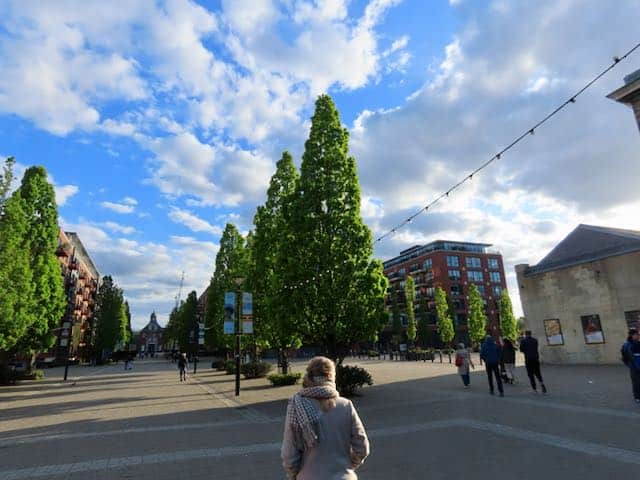
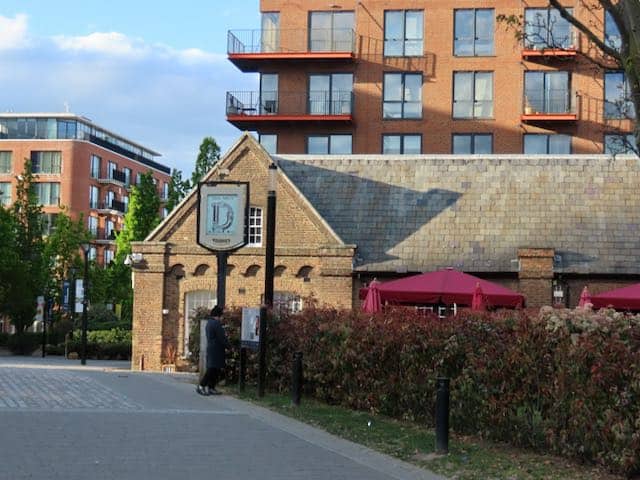
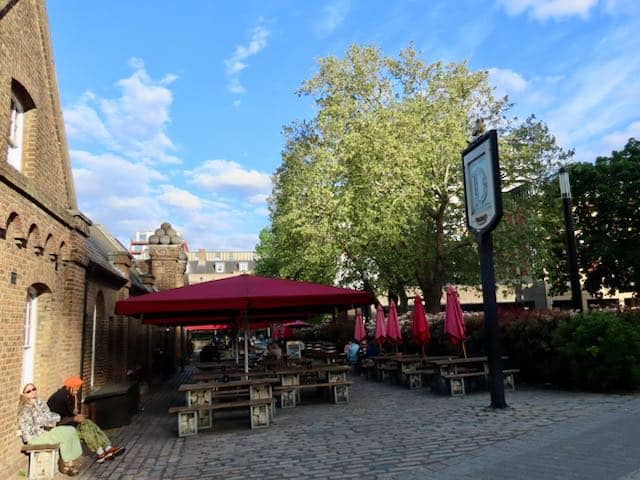
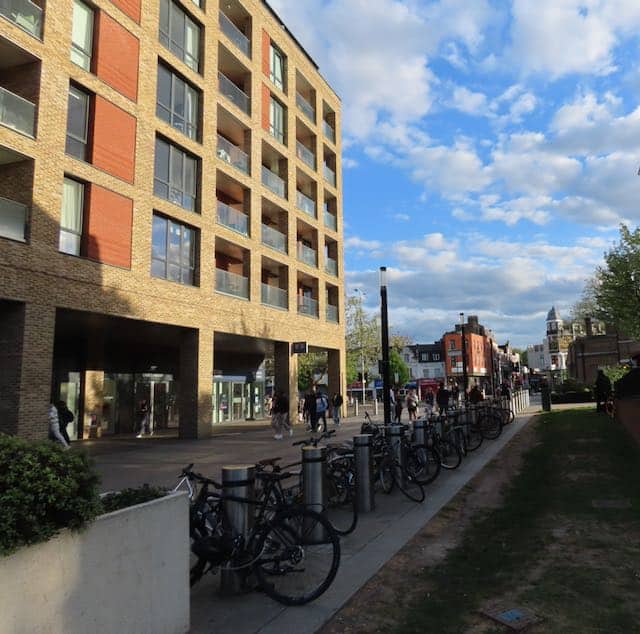
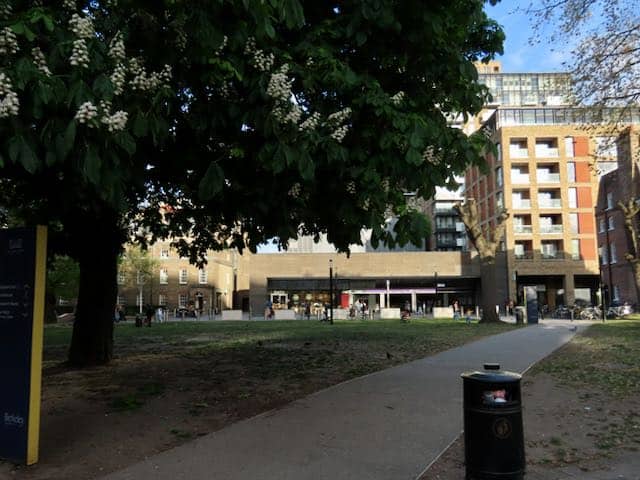
Woolwich began manufacturing artillery in the 18th century, evolving to become the largest munitions factory complex in the world by World War I, employing over 100,000 people. The site was decommissioned in 1967 and has now been transformed into a lovely residential community.
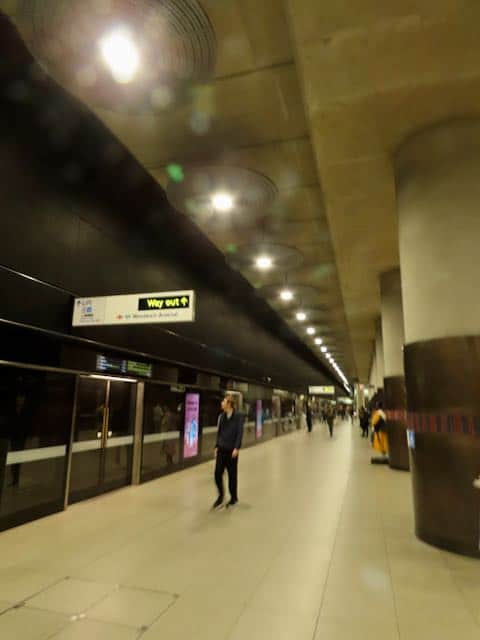
We wandered up the main public plaza (formerly the parade grounds), then found the station for the Elizabeth Line, which whisked us quickly back to the flat – where we called it a day.


Fascinating descriptions! I have fond memories of Battersea Park 🙂