
Wednesday dawned cold and very windy. We wore hats and gloves and wrapped up in Mashatu blankets on the morning drive. Talc-like dust stung the eyes and coated everything, as you can see from the binocs on my blanket-covered lap.

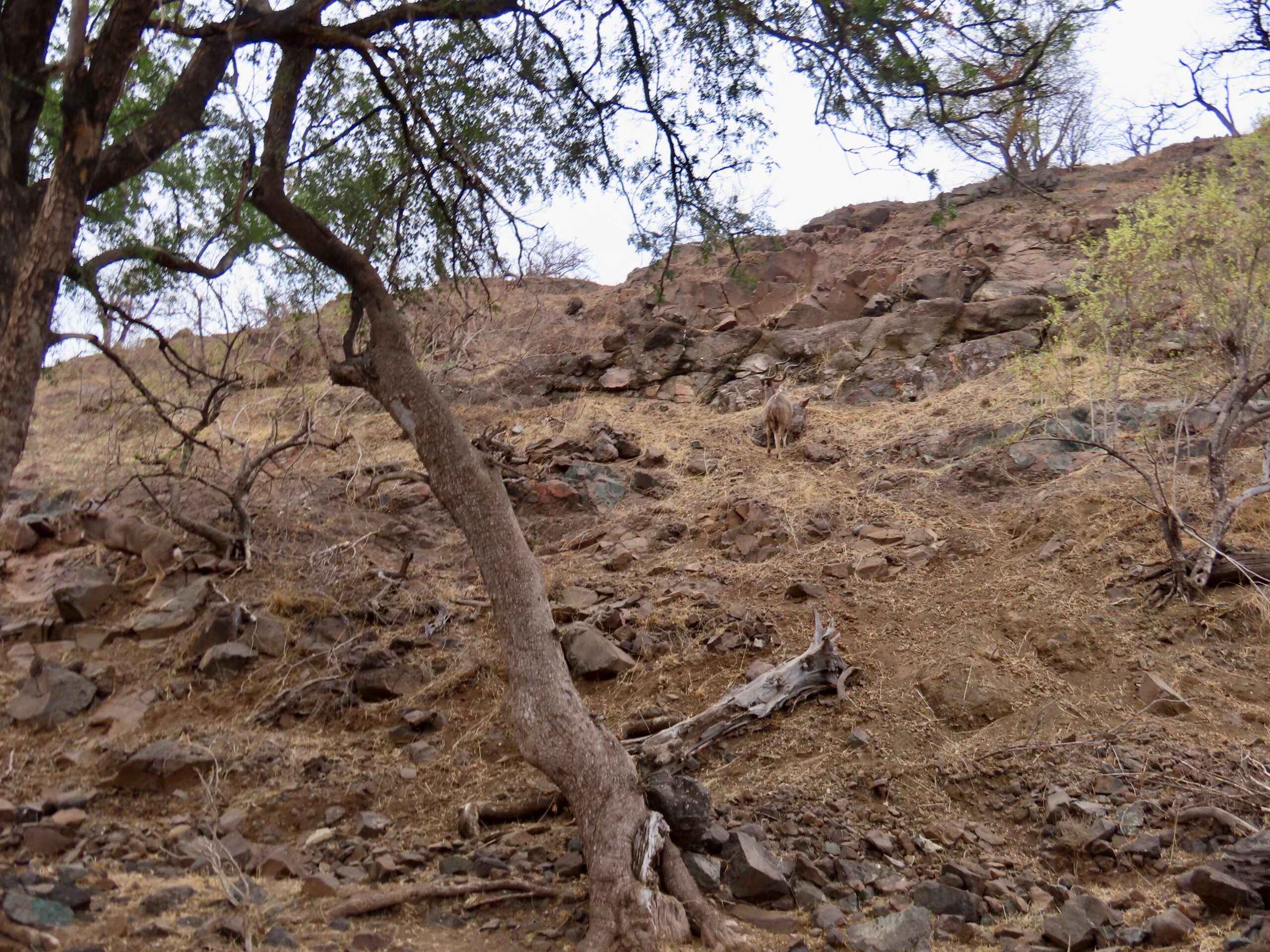
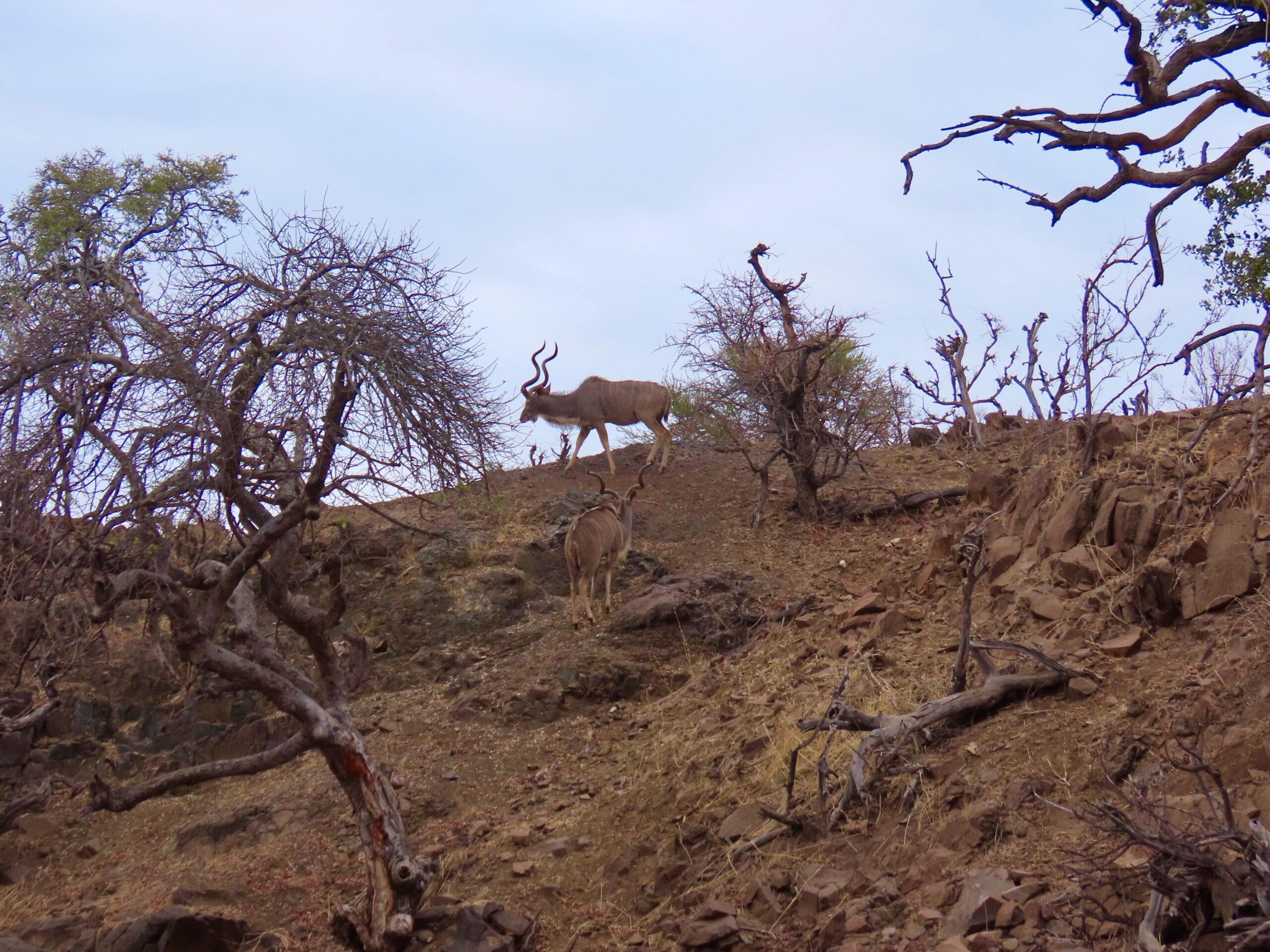
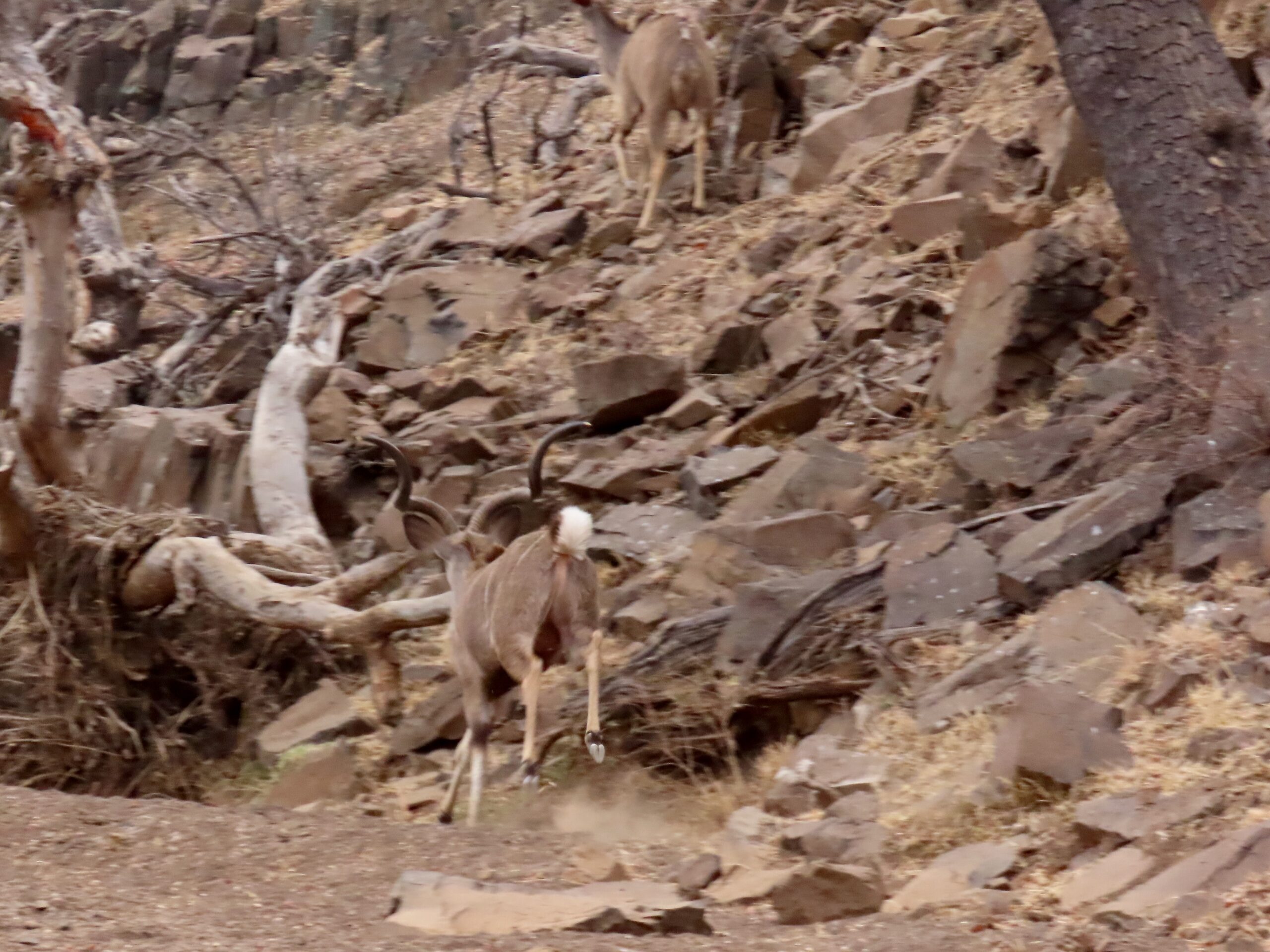
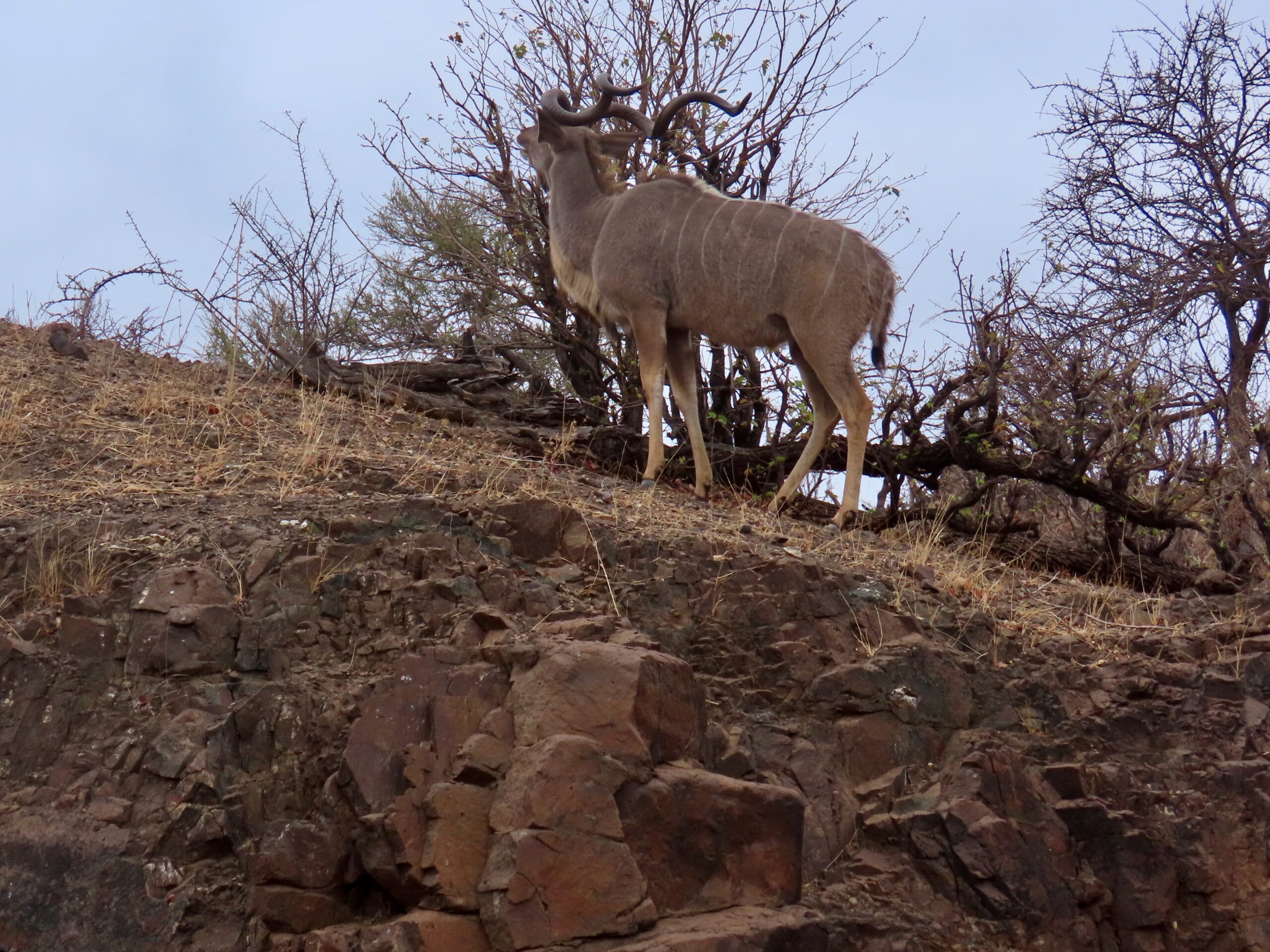
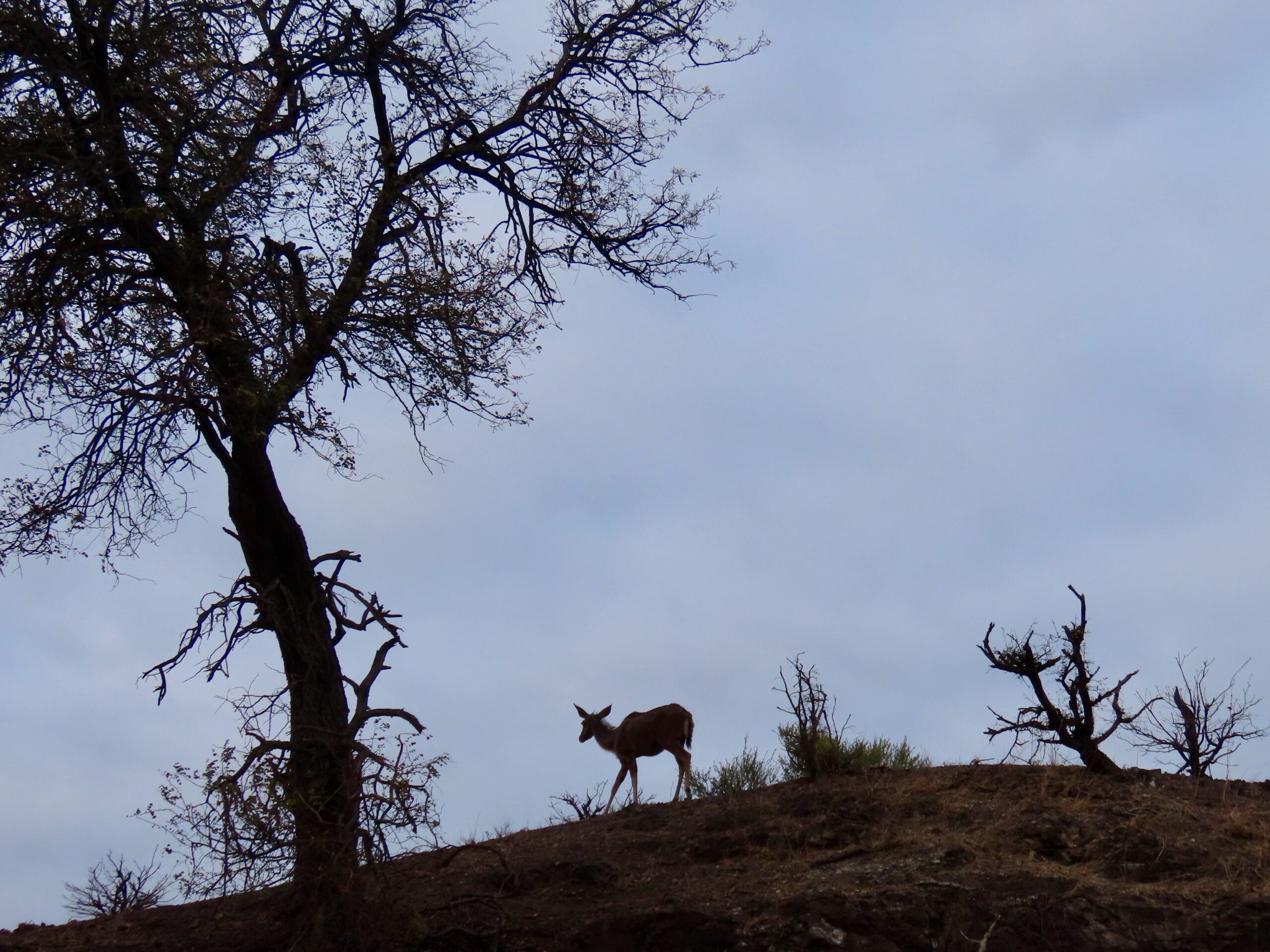
Animals were mostly hunkered down in shrubs or under cover to escape the wind. We drove down one of the dry riverbeds and came across a group of six Kudu hopping around on a steep cliff like mountain goats. I had no idea an antelope this large could be so agile.

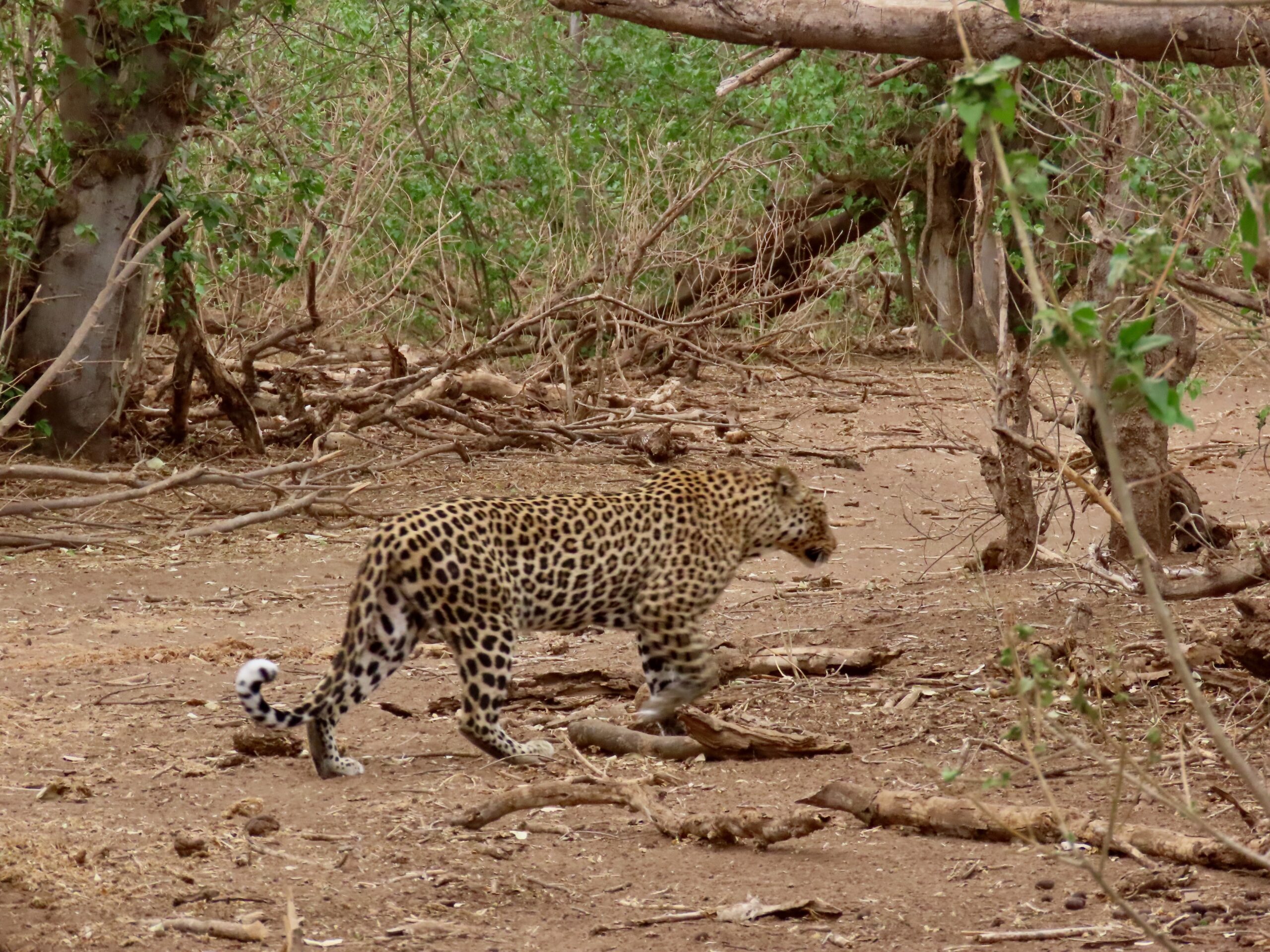
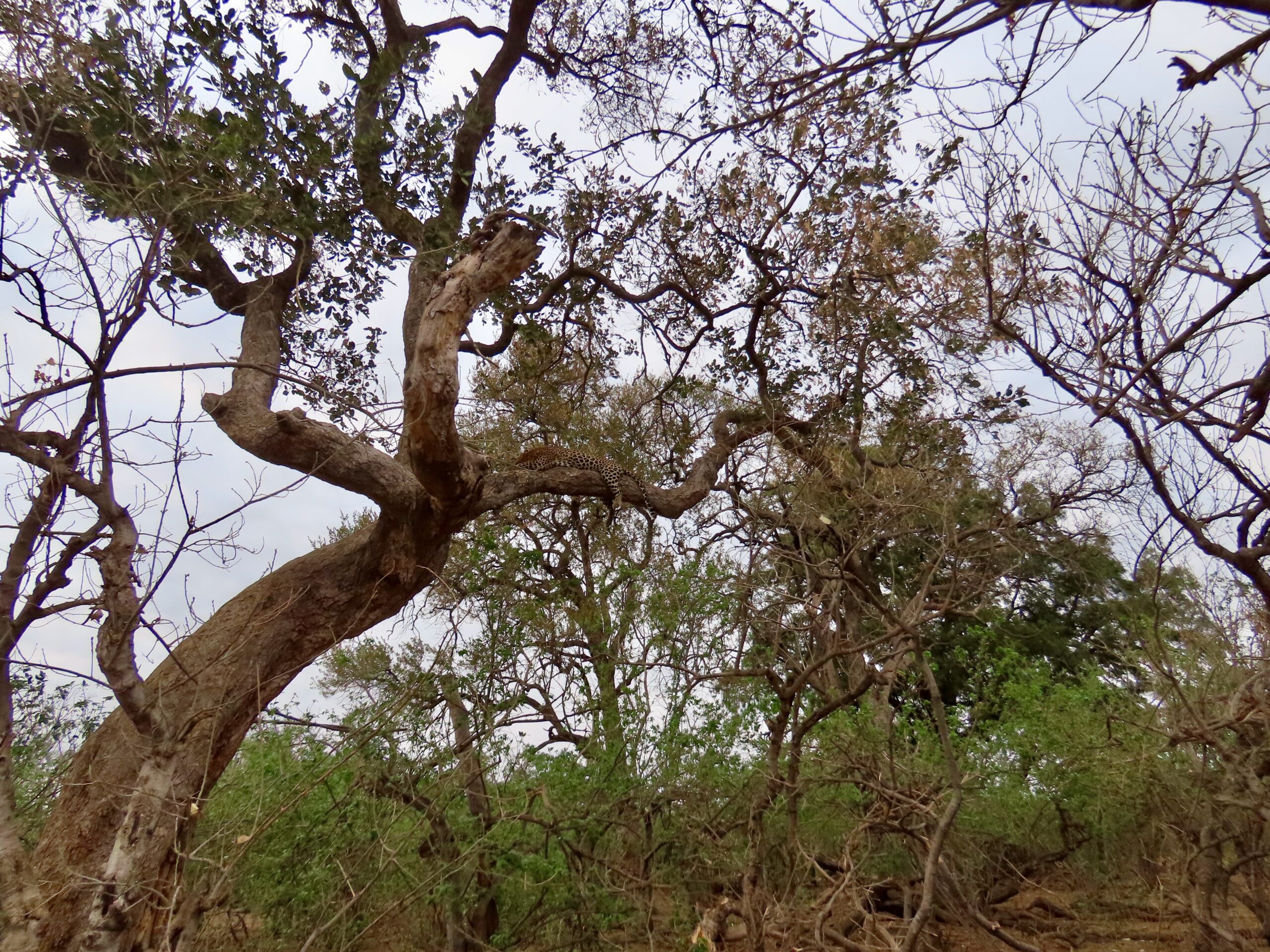
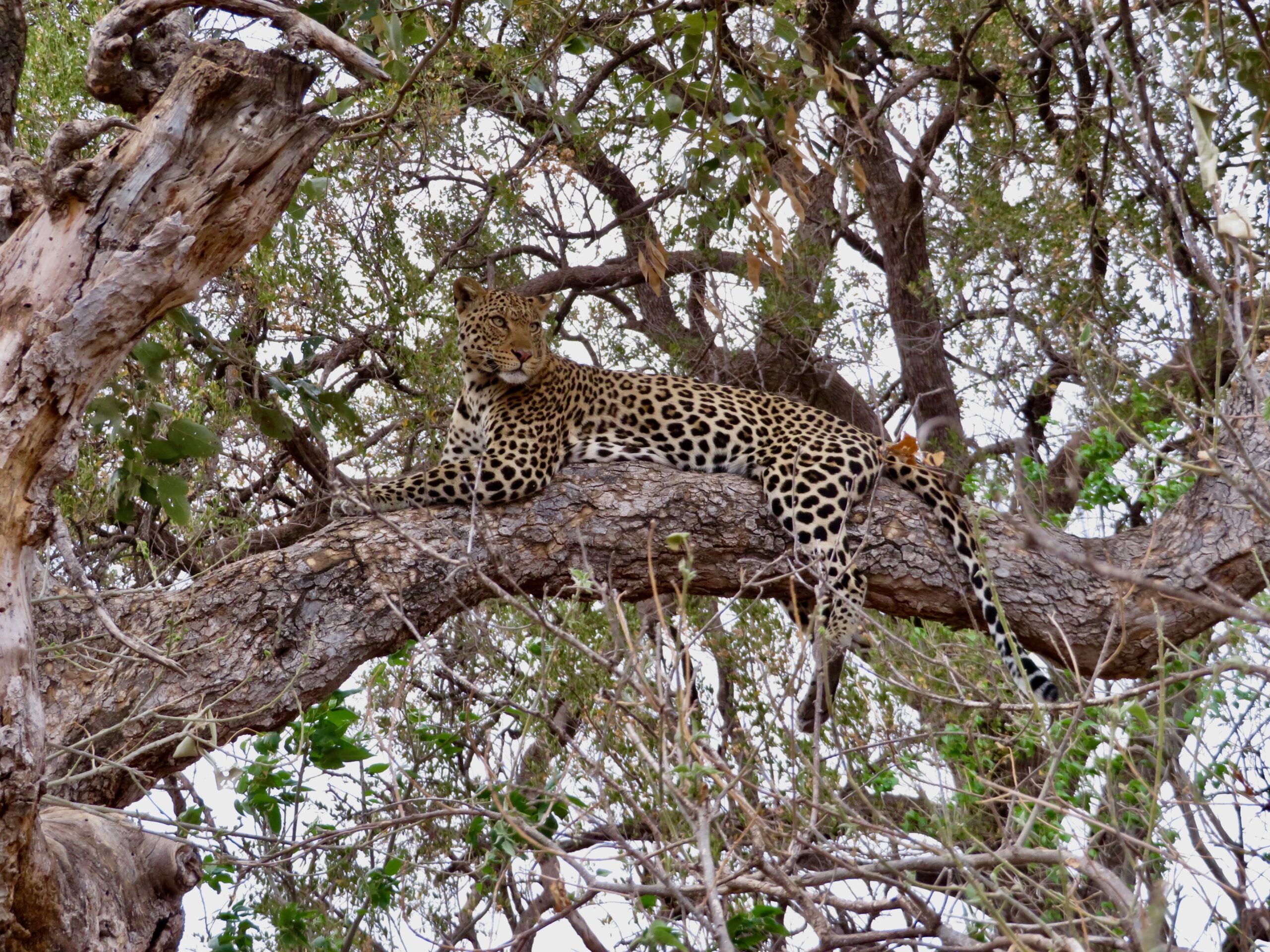
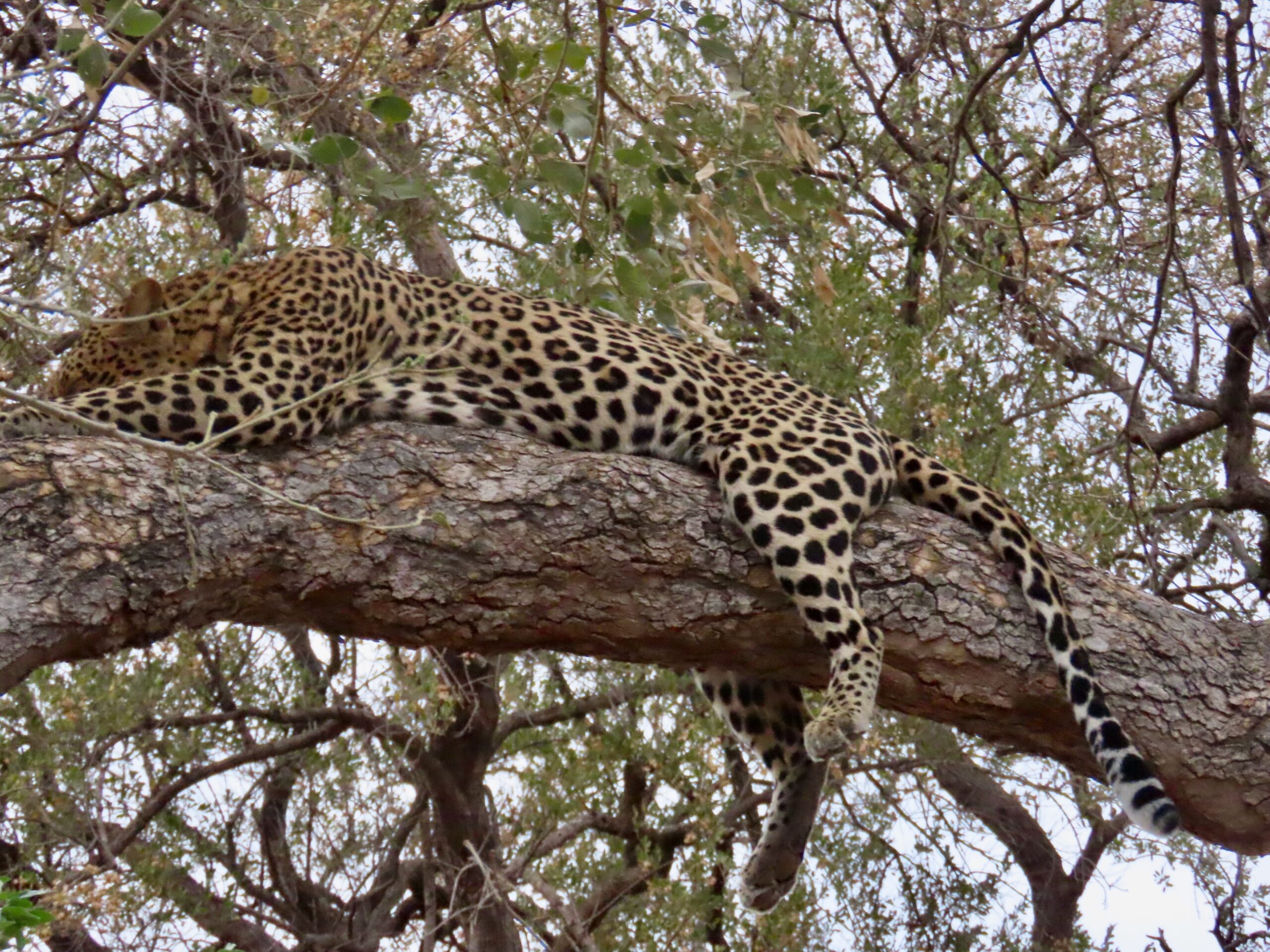
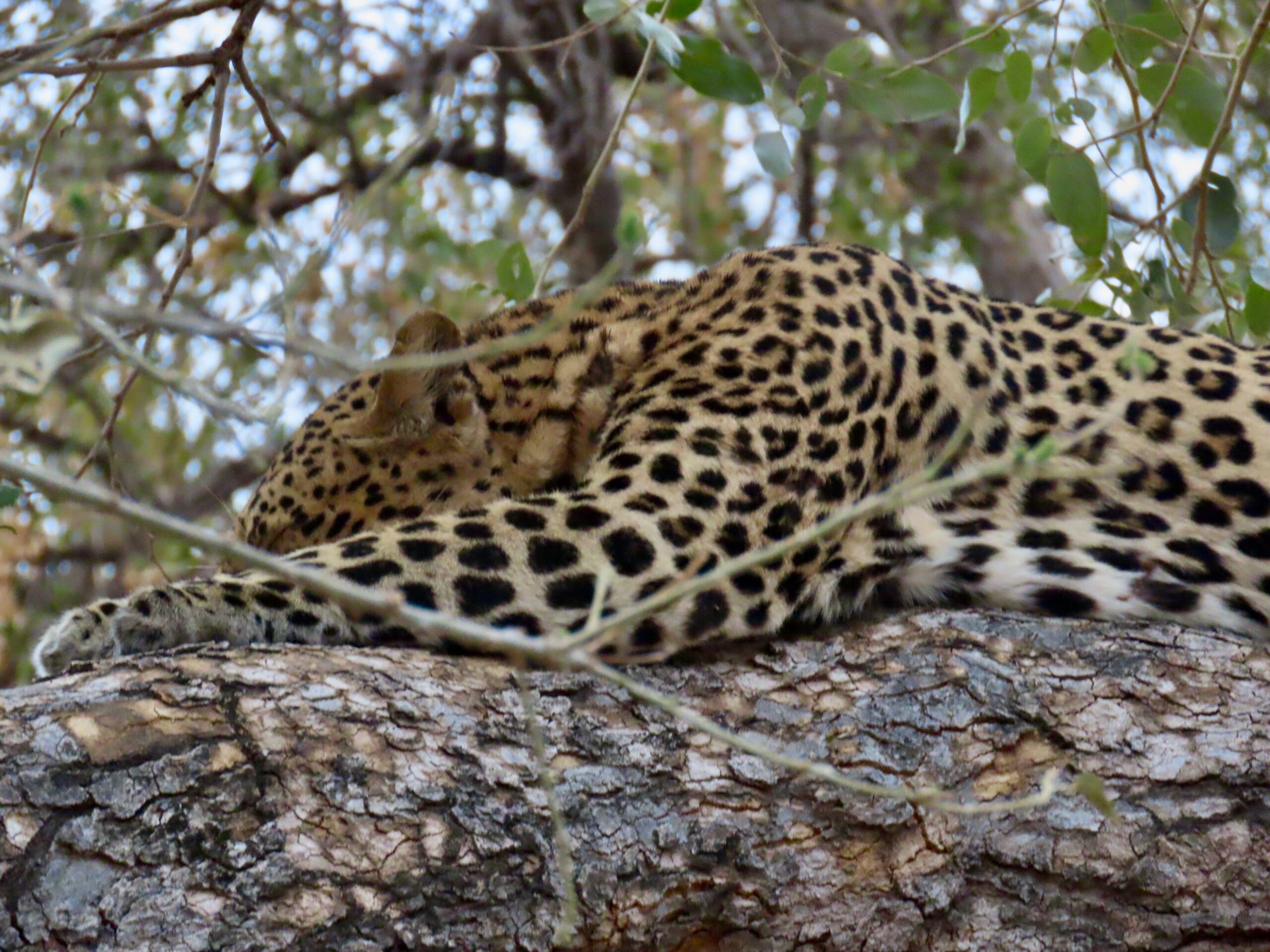
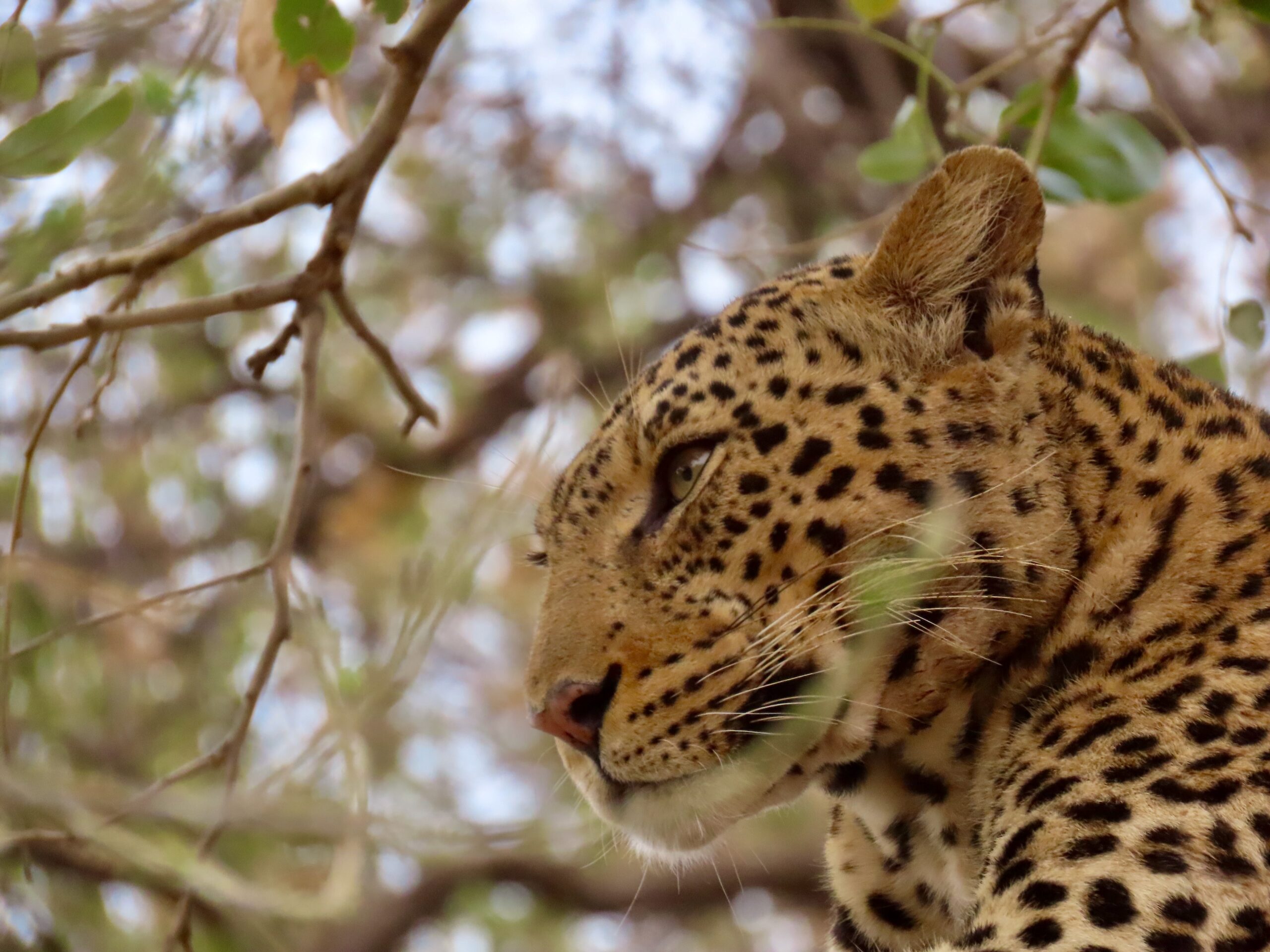
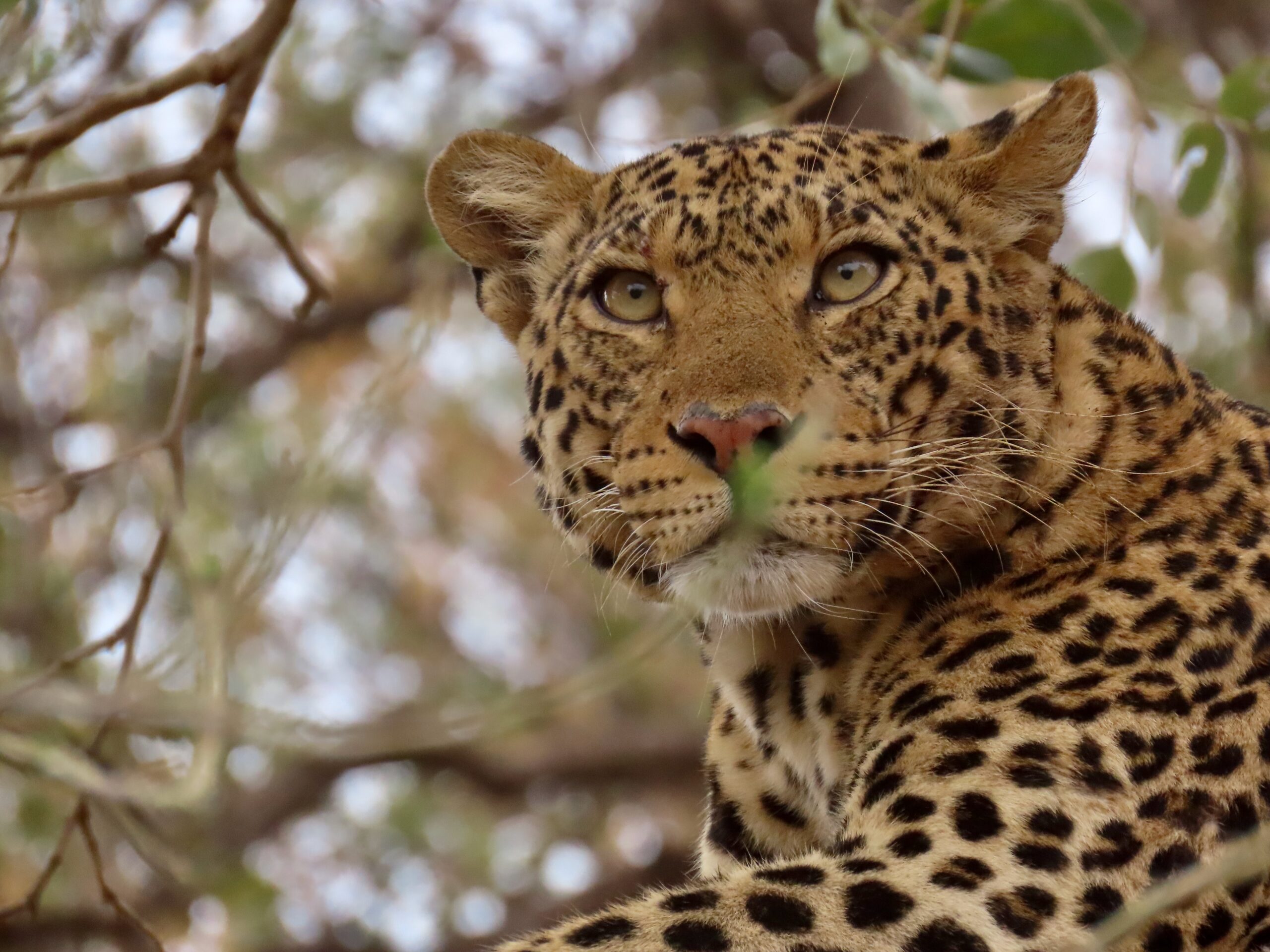
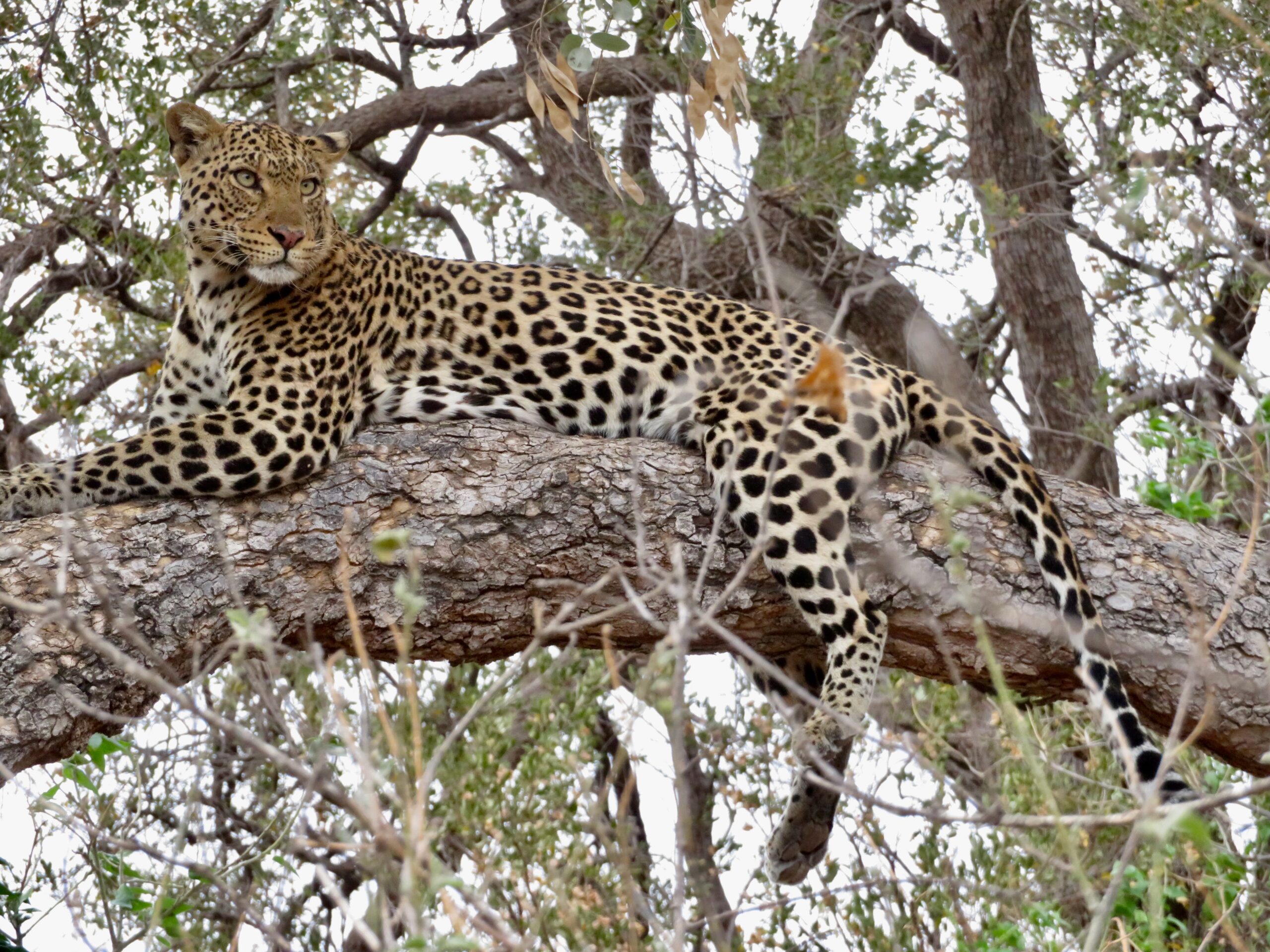
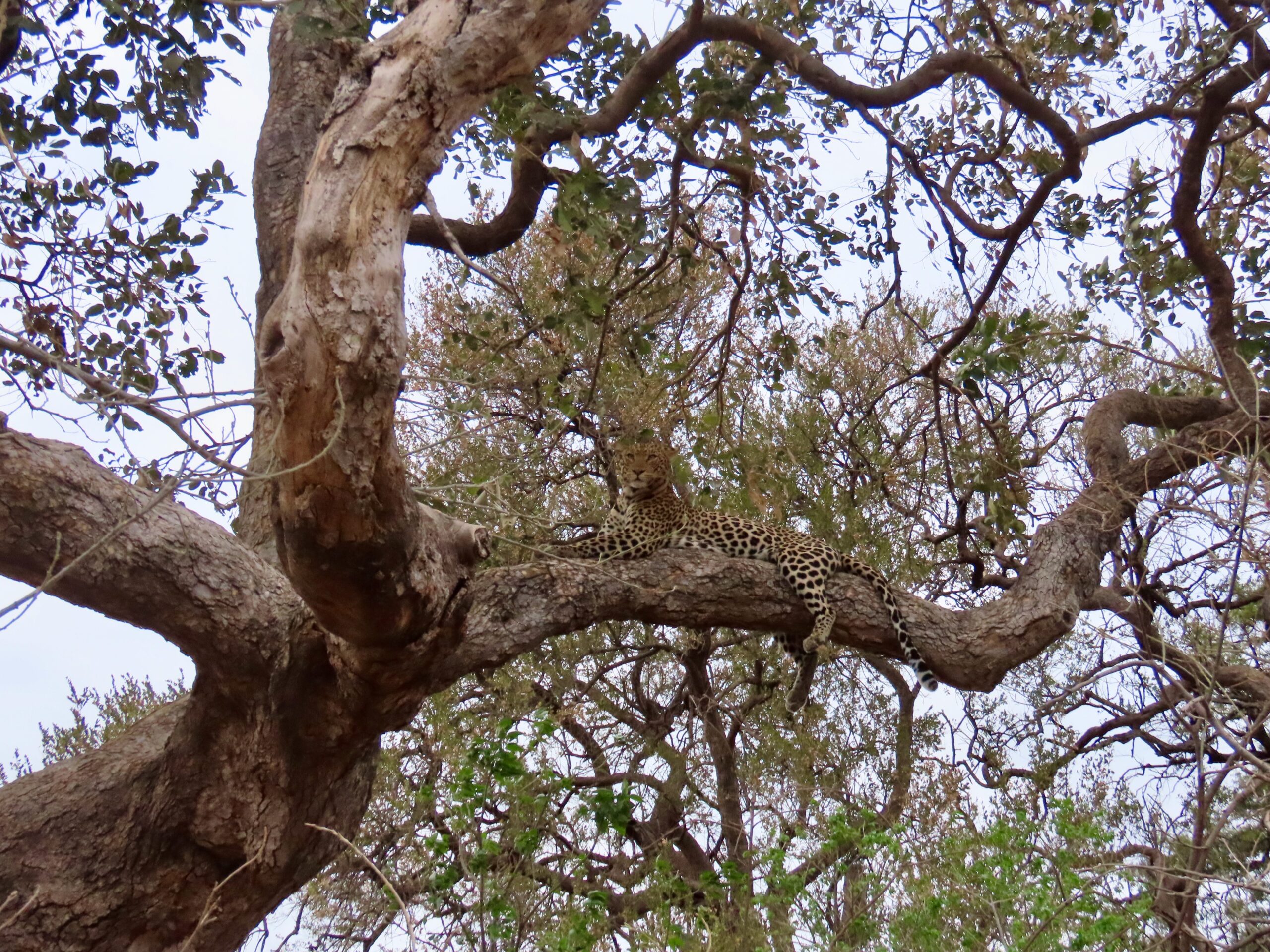
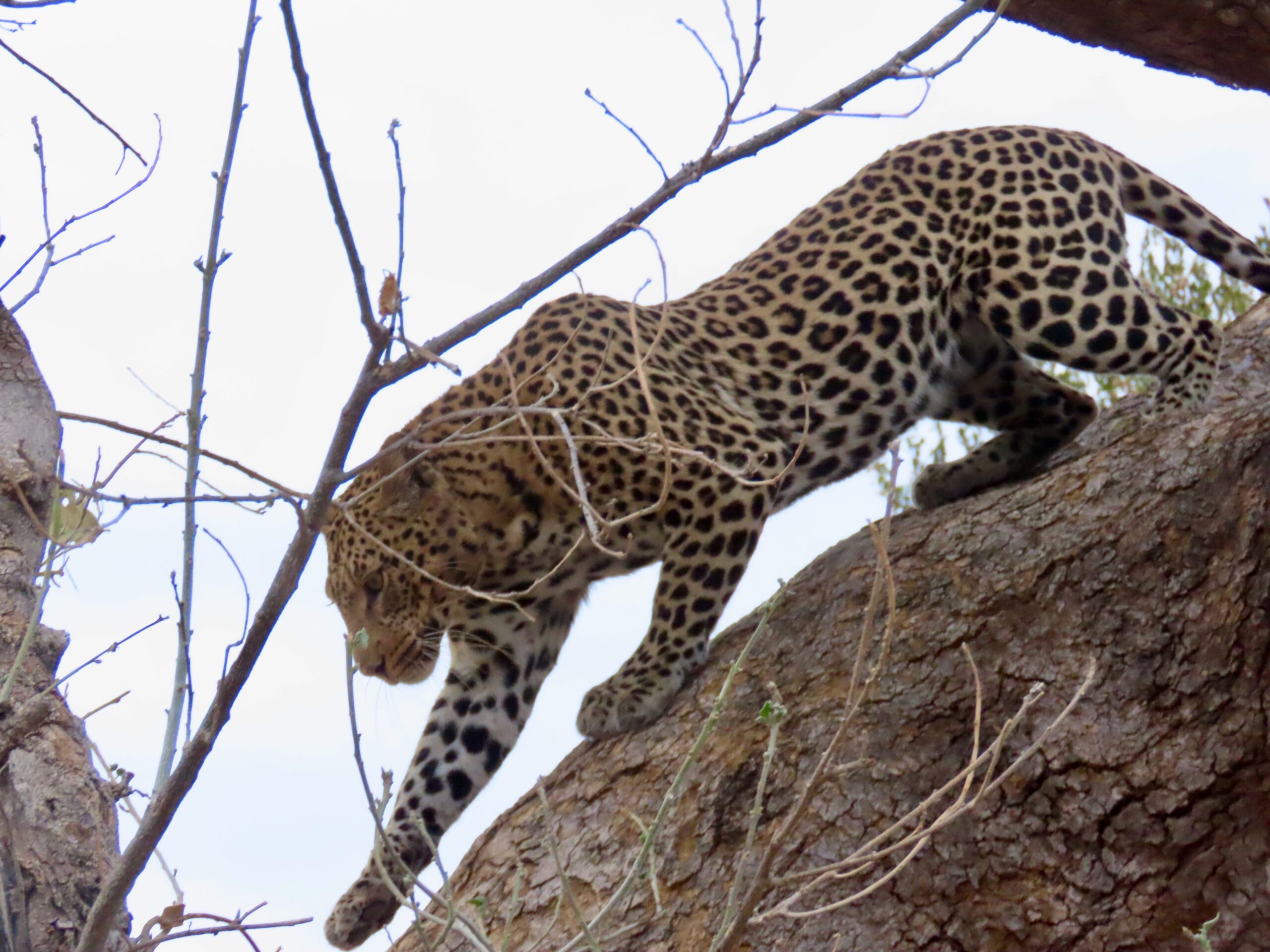
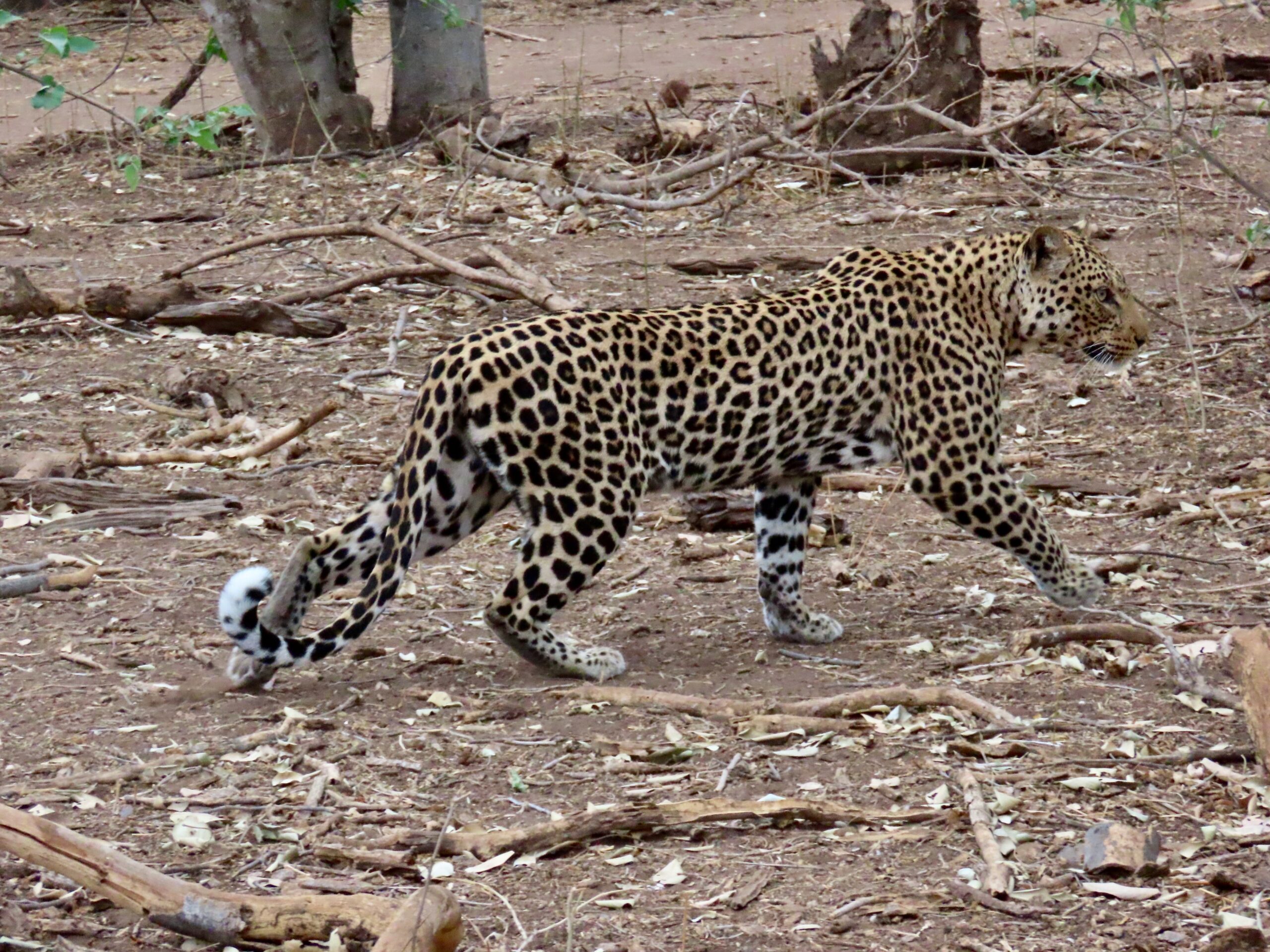
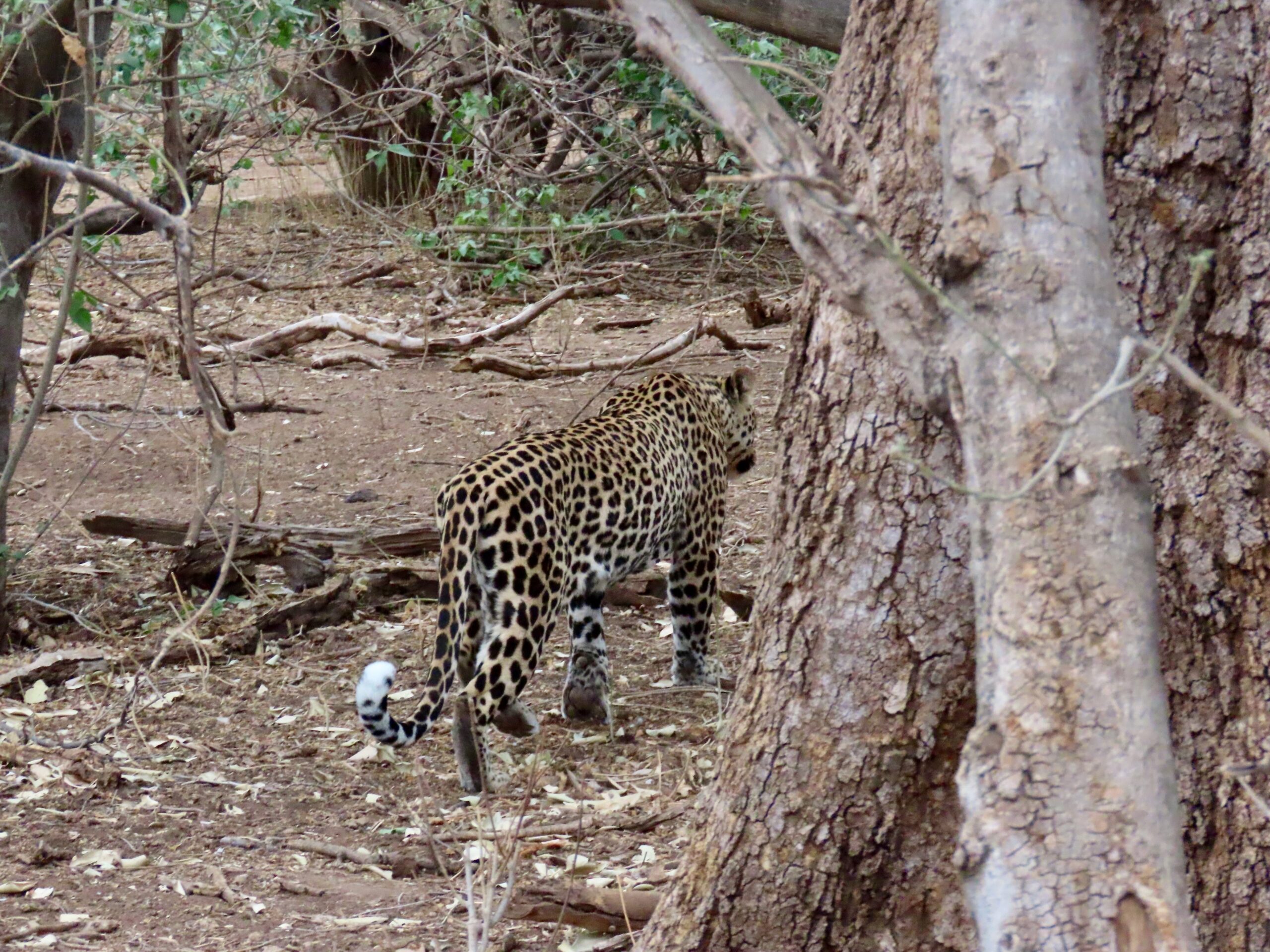
A five-six year old female leopard materialized beside us as we drove through the Fevertree bushes. We followed to see her flow up a tree (I swear they don’t climb, just flow) and perch an a branch, watching for Impala, then flow back down and move on to another spot. She’s a daughter of the older female we’ve seen a couple of times before (most recently on the riverbank on Monday). Dan said that Mom is tolerating this girl in her territory for now, although that will likely change when cubs come into the picture.













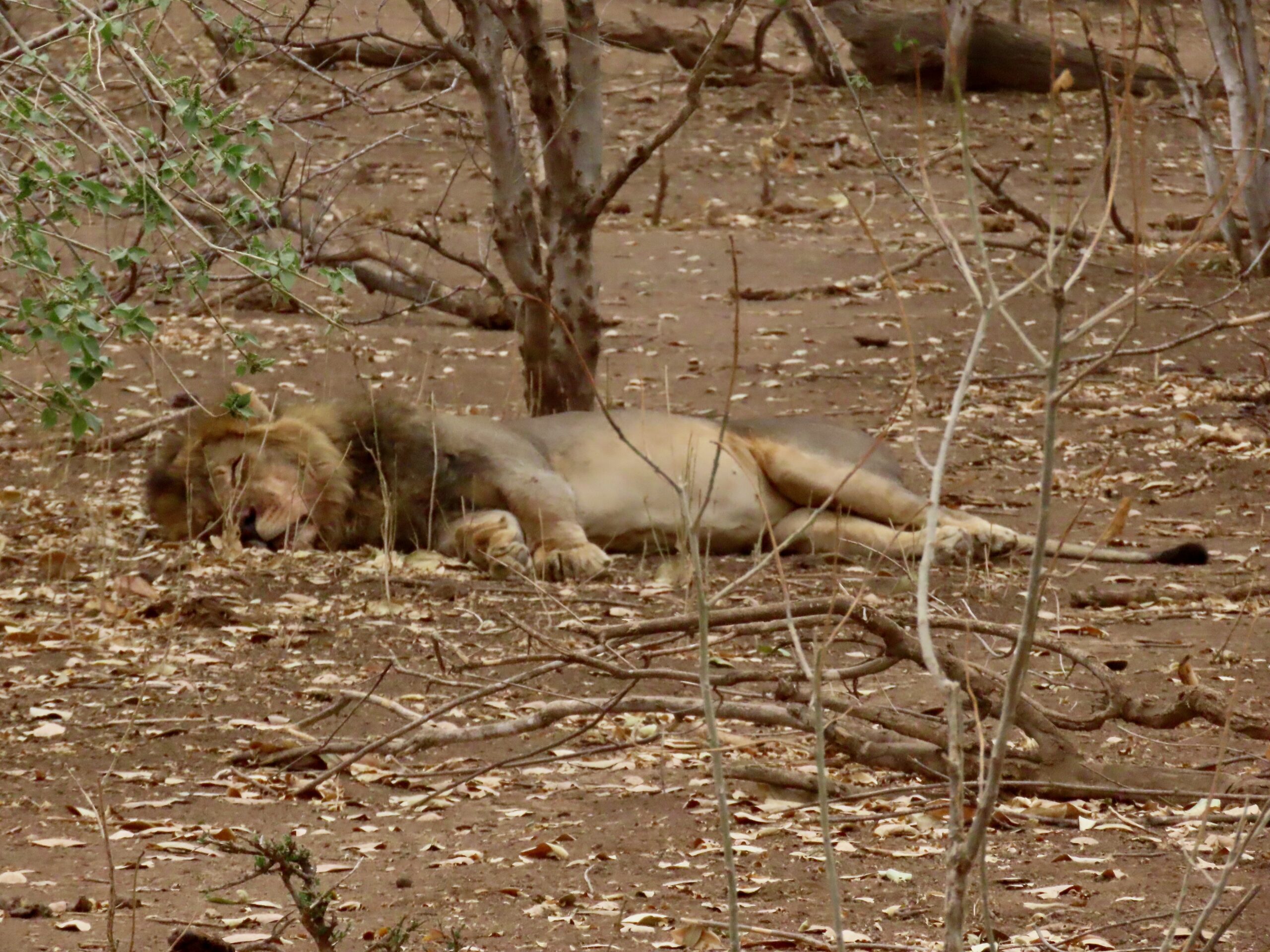
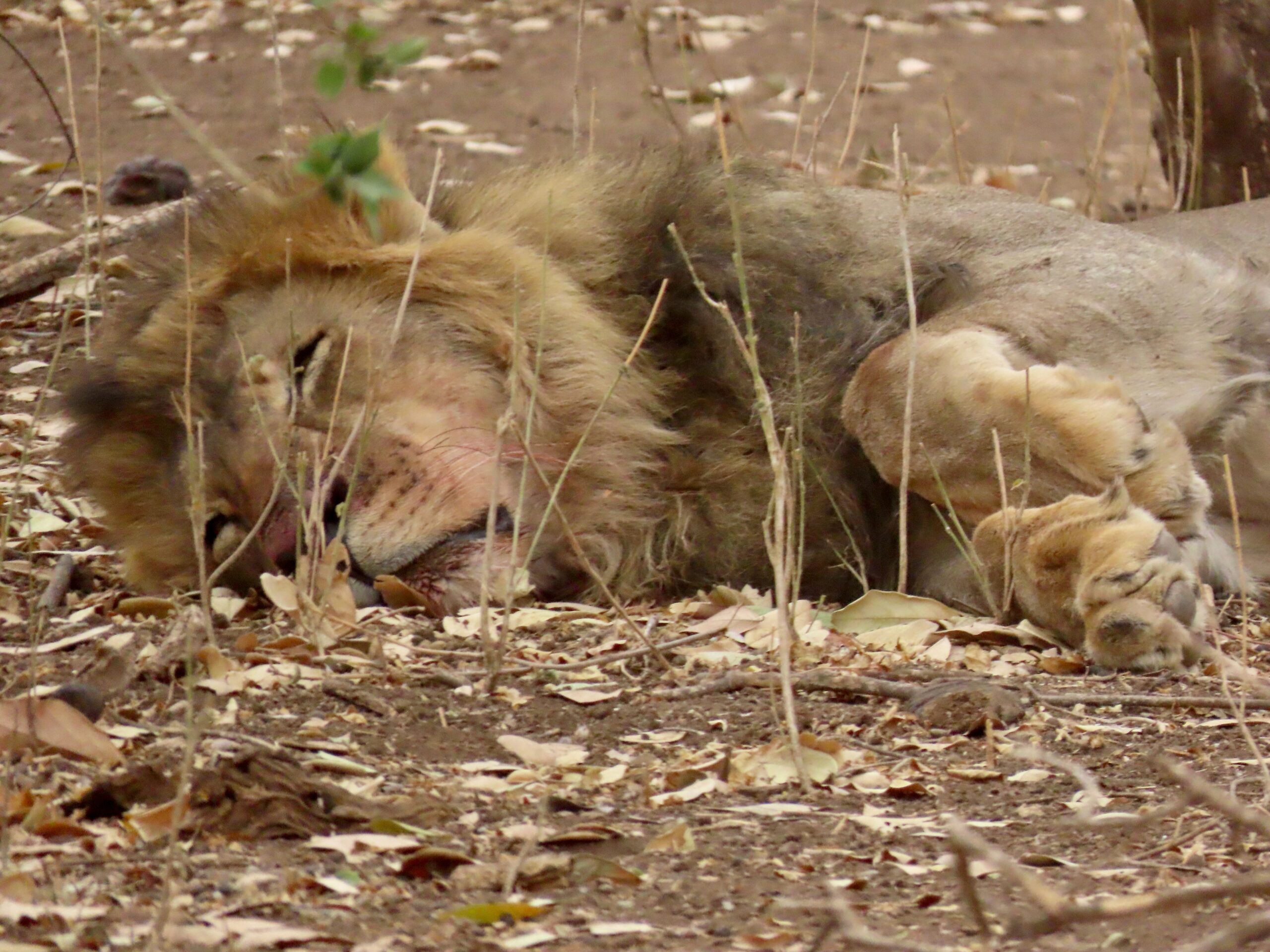
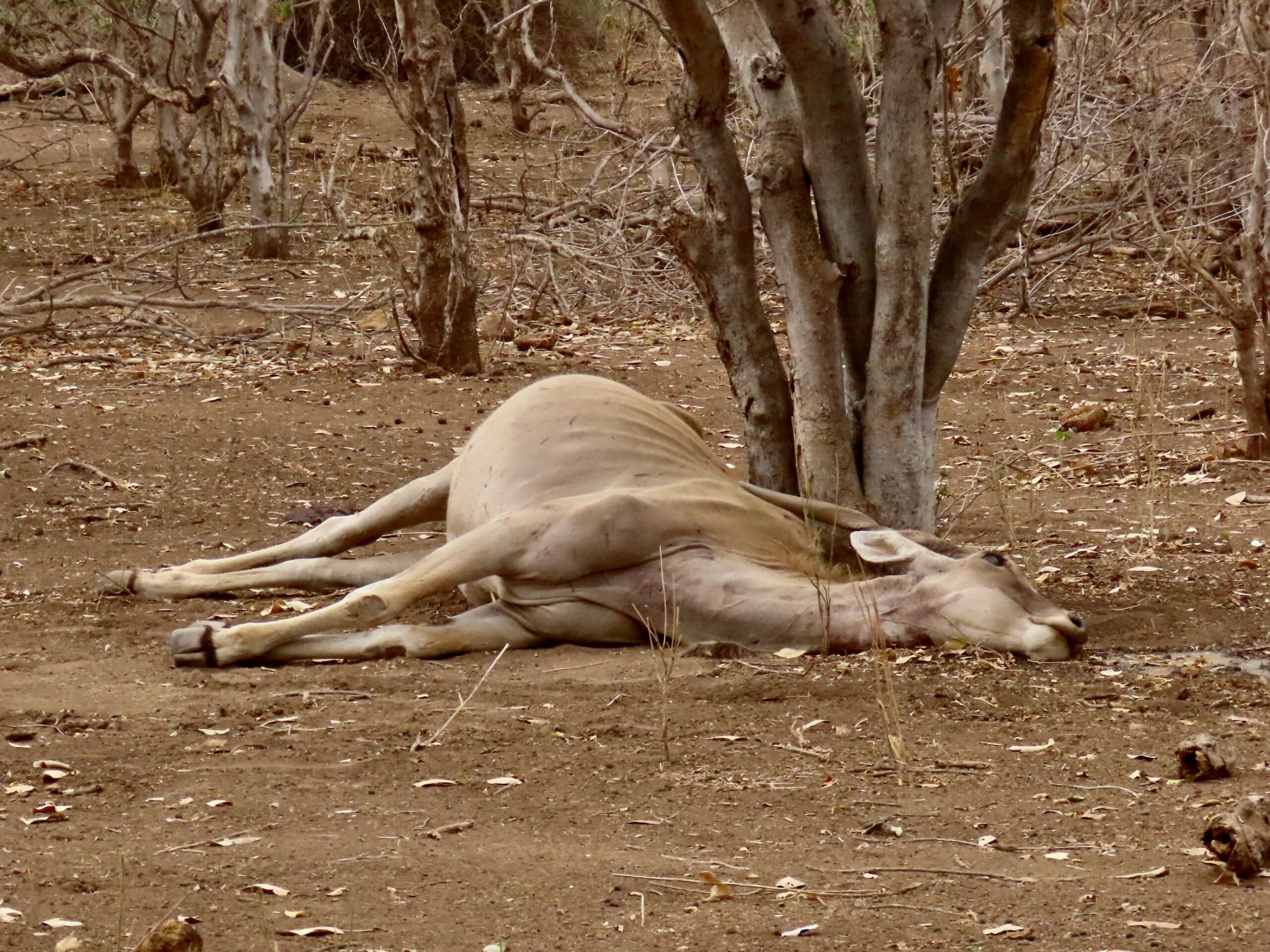
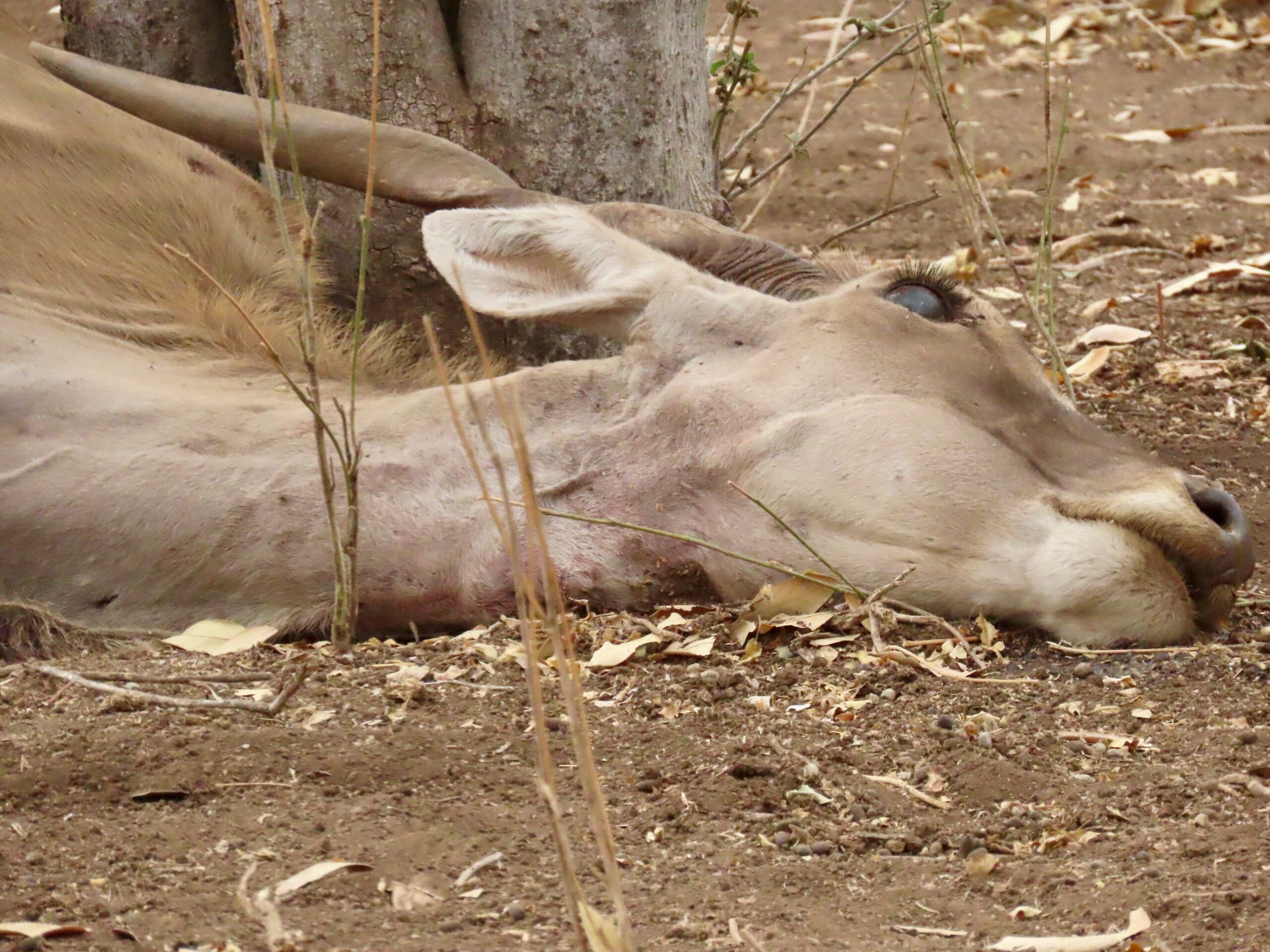
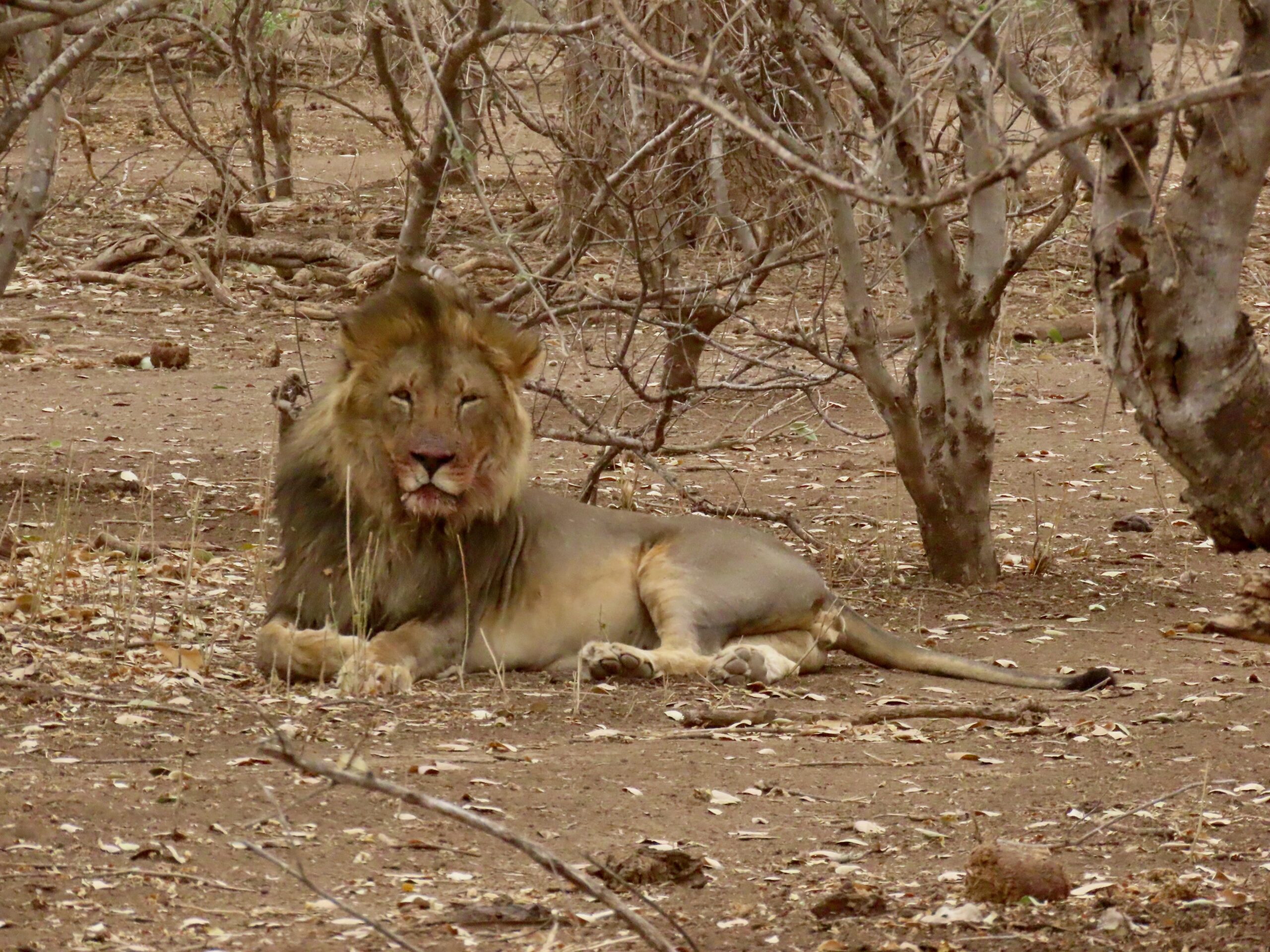
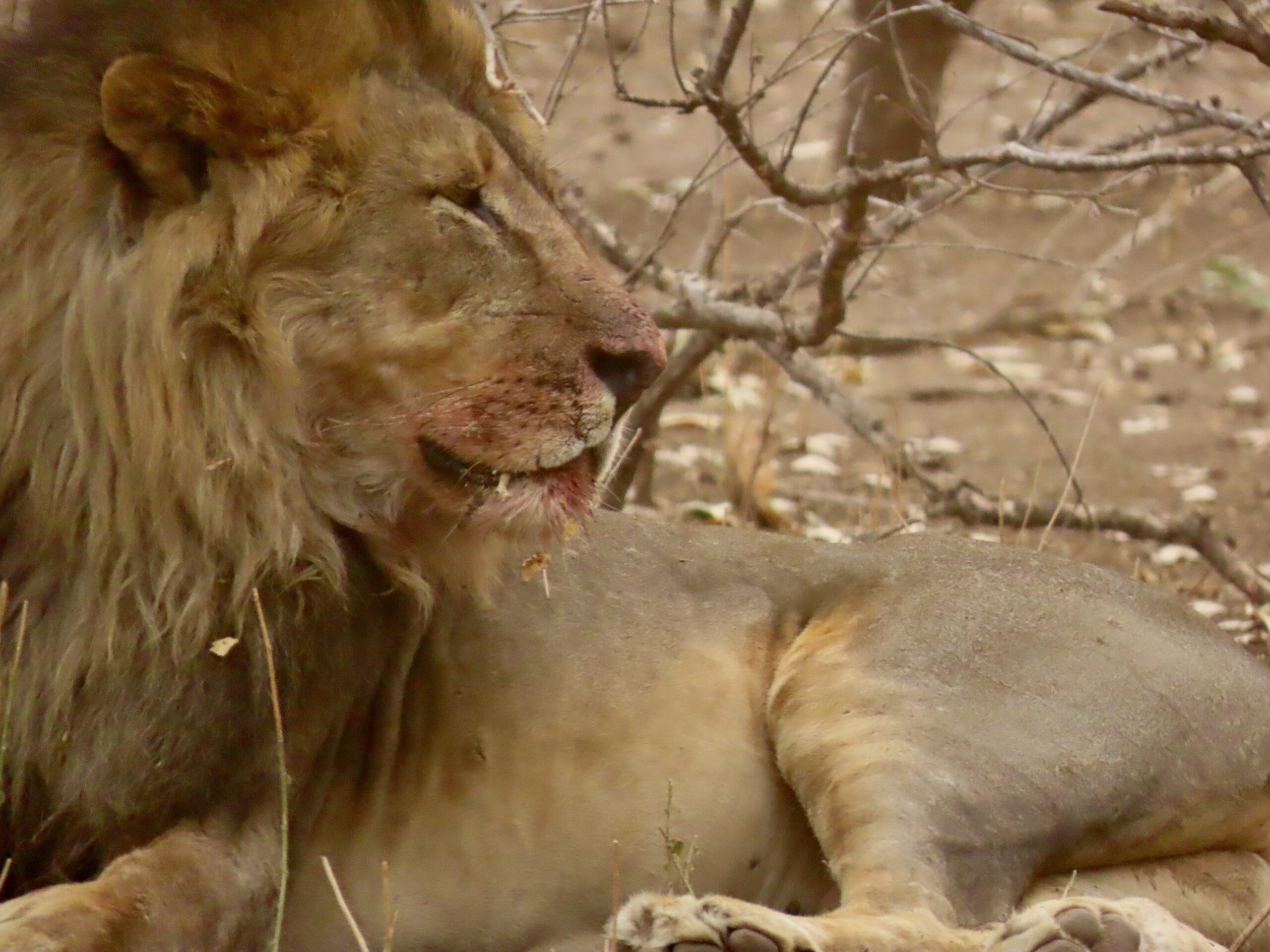
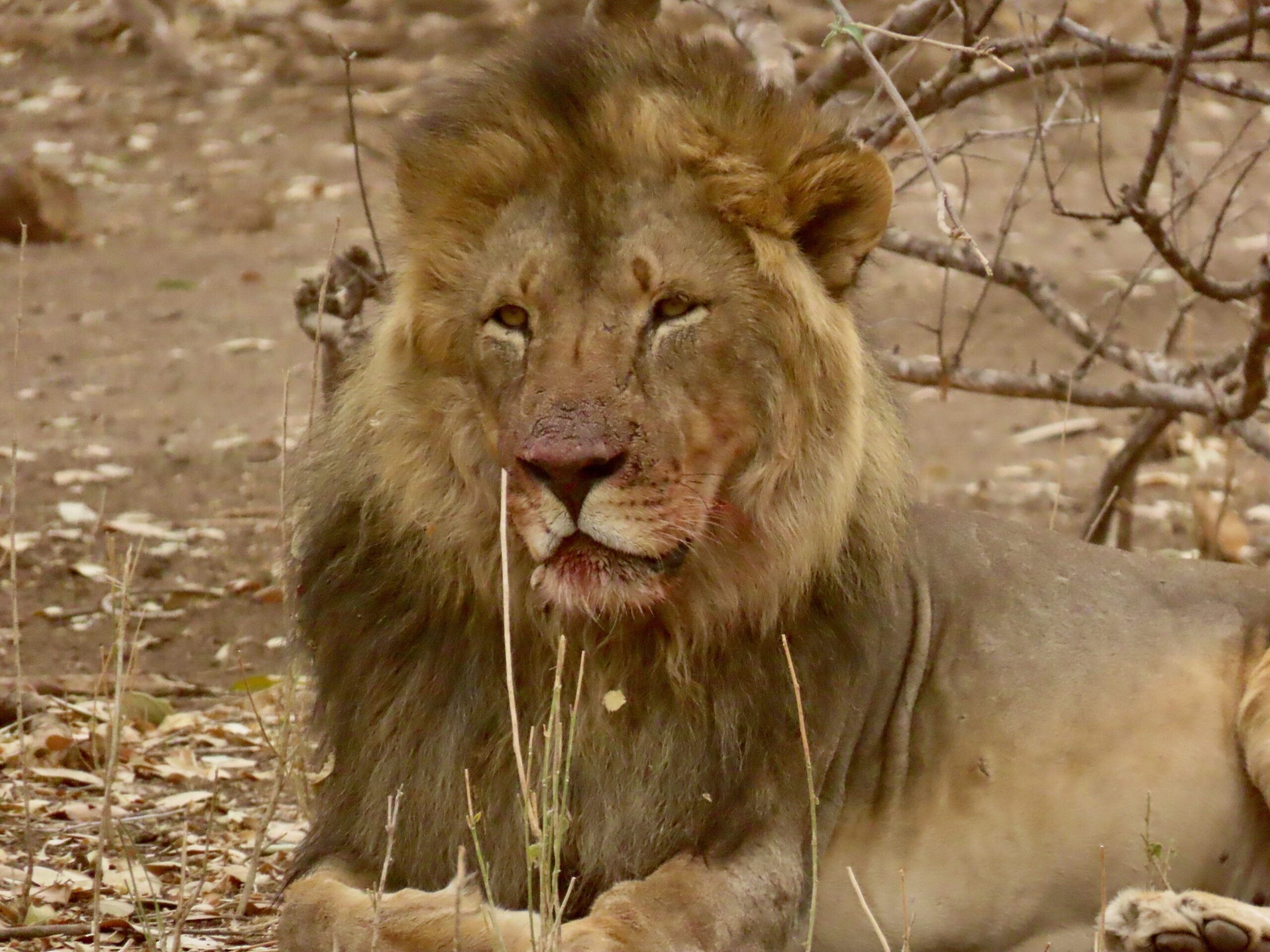
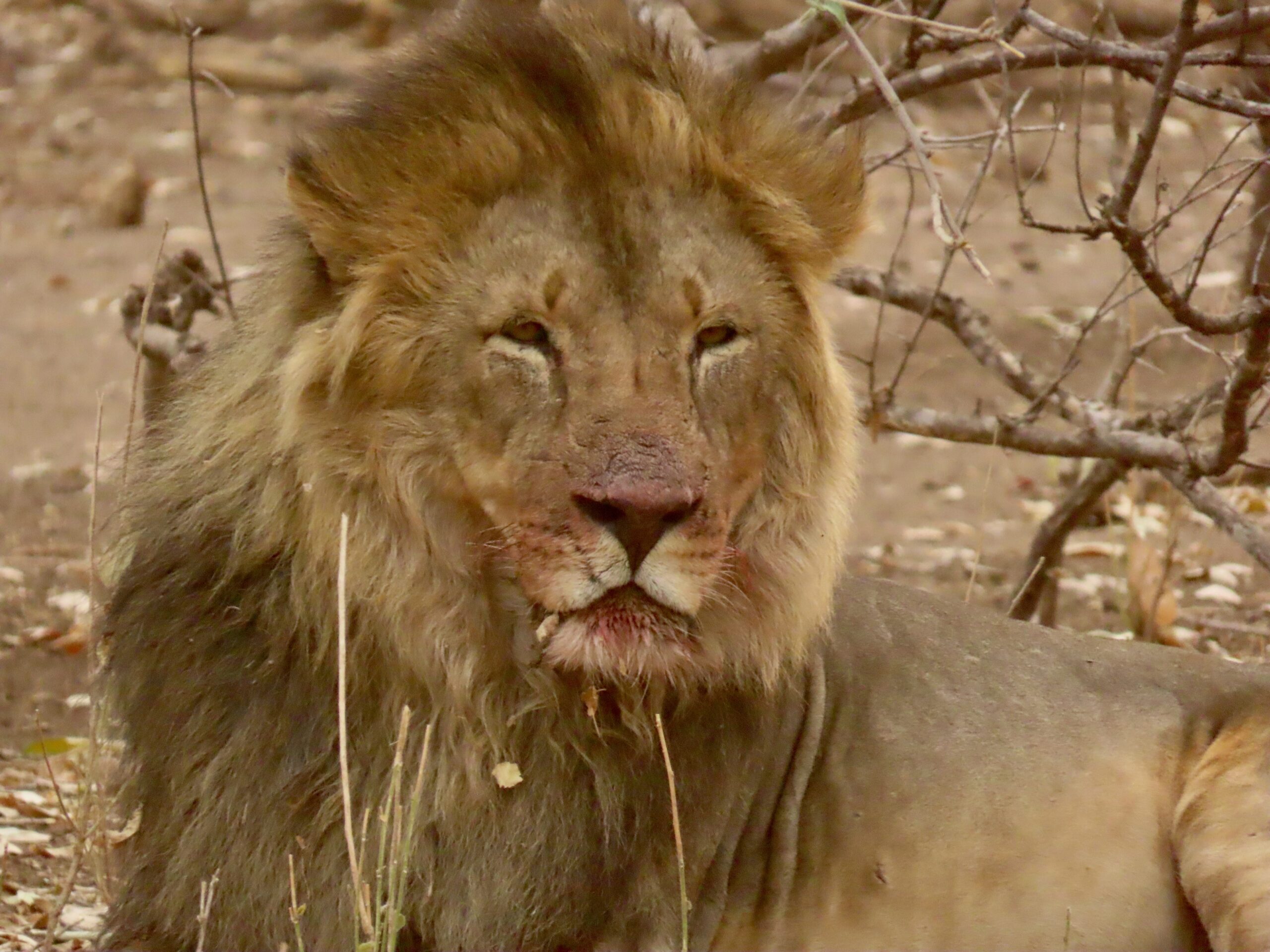
A bit further along we came across a male lion lounging in the bushes a few yards away from the carcass of an Eland he had recently killed. He is one of the Big Boys in a coalition of four who had taken over three prides in the area, including the ones we had seen earlier in the week. Like a forensic detective, Dan reconstructed the morning’s events from tracks in the dust. The lion came across the Eland as she was sleeping under a bush. She tried to escape, but he jumped on her back, dragged her down and suffocated her by gripping her neck. Having snacked on her innards, he was now taking a break from eating while guarding his kill.







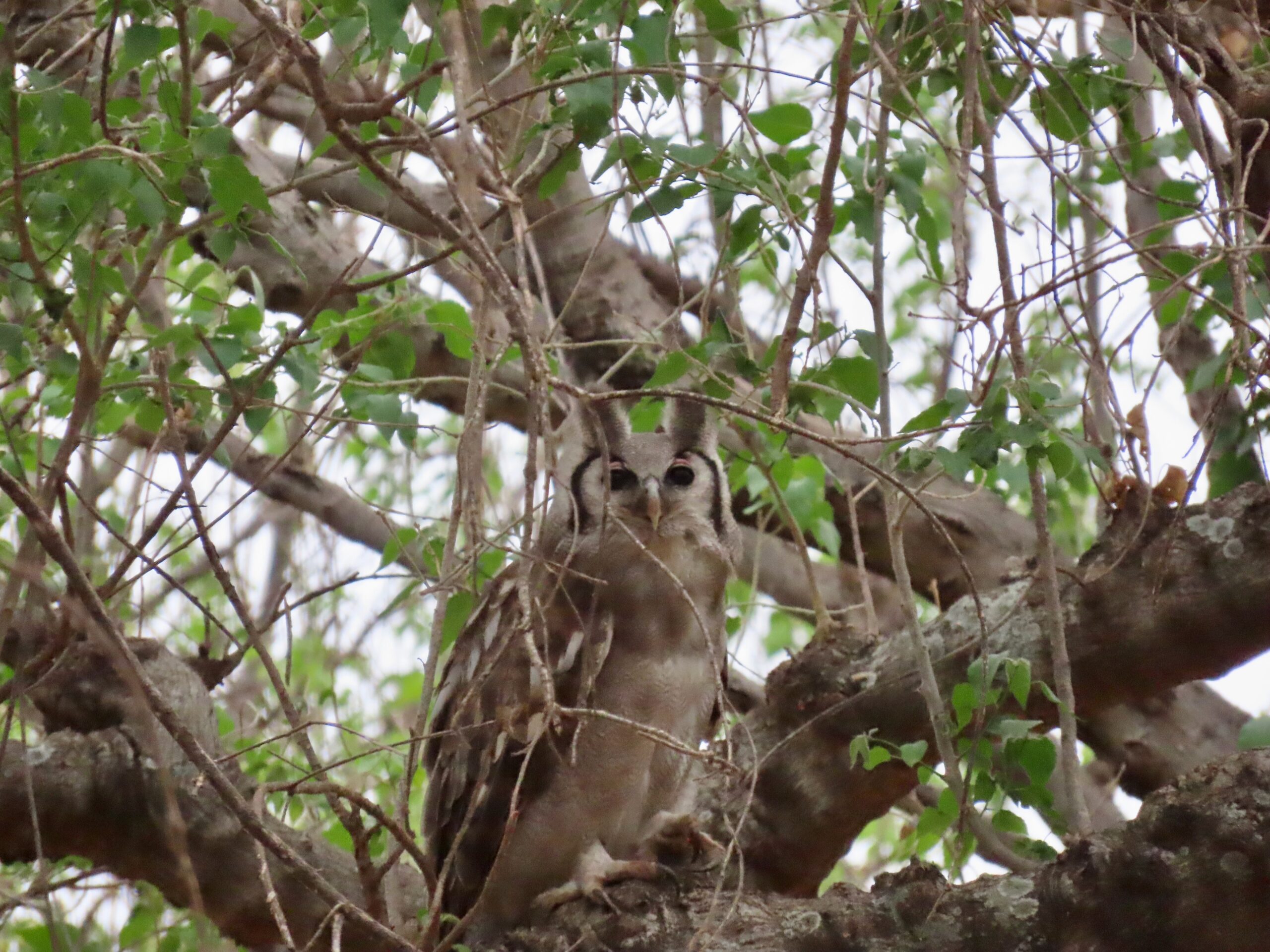
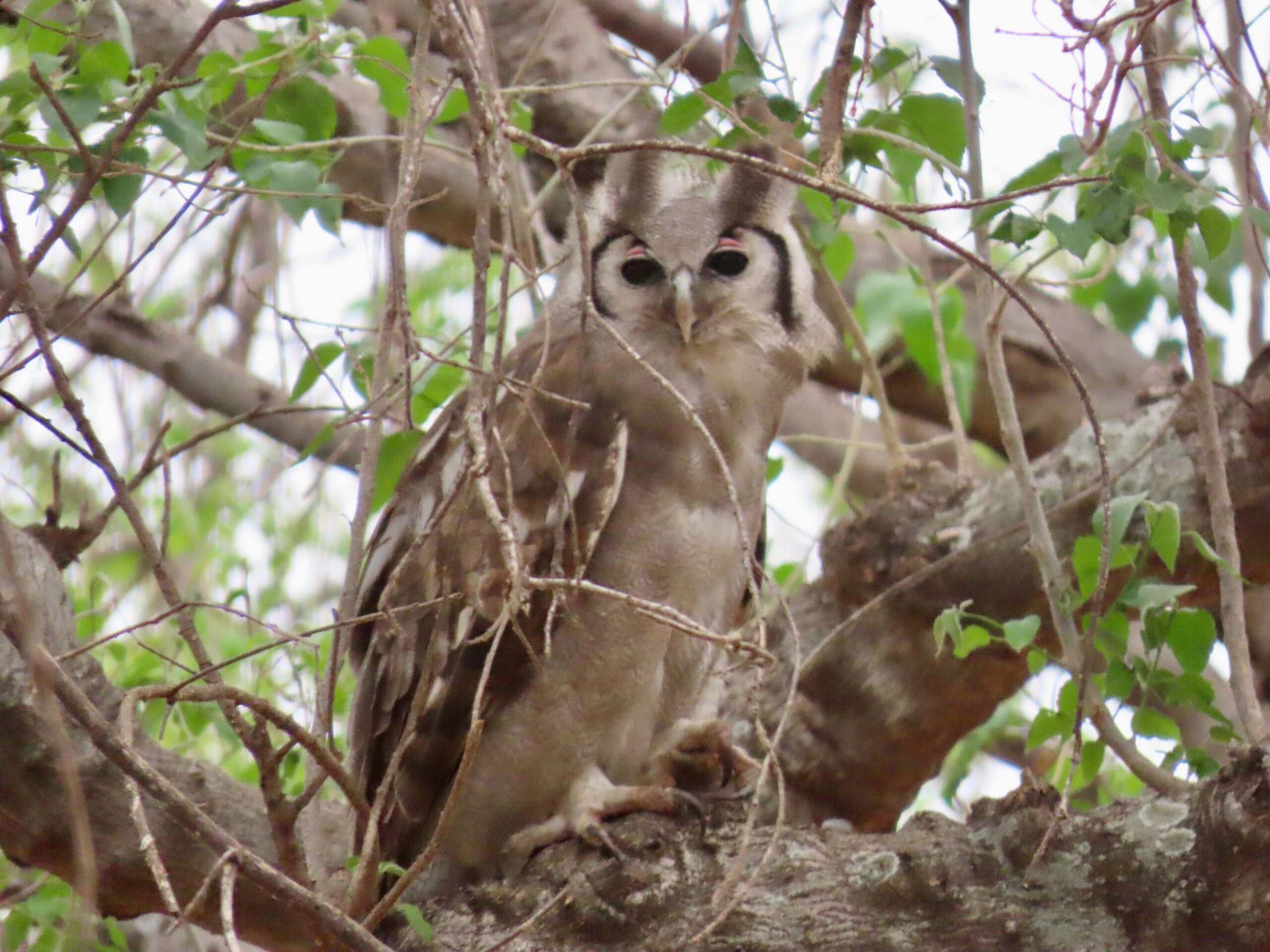
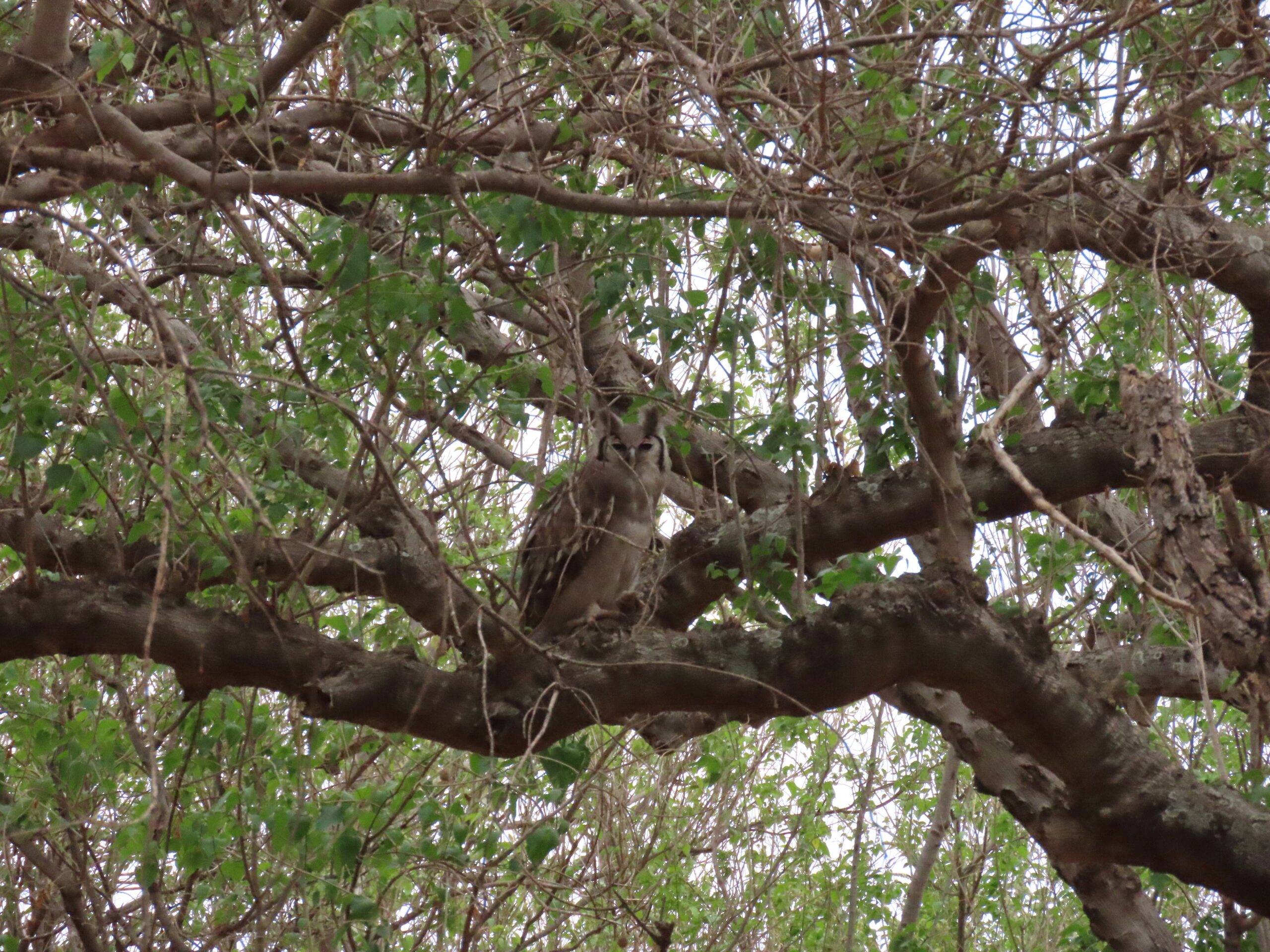
We drove on through the Feverberries and spotted a Verreaux’s Eagle Owl before parking under a Mashatu tree for morning coffee.


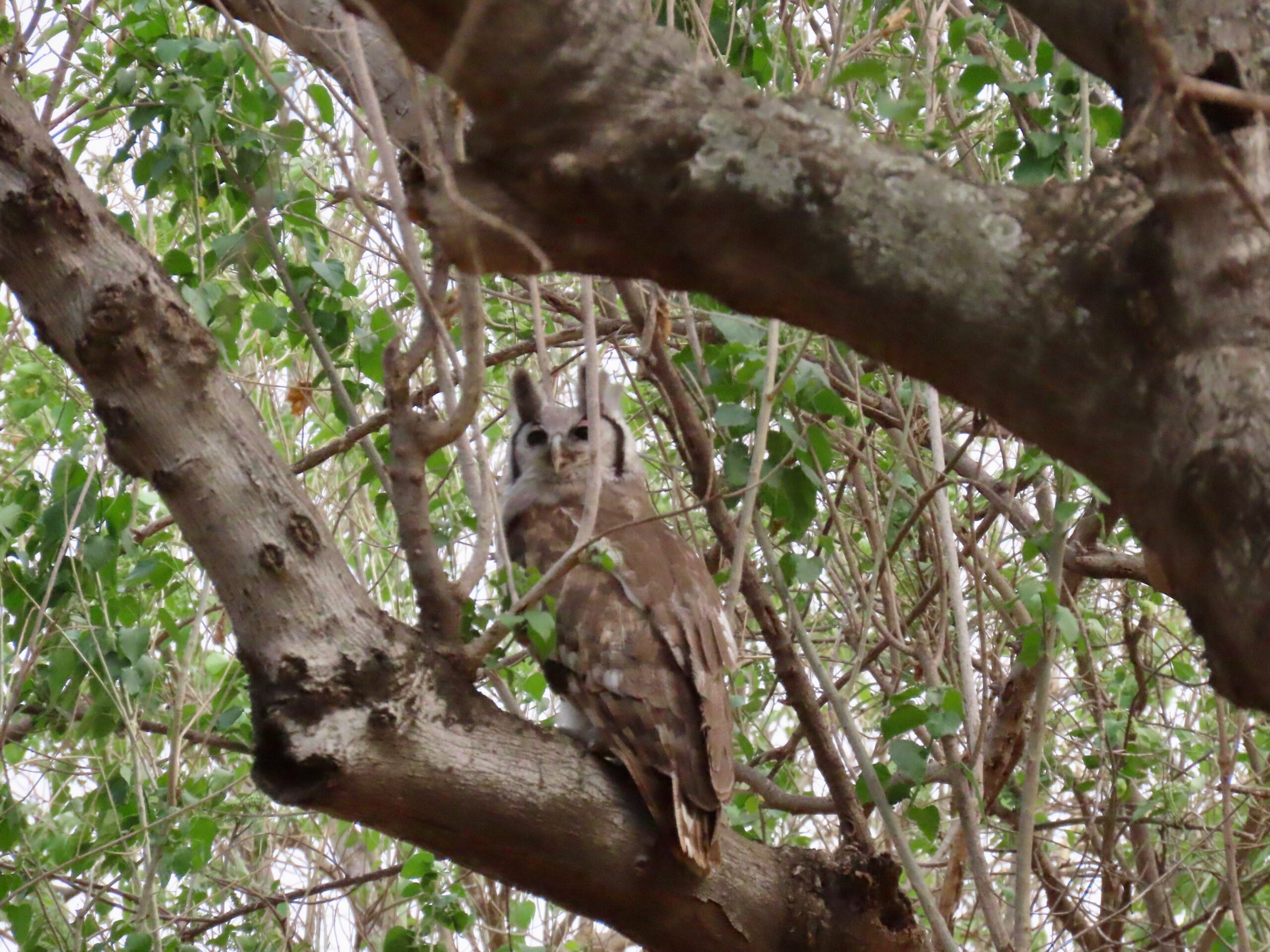
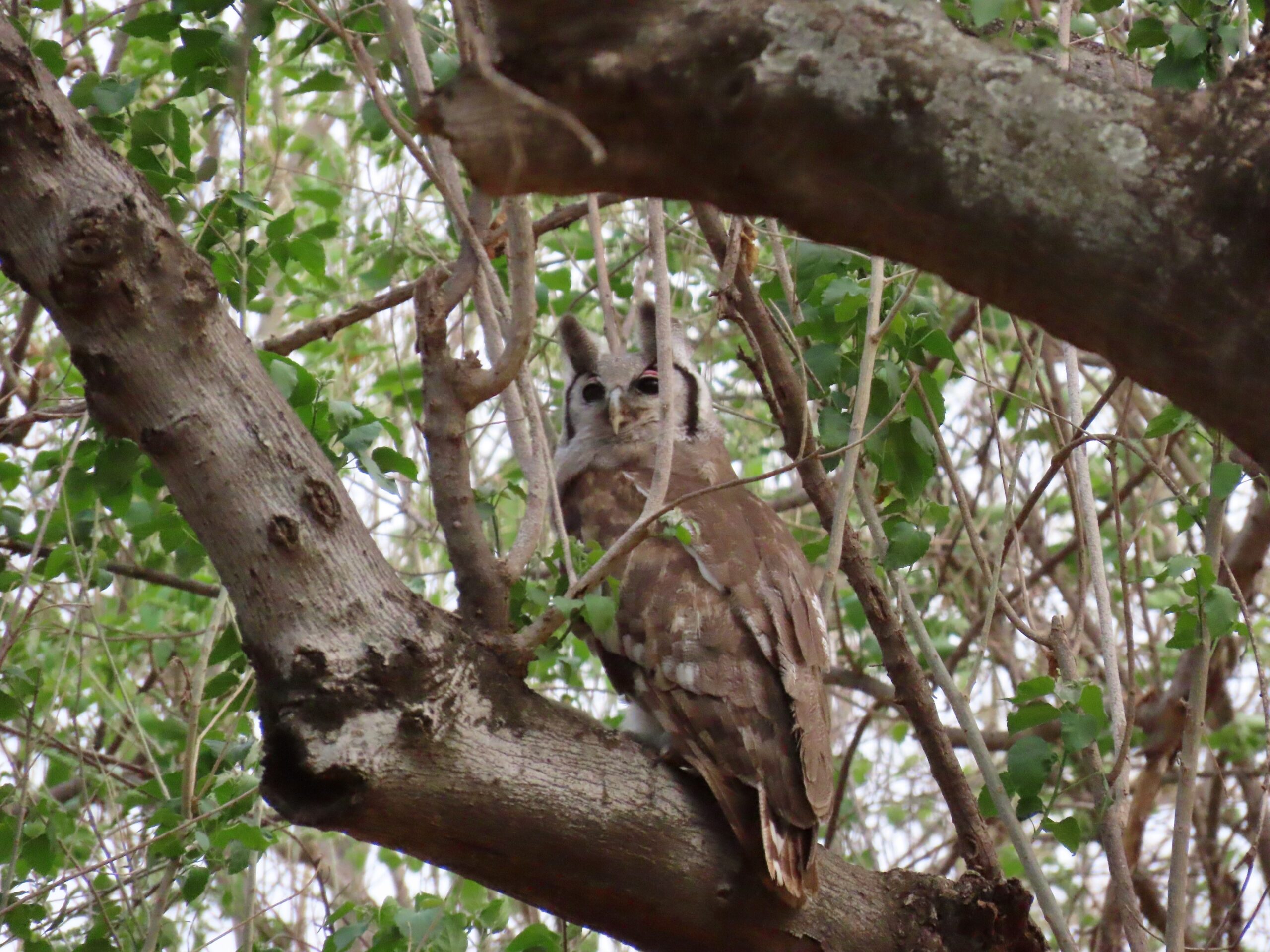
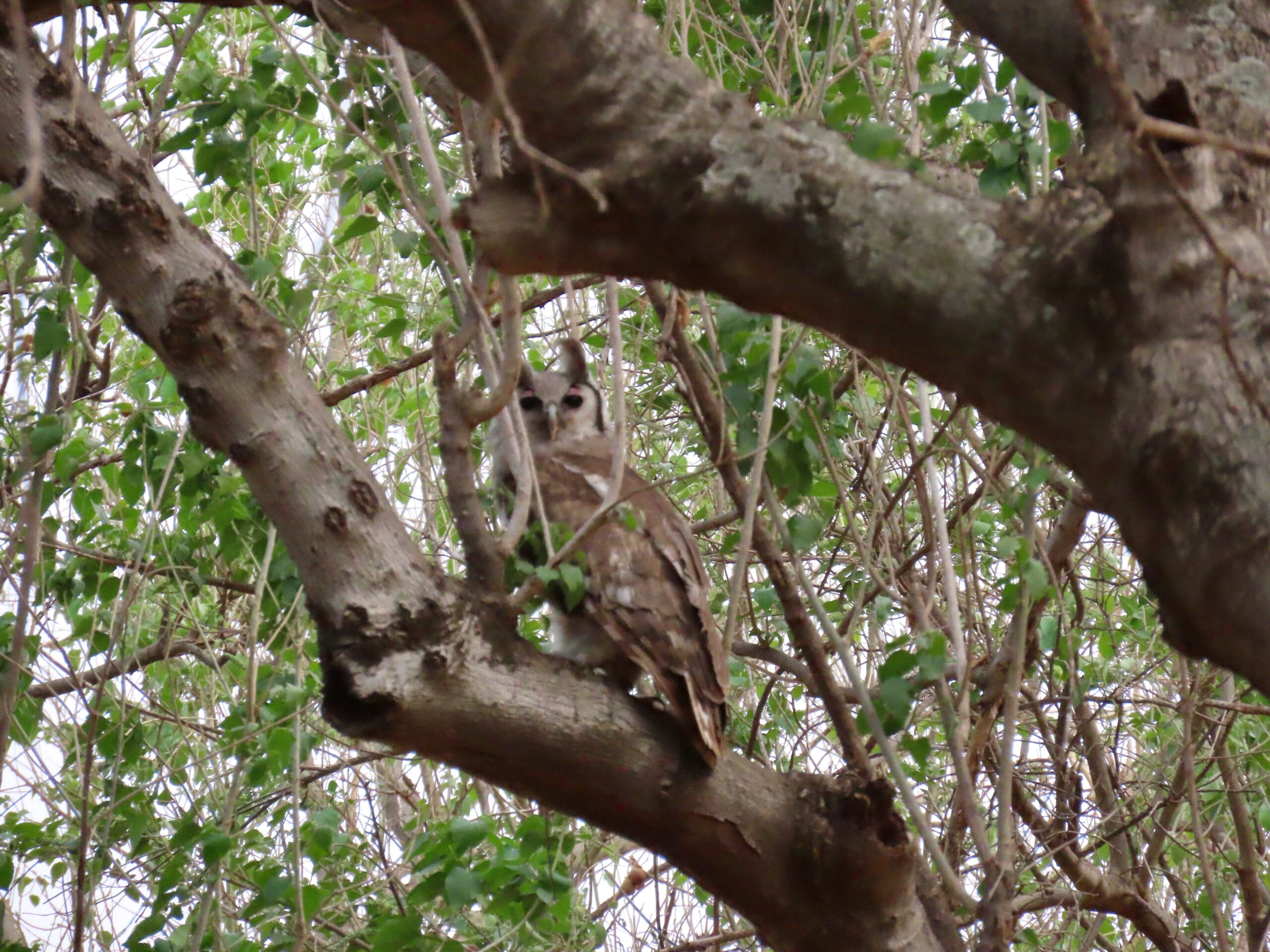
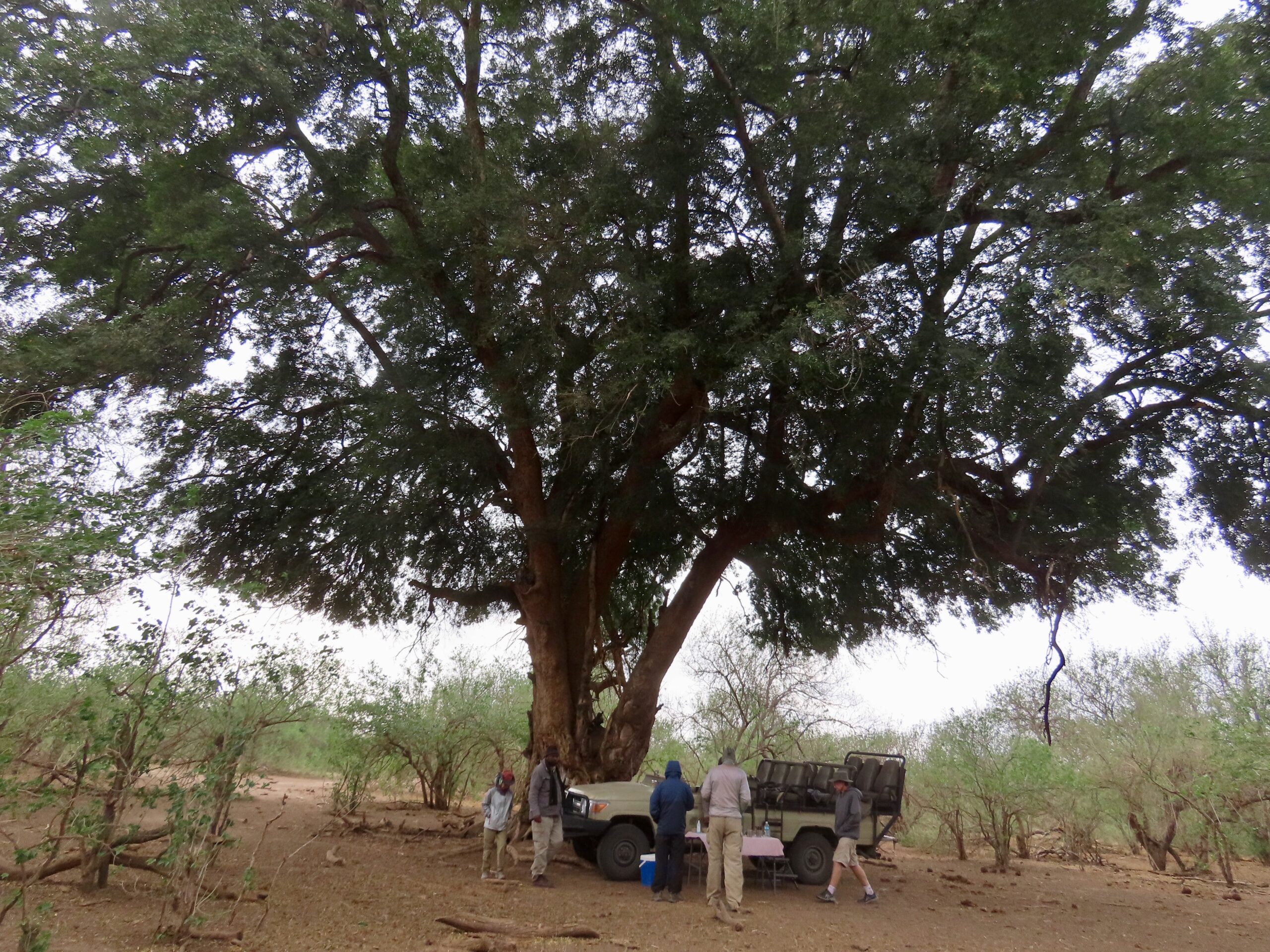

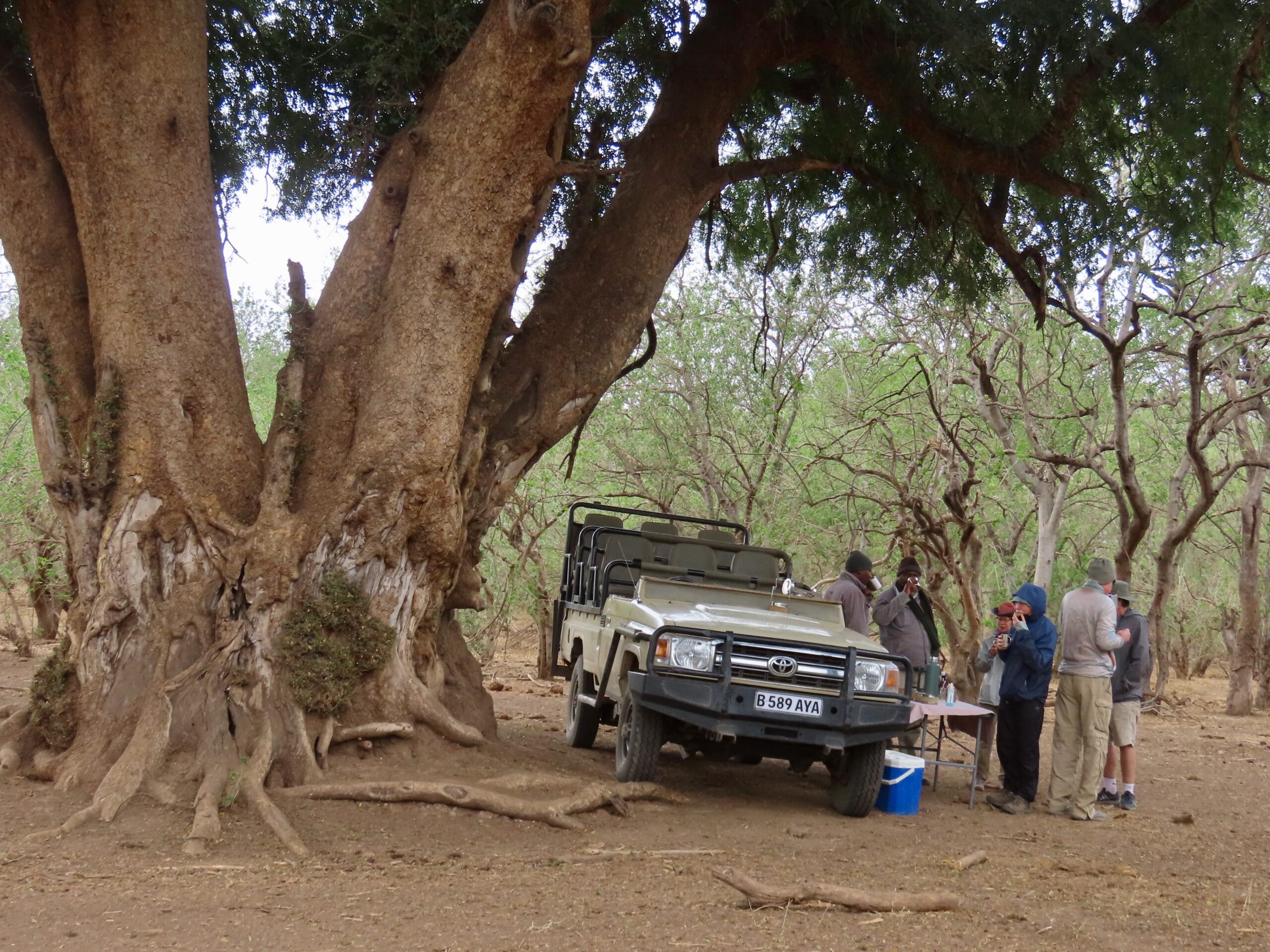
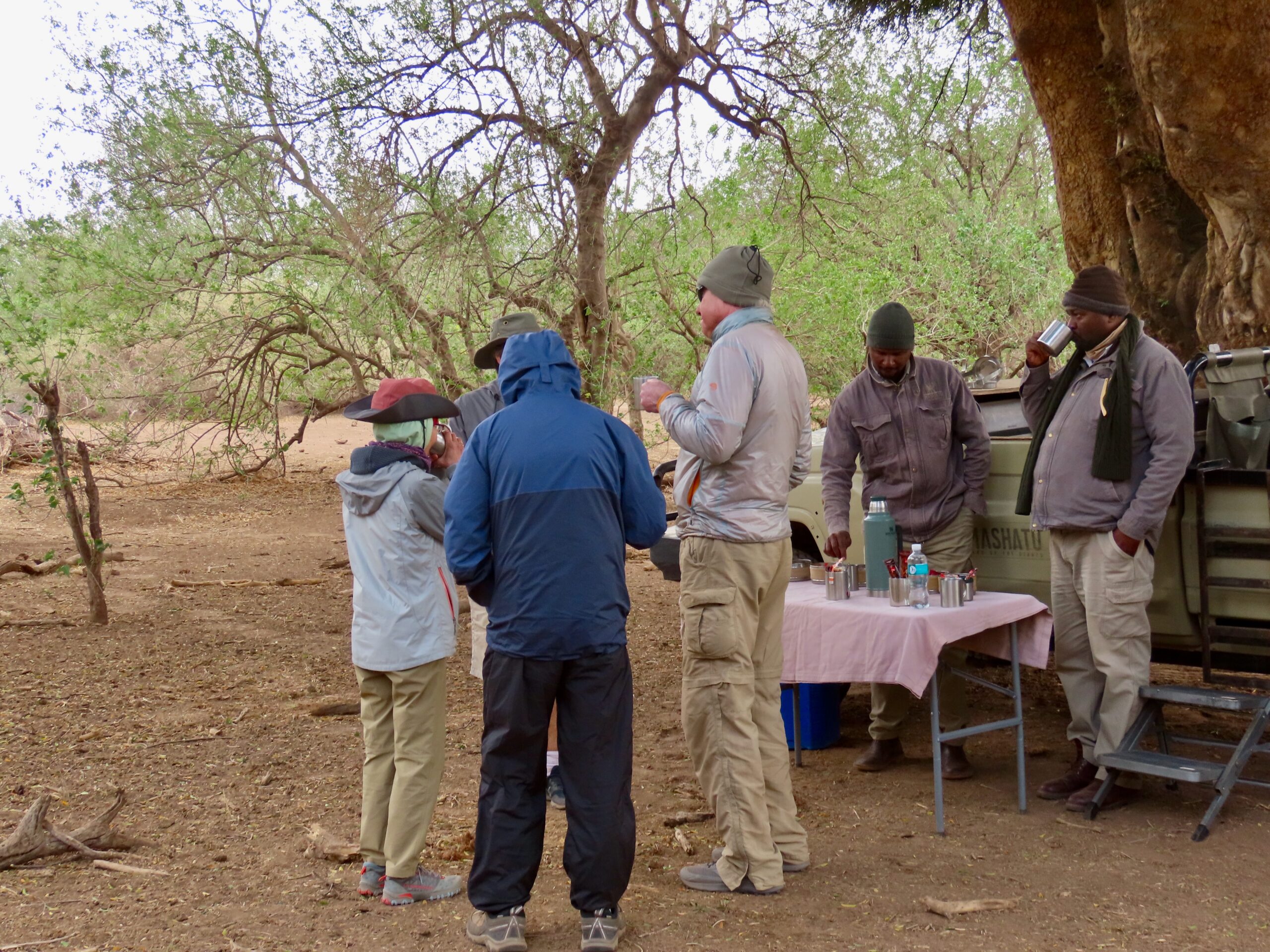
After the coffee stop, we got a better view of what turned out to be a pair of Verreaux’s Eagle Owls.
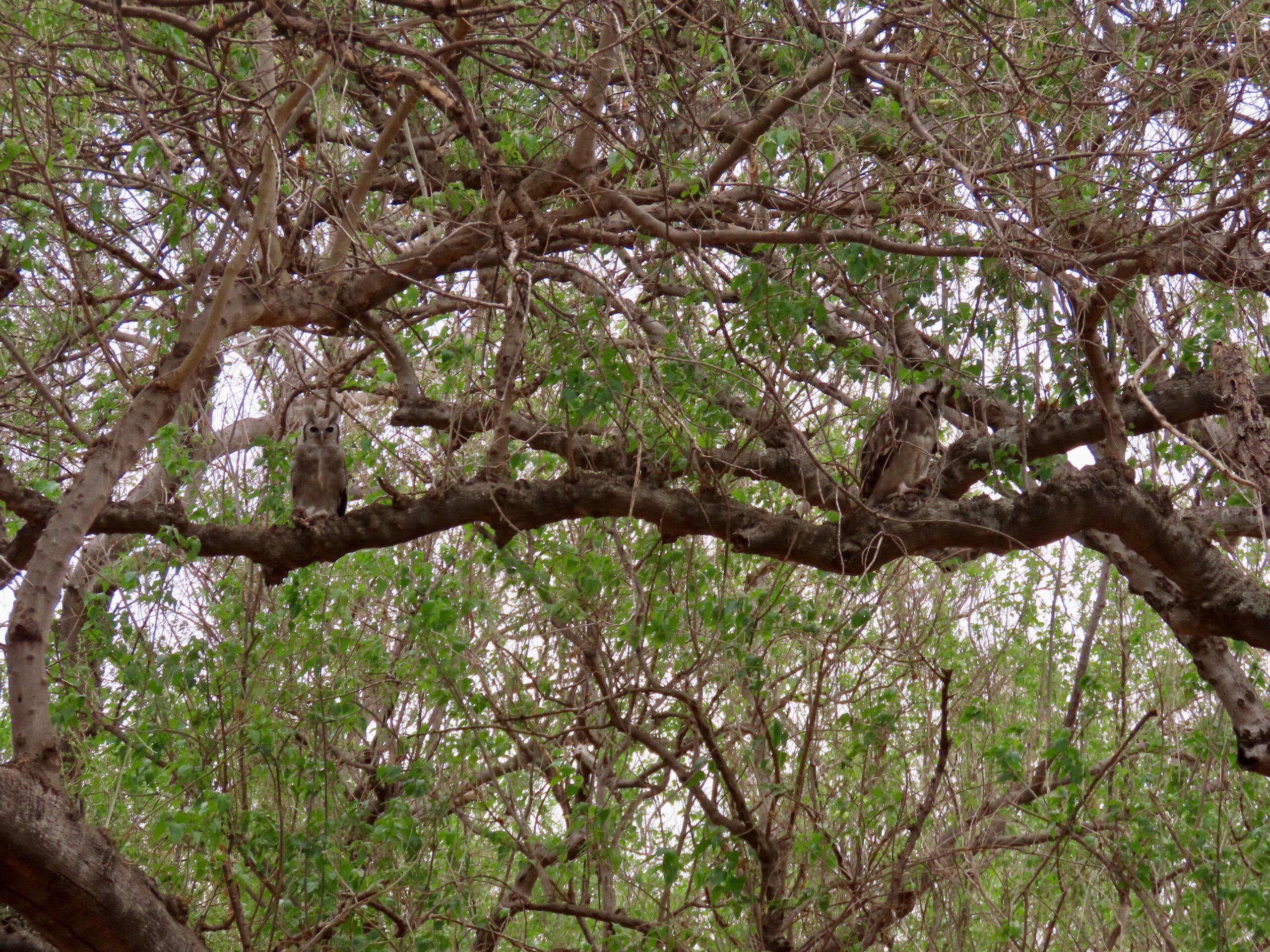
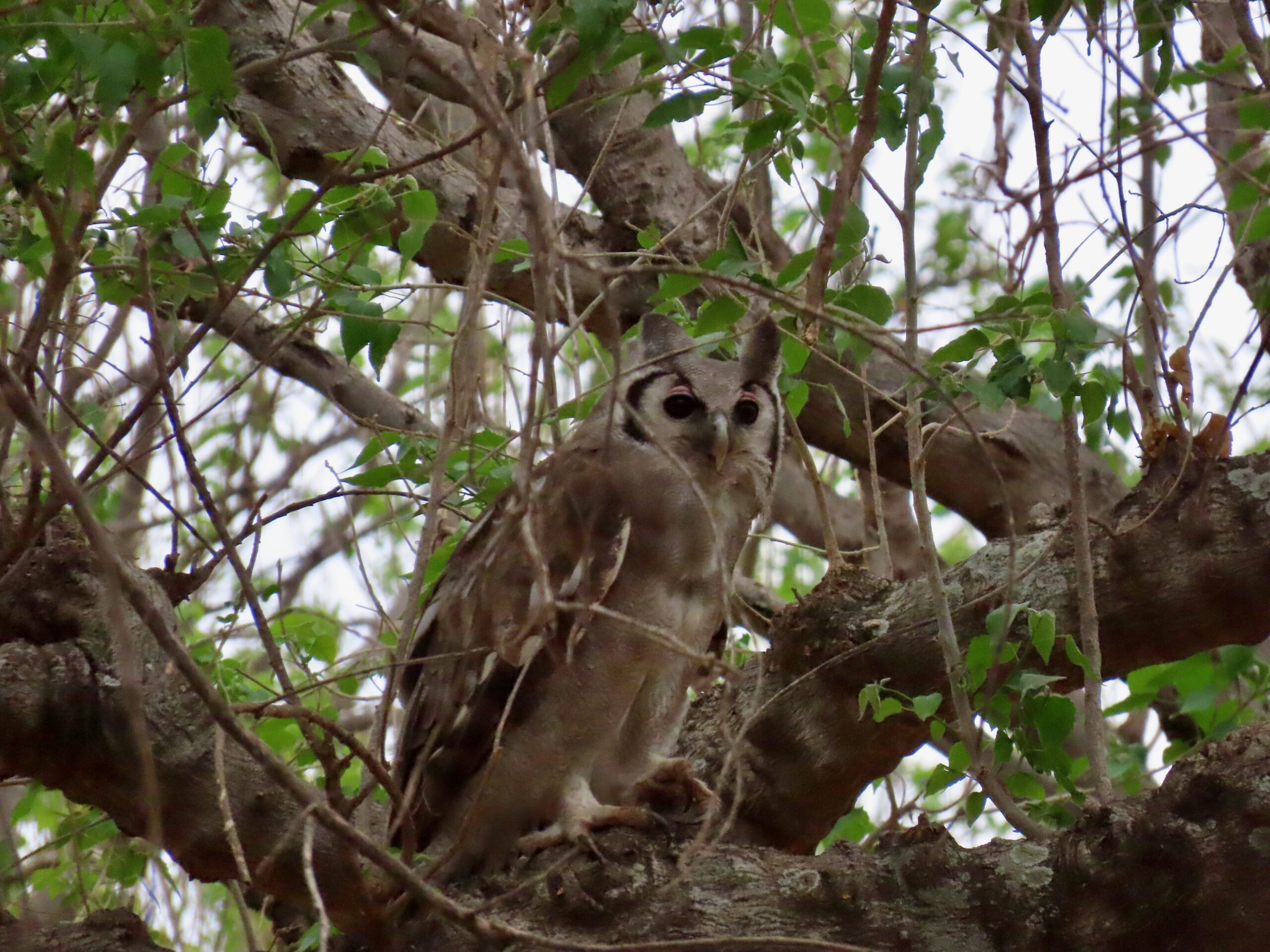

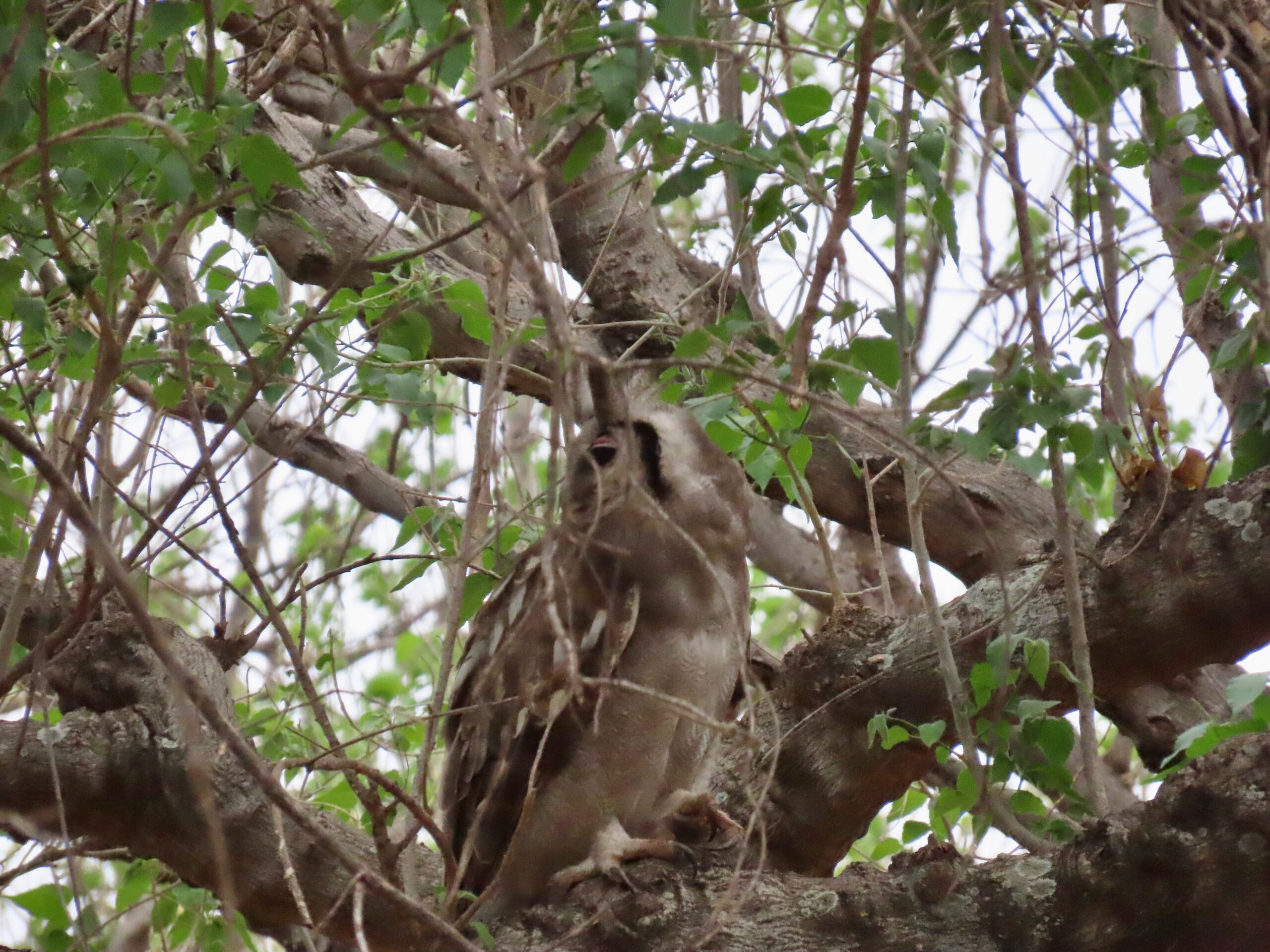
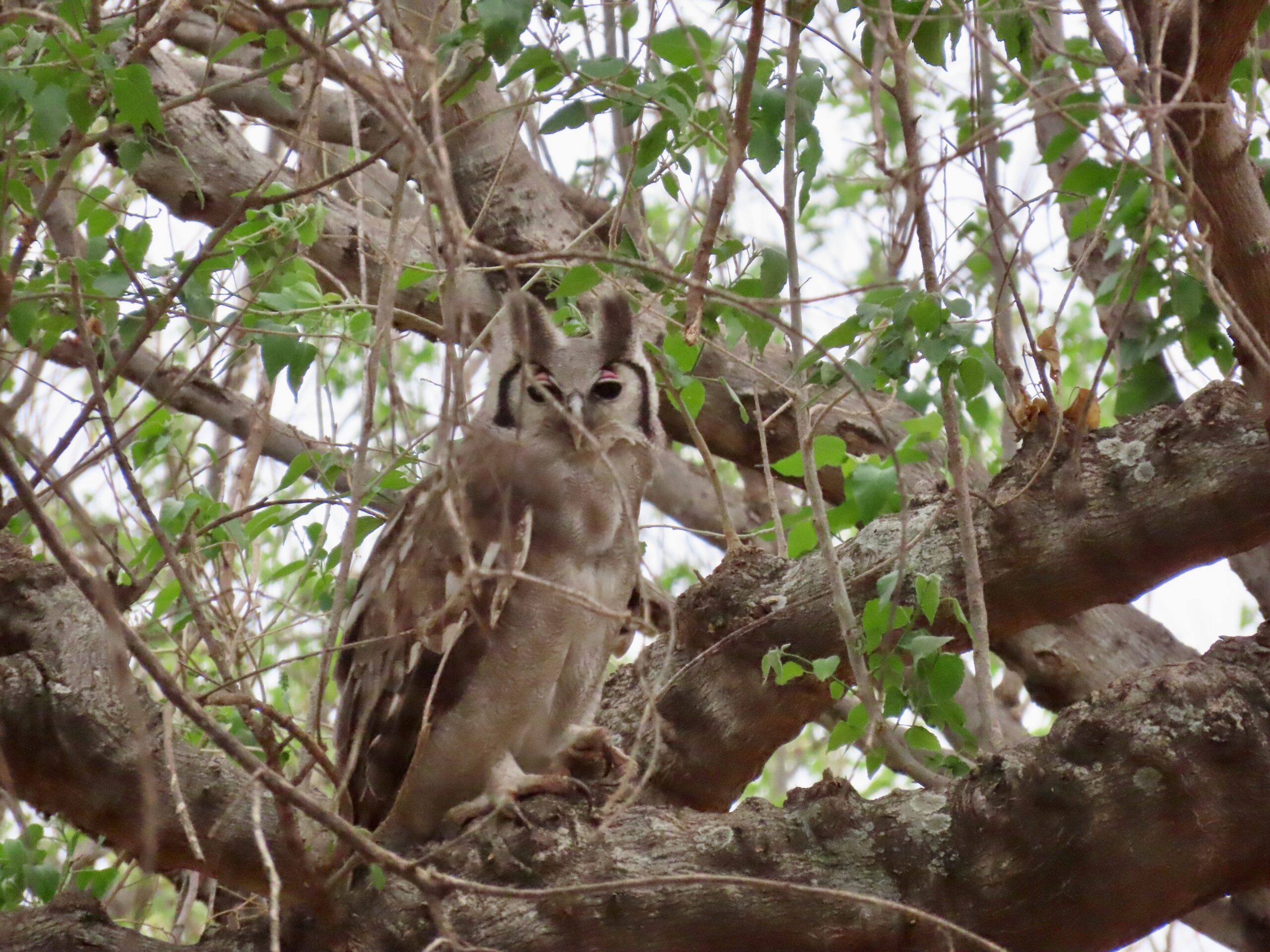



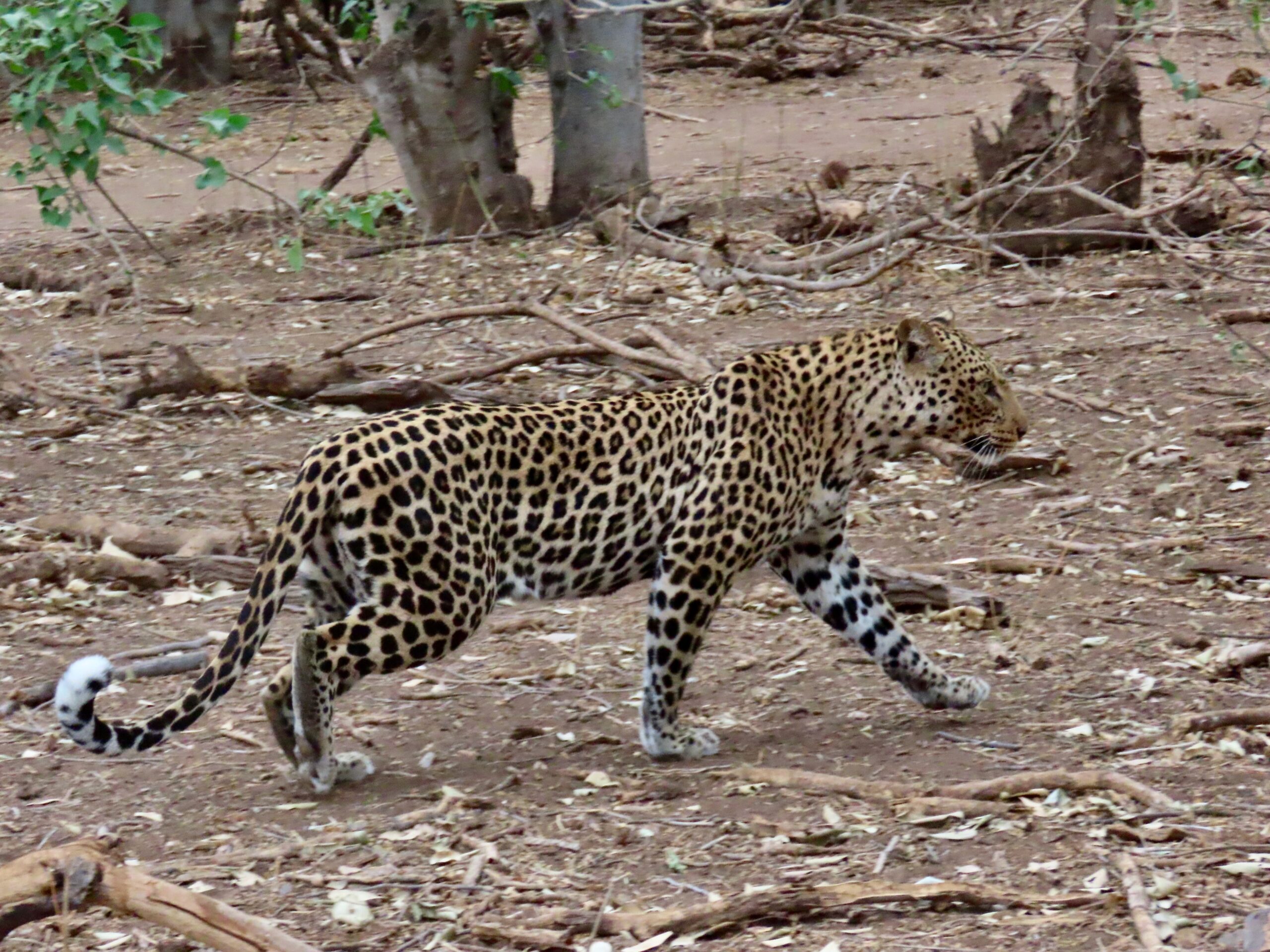
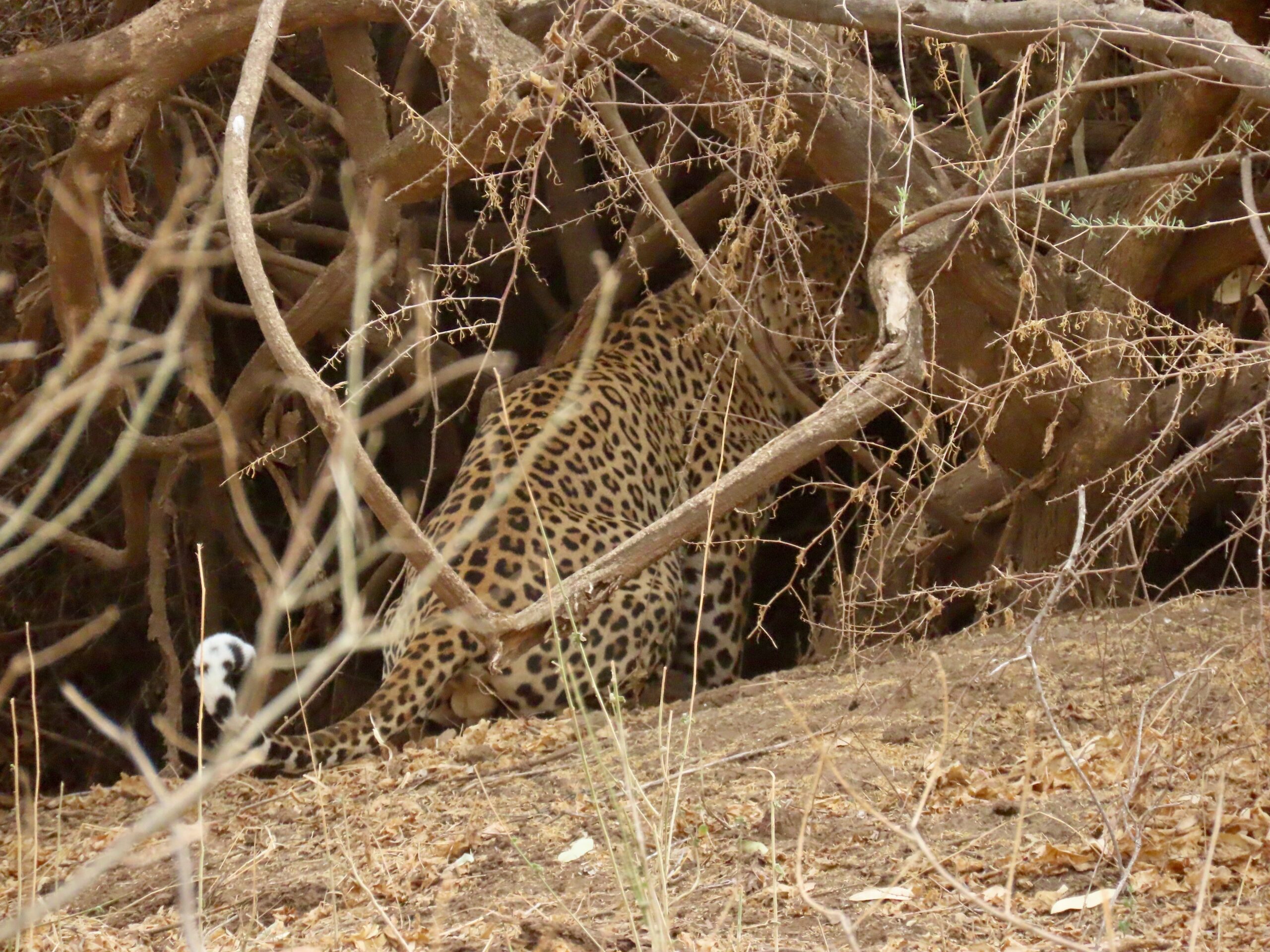
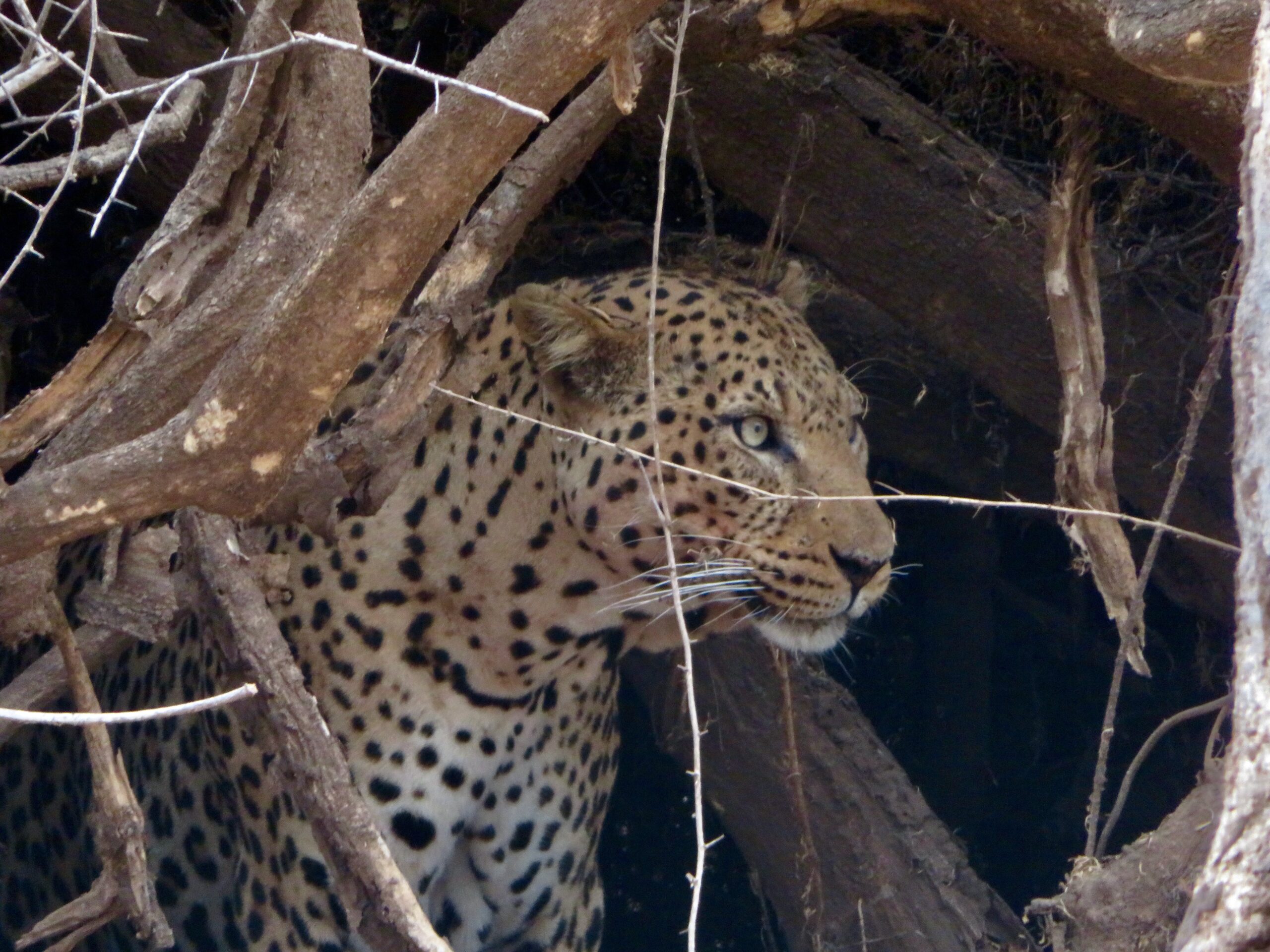
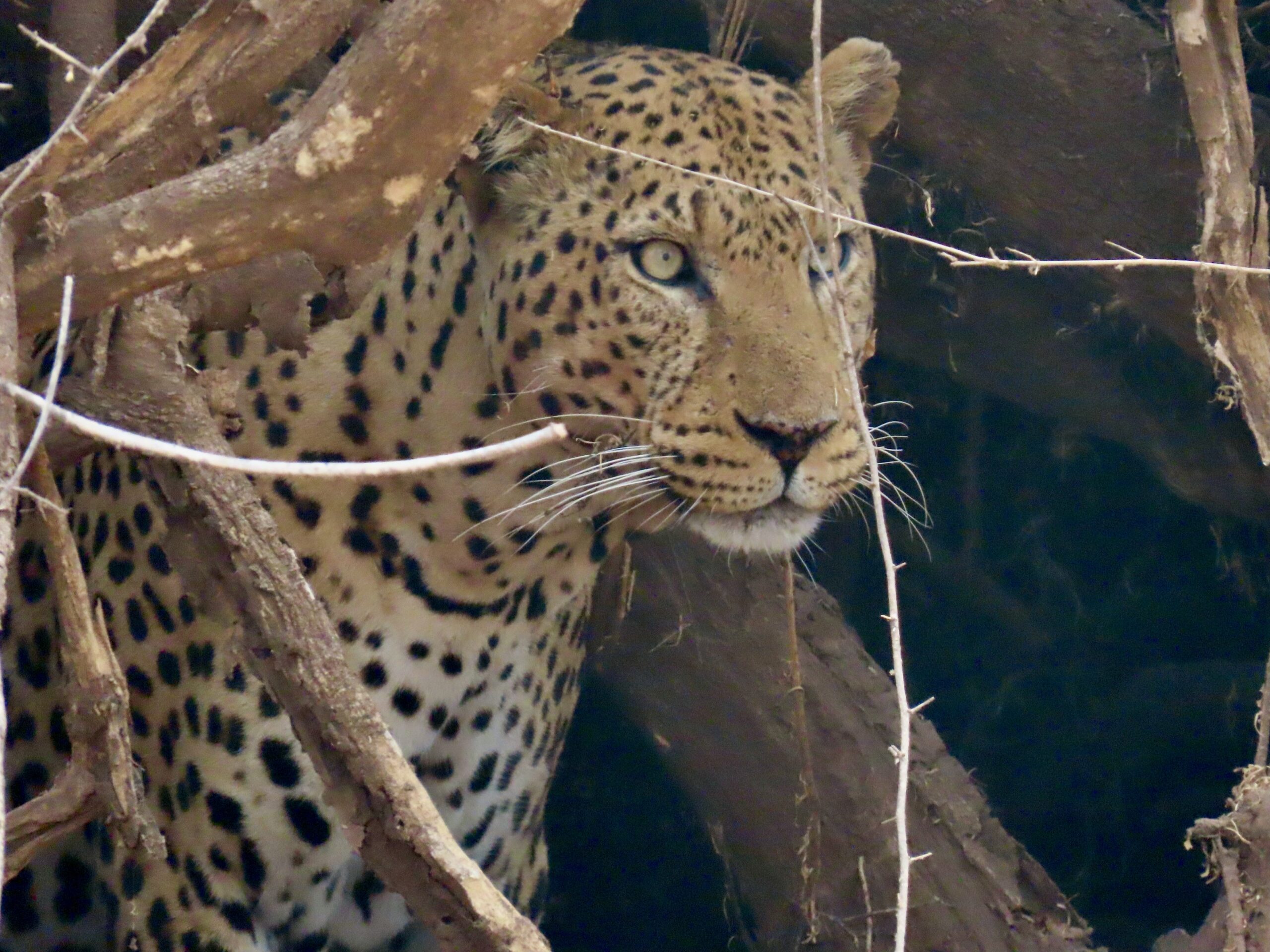
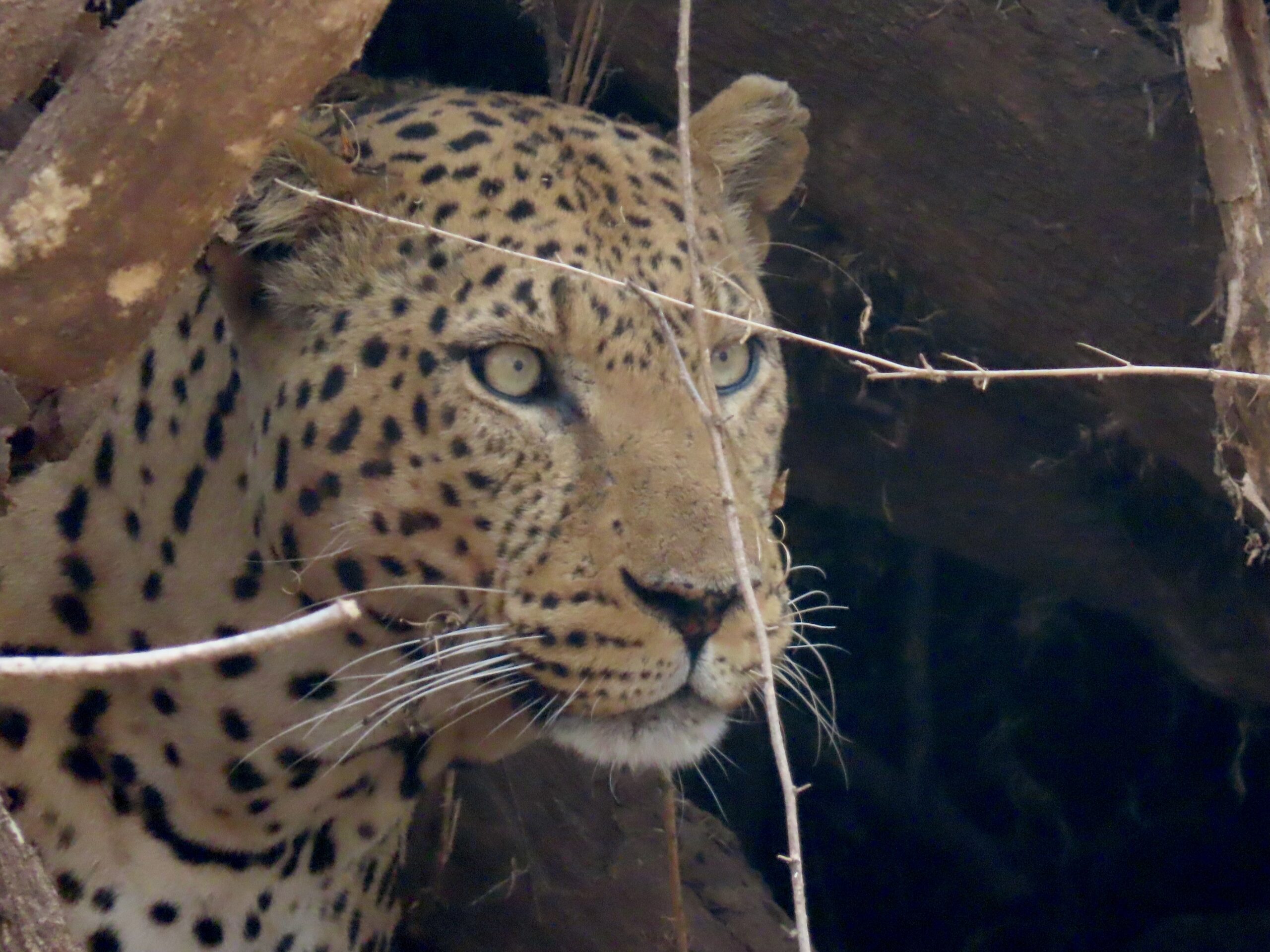
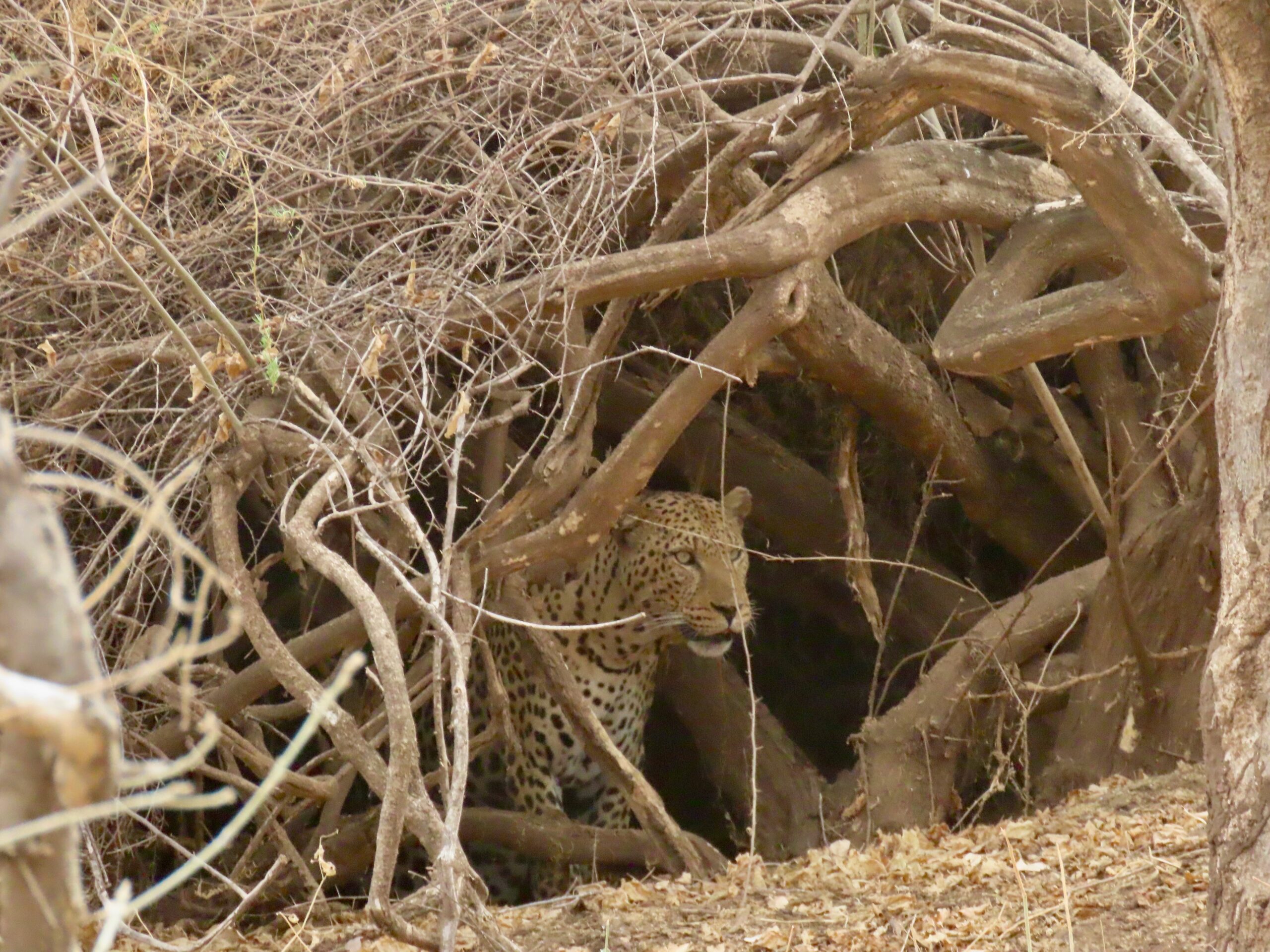
Next up was another leopard – the large male we saw three days ago – pacing through the bushes. He went to ground out of the wind in a nearby thicket.



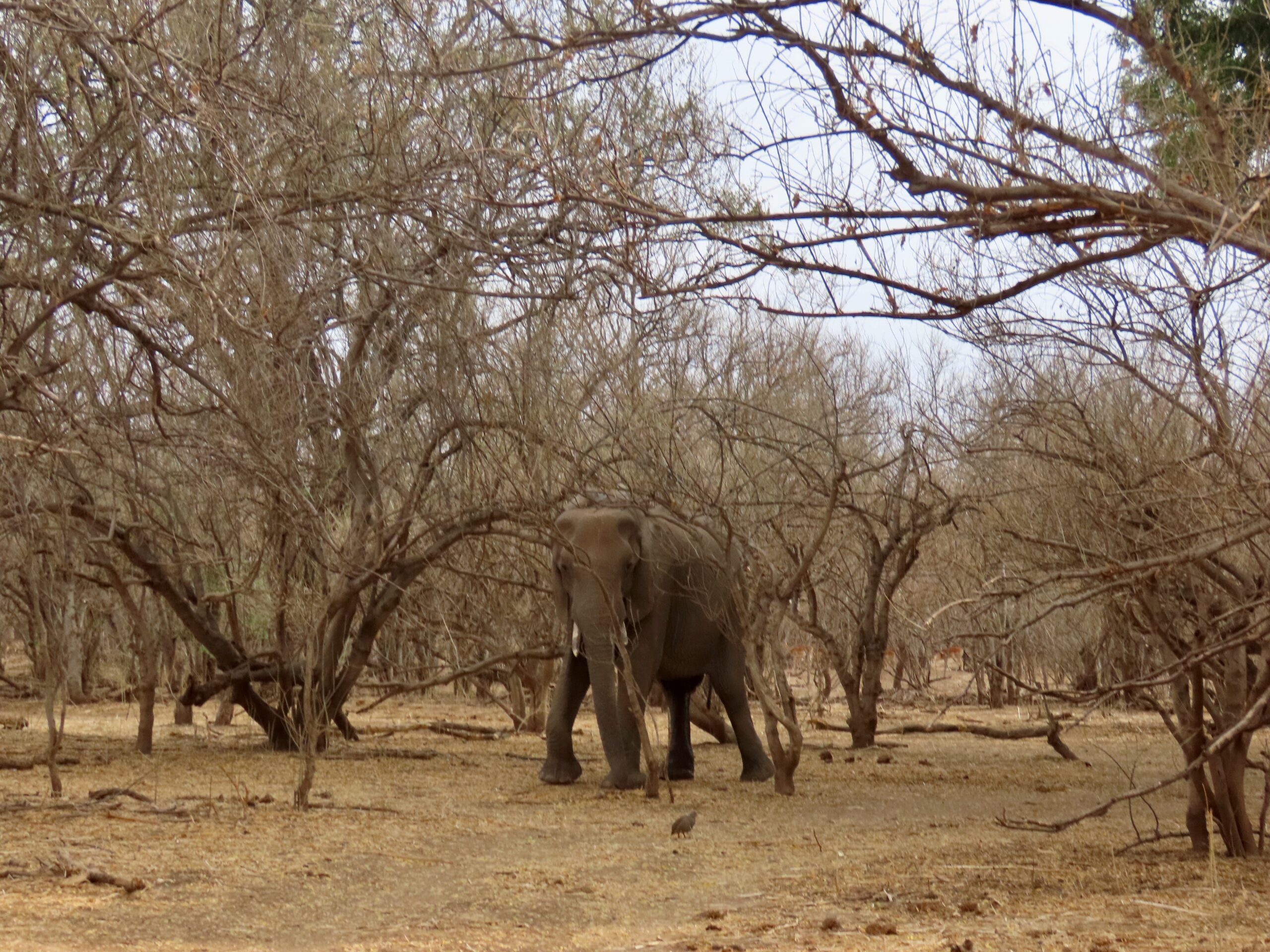
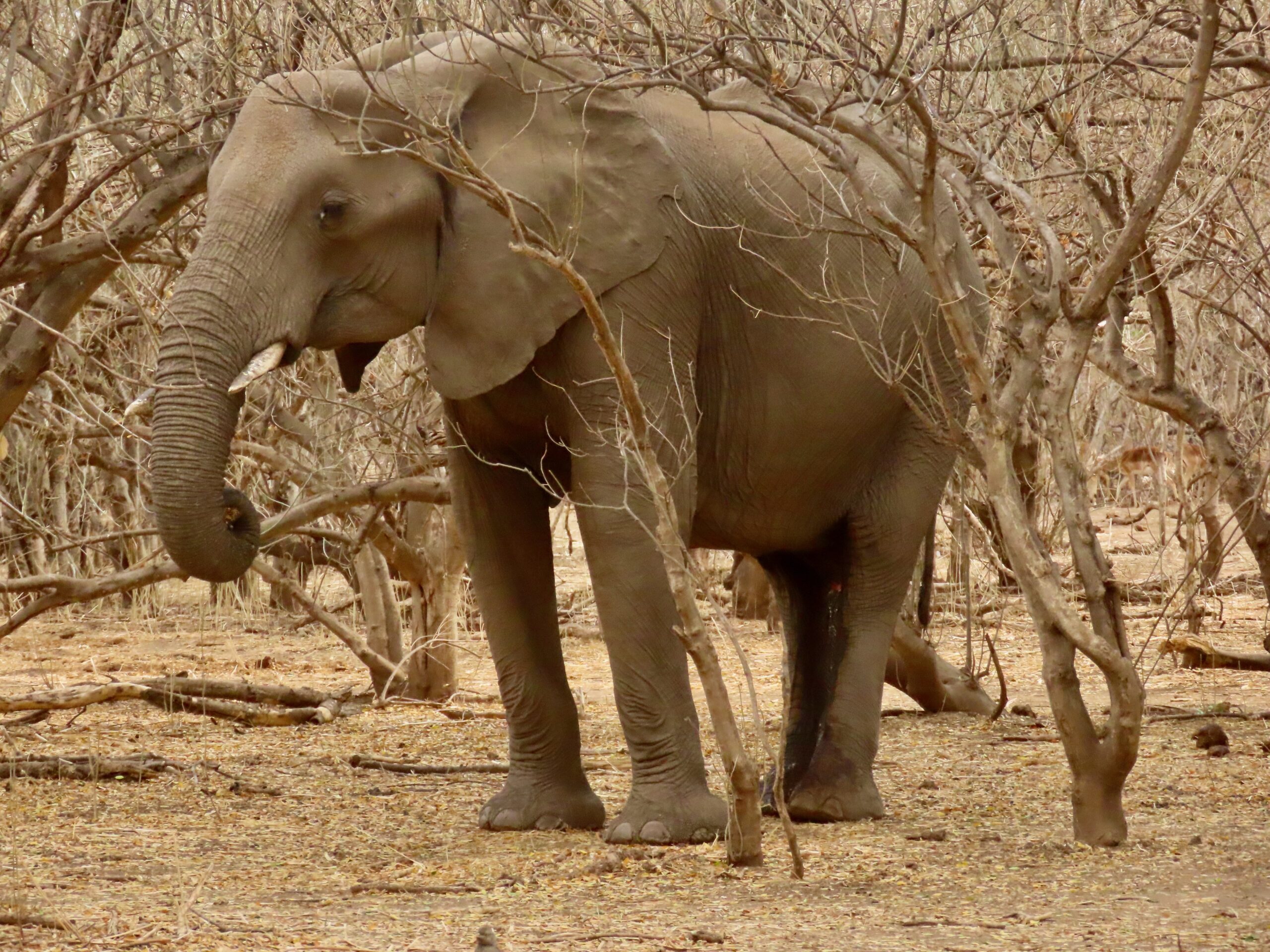
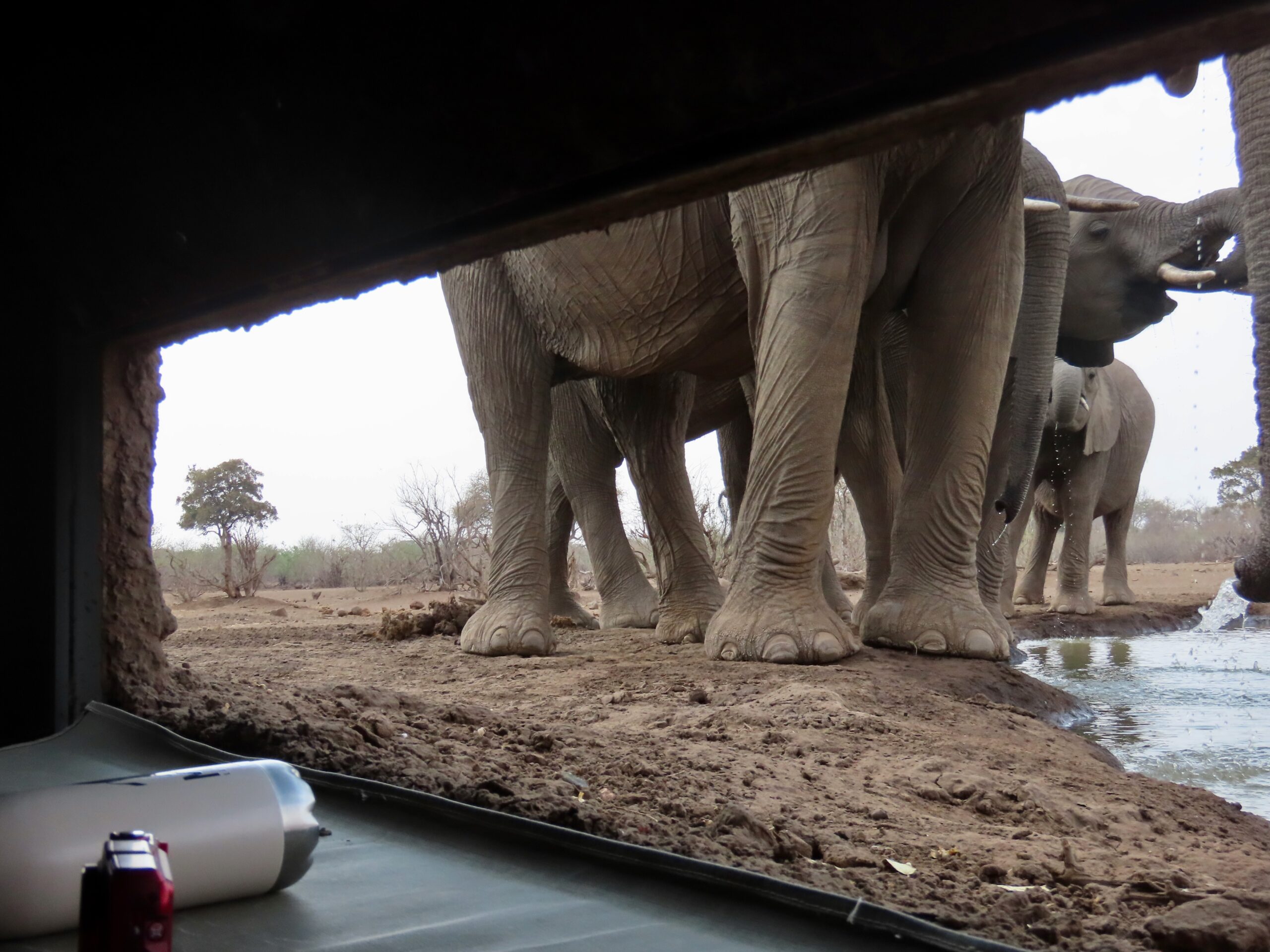
We came across an elderly elephant matriarch (60-70 years old) all on her own in amidst the bushes. Elephants develop six sets of four molars over their lifetimes. As one set wears out, another moves forward to replace it. When the final set wears out, the elephant is no longer able to chew plants and slowly dies of starvation. This matriarch’s teeth were in that last stage, and, because she eats very slowly, she is unable to keep up with the rest of the herd (who have to keep moving to protect the young ones). Dan told us that the herd would leave her behind, then come back to check on her later in the day. When she dies, they will mourn her, then move on, although they will keep checking back on her carcass. When there is nothing left but bones, they will scatter the bones and roll the skull to crush it into pieces, leaving no trace of her behind. Elephants are highly intelligent, and this kind of behavior around dead ellies is well documented. They show no interest in the carcasses of other species.



Our route back to camp took us past the hide, where we saw giraffes and a Kori Bustard headed for the waterhole.


After a last wonderful lunch, we loaded up in the vehicle with Dan for a transfer back to Pont Drift. Our baggage preceded us in another vehicle.
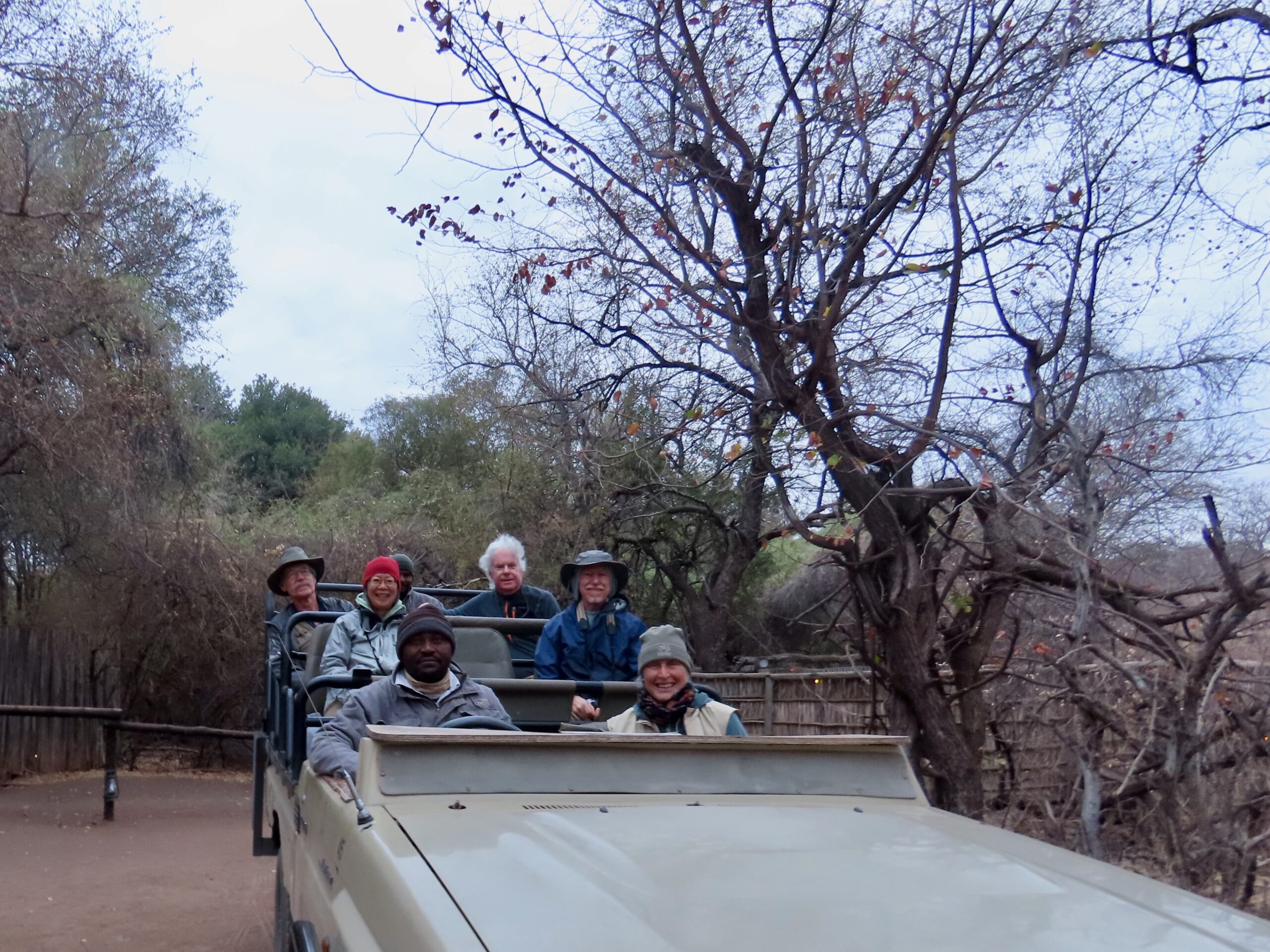
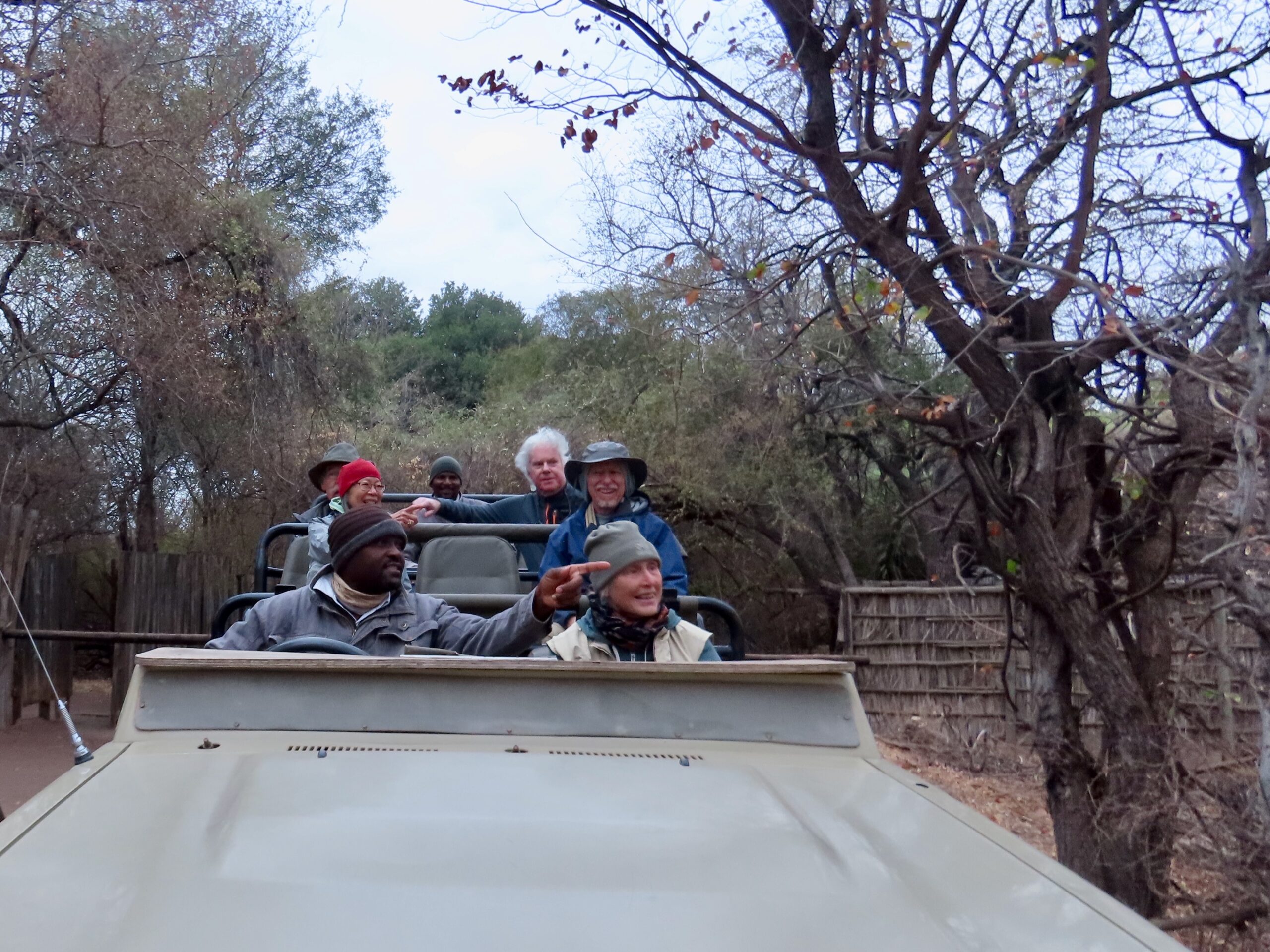


Along the way, we had a new experience: a flat tire. Fortunately/unfortunately, this was not a new experience for poor Dan. He had lots of overseers.


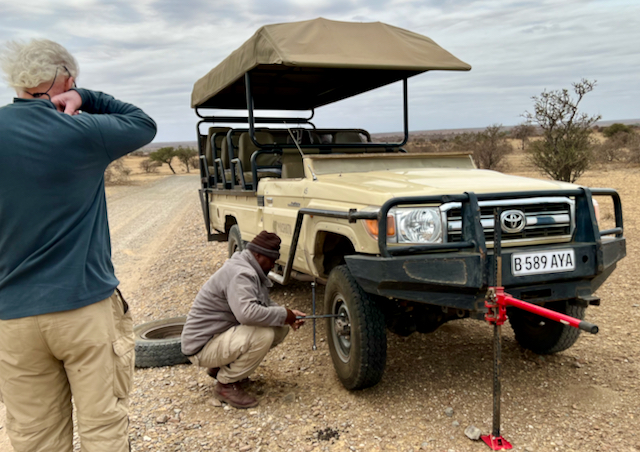
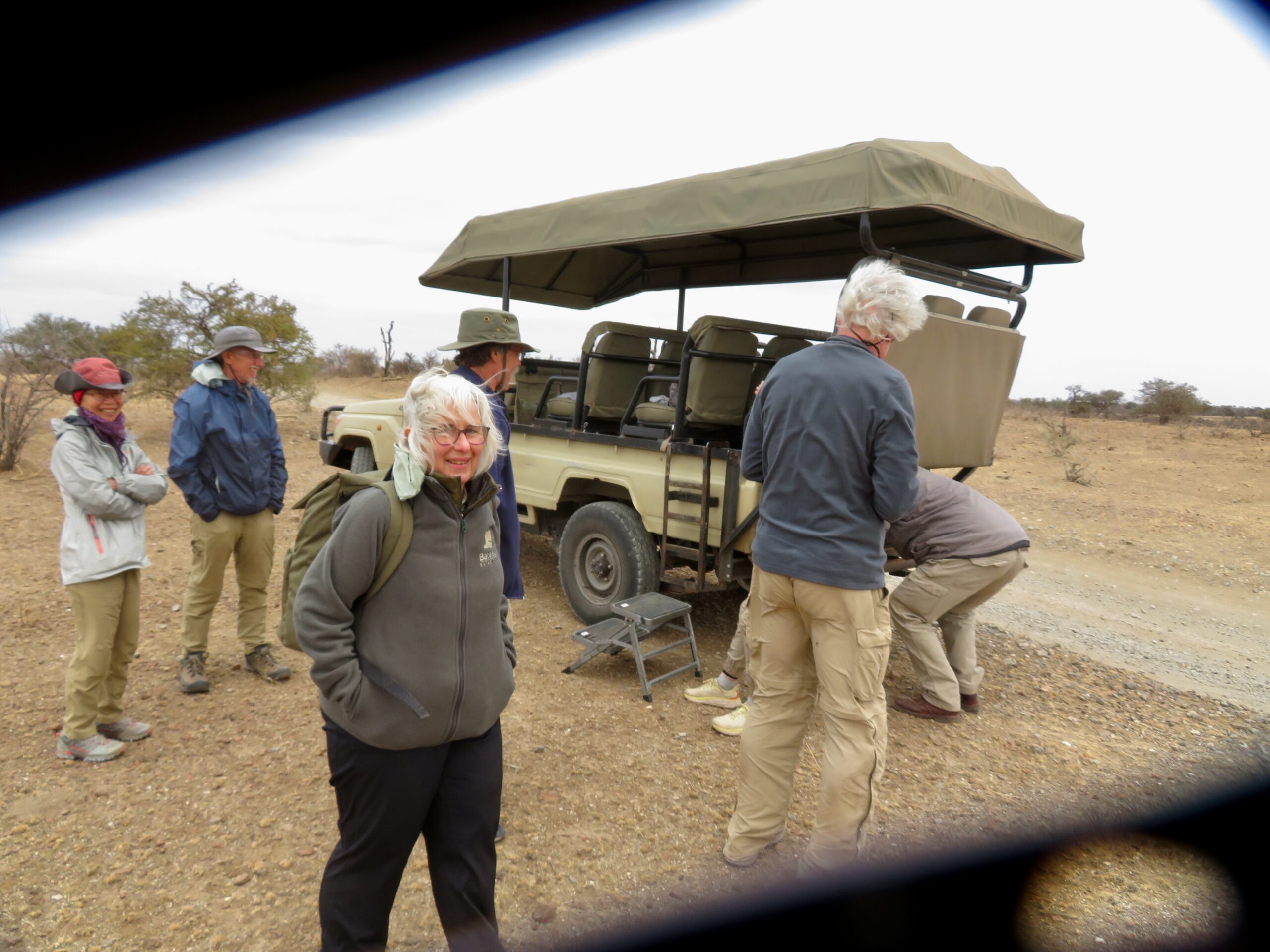


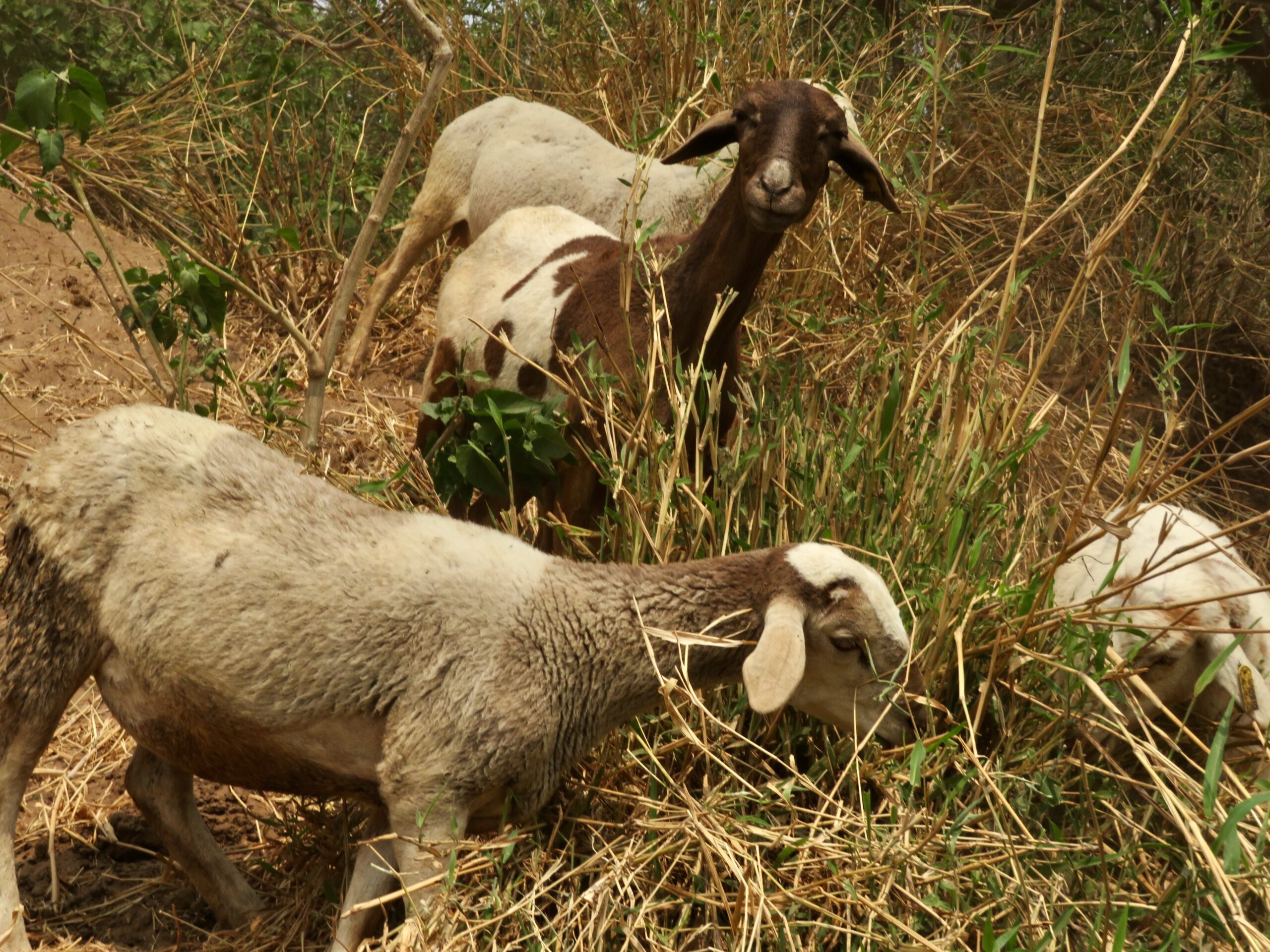
Four wheels restored, we were back on the road to Pont Drift. We encountered a new species en route: domestic shoats. (That’s the term archeologists use for sheep/goats because they can’t tell them apart from their bones. I couldn’t tell which they were with flesh on those bones, so shoats it is.)


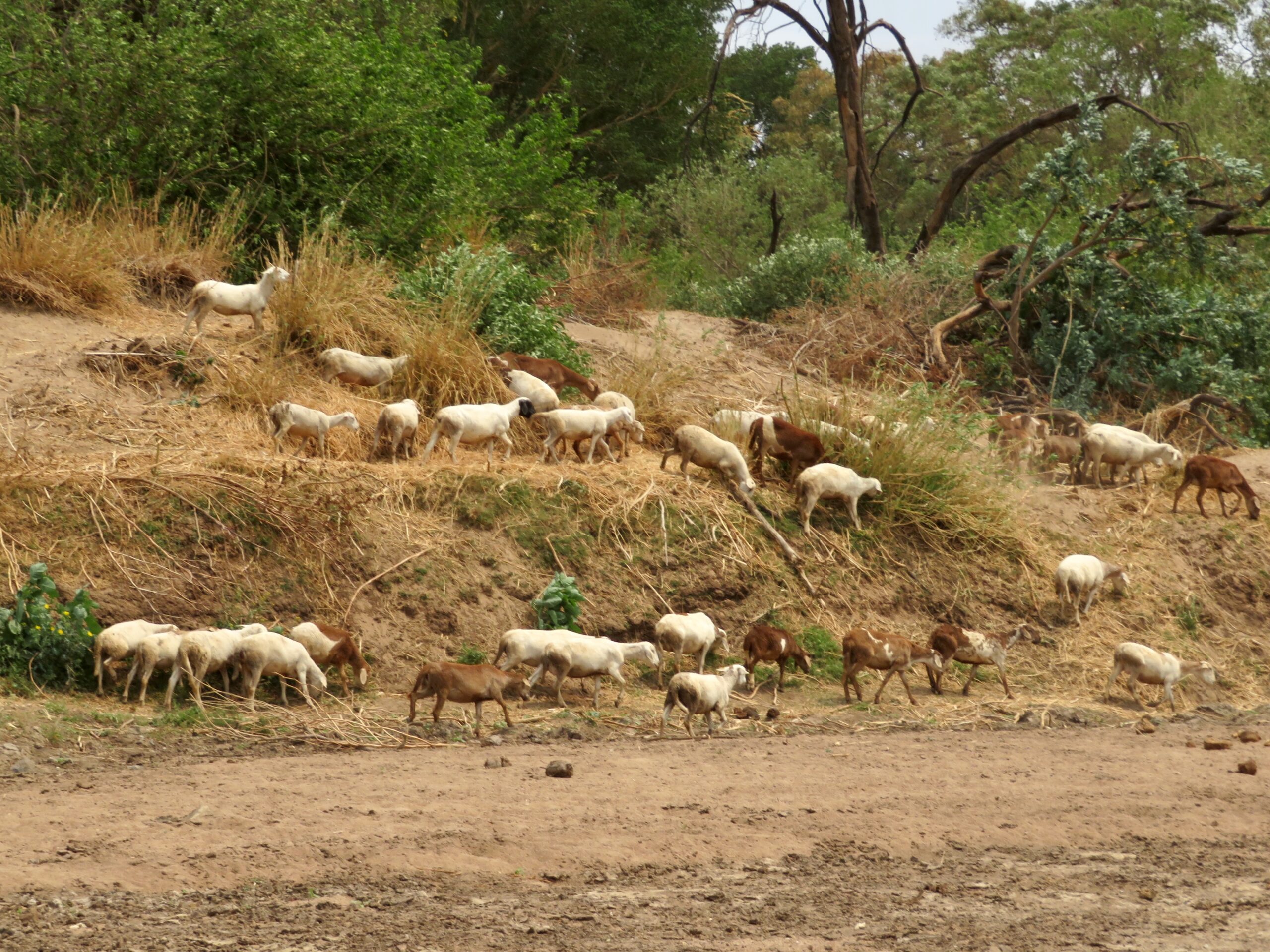
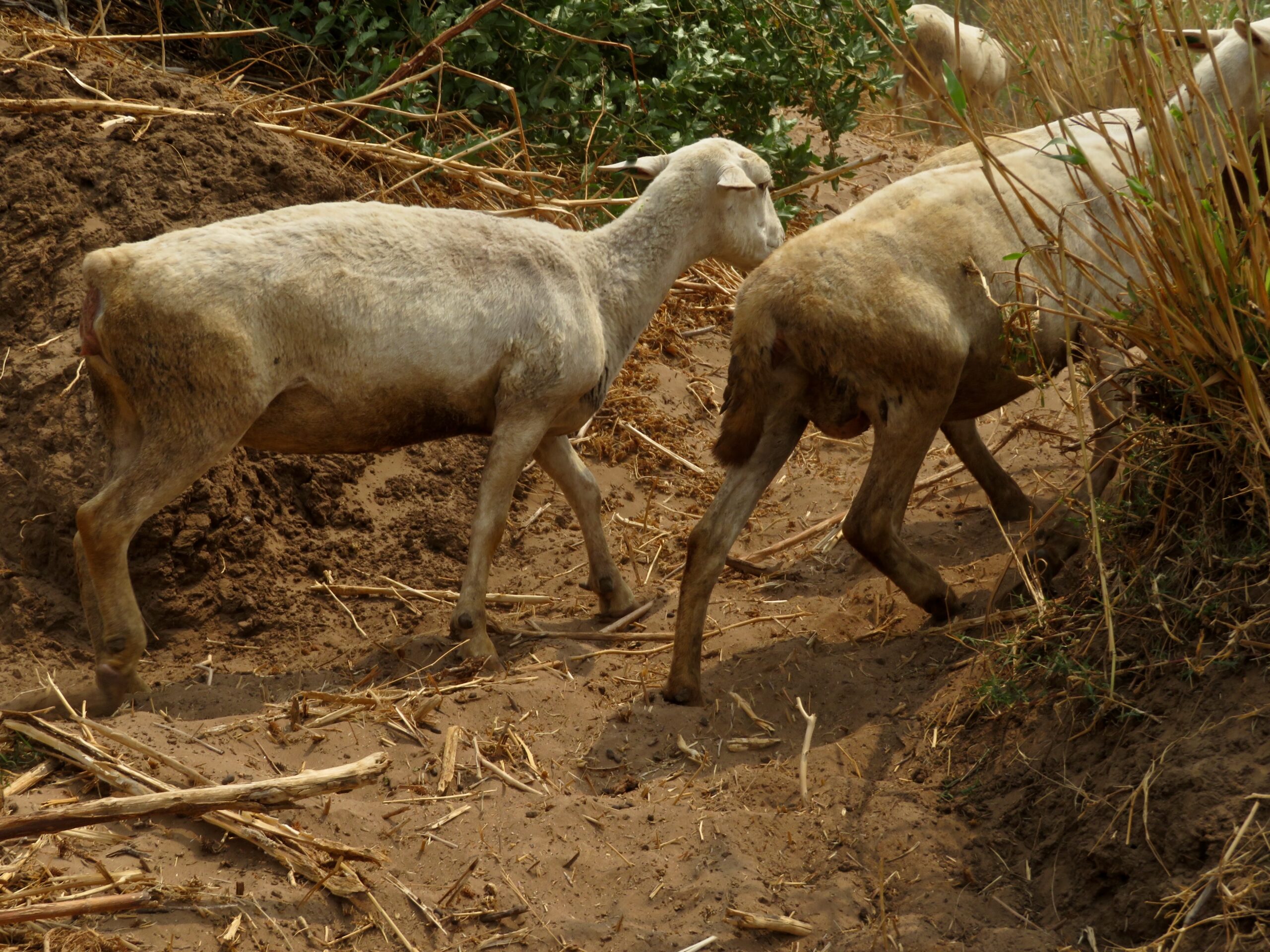

We arrived at Pont Drift a little late, to find Mike, owner of Mashatu Connect, waiting to transport us south for the last stop on our trip. The airport in Johannesburg, which we were booked out of on Friday, is a drive of ~7- 8 hours from Mashatu. So instead taking a very long drive (and chancing a missed flight), we had decided to stop over for a couple of nights somewhere closer to the airport, and settled on Zebras Crossing, located in the Waterberg region.
The Waterberg is a large massif and UN Biosphere Reserve located just north of Pretoria and Johannesburg. Its proximity to these large cities makes it a very popular tourist area (see map clip below), with lots of smaller private reserves, most without elephants or large predators. Zebra’s Crossing is one of these.


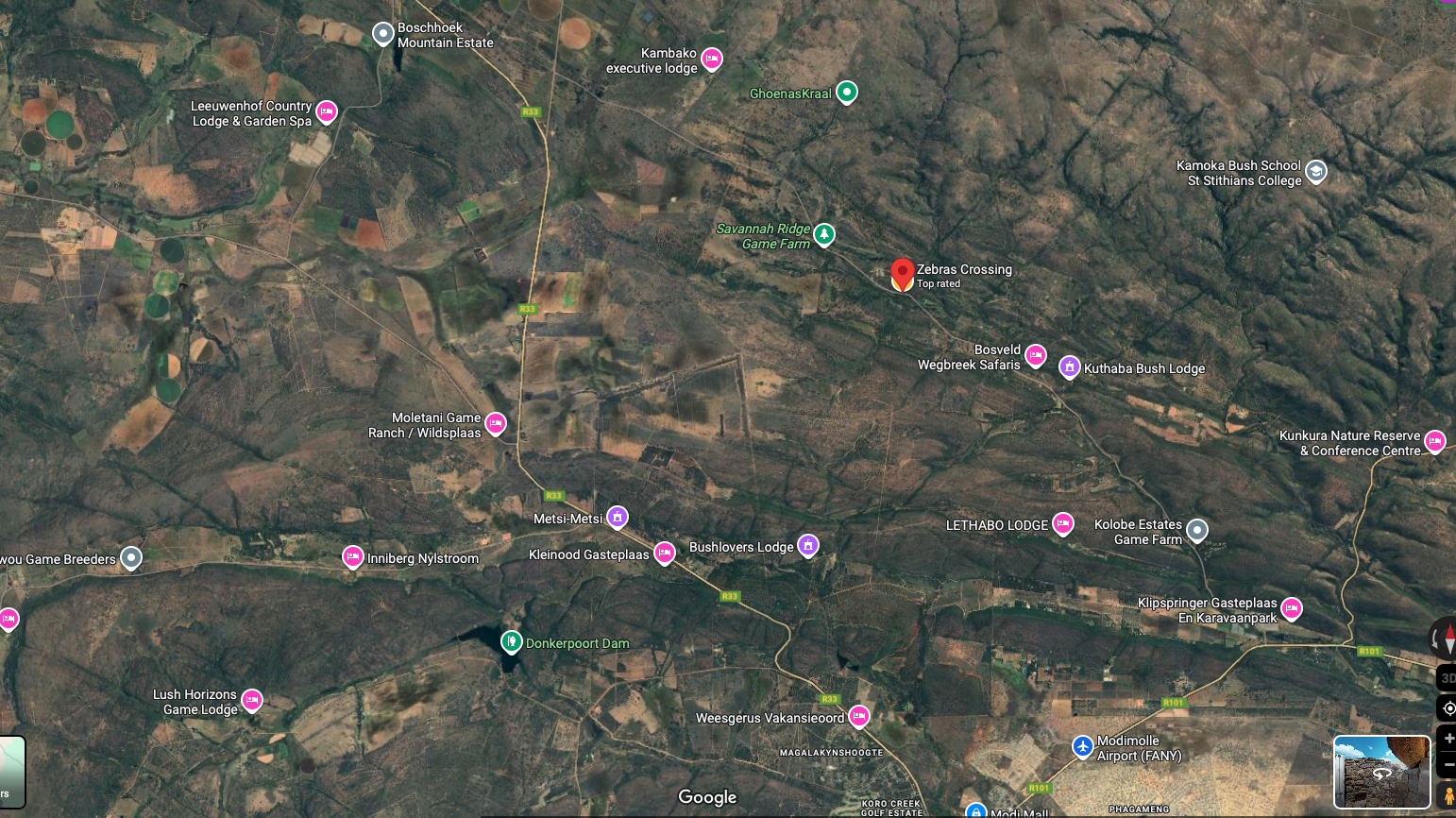
The drive from Tent Camp to Pont Drift took about an hour, and it was another ~2.5 hours from Pont Drift to Polokwane, where we stopped for a quick break. The two-lane road was heavily pot-holed until very near to Polokwane, when it turned into a four-lane highway..
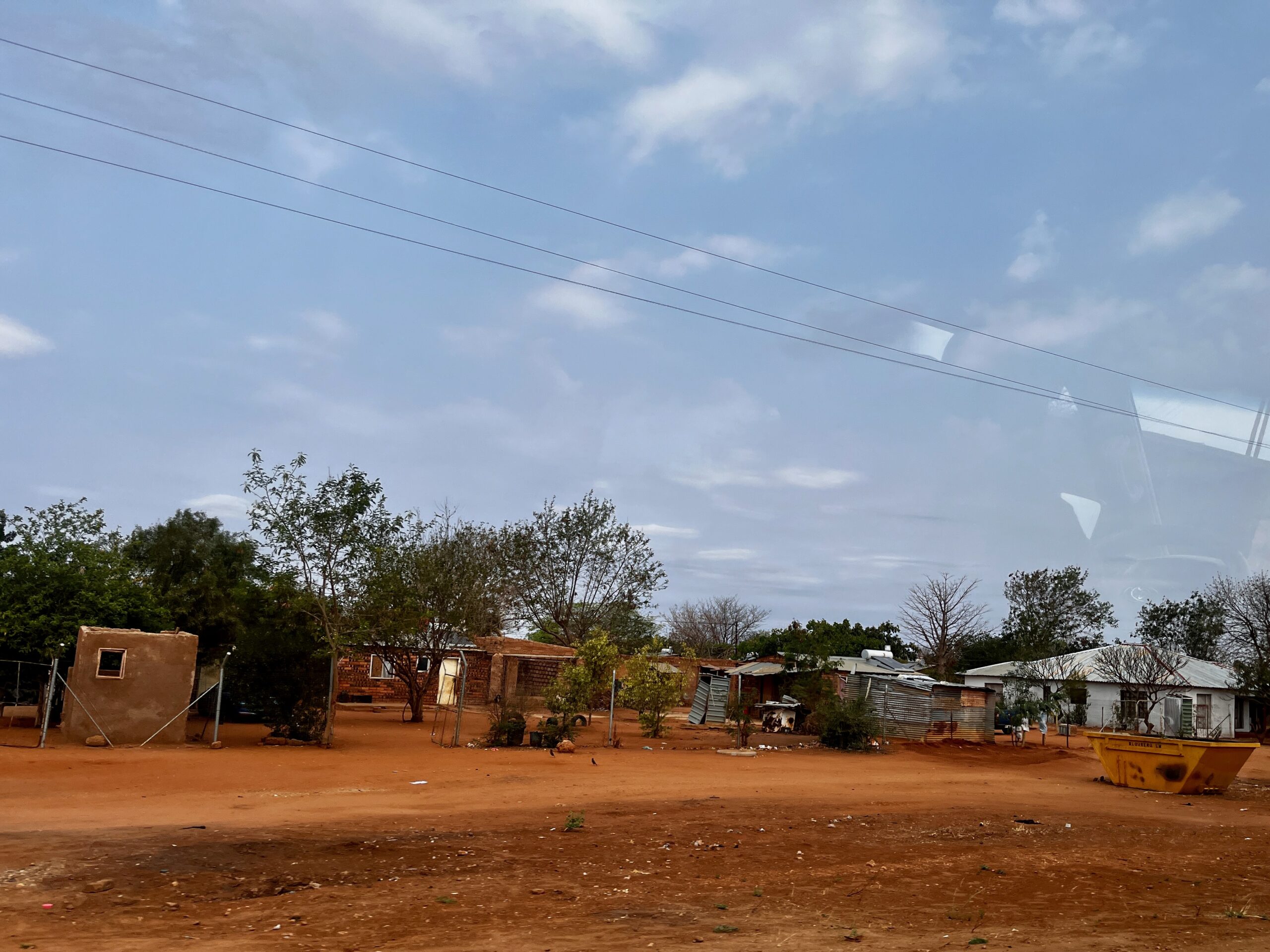
En route, we crossed the Tropic of Capricorn and passed many miles of fenced and heavily bushed game farms, with some not very prosperous settlements that were former townships. These were usually dominated by tiny structures (smaller than a single car garage in the US) made from scraps of ribbed sheet metal put together for walls and roofs. Some houses were more solidly made fro cinder blocks with tile roofs. There were many informal fruit/veg stands operating from makeshift shelters with produce hung in string bags, and a lot of men selling large chunks of wood wrapped in plastic for firewood.
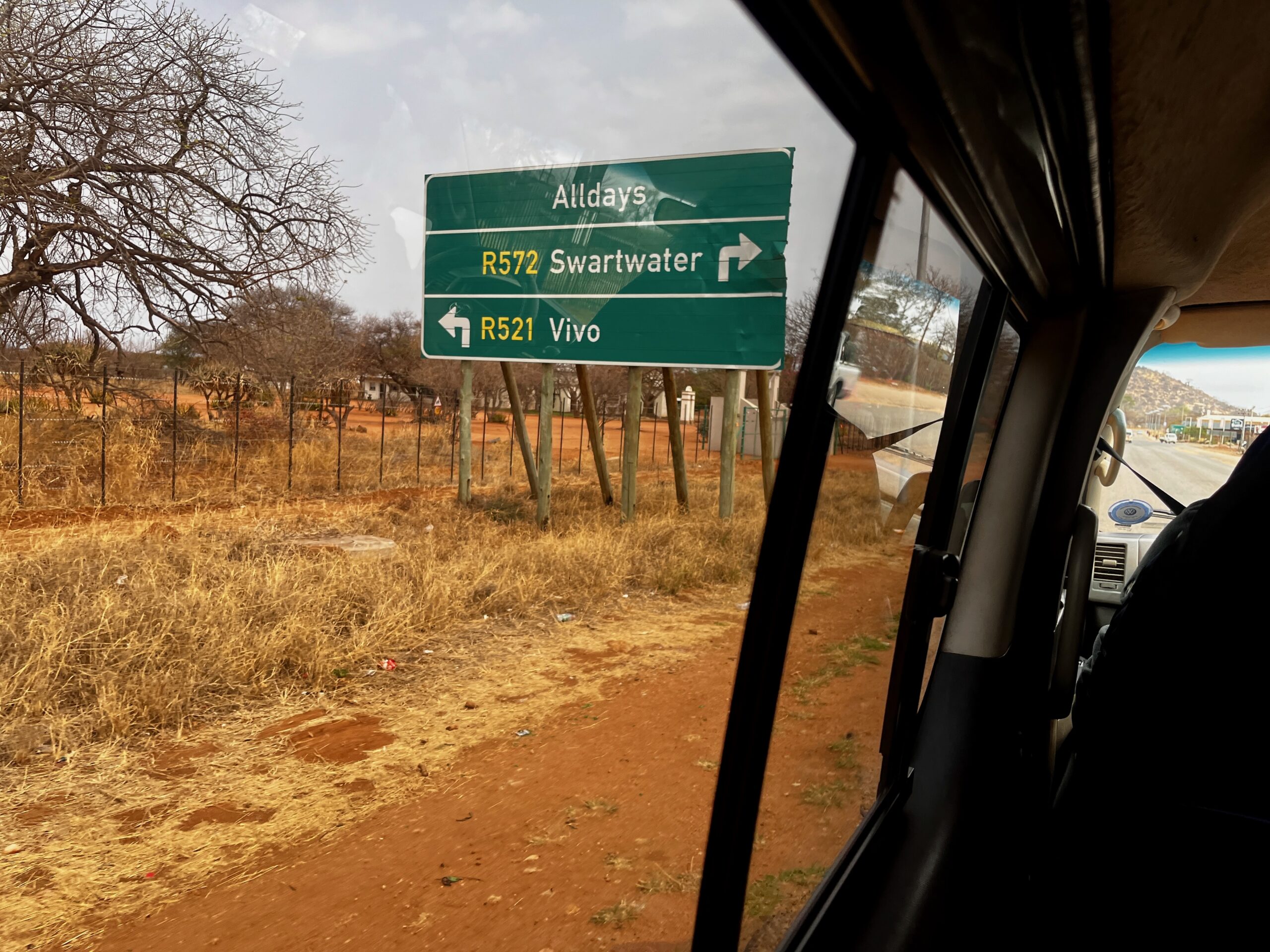
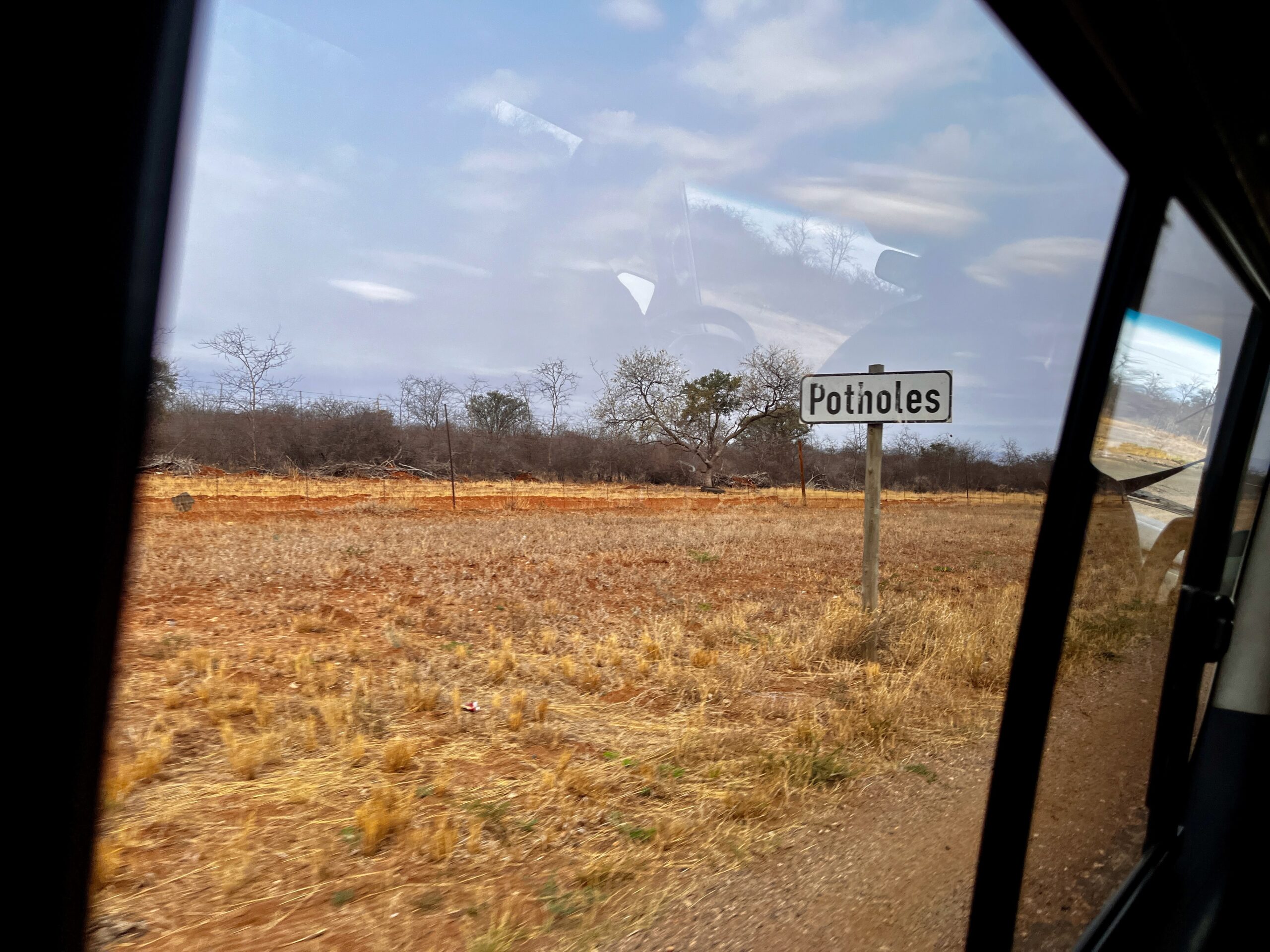


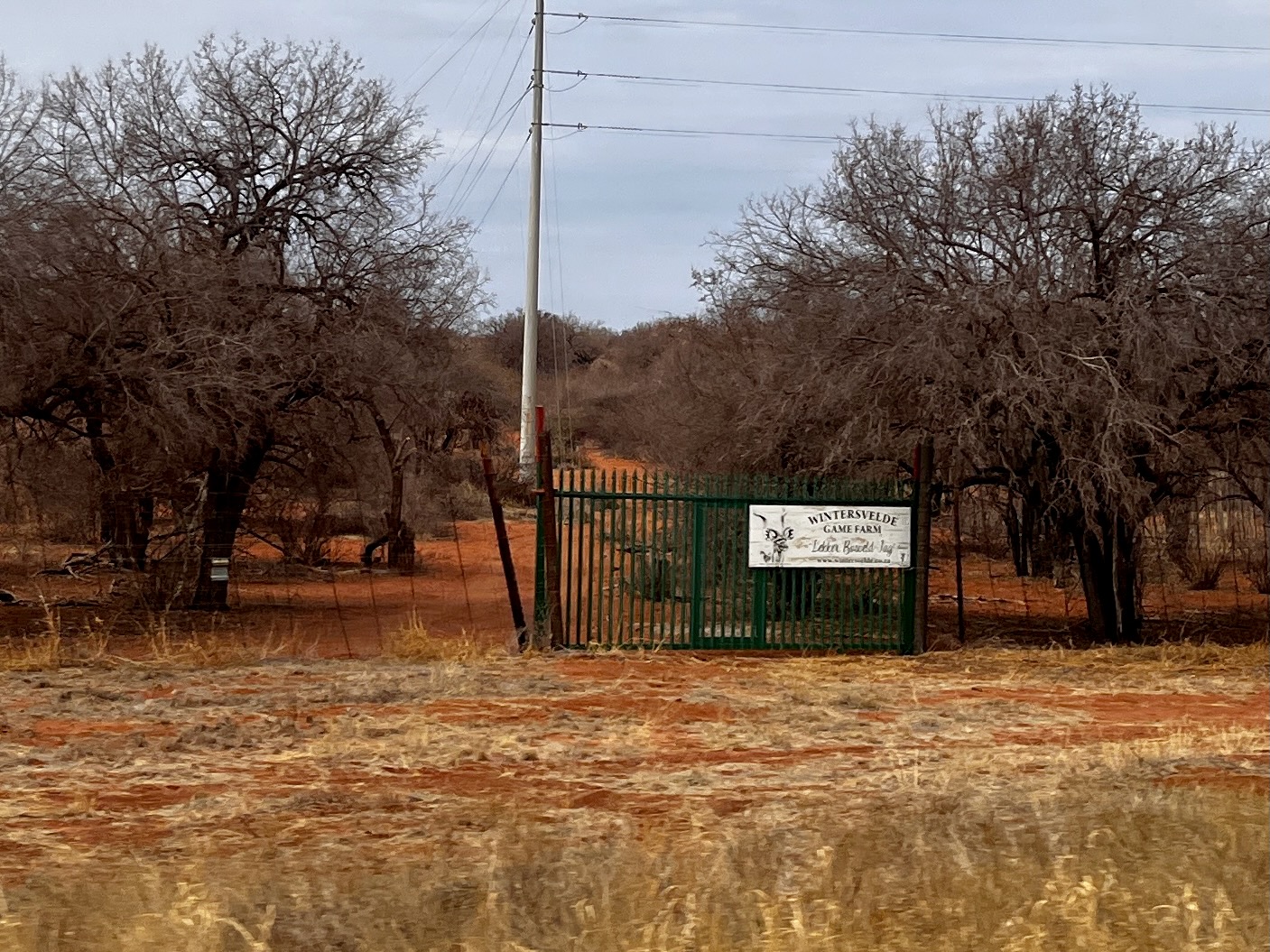
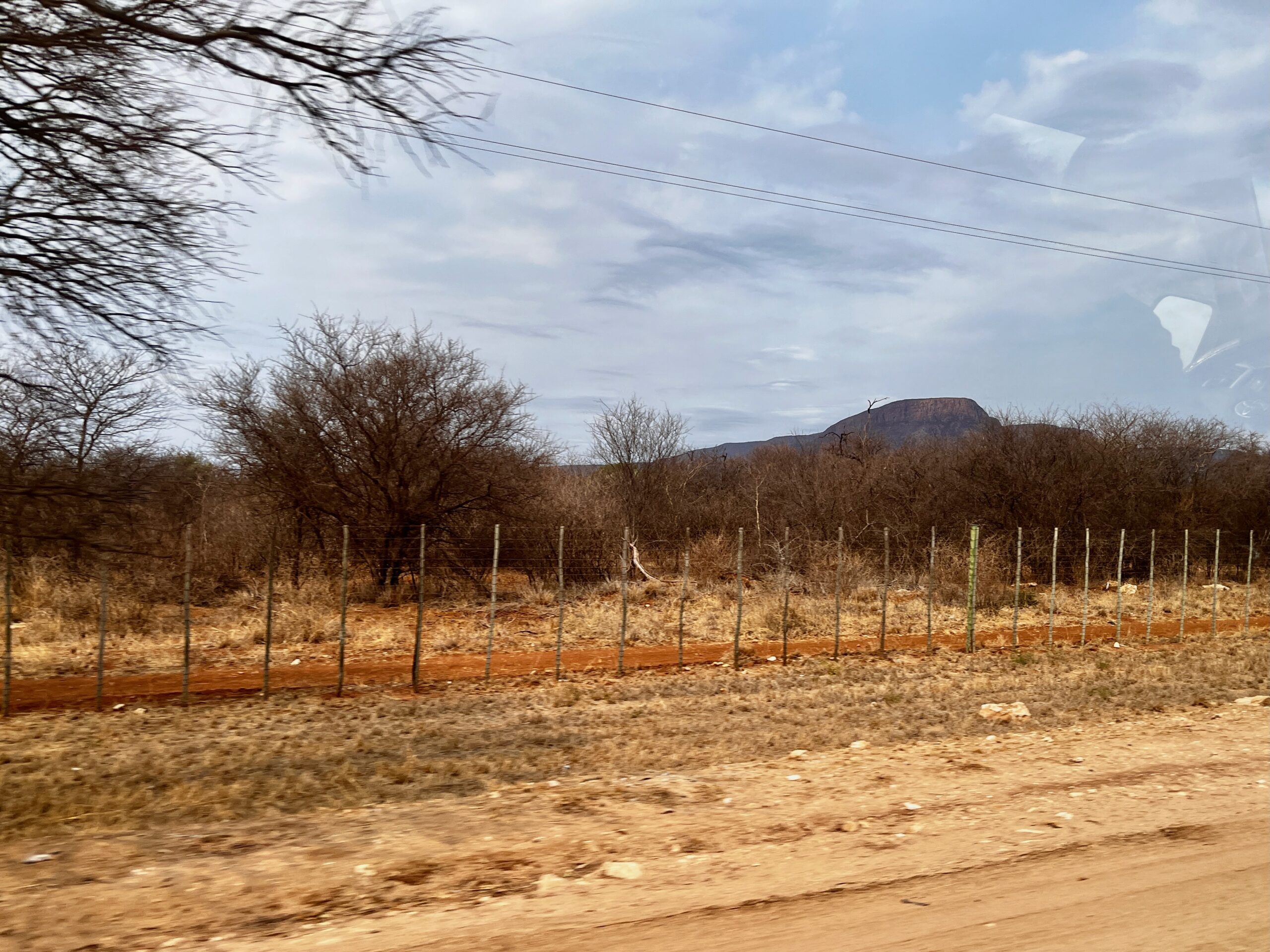
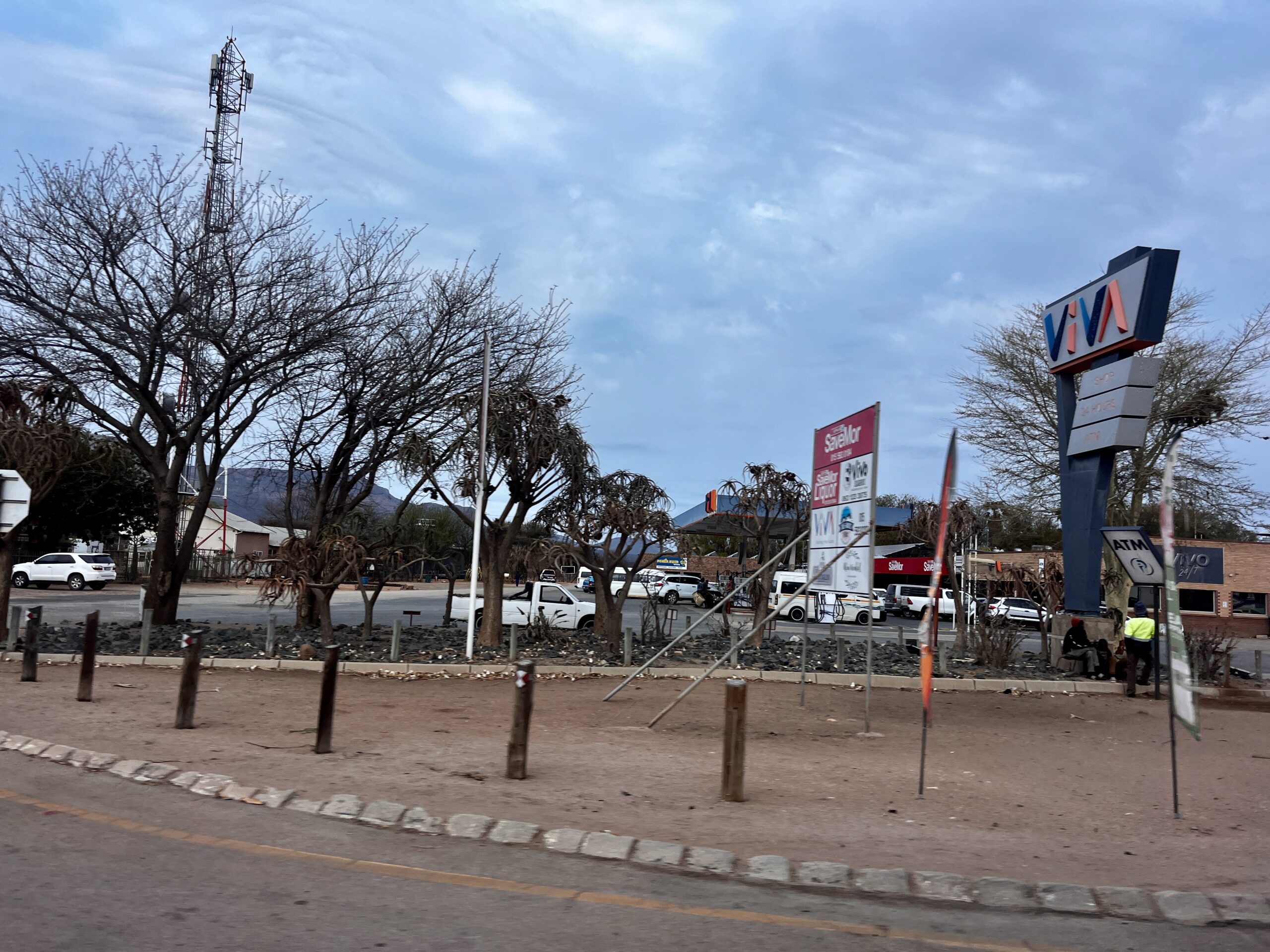


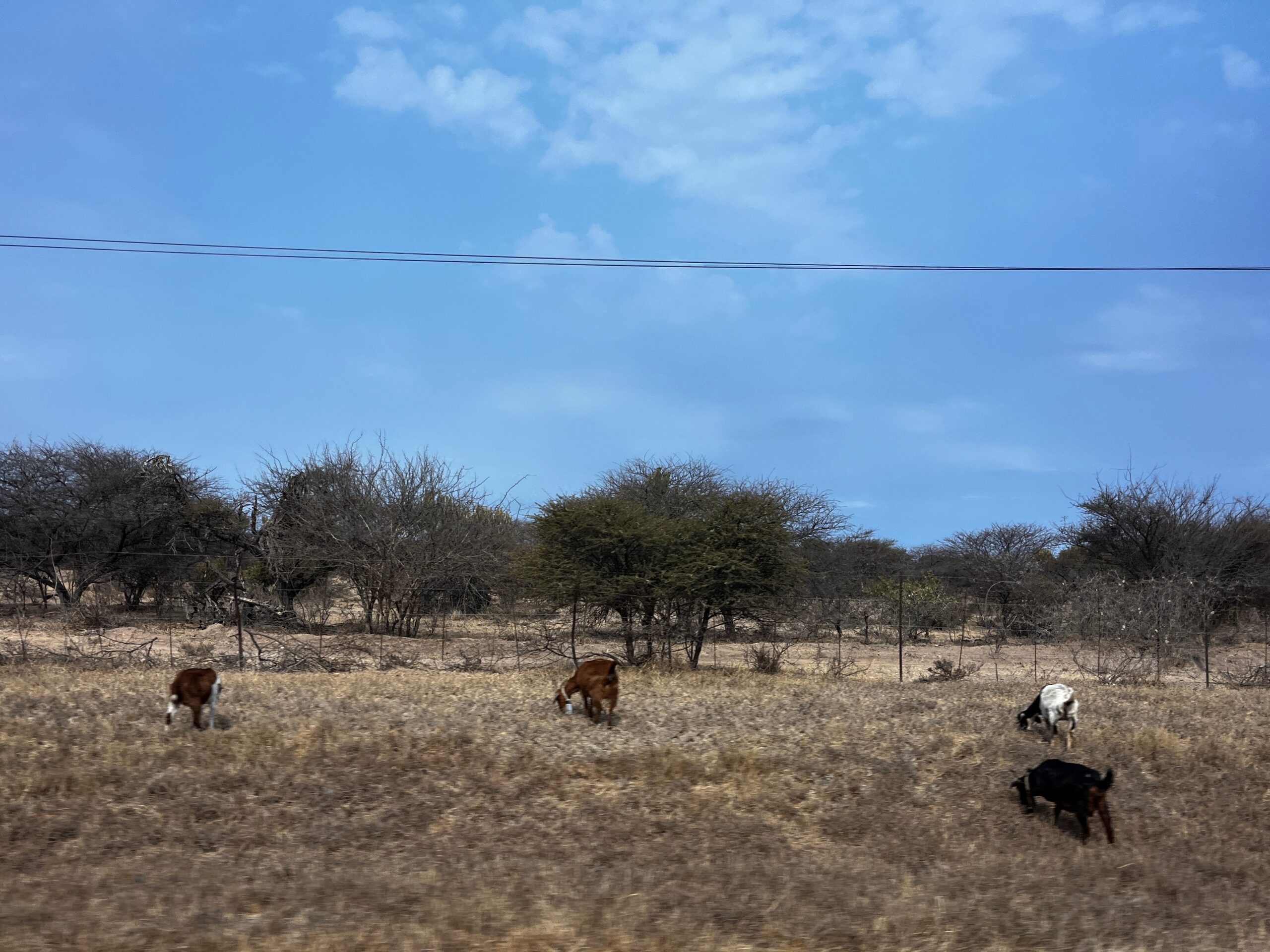


At Polokwane, we loaded up on snacks and took advantage of the lovely bathrooms. Don was delighted to find a Seattle Coffee Company outlet – less so when the coffee turned out to be “flavored milk.”


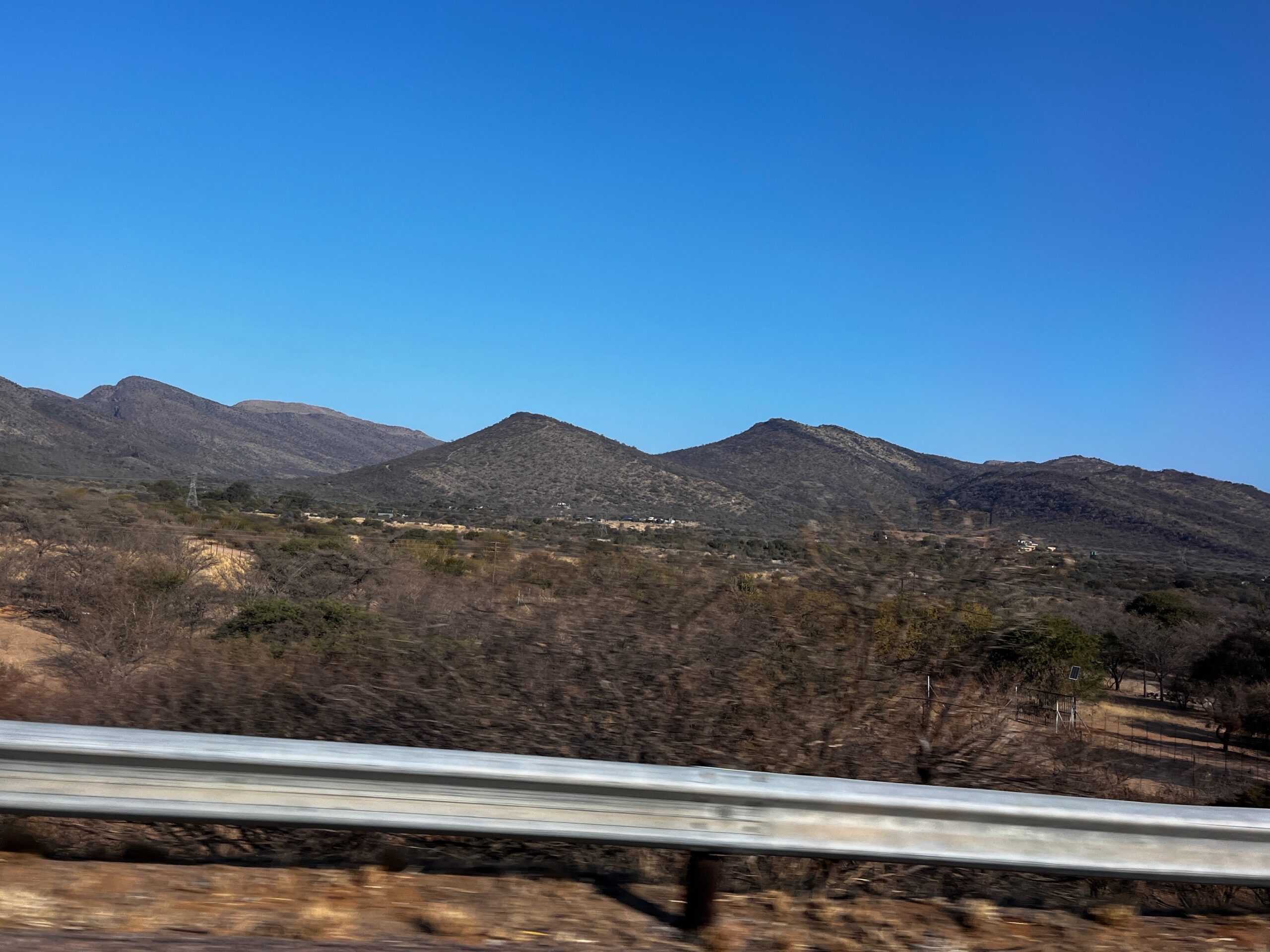
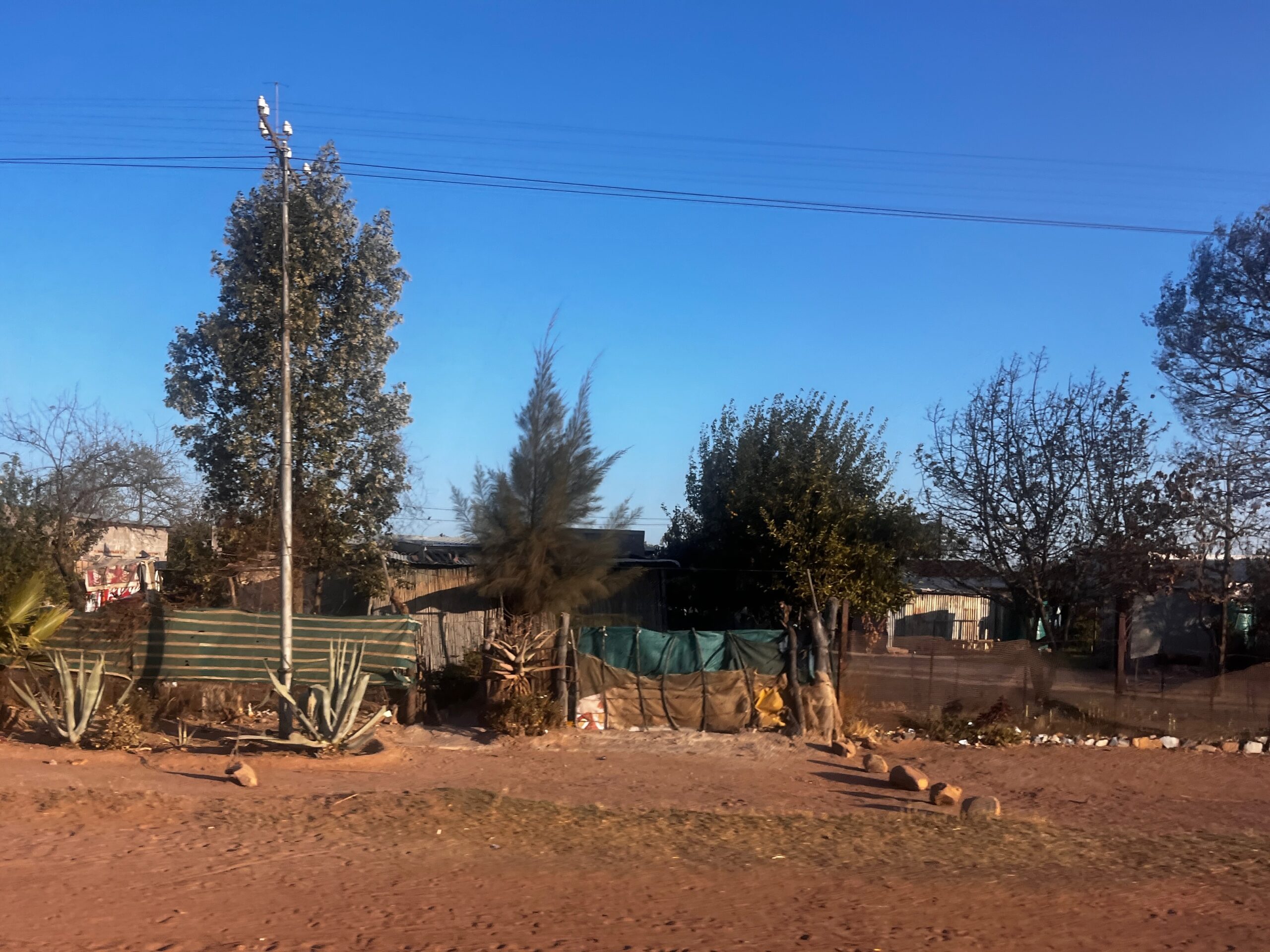


From Polokwane, it was another ~1.5 hours to Zebra’s Crossing. Things got a bit discombobulated at Moddimole (the closest town to Zebra’s Crossing) when Mike realized that his directions to Zebra’s Crossing assumed arrival from the south, rather than the from the north (our direction of travel), and we were going the long way round. We finally reached the lodge after bumping over some 10 km of dirt road, followed by another 4 km along a dirt lane. Mike’s re-routing was helped along by three backseat drivers on their phones, bickering amiably over the correct route, since Google and Apple maps routed us differently. (For the record, Apple Maps was most correct). More on Zebra’s Crossing (which was delightful) and our last day in South Africa in the final post for this trip.


Great trip!
Thank you again, Joni!