
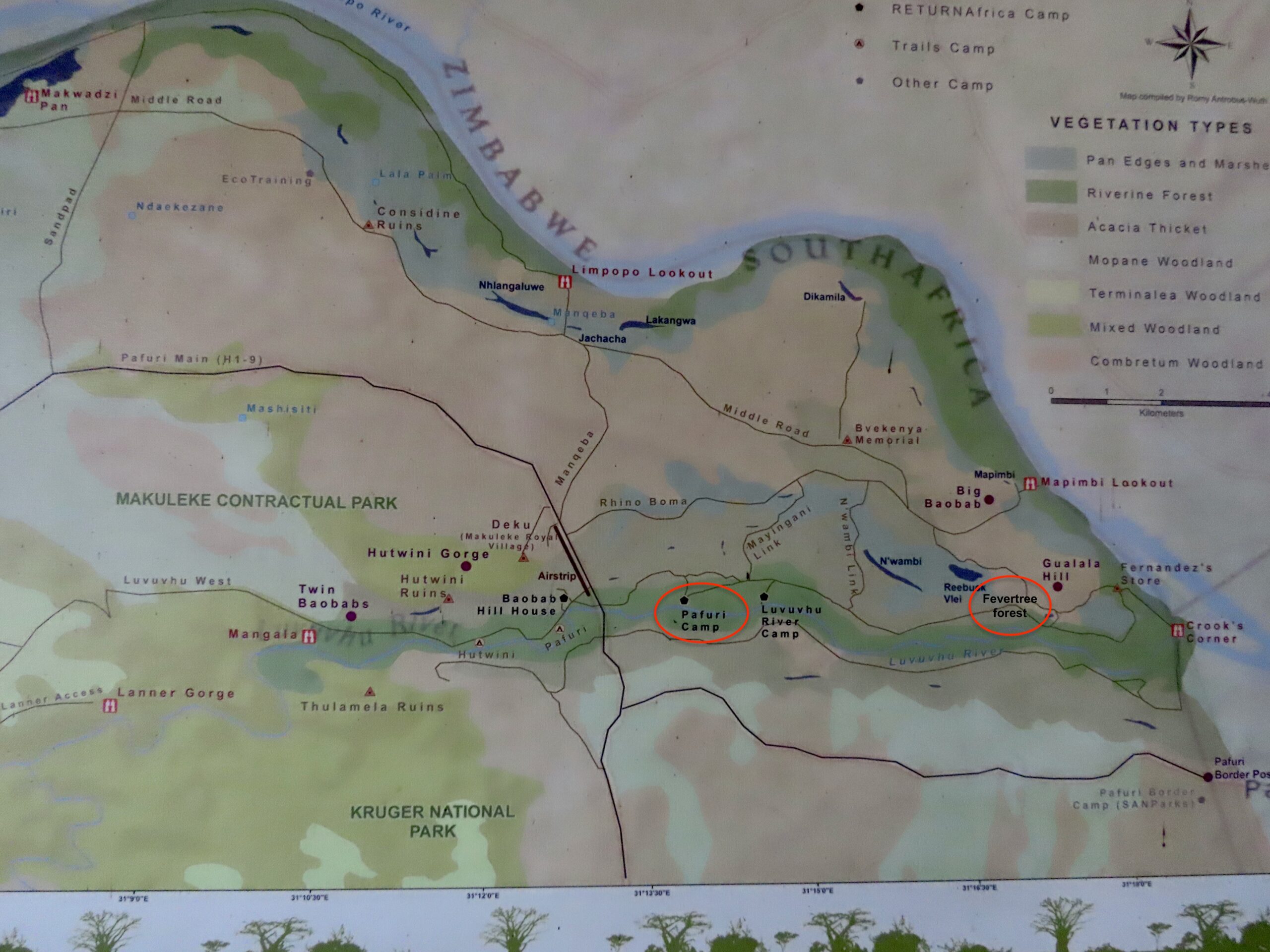
Thursday morning we headed out for another walk, this time in the opposite direction from Thulamela. Our plan was a gentle walk in the woods of the Fever Tree Forest. The local critters had other ideas.
En route, we stopped to watch a pair of Tree Squirrels cavort in an Apple Leaf Tree.


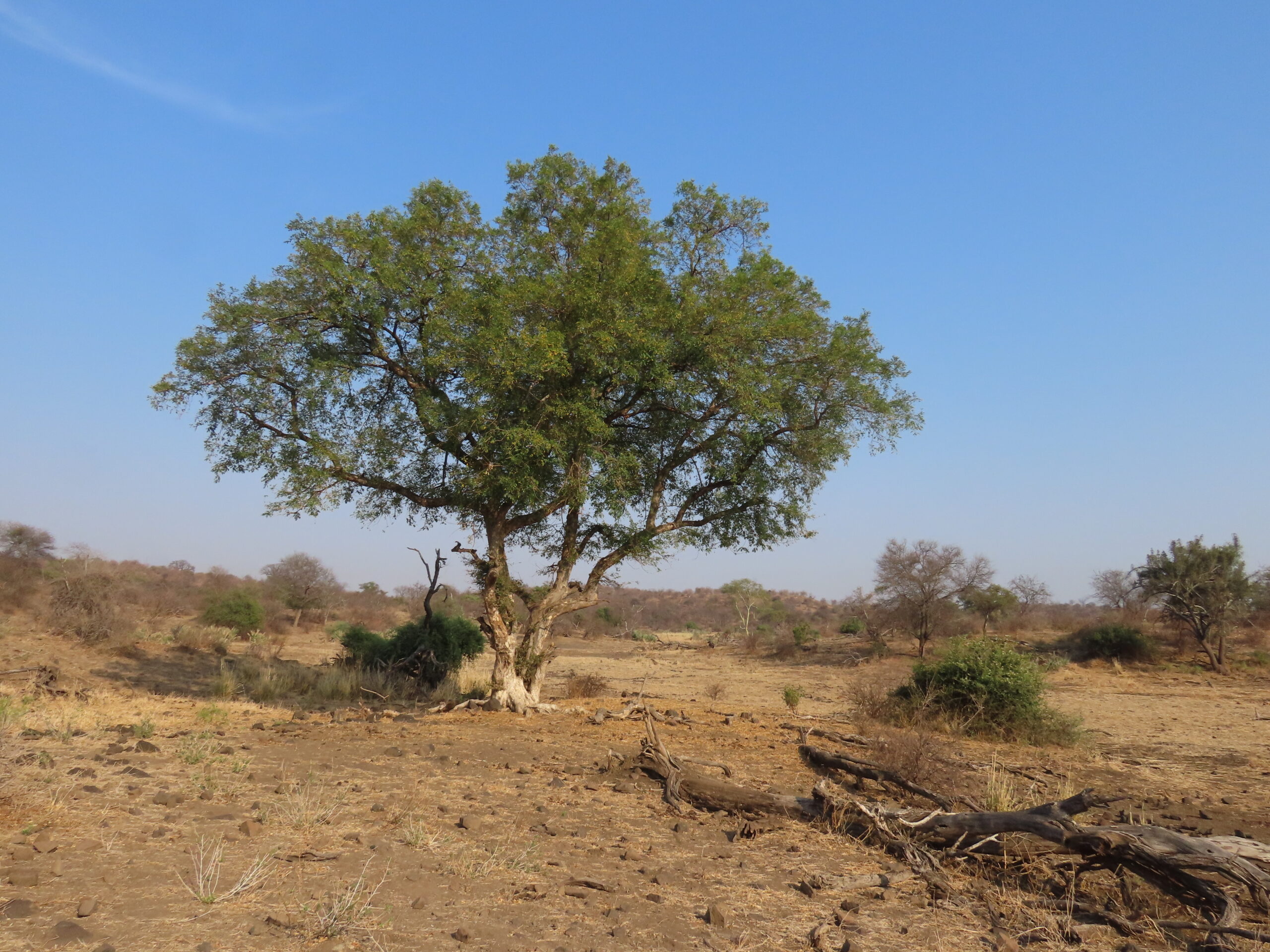
Fever Trees are an iconic tree in Southern Africa. They need a lot of water, so are usually found around riverbanks and in “pans” that are routinely flooded. In Africa, lots of water = equals malaria, and European colonists associated these gorgeous yellowish-green barked trees with malarial fevers. Believing that the trees made people sick, they named them Fever Trees.
They play a vital role in their ecosystem, providing habitat and food for birds, insects, and mammals. The trees’ flowers are a rich source of nectar, attracting pollinators such as bees and butterflies. Additionally, the foliage offers shelter and nesting sites for birds, and tree roots help stabilize the soil, preventing erosion along rivers. Like Aspen, their bark photosynthesizes, and (to my eye) there are similarities between the bark of the two species.
Makuleke’s large stand of Fever Trees grow in a floodplain that fills with water when the river overflows each year. Basalt rock underlies this “pan,” allowing little water to infiltrate deeper into the ground, so there is a long period of standing water during and after flood season – great breeding ground for mosquitoes and all the birds and bats that hunt them. Fever Trees only live for about 50 years, and Jan said this stand will be gone in about 20 years.


As we admired the trees and prepared to disembark, Jan noticed a herd of elephants lurking in the (ubiquitous) wooly caper bushes nearby – much too close for comfort. So, with a quick change of itinerary, Jan took us instead to a slight ridge nearby, in more open country, with plans to walk over to the Limpopo River.


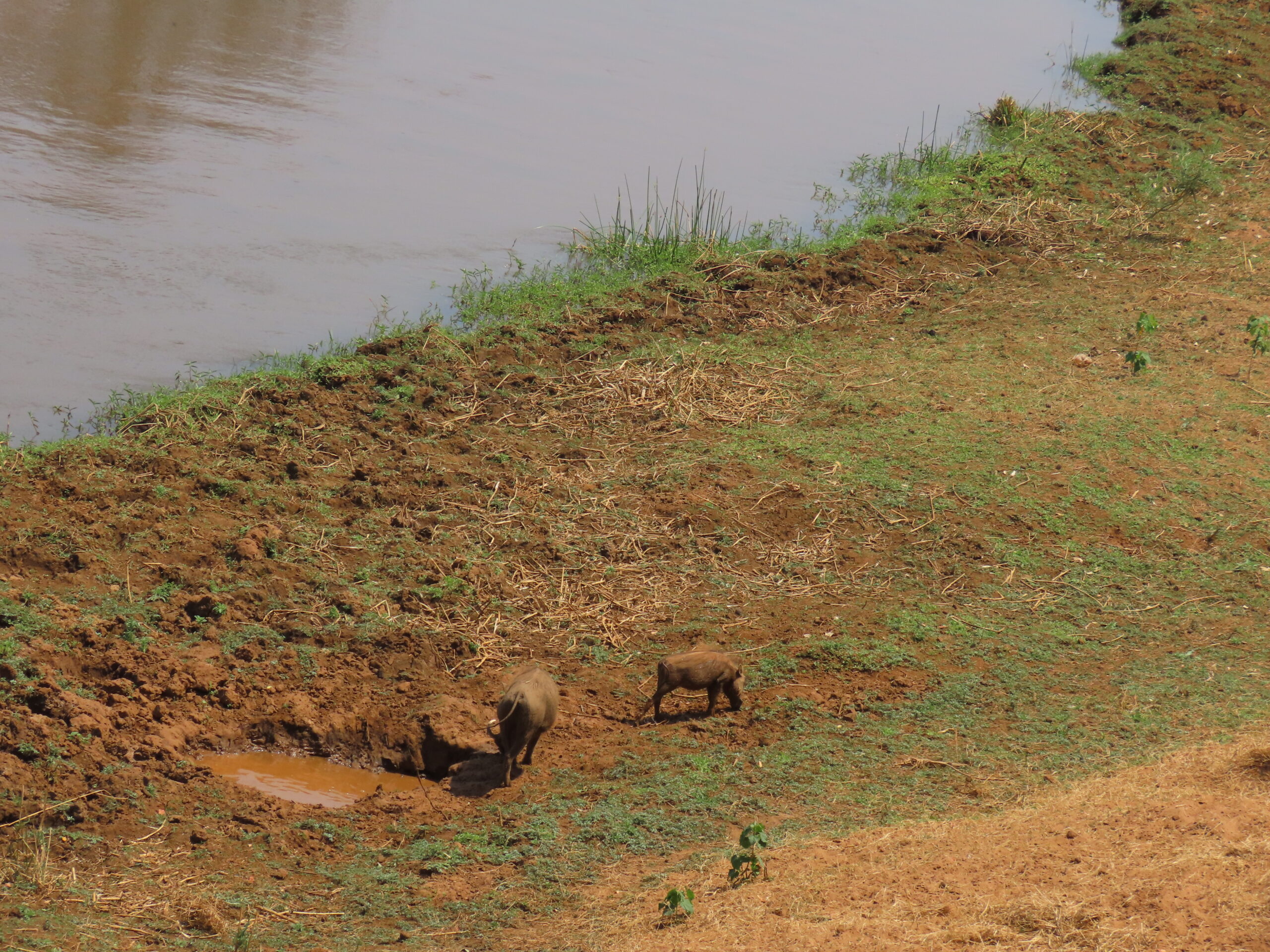
Our first nature lesson involved a mud wallow, a common feature which can become a problem for the local ecosystem. This wallow probably began as a hole from a tree knocked down by elephants. The hole collected water, creating mud, which Warthogs take for their dens. Animals walked through the hole, making it larger and larger, and eventually it became a catchment pool and water source. Animals tend to congregate around wallows like this, overgrazing the area.

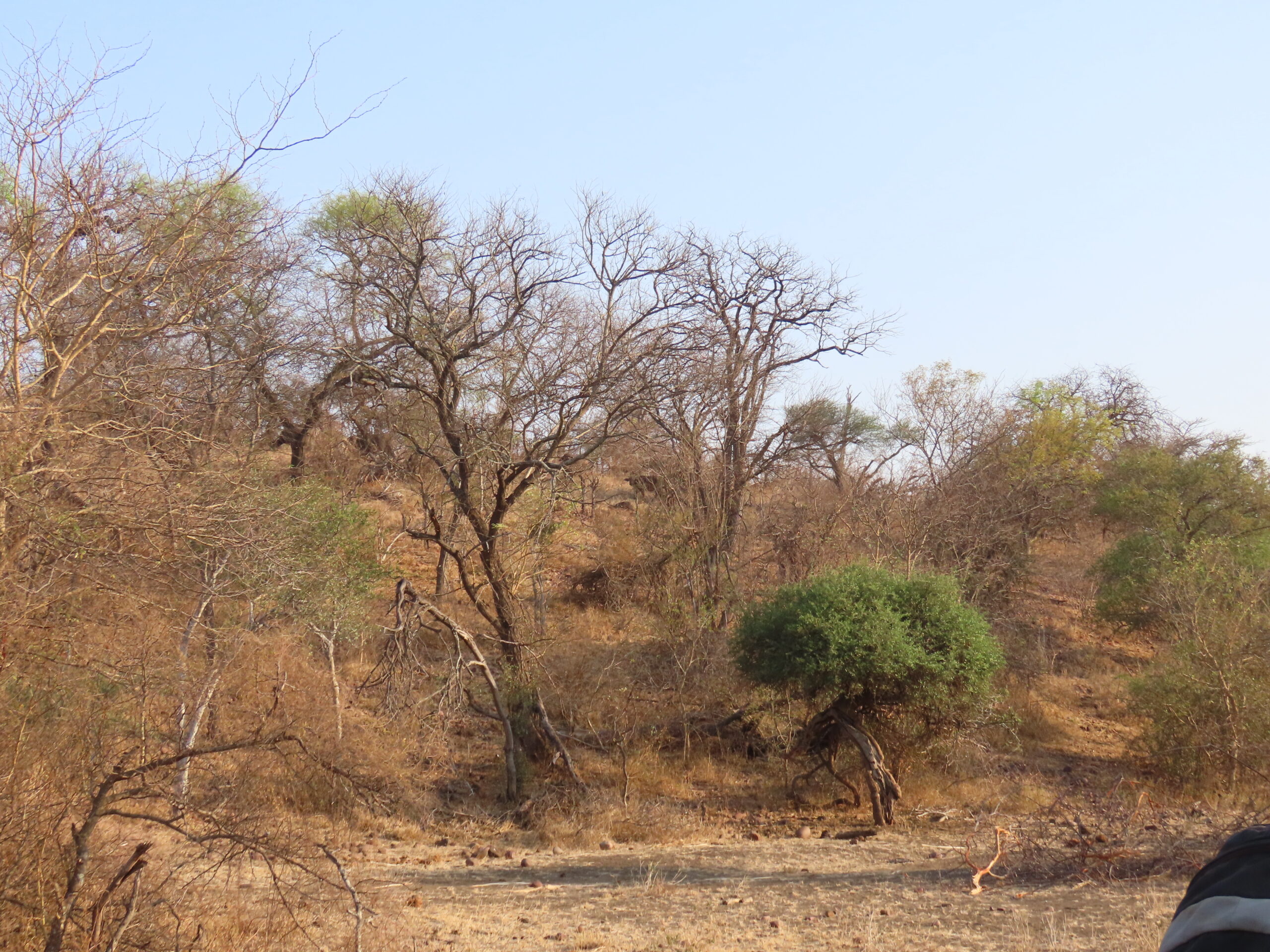
We clambered gradually up several hundred feet to the top of the small ridge.


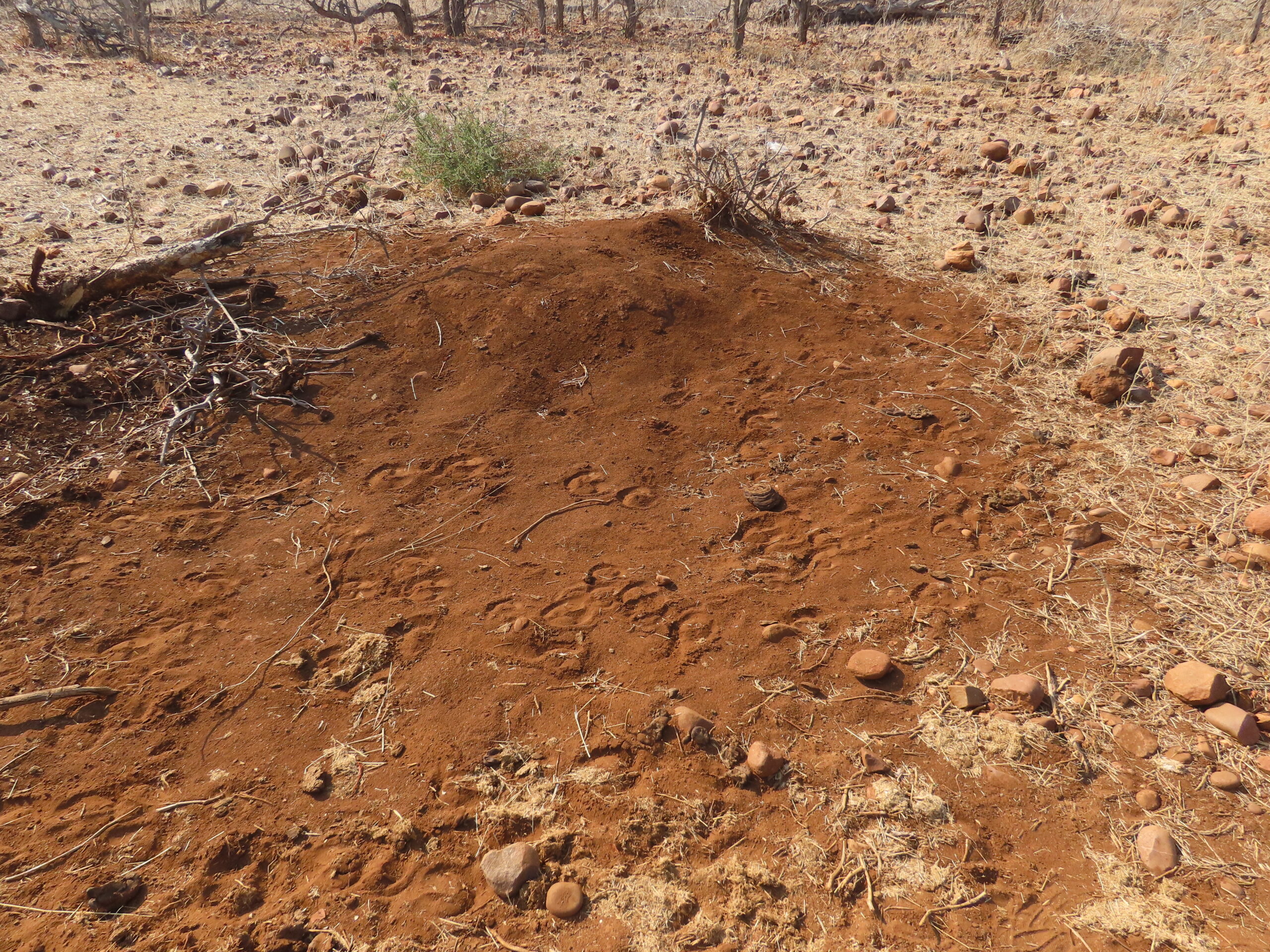
This is an Impala midden. Males are territorial, and defecate/urinate in the midden every day to mark their territory. (Sounds like some political behavior today, nu?) The white crystals in the top center are from Zebra urine, which is whitened by high levels of fluoride in the water here.



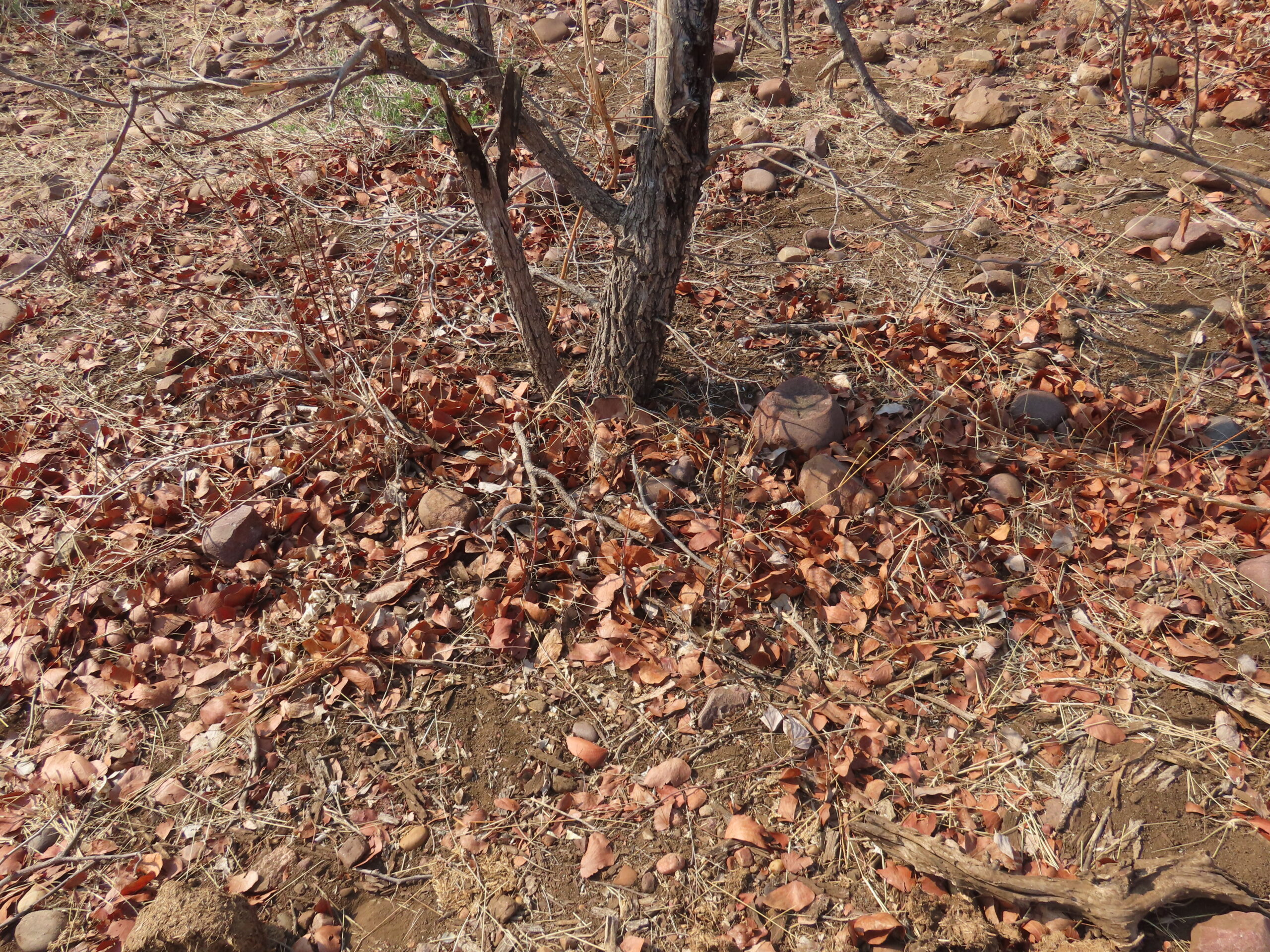
This red elephant pooh indicates that the animals are eating a diet of branches and bark. Brown ellie pooh indicates a grass diet. Ruminant pooh (antelope and buffalo) is black because they are better at digesting than elephants.


I found a mostly thornless branch that Dominique could use as a walking stick.


We traversed across the ridge for a quarter mile or so…


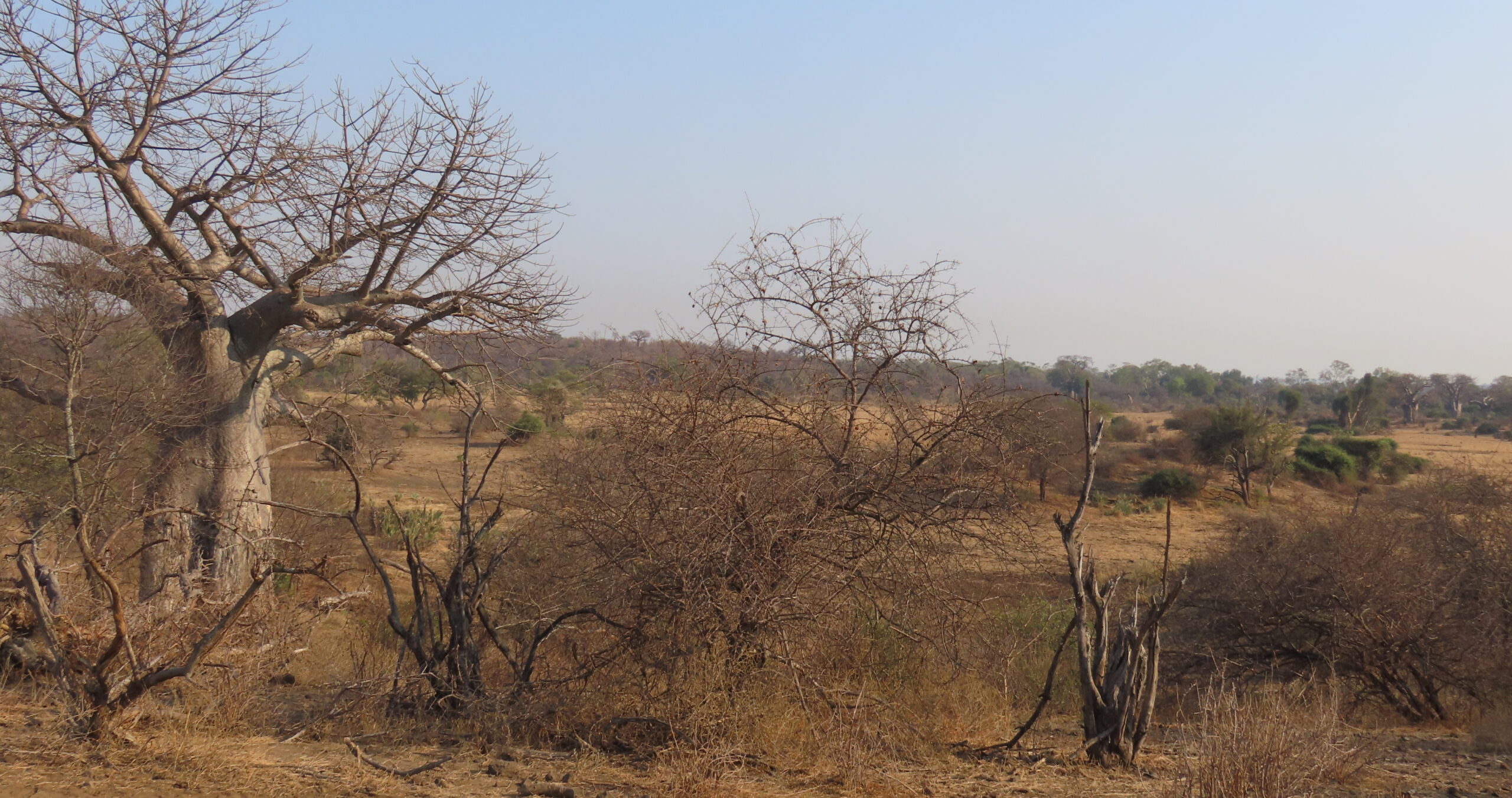
…then started down towards the Limpopo River (visible in the distance (behind the Baobob trees).




And now a word about Vellies. Those of you have read Sally Andrew’s wonderful South African/Klein Karoo mystery series, Recipes for Love and Murder,or watched Acorn TV’s wonderful adaptation, (and if you haven’t – do so!) know that Vellies are a South African footwear icon. (Spoiler alert: Tannie Maria’s Vellies are murdered.) Veldskoene (the long version of the name) translates to “skin-field-shoes,” which were created by Afrikaaner farmers based on traditional tribal footwear. The design was picked up the Clark Shoe Company and popularized as “desert boots” in the 1950s. Jan’s Vellies are made by a company that specializes in boots for rangers, donating one pair to a ranger for every ten pairs sold. Jan tops his veelies with gaiters to protect his socks from thorns and stickies, which can be impossible to remove.

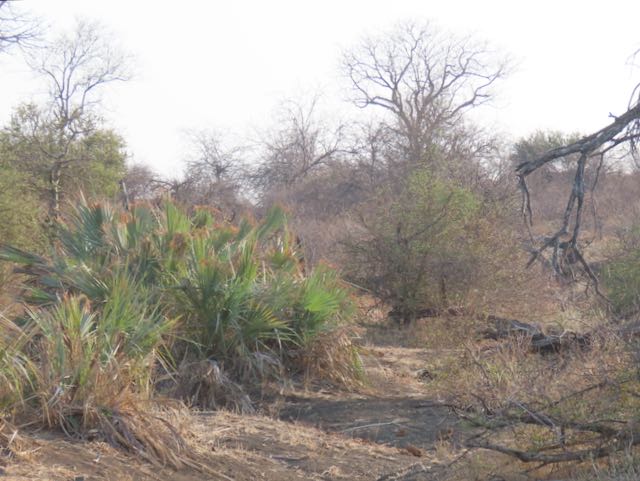
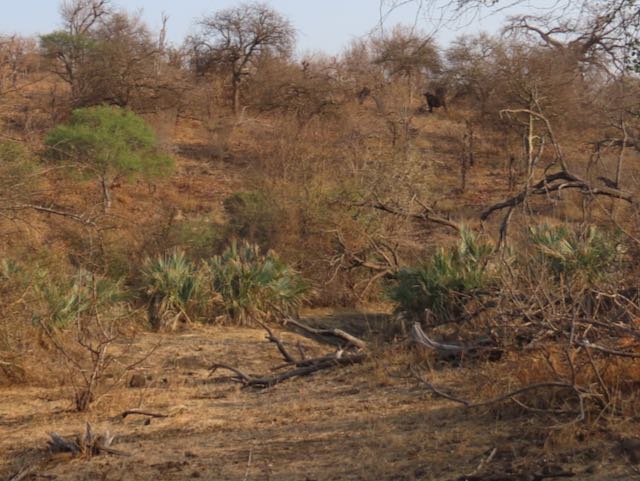
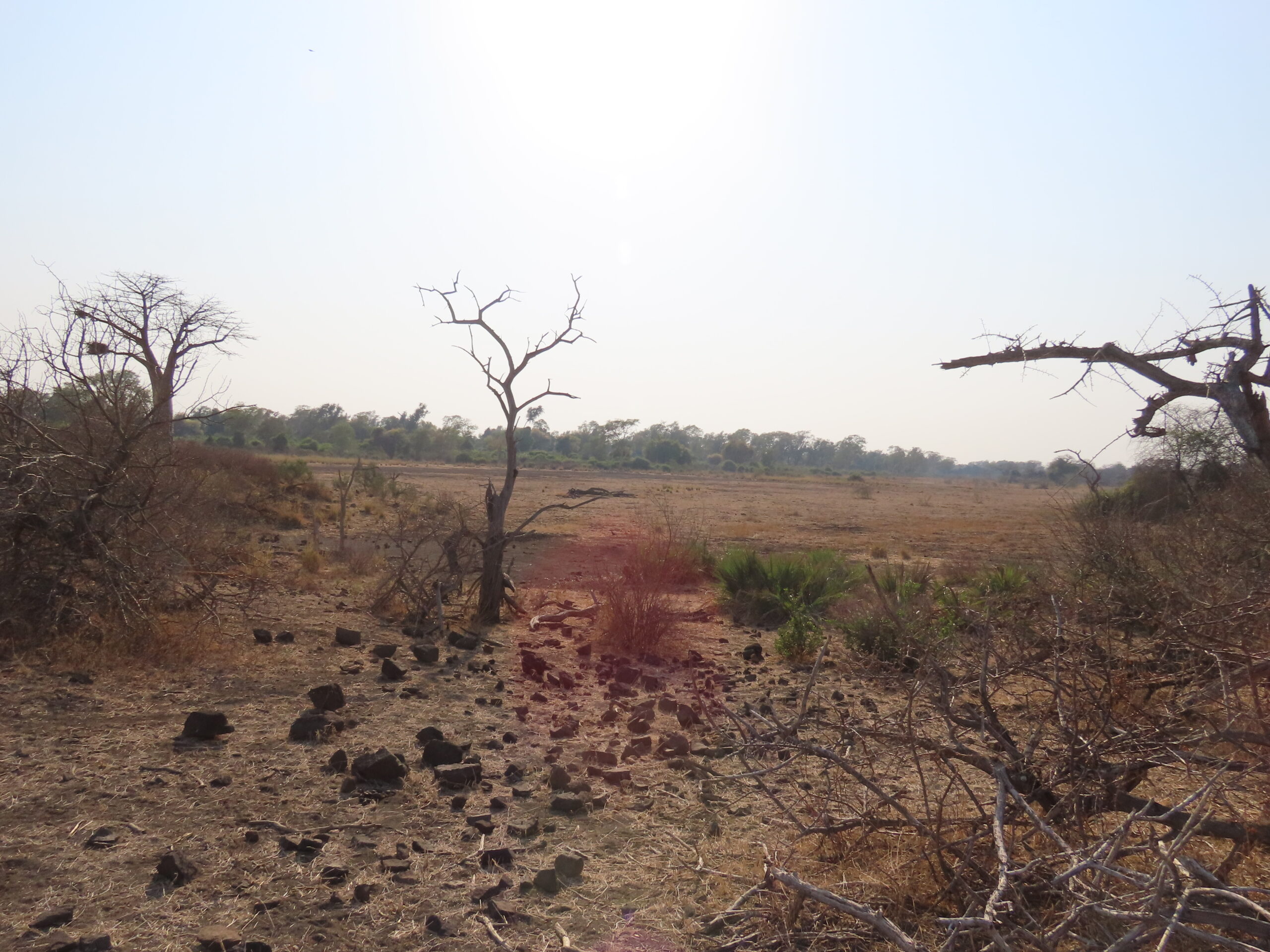
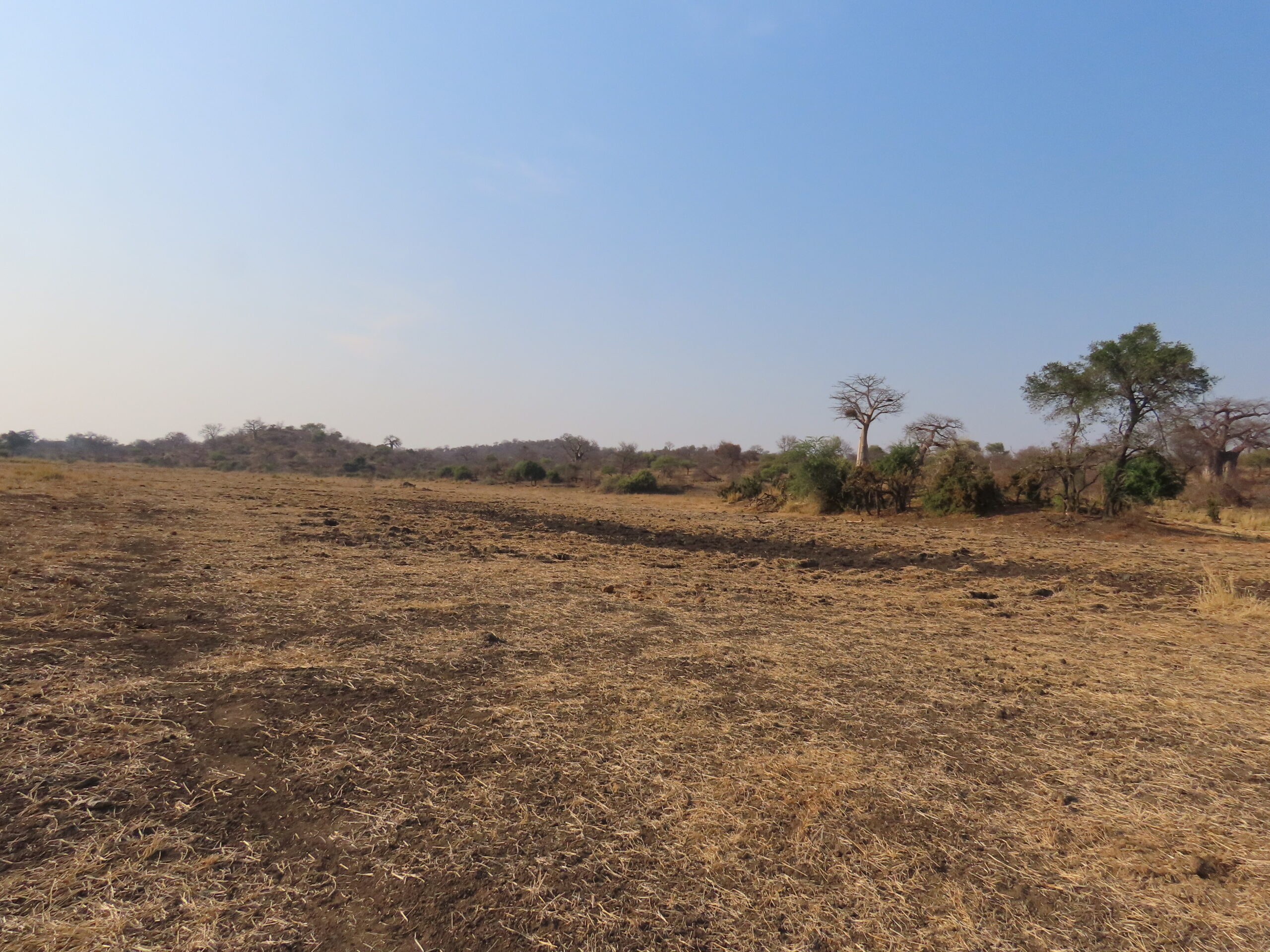
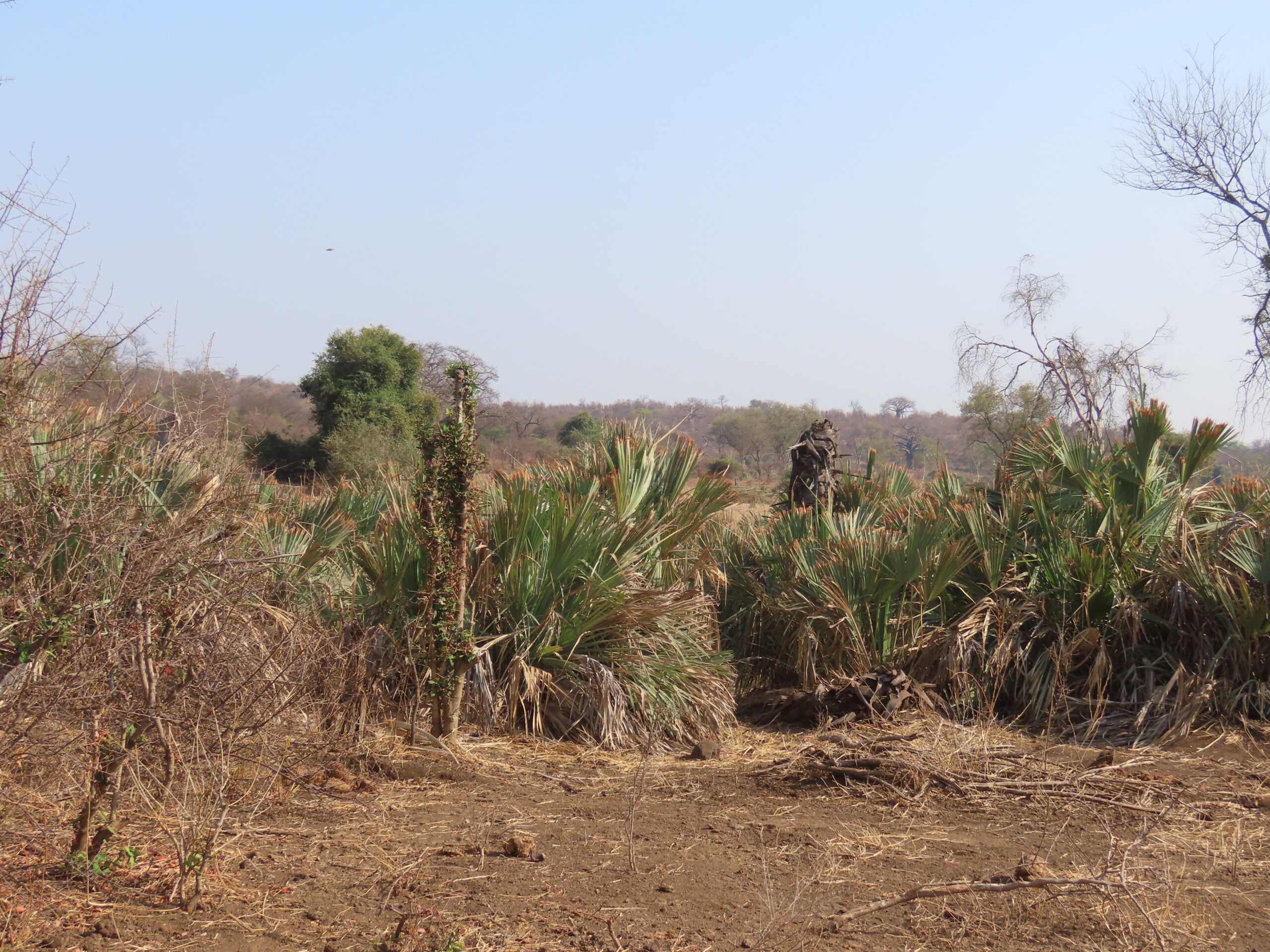
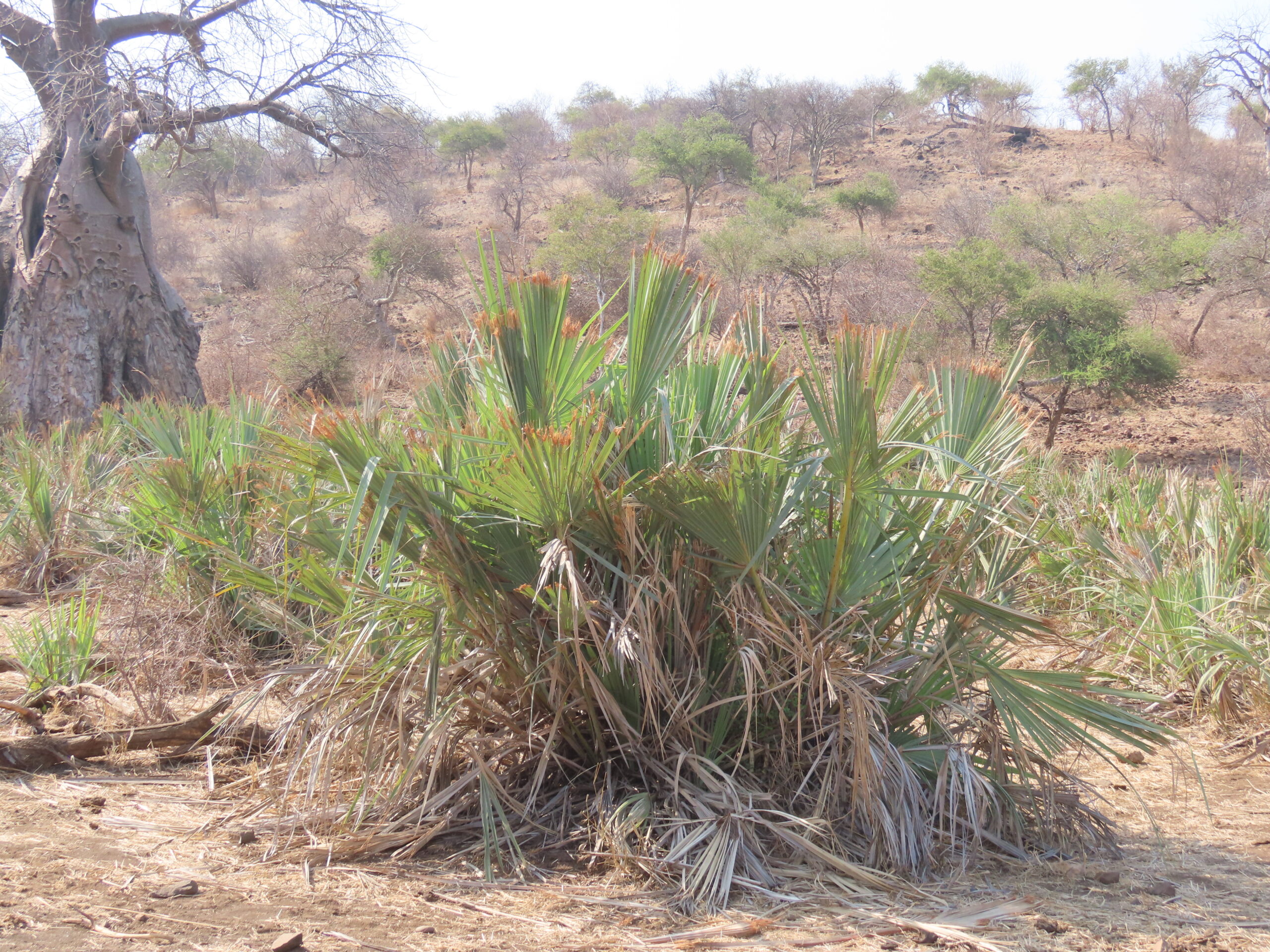
On the other side of the ridge, we started across a broad pan, characterized by scrubby grasses and sun-baked mud, with reeds and palms hugging the fringes of high water spots.




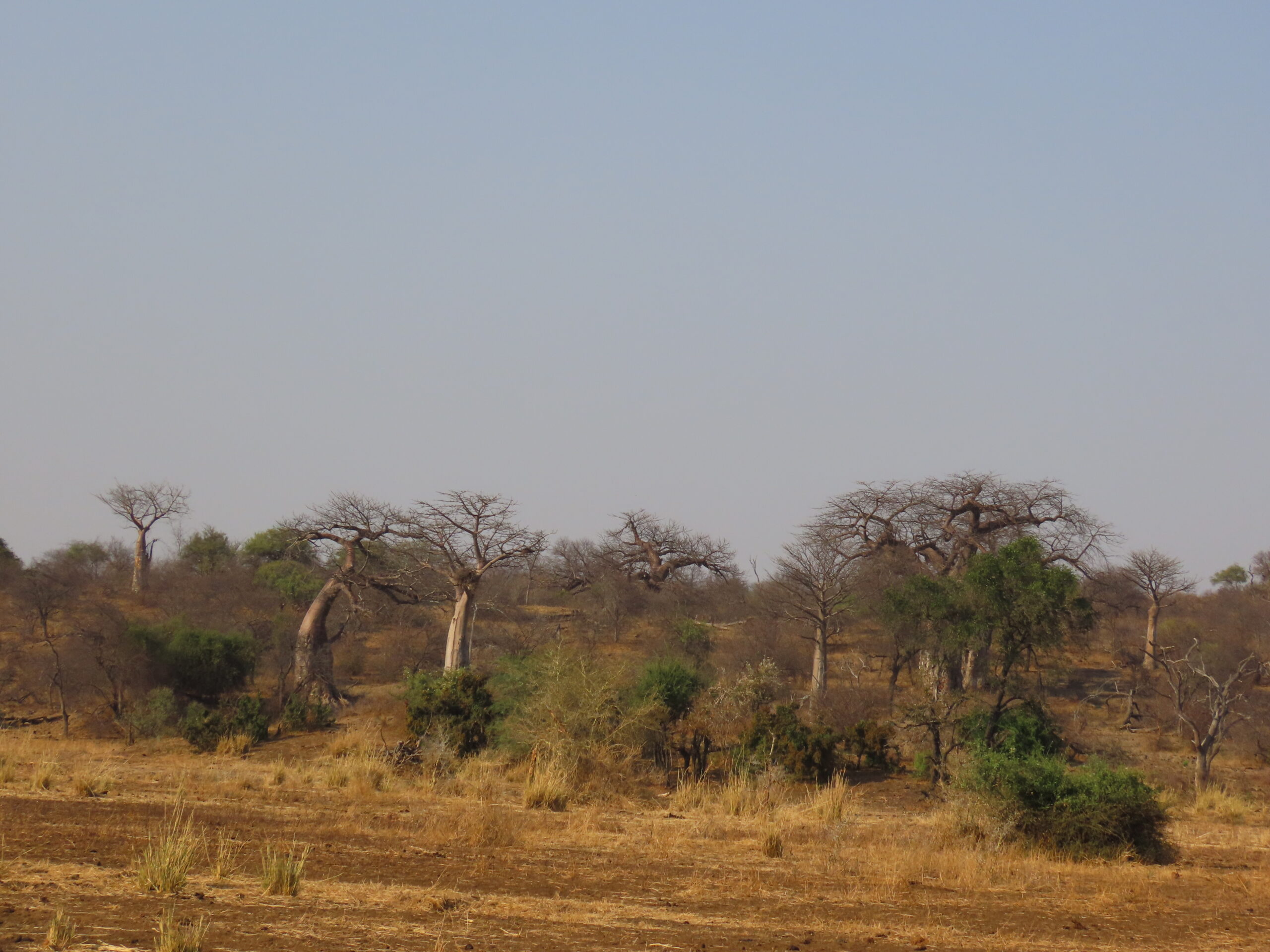


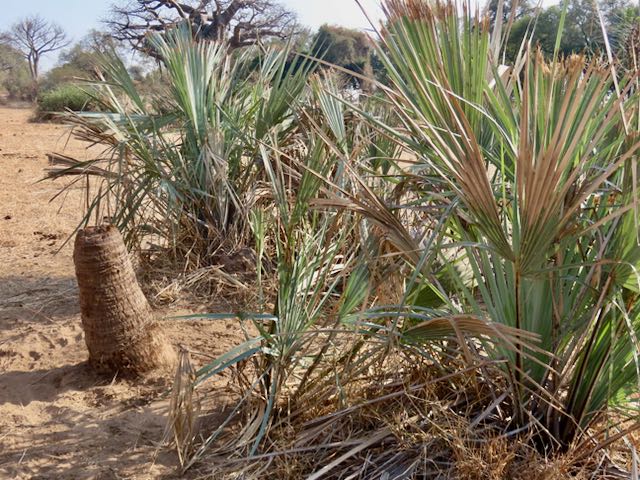
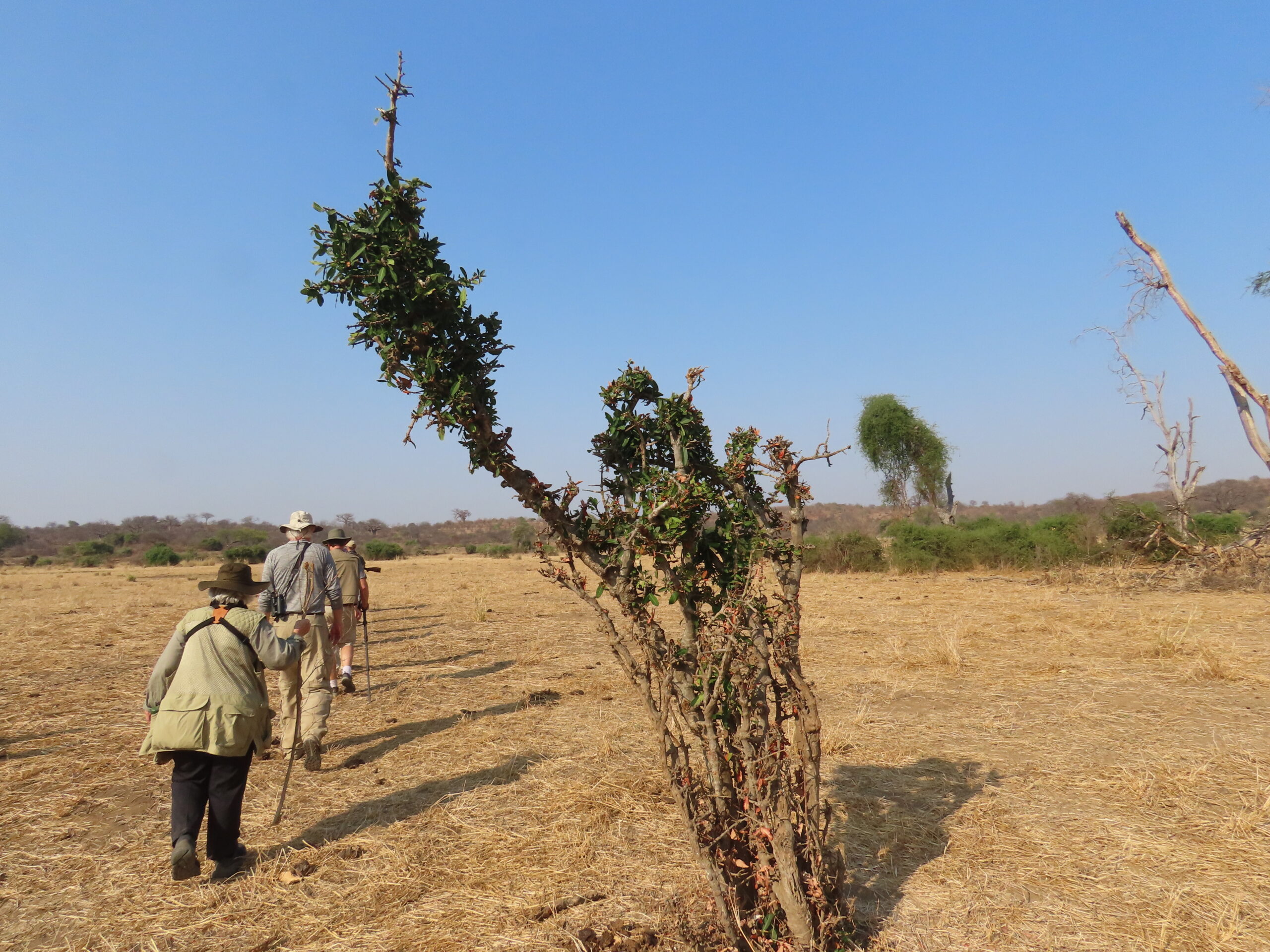
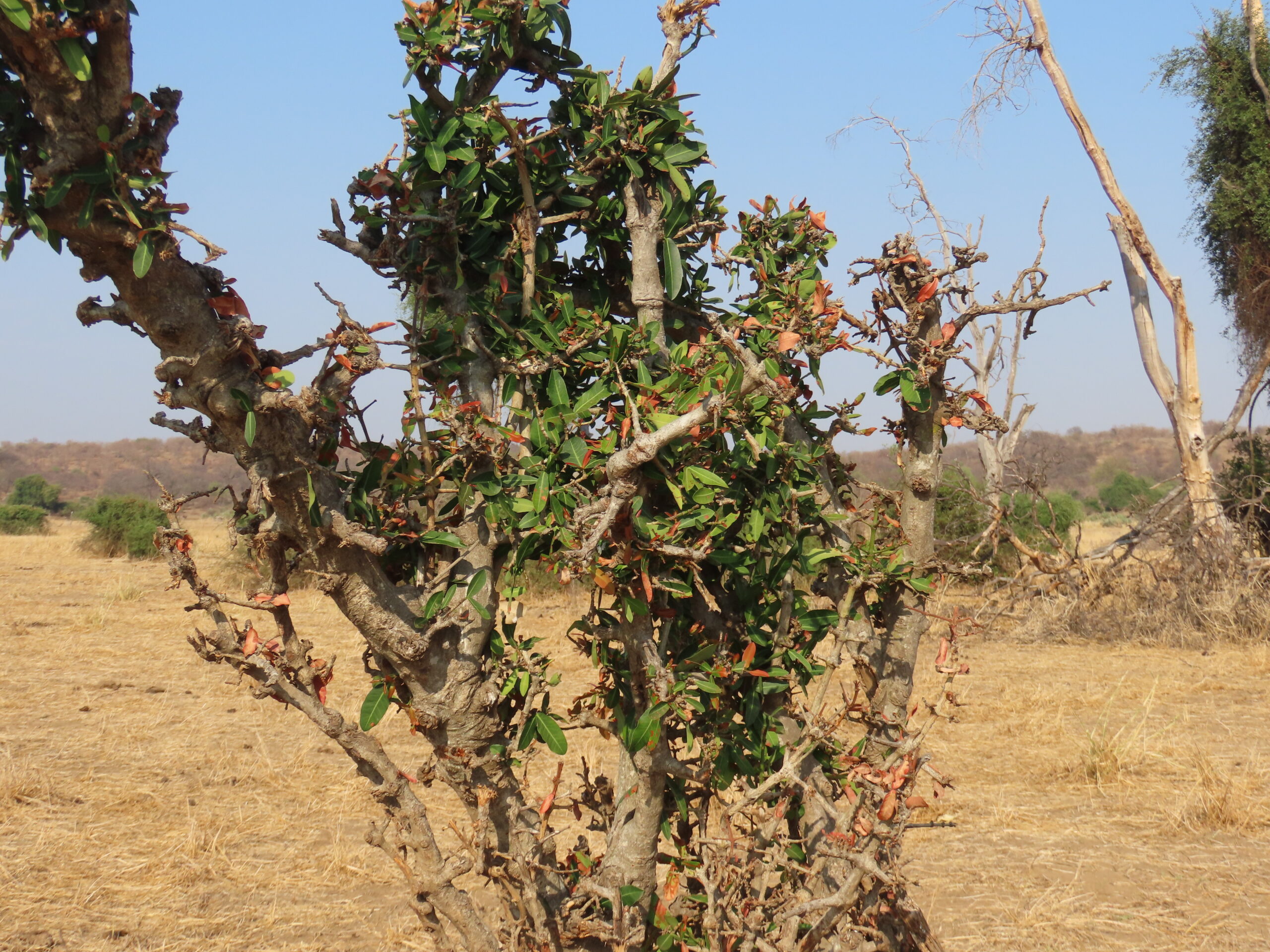
These palms produce a fruit with coconut-liker milk, which lots of critters eat.
Elephants also love the young leaves, so most of the palsm are stunted, never reaching their full height of 15-25 feet.
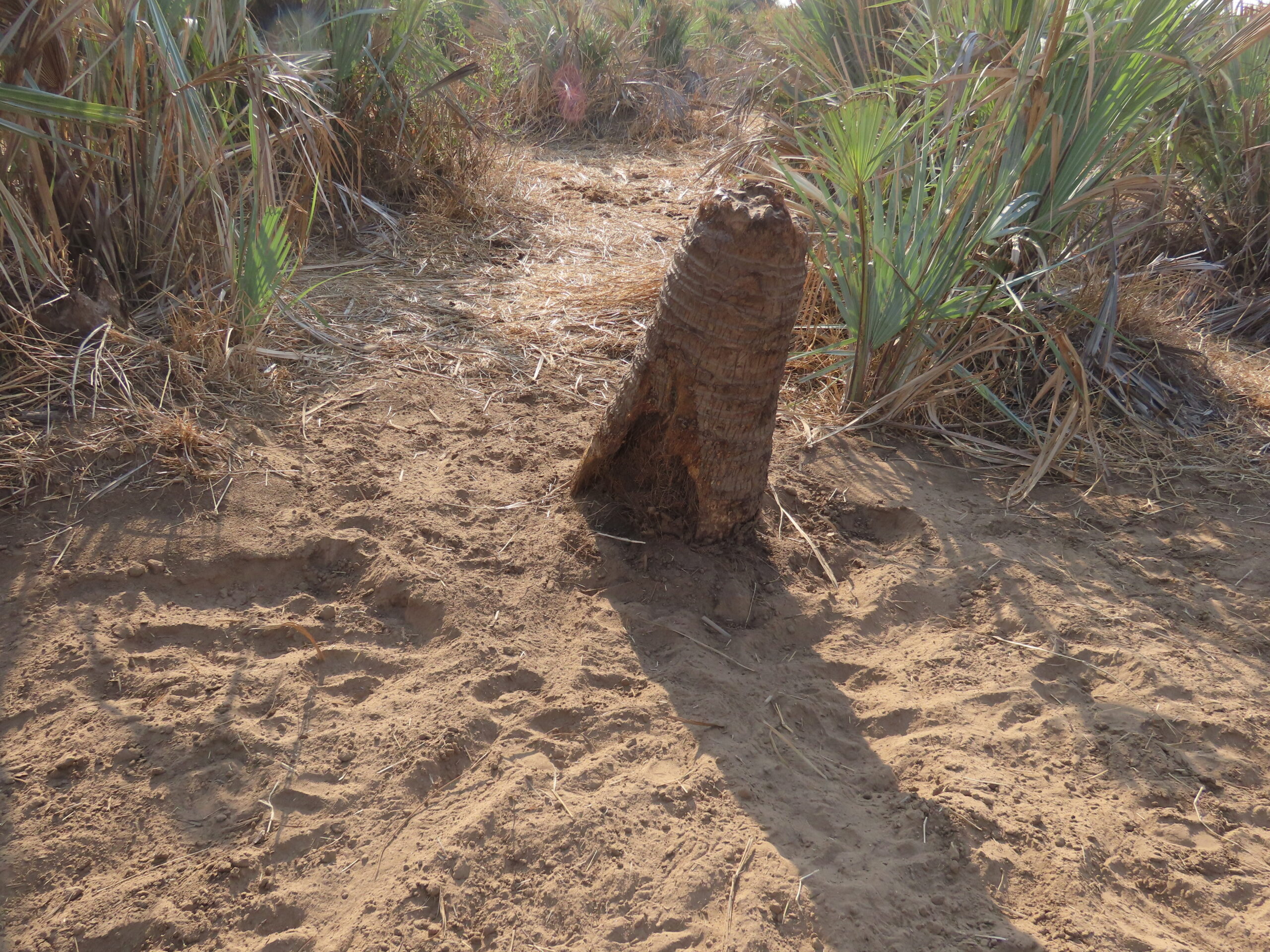


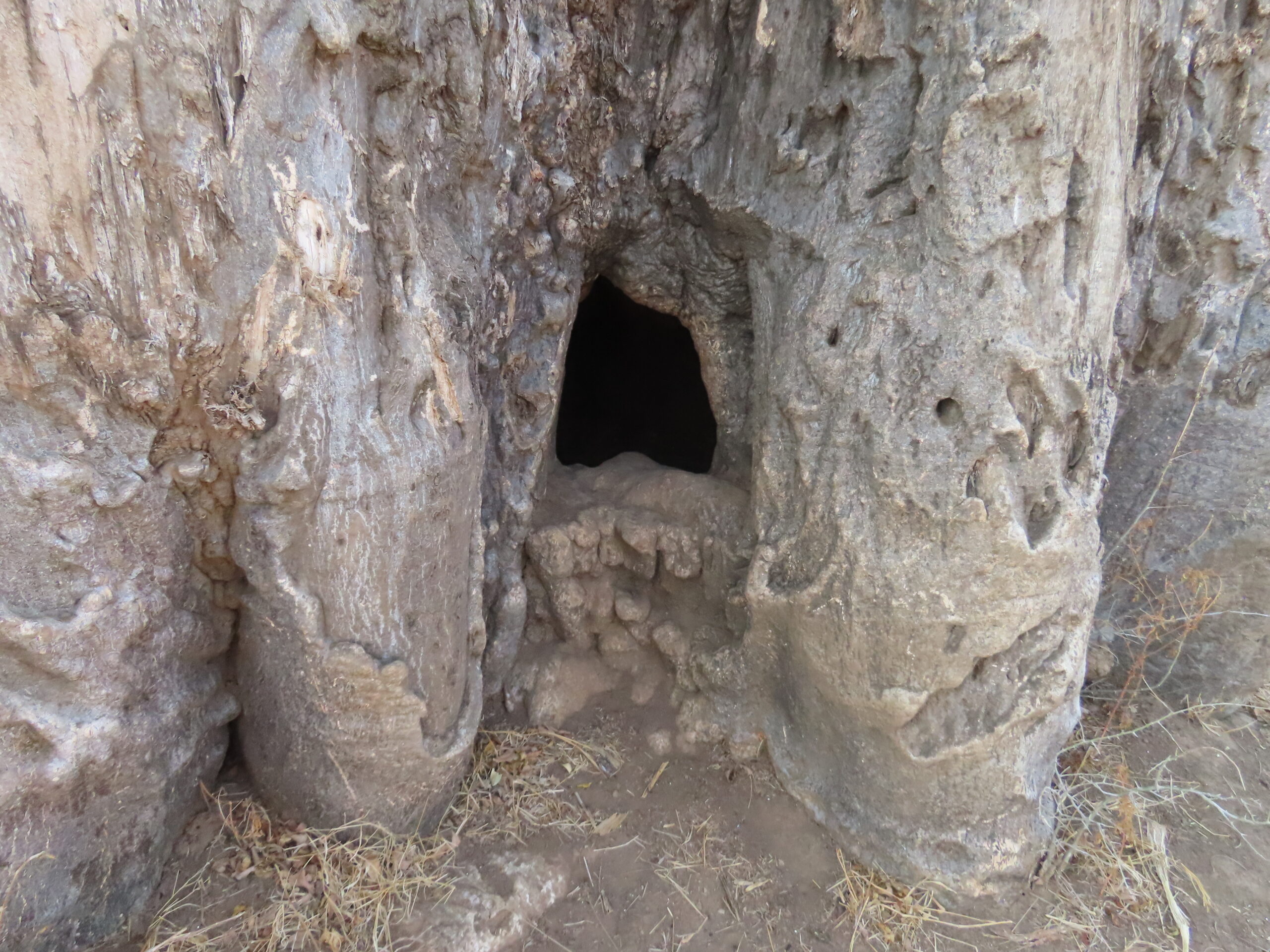
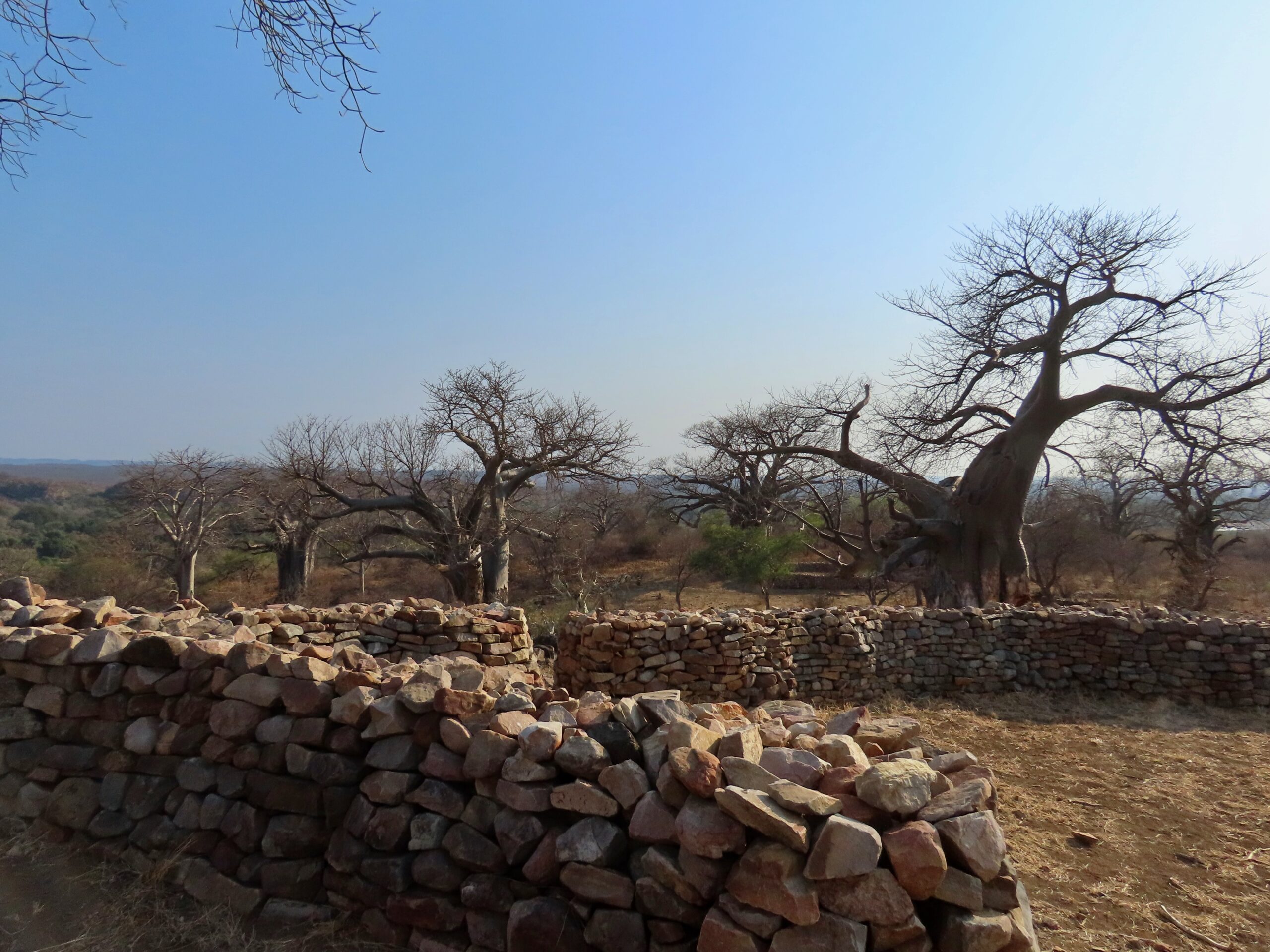
This very large, hollow Baobob was formerly inhabited by a “witch doctor” (politically corrected to “traditional healer” these days). Witch doctors like the one who lived here use animal and bird parts in the practice of black magic. They recently killed more than 100 endangered vultures in Kruger by poisoning a buffalo carcass, in order to harvest beaks and talons from the birds.



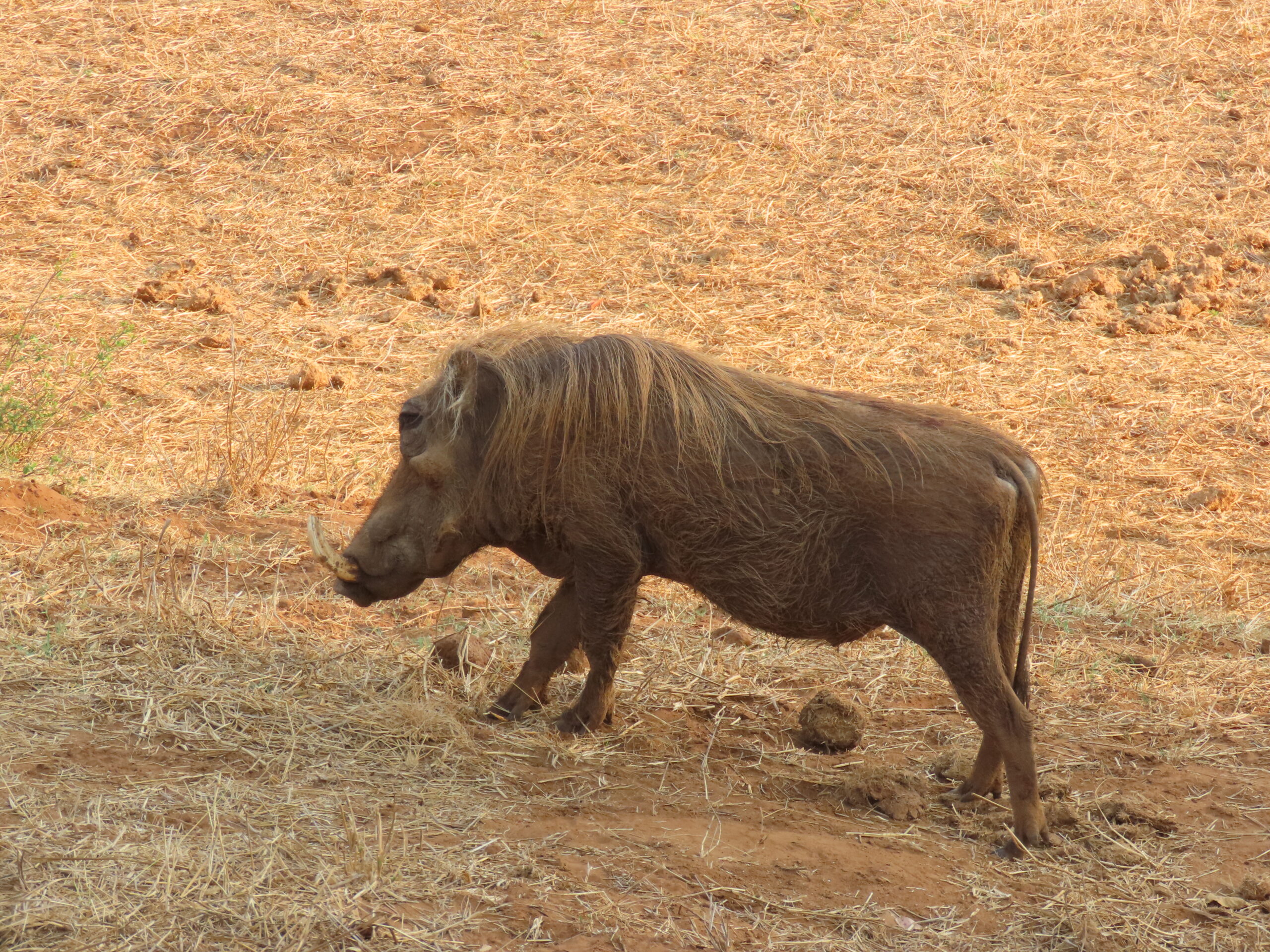
We stopped in front of a large hole in the ground dug by an Aardvark. Jan said it was active, probably used by Warthogs, although Honey Badgers, snakes and Wild Dogs also use them. When Matt walked in front to look more closely, Jan called him back, warning that Warthogs back into their holes, tusks forward, and are known to jump out and grab whatever is in front. People have been airlifted to hospital after a Warthog clamps onto their leg.


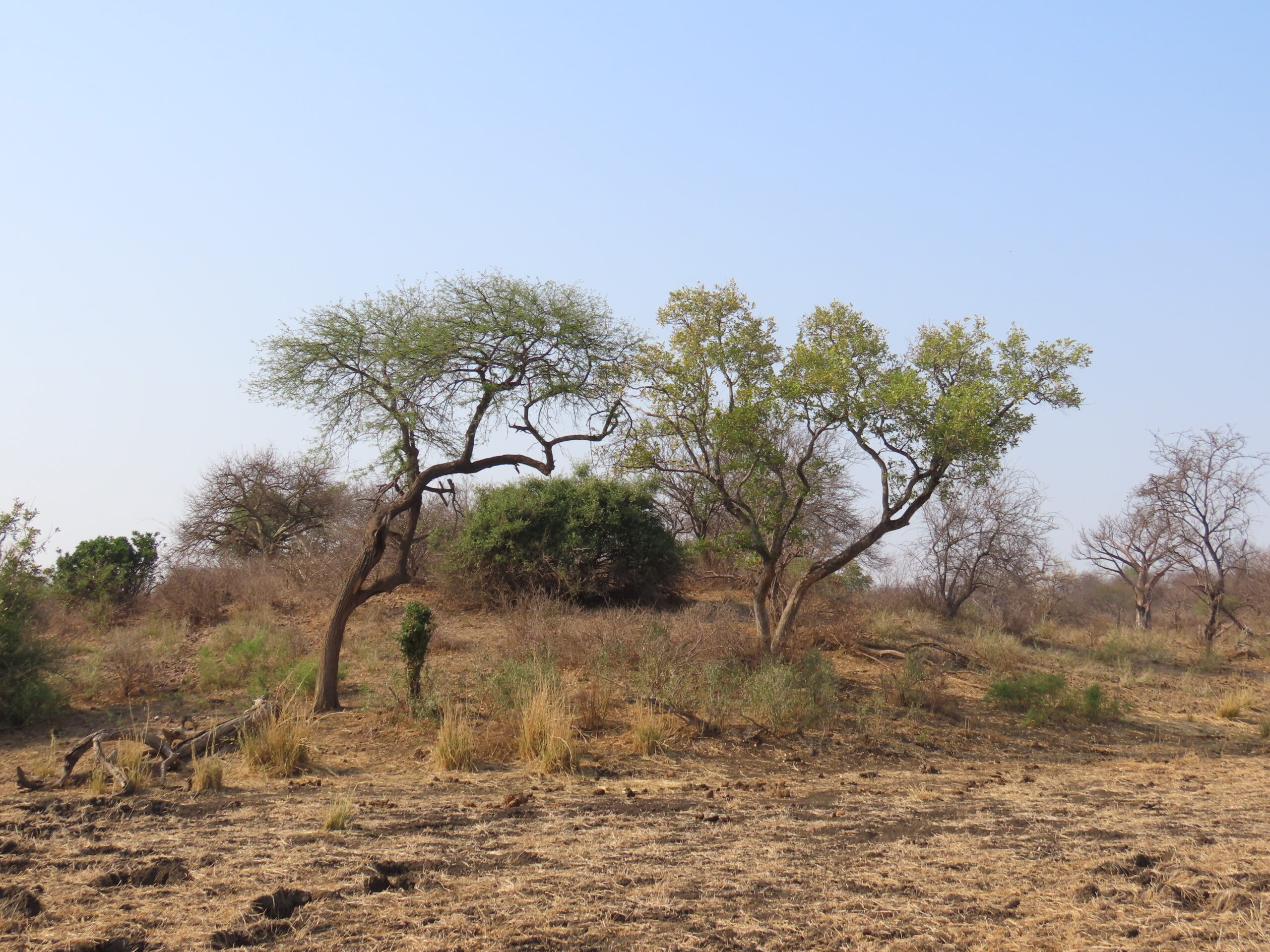
We started towards the Limpopo, but had to divert because a large herd of Cape Buffalo was strung out between the river and us. So we circled around them over a hill and through a valley dominated by Mopane trees.
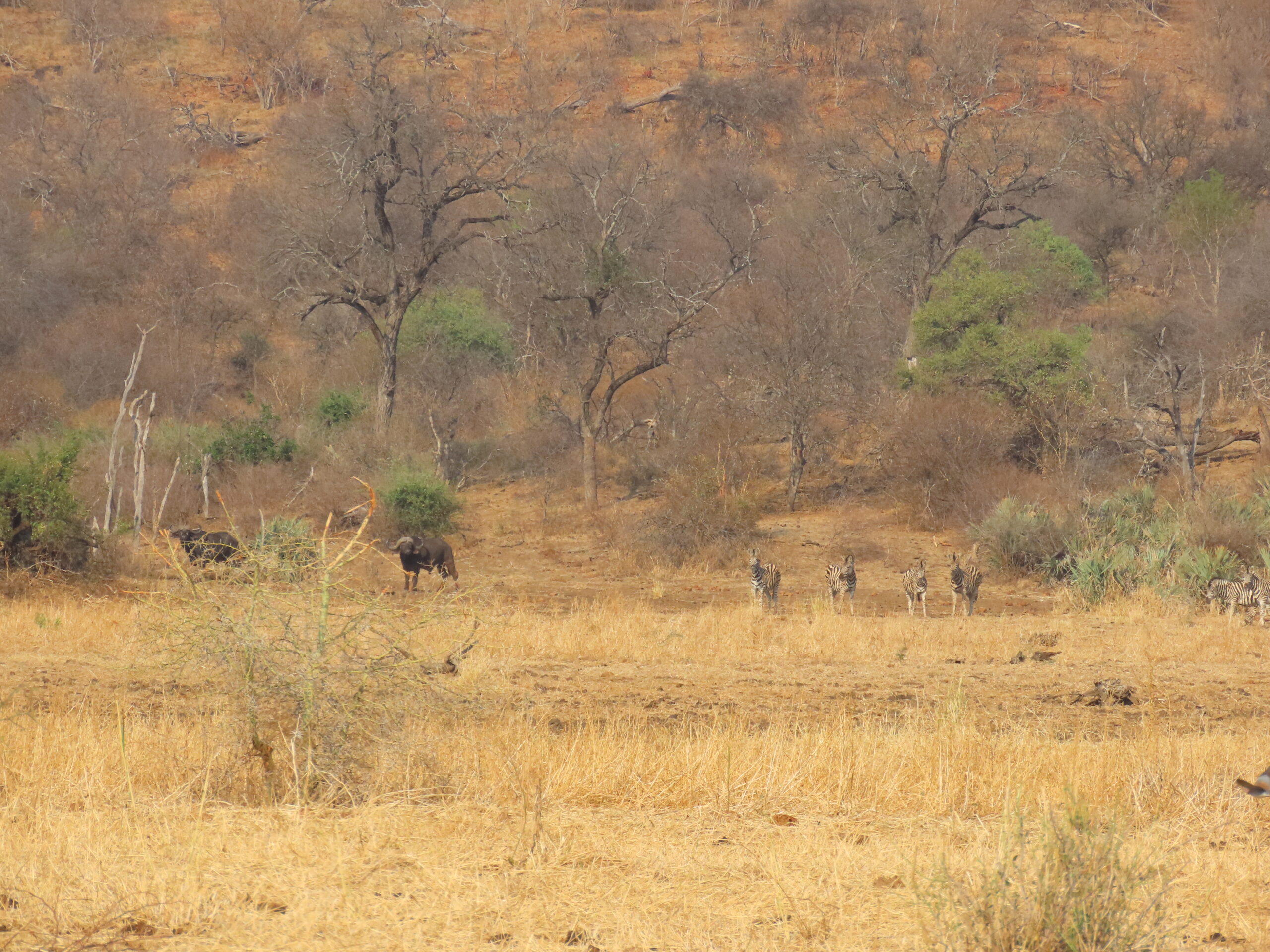

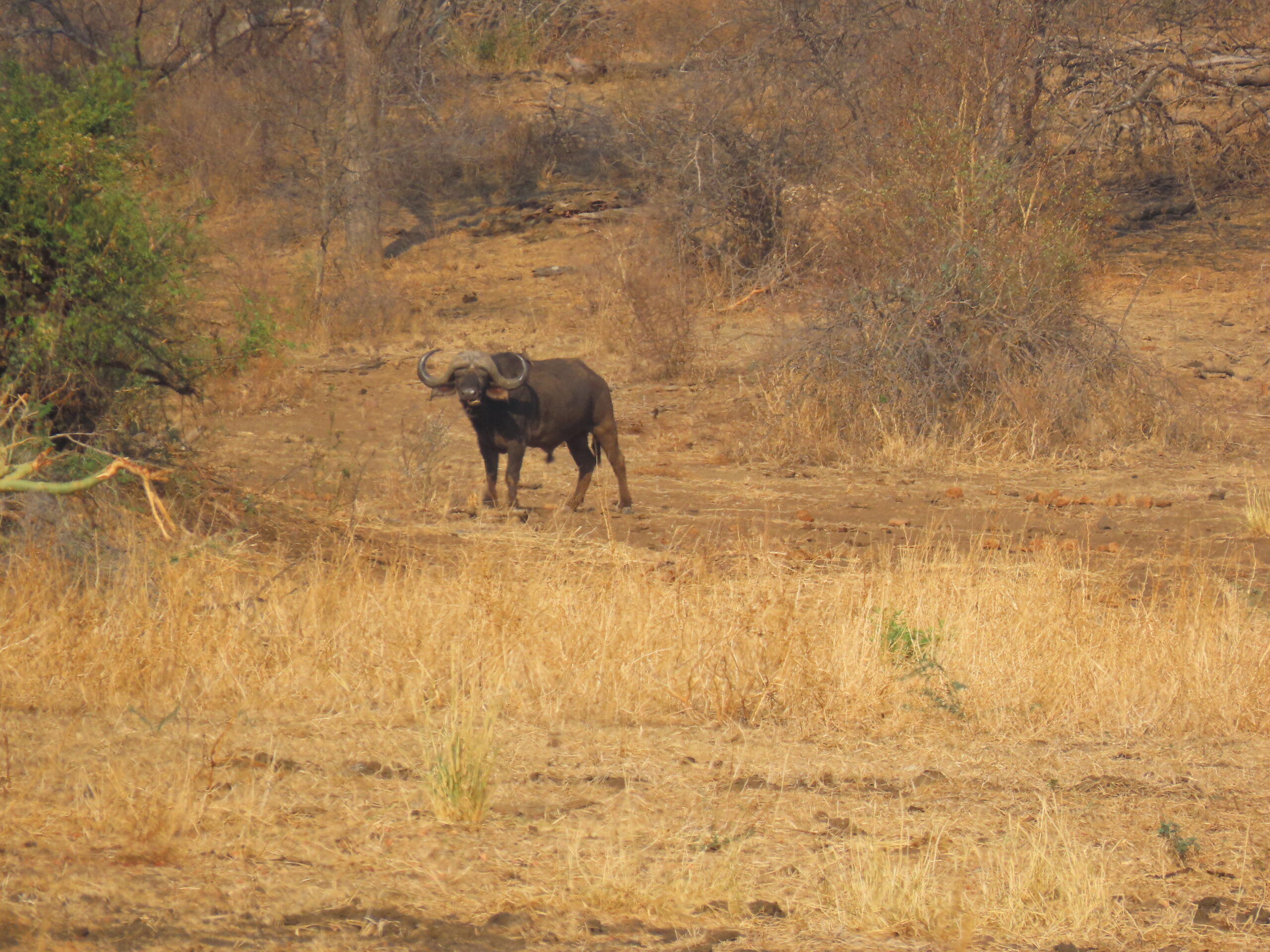


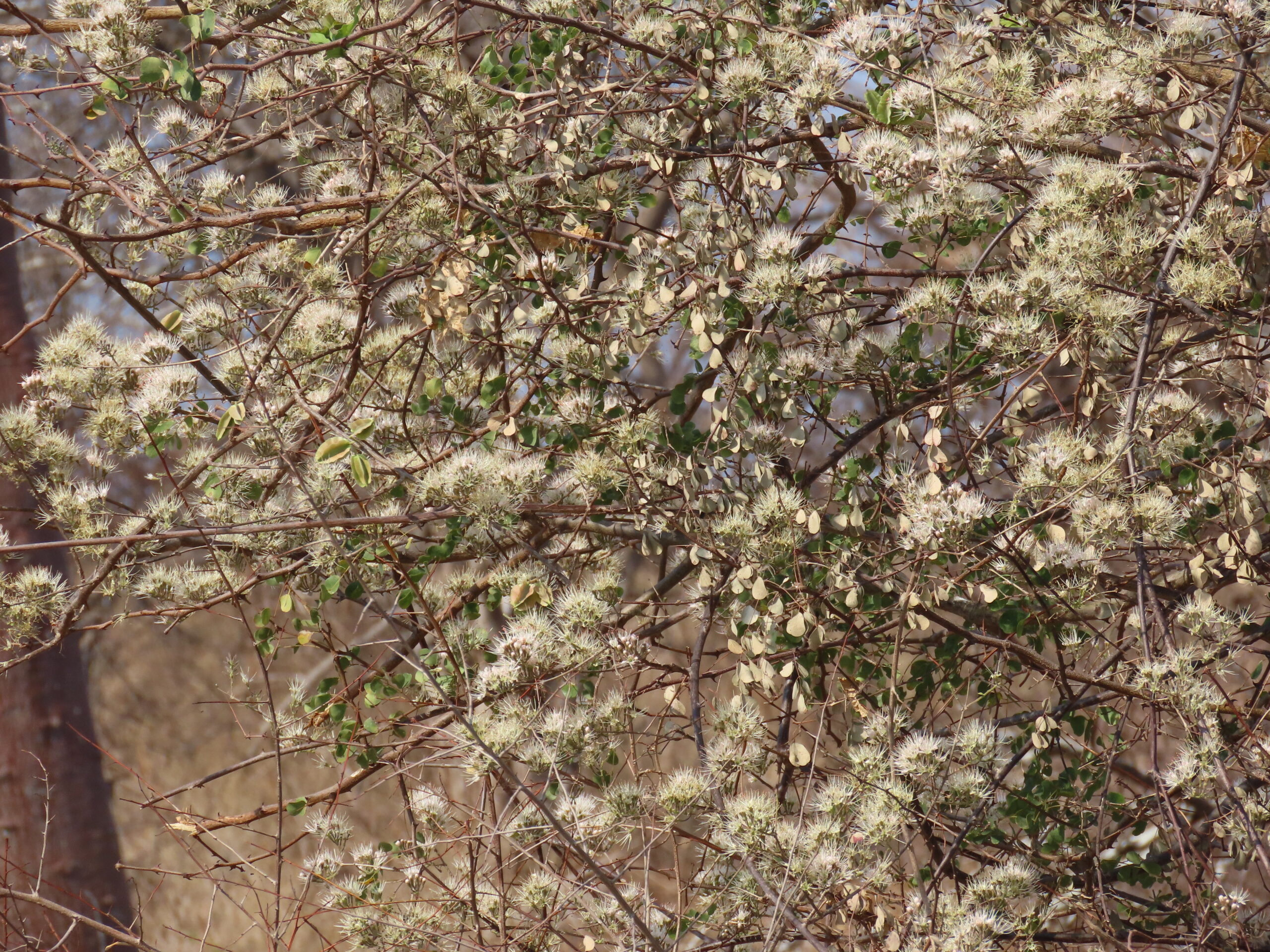







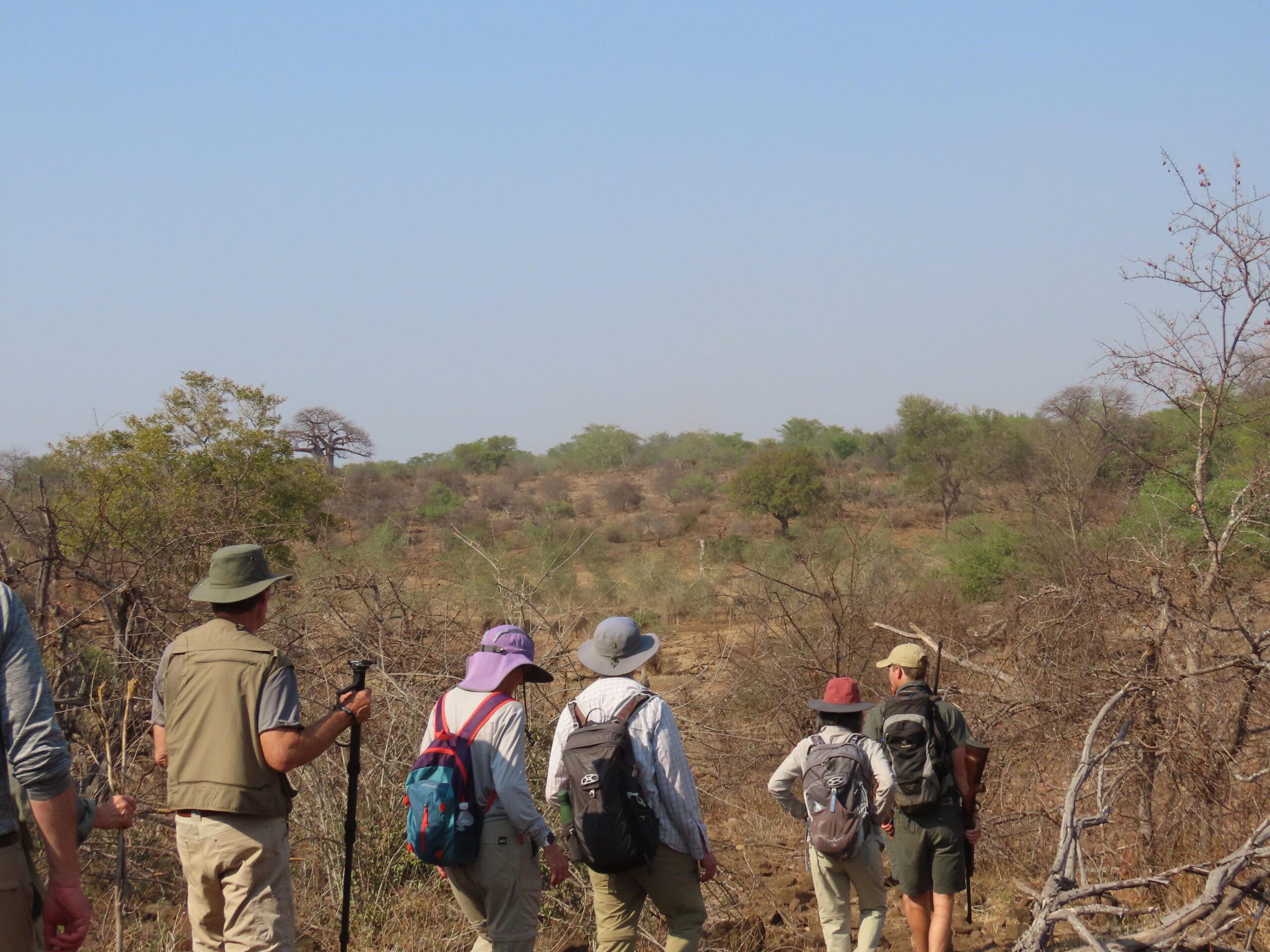

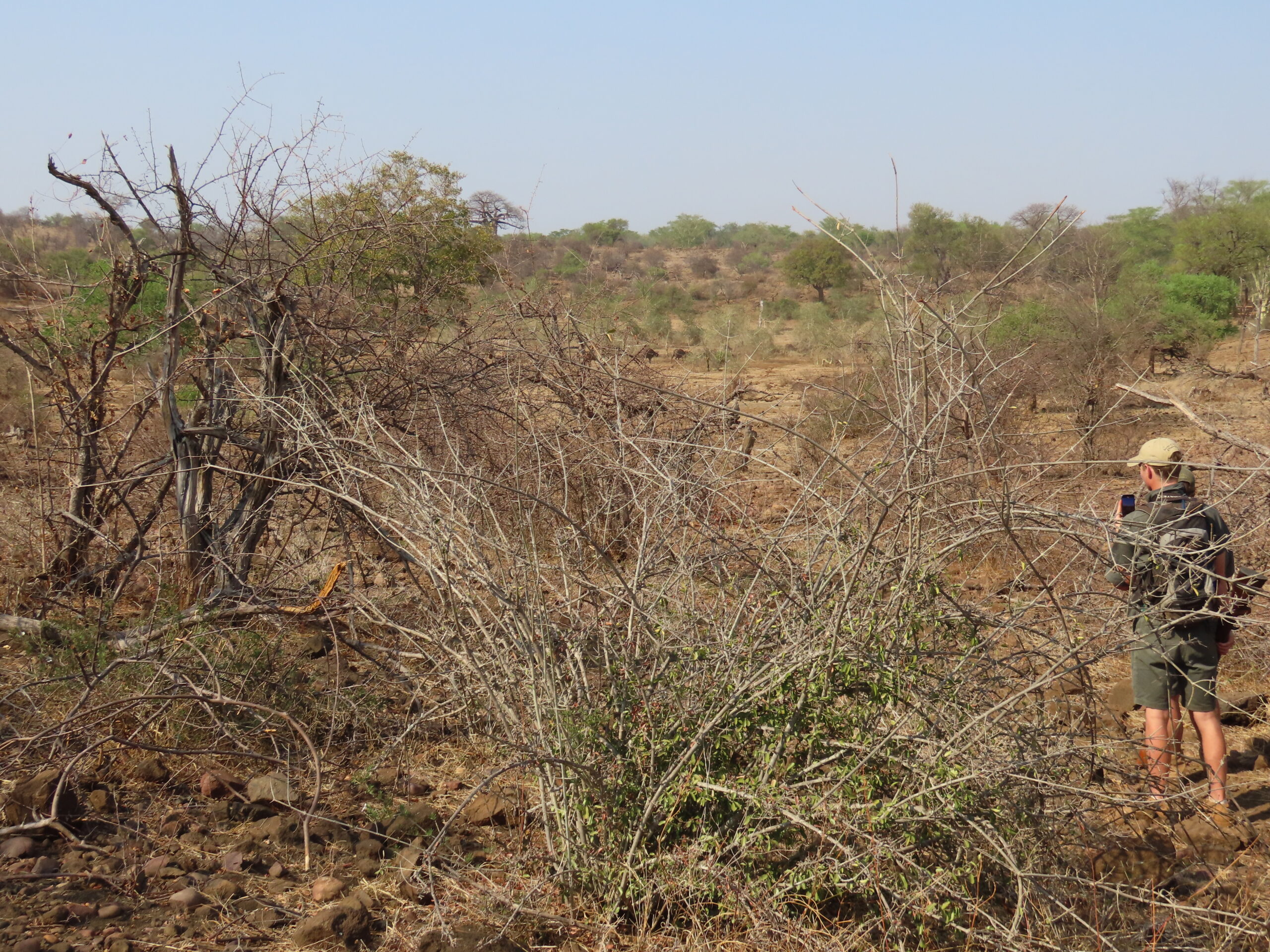

As we circled around the buffalo, the herd started to move. The bulls passed around us to the right of the valley we were in, while the mother/cow herd thundered above us on the ridge, shaking the ground as they passed. We stood very VERY still until Jan said it was safe to move.




Back at camp, we had showers and breakfast, enjoying all the action on the river as we ate. It was very hot – high 90s F, heading towards 100 degrees F – so the river was the place to be for almost everyone and everything.


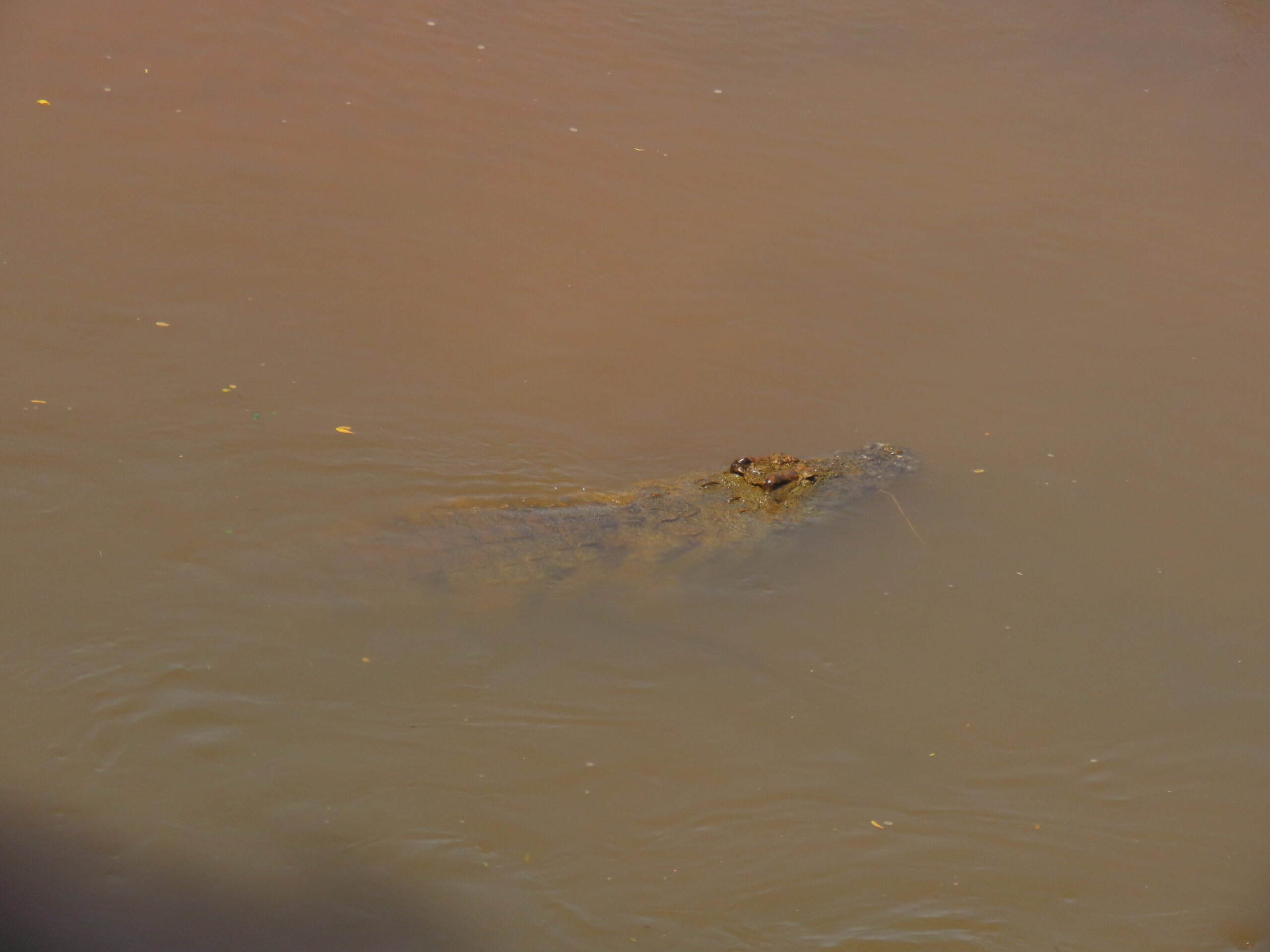
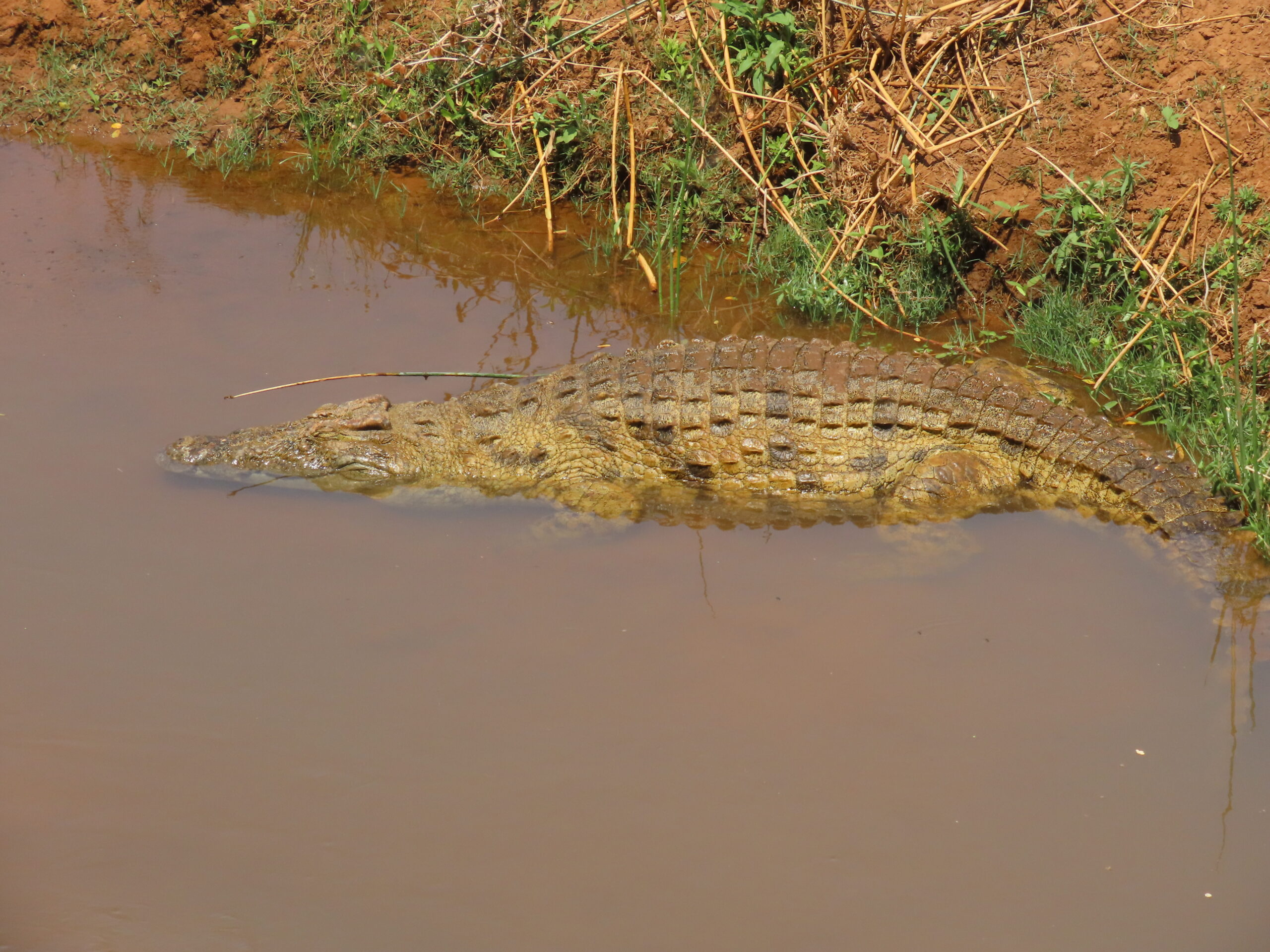
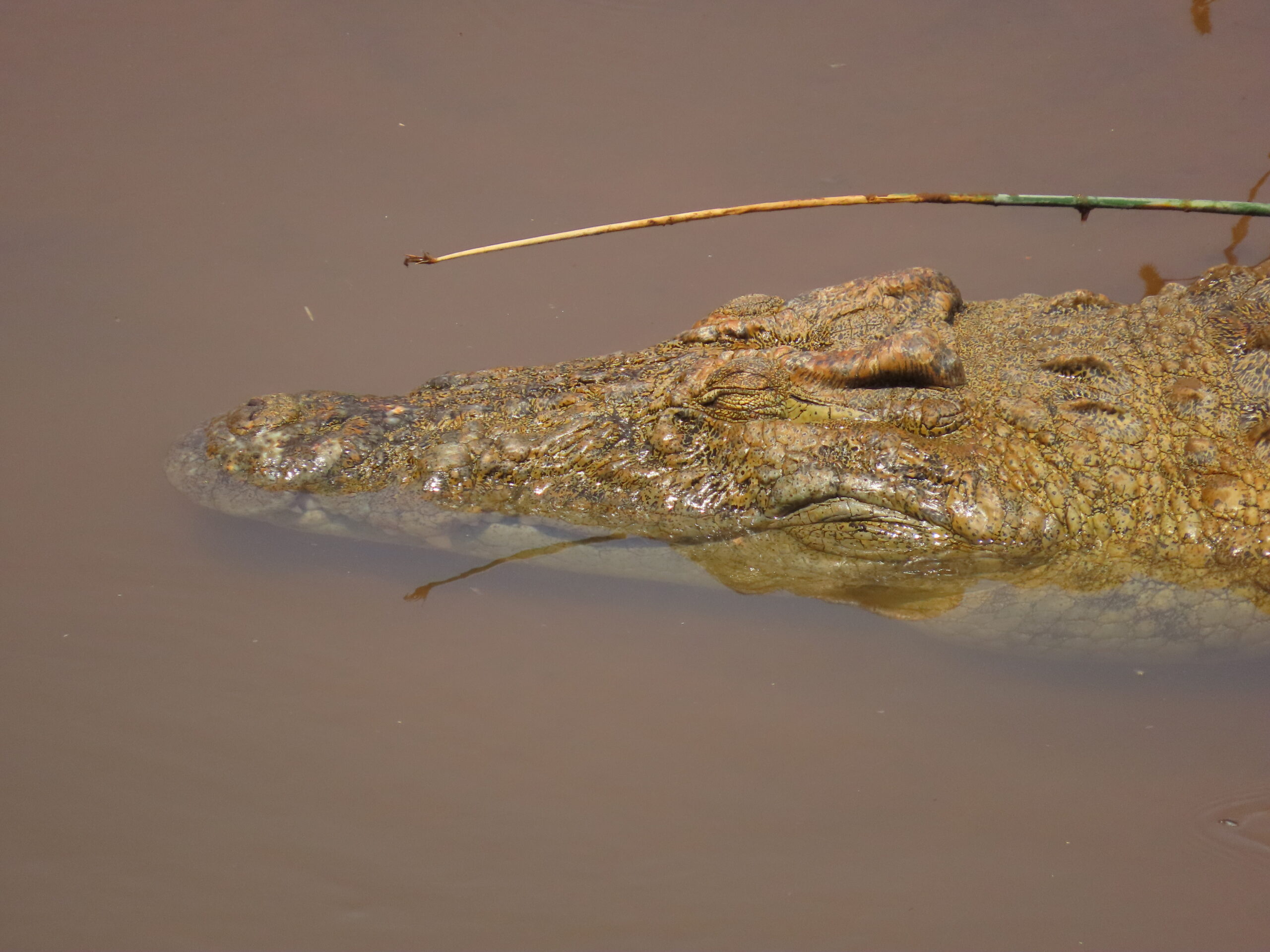
The crocodiles were especially entertaining. This large specimen kept moving across the various river channels to lurk in the shallows near whoever was on the bank. I’d periodically hear a large splash, and assumed the croc was pouncing and missing prey. Turns out it was fishing in the channels.




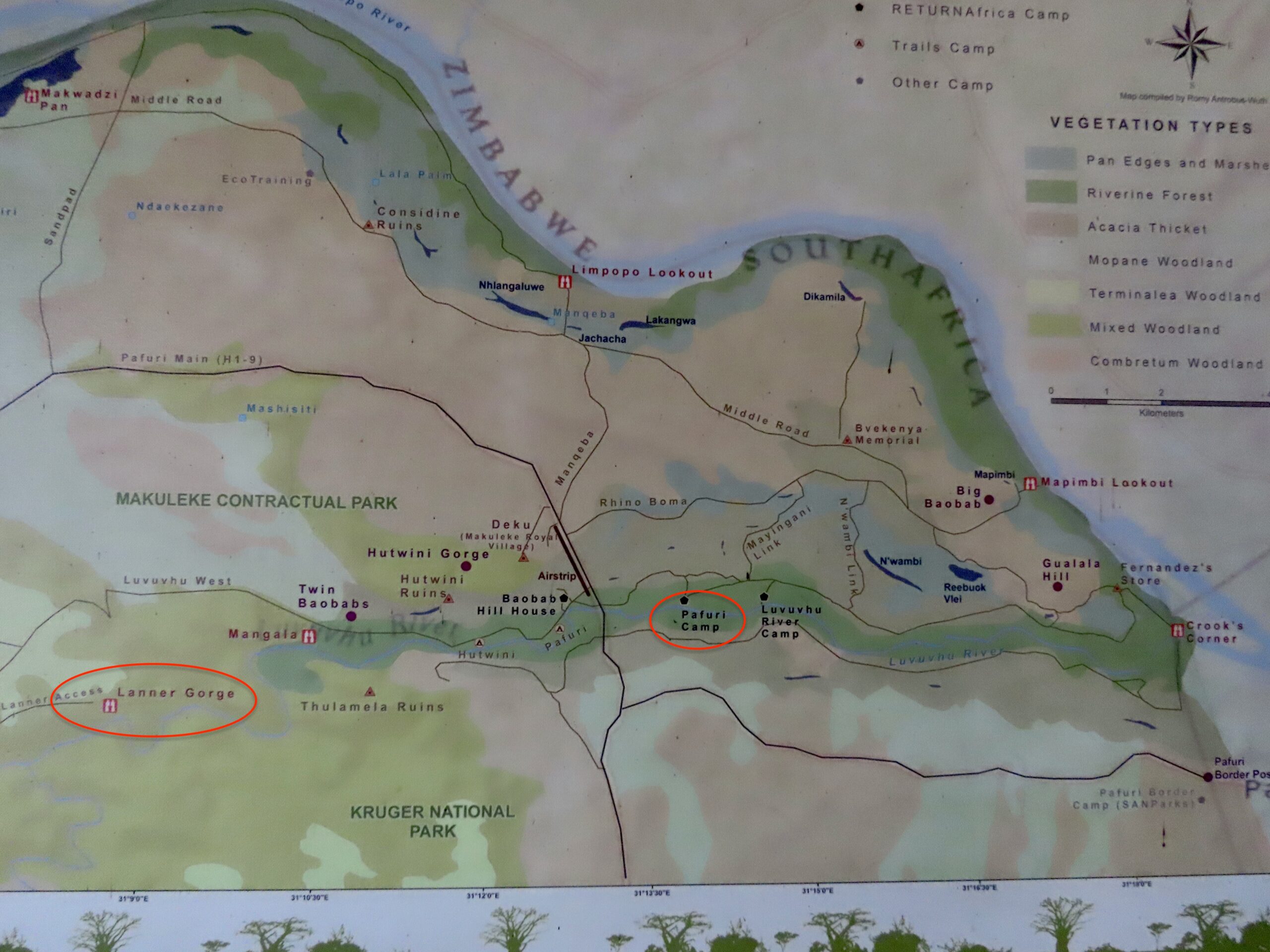
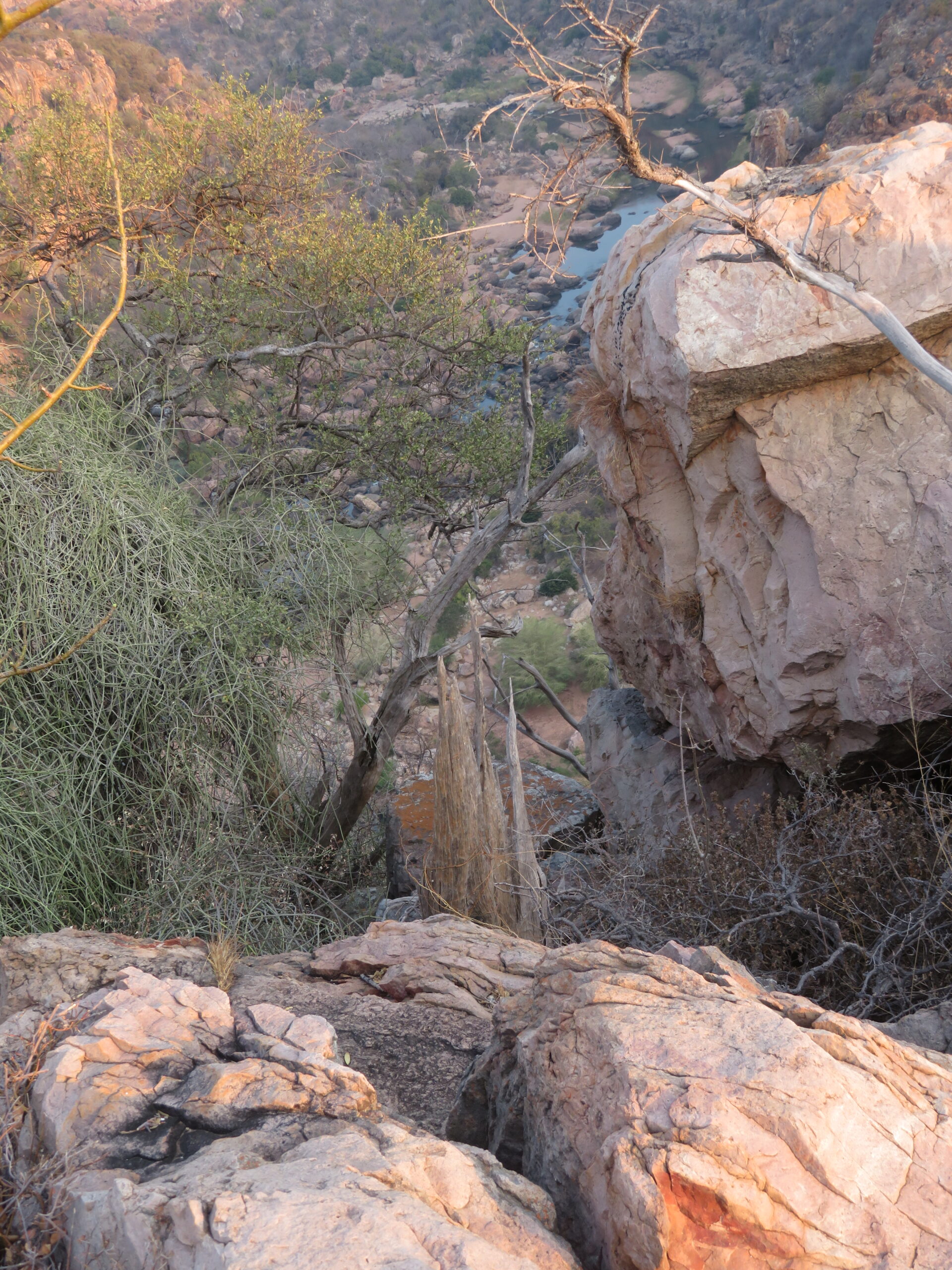
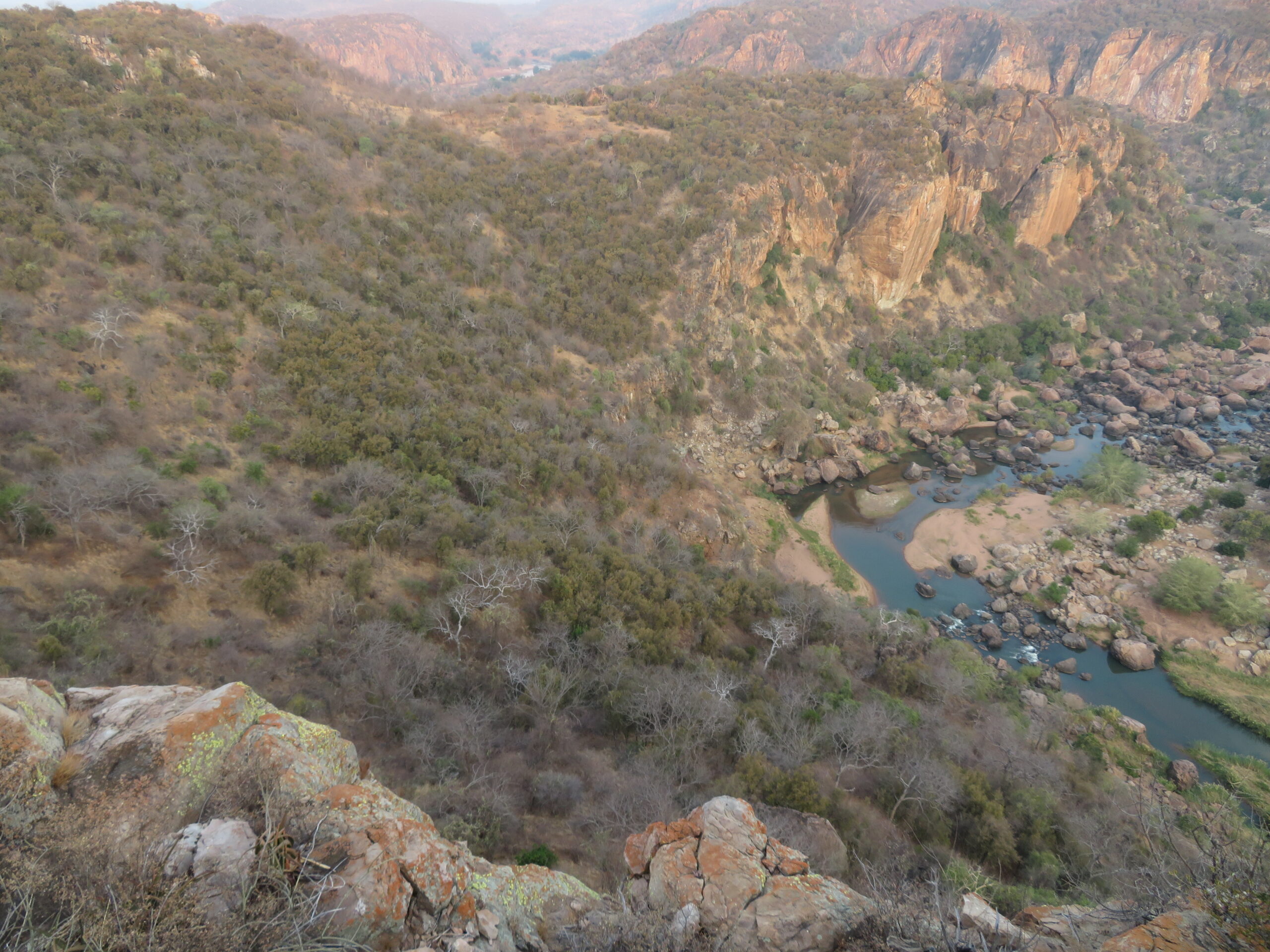
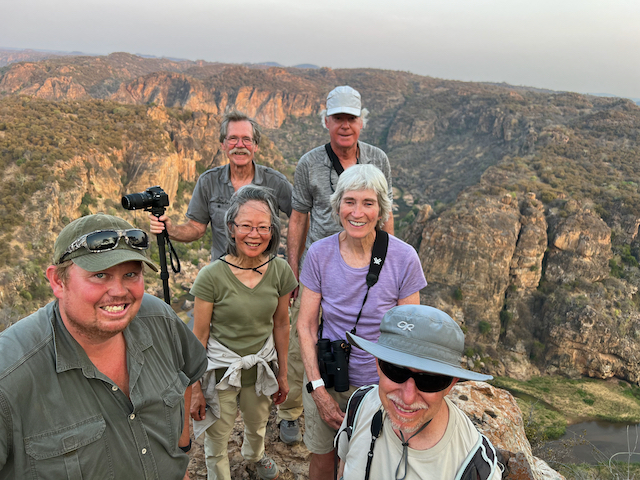
Matt, Ken & Judy and Don & Barb decided to make an afternoon trek to the Lanner Gorge, the area’s major geologic feature. Located on the Luvuvhu River, this eleven kilometer long gorge cuts through the surrounding sandstone cliffs to a depth of 450 feet. Dominique and I opted to stay on the river at Pafuri. The excursionists reported that it was a long, hot bumpy ride with some lovely views at the end, and they shared photos for the blog.





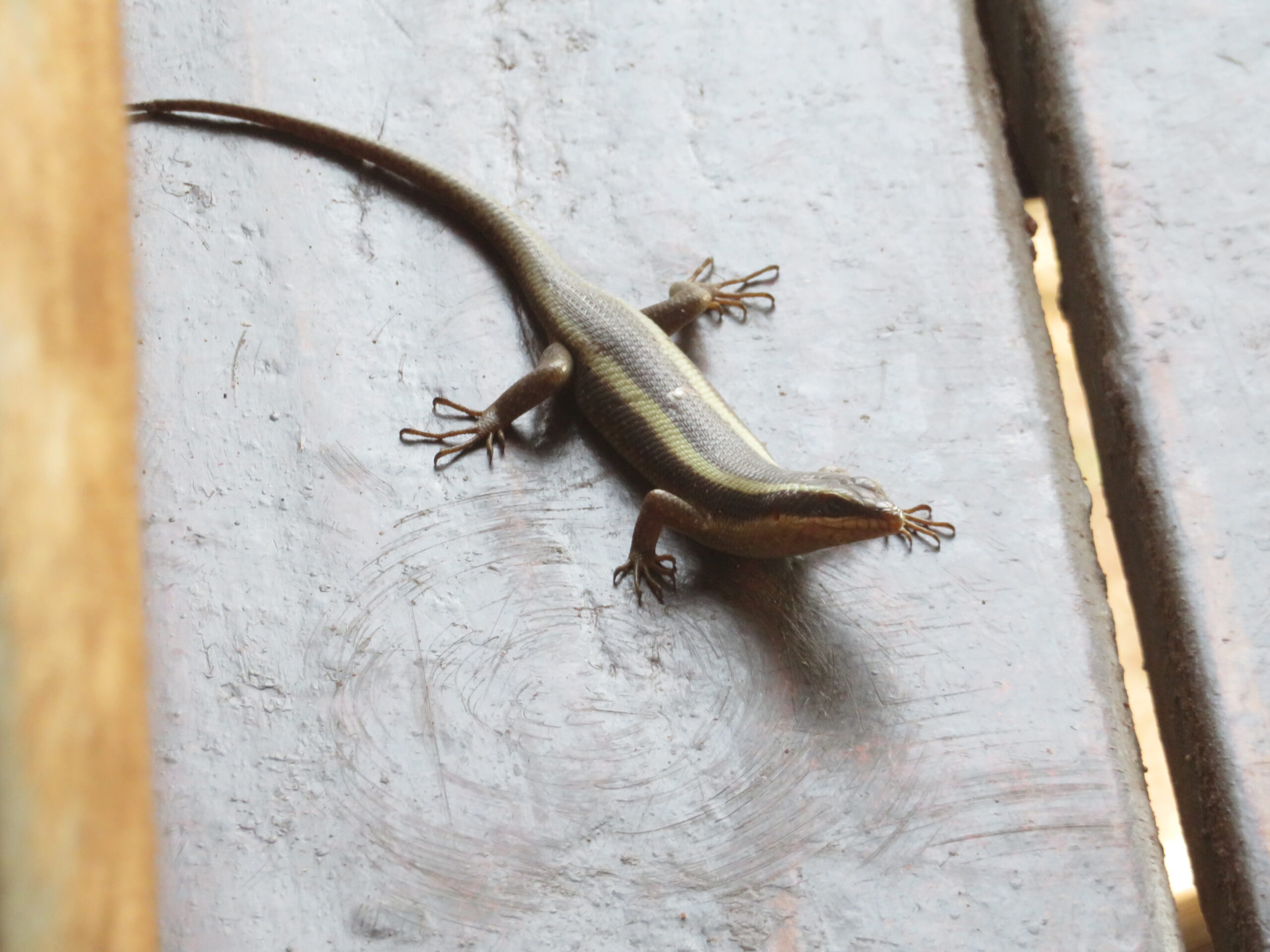
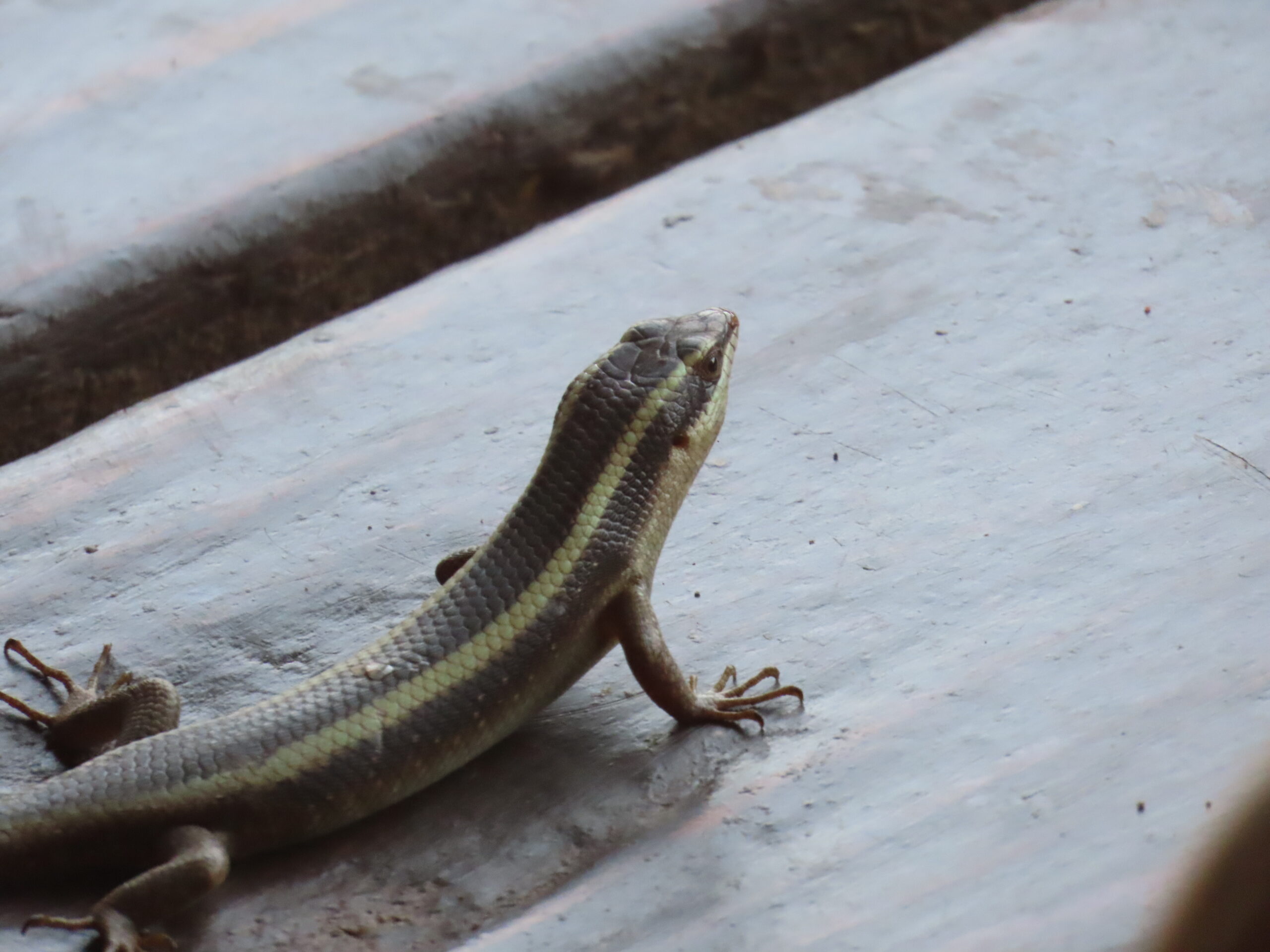
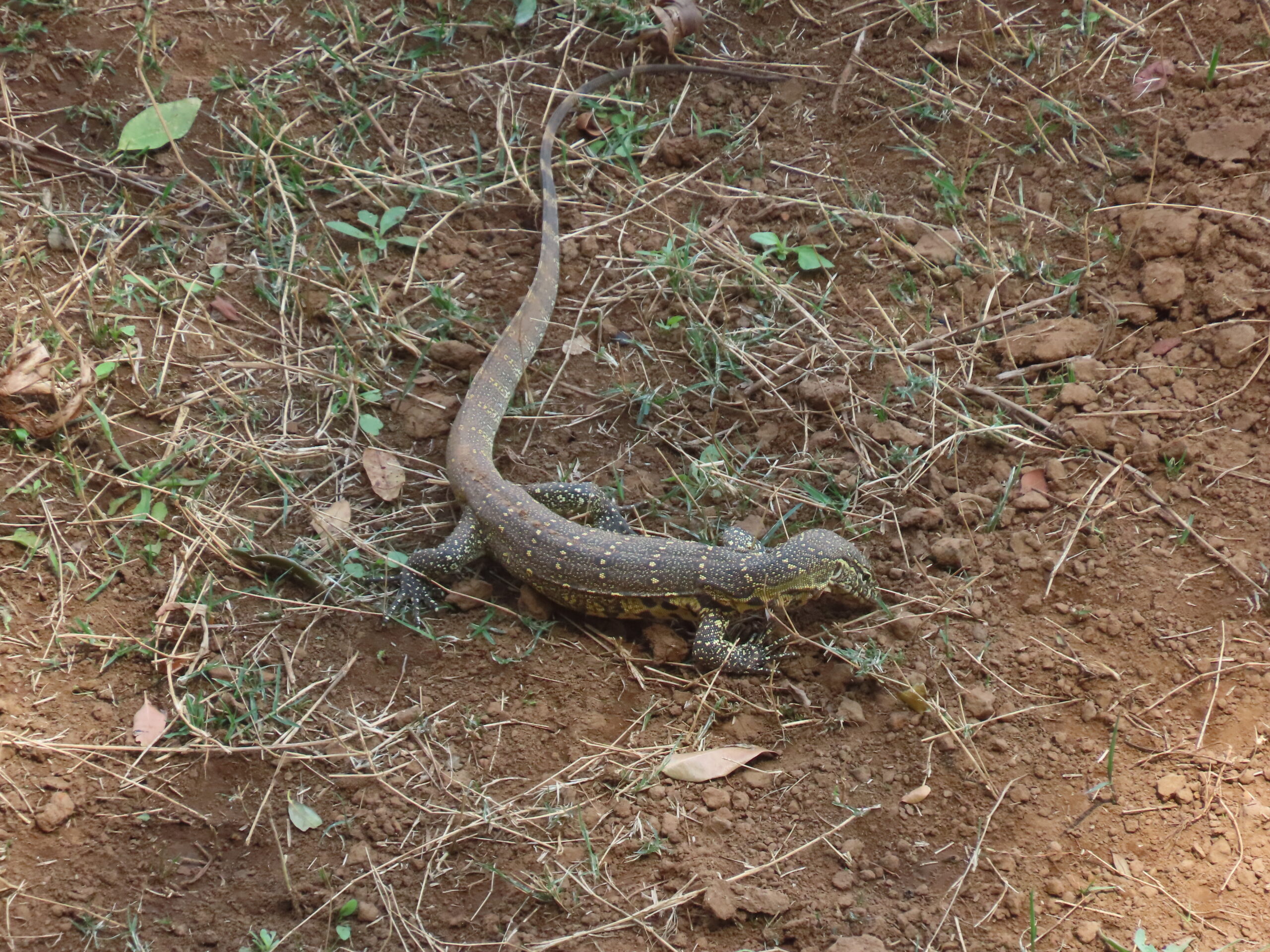
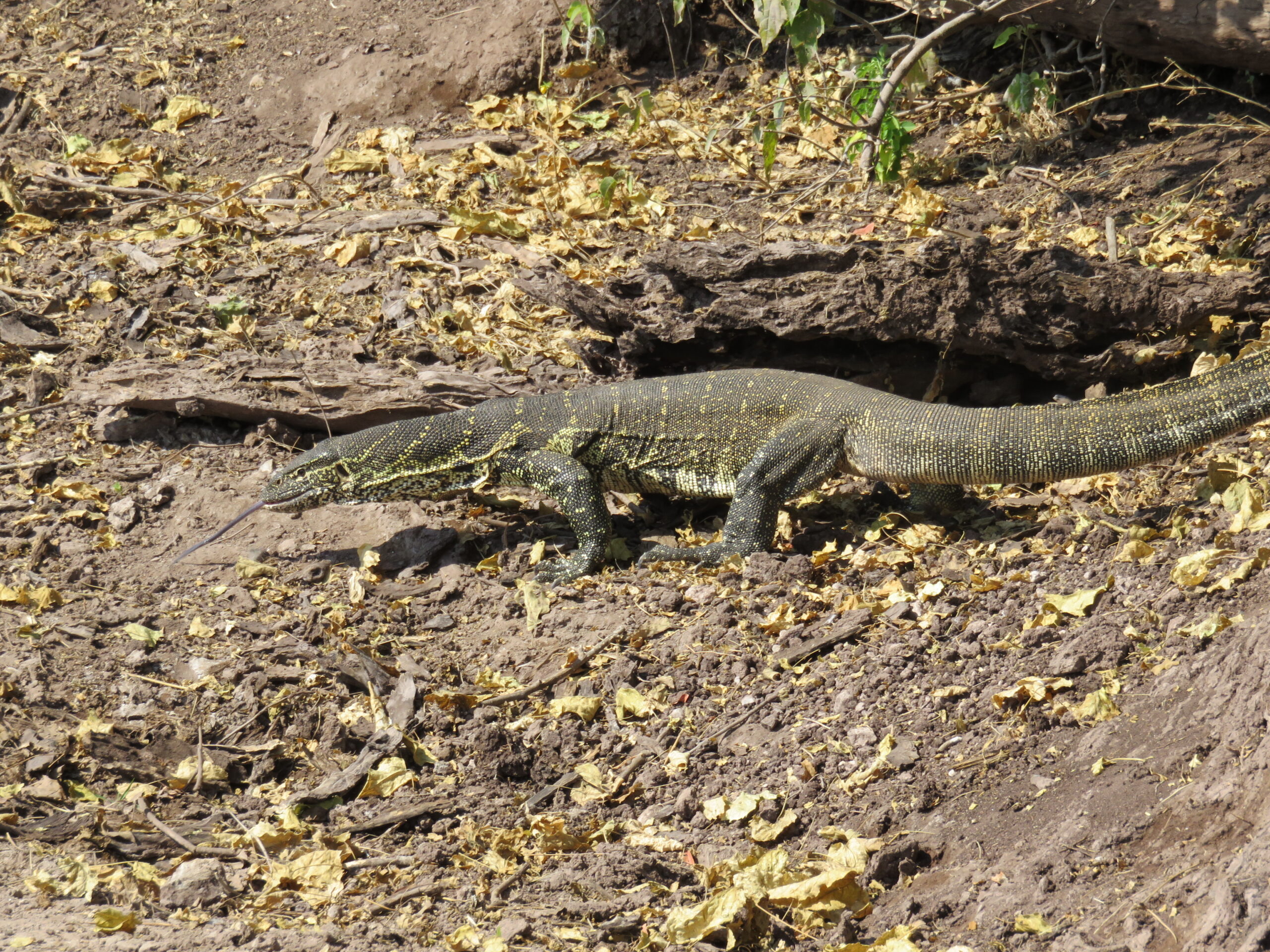
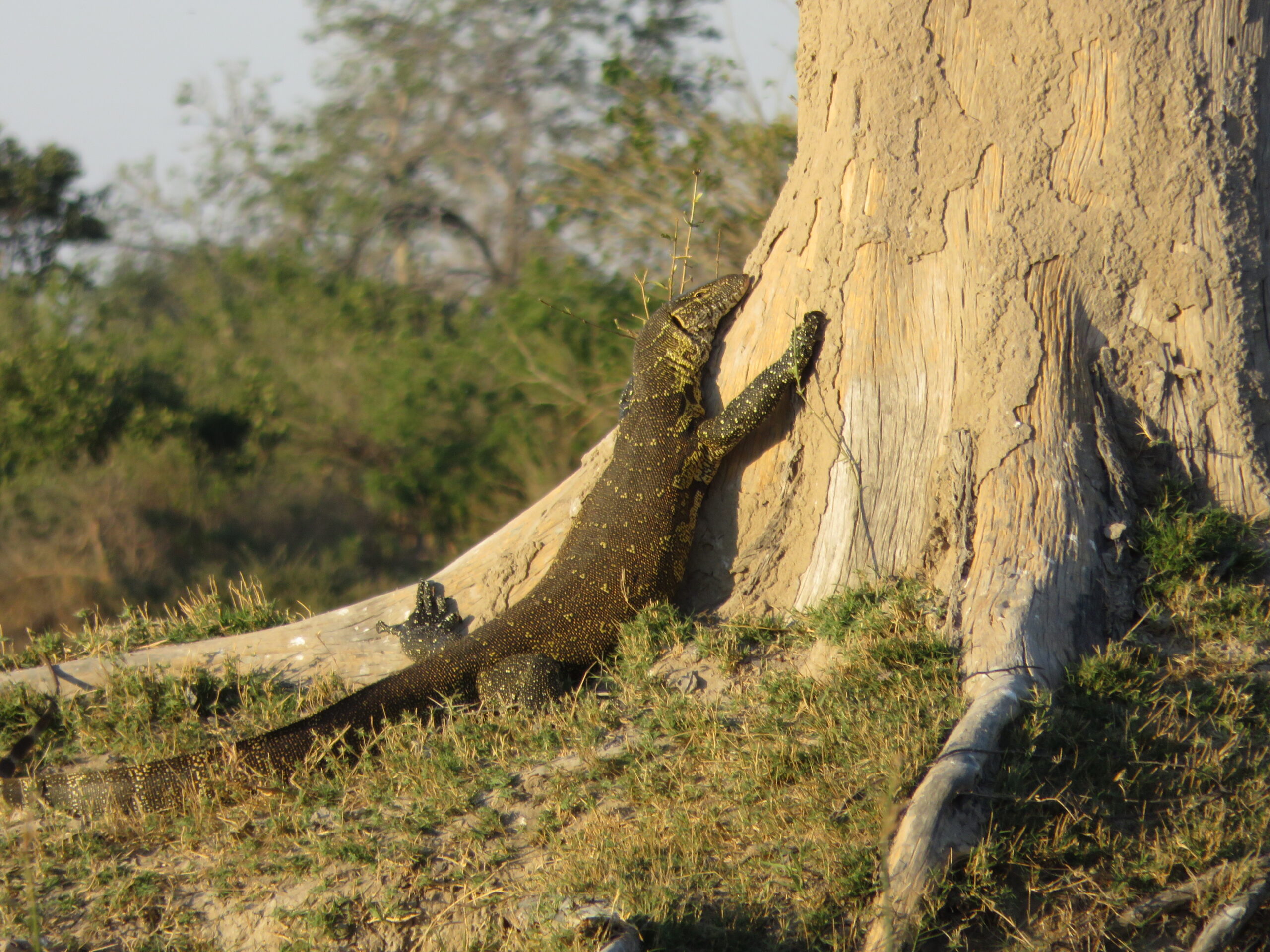
Meanwhile, back at the camp, Dominique and I had an encounter with a lounge lizard.


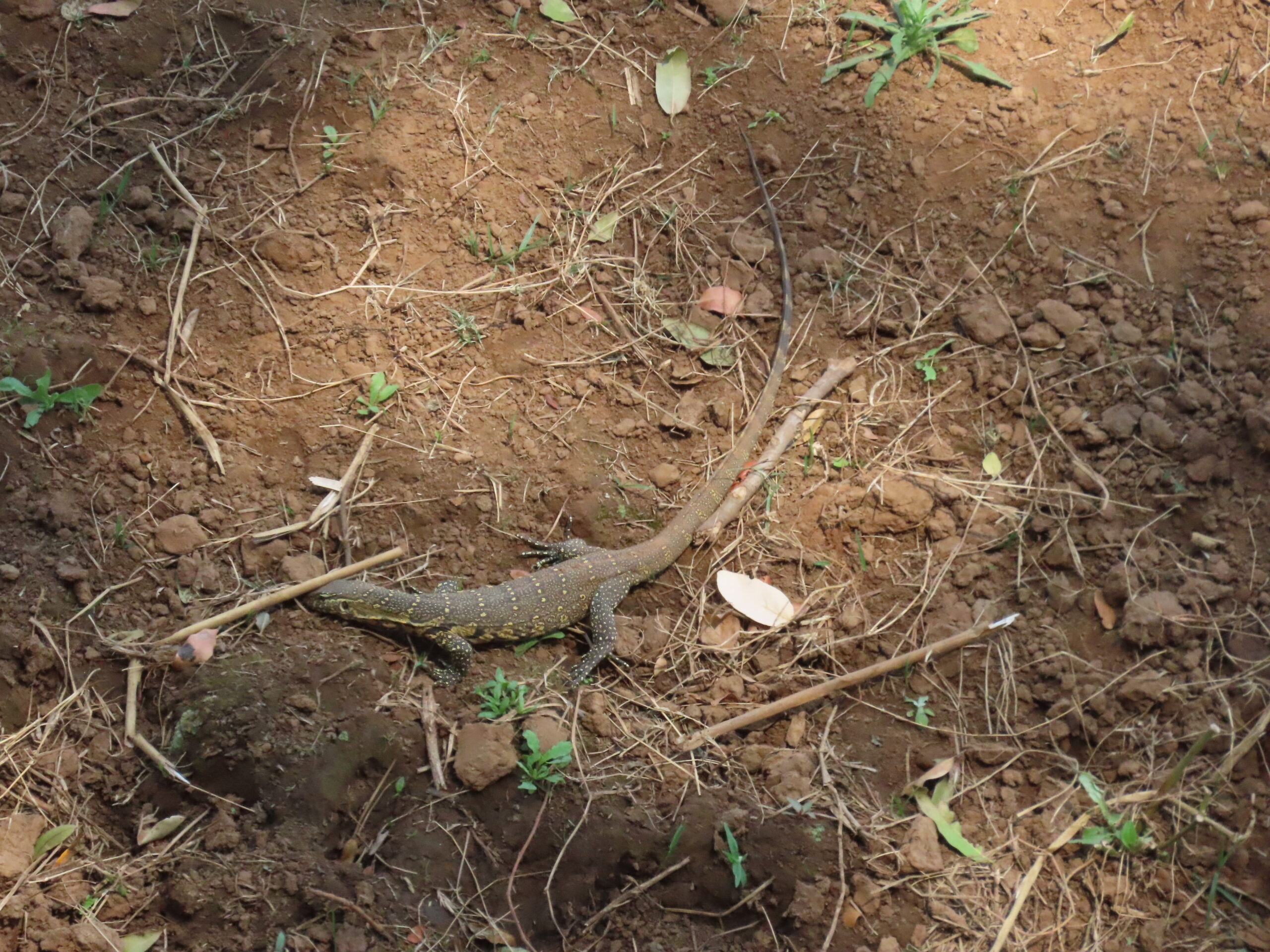
I was thrilled to spot a Nile Monitor Lizard hunting on the opposite bank. These guys can reach 5-6 feet in length – this one was about three feet long. We saw some of the big guys on the Zambezi River during our trip to Zimbabwe and Botswana ten years ago.




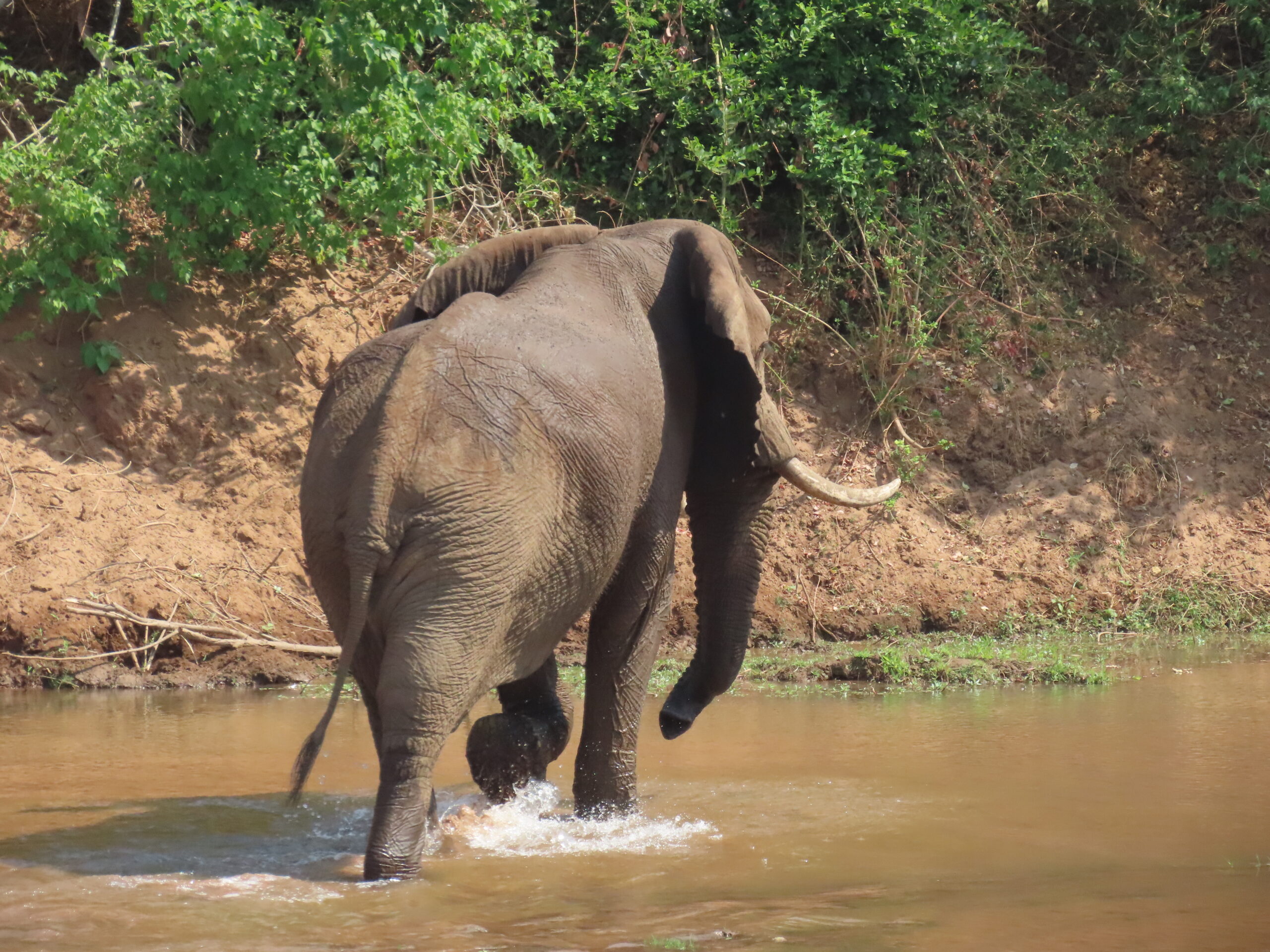
There was, of course, a visitation by elephants. First, was a jumbo who trekked by outside my tent.



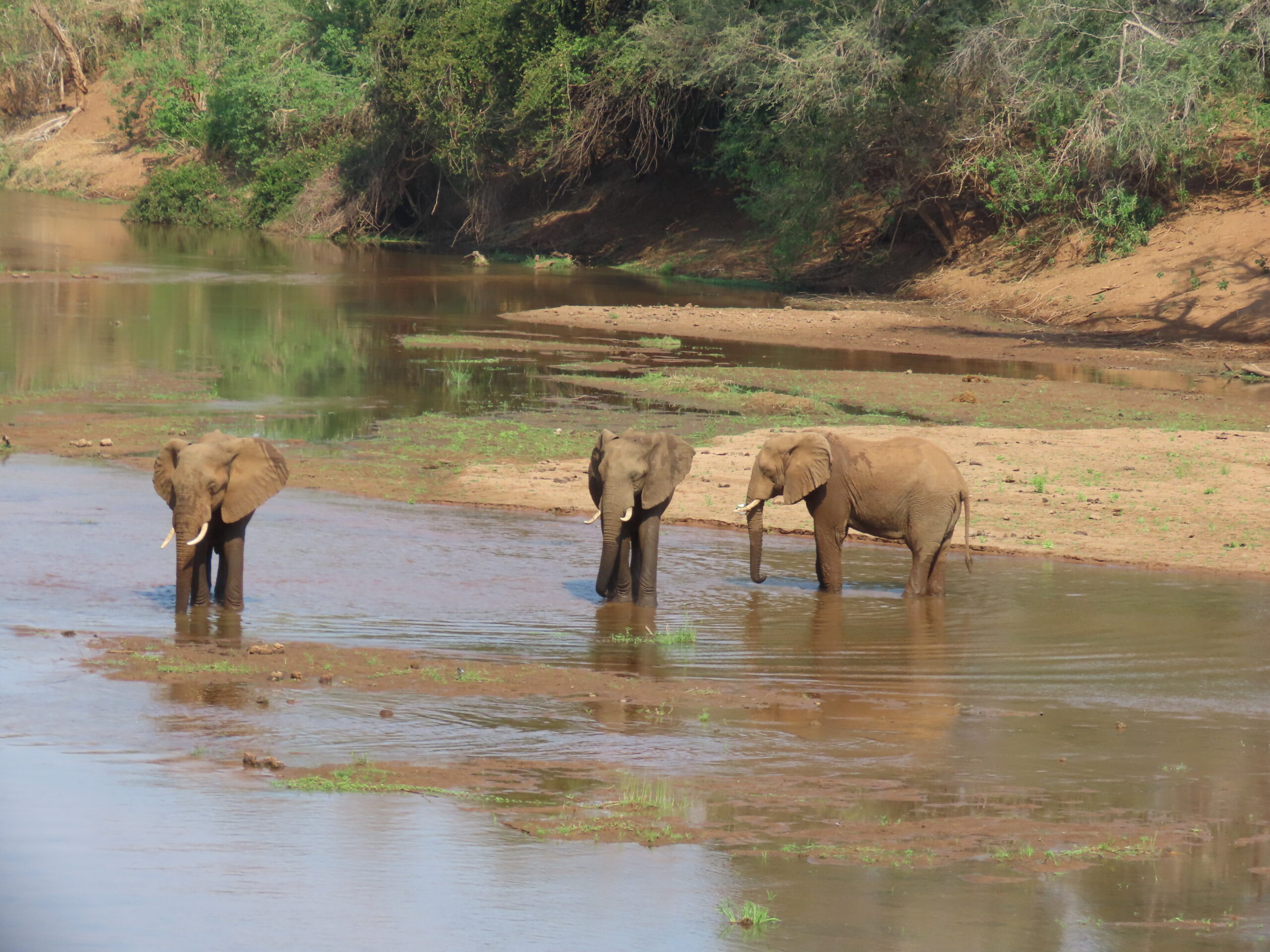
Back at the lodge, a small mother/sub-adult herd made their ablutions just next door.



A subadult male browsed his way along the bank right beneath the deck we occupied.


In this short video, you can see the ellies in motion and hear the lively backdrop of chatter (animal and human). The loudmouth birds are Habada Ibis.


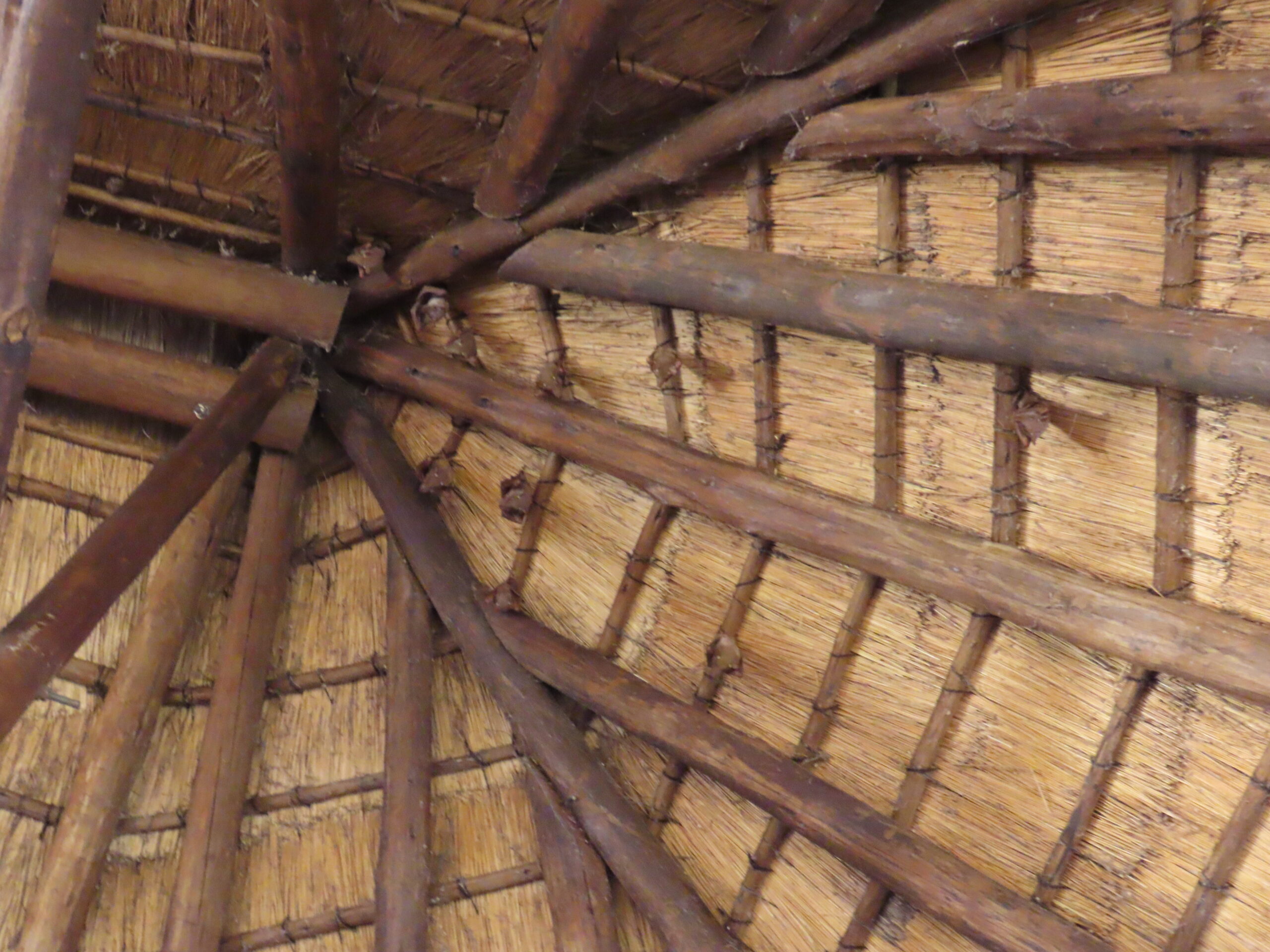
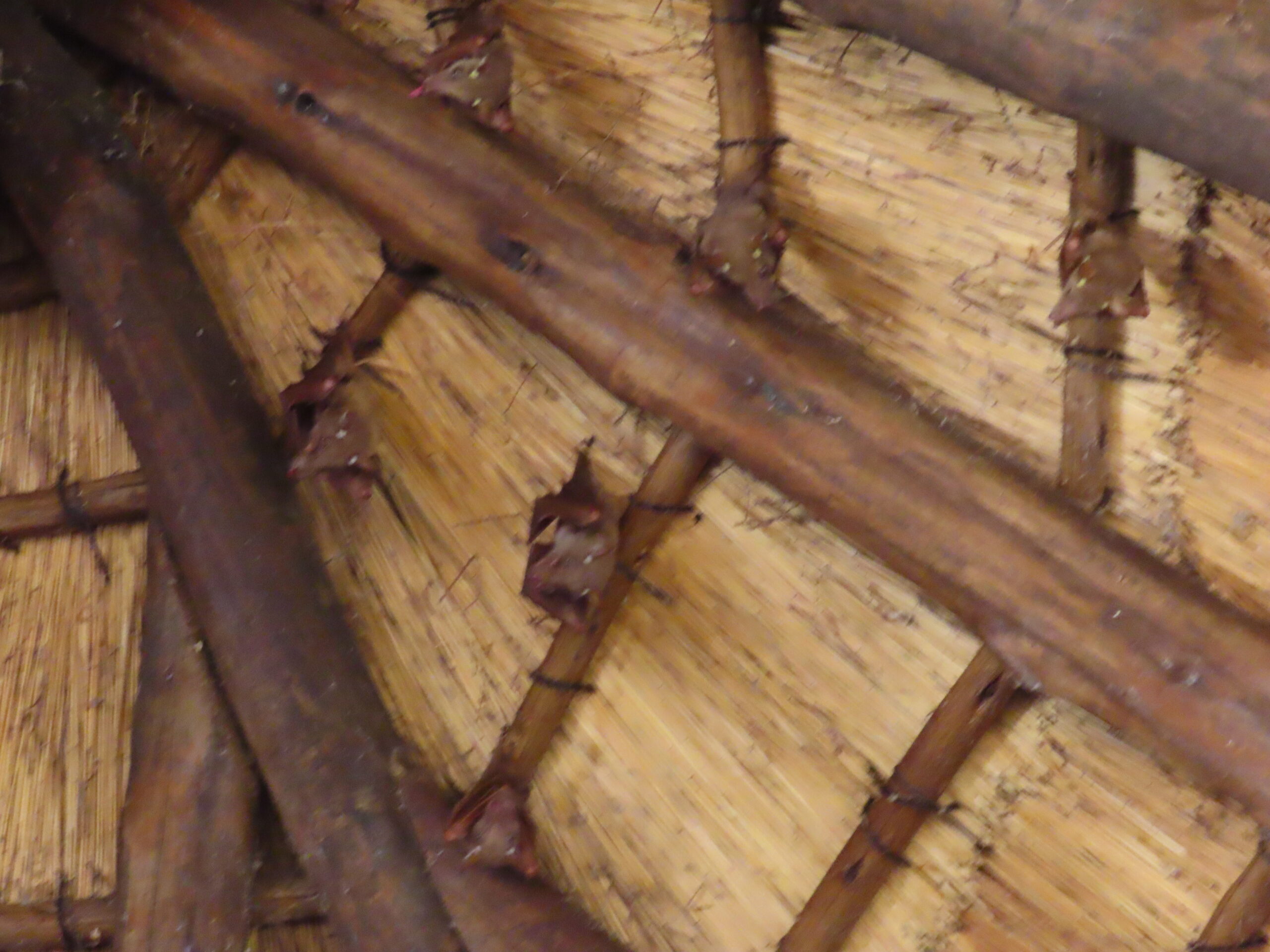
A group of Fruit Bats were roosting in the top corners of the lounge ceiling. I couldn’t get a good closeup, so included a protrait from the web.

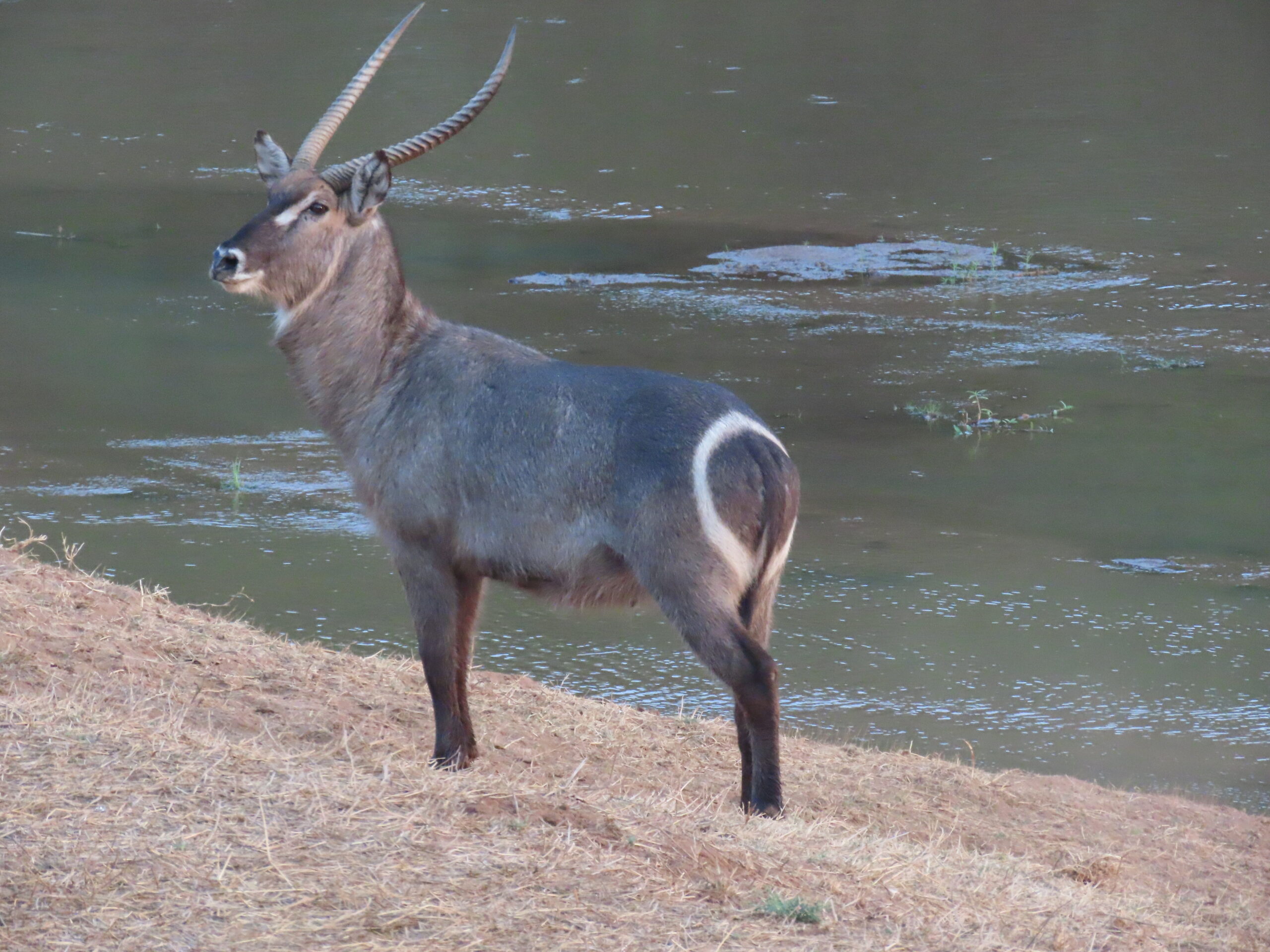
Back at the tent, a large male Waterbuck came calling.




Once everyone was back in camp, we ended the day with another lovely dinner. We then turned in for an early night to pack and get ready for our departure to Botswana in the morning.

Amazing how much you packed into one day!