
Monday, September 30th, was Botswana Independence Day. All staff members were resplendent in shirts designed around the colors of the Botswana flag: iridescent blue, white and black. Fans of Alexander McCall Smith’s #1 Ladies Detective Agency series know that Mma Ramotswe loves her country’s flag and the symbolism it represents – and these folks seemed to share that love. Here’s how Gemini summarizes Mma’s thoughts, which corresponds to my reading of the books. (So glad I I finally found a use for AI 🙂
While the books don’t provide a single, detailed description in one place, Mma Ramotswe’s thoughts throughout the series emphasize a few key elements:
- The Blue: The light blue represents the sky and, most importantly, “pula”, the Setswana word for rain. In a semi-arid country like Botswana, rain is life, and the word is also the national motto, symbolizing hope and prosperity.
- The Black and White Stripes: These central stripes are a powerful symbol of racial harmony and the cooperation between the different peoples of Botswana. Mma Ramotswe sees them as a representation of a country that is free of the racial divisions that plague its neighbors. The books often draw a contrast between the peaceful, unified Botswana and the apartheid-era South Africa.
- The Overall Meaning: For Mma Ramotswe, the flag is not just a piece of cloth; it is a visual representation of Botswana’s core values—peace, racial harmony, and the hope for a prosperous future. Her love for the flag is an extension of her love for her country and its people.

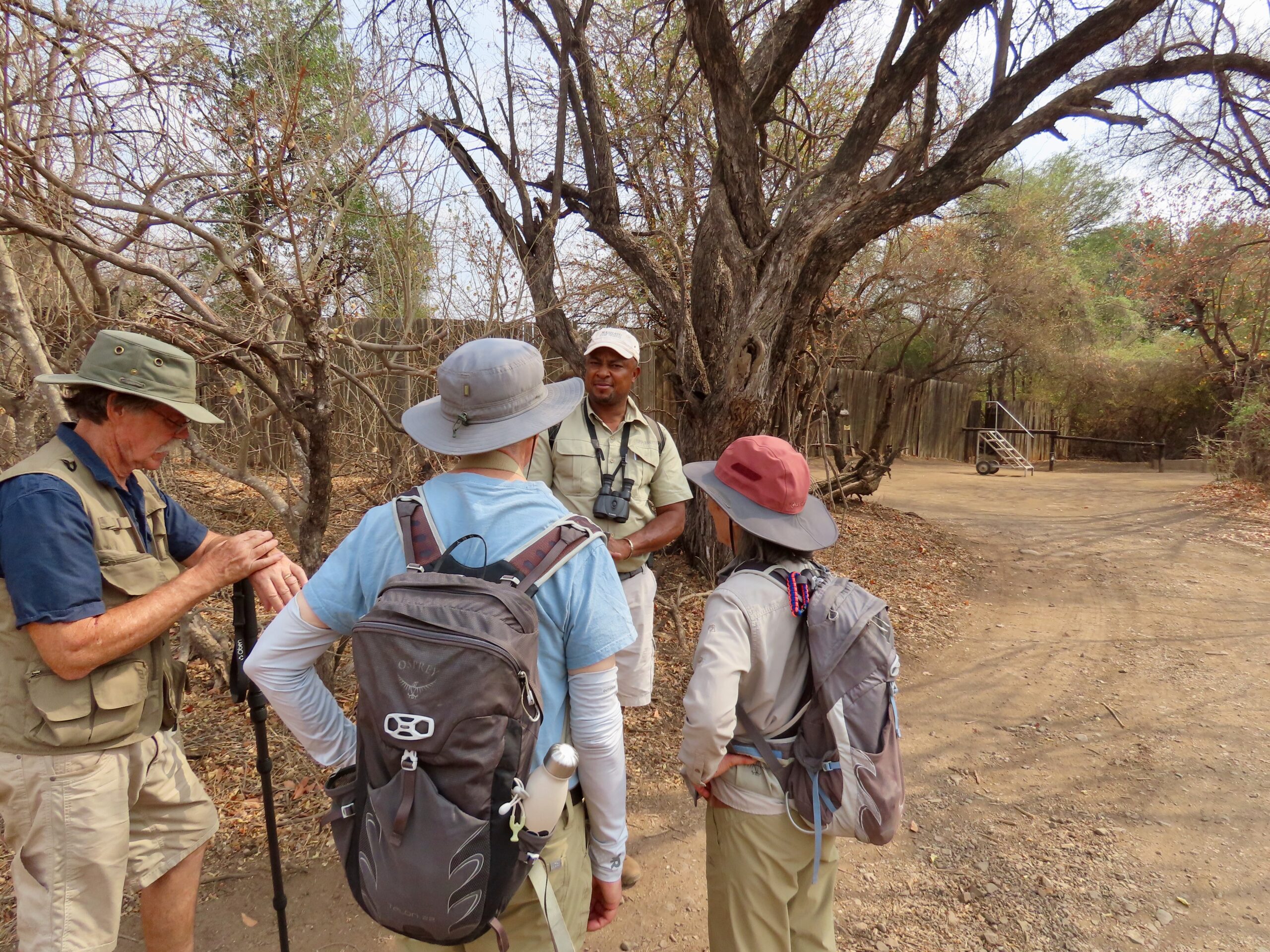
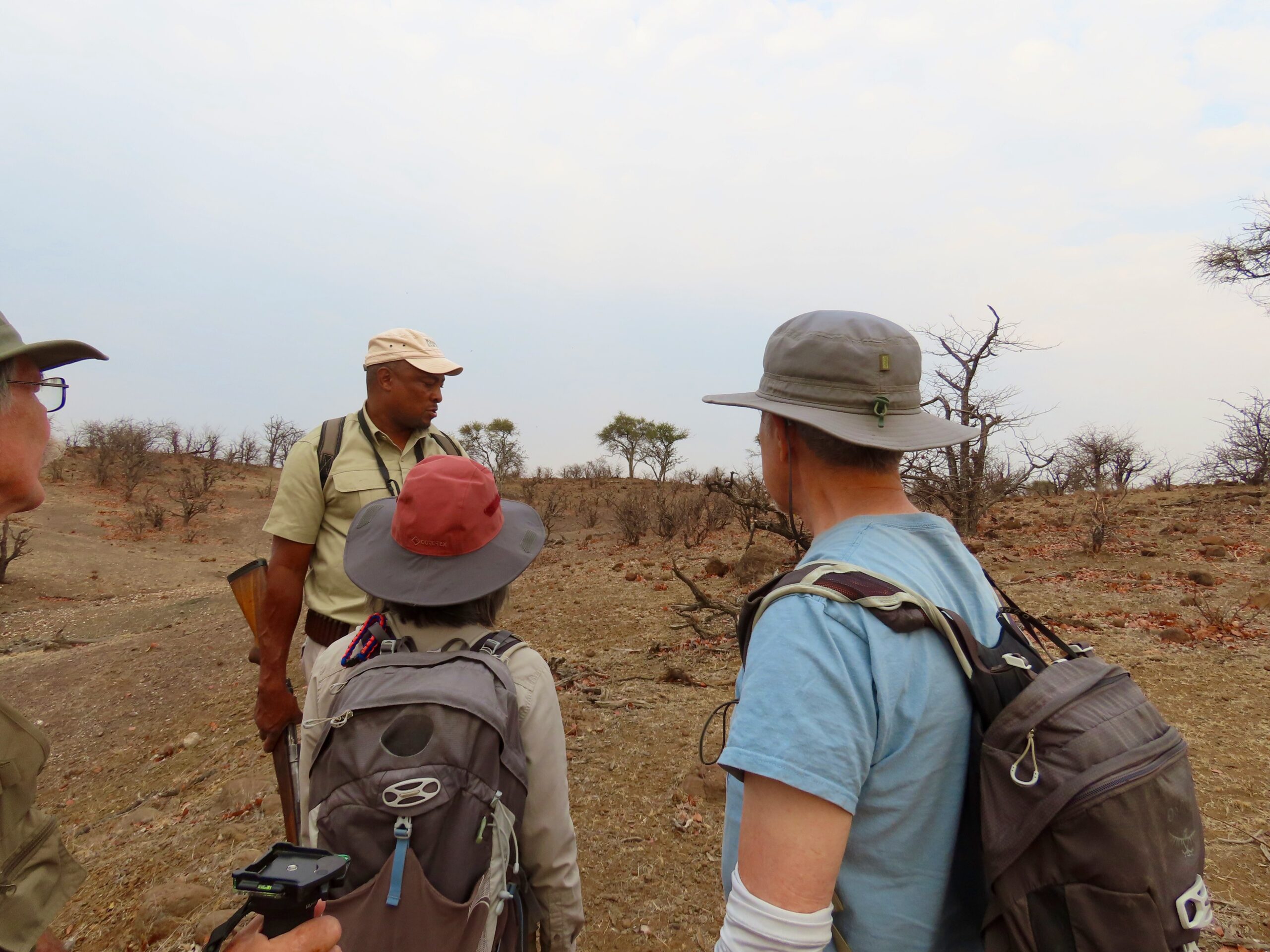
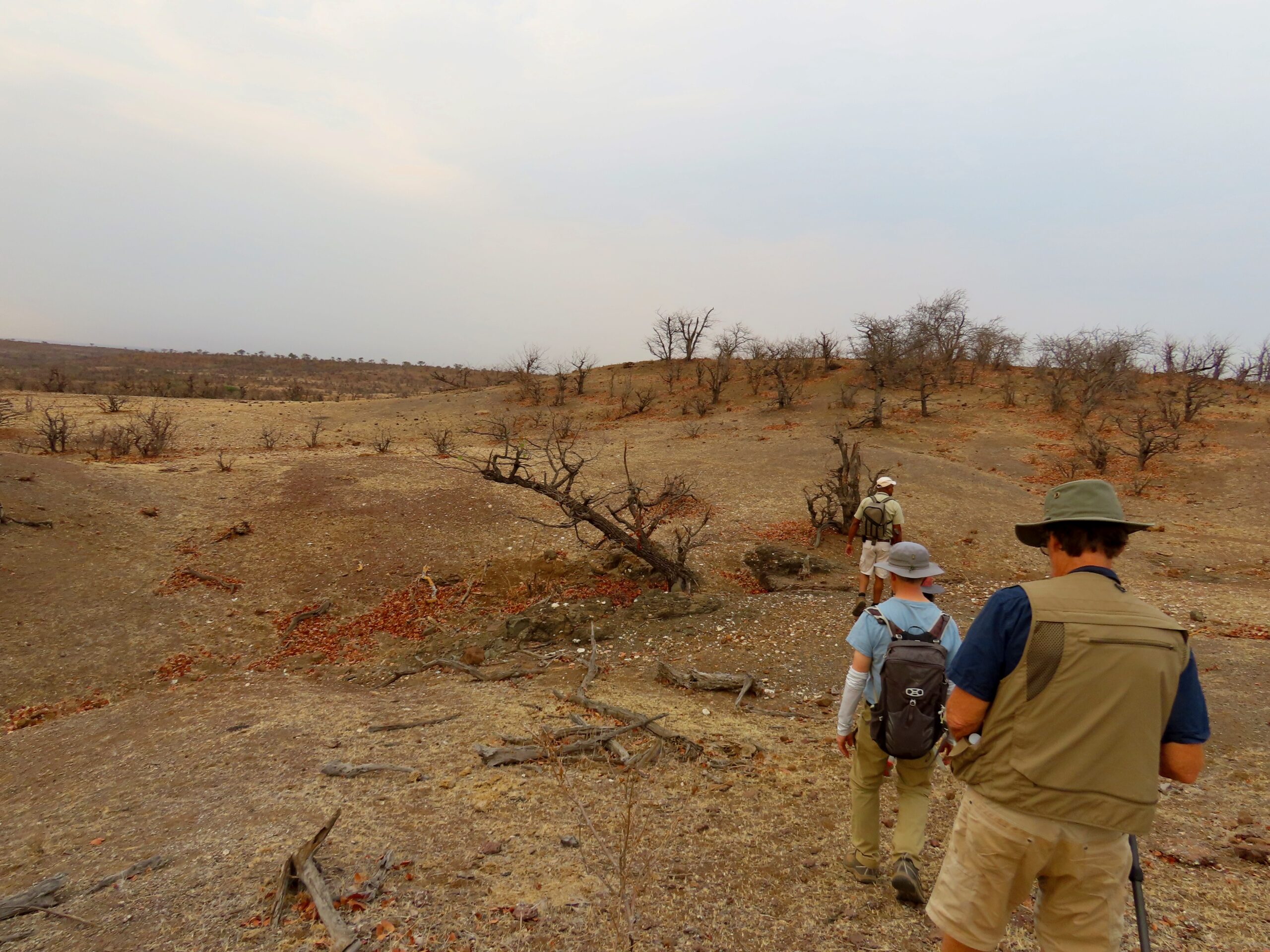
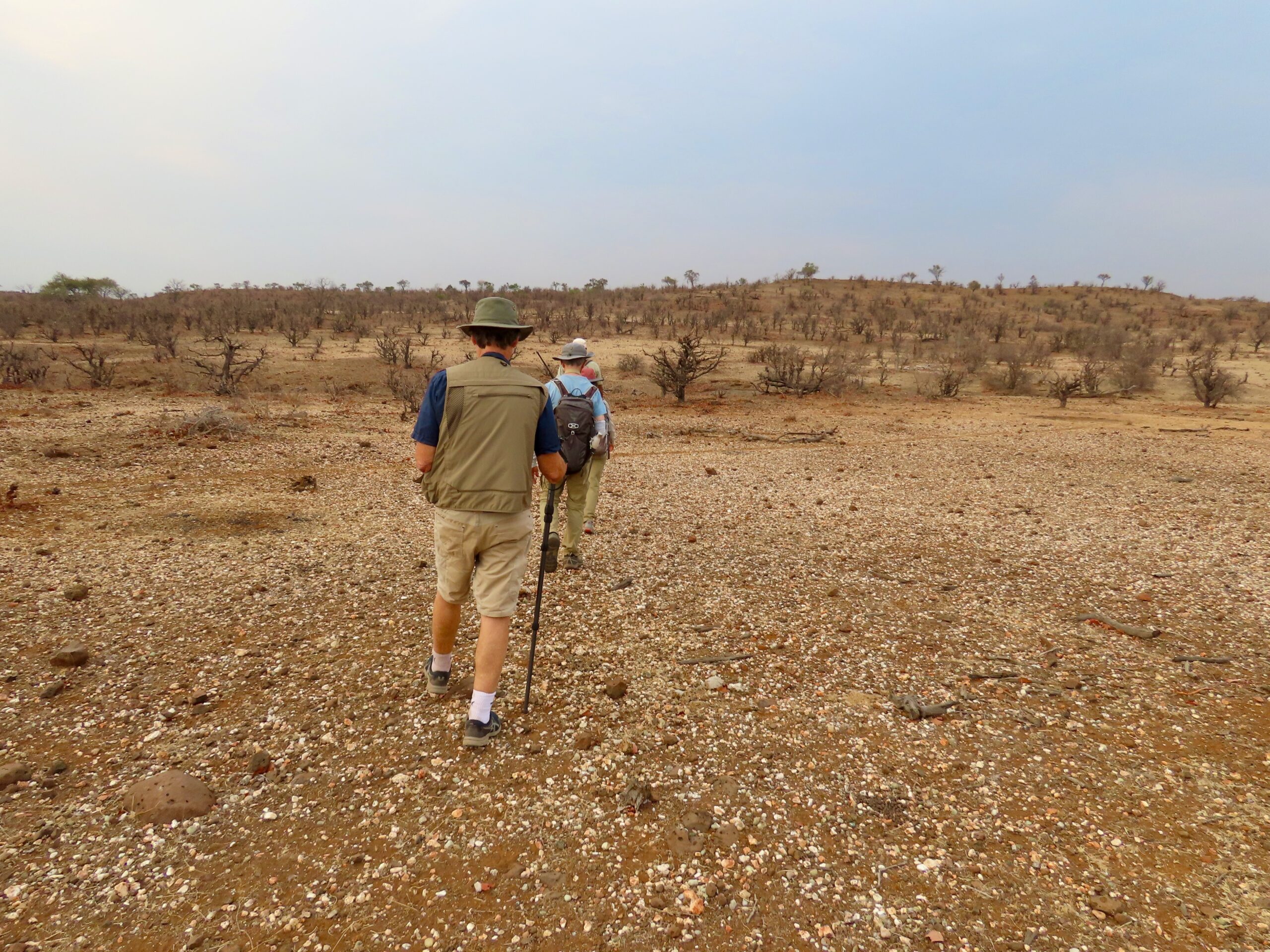
The day felt like a kind of independence for us as well, because we had a bush walk scheduled in the morning. Only four of us participated: Barb wasn’t feeling well and Matt and Dominque opted for a quiet morning in camp. So Don, Judy, Ken and I assembled at the lounge to meet Tips, our walking guide. He cast an eye over our clothing and judged us suitably attired: no bright or unnatural colors that would draw the wary or hungry eyes of bush dwellers.


Heading out into the dawn, we immediately encountered hyena tracks from an animal’s nocturnal stroll inside the camp – a helpful reminder of why everyone is locked inside tents at night.


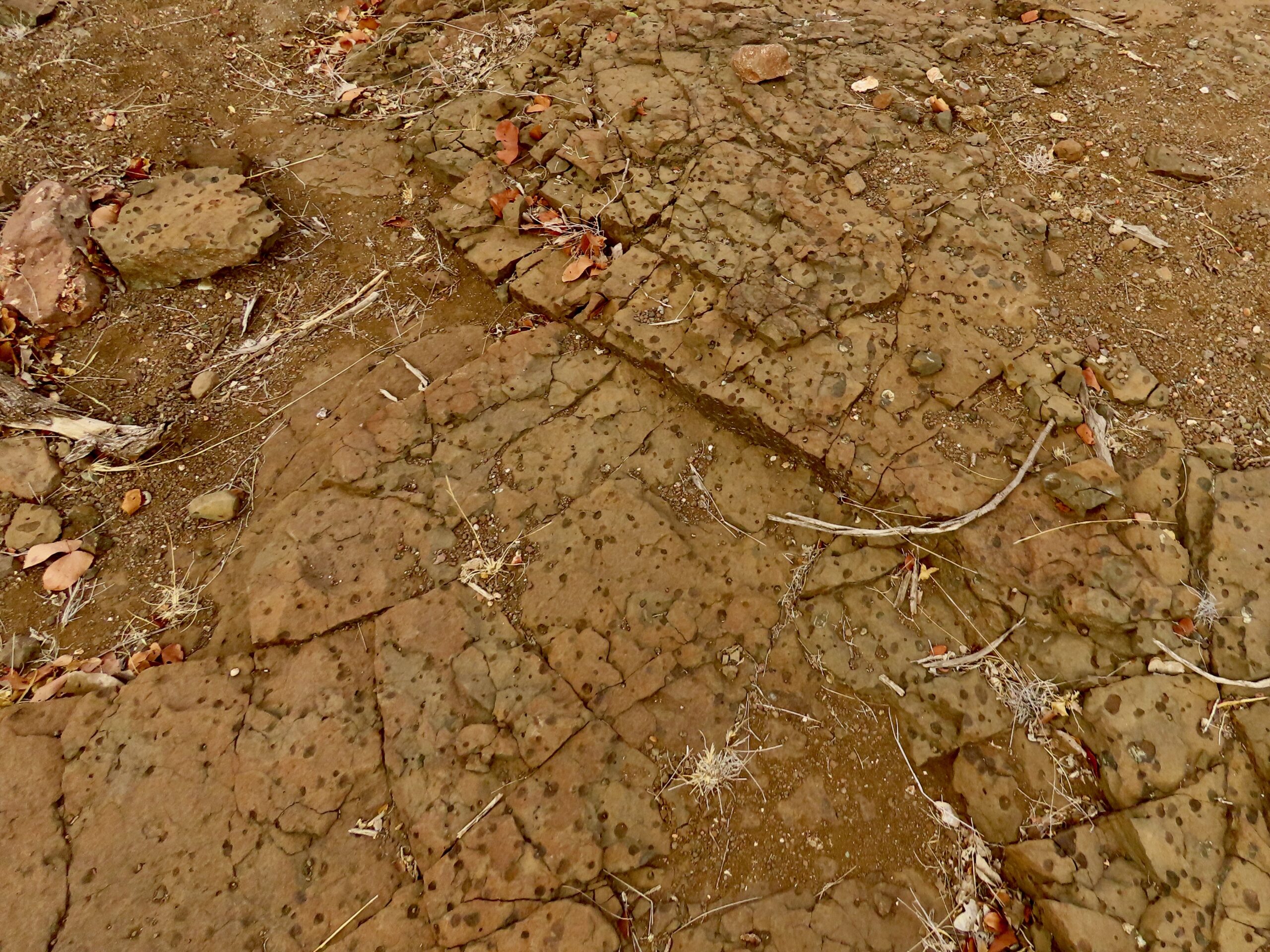
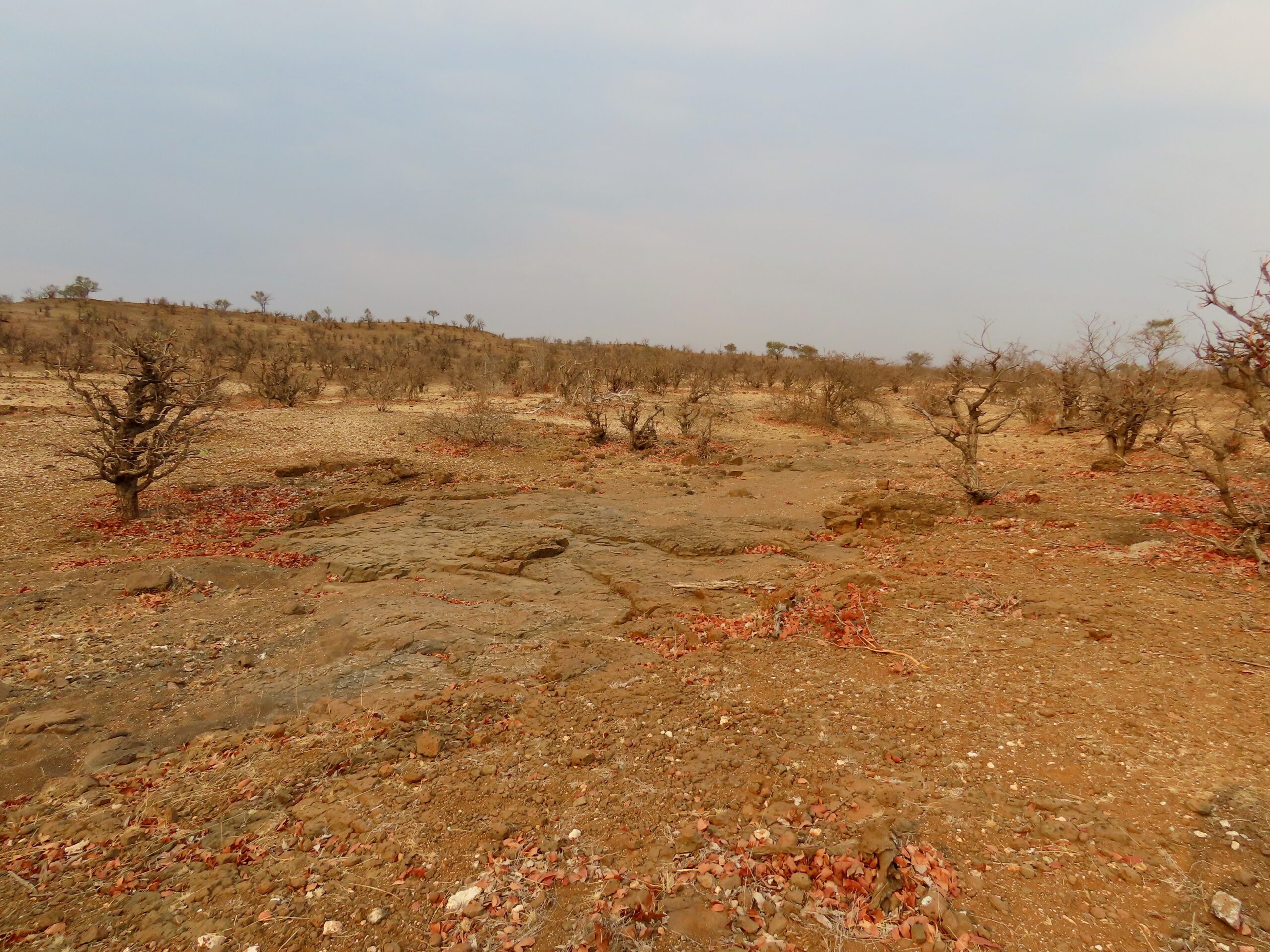
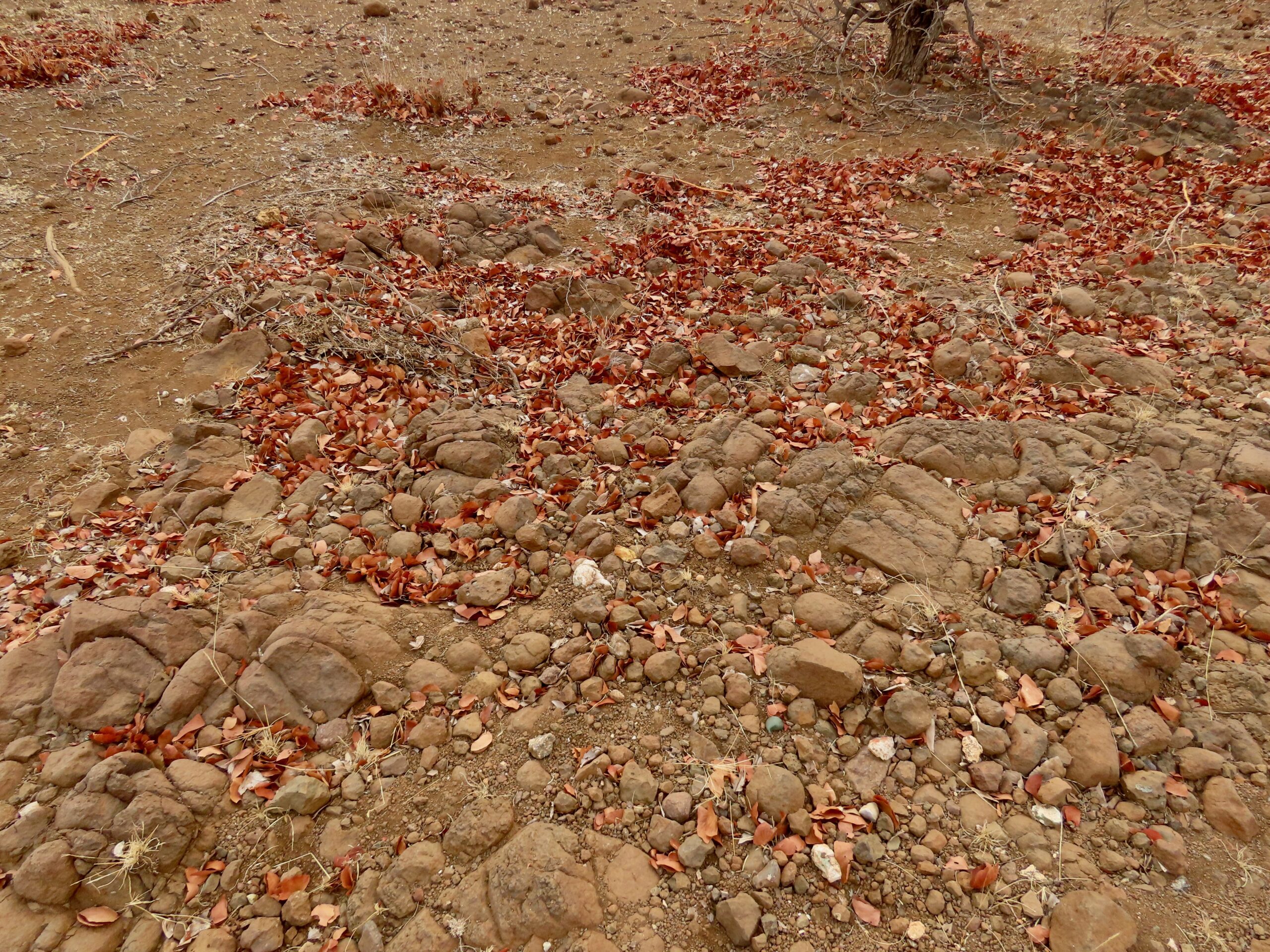
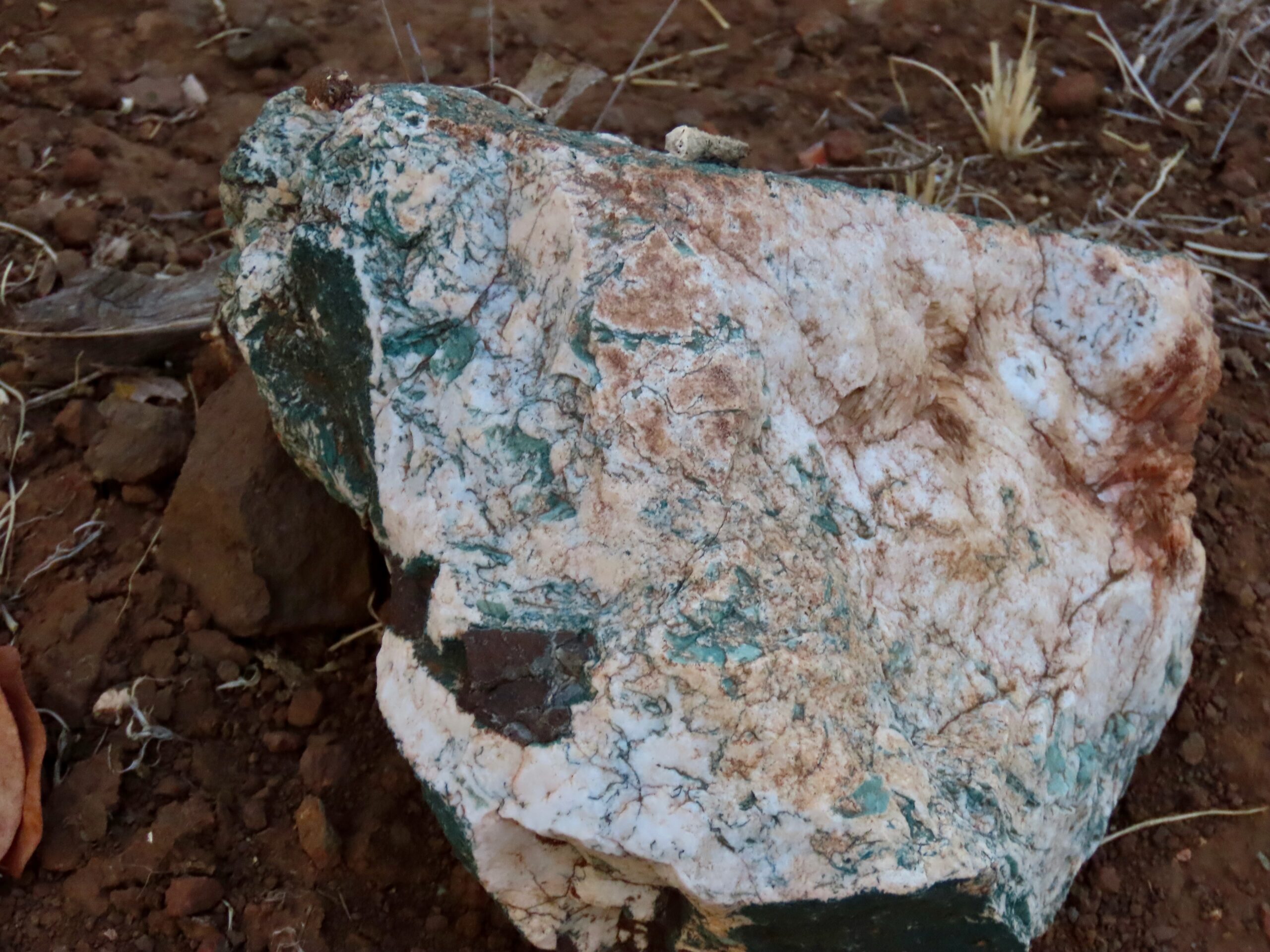
We walked generally uphill, winding through Mopane trees and clambering across those rocky gullies that we flash through on game drives. I was mesmerized by the beauty of the geology. Although most everything is colored dull brown and rust on the surface, the variety and colors visible in eroded formations and rocks that were broken or had their surface stripped away was amazing. I saw quartz, geodes, crystals, a vivid green like tourmaline and many stones I could not identify. (I’m no geologist, sadly.) I really appreciated the opportunity to get up close and personal with the bones of the earth.


(I left them in the Reserve.)


Tips told us that giraffes make very few sounds. Instead, they communicate through extremely sharp eyesight. The white patches on the backs of their ears can be spotted from very far away and are used to find one another. They tend to be solitary during the day, finding a tree with food and staking a claim to its leaves. During the rainy season, when the landscape greens, they gather in groups.

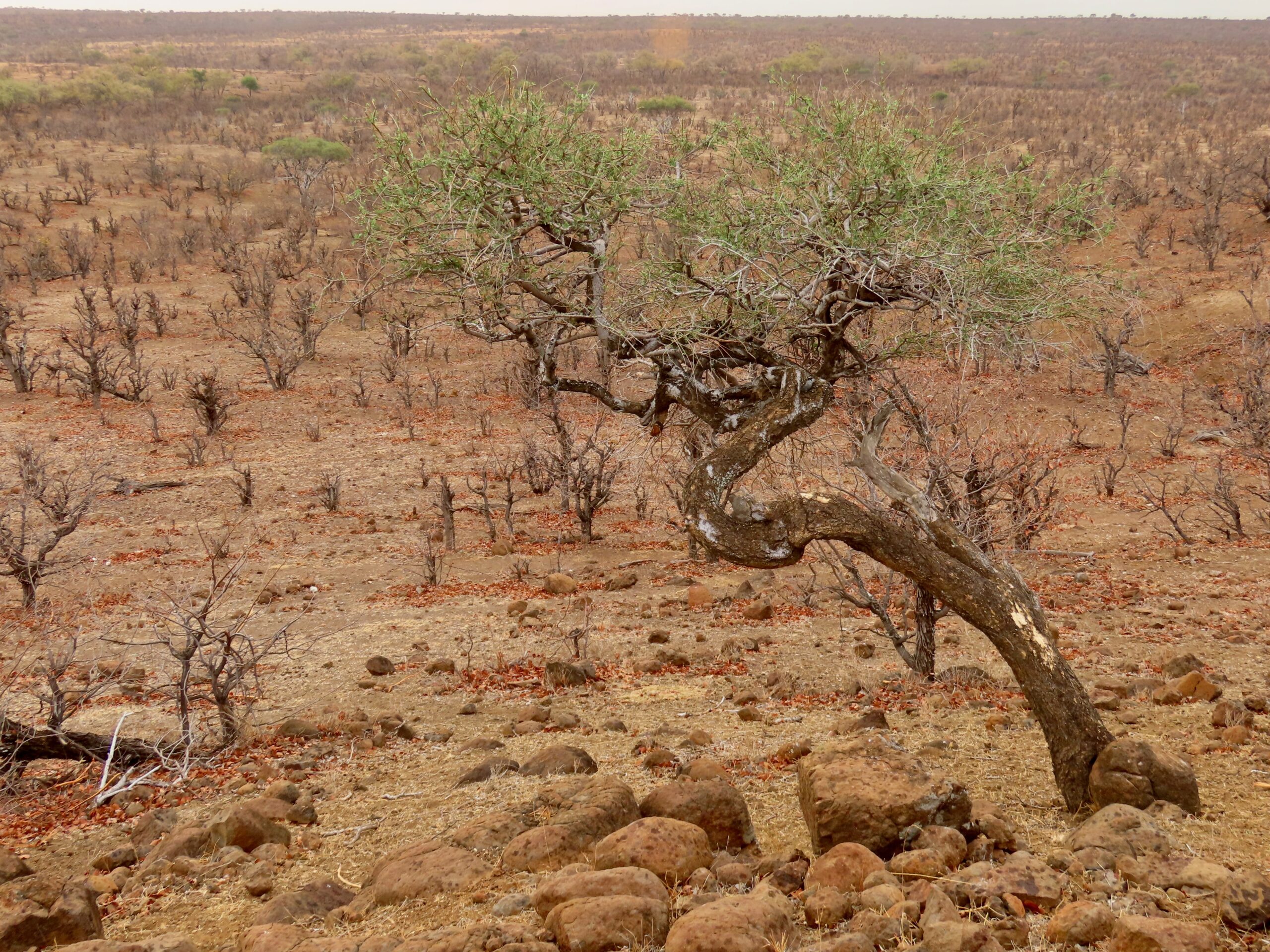
Tips also offered a different perspective on the stunted Mopane trees that dominate Mashatu’s landscape and their relationship to elephants. Breeding herds (like the matriarchs and youngsters we saw walking on prior days) prune the trees to a height that young ones can reach. Their dung fertilizes this keystone species and (because it is so poorly digested) provides food for insects, priming the bottom of the food chain. He pointed out lots of tracks and scat as we walked, quizzing us on who we thought pooped what. We usually got it wrong.


This photo is by Louise Joubert at the SanWild Sanctuary nearby
Aardvark dens have front and back entrances. When pursued, they pop in one entrance, then pop out the other, closing off the entrance behind them. Aardvark are very fast tunnelers, using their front claws to dig and their tails to slap dirt behind them against the entrance. Aardvark are another keystone species since so many animals use their dens: hyenas, warthogs, jackals, wild dogs, porcupines and mongoose, among others. Most of these animals can’t dig their own dens, so are reliant on aardvarks or to do that work for them. For wild dogs, the pack’s lead female will inspect an abandoned den to ensure that it is big enough and without lots of tunnels that blind newborn pups could wander into and get lost.
Aardvarks are also known as Ant Bears. They frequently make their dens in termite mounds, after first dining on the termites by digging in the mound and inserting their long sticky tongues to capture the insects. The large mounds of fungus termites function as chimneys, regulating heat inside the colony (which may be some distance away).

Impala middens serve as territorial markers for Impala rams and tick removal “spas” for hyenas and jackals. When it’s hot, the carnivores roll in a midden, the ticks jump off, lured by the smell of urine, and the host trots away – leaving the ticks to die in the midden.
Remnants of Leopard Tortoise shell were lying in the midden, left there by a hyena after its tick removal spa. A Ground Hornbill had opened the shell to eat the tortoise inside, and the opportunistic hyena chewed on the remainder. Leopard Tortoises hide underground during the dry season, lowering their metabolism to a state of near hibernation, then emerge with the rains.


A Giant Snail shell was another Ground Hornbill/Hyena victim. After the Hornbill takes the juicy bits, a hyena will pick up the shell and carry it up to 3 kilometers away to eat the rest. The stripes in the shell are veins, which fade in the sun.


White-browed Sparrow Weavers always build their nests on the west side of trees, for two reasons:
wind comes from the east and can knock the nests down, and the east side of the tree is hotter.
Observing these nests is a way to know compass directions, since they always face west.


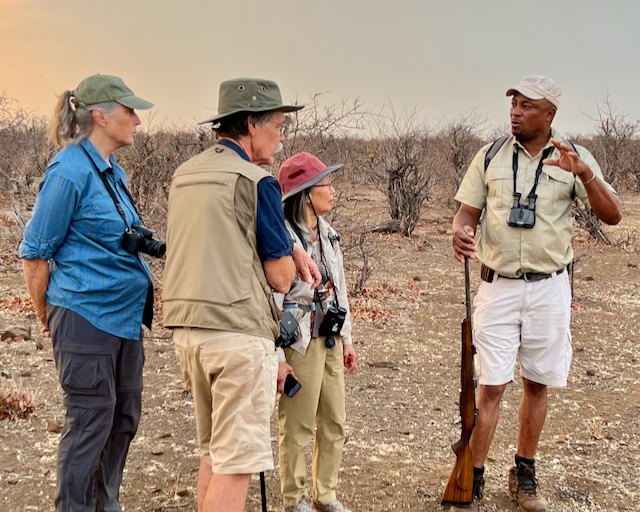




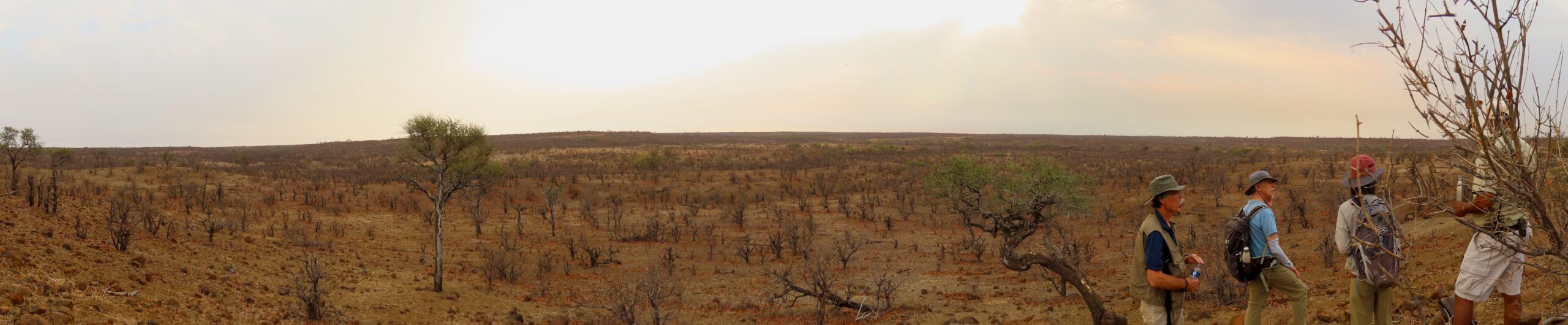
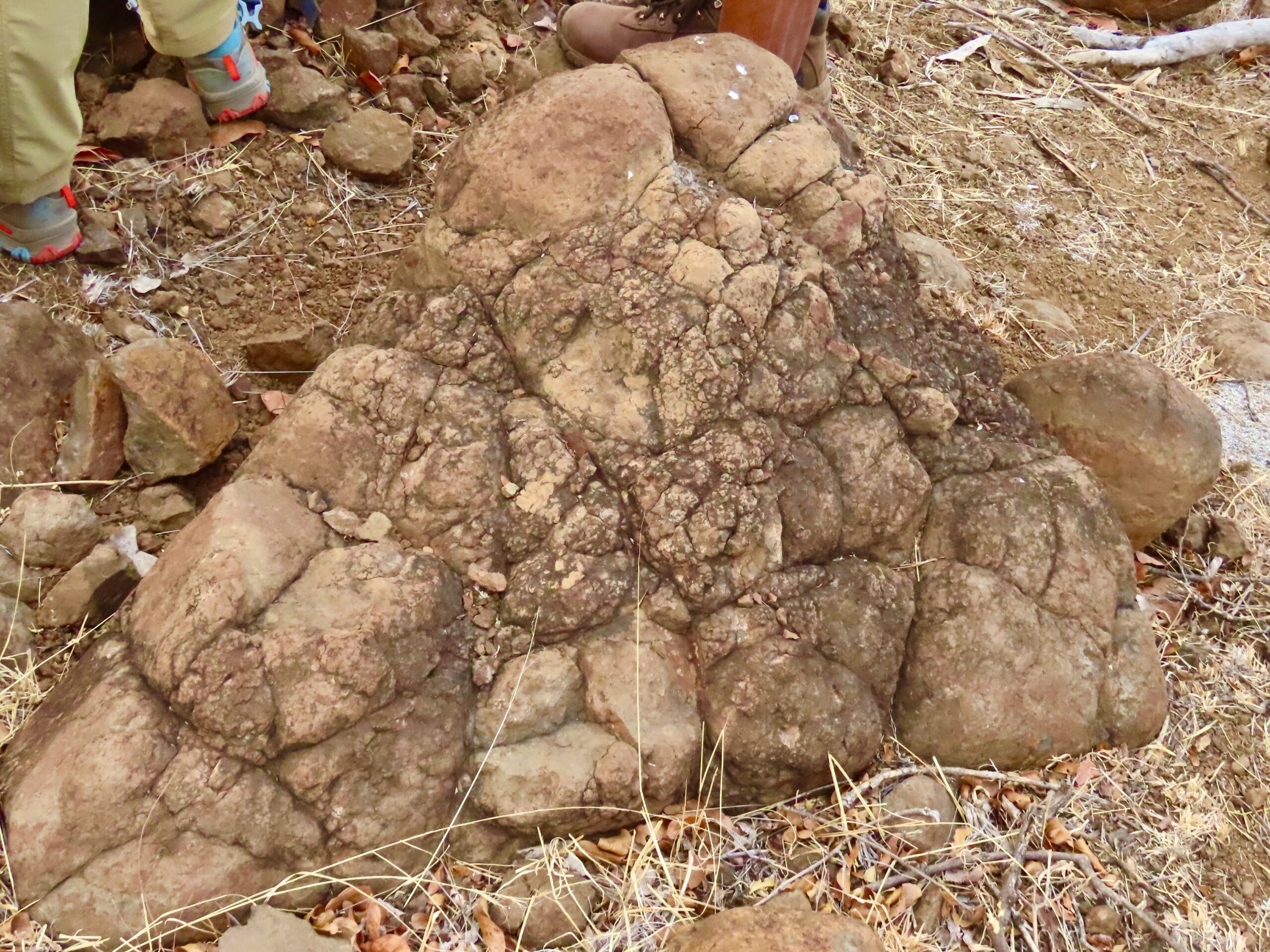

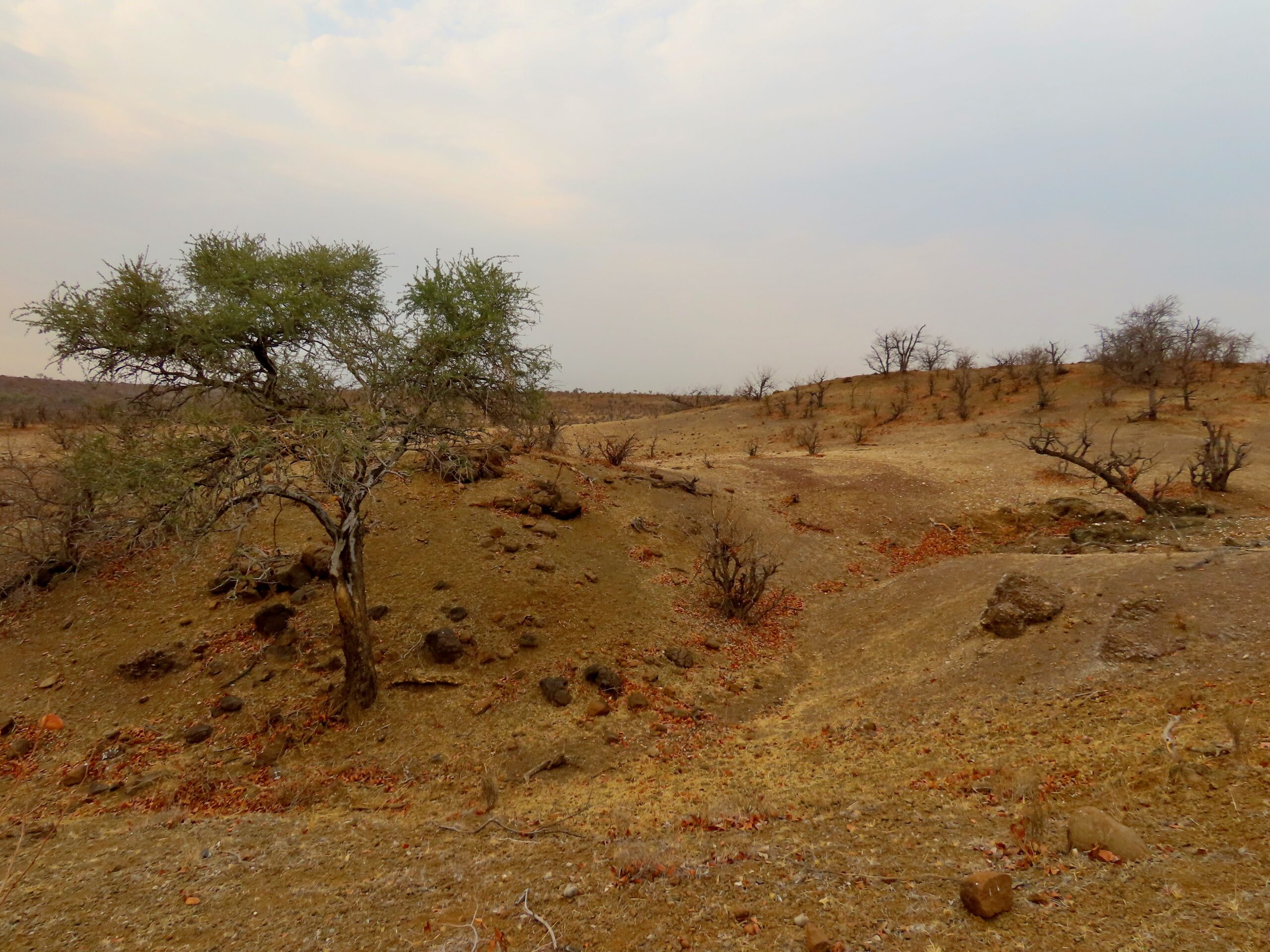

While cresting a ridge, I noticed a giraffe on top of a further hill, with a glaring splotch of color on the road below. It really brought home to me why walking safari operators insist on clothing that fits into the landscape.


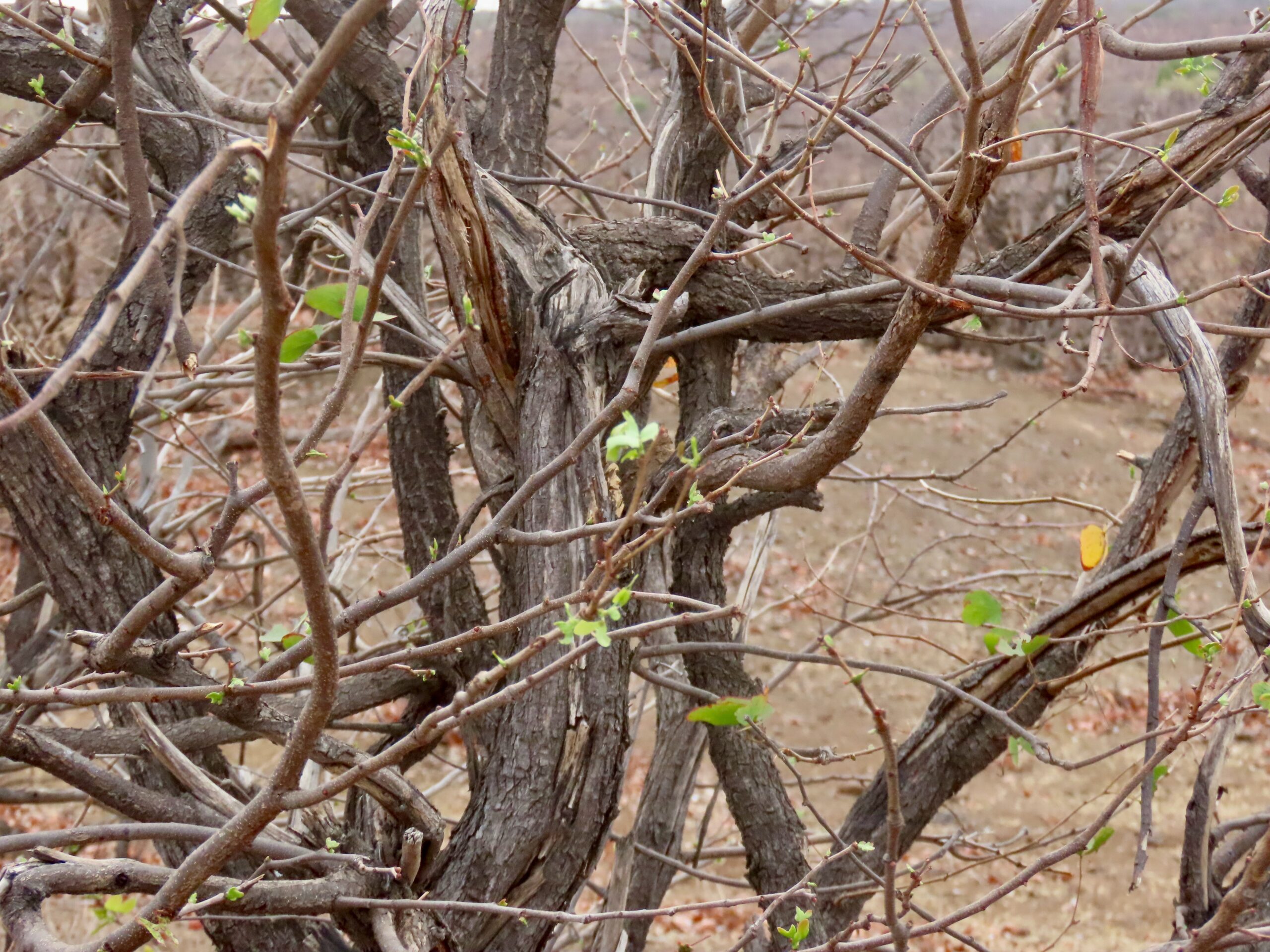
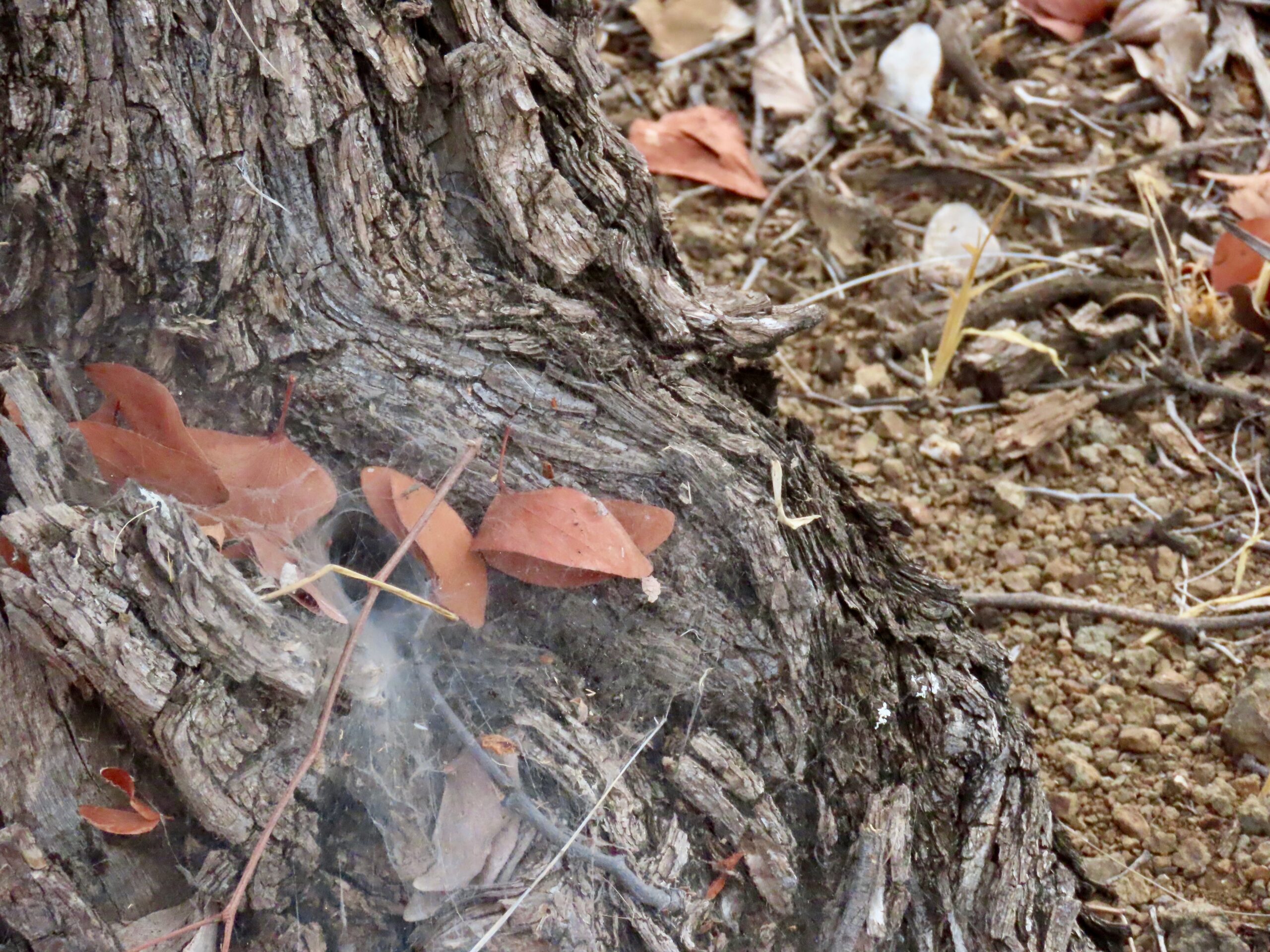
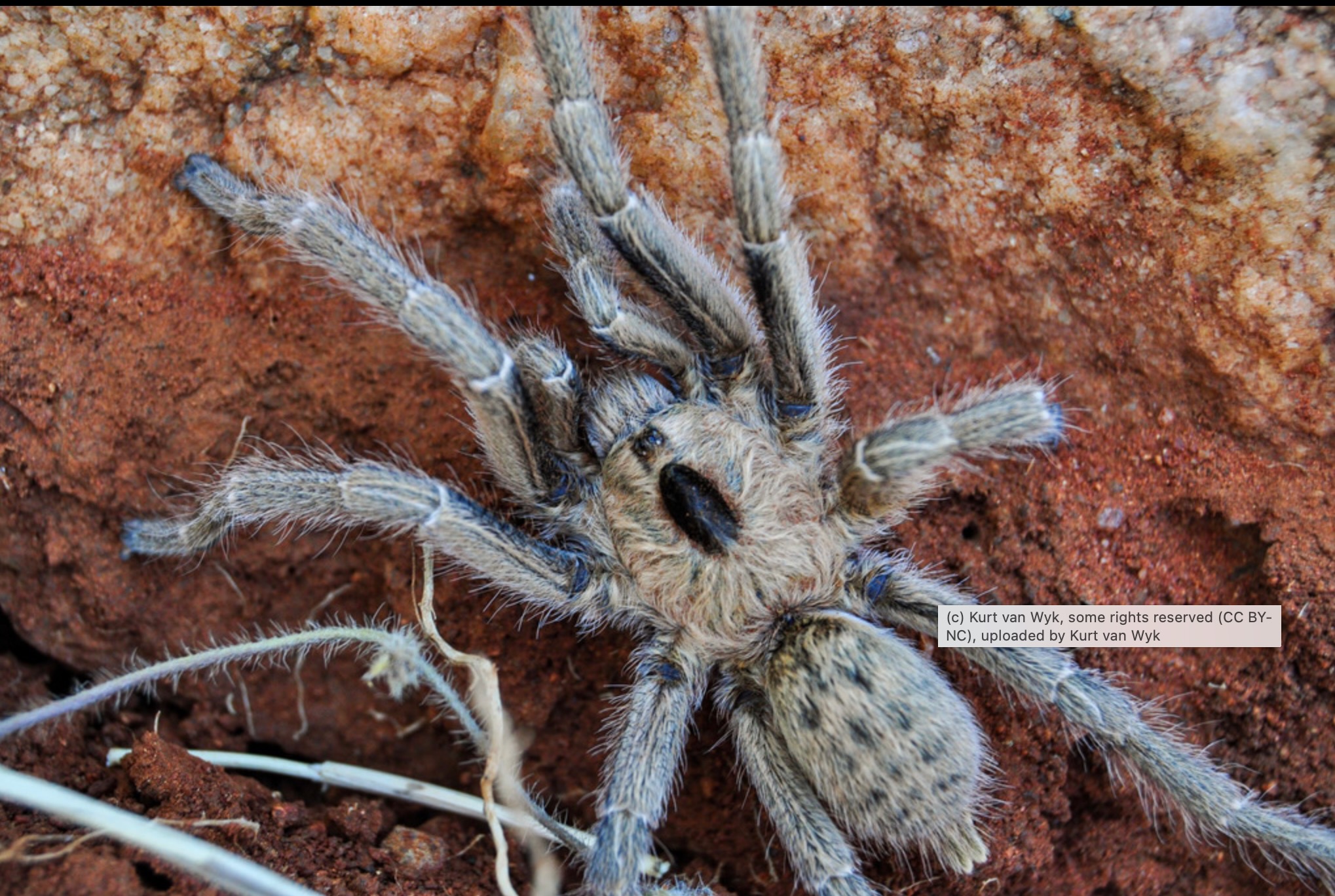
I’m always fascinated by spiders, so was eager to learn about the Baboon Spider who wove this web. They are in the Tarantula family, not dangerous to people, reclusive, and a little over two inches long. They often spin their webs on the ground with a trapdoor that they can close when it rains.
We soldiered on in the general direction of the giraffe on the hill.
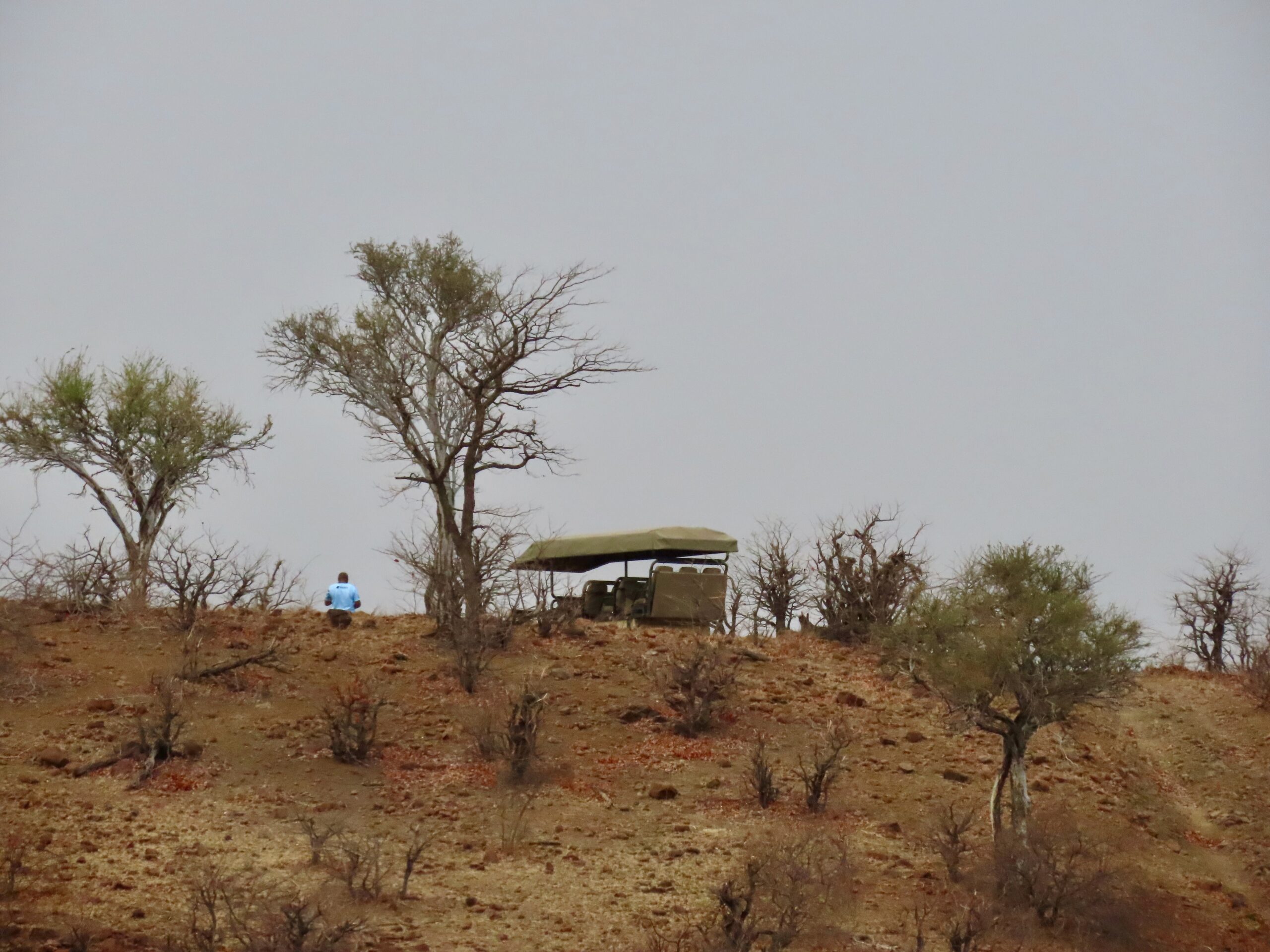
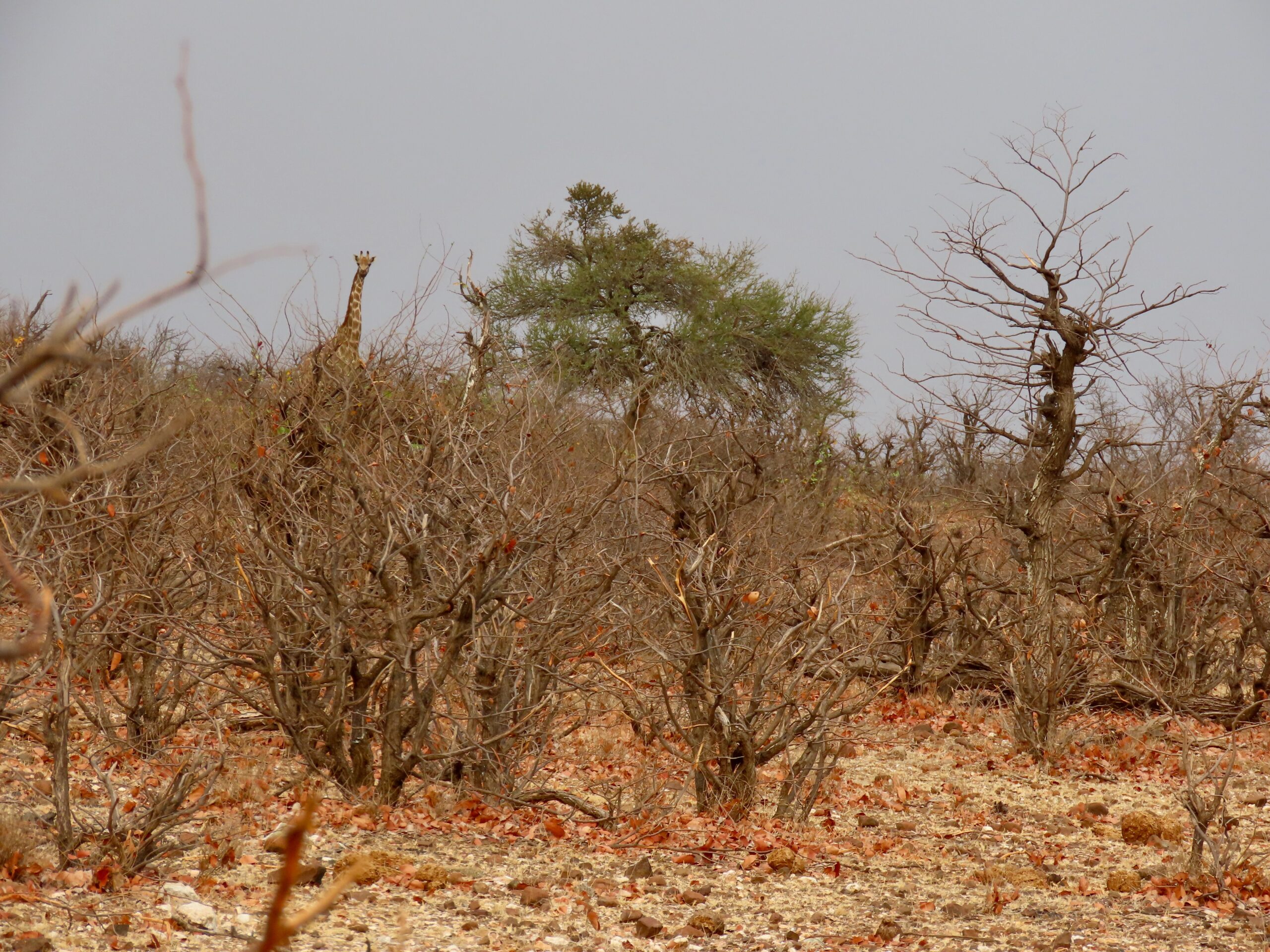


As we approached the top of the giraffe’s hill, I realized that the splotches of bright color and the safari vehicle were Dan and Tau, arriving with our morning coffee. So very civilized – especially fo people used to gasping our way up trails in the Colorado Rockies carrying pounds of water bottles and food for refreshment at the top.


I found lots of interesting bits on the ground around our coffee spot.


A secondary reason for bringing beverages and snacks was to see if we wanted to bail out of walking and take the vehicle back to camp. Reluctant to give up our independence, we all opted to walk back.



They eat fresh dung, and Ground Hornbills dig them up while the dung is still fresh.


This is a rubbing stick, a branch made smooth by Wildebeest rubbing against it to dislodge ticks. Wildebeest also roll on the ground creating wallows, which get bigger over time and become water catchment basins.


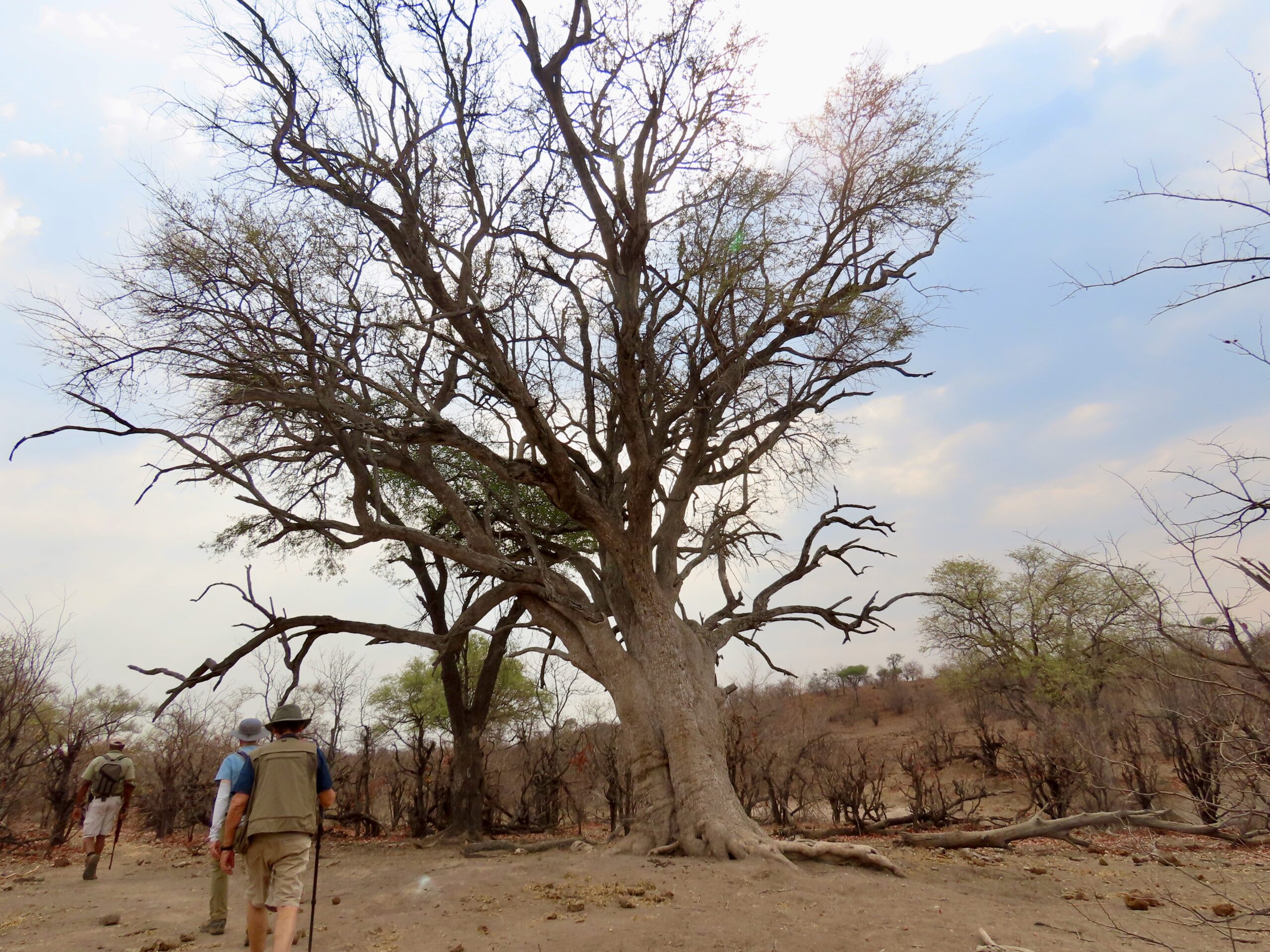


Back at camp, staff had dressed up the meal table in Botswana colors, and there was a low murmur of excitement about a “surprise” coming later.

After another very hot mid-day break, we began the afternoon game drive by searching for hyenas. Dan scoured the riverbed by their den looking for members of the pack, but without success.


A sad sight was this several months old giraffe who was not getting enough nourishment from mother’s milk and vegetation to thrive. Dan said “she’s not going to make it.”


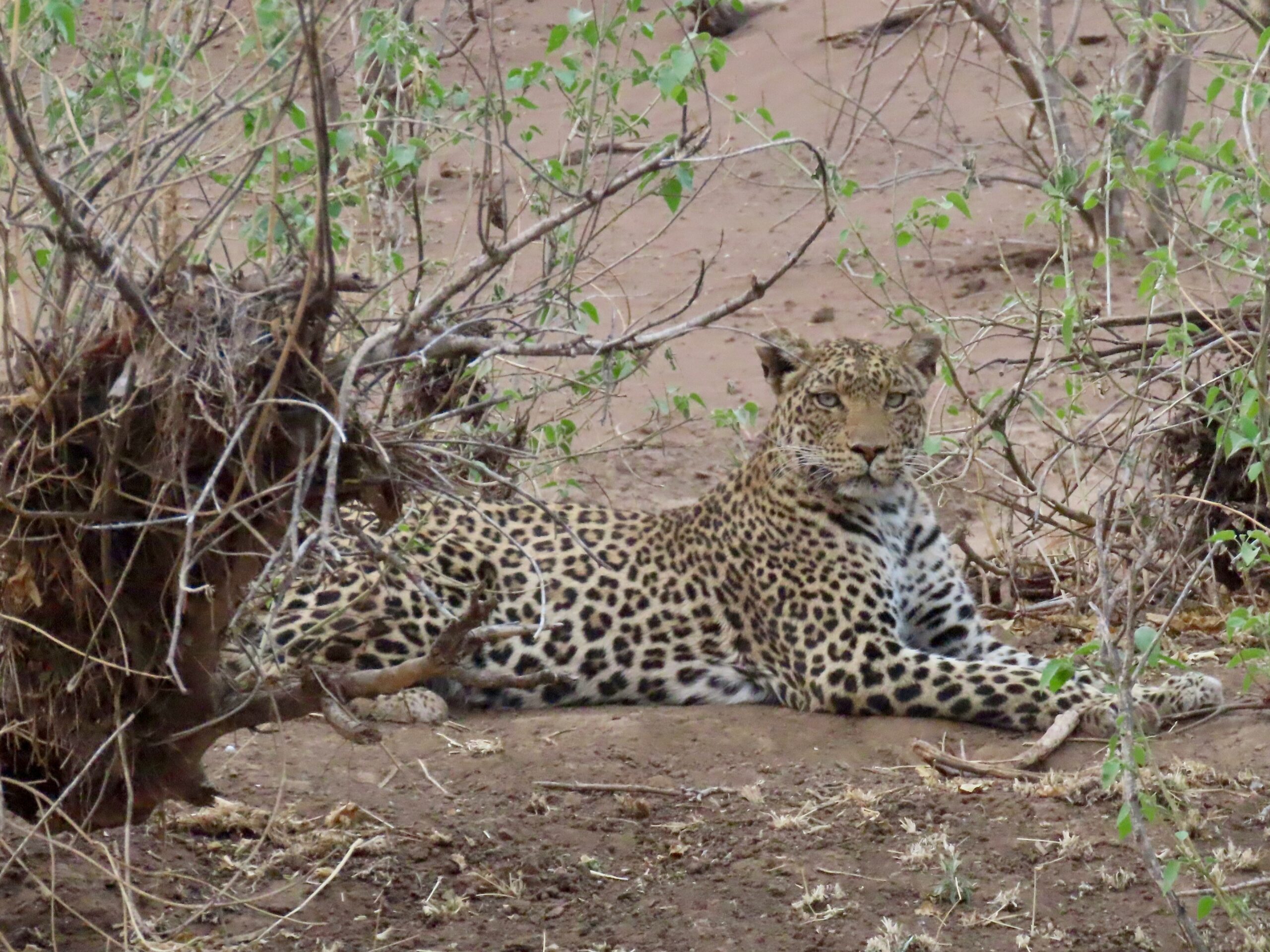
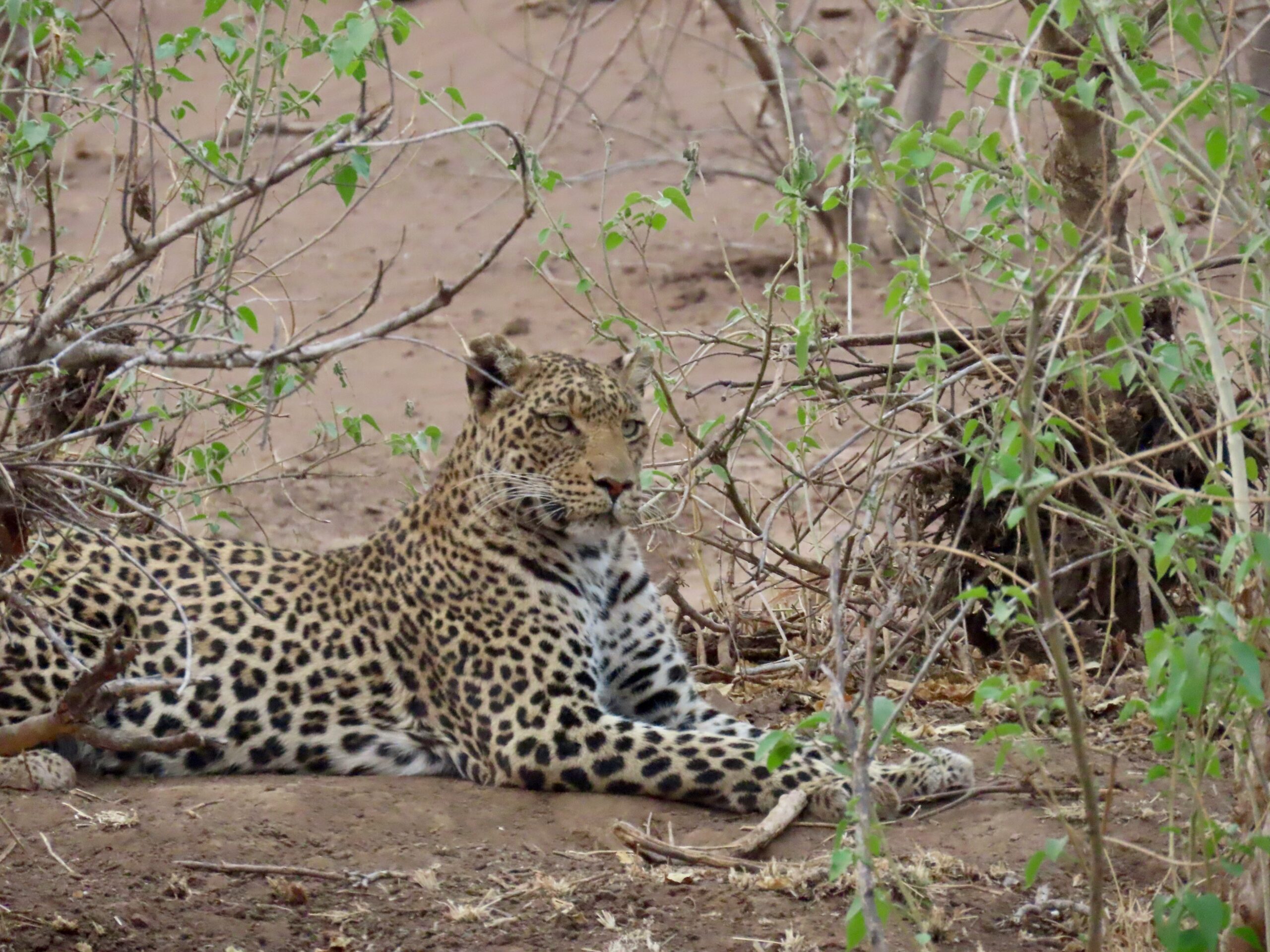
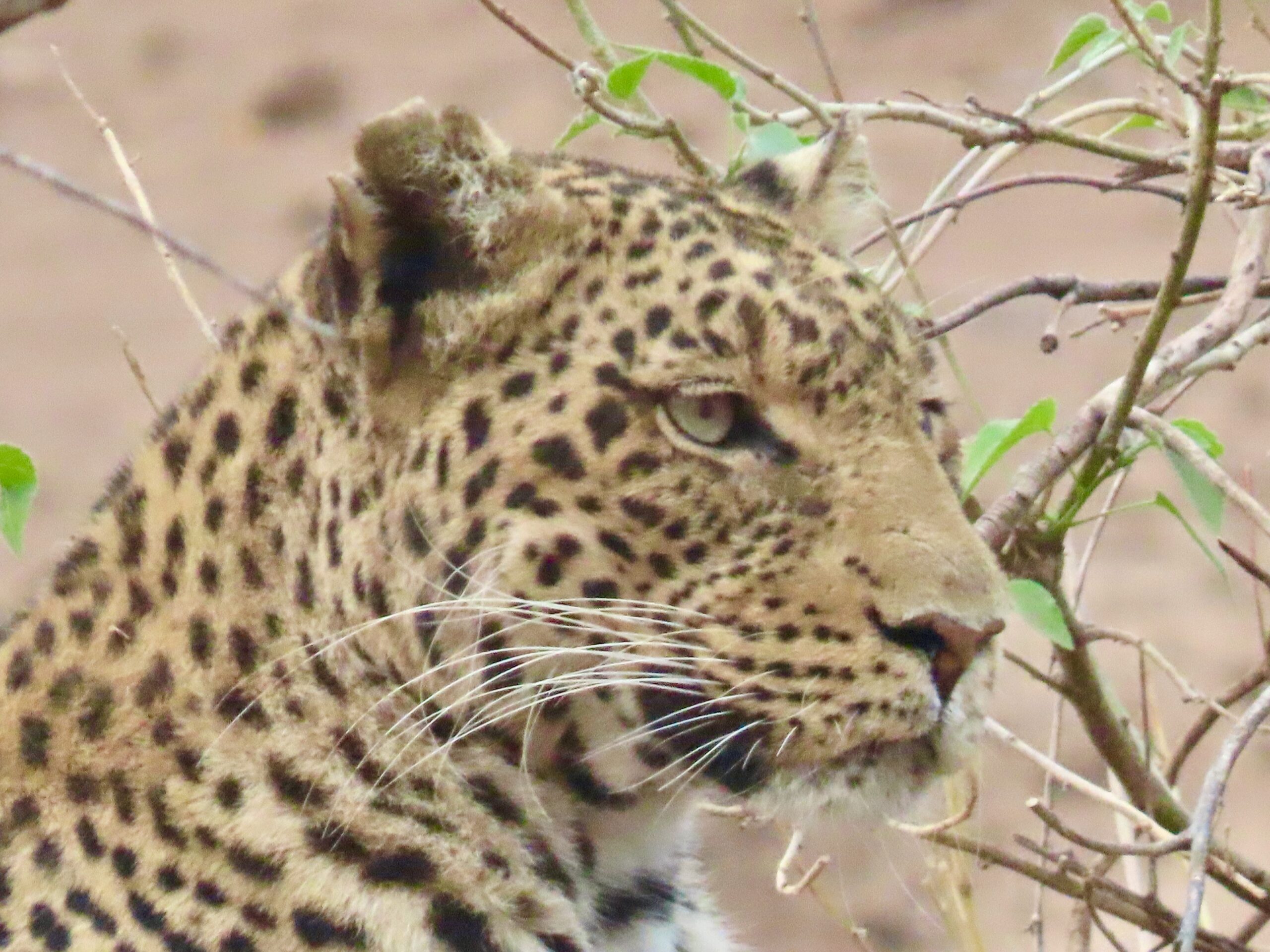
As we headed into the Fevertree bushes, I looked to my left to find a leopard trotting along beside us. This is the same leopard we saw in the tree yesterday, a 15-16 year old female. Earlier this year, her cubs were killed by her sister, and she retaliated by killing another leopard’s cubs. (Like humans, it’s all about territory.)
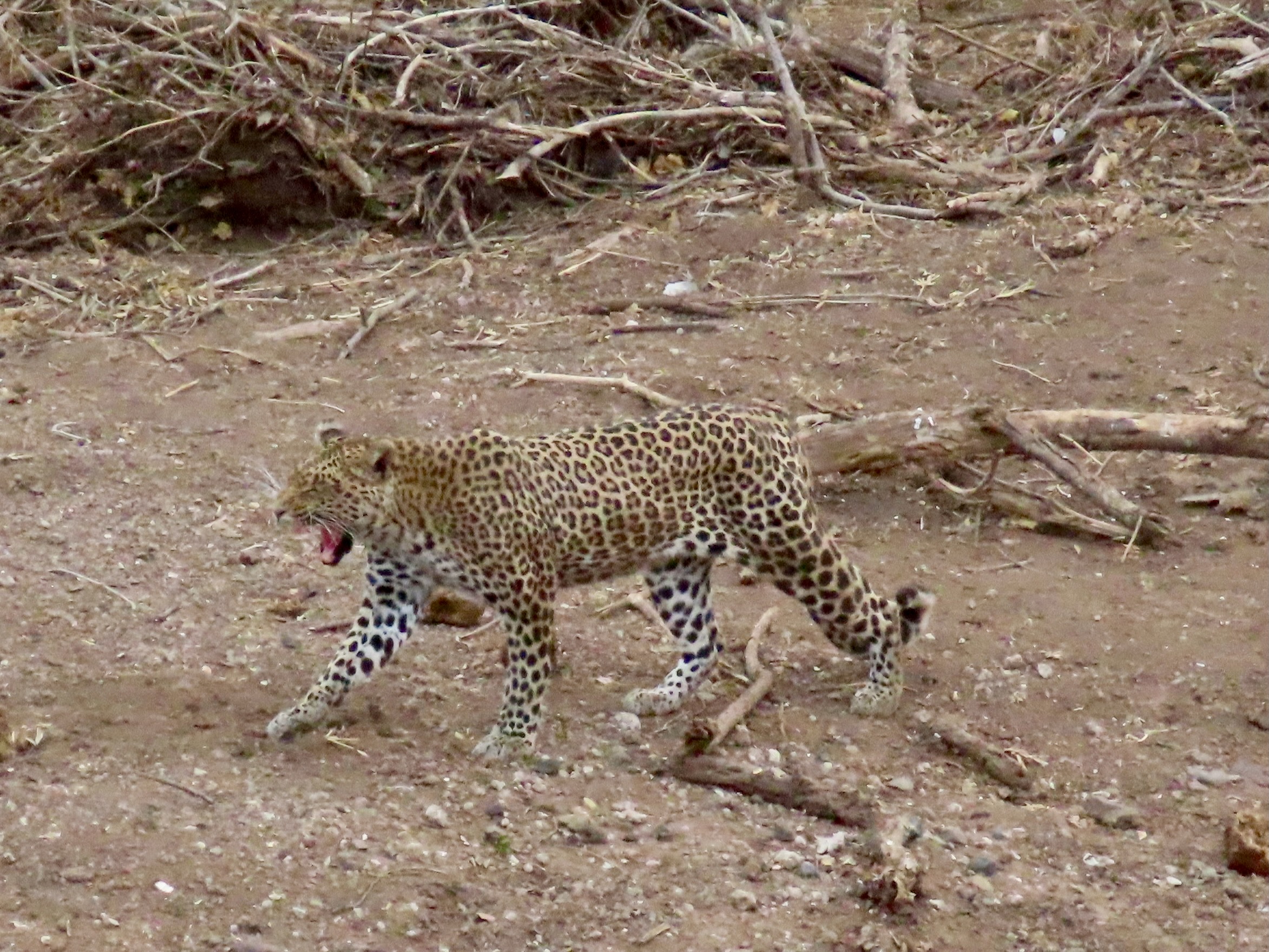


We encountered the leopard again, as she was finding her place to settle down beneath the bushes.


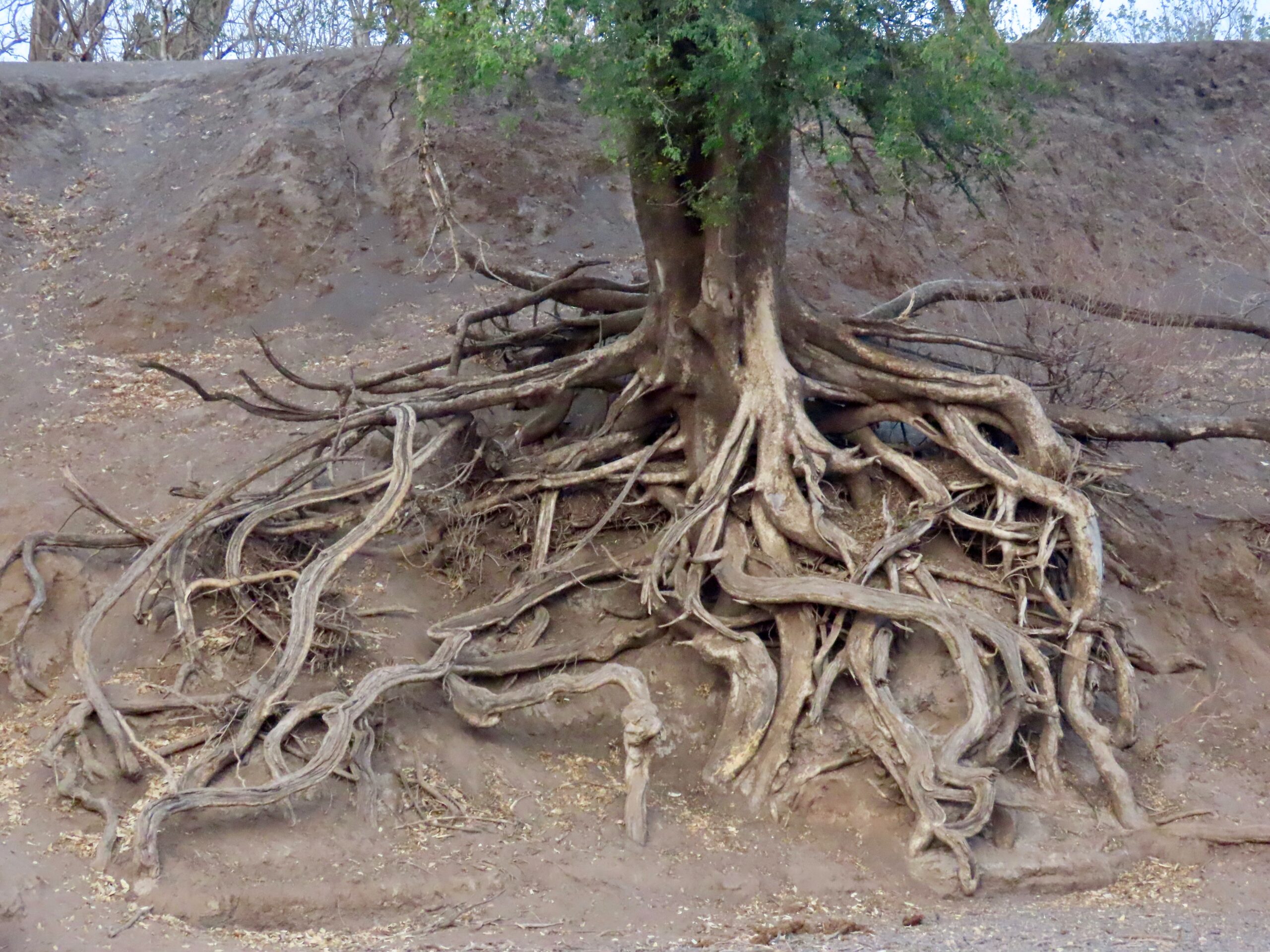
We passed a number of Sycamore Fig trees, slowly being undermined by the waters rushing through this riverbed during the rainy season.




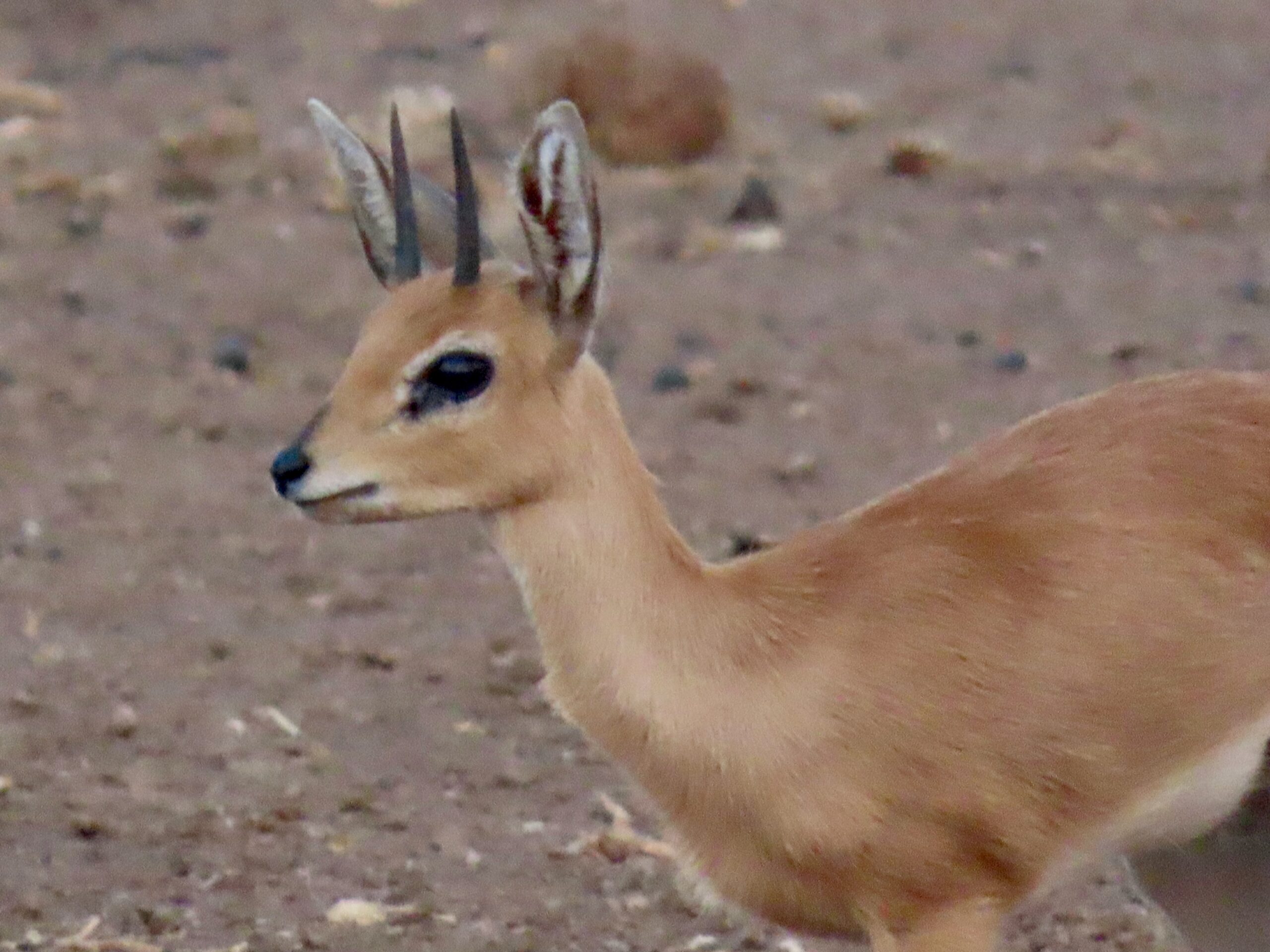
We got a great look at a Steenbok, er, doing its business. These little guys usually sproing away as soon as they are spotted.


As darkness approached, an Eland herd and a very large array of Helmeted Guinea Fowl were heading into cover for the night.


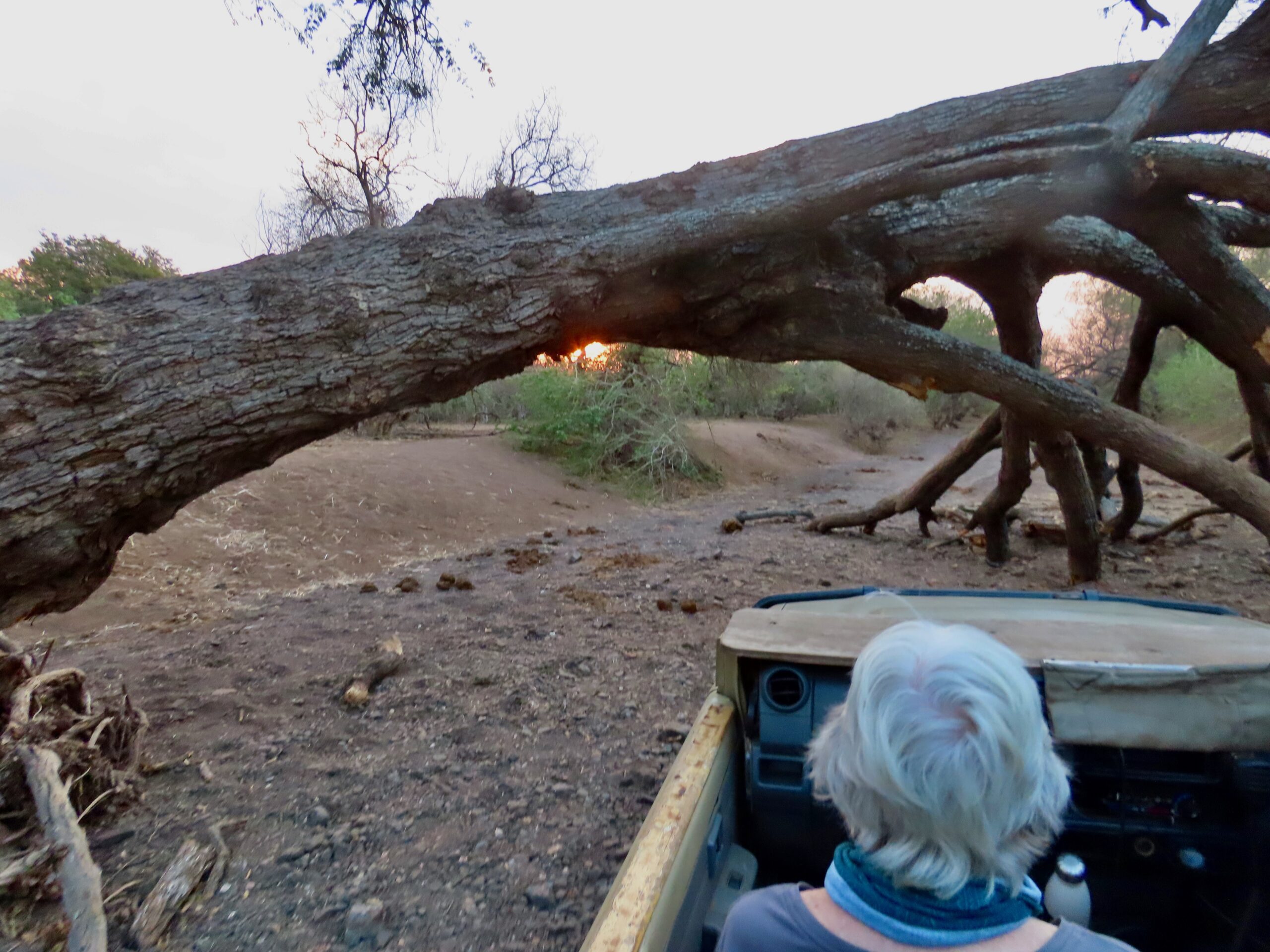
Everyone had to duck, with much laughter, as Dan drove us under the boughs of a fig tree that had topped into the riverbed.

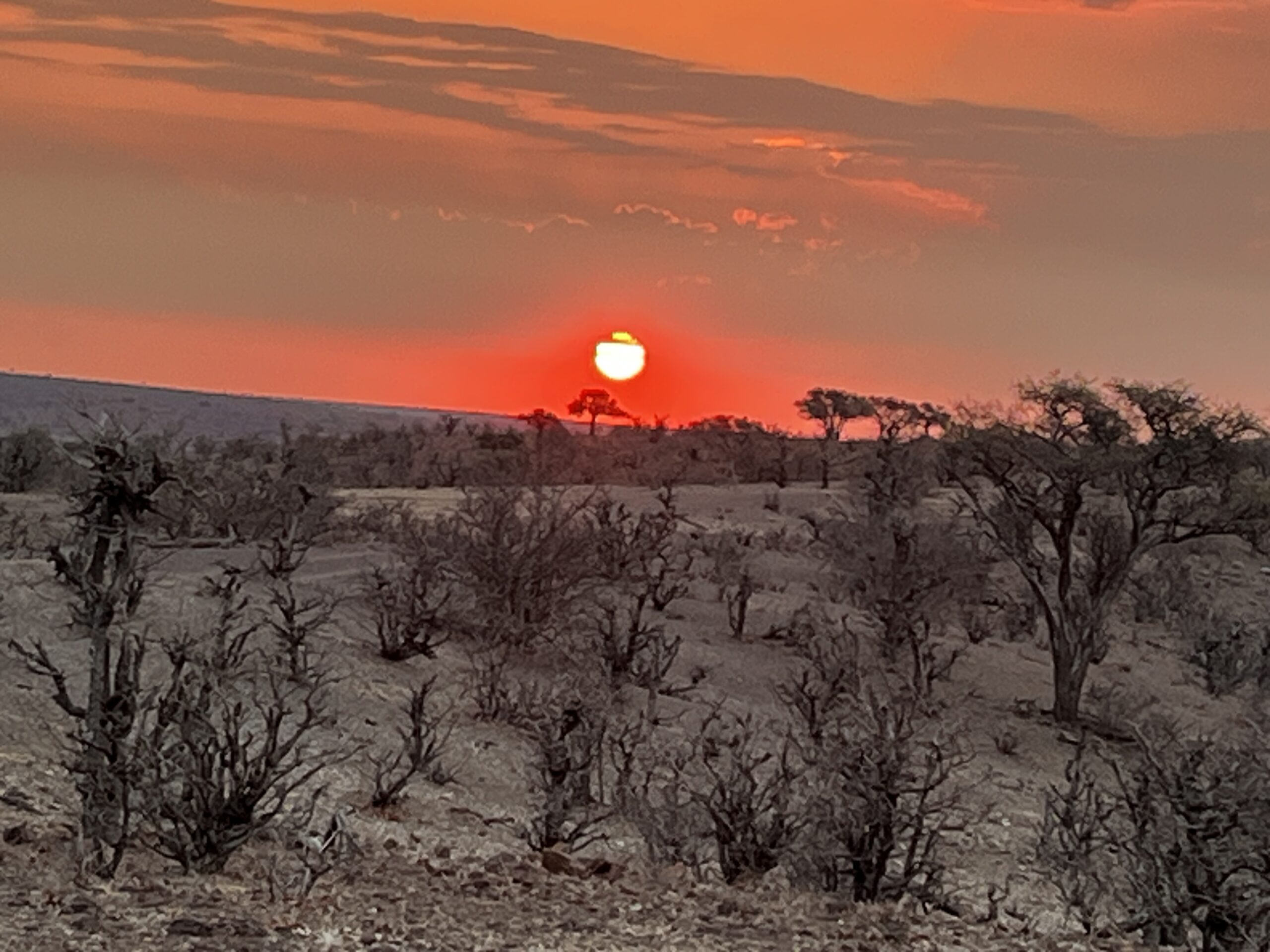
As darkness fell, all of the safari vehicles from every part of the reserve converged on “the surprise:” a large outdoor boma and massive bush dinner that staff had put together as a celebration. As I watched the headlights converging in the dark, I felt like we had joined the guinea fowl in flocking together to an evening’s roost.



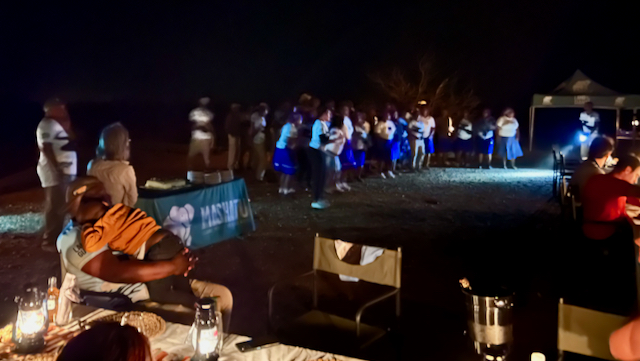
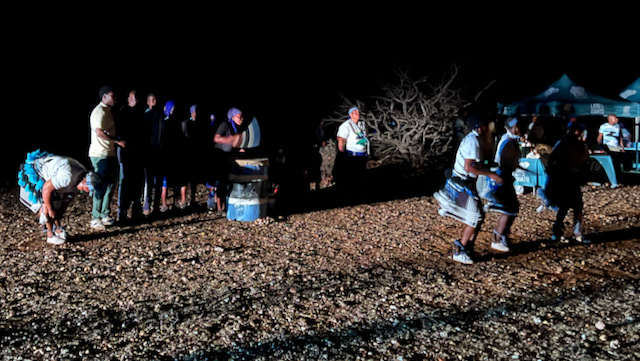
The temporary boma, which staff had worked on all day, was gorgeous: long rows of tables draped in white tablecloths, held down by rocks against the evening breeze; illumination provided by lanterns on tables and the ground; and a grand buffet with a braai (barbecue, in our terminology) featuring eight kinds of meat on the side. (It is a carnivorous culture.) After brief statements by the camp owner and a food introduction by the chef, we were off and running with a wonderful butternut squash soup. All of the food was extraordinary, and there was lots of chatter and laughter among staff and guests. Best of all, staff members gathered together to dance and sing in traditional call-and-response harmonies. The music was beautiful and they all seemed to be having a wonderful time.



Thanks for the bush dinner video! Sad about the leopard cubs and baby giraffe who wasn’t going to make it… As always, very interesting reading and photos!